The Invisible Ropes: How Fiber Bundles Shape Our World
From the tendons that move your body to the cables that power your home, the science of fiber bundles is all around us.
Have you ever wondered what gives a climbing rope the strength to support a human life, or how a single strand of hair can withstand a surprising amount of pull? The answer lies not in a single, mighty thread, but in the collective power of many fibers working together. Fiber bundles are precisely that—collections of thin, flexible filaments grouped to perform a function that no single fiber could achieve alone. Found everywhere from the deepest structures of the human brain to the most advanced composite materials in aerospace engineering, these bundles are masterpieces of natural and human engineering. Their strength is more than the sum of their parts, governed by fascinating principles of physics, statistics, and mechanics 1 .
The Fundamentals: Why Bundle Up?
At its core, the concept of a fiber bundle is a strategy for managing failure. A single fiber, while often very strong, is also brittle; when it meets its breaking point, it fails completely and catastrophically. A bundle, however, introduces redundancy and a degree of forgiveness.
Global Load Sharing
The load from the broken fiber is shared equally among all surviving fibers in the entire bundle. This is an ideal scenario that maximizes the bundle's overall strength.
Local Load Sharing
The load is transferred only to the immediate neighbors of the broken fiber. This creates stress concentrations and can lead to a cascade of failures.
From Biological to Synthetic


A Deep Dive: The Ceramic Fiber Experiment
To truly understand the science, let's look at a crucial experiment conducted to determine the "true strength" of ceramic fiber bundles, which are vital for high-temperature applications. The challenge researchers faced was that it's nearly impossible to visually count how many fibers are broken inside a bundle at the moment of peak stress 3 .
Methodology: Listening to Fibers Break
Single Fiber Characterization
Single filaments were stretched to failure and analyzed using Weibull statistics.
Bundle Tensile Testing
Bundles were mounted in a universal testing machine and stretched.
Rupture Signal Detection
Acoustic signals were detected each time a filament snapped.
Results and Analysis
The experiment yielded two key findings. First, researchers confirmed that the true strength of a fiber bundle is higher than its engineering strength 3 . Second, and more surprisingly, they found that the true strength increased with the initial number of fibers in the bundle 3 .
| Property | 3M Nextel 610 (N610) | 3M Nextel 720 (N720) |
|---|---|---|
| Chemical Composition | >99% Al₂O₃ (Alumina) | 85% Al₂O₃, 15% SiO₂ |
| Filament Diameter | 10–12 μm | 10–12 μm |
| Tensile Strength | 3100 MPa | 2100 MPa |
| Tensile Modulus | 380 GPa | 260 GPa |
| Observation | Scientific Implication |
|---|---|
| Bundle true strength is higher than engineering strength. | Load is carried by a smaller, stronger subset of fibers at peak load. |
| True strength increases with the initial number of fibers. | Larger bundles have a statistical advantage, containing more very strong fibers. |
| The final proportion of surviving fibers varies. | Breakage is a dynamic, statistical process, not a uniform event. |
Strength Comparison: Single Fiber vs. Bundle
The Scientist's Toolkit
Research into fiber bundles relies on a suite of specialized reagents, materials, and methods. The table below details some essentials used across the featured experiments.
| Tool/Reagent | Function in Research |
|---|---|
| Glycerinated Storage Solution | Preserves biological muscle fibers and bundles before biomechanical testing, preventing degradation. |
| Weibull Statistics | A mathematical model used to analyze the statistical variation in the strength of brittle single fibers. |
| Polyvinyl Alcohol (PVA) Sizing | A protective coating applied to synthetic fibers by manufacturers to prevent damage during handling; often removed before testing. |
| Physiological Relaxing Solution | A chemical solution used to maintain fresh muscle fibers in a relaxed state for accurate passive property measurement. |
| Acoustic Emission Sensors | Highly sensitive devices that detect the sound waves emitted when a fiber breaks, allowing researchers to track failures in real-time. |
| Universal Testing Machine | A device that stretches fiber specimens at a controlled rate while precisely measuring the applied force and elongation. |
Beyond Mechanics: Bundles in the Brain and Future Tech
The principle of fiber bundles extends far beyond structural materials. In neuroscience, the white matter of our brain is composed of axonal fiber bundles (neural pathways). Researchers are now using advanced imaging and deep learning to automatically map these incredibly complex pathways, which is crucial for understanding brain connectivity and disorders 2 6 .
Looking forward, biomimicry is pushing the boundaries of what fiber bundles can do. Scientists have created artificial neuromuscular fiber bundles called "NeuroMuscles." These systems don't just contract like artificial muscles; they have a built-in sensory feedback system, much like our own muscle spindles, allowing them to "feel" their own motion and interact adaptively with their environment 5 .
Did You Know?
The human body contains approximately 600 skeletal muscles, each composed of thousands to millions of individual muscle fibers bundled together.
Neural Pathways: Axonal Fiber Bundles in the Brain
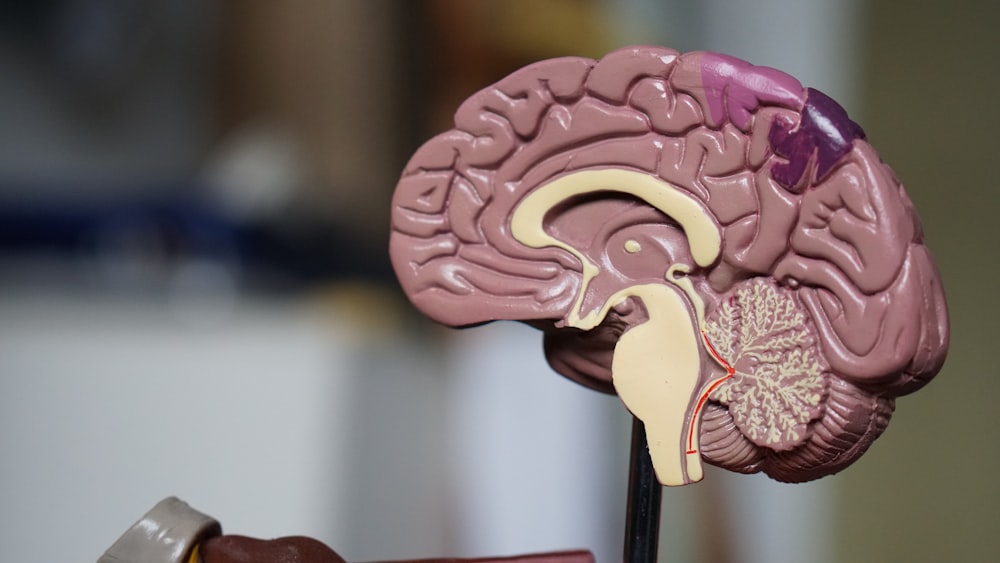
Advanced imaging techniques reveal the complex network of axonal fiber bundles in the human brain.
Conclusion
From the timeless integrity of a natural tendon to the cutting-edge ceramics enabling space exploration, fiber bundles represent a unifying engineering principle. They teach us that resilience often lies in collective behavior, in the ability to distribute stress and recover from local failures without global catastrophe. The next time you tie your shoes or marvel at a modern engineering marvel, remember the invisible ropes—the countless fibers bundled together—silently holding our world together.
References
References will be added here manually.