The Complete AlphaFold2 Guide: Step-by-Step Protocol for Accurate Protein Structure Prediction in Biomedical Research
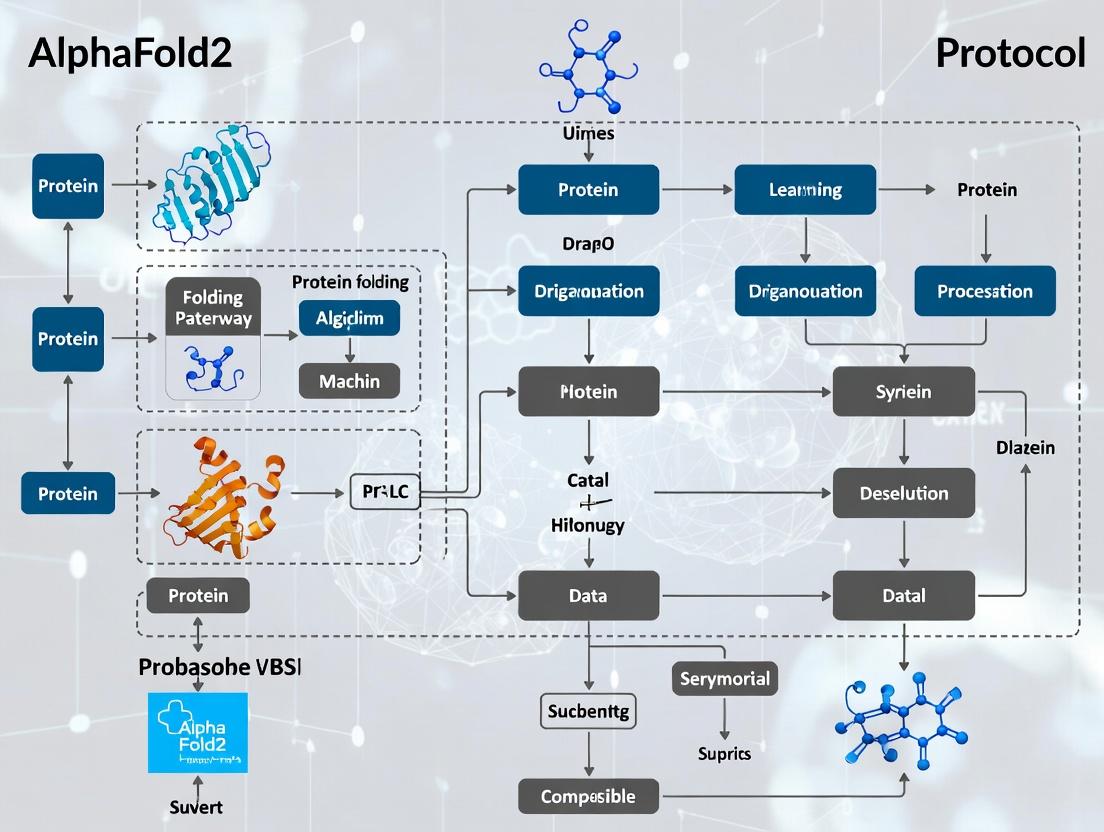
This comprehensive guide provides researchers, scientists, and drug development professionals with a detailed protocol for using AlphaFold2, the groundbreaking AI system for protein structure prediction.
The Complete AlphaFold2 Guide: Step-by-Step Protocol for Accurate Protein Structure Prediction in Biomedical Research
Abstract
This comprehensive guide provides researchers, scientists, and drug development professionals with a detailed protocol for using AlphaFold2, the groundbreaking AI system for protein structure prediction. We cover the foundational principles of this transformative technology, a step-by-step methodological workflow from sequence to 3D model, common troubleshooting and optimization strategies for challenging targets, and rigorous validation techniques to assess prediction quality. The article integrates the latest advancements and best practices to empower users to reliably predict protein structures for applications in structural biology, drug discovery, and functional annotation.
Understanding AlphaFold2: Decoding the AI Revolution in Structural Biology
The protein folding problem—predicting a protein’s three-dimensional structure from its amino acid sequence—has been a central challenge in molecular biology for over 50 years. The inability to reliably predict structure from sequence hampered fundamental understanding and drug discovery. The development of DeepMind's AlphaFold2 (AF2) in 2020 represented a paradigm shift, achieving accuracy comparable to experimental methods in many cases. This application note frames the AF2 protocol within ongoing research, providing detailed methodologies for its application and validation in a research setting.
Key Quantitative Performance Data
Table 1: AlphaFold2 Performance at CASP14 (2020) vs. Previous Methods
| Metric | AlphaFold2 | Next Best Method (CASP14) | AlphaFold1 (CASP13) |
|---|---|---|---|
| Global Distance Test (GDT_TS) ≥ 92 | 24.8% of targets | 3.5% of targets | 0% of targets |
| Median GDT_TS across all targets | 92.4 | 73.9 | 68.5 |
| RMSD (Å) for high-accuracy targets | ~1.0 | ~2.5 | N/A |
| Average prediction time per target | Hours to days | Days to weeks | Days |
Table 2: AlphaFold DB Coverage (as of late 2023)
| Statistic | Value |
|---|---|
| Total predicted structures | >200 million |
| Coverage of UniProt reference clusters (Swiss-Prot+TrEMBL) | >99% |
| Average predicted RMSD to experimental (pLDDT >70) | ~1.5 Å |
| Fraction of residues with high confidence (pLDDT > 90) | ~58% |
| Fraction of residues with low confidence (pLDDT < 50) | ~7% |
Core AlphaFold2 Protocol for Research Prediction
This protocol details running AlphaFold2 locally for custom sequence prediction, as per the publicly available codebase (Jumper et al., Nature, 2021).
Protocol 3.1: Environment Setup and Input Preparation
Objective: Prepare computing environment and input sequence data for AF2. Materials: High-performance computing cluster or workstation with NVIDIA GPU (≥16GB VRAM), Linux OS, Docker/Singularity. Procedure:
- Software Installation: Install Docker or Singularity. Pull the official DeepMind AlphaFold2 container (
deepmind/alphafold). - Database Download: Download the full set of genetic databases (approx. 2.2 TB). Required databases include: UniRef90, UniProt, MGnify, BFD, UniClust30, and the PDB70 and PDBmmCIF for template search. Use the provided
download_all_data.shscript. - Input FASTA Preparation:
- Create a single FASTA file containing the target amino acid sequence(s).
- For multimers, specify chains as separate entries in the FASTA (e.g.,
>chain_A,>chain_B). - Note: The model will treat sequences in a single FASTA as part of one complex.
Protocol 3.2: Running Structure Prediction
Objective: Execute the AF2 inference pipeline to generate 3D models and confidence metrics. Procedure:
- Command Execution: Run the AlphaFold2 container with mounted database and output directories. A typical command structure is:
- Parameter Selection:
model_preset: Usemonomerfor single chains,multimerfor complexes.max_template_date: Set to exclude PDB templates after a specific date for blind prediction.db_preset: Usereduced_dbsfor faster, less comprehensive searches if necessary.
- Output Generation: The pipeline runs for several hours, producing:
- Predicted Structures (.pdb): Up to 5 ranked models.
- Per-Residue Confidence Scores (.json): pLDDT (per-residue) and pTM (predicted TM-score, for complexes).
- MSAs and Logs: Raw alignment files and run logs.
Protocol 3.3: Model Analysis and Validation
Objective: Interpret AF2 outputs and assess model reliability. Materials: Molecular visualization software (PyMOL, ChimeraX), plotting software (Matplotlib). Procedure:
- Confidence Metric Analysis:
- Load the pLDDT values. Residues with pLDDT > 90 are high confidence, 70-90 good, 50-70 low, <50 very low/unstructured.
- For complexes, analyze the predicted interface predicted TM-score (ipTM) and interface pLDDT.
- Visual Inspection:
- Color the 3D model (ranked_0.pdb) by pLDDT to identify poorly predicted regions.
- Check for stereochemical errors using MolProbity or the built-in validation in ChimeraX.
- Comparative Analysis: If an experimental structure is available, compute the RMSD of the aligned model using PyMOL or UCSF Chimera.
Experimental Validation of AlphaFold2 Predictions (A Case Study Protocol)
Protocol 4.1: Validating a Novel AF2 Prediction via X-ray Crystallography Objective: Experimentally determine the structure of a protein predicted by AF2 to confirm accuracy and resolve ambiguous regions. Workflow Overview: Cloning → Expression → Purification → Crystallization → Data Collection → Structure Solution & Comparison.
Diagram 1: X-ray validation workflow for AF2 predictions
Detailed Procedure:
- Construct Design: Use the AF2 prediction to inform construct boundaries, prioritizing high-pLDDT regions. Order synthetic gene.
- Protein Production: Clone gene into expression vector (e.g., pET series). Express in E. coli or HEK293 cells. Purify via affinity (Ni-NTA for His-tag) and size-exclusion chromatography.
- Crystallization: Screen purified protein at 5-20 mg/mL using commercial sparse-matrix screens (e.g., JCSG+, Morpheus) via sitting-drop vapor diffusion.
- Data Collection & Refinement: Flash-freeze crystals. Collect dataset at synchrotron beamline. Solve structure by molecular replacement using the AF2 prediction as the search model.
- Comparison: Superimpose the experimental structure with the AF2 model. Calculate all-atom RMSD. Analyze regions where pLDDT was low to see if they were disordered or misfolded.
The Scientist's Toolkit: Key Research Reagents & Materials
Table 3: Essential Reagents for AlphaFold2-Guided Research
| Item | Function/Description | Example Product/Supplier |
|---|---|---|
| Cloning Vector | Expression of target protein with affinity tag for purification. | pET-28a(+) vector (Novagen) |
| Competent Cells | For plasmid amplification and protein expression. | BL21(DE3) E. coli cells (NEB) |
| Affinity Resin | Primary purification step capturing poly-His tag. | Ni Sepharose 6 Fast Flow (Cytiva) |
| Size-Exclusion Column | Polishing step for monomeric, pure protein. | Superdex 200 Increase (Cytiva) |
| Crystallization Screens | Sparse-matrix screens to identify initial crystallization conditions. | JCSG+ Suite (Qiagen) |
| Synchrotron Beamline Access | High-intensity X-ray source for diffraction data collection. | ESRF (Grenoble), APS (Argonne) |
| Molecular Graphics Software | Visualization, analysis, and comparison of 3D structures. | PyMOL (Schrödinger), UCSF ChimeraX |
| Computational Hardware | Running local AF2 predictions and analyses. | NVIDIA A100/A6000 GPU, High-CPU server |
Integrating AF2 into Drug Discovery Workflows
AF2 predictions can be used for structure-based drug design (SBDD), especially for targets with no experimental structure.
Diagram 2: AF2 in structure-based drug discovery pipeline
Protocol 6.1: Virtual Screening Using an AF2-Generated Structure
- Structure Preparation: Using the highest-ranked AF2 model, prepare the protein for docking: add hydrogens, assign charges (e.g., with UCSF Chimera's Dock Prep), define a binding site box based on known mutagenesis or predicted active sites.
- Library Preparation: Prepare a library of purchasable compounds (e.g., ZINC20) in appropriate 3D formats (mol2, sdf).
- Molecular Docking: Perform high-throughput docking using software like AutoDock Vina, Glide, or GNINA. Use the AF2's pLDDT as a restraint—down-weighting residues with low confidence.
- Hit Selection: Rank compounds by docking score and visual inspection of interactions. Select top 50-100 compounds for in vitro testing.
The leap in protein structure prediction accuracy between CASP13 (2018) and CASP14 (2020) represents one of the most significant breakthroughs in computational biology, driven primarily by DeepMind's AlphaFold2. Within the broader thesis on the AlphaFold2 protocol, this application note details its core architectural innovations, experimental validation, and practical implementation for research and drug development.
Architectural Comparison: AlphaFold1 (CASP13) vs. AlphaFold2 (CASP14)
The core advance lies in the shift from a physics-based gradient descent on distance maps to an end-to-end deep learning system that directly predicts atomic coordinates.
Table 1: Quantitative Performance Comparison at CASP13 vs. CASP14
| Metric | AlphaFold1 (CASP13) | AlphaFold2 (CASP14) |
|---|---|---|
| Median GDT_TS (All Targets) | ~58.0 | ~92.4 |
| Median GDT_TS (Free Modeling) | ~47.0 | ~87.0 |
| Key Architectural Paradigm | Convolutional Neural Network + Gradient Optimization | Evoformer + Structure Module (End-to-End) |
| Primary Output | Distogram (pairwise distances) | Full 3D atomic coordinates |
| Training Data (approx.) | ~29,000 PDB structures | ~170,000 PDB structures (including redundancy) |
Table 2: Core Components of the AlphaFold2 Architecture
| Module | Function | Key Innovation |
|---|---|---|
| Evoformer | Processes multiple sequence alignment (MSA) and pairwise features. | Uses self-attention and cross-attention to infer evolutionary and structural constraints. |
| Structure Module | Iteratively refines 3D atomic coordinates. | Represents protein as a rigid-body frame (rotation & translation) for each residue, enabling SE(3) equivariance. |
| Recycling | Iterative refinement of the entire model's internal representation. | The output embeddings are fed back as input multiple times (typically 3 cycles). |
| End-to-End Loss | Directly optimizes for accurate structure. | Uses Frame Aligned Point Error (FAPE) loss operating on the predicted atomic coordinates. |
Detailed Protocol: Implementing AlphaFold2 for Novel Protein Prediction
This protocol outlines the steps for predicting the structure of a novel protein sequence using a pre-trained AlphaFold2 model, as per the open-source implementation.
Protocol 2.1: Input Feature Generation
Objective: Generate the necessary input features (MSA and templates) from the target amino acid sequence. Materials:
- Target Sequence: FASTA format.
- Computational Resources: High-performance compute cluster or cloud instance (e.g., 8-core CPU, 64GB RAM, GPU (NVIDIA V100/A100 recommended)).
- Databases:
- UniRef90 (for MSA generation)
- BFD/MGnify (for MSA generation)
- PDB70 (for template search) Procedure:
- Sequence Search: Use HHblits against UniRef90 and JackHMMER against BFD/MGnify to generate multiple sequence alignments (MSAs). Combine and deduplicate results.
- Template Search: Use HMMsearch against the PDB70 database to identify potential structural templates.
- Feature Processing: Convert the MSA and template hits into specific feature arrays:
msa_feat,pair_feat,template_feat. Generate a positional deletion matrix and target residue index. - Output: A feature dictionary in
.pklformat containing all processed inputs for the neural network.
Protocol 2.2: Model Inference and Structure Prediction
Objective: Execute the AlphaFold2 neural network to generate predicted 3D coordinates. Materials:
- AlphaFold2 software (v2.0.0+).
- Pre-trained model parameters (e.g.,
model_1_ptm). - GPU with ≥16GB VRAM. Procedure:
- Model Configuration: Load the desired model configuration and parameters.
- Run Inference: Feed the feature dictionary into the model. The Evoformer block will process MSA and pair representations. The Structure module will generate initial atom positions (backbone N, Cα, C, O, and sidechain Cβ).
- Recycling: Allow the system to recycle the processed embeddings (default: 3 iterations) for refinement.
- Output Raw Predictions: The model outputs multiple items:
predicted_lddt: Per-residue confidence score (pLDDT).final_atom_positions: 3D coordinates for all atoms.predicted_aligned_error: Estimated positional error between residues.
Protocol 2.3: Post-processing and Model Selection
Objective: Generate the final, physically plausible PDB file. Procedure:
- AMBER Relaxation: Apply a restrained energy minimization using the AMBER force field via OpenMM. This relieves minor steric clashes while keeping the structure close to the neural network prediction.
- Rank Models: If multiple model parameters (e.g.,
model_1tomodel_5) were used, rank predictions by the highest average pLDDT score. - Generate Output Files:
target.pdb: The final predicted atomic coordinates.target.plddt.png: A per-residue confidence plot.target_pae.png: A predicted aligned error matrix plot.
Visualization of the AlphaFold2 Workflow
Title: AlphaFold2 End-to-End Prediction Workflow
The Scientist's Toolkit: Essential Research Reagent Solutions
Table 3: Key Resources for AlphaFold2-Based Research
| Item | Function/Description | Example/Provider |
|---|---|---|
| AlphaFold2 Colab Notebook | Free, cloud-based interface for single-sequence prediction. | DeepMind ColabFold (GitHub) |
| LocalFold / AlphaFold Pipeline | Full local installation for batch processing and sensitive data. | DeepMind's GitHub Repository |
| OpenMM | Toolkit for molecular simulation, used for AMBER relaxation step. | openmm.org |
| HH-suite3 | Software suite for fast, sensitive protein MSA generation. | github.com/soedinglab/hh-suite |
| PDB70 Database | Curated set of PDB profiles for homology-based template search. | Available from the author's server |
| UniRef90 & BFD | Large, clustered sequence databases for comprehensive MSA. | UniProt, BFDa |
| pLDDT Confidence Metric | Per-residue model confidence score (0-100). High confidence (>90) indicates reliable backbone. | Output of AlphaFold2 |
| Predicted Aligned Error (PAE) | 2D matrix estimating distance error between residues, indicates domain packing confidence. | Output of AlphaFold2 |
| AlphaFold Protein Structure Database | Pre-computed predictions for 200+ million proteins, enabling immediate lookup. | EBI AlphaFold DB |
Application Notes
AlphaFold2's breakthrough in protein structure prediction is built upon three interdependent innovations. The Evoformer serves as the core neural network engine within the model's "trunk," processing multiple sequence alignments (MSAs) and pair representations. It employs a novel attention mechanism to exchange information between the sequence (MSA) and spatial (pair) representations, enabling the model to learn co-evolutionary and structural constraints. The Structure Module is a specialized network that directly constructs atomic 3D coordinates, using the refined pair representations and embeddings from the Evoformer. Crucially, it operates on internal frames and rotations, ensuring physical plausibility. These components are unified through End-to-End Differentiable Learning, where the entire pipeline—from input sequences to final 3D coordinates—is trained as a single, differentiable function. This allows gradient-based optimization to flow back from the structure-level loss (e.g., FAPE - Frame Aligned Point Error) through to the initial embedding layers, ensuring all components learn collaboratively toward the singular objective of accurate structure prediction.
Table 1: Quantitative Impact of Core Innovations in AlphaFold2
| Innovation | Key Metric | Performance Impact | Benchmark (CASP14) |
|---|---|---|---|
| Evoformer | Global Distance Test (GDT_TS) | Enables >40 GDT_TS points improvement over naive networks | Foundational for median score of 92.4 GDT_TS |
| Structure Module | FAPE Loss (Å) | Directly minimizes coordinate error; reported losses < 0.1 Å | Enables high-accuracy all-atom modeling |
| End-to-End Differentiability | Training Efficiency (Steps) | Converges in ~1-2 weeks on 128 TPUv3 cores | Essential for joint optimization of all modules |
| Combined System | RMSD (Å) to Ground Truth | Achieves median backbone RMSD < 1 Å on many targets | 0.96 Å median backbone RMSD on easy targets |
Experimental Protocols
Protocol: Training the AlphaFold2 System End-to-End
Objective: To replicate the training of the full AlphaFold2 model using the differentiable pipeline. Materials: As per "Scientist's Toolkit" below. Procedure:
- Data Preparation: Curate a dataset of protein sequences, corresponding MSAs (from databases like UniRef, BFD, MGnify), and known 3D structures (from the PDB). Generate template features if applicable.
- Input Embedding: Process each MSA through the input embedding layer to generate initial MSA (s × r × cm) and pair (r × r × cz) representations, where
sis sequences,ris residues, andcare channels. - Evoformer Processing: Pass representations through 48 stacked Evoformer blocks. Each block executes: a. MSA-row wise gated self-attention with pair bias. b. MSA-column wise attention. c. Transition layers with LayerNorm. d. Triangle multiplicative updates (outgoing and incoming) on the pair representation. e. Triangle self-attention on the pair representation. f. Information exchange via an outer product mean between MSA and pair representations.
- Structure Module Execution: For each recycling iteration (typically 3): a. Generate initial backbone frames from the pair representation. b. Pass frames and pair representation through 8 Invariant Point Attention (IPA) layers. c. Refine side-chain atom positions using a dedicated network. d. Compute the Frame Aligned Point Error (FAPE) loss between predicted and true atomic coordinates.
- Loss Computation & Backpropagation: Compute total loss as weighted sum of FAPE, distogram bin prediction, and auxiliary losses (e.g., masked MSA). Perform backward propagation through the entire, fully differentiable computational graph.
- Optimization: Update all model parameters using the Adam optimizer. Train until convergence (typically several hundred thousand steps).
Protocol: Ablation Study on Evoformer's Information Exchange
Objective: To quantify the contribution of information exchange between MSA and pair representations. Procedure:
- Control Model: Train a full AlphaFold2 model as per Protocol 2.1.
- Ablated Model: Train an identical model but disable the outer product mean operation that transfers information from the MSA representation to the pair representation in each Evoformer block.
- Evaluation: Benchmark both models on a held-out validation set (e.g., CASP13 targets). Record key metrics: GDT_TS, RMSD, and predicted LDDT (pLDDT).
- Analysis: Compare the drop in performance for the ablated model to isolate the contribution of the cross-talk mechanism.
Table 2: Sample Ablation Study Results
| Model Variant | Median GDT_TS | Median RMSD (Å) | Mean pLDDT |
|---|---|---|---|
| Full AlphaFold2 (Control) | 87.5 | 1.8 | 89.2 |
| Without MSA→Pair Exchange | 72.1 | 3.5 | 75.4 |
| Performance Delta | -15.4 | +1.7 | -13.8 |
Visualizations
Title: AlphaFold2 End-to-End Differentiable Architecture
Title: Single Evoformer Block Workflow
The Scientist's Toolkit: Research Reagent Solutions
Table 3: Essential Materials & Computational Resources for AlphaFold2-Style Research
| Item / Solution | Function / Purpose | Key Specification / Note |
|---|---|---|
| Multiple Sequence Alignment (MSA) Databases (UniRef90, BFD, MGnify) | Provides evolutionary information as primary input to the Evoformer. Critical for inferring residue-residue contacts. | Large, diverse, and curated databases are essential. JackHMMER or HHblits used for generation. |
| Protein Data Bank (PDB) | Source of high-resolution 3D protein structures for training (ground truth labels) and template information. | Requires preprocessing pipelines to filter, cluster, and align sequences to structures. |
| JAX & Haiku Libraries | Deep learning framework enabling efficient, composable function transformations and auto-differentiation. | Essential for implementing the end-to-end differentiable pipeline as described in AlphaFold2. |
| TPU (Tensor Processing Unit) or High-End GPU Clusters | Accelerators for training the large model (≈21 million parameters) with massive batch sizes of MSAs. | Training typically requires 128-256 TPUv3/v4 cores or equivalent A100/H100 GPUs for weeks. |
| AlphaFold2 Open Source Code (v2.3.2) | Reference implementation of the Evoformer, Structure Module, and training/inference pipelines. | Serves as the baseline for modifications, ablation studies, and protocol development. |
| PyMOL / ChimeraX | Visualization software for analyzing predicted 3D coordinates, calculating RMSD, and assessing model quality. | Used for qualitative and quantitative validation of Structure Module outputs. |
| Frame Aligned Point Error (FAPE) Loss Function | Differentiable loss function that measures coordinate error in local frames, enabling gradient flow. | Core to training the Structure Module end-to-end; invariant to global rotations/translations. |
Within the broader thesis on the AlphaFold2 (AF2) protocol, the accuracy of protein structure prediction is fundamentally contingent upon the quality of input data. AF2 does not predict structure de novo from a single sequence. Instead, it relies heavily on evolutionary information gleaned from Multiple Sequence Alignments (MSAs) and, when available, known structural templates. These inputs provide the co-evolutionary signals and structural priors that guide the deep learning network’s three-dimensional reasoning.
Application Notes: The Dual-Input System
2.1 Multiple Sequence Alignments (MSAs): Capturing Evolutionary Constraints MSAs are collections of homologous protein sequences aligned to reveal conserved and co-evolving residues. AF2’s Evoformer attention mechanisms analyze these alignments to infer spatial relationships between amino acids. The depth and diversity of the MSA are critical performance determinants.
- Key Metric: The number of effective sequences (Neff) or sequence depth.
- Impact: Higher Neff values correlate strongly with higher prediction accuracy (pLDDT). For targets with very deep MSAs (Neff > 10^4), AF2 often achieves accuracy rivaling experimental structures. For targets with shallow MSAs (Neff < 100), predictions are less reliable, especially for loop regions.
2.2 Templates: Leveraging Known Structural Knowledge Templates are experimentally solved structures of homologous proteins. AF2 optionally uses these to initialize its structural module, providing a strong geometric prior. This is particularly crucial for proteins with few sequence homologs but available structural homologs in the PDB.
Data Presentation: Quantitative Impact of MSAs and Templates
Table 1: Impact of MSA Depth on AlphaFold2 Prediction Accuracy
| MSA Depth (Neff) | Typical pLDDT Range | Predicted TM-score vs. Native | Reliability Class |
|---|---|---|---|
| > 10,000 | 85-95 | 0.90-0.95 | Very high (1) |
| 1,000 - 10,000 | 75-90 | 0.80-0.90 | High (2) |
| 100 - 1,000 | 65-80 | 0.70-0.85 | Medium (3) |
| < 100 | 50-70 | < 0.70 | Low (4-5) |
Table 2: Comparative Performance: With vs. Without Template Information
| Target Type (CATH Class) | AF2 with MSAs Only (Avg. TM-score) | AF2 with MSAs + Templates (Avg. TM-score) | Typical Improvement |
|---|---|---|---|
| Alpha-Beta (3.40) | 0.84 | 0.89 | +0.05 |
| Mainly Beta (2.40) | 0.81 | 0.87 | +0.06 |
| Mainly Alpha (1.10) | 0.88 | 0.91 | +0.03 |
| Few Homologs (Neff<500) | 0.65 | 0.78 | +0.13 |
Experimental Protocols
Protocol 4.1: Generating Comprehensive MSAs for AF2 This protocol details the standard pipeline for constructing the MSA input.
Materials: Target protein sequence (FASTA), high-performance computing cluster or cloud instance, sequence databases (UniRef90, UniRef30, BFD, MGnify), MMseqs2 software suite, JackHMMER (optional).
Methodology:
- Primary Sequence Search: Use MMseqs2 in
easy-searchmode with the target sequence against the large clustered database (e.g., BFD/UniRef30). This rapidly identifies a broad set of homologs. - Alignment Construction: Extract and align homologous sequences using MMseqs2
alnmodule or Kalign. Filter sequences with >90% pairwise identity to reduce redundancy. - Secondary Iterative Search (Optional but Recommended): Use JackHMMER against the UniRef90 database for 2-3 iterations to capture more distant homologs. Merge results with the MMseqs2 alignment.
- Formatting: Convert the final alignment to the accepted AF2 format (A3M or FASTA). The MSA is ready for input into the AF2 inference pipeline.
Protocol 4.2: Incorporating Structural Templates into AF2 This protocol covers template identification and processing.
Materials: Target sequence (FASTA), PDB database, HHSearch or HMMER, template processing scripts (from AF2 repository).
Methodology:
- Template Search: Create a profile HMM from the target MSA using
hmmbuild. Search this HMM against a database of PDB profiles usinghhsearch. - Template Selection: Select top-ranking templates based on E-value, probability, and coverage. Manually inspect to ensure biological relevance (e.g., same functional family).
- Template Processing: For each selected template PDB file, use the
script/template_featurizer.py(or equivalent from AF2) to extract and format features: atom positions, secondary structure, torsion angles. - Featurization: The processed template data is converted into a template-specific feature array for direct input into AF2's Structure Module.
Visualizations
Diagram 1: AlphaFold2 Input Processing Workflow
Diagram 2: Role of Inputs in the AF2 Architecture
The Scientist's Toolkit: Research Reagent Solutions
Table 3: Essential Tools and Resources for AF2 Input Preparation
| Item | Function & Relevance |
|---|---|
| MMseqs2 | Ultra-fast protein sequence search and clustering suite. Used for the primary, efficient generation of MSAs from large databases. |
| JackHMMER | Iterative profile HMM search tool. Crucial for sensitive detection of distant sequence homologs to deepen MSA. |
| UniRef90/30 Databases | Clustered sets of protein sequences at 90% or 50% identity. Provide non-redundant search spaces for efficient MSA construction. |
| Big Fantastic Database (BFD) | Large, clustered metagenomic protein sequence database. Source of diverse, evolutionarily informative sequences for MSA. |
| HH-suite & PDB70 | Software (HHSearch/HHBlits) and a database of profile HMMs from the PDB. The standard for sensitive structural template detection. |
| AlphaFold2 Colab Notebook | Provides a pre-configured pipeline that automates MSA generation (via MMseqs2 server) and template search for single sequences. |
| PDBx/mmCIF Files | The standard archive format for the Protein Data Bank. Source files for extracting template structural information. |
| Kalign/MUSCLE | Multiple sequence alignment programs. Used for refining and formatting the final MSA after homologous sequences are gathered. |
Within the broader thesis on AlphaFold2 protocols for protein structure prediction, selecting the appropriate computational access pathway is a critical initial decision. This document provides detailed application notes and protocols comparing the three primary access methods: ColabFold, Local Installation, and Cloud Services, enabling researchers to align their choice with project requirements, computational resources, and budget.
Comparative Analysis of Access Pathways
The following table summarizes the key quantitative and qualitative parameters for each access method, based on current service models and hardware benchmarks.
Table 1: Comparison of AlphaFold2 Access Pathways
| Parameter | ColabFold | Local Installation | Cloud Services (e.g., AWS, GCP) |
|---|---|---|---|
| Primary Use Case | Interactive prototyping, education, single predictions | High-throughput screening, sensitive data, offline use | Scalable production runs, large datasets, reproducible pipelines |
| Setup Complexity | Low (Browser-based) | High (System administration required) | Medium (Cloud orchestration needed) |
| Upfront Cost | $0 (Free tier limited) | High (Hardware investment) | $0 (Pay-as-you-go) |
| Typical Cost per Prediction* | $0 - $0.50 (Colab Pro) | ~$0.10 - $0.30 (amortized hardware/electricity) | $0.50 - $2.50 (varies with instance) |
| Hardware Control | None (Google-managed) | Full control and customization | Full control, select instance type |
| Data Privacy | Low (Input data on Google servers) | Highest (Data remains on-premise) | High (VPC, encryption options) |
| Typical Maximum Speed | ~1-10 mins (Templates)/ ~1-3 hrs (No templates) | ~3-10 mins (With GPUs like RTX 4090, A100) | ~3-10 mins (High-end instances like AWS p4d) |
| Software Maintenance | Managed by ColabFold team | User responsibility | User responsibility (Image management) |
| Best for | Quick tests, teaching, low-budget projects | Large institutes, frequent internal use, proprietary data | Industry teams, burst compute, avoiding capital expenditure |
*Cost estimates are approximate and highly dependent on sequence length, use of templates, and specific service pricing.
Experimental Protocols
Protocol 1: Structure Prediction Using ColabFold
Application Note: This protocol is designed for rapid, single protein structure prediction with minimal setup.
- Access: Open a web browser and navigate to the official ColabFold GitHub repository (
github.com/sokrypton/ColabFold). - Launch: Click on the "AlphaFold2" notebook link to open it in Google Colab.
- Input Sequence:
- In the designated notebook cell, input your protein amino acid sequence in FASTA format.
- Example:
>MyProtein\nMKAL...
- Configure Run Parameters:
- Set
use_templatestoTruefor higher accuracy (uses PDB via MMseqs2). - Set
use_ambertoTruefor final energy relaxation (slower). - Set
num_modelsto5to generate all five AF2 models.
- Set
- Execute: Run all cells sequentially (Runtime -> Run all). Authenticate with your Google account if prompted.
- Output: Results, including predicted PDB files, ranking JSON, and confidence plots (pLDDT, PAE), are available for download from the Colab runtime's sidebar.
Protocol 2: Local Installation of AlphaFold2
Application Note: This advanced protocol installs a full, containerized AlphaFold2 system on a local Linux server with NVIDIA GPUs.
- System Preparation:
- Ensure a Linux system (Ubuntu 20.04 LTS recommended) with at least 1x NVIDIA GPU (8GB+ VRAM), 32GB RAM, and 3TB storage for databases.
- Install NVIDIA drivers (>525.60), Docker, and NVIDIA Container Toolkit.
- Download Databases:
- Use the
scripts/download_all_data.shscript from the AlphaFold repository. - Store databases on a high-throughput filesystem (e.g., SSD array). Expected download size is ~2.2 TB.
- Use the
- Build Docker Image:
- Clone the AlphaFold GitHub repository (
github.com/deepmind/alphafold). - Navigate to the repository and run
docker build -f docker/Dockerfile -t alphafold .
- Clone the AlphaFold GitHub repository (
Run Prediction:
- Prepare an input directory with FASTA file(s).
- Execute a modified version of the
run_docker.pyscript, mapping paths to your database and input directories. - Example command structure:
Monitoring: Use
nvidia-smito monitor GPU utilization. Logs are written to the specified output directory.
Protocol 3: Deployment on Cloud Services (AWS)
Application Note: This protocol deploys AlphaFold2 on Amazon Web Services for scalable, on-demand predictions.
- Instance Provisioning:
- Log into the AWS Management Console.
- Launch an EC2 instance using a Deep Learning AMI (Ubuntu 20.04) or the AWS Batch for job arrays.
- Select an instance type with multiple GPUs (e.g.,
p3.2xlargefor single,p4d.24xlargefor cluster). - Attach a large, high-IOPS EBS volume (≥3TB) or use FSx for Lustre for databases.
- Database Setup:
- Mount the storage volume.
- Download databases (as in Protocol 2) or attach a pre-populated EBS snapshot to accelerate setup.
- Container Execution:
- Pull the official AlphaFold Docker container from DeepMind's repo:
docker pull alphafold/alphafold. - Run the container, ensuring correct paths are mounted from the EC2 instance storage to the container.
- Pull the official AlphaFold Docker container from DeepMind's repo:
- Orchestration (Optional):
- For multiple sequences, use AWS Batch to define a job queue and compute environment.
- Submit FASTA files as separate jobs, allowing parallel processing across multiple instances.
- Data Management: Configure S3 buckets for input FASTA upload and output results storage. Set lifecycle policies to manage costs.
Visualization of Access Pathway Decision Logic
Title: Decision Logic for AlphaFold2 Access Pathways
The Scientist's Toolkit: Key Research Reagent Solutions
Table 2: Essential Materials and Software for AlphaFold2 Experimentation
| Item | Category | Function & Relevance |
|---|---|---|
| Protein Sequence (FASTA) | Input Data | The primary reagent. Defines the amino acid chain to be folded. Must be accurate and may include multiple chains for complexes. |
| AlphaFold2 Software | Core Algorithm | The predictive model itself. Available as source code, Docker container, or integrated into services like ColabFold. |
| Reference Databases (UniRef90, BFD, etc.) | Computational Reagent | Large sequence databases used for generating multiple sequence alignments (MSAs), the key input for the Evoformer. |
| PDB (Protein Data Bank) & PDB70 | Computational Reagent | Structural databases used for template-based modeling when the use_templates flag is enabled. |
| NVIDIA GPU (e.g., A100, RTX 4090) | Hardware | Drastically accelerates the deep learning inference step. Essential for practical runtimes. |
| Docker / Singularity | Software Environment | Provides a reproducible, containerized environment with all dependencies, crucial for local and cloud installations. |
| Jupyter / Colab Notebook | Interface | Provides an interactive environment for ColabFold, allowing stepwise execution and visualization. |
| PyMOL / ChimeraX | Analysis Tool | Used to visualize, analyze, and compare the predicted PDB structures and confidence metrics (pLDDT). |
| High-Performance Storage (SSD Array) | Infrastructure | Required to store and rapidly access the ~2.2 TB of reference databases for local/cloud installations. |
| Cloud Compute Instance (e.g., AWS p4d) | Infrastructure | Provides on-demand, scalable hardware for cloud-based deployment, eliminating upfront capital costs. |
AlphaFold2 Protocol in Action: A Step-by-Step Workflow for Prediction
Application Notes
Within the AlphaFold2 (AF2) protein structure prediction pipeline, the generation of high-quality multiple sequence alignments (MSAs) is the critical first computational step. This step informs the neural network's evolutionary and co-evolutionary understanding of the target protein, directly impacting prediction accuracy. Two primary tools are employed: MMseqs2 (for fast, sensitive searching via the ColabFold server) and HHblits (the original tool used in DeepMind's AF2, leveraging hidden Markov models (HMMs)). The choice involves a trade-off between speed and depth.
Key Quantitative Comparison:
Table 1: Comparison of MSA Generation Tools for AlphaFold2
| Feature | MMseqs2 (via ColabFold) | HHblits (Standard Protocol) |
|---|---|---|
| Core Method | Sequence profile search using pre-clustered databases. | Iterative HMM-HMM comparison. |
| Typical Runtime | Minutes to tens of minutes. | Hours to tens of hours. |
| Primary Databases | UniRef30 (clustered at 30% identity), Environmental sequences. | UniClust30, BFD, or UniRef30. |
| Sensitivity | High, optimized for speed via pre-filtering. | Very High, due to iterative HMM refinement. |
| Memory Usage | Moderate. | High, especially with large databases (e.g., BFD). |
| Best Use Case | Rapid prototyping, high-throughput projects, ColabFold pipeline. | Maximum accuracy for difficult targets, original AF2 replication. |
Adequate MSA depth is quantifiable. AF2 performance strongly correlates with the number of effective sequences (Neff) in the MSA. Protocols typically aim for Neff > 128, with diminishing returns beyond several hundred effective sequences.
Detailed Experimental Protocols
Protocol A: MMseqs2 MSA Generation via the ColabFold API/Server
This is the current standard for most research applications due to its efficiency.
- Input Preparation: Provide the target protein sequence in standard one-letter amino acid code (FASTA format). Ensure the sequence is checked for ambiguous residues.
- Database Selection: The process automatically queries the latest MMseqs2-hosted databases, which include:
- UniRef30: Clustered at 30% sequence identity.
- Environmental sequences: Metagenomic data from various sources (e.g., MGnify).
- Search Execution: Submit the sequence to the public ColabFold server or local ColabFold installation. The workflow:
- Performs an initial search against the UniRef30 database.
- Extracts seed MSAs from the top hits.
- Expands the search using these seeds to find more homologs, including environmental sequences.
- Filters the results and generates the final MSA in A3M format, ready for input into AlphaFold2.
- Output: The primary output is a compressed A3M format MSA file (
target.a3m).
Protocol B: Standard HHblits MSA Generation (Local)
Used for maximum sensitivity or when replicating the original AF2 methodology.
- Input & HHsuite Setup: Install HH-suite3. Prepare the target sequence as a FASTA file. Download required databases (e.g., UniClust30).
- Database Preprocessing (One-time): Convert the database to HMM format using
hhblitsdatabase tools (ffindexandhhmake). - Iterative Search Command:
- Post-processing: The resulting A3M file may require filtering to reduce redundancy (e.g., using
hhfilterfrom HH-suite) based on sequence identity (e.g., 90% or 99% max). - Output: Final filtered A3M file for AF2.
Visualizations
ColabFold/MMseqs2 MSA Workflow
HHblits Iterative HMM Search Process
MSA Role in the AlphaFold2 Thesis Pipeline
The Scientist's Toolkit
Table 2: Essential Research Reagent Solutions for MSA Generation
| Item | Function & Description |
|---|---|
| Target Protein Sequence (FASTA) | The primary input. Must be accurate, often derived from cDNA or genomic DNA. Can be a fragment or full-length. |
| UniRef30 Database | Clustered version of UniProt, reducing redundancy at 30% identity. Core resource for finding diverse homologs. |
| BFD / MGnify Databases | Large metagenomic databases (Big Fantastic Database, MGnify) providing evolutionary depth, especially for difficult targets. |
| MMseqs2 Software Suite | Ultra-fast, sensitive protein sequence search suite used by ColabFold for scalable MSA generation. |
| HH-suite3 Software | Toolkit for sensitive HMM-HMM comparisons, containing hhblits, hhsearch, and hhfilter. |
| High-Performance Computing (HPC) Cluster / Cloud GPU | Local HHblits requires significant CPU/Memory. ColabFold can be run on cloud GPUs (e.g., Google Colab, AWS). |
| ColabFold Server/API | Publicly accessible service that wraps MMseqs2 and AF2 into a single, user-friendly pipeline. |
| A3M Format MSA File | The key output of this step. A specific alignment format used directly as input to the AF2 neural network. |
Application Notes
In the context of a broader thesis on optimizing the AlphaFold2 protocol for rigorous protein structure prediction research, the configuration of the computational run is a critical determinant of success. This step involves strategic decisions that balance predictive accuracy, model diversity, and computational cost. For researchers and drug development professionals, understanding these parameters is essential for generating reliable structural hypotheses for experimental validation.
The core configurable parameters are the number of genetic models used, the recycling iterations within each model, and the application of Amber relaxation. Models (e.g., model1 to model5) refer to distinct neural network architectures trained by DeepMind; using multiple models assesses prediction consistency. Recycling is an internal iterative refinement process where the network's output is fed back as input, allowing the structure to converge. Amber relaxation is a subsequent molecular mechanics minimization that removes steric clashes and improves local bond geometry, though it may slightly deviate from the network's raw prediction.
Current best practices, as evidenced by recent benchmarks, suggest that using all available models (typically 5) with 3 recycling steps provides a robust consensus without excessive compute time for most targets. Amber relaxation is recommended for the final representative structure but may be omitted for high-confidence predictions or large-scale screenings where speed is paramount.
Table 1: Impact of Configuration Parameters on Prediction Performance and Resources
| Parameter | Typical Range | Effect on pLDDT (Typical Δ) | Effect on Runtime (Approx. Factor) | Recommended Use Case |
|---|---|---|---|---|
| Number of Models | 1 - 5 | +1 to +5 points (using 5 vs 1) | Linear increase (5x for 5 models) | Standard research; consensus evaluation. |
| Recycle Count | 0 - 20 | +0 to +10 points (3 vs 0 recycles) | ~1.5x per 3 recycles | Default: 3. Increase for difficult targets. |
| Amber Relaxation | On / Off | Slight local geometry improvement | 2-5x increase per model | Final published structure; clash removal. |
| Ensemble Size | 1 - 8 (MSA) | +0 to +3 points | Linear increase with MSA generation | For low-confidence or orphan sequences. |
Table 2: Configuration Presets for Common Research Scenarios
| Scenario | Models | Recycles | Amber Relaxation | Rationale |
|---|---|---|---|---|
| Initial Screening | 3 | 1 | Off | Maximize throughput for many targets. |
| Standard Prediction | 5 | 3 | On (top model) | Balance of accuracy and compute (default). |
| Difficult Target | 5 | 6-12 | On (top model) | Extra refinement for low-confidence regions. |
| Large Complex | 1-2 (multimer) | 3 | Off or On (single) | Manage memory and runtime for big assemblies. |
Experimental Protocols
Protocol 1: Standard AlphaFold2 Run with Amber Relaxation
This protocol details the configuration for a standard, high-accuracy prediction run using a local installation of AlphaFold2.
Materials:
- Hardware: GPU-equipped workstation or cluster (e.g., NVIDIA A100, V100).
- Software: AlphaFold2 (v2.3.2 or later), Docker/Singularity, CUDA drivers.
- Input: Target protein sequence in FASTA format.
Methodology:
- Environment Setup: Launch the AlphaFold2 Docker container with GPU access and necessary database mounts.
- Command Configuration: Construct the run command with the following key flags:
--db_preset=full_dbs(orreduced_dbsfor faster MSA)--model_preset=monomer(ormultimerfor complexes)--num_multimer_predictions_per_model=1(for multimer)
- Parameter Setting: In the
run_alphafold.pyscript or command line, ensure:max_template_dateis set appropriately.--models_to_relax=allor--models_to_relax=bestto enable Amber relaxation on all or the top-ranked model.- The
--num_recyclesflag is set to the default (3) or adjusted (e.g., 6).
- Execution: Run the script, specifying output directories and the FASTA file path.
- Post-processing: Upon completion, the top-ranked model (
ranked_0.pdb) will have undergone Amber relaxation. Analyze confidence metrics (ranked_0.pdbB-factor column contains pLDDT scores).
Protocol 2: Benchmarking Model and Recycle Impact
This protocol is designed to systematically evaluate the effect of model count and recycle iterations for method validation within a thesis.
Materials:
- As in Protocol 1.
- A set of benchmark proteins with known experimental structures (e.g., from CASP).
Methodology:
- Control Run: Execute AlphaFold2 on a benchmark target using the default settings (5 models, 3 recycles, relaxation on top model).
- Variable Manipulation:
- Model Sweep: Run predictions using
--models=flag set to1, then2, then3, etc., keeping recycles=3 and relaxation on. - Recycle Sweep: Run prediction with 1 model, varying
--num_recyclesfrom 0, 1, 3, 6, to 12.
- Model Sweep: Run predictions using
- Data Collection: For each run, record the pLDDT of the predicted model, its TM-score (or RMSD) to the known experimental structure, and the total wall-clock runtime.
- Analysis: Plot pLDDT/TM-score vs. runtime for different configurations. Determine the point of diminishing returns for accuracy versus computational expense.
Visualizations
AlphaFold2 Run Configuration Workflow
Parameter Impact on Run Outcomes
The Scientist's Toolkit: Research Reagent Solutions
Table 3: Essential Materials and Software for AlphaFold2 Configuration
| Item | Function / Role in Configuration | Example / Note |
|---|---|---|
| GPU Computing Resource | Accelerates deep learning inference; runtime scales with models/recycles. | NVIDIA A100, V100, or H100; Cloud options (Google Cloud Vertex AI, AWS EC2). |
| AlphaFold2 Software | Core prediction engine. Must be configured via flags and scripts. | DeepMind's GitHub repository; ColabFold (streamlined version). |
| Sequence Databases | Provide evolutionary information (MSA). Choice affects speed/accuracy. | BFD/MGnify, Uniclust30, Uniref90 (fulldbs vs. reduceddbs preset). |
| Structure Databases | Provide templates (optional). Date cutoff is a key configuration. | PDB (via PDB70). max_template_date sets knowledge cutoff. |
| Amber Tools | Performs the molecular mechanics relaxation post-prediction. | Integrated in AlphaFold2 Docker image via OpenMM and Amber force field. |
| Visualization Software | For analyzing and comparing multiple model outputs. | PyMOL, ChimeraX, UCSF Chimera. |
| Benchmark Dataset | For validating the impact of configuration changes. | CASP targets, PDB structures released after training cutoff date. |
This document details the critical execution phase of the AlphaFold2 pipeline, a core component of our broader thesis on advancing protein structure prediction methodologies. For researchers, scientists, and drug development professionals, the choice of computational setup significantly impacts prediction speed, scalability, and resource accessibility. This note provides a comparative analysis and practical protocols for deploying AlphaFold2 via command-line, Docker container, and High-Performance Computing (HPC) cluster environments.
Comparative Analysis of Execution Setups
The following table summarizes key quantitative and qualitative metrics for each setup, based on current benchmarks and system requirements.
Table 1: Comparison of AlphaFold2 Execution Setups
| Feature | Local Command-Line (Conda) | Docker Container | HPC/Slurm Cluster |
|---|---|---|---|
| Primary Use Case | Single protein, local development/testing. | Reproducible, isolated deployments on a server or local machine. | High-throughput batch predictions, large-scale studies. |
| Typical Setup Time | 30-60 minutes (after dependencies). | 5-10 minutes (pull image). | Variable (account/queue setup). |
| Ease of Configuration | Moderate (requires managing Conda envs & libs). | High (pre-built image). | High (modules/scripts provided). |
| Hardware Control | Direct access to local GPU/CPU. | Requires GPU passthrough (--gpus all). |
Managed via job scheduler (e.g., #SBATCH). |
| Model Inference Time* (CASP14 Target) | ~45-60 min (RTX 3090, full DB). | ~45-60 min (RTX 3090, full DB). | ~30-45 min (A100 40GB, full DB). |
| Multi-protein Batch Support | Manual scripting required. | Manual scripting or external orchestration. | Native via job arrays. |
| Data Management | Manual download (~2.2 TB). | Bind mount to external data. | Centralized, shared database files. |
| Best For | Prototyping, debugging, single predictions. | Stable, production-like environments, easy sharing. | Large-scale virtual screening, mutational studies. |
*Inference time varies dramatically based on GPU type, sequence length, and database location (local vs. network).
Detailed Protocols
Protocol: Command-Line Execution via Local Installation
Objective: To run AlphaFold2 prediction from a Conda environment on a local Linux workstation.
Materials & Reagents:
- Workstation with NVIDIA GPU (≥ 8GB VRAM), 32GB RAM, ≥ 1TB SSD.
- AlphaFold2 source code from GitHub.
- Download genetic databases (∼2.2 TB).
Methodology:
- Environment Activation:
Navigate to AlphaFold directory:
Execute Prediction Script:
Output: Results are written to
output_dir. The final ranked structure isranked_0.pdb.
Protocol: Execution via Docker Container
Objective: To run a standardized, isolated AlphaFold2 prediction using Docker.
Methodology:
- Pull the Official Docker Image:
Run the Container with Mounts and GPU:
Output: Predictions are accessible on the host at the mounted
/path/to/output_dir.
Protocol: High-Throughput Execution on an HPC Cluster (SLURM)
Objective: To submit multiple AlphaFold2 jobs in parallel using a cluster scheduler.
Methodology:
- Prepare a Job Submission Script (
submit_af2.slurm):
Submit a Single Job:
Submit a Batch of Jobs (Job Array):
Output: Each job generates a unique output directory under /project/output/.
Visual Workflows
Title: AlphaFold2 Deployment Paths
Title: HPC Cluster Job Distribution Flow
The Scientist's Toolkit: Research Reagent Solutions
Table 2: Essential Components for AlphaFold2 Execution
Item
Function/Description
Example/Note
Reference Protein Sequences
Input for prediction. Must be in FASTA format.
UniProt IDs, custom synthetic sequences.
AlphaFold2 Codebase
Core prediction algorithms and neural network models.
Clone from DeepMind's GitHub repository.
Genetic Databases
MSA and template data for the model's evolutionary and structural context.
BFD, MGnify, PDB70, Uniclust30, PDB mmCIF.
Conda Environment
Manages Python dependencies and library versions to ensure compatibility.
environment.yml file from AlphaFold.
Docker/Podman
Containerization platform for creating reproducible, isolated execution environments.
Official ghcr.io/deepmind/alphafold image.
NVIDIA GPU Drivers & CUDA
Enables GPU acceleration, drastically reducing inference time.
Requires CUDA ≥ 11.0 and compatible drivers.
Job Scheduler (HPC)
Manages resource allocation and job queues on shared clusters.
Slurm, PBS Pro, or LSF.
High-Speed Storage
For storing large databases (≥2.2 TB) and numerous output PDB files.
Local NVMe SSDs or high-performance parallel file systems (e.g., Lustre).
Metrics & Analysis Scripts
Tools to analyze prediction confidence (pLDDT, PAE) and compare structures.
alphafold/analysis scripts, PyMOL, ChimeraX.
Within the broader thesis on implementing the AlphaFold2 protocol for protein structure prediction, Step 4 is the critical analysis phase. This stage transforms raw computational output into interpretable, actionable structural models. The outputs from AlphaFold2 consist of multiple predicted 3D coordinates (PDB files) paired with per-residue and per-model confidence metrics. For researchers, scientists, and drug development professionals, rigorous analysis of these files and metrics is paramount for selecting the most reliable model for downstream applications, such as functional annotation, virtual screening, or mechanistic studies. This protocol details the standardized approach for this analysis.
Core Output Components and Their Interpretation
AlphaFold2 generates two primary, interlinked outputs: the predicted structures and their associated confidence scores.
PDB Files and the Ranked Models
AlphaFold2 typically outputs five ranked models (ranked1 to ranked5). The ranking is based on the model's predicted TM-score (pTM), a global fold accuracy metric. Each model is provided as a standard Protein Data Bank (PDB) file containing the 3D atomic coordinates for all non-hydrogen atoms in the polypeptide chain.
Confidence Metrics: pLDDT and pTM
Confidence is quantified at two levels:
- Per-residue confidence (pLDDT): Reported on a scale of 0-100. It is analogous to the Local Distance Difference Test used in experimental structure validation.
- Per-model confidence (pTM): Reported as a value between 0-1, predicting the TM-score of the model against a hypothetical true structure.
Table 1: Interpretation of pLDDT Confidence Scores
| pLDDT Range | Confidence Band | Structural Interpretation |
|---|---|---|
| 90 - 100 | Very high | Backbone atom placement is highly accurate. Suitable for detailed analysis like binding site characterization. |
| 70 - 90 | Confident | Backbone is generally reliable, but side-chain orientations may vary. |
| 50 - 70 | Low | Caution advised. The local topology may be incorrectly folded. Often corresponds to flexible loops or disordered regions. |
| 0 - 50 | Very low | Predicted coordinates should not be interpreted. These are likely intrinsically disordered regions (IDRs). |
Table 2: Interpretation of Predicted TM-scores (pTM)
| pTM Range | Confidence in Overall Fold |
|---|---|
| >0.7 | High confidence that the model shares the correct fold (same SCOP/CATH fold family). |
| 0.5-0.7 | Medium confidence. Model may have topological errors. |
| <0.5 | Low confidence. The model likely does not have the correct fold. |
Protocol: A Step-by-Step Workflow for Output Analysis
Materials Required: AlphaFold2 output directory (containing ranked_0.pdb to ranked_4.pdb, ranking_debug.json, and result_model_*.pkl files), molecular visualization software (e.g., PyMOL, UCSF ChimeraX), and data analysis environment (e.g., Python with Pandas, Matplotlib, Biopython).
Protocol Steps:
Initial Inspection of Ranking File:
- Locate the
ranking_debug.jsonfile in the AlphaFold2 output directory. - This file contains the order of models sorted by their predicted TM-score (pTM). The model listed first has the highest pTM (ranked_1.pdb).
- Action: Note the pTM and predicted interface TM-score (ipTM, for multimeric predictions) for each ranked model. The top-ranked model is the algorithm's best guess for the most accurate overall fold.
- Locate the
Visual Analysis of the Top-Ranked Model:
- Load
ranked_0.pdb(equivalent to ranked_1) into molecular visualization software. - Color the structure by the B-factor column. AlphaFold2 stores the pLDDT score in the B-factor column of the PDB file.
- Apply a color spectrum (e.g., blue->green->yellow->red) corresponding to the pLDDT ranges in Table 1.
- Action: Visually identify high-confidence (blue) core regions and low-confidence (red/yellow) loops or termini. Assess if low-confidence regions are functionally critical (e.g., active site).
- Load
Comparative Analysis of All Ranked Models:
- Superimpose all five ranked models (
ranked_0.pdbtoranked_4.pdb) onto the core domain of the top-ranked model. - Calculate the pairwise root-mean-square deviation (RMSD) for the backbone atoms (Cα) of well-structured regions (pLDDT > 70).
- Action: Significant divergence (>2-3 Å RMSD) among top models in specific regions indicates inherent prediction uncertainty or flexibility in that region.
- Superimpose all five ranked models (
Extracting and Plotting Confidence Metrics:
- Use a Python script to parse the
result_model_1.pklfile (or equivalent for the top model) to extract the full pLDDT array. - Plot the pLDDT score versus residue number.
- Action: Correlate dips in the pLDDT plot with specific secondary structure elements or domains. Persistent low confidence across all models may suggest intrinsic disorder.
- Use a Python script to parse the
Final Model Selection and Documentation:
- Decision Point: If the top-ranked model has high pTM (>0.7) and high average pLDDT, it is likely suitable for use.
- If models are close in pTM score, inspect regions of divergence visually. The model with better-defined geometry (e.g., fewer clashes, better rotamers) in functionally important regions may be selected.
- Action: Document the chosen model, its associated pTM, average pLDDT, and any notes on low-confidence regions in a lab notebook or metadata file.
Visualization of the Analysis Workflow
Title: AlphaFold2 Output Analysis Protocol Workflow
Table 3: Key Tools for Analyzing AlphaFold2 Output
| Tool / Resource | Category | Function in Analysis |
|---|---|---|
AlphaFold2 Output Files (*.pdb, ranking_debug.json, *.pkl) |
Primary Data | The raw prediction data containing coordinates, rankings, and confidence scores. |
| PyMOL or UCSF ChimeraX | Visualization Software | For 3D visualization, model superposition, coloring by confidence (B-factor/pLDDT), and structural analysis. |
| Python with Biopython, NumPy, Matplotlib | Programming Environment | For scripting the extraction of metrics from .pkl files, calculating RMSD, and generating custom plots (e.g., pLDDT vs. residue). |
| ColabFold (if used) | Alternative Platform | Provides integrated visualization of pLDDT and PAE plots alongside the model, streamlining initial assessment. |
| MolProbity or PDB Validation Servers | Validation Service | To check the stereochemical quality of the selected model (clashscore, rotamer outliers) as a complementary check to pLDDT. |
| DALI or FoldSeek | Structural Similarity Server | To search the PDB for known structures with similar folds, providing external validation of the predicted topology. |
Application Notes
AlphaFold2's impact extends beyond structure prediction, revolutionizing multiple fields by providing accurate protein models where experimental structures are absent.
Drug Target Modeling and Virtual Screening
Accurate models of drug targets (GPCRs, kinases, ion channels) enable structure-based drug design. For example, AlphaFold2 models of understudied GPCRs have been used for in silico screening of billions of compounds, identifying novel binders with experimental validation. Quantitative benchmarks show that docking against high-confidence (pLDDT > 90) AlphaFold2 models can achieve an enrichment factor comparable to crystallographic structures for top-ranked compounds.
Enzyme Engineering for Industrial Biotechnology
AlphaFold2 models facilitate the design of enzymes with enhanced stability, activity, or novel substrate specificity. A notable application is the engineering of PET hydrolases for plastic degradation. By analyzing structural models, key residues for thermostability were identified and mutated, resulting in variants with a 12°C increase in melting temperature and a 2.5-fold improvement in PET depolymerization rate at 70°C.
Modeling Protein-Protein Interactions and Complex Assembly
AlphaFold2 and its complex-prediction mode, AlphaFold-Multimer, enable the prediction of heterodimeric and larger assemblies. This has been applied to map signaling complexes, such as the ubiquitin ligase system, and to model antigen-antibody interactions. For immune checkpoint proteins like PD-1, predicted structures of complexes with designed peptides have guided the development of new biologics.
Table 1: Quantitative Performance Metrics of AlphaFold2 in Practical Applications
| Application Area | Key Metric | AlphaFold2 Performance | Experimental Validation Result |
|---|---|---|---|
| Virtual Screening | Enrichment Factor (EF₁%) | 25.4 ± 3.1 | Cocrystal structure confirmed predicted binding pose for lead compound. |
| Enzyme Engineering | ΔTm of designed variant | +8.5°C to +15.2°C | Improved half-life at operational temperature by 6-fold. |
| Complex Prediction | Interface Accuracy (DockQ Score) | 0.72 (High Quality) for heterodimers | 78% of predicted interfaces within 2 Å RMSD of crystal structure. |
| Membrane Proteins | pLDDT for helical regions | 85.2 ± 4.5 | Model confirmed by cryo-EM map for novel transporter. |
Detailed Protocols
Protocol: Structure-Based Virtual Screening Using an AlphaFold2 Model
This protocol details virtual screening against a predicted protein structure to identify hit compounds.
Materials & Software: AlphaFold2-colab or local installation, molecular modeling suite (e.g., Schrodinger Maestro, UCSF Chimera), virtual screening library (e.g., ZINC20), high-performance computing cluster.
Procedure:
- Model Generation & Validation: Generate the target protein structure using AlphaFold2. Inspect the predicted aligned error (PAE) plot to ensure high confidence in the putative ligand-binding site (low inter-domain error). Calculate pLDDT scores; residues with score < 70 should be treated with caution.
- Model Preparation: Using a molecular modeling suite, add missing hydrogen atoms, optimize side-chain rotamers for low-confidence residues, and perform a restrained energy minimization of the model.
- Binding Site Definition: Define the binding pocket based on known mutagenesis data or, for novel targets, using pocket detection algorithms (e.g., FPocket) applied to the AlphaFold2 model.
- Molecular Docking: Perform high-throughput docking of a prepared ligand library into the defined binding site. Use a standard docking program (e.g., AutoDock Vina, Glide).
- Post-Docking Analysis: Cluster docking poses by RMSD. Rank compounds by docking score and visual inspection of key interaction motifs. Select top 100-500 compounds for further evaluation.
- Experimental Validation: Procure top-ranked compounds for in vitro binding (SPR, thermal shift) or activity assays.
Protocol:De NovoEnzyme Design via AlphaFold2-Guided Iteration
This protocol uses AlphaFold2 to assess the fold integrity of computationally designed enzymes.
Materials & Software: Protein design software (e.g., Rosetta, ProteinMPNN), AlphaFold2, plasmid vector, expression host (E. coli), standard reagents for protein purification and activity assay.
Procedure:
- Initial Design: Using a wild-type enzyme AlphaFold2 model as a scaffold, specify desired mutations (e.g., for substrate specificity) or use de novo backbone design tools to generate thousands of candidate sequences.
- In Silico Folding: Submit all candidate sequences to AlphaFold2 for structure prediction.
- Filtering Candidates: Filter designs based on:
- High mean pLDDT (>85).
- Low PAE across the structure, indicating a stable fold.
- Structural similarity (RMSD) of the active site to the functional template.
- Preservation of key catalytic residues and structural motifs.
- Construct Generation: Select top 20-50 designs. Generate DNA sequences, optimize codons, and order gene fragments for cloning.
- Experimental Characterization: Clone, express, and purify designs. Test for catalytic activity and stability (e.g., melting temperature via DSF).
- Iterative Design: Use data from characterized designs to refine computational models and initiate a new design cycle.
Visualizations
Workflow for Virtual Screening Using AF2 Models
Iterative Enzyme Design with AlphaFold2
The Scientist's Toolkit
Table 2: Essential Research Reagents & Solutions for AF2 Applications
| Item | Function in Application | Example Product/Catalog |
|---|---|---|
| Gene Fragment | Codon-optimized DNA for expressing designed protein variants. | Twist Bioscience gBlocks, IDT Gene Fragments. |
| Thermal Shift Dye | Fluorescent dye for measuring protein melting temperature (Tm) to assess stability of engineered enzymes. | Prometheus NT.48 nanoDSF grade capillaries, Thermo Fisher Protein Thermal Shift Dye. |
| SPR Chip | Sensor chip for surface plasmon resonance (SPR) to measure binding kinetics of drug candidates. | Cytiva Series S CM5 Sensor Chip. |
| Cryo-EM Grids | Ultrathin carbon grids for flash-freezing protein complexes predicted by AF2-Multimer for validation. | Quantifoil R1.2/1.3 Au 300 mesh. |
| Ligand Library | Curated, drug-like small molecules for virtual screening. | ZINC20 "Lead-Like" subset, Enamine REAL database. |
| Cell-Free Expression Kit | For rapid expression of membrane proteins or toxic proteins modeled by AF2. | Thermo Fisher PURExpress, NEB PURExpress. |
| Size-Exclusion Column | To purify monodisperse protein complexes for validation of predicted assemblies. | Cytiva HiLoad 16/600 Superdex 200 pg. |
Optimizing AlphaFold2 Performance: Troubleshooting Low-Confidence Predictions and Complex Targets
Within the AlphaFold2 (AF2) protocol for protein structure prediction research, a low per-residue confidence score (pLDDT) is a critical interpretive challenge. This metric, ranging from 0-100, reflects the model's predicted local distance difference test accuracy. Low pLDDT (<70) can indicate either a biologically meaningful intrinsically disordered region (IDR) or a technical failure due to an insufficient depth of the multiple sequence alignment (MSA). Accurate diagnosis is essential for downstream applications in structural biology and drug development.
Table 1: Key Indicators for Differentiating Low pLDDT Causes
| Feature | Intrinsic Disorder | Insufficient MSA Depth |
|---|---|---|
| Typical pLDDT Profile | Consistently low across a contiguous region (>30 residues). | Erratically low, often scattered or localized to short segments. |
| Predicted Aligned Error (PAE) | Low inter-domain error; high confidence in relative positioning of structured regions. | High error between predicted domains; overall low confidence in relative placement. |
| MSA Depth (Neff) | Can be high; disorder is conserved. | Very low (<10-20 sequences). Direct correlation with low pLDDT. |
| Sequence Properties | Enriched in polar, charged residues (P, E, S, Q, K); depleted in hydrophobic, order-promoting residues (W, C, F, I, Y, V). | No specific compositional bias. |
| AF2 Model Metrics | Low pLDDT coupled with low ptm and iptm scores can indicate general uncertainty, often from poor MSA. |
|
| Experimental Correlates | Validated by techniques like CD spectroscopy, NMR, or bioinformatics predictors (e.g., IUPred2A). | Improved by enriching MSA via iterative search or metagenomic databases, leading to higher pLDDT. |
Table 2: Benchmarking MSA Depth Impact on Model Confidence
| MSA Depth (Neff) | Average pLDDT (Structured Domain) | pLDDT Standard Deviation | Model Confidence Tier |
|---|---|---|---|
| >100 | >85 | <5 | Very high (likely reliable) |
| 50-100 | 75-85 | 5-10 | High |
| 20-50 | 65-75 | 10-20 | Low (caution advised) |
| <20 | <65 | >20 | Very low (likely unreliable) |
Experimental Protocols
Protocol 1: Diagnostic Workflow for Low pLDDT Regions
Objective: To systematically determine the root cause of low confidence in an AF2 prediction.
Materials: AF2 output files (result_model_X.pkl), sequence in FASTA format, server/cli access to HHblits/JackHMMER, IUPred2A.
Procedure:
- Data Extraction: Parse the AF2 output to extract pLDDT and PAE matrices. Plot pLDDT per residue and the PAE heatmap.
- MSA Analysis: Re-run the MSA generation step using the exact same parameters as the original AF2 run. Calculate the effective number of sequences (
Neff) for the entire query and specifically for the low-pLDDT region using the MSA statistics. - Sequence Analysis: Submit the query sequence to IUPred2A (or DISOPRED3) to obtain a disorder probability score. Calculate amino acid composition for the low-pLDDT region.
- Correlative Diagnosis:
- If the region has high disorder probability (>0.5), conserved high
Neff, and a smooth low-pLDDT profile → diagnose as Intrinsic Disorder. - If the region has low
Neff(<20), erratic pLDDT, and no strong disorder prediction → diagnose as Insufficient MSA Depth.
- If the region has high disorder probability (>0.5), conserved high
- Validation Experiment: For MSA-depth cases, proceed to Protocol 2.
Protocol 2: MSA Enrichment for Improved Confidence
Objective: To enhance MSA depth and evaluate its impact on pLDDT. Materials: Query sequence, access to HMMER suite, large sequence databases (UniRef90, BFD, MGnify), computing cluster. Procedure:
- Iterative Search: Use
jackhmmerfor an iterative search against a large database (e.g., UniRef90). Run 3-5 iterations with an E-value threshold of 1e-3. Convert the final alignment to a Stockholm format MSA. - Metagenomic Integration: Perform a supplemental search using
hhblitsagainst a metagenomic database (e.g., BFD or MGnify) to capture more diverse homologs. Merge this alignment with the one from Step 1, ensuring redundancy removal. - AF2 Re-run: Execute a custom AF2 run (using local AF2 or ColabFold) using the enriched, combined MSA as direct input, bypassing the built-in MSA search.
- Comparative Analysis: Compare the pLDDT and PAE profiles of the new model with the original. A significant increase in pLDDT for the previously low-scoring region confirms the diagnosis of insufficient MSA depth.
Visualization
Title: Diagnostic Decision Tree for Low pLDDT
Title: MSA Enrichment Experimental Workflow
The Scientist's Toolkit
Table 3: Essential Research Reagent Solutions
| Item | Function in Diagnosis | Example/Note |
|---|---|---|
| ColabFold | Provides accessible, accelerated AF2 runs with integrated MSA generation tools (MMseqs2). Ideal for rapid prototyping and MSA enrichment tests. | Jupyter notebook environment. |
| AlphaFold2 Local Installation | Enables full control over MSA input, custom MSAs, and detailed extraction of all model confidence metrics. | Required for Protocol 2. |
| HMMER Suite (jackhmmer) | Performs iterative, sensitive sequence searches to build deep MSAs from standard databases. | Core tool for MSA enrichment. |
| HH-suite (hhblits) | Efficiently searches large metagenomic protein databases to find distant homologs and increase MSA diversity. | Uses HMM-HMM comparisons. |
| IUPred2A / DISOPRED3 | Bioinformatics tools that predict protein intrinsic disorder from amino acid sequence. Provides a disorder probability score. | Critical for distinguishing biological disorder. |
| pLDDT & PAE Parser Script | Custom Python script to extract and visualize confidence metrics from AF2's .pkl output files. |
Essential for quantitative analysis. |
| Metagenomic Databases (MGnify, BFD) | Large, diverse sequence collections from environmental samples. Key for finding homologs absent in curated DBs. | |
| UniRef90 Database | Clustered non-redundant protein sequence database. Standard resource for initial homology search. |
Application Notes
The performance of AlphaFold2 (AF2) in protein structure prediction is critically dependent on the depth and diversity of the Multiple Sequence Alignment (MSA) provided as input. The MSA informs the evolutionary constraints and co-evolutionary signals that the deep learning model uses to infer three-dimensional structure. Insufficient MSA coverage directly correlates with lower prediction confidence, particularly for poorly characterized protein families. This protocol details strategic database selection and custom sequence collection to maximize MSA coverage, a foundational step within the broader AF2 research pipeline.
1. Primary Database Selection Strategy The choice of sequence databases directly impacts MSA composition. A tiered approach is recommended.
Table 1: Comparison of Primary Protein Sequence Databases for MSA Generation
| Database | Key Features | Recommended Use Case | Typical Size (as of 2024) |
|---|---|---|---|
| UniRef100 | Clustered at 100% identity; non-redundant. | Core set for high-identity sequences. Avoids over-representation. | ~250 million clusters |
| UniRef90 | Clustered at 90% identity; balance of diversity/size. | Default starting point for most AF2 runs. Provides diverse coverage. | ~150 million clusters |
| UniRef50 | Clustered at 50% identity; highly diverse. | For extremely distant homology detection. May miss recent paralogs. | ~50 million clusters |
| BFD (Big Fantastic Database) | Large, clustered metagenomic & genomic data. | Essential for detecting very remote homologies, especially for eukaryotic targets. | ~2.2 billion sequences (pre-clustered) |
| MGnify | Focus on metagenomic data from various environments. | Crucial for under-sampled protein families (e.g., viral, bacterial niche adaptations). | ~1.5 billion predicted proteins |
Protocol 1.1: Iterative MSA Search Using MMseqs2
- Input: Target protein sequence (
.fastaformat). - Initial Search: Run
mmseqs easy-searchagainst UniRef90. Use sensitive parameters (--sens 3 --max-seqs 10000). - Result Processing: Extract homologous sequences and align using
hhalignorjackhmmerfor profile generation. - Expansion Search: Use the resulting profile as query for a second-pass search against a metagenomic database (BFD or MGnify). Command:
mmseqs search <profile_db> <metagenome_db> <result_db> <tmp_dir> --expansion 2. - Merge & Filter: Combine hits from both searches, filter sequences with >90% coverage to the target, and remove fragments (<75% of target length).
- Output: A non-redundant MSA in
.a3mformat ready for AF2.
2. Custom Sequence Collection via Genome Mining For novel protein families (e.g., from understudied organisms), custom sequence collection is necessary.
Protocol 2.1: Building a Custom Genomic Database
- Identify Source Genomes: Use NCBI Assembly or ENA to identify relevant genomes, metagenome-assembled genomes (MAGs), or transcriptomes.
- Bulk Download: Use the
ncbi-genome-downloadorena-data-retrievertools to download all related genomic data in.fnaformat. - Proteome Prediction: For genomic DNA, run
Prodigal(for bacteria/archaea) orGeneMarkS-2(for eukaryotes) to predict open reading frames (ORFs). Use default parameters unless organism-specific models are available. - Database Construction: Compile all predicted protein sequences into a single
.fastafile. Create a searchable database usingmmseqs createdb <seqfile> <db_output>.
Protocol 2.2: Profile-HMM Driven Homology Detection
- Initial Profile Creation: Generate an initial alignment from Protocol 1.1 or using known homologs. Convert to a Profile-HMM using
hmmbuildfrom the HMMER suite. - Search Custom Database: Run
hmmscanwith the custom database built in Protocol 2.1. Use an E-value threshold of 1e-5. - Iterate: Add significant hits to the alignment, rebuild the Profile-HMM, and rescan. Perform 3-5 iterations until convergence (no new sequences added).
- Curate Final MSA: Align all collected sequences using
mafft --autoand manually inspect/trim poorly aligning regions.
Visualization of Workflows
Diagram 1: Iterative MSA generation workflow.
Diagram 2: Custom sequence collection and genome mining.
The Scientist's Toolkit
Table 2: Essential Research Reagent Solutions for MSA Enhancement
| Item / Tool | Category | Function in Protocol |
|---|---|---|
| MMseqs2 | Software Suite | Ultra-fast, sensitive sequence searching and clustering. Core engine for Protocol 1.1. |
| HMMER Suite (hmmbuild, hmmscan) | Software Suite | Building and searching with probabilistic Profile Hidden Markov Models for remote homology detection (Protocol 2.2). |
| MAFFT | Software | Producing high-quality multiple sequence alignments from collected homologs. |
| NCBI Datasets & ENA Toolkit | Data Retrieval API | Programmatic access to download genomic sequences and metadata for custom database construction. |
| Prodigal | Software | Predicting protein-coding genes from prokaryotic genomic sequences. |
| UniRef90/100/50 databases | Protein Database | Curated, clustered reference sequence sets providing a foundation for homology search. |
| BFD/MGnify databases | Metagenomic Database | Large-scale environmental sequence repositories for finding distant homologs not in reference DBs. |
| Compute Cluster/Cloud (CPU-heavy) | Infrastructure | MSA generation, particularly with iterative searches and large DBs, is computationally intensive. |
This document constitutes a critical chapter in a broader thesis on the AlphaFold2 (AF2) protocol for protein structure prediction research. While monomeric structure prediction is transformative, biological function is often mediated by protein-protein interactions within complexes or multimers. This application note details the specialized AlphaFold-Multimer protocol, which extends the core AF2 framework to model hetero- and homo-multimeric protein complexes with high accuracy, enabling mechanistic studies and structure-based drug design.
Key Quantitative Performance Metrics
The performance of AlphaFold-Multimer is benchmarked using standard metrics such as DockQ for complex quality, Interface Template Modeling score (ipTM), and the standard predicted TM-score (pTM). A higher ipTM score specifically indicates a more accurate prediction of the interfacial geometry.
Table 1: AlphaFold-Multimer v2.3 Performance Summary on Standard Benchmarks
| Benchmark Dataset | Median DockQ Score | Median ipTM Score | High Accuracy (DockQ≥0.8) | Acceptable Accuracy (DockQ≥0.23) |
|---|---|---|---|---|
| Protein Data Bank (PDB) test set (heterodimers) | 0.79 | 0.75 | 67% | 94% |
| Homodimers (from PDB) | 0.85 | 0.82 | 73% | 96% |
| Large Complexes (>5 chains) | 0.65 | 0.68 | 45% | 85% |
Table 2: Impact of Multiple Sequence Alignment (MSA) Depth on Prediction Accuracy
| MSA Processing Mode | Description | Median ipTM (Heterodimer) |
|---|---|---|
| Single-sequence | No MSA used | 0.22 |
| Isolated MSAs | Chains processed independently | 0.58 |
| Paired MSAs (Protocol Default) | Sequences paired across species in the complex | 0.75 |
Detailed Experimental Protocol
Protocol 1: Standard AlphaFold-Multimer Prediction Run
Objective: To predict the structure of a defined protein complex from its amino acid sequences.
Materials & Software:
- AlphaFold-Multimer installation (via ColabFold or local installation).
- Input: FASTA file with sequences for each chain.
- Computing resources (GPU strongly recommended).
Methodology:
- Input Preparation: Create a single FASTA file. For a heterodimer A+B, format as: For homomultimers, repeat the same sequence with unique chain IDs.
- Sequence Database Search: Run the
jackhmmerormmseqs2(via ColabFold) tool to generate paired Multiple Sequence Alignments (MSAs). This is the most critical step, as it co-evolves the sequences across the exact stoichiometry of the input complex. - Feature Generation: Compile MSAs and template features (from PDB) into a single feature dictionary for the entire complex.
- Model Inference: Execute the AlphaFold-Multimer model (specifically the
model_*_multimerversions). The model is run for a defined number of recycles (default 3-20), with intermediate structures fed back into the network to refine the interface. - Structure Sampling: Generate multiple models (e.g., 5-25) by varying the random seed. The model uses a complex loss function weighting pTM and ipTM.
- Ranking and Output: Models are ranked by predicted ipTM + pTM score. The top-ranked model is selected, and all predictions are saved in PDB format alongside confidence metrics (per-residue pLDDT and predicted aligned error (PAE) between all residues).
Protocol 2: Interface Scanning with Complex Contact Prediction
Objective: To identify potential interacting partners from a pool of candidates.
Methodology:
- Define a "bait" protein chain of interest.
- Create individual FASTA files pairing the bait sequence with each candidate "prey" sequence.
- Run a streamlined AlphaFold-Multimer prediction for each pair with limited recycles (e.g., 3) to reduce compute time.
- Analysis: Plot the predicted ipTM score for each pair. A sharp peak in ipTM for a specific candidate pair suggests a high-confidence interaction. Examine the predicted PAE matrix for a tight, low-error interface.
Visualization of Workflows
Diagram 1: AlphaFold-Multimer Prediction Pipeline
Diagram 2: Paired vs. Unpaired MSA Logic
The Scientist's Toolkit: Research Reagent Solutions
Table 3: Essential Materials and Tools for AlphaFold-Multimer Experiments
| Item | Function/Description |
|---|---|
| ColabFold (Google Colab) | Cloud-based platform providing free, easy access to AlphaFold-Multimer with MMseqs2 for fast MSA generation. Essential for prototyping. |
| AlphaFold-Multimer (Local Installation) | Local software stack for high-throughput or sensitive data predictions. Requires expertise in Docker/Singularity and significant GPU resources. |
| MMseqs2/JackHMMER | Tools for generating paired multiple sequence alignments from sequence databases (UniRef, BFD, MGnify). Paired MSAs are the critical input. |
| UniProt and PDB Databases | Source of input sequences and templates. The PDB is used for template-based search in the feature generation stage. |
| Custom Python Scripts (for analysis) | For parsing output JSON files, plotting predicted aligned error (PAE) matrices, and calculating interface metrics from predicted structures. |
| Molecular Visualization Software (PyMOL/ChimeraX) | To visualize the predicted multimer, assess interface quality, and compare models. Used to validate hydrogen bonding and steric complementarity at the interface. |
| GPU Cluster (e.g., NVIDIA A100/V100) | High-performance computing resource. Multimer predictions are computationally intensive, especially for large complexes (>5 chains). |
This application note, framed within a broader thesis on the AlphaFold2 (AF2) protocol for protein structure prediction, provides detailed methodologies and analyses for managing computational resources. We address the critical trade-offs between inference speed, prediction accuracy, and memory footprint, presenting optimized protocols for researchers and drug development professionals.
Quantitative Analysis of AF2 Resource Requirements
Table 1: AlphaFold2 Computational Resource Benchmarks (Single Prediction)
| Parameter | Full DB (Uniref90, MGnify, BFD, Uniclust30) | Reduced DB (Uniref90 only) | ColabFold (MSA-only mode) |
|---|---|---|---|
| MSA Generation Time | 30-120 min | 10-30 min | 5-15 min |
| Structure Inference Time | 3-10 min | 3-10 min | 1-3 min |
| Peak GPU Memory | 10-16 GB | 6-10 GB | 3-6 GB |
| Total Disk Space (DBs) | ~2.2 TB | ~100 GB | Varies (remote) |
| Expected pLDDT (Global) | 85-95 | 75-85 | 70-82 |
Table 2: Speed vs. Accuracy Trade-off for Common AF2 Implementations
| Implementation/Protocol | Relative Speed | Relative Accuracy (pLDDT) | Key Limiting Resource | Ideal Use Case |
|---|---|---|---|---|
| AF2 Full (w/ templates) | 1x (baseline) | 100% (baseline) | GPU Memory, CPU I/O | High-confidence publication structures |
| AF2 (no templates) | ~1.2x | ~98% | GPU Memory | Novel folds without homologs |
| ColabFold (full MSA) | ~3-5x | ~95-98% | Internet bandwidth | Rapid prototyping, batch screening |
| AlphaFold-Multimer | 0.5-0.7x | Varies (interface) | GPU Memory, VRAM | Protein complexes, oligomers |
| LocalColabFold (--amber) | ~2x | ~99% | CPU (relaxation) | Refined models for docking |
Experimental Protocols for Resource-Managed AF2 Runs
Protocol 3.1: High-Throughput Screening with Reduced Databases
Objective: Maximize throughput for screening hundreds of targets with acceptable accuracy loss. Materials: Local AF2 installation, reduced sequence databases (Uniref90 only), GPU with ≥8GB VRAM. Procedure:
- Database Configuration: Point AlphaFold's
PATHenvironmental variable to the reduced database directory (Uniref90). - Modify Run Script: Set
--db_preset='reduced_dbs'in therun_alphafold.pycommand. - MSA Generation: Execute. JackHMMER will run only against Uniref90.
- Model Inference: Use
--model_preset='monomer'and--num_ensemble=1. Limit models to 2 (--num_models=2). - Post-processing: Disable relaxation (
--enable_relaxation=false) to save CPU time. - Output: Analyze
ranked_0.pdbandranking_debug.json. Expect <5% average pLDDT drop vs. full DB for many targets.
Protocol 3.2: Memory-Optimized Inference for Large Proteins/Complexes
Objective: Predict structure for proteins >1500 residues or complexes within 16GB GPU memory limits. Materials: AlphaFold-Multimer, GPU (e.g., NVIDIA A100/V100 with 16-32GB), high-speed SSD. Procedure:
- Chunk MSAs: For very large sequences, pre-generate and manually chunk MSAs using
hhfilterfrom HH-suite to reduce size. - Adjust Model Configuration: Edit the model config (
model_config_multimer.py):- Set
"subbatch_size": 4(or lower) fortrainandevalsections. - Reduce
"max_extra_msa": 1024or512.
- Set
- Run Command:
- Monitor Memory: Use
nvidia-smi -l 1to monitor peak memory usage. - Fallback: If OOM occurs, use
--models_to_relax='none'and consider--use_precomputed_msasfrom a previous, smaller MSA run.
Protocol 3.3: Balanced Accuracy-Speed Protocol for Candidate Validation
Objective: Achieve >95% of full AF2 accuracy in ~50% of the time for 10-50 candidate proteins. Materials: Full databases, 2x GPUs (e.g., RTX 3090), high-performance CPU cluster. Procedure:
- Parallelize MSA Generation: Run JackHMMER/HHblits for multiple targets simultaneously on a CPU cluster. Use
parallelor a job scheduler. - Use Pre-computed MSAs: Store MSAs in a shared directory. Run AF2 with
--use_precomputed_msas=true. - Optimized Inference:
- Use
--num_ensemble=1(biggest time save, minimal accuracy impact). - Use
--num_recycle=3(default is 3; do not increase). - Enable
--use_gpu_relax(faster than CPU relaxation).
- Use
- Batch Execution: Run multiple
run_alphafold.pyinstances on different GPUs, each with a unique--output_dir.
Visualization of Workflows and Resource Logic
Title: AF2 Resource Management Decision Workflow
Title: Key Computational Bottlenecks in AF2 Pipeline
The Scientist's Toolkit: Research Reagent Solutions
Table 3: Essential Software and Hardware for Resource-Optimized AF2 Research
| Item | Function & Rationale | Example/Specification |
|---|---|---|
| NVIDIA GPU (Ampere or later) | Accelerates Evoformer/Structure module inference. Tensor Cores crucial for speed. | RTX 4090 (24GB), A100 (40/80GB). Minimum: RTX 3080 (10GB). |
| High-Speed NVMe SSD Array | Stores genetic databases. High random read speed reduces MSA generation bottleneck. | 2-4TB NVMe (PCIe 4.0/5.0) in RAID 0 configuration. |
| CPU with High Core Count | Parallelizes JackHMMER/HHblits searches across multiple database chunks. | AMD EPYC or Threadripper, Intel Xeon. ≥16 physical cores. |
| Large System Memory (RAM) | Holds multiple database indexes and intermediate search results in memory. | ≥128 GB DDR4/5 ECC RAM. |
| AlphaFold Docker Container | Ensures reproducible environment with correct library versions (CUDA, TensorFlow, etc.). | ghcr.io/deepmind/alphafold or rocker/tidyverse + manual install. |
| ColabFold (Python Package) | Provides faster, memory-efficient MSA generation via MMseqs2 API and optimized model. | colabfold_batch for local batch processing. |
| Slurm/PBS Job Scheduler | Manages resource allocation for large-scale batch predictions on HPC clusters. | Essential for fair sharing of GPU/CPU resources in labs. |
| HDF5/MMseqs2 Local Server | Local caching of sequence databases or pre-computed MSAs to reduce network latency/I/O. | Custom setup for multi-user environments. |
| Molecular Dynamics Software | For post-prediction refinement and validation (uses different resource profile). | GROMACS, AMBER, OpenMM (integrated with AF2 relaxation). |
| High-Resolution Monitor | Visual inspection of predicted models and alignment with electron density maps. | 4K+ resolution, color-accurate display. |
Application Notes
The revolutionary success of AlphaFold2 (AF2) in predicting accurate structures for single-domain, soluble proteins has shifted research focus to its performance on more complex biological challenges. Within the broader thesis of refining and applying the AF2 protocol, three key frontiers are membrane proteins, proteins with novel folds absent from the PDB, and proteins with post-translational modifications (PTMs). These cases test the limits of the model's training on known structures and its ability to generalize.
- Membrane Proteins: AF2's predictions for membrane protein transmembrane domains are often highly confident and accurate, benefiting from evolutionary constraints captured in multiple sequence alignments (MSAs). However, accuracy can drop in peripheral or flexible regions. Integration with experimental data, such as cryo-EM density maps or distance constraints from cross-linking mass spectrometry (XL-MS), is crucial for refining these regions and determining oligomeric states.
- Novel Folds: Proteins with low sequence similarity to known structures ("dark" proteome) present a fundamental test. AF2's confidence metric (pLDDT) is a reliable indicator here; low pLDDT scores (<70) often correlate with novel or intrinsically disordered regions. Forcing prediction with truncated or modified MSAs can sometimes reveal new folds, but validation is essential.
- Post-Translational Modifications: Standard AF2 does not model PTMs (phosphorylation, glycosylation, etc.) as they are not explicitly in its training data. PTMs can drastically alter protein structure and function. Strategies include using AF2 to predict the unmodified backbone, then using molecular dynamics (MD) simulations or specialized docking tools to model the modified residues.
Table 1: Comparative Performance of AlphaFold2 on Challenging Cases
| Case Study Category | Key Limitation of Standard AF2 Protocol | Typical pLDDT/IpTM Range | Recommended Complementary Approach | Primary Validation Method |
|---|---|---|---|---|
| Alpha-Helical Membrane Protein | Poor definition of extracellular/intracellular loops; lipid interactions absent. | TM Helices: 80-90; Loops: 50-70 | Molecular dynamics in a lipid bilayer. | Cryo-EM, Crystallography in detergent/micelles. |
| Beta-Barrel Outer Membrane Protein | Variable accuracy in extracellular loops. | Barrel: 85-95; Loops: 60-80 | Integration of sparse NMR restraints. | NMR, X-ray crystallography. |
| Protein with Novel Fold | Low confidence due to poor MSA coverage. | Overall: <70 | Ab initio folding with RosettaFold or trRosetta. | Experimental structure determination. |
| Phosphorylated Protein | Cannot model phosphate group or induced conformational change. | Unmodified region: High | MD simulation with phosphorylated residues. | Phosphomimetic mutant structures, NMR. |
| Glycosylated Protein | Cannot model glycan chains or their steric effects. | Protein core: High | Docking of glycan libraries followed by MD refinement. | Cryo-EM, Mass Spectrometry. |
Experimental Protocols
Protocol 1: Integrating Cryo-EM Density with AF2 for Membrane Protein Complex Refinement
Objective: To solve the structure of a human G-protein coupled receptor (GPCR) in complex with its intracellular binding partner.
- Sample Preparation: Express and purify the GPCR and partner protein. Reconstitute the complex into a saposin-lipid nanoparticle (Salipro) system to enhance stability.
- Data Collection: Collect a cryo-EM dataset. Generate an initial mid-resolution (~4Å) density map using standard processing pipelines (CryoSPARC/RELION).
- Initial AF2 Prediction: Run AF2 separately for each protein subunit using the full genetic sequence.
- Docking and Flexible Fitting: Dock the high-confidence AF2 models into the cryo-EM density map using ChimeraX or COOT. Manually adjust loop regions with poor fit.
- Real-Space Refinement: Use the adjusted model as a starting point for real-space refinement in Phenix or ISOLDE, using the cryo-EM density as a constraint.
- Validation: Calculate map-vs-model correlation (CC, FSC) and check MolProbity scores.
Protocol 2: Investigating PTM-Induced Conformational Changes
Objective: To model the activated state of a kinase induced by autophosphorylation.
- Baseline Structure: Predict the structure of the unmodified kinase using the standard AF2 protocol (ColabFold). Save the ranked PDB files.
- Identify Modification Sites: From literature or mass-spec data, identify key tyrosine/serine/threonine residues known to be phosphorylated upon activation.
- System Preparation: Using the top-ranked AF2 model, prepare the system for MD:
- Add phosphate groups to the specified residues using CHARMM-GUI or PDB Manipulator.
- Solvate the system in a rectangular water box and add ions to neutralize.
- Molecular Dynamics Simulation:
- Perform energy minimization (5,000 steps).
- Equilibrate under NVT and NPT ensembles (100 ps each).
- Run a production simulation (100-500 ns) using AMBER or CHARMM force fields.
- Trajectory Analysis: Cluster the trajectory frames. Analyze the dominant conformation for active site geometry, loop movements, and compare to the unmodified AF2 prediction and any known active/inactive experimental structures.
Visualizations
AF2 & Cryo-EM Integration Workflow
Modeling PTM Effects via MD Simulation
The Scientist's Toolkit: Research Reagent Solutions
| Item | Function in Challenging Case Research |
|---|---|
| Saposin Nanoparticles (Salipro) | A membrane scaffold protein used to solubilize and stabilize membrane proteins in a lipid environment for structural studies. |
| DNL (Dog Nasal Epithelium) Cell Lysate | A rich source of G-protein subunits and membrane machinery for generating functional complexes with recombinant GPCRs. |
| Phosphomimetic Mutagenesis Kits (e.g., S/D, T/E, Y/E) | Used to create mutant proteins that mimic constitutive phosphorylation for functional and structural studies. |
| Endoglycosidase H/PNGase F | Enzymes for removing N-linked glycans to simplify mass spectrometry analysis or to assess glycan contribution to protein stability. |
| Cross-linking Reagents (e.g., DSSO, BS3) | Chemical crosslinkers for capturing transient protein-protein interactions and obtaining distance restraints for integrative modeling. |
| Lipid Nanodiscs (MSP, Styrene Maleic Acid) | Membrane mimetics that provide a native-like lipid bilayer environment for studying membrane proteins in solution. |
| Cryo-EM Grids (UltraFoil, Graphene Oxide) | Specialized grids that improve particle distribution and orientation, crucial for high-resolution structure determination. |
| Turbofect/PEI Max Transfection Reagent | High-efficiency transfection reagents for expressing challenging, toxic, or large membrane protein complexes in HEK293 cells. |
Validating AlphaFold2 Models: Metrics, Comparison with Experimental Data, and Alternative Tools
Within the broader thesis on the AlphaFold2 (AF2) protocol for protein structure prediction, the accurate interpretation of its intrinsic confidence metrics is paramount for research and drug development. AF2 provides two primary types of metrics: per-residue confidence (pLDDT) and global fold confidence (pTM/pIPTM). These metrics are not direct measures of ground-truth accuracy but are highly correlated with it, guiding researchers on where and how to trust a predicted model. This application note details the interpretation, protocols for utilization, and practical implications of these metrics.
Table 1: AlphaFold2 Confidence Metrics Overview
| Metric | Full Name | Range | Interpretation (Qualitative) | Correlates With |
|---|---|---|---|---|
| pLDDT | Predicted Local Distance Difference Test | 0-100 | Per-residue model confidence. | Local structure accuracy (backbone and side-chain). |
| pTM | Predicted Template Modeling score | 0-1 | Global model confidence (monomer or single chain). | Global fold similarity (TM-score) to native structure. |
| pIPTM | Predicted Interface pTM | 0-1 | Interface confidence in multimer predictions. | Interface quality in complexes (interface TM-score). |
Table 2: pLDDT Score Interpretation Guide (Per-Residue)
| pLDDT Range | Color Code (Standard) | Confidence Level | Suggested Interpretation |
|---|---|---|---|
| 90 - 100 | Dark Blue | Very High | High backbone accuracy. Suitable for precise tasks (e.g., catalytic site analysis). |
| 70 - 90 | Light Blue | Confident | Generally reliable backbone conformation. |
| 50 - 70 | Yellow | Low | Caution advised. Potential structural errors, often in loops. |
| 0 - 50 | Orange | Very Low | Very low confidence. Unstructured or disordered regions. |
Table 3: Global Score Interpretation for Model Selection
| Model Rank (by AF2) | Typical pTM Range (Monomer) | Typical pTM/pIPTM Range (Multimer) | Recommended Use |
|---|---|---|---|
| Rank 1 (Model 1) | Highest (e.g., 0.75-0.95) | Highest | Primary model for analysis if global score is high. |
| Rank 2-3 (Models 2-5) | Variable, often lower | Variable | Use for assessing conformational diversity; check for stable domains. |
Experimental Protocols
Protocol 1: Running AlphaFold2 with Confidence Metrics Output Objective: Generate protein structure models with associated pLDDT and pTM/pIPTM scores.
- Input Preparation: Prepare a FASTA file containing the target protein sequence(s).
- Software Setup: Install AlphaFold2 via official ColabFold repository (recommended for ease) or local installation using Docker.
- Execution Command (ColabFold Example):
- Output Analysis: The run produces PDB files with pLDDT as B-factors and a JSON file (
ranking_debug.json) containing global scores (pTM for monomers, pTM/pIPTM for multimers).
Protocol 2: Validating AF2 Predictions Using Confidence Metrics Objective: Systematically assess prediction reliability before downstream experiments.
- Global Check: Inspect the pTM score. For monomers, a pTM > 0.7 generally indicates a reliable global fold. For multimers, prioritize models with higher pIPTM for interface reliability.
- Local Analysis: Visualize the model in software like PyMOL or ChimeraX, colored by pLDDT (standard coloring applied automatically by ColabFold outputs).
- Decision Thresholds:
- For functional site analysis (e.g., mutagenesis), focus on residues with pLDDT > 70.
- Regions with pLDDT < 50 should be treated as potentially disordered or unreliable for mechanistic hypotheses.
- If overall pTM < 0.5, consider the prediction as a low-confidence hypothesis requiring experimental validation.
Visualization of Metric Interpretation Workflow
Title: Decision workflow for interpreting AF2 confidence metrics.
Title: Origin and application of AF2 confidence scores.
The Scientist's Toolkit: Research Reagent Solutions
Table 4: Essential Resources for AF2 Analysis
| Item | Function/Description | Example/Source |
|---|---|---|
| ColabFold | Streamlined, cloud-based AF2 server. Reduces computational barrier. | GitHub: sokrypton/ColabFold |
| PyMOL | Molecular visualization software for viewing models colored by pLDDT. | Schrödinger LLC (Academic) |
| UCSF ChimeraX | Alternative visualization tool with excellent AF2 output support. | Free download from RBVI |
| AlphaFold DB | Repository of pre-computed AF2 models for the proteome. | alphafold.ebi.ac.uk |
| pLDDT Coloring Script | Script to apply standard pLDDT color scheme to any PDB in visualization software. | Available in ColabFold outputs |
| LocalColabFold | Tool to run ColabFold locally on a Linux system or HPC cluster. | GitHub: YoshitakaMo/localcolabfold |
Application Notes
The integration of AlphaFold2 (AF2) into structural biology pipelines necessitates rigorous experimental validation against empirical data from X-ray crystallography, cryo-electron microscopy (cryo-EM), and nuclear magnetic resonance (NMR) spectroscopy. This validation is critical for assessing prediction accuracy, identifying systematic biases, and establishing confidence intervals for use in downstream applications like drug design. Key metrics for comparison include the global distance test (GDT_TS), root-mean-square deviation (RMSD) of Cα atoms, and local geometry assessments (e.g., Ramachandran plot outliers, side-chain rotamer normality).
Quantitative analyses consistently show AF2 predictions often fall within the uncertainty range of medium-resolution crystal structures (~2-3 Å) and cryo-EM maps (~3-4 Å). However, notable discrepancies frequently occur in:
- Flexible Regions: Disordered loops, termini, and hinge regions poorly constrained in crystal lattices.
- Multimeric States: Quaternary structures, where training data may have been limited to monomers.
- Ligand-Binding Pockets: Conformational changes induced by cofactors, ions, or substrates.
- Membrane Proteins: Regions interacting with lipids, particularly in non-standard conformations.
Successful application involves using AF2 models as molecular replacement search models in crystallography, initial references for cryo-EM single-particle analysis, and restraints for NMR structure calculation, significantly accelerating experimental structure determination.
Table 1: Comparison of AlphaFold2 Prediction Accuracy Against Experimental Methods (Representative Data)
| Metric | vs. X-ray (<2.0 Å) | vs. Cryo-EM (3.0-4.0 Å) | vs. NMR Ensemble | Notes / Context |
|---|---|---|---|---|
| Average Cα RMSD (Å) | 1.2 - 2.5 | 2.0 - 3.5 | 1.5 - 3.0 | Core regions (≥90% residue coverage); NMR comparison is to ensemble centroid. |
| Average GDT_TS (%) | 85 - 95 | 75 - 90 | 80 - 92 | |
| pLDDT Correlation | High (r ≈ 0.85) | Moderate (r ≈ 0.75) | Moderate (r ≈ 0.70) | pLDDT reliably indicates per-residue confidence vs. X-ray B-factors. |
| Problematic Regions | Surface loops | Flexible subunits | Dynamic domains | Low pLDDT (<70) correlates with high experimental disorder/B-factor. |
| Side-chain χ1 Accuracy | ~75% | ~65% | ~70% | For residues with pLDDT > 80. |
Table 2: Suitability of AF2 Models for Experimental Phasing and Refinement
| Experimental Method | Primary Use of AF2 Model | Typical Benefit / Time Saving | Key Validation Step |
|---|---|---|---|
| X-ray Crystallography | Molecular Replacement (MR) search model | Can solve phases where traditional MR fails; reduces model bias. | Real-space refinement, monitoring Rfree. |
| Cryo-EM | Initial reference model for 3D reconstruction | Prevents reference bias; improves map interpretation in low resolution. | Fourier Shell Correlation (FSC) and model-to-map fit. |
| NMR Spectroscopy | Restraints for simulated annealing, assignment aid | Guides NOE assignment; reduces calculation time. | Comparison with chemical shifts and NOE distance bounds. |
Experimental Protocols
Protocol 1: Validating an AF2 Prediction Against a High-Resolution X-ray Structure
Objective: To quantitatively compare an AF2-predicted model with a subsequently determined or existing high-resolution X-ray crystal structure.
Materials:
- AF2-predicted model (PDB format).
- Experimental X-ray structure (PDB format).
- Software: UCSF ChimeraX, PyMOL, or similar; Phenix or REFMAC for refinement.
- Computing environment.
Procedure:
- Structure Alignment: Superpose the predicted model onto the experimental structure using a rigid-body alignment algorithm (e.g.,
matchmakerin ChimeraX) based on Cα atoms of the well-ordered core. - Global Metric Calculation:
- Calculate the Cα RMSD for the aligned regions.
- Calculate the GDT_TS score using tools like TM-score or from the alignment output.
- Local Metric Analysis:
- Extract per-residue B-factors from the experimental structure and per-residue pLDDT from the AF2 prediction file.
- Plot pLDDT vs. B-factor to assess correlation (e.g., using a Python script with Matplotlib).
- Analyze Ramachandran plot statistics for both models using MolProbity or PHENIX.
- Real-Space Refinement (Optional):
- In Phenix, perform real-space refinement of the AF2 model into the experimental electron density map.
- Monitor the change in model geometry and the fit to density (real-space correlation coefficient, RSCC).
Protocol 2: Utilizing an AF2 Model as a Cryo-EM Reference
Objective: To use an AF2 prediction as an initial model for single-particle cryo-EM reconstruction and validate the final refined model.
Materials:
- AF2-predicted model.
- Cryo-EM particle stack (
.mrcsfile). - Software: RELION, cryoSPARC, Phenix.
- GPU-equipped workstation/cluster.
Procedure:
- Low-pass Filtering: Filter the AF2 model to a resolution of 6-8 Å using
phenix.process_predicted_modelor a similar tool to avoid high-resolution bias. - Initial 3D Reference Generation: Use the filtered model as an initial reference for 3D classification and refinement in RELION or cryoSPARC.
- Reconstruction & Refinement: Proceed with standard iterative refinement cycles (particle polishing, CTF refinement, Bayesian polishing).
- Validation:
- Calculate the Fourier Shell Correlation (FSC) between the final model and the post-processed map.
- Perform model-to-map fitting in ChimeraX, calculating per-residue RSCC values.
- Quantitatively compare the final refined cryo-EM model with the original AF2 prediction using RMSD/GDT_TS.
Protocol 3: Integrating AF2 Predictions with NMR Data
Objective: To use an AF2 model to guide NMR structure calculation and validate against the experimental NMR ensemble.
Materials:
- AF2-predicted model.
- NMR experimental data: chemical shift assignments, NOESY peak lists, RDCs (if available).
- Software: CS-Rosetta, CYANA, ARIA, AMBER, or Xplor-NIH.
- NMR data analysis workstation.
Procedure:
- Chemical Shift Validation: Back-calculate chemical shifts from the AF2 model using SHIFTX2 or SPARTA+ and compare with experimental shifts. Calculate the Pearson correlation coefficient.
- Restraint Generation: Use the AF2 model to resolve ambiguities in NOE assignments (e.g., by providing a list of likely long-range contacts).
- Hybrid Structure Calculation:
- In CS-Rosetta: Use the AF2 model as a "homology model" template in conjunction with chemical shifts to guide fragment assembly and Monte Carlo sampling.
- In CYANA/ARIA: Incorporate loose distance restraints derived from the AF2 model (e.g., for well-confident regions with pLDDT > 90) alongside experimental NOEs.
- Ensemble Comparison: Superpose the calculated NMR ensemble and the AF2 model. Calculate the RMSD between the AF2 model and the centroid of the NMR ensemble.
Mandatory Visualization
Title: AF2 Validation and Integration Workflow with Experimental Methods
Title: Key Metrics for AF2 vs. Experimental Structure Comparison
The Scientist's Toolkit
Table 3: Essential Research Reagent Solutions for AF2 Experimental Validation
| Item / Solution | Function in Validation Context |
|---|---|
| Molecular Biology Grade Water & Buffers | Preparation of protein samples for crystallization, cryo-EM grid preparation, and NMR sample preparation. Essential for reproducibility. |
| Crystallization Screening Kits (e.g., from Hampton Research, Molecular Dimensions) | Empirically determine conditions for growing protein crystals suitable for high-resolution X-ray diffraction. |
| Cryo-EM Grids (e.g., Quantifoil, Ted Pella UltrAuFoil) | Provide the support film for vitrifying protein samples in thin ice for cryo-electron microscopy imaging. |
| Deuterated Solvents & NMR Buffers (e.g., D2O, deuterated Tris) | Required for preparing samples for NMR spectroscopy to avoid overwhelming proton signals from the solvent. |
| Structure Refinement Suites (e.g., PHENIX, CCP4, Refmac) | Software used to refine atomic models against experimental data (X-ray, cryo-EM), crucial for the final validation step. |
| Validation Servers & Software (e.g., PDB Validation Server, MolProbity, EMRinger) | Provide objective, standardized metrics (clashscores, rotamer outliers, RSCC) to assess model quality against experimental data. |
| High-Performance Computing (HPC) Resources / Cloud Credits (e.g., Google Cloud, AWS) | Necessary for running compute-intensive AF2 predictions, cryo-EM data processing, and MD simulations for validation of dynamic regions. |
Within the broader thesis on optimizing AlphaFold2 (AF2) protocols for protein structure prediction, a critical step is the refinement of initial models. While AF2 provides highly accurate predictions, local regions—particularly loops, termini, and side-chain rotamers—can exhibit stereochemical imperfections, steric clashes, or suboptimal conformations not captured by the deep learning model's training data. This article details application notes and protocols for two primary computational techniques used for post-prediction local relaxation: Rosetta-based refinement and Molecular Dynamics (MD) simulation. These methods are essential for researchers, structural biologists, and drug development professionals seeking to generate physically realistic and stable models for downstream applications like virtual screening and mechanistic studies.
Table 1: Quantitative Comparison of Rosetta Relax and MD Simulation for Local Refinement
| Parameter | Rosetta Relax (FastRelax) | Molecular Dynamics (Explicit Solvent, Short) | Notes |
|---|---|---|---|
| Typical Time Scale | Minutes to a few hours | 10-100 nanoseconds (hours to days on GPUs) | MD wall-clock time heavily dependent on system size and hardware. |
| Energy Function | Rosetta's full-atom ref2015 or beta_nov16 score function. |
Physics-based force fields (e.g., CHARMM36, AMBER ff19SB). | Rosetta uses a statistically derived potential; MD uses classical physics potentials. |
| Solvation Model | Implicit solvent (GB/SA or LK) or explicit membrane. | Explicit solvent (TIP3P, TIP4P water) with ions. | Explicit solvent in MD captures specific water-mediated interactions. |
| Sampling Method | Monte Carlo with minimization moves. | Numerical integration of Newton's equations of motion. | MD samples a time-dependent trajectory, providing dynamics data. |
| Primary Output Metric | Low-energy structural decoys (typically <50). | Trajectory of structures, root-mean-square deviation (RMSD), radius of gyration (Rg). | MD allows analysis of stability and fluctuations. |
| Key Refinement Target | Side-chain packing, backbone dihedrals, clash removal. | Local backbone flexibility, side-chain dynamics, solvation shell. | Both improve Ramachandran statistics and MolProbity scores. |
| Common Software | Rosetta (command: relax.linuxgccrelease). |
GROMACS, AMBER, NAMD, OpenMM. | |
| Typical Local RMSD Change | 0.5 - 2.0 Å from starting AF2 model. | 1.0 - 3.0 Å (equilibrium fluctuations may be 1-2 Å RMSD). | Large deviations may indicate model inaccuracy or flexible region. |
Detailed Experimental Protocols
Protocol 1: Local Relaxation with Rosetta FastRelax
This protocol is designed to refine an AF2-predicted model (af2_model.pdb) by optimizing side-chain conformations and relieving steric clashes while minimally perturbing the overall fold.
1. Pre-processing the AlphaFold2 Model:
- Remove all heteroatoms (waters, ions) and alternate conformations from the PDB file.
- Clean the PDB using Rosetta's
clean_pdb.pyscript to ensure standard atom names and numbering:python rosetta/tools/protein_tools/scripts/clean_pdb.py af2_model.pdb - The output (
af2_model.clean.pdb) is used for refinement.
2. Generating a Rosetta-Compatible Constraints File (Optional but Recommended):
- To prevent large backbone movements, generate constraints to tether the backbone to its original positions. Use the
generate_constraints.pyscript (or similar):python generate_constraints.py -i af2_model.clean.pdb -o constraints.cst -t 0.5This applies harmonic constraints with a tolerance of 0.5 Å.
3. Running Rosetta FastRelax:
- Create a Rosetta relax flags file (
relax.flags): - Execute the relax application:
relax.linuxgccrelease @relax.flags
4. Post-processing and Model Selection:
- Rosetta outputs multiple decoys (e.g.,
af2_model_0001_relaxed.pdb) and a score file. - Select the model with the lowest total Rosetta energy score (the
total_scorecolumn inrelax_scores.sc), indicating the most stable conformation according to the Rosetta energy function.
Protocol 2: Local Refinement via Short Explicit-Solvent MD Simulation
This protocol uses GROMACS to perform energy minimization and a short equilibration/restrained production run to relax the local environment of an AF2 model.
1. System Preparation:
- Force Field Selection: Use a modern force field (e.g., CHARMM36m or AMBER ff19SB) with matching water model (e.g., TIP3P).
- Prepare Protein Topology: Use
pdb2gmxto generate topology and processed structure file:gmx pdb2gmx -f af2_model_cleaned.pdb -o processed.gro -water tip3p -ignh - Define Solvation Box: Place the protein in a cubic box with ≥1.0 nm padding:
gmx editconf -f processed.gro -o centered.gro -c -d 1.0 -bt cubicgmx solvate -cp centered.gro -cs spc216.gro -o solvated.gro -p topol.top - Add Ions: Add ions to neutralize the system and achieve physiological concentration (e.g., 0.15 M NaCl):
gmx grompp -f ions.mdp -c solvated.gro -p topol.top -o ions.tprgmx genion -s ions.tpr -o neutralized.gro -p topol.top -pname NA -nname CL -neutral -conc 0.15
2. Energy Minimization and Position-Restrained Equilibration:
- Minimization: Run steepest descent minimization (
em.mdp) to remove severe clashes. - NVT & NPT Equilibration: Perform two short equilibrations (typically 100 ps each) with heavy backbone atoms position-restrained (define
define = -DPOSRESin.mdpfile). This allows solvent and side-chains to relax around the fixed backbone.
3. Local Relaxation via Restrained Production MD:
- Run a short production simulation (1-10 ns) with backbone positional restraints applied with a strong force constant (e.g., 1000 kJ/mol·nm²) to allow local relaxation without global unfolding.
- Create a
posres_backbone.itpfile with appropriate restraints. The production.mdpfile should specify:refcoord_scaling = composition-restraints =... - Run the simulation:
gmx grompp -f production_restrained.mdp -c npt.gro -p topol.top -o restrained_md.tprgmx mdrun -v -deffnm restrained_md -nb gpu
4. Analysis and Model Extraction:
- Analyze backbone root-mean-square deviation (RMSD) to ensure stability.
- Extract the final frame or an averaged structure from the last stable portion of the trajectory:
gmx trjconv -f restrained_md.xtc -s restrained_md.tpr -o final_frame.pdb -dump <time_in_ps>OR, create an average structure:gmx rms -s restrained_md.tpr -f restrained_md.xtc -o rmsd.xvg -tu nsgmx trjconv -f restrained_md.xtc -s restrained_md.tpr -o avg.pdb -avg <start_time> <end_time>
Visualization of Workflows
Title: Rosetta FastRelax Refinement Workflow (76 chars)
Title: Molecular Dynamics Refinement Workflow (54 chars)
Title: Choosing a Refinement Method (44 chars)
The Scientist's Toolkit: Research Reagent Solutions
Table 2: Essential Software and Resources for Local Model Refinement
| Item | Type | Function/Benefit |
|---|---|---|
| Rosetta Suite | Software Suite | Provides the relax application and scoring functions for fast, Monte Carlo-based structural refinement and side-chain packing. |
| GROMACS | MD Software | High-performance, open-source package for running energy minimization, equilibration, and production MD simulations. |
| AMBER/OpenMM | MD Software | Alternative suites for MD, with OpenMM enabling efficient GPU-accelerated simulations. |
| CHARMM36m Force Field | Parameter Set | A modern, widely used all-atom force field for proteins, optimized for MD simulation accuracy. |
| AMBER ff19SB | Parameter Set | A recent AMBER force field offering improved accuracy for protein backbone and side-chain conformations. |
| MolProbity / PDB-REDO | Validation Server | Web servers for evaluating model quality post-refinement (clashscore, rotamer outliers, Ramachandran plot). |
| VMD / PyMOL / ChimeraX | Visualization Software | Essential for visually inspecting starting models, refinement trajectories, and final refined structures. |
| MDAnalysis / MDTraj | Python Library | Toolkit for analyzing MD trajectories (e.g., calculating RMSD, radius of gyration, distances). |
| AlphaFold2 Protein Structure Database | Pre-computed Models | Source of initial models requiring refinement, especially for human proteins and model organisms. |
This analysis is framed within a broader thesis on the AlphaFold2 protocol for protein structure prediction research. The unprecedented accuracy of AlphaFold2 marked a paradigm shift, moving the field from an era dominated by template-based modeling to one driven by deep learning. This document provides application notes and protocols to comparatively evaluate the key methodologies—AlphaFold2, its successor AlphaFold3, the competitive deep learning system RoseTTAFold, and the traditional approach of homology modeling—within a unified experimental framework for researchers and drug development professionals.
Quantitative Performance Comparison
Table 1: Core Architectural and Performance Metrics
| Feature | AlphaFold2 | AlphaFold3 | RoseTTAFold (v2.0) | Traditional Homology Modeling |
|---|---|---|---|---|
| Core Method | Evoformer (MSA + Pairing) + Structure Module | Joint Diffusion (Single Module) | Three-Track Network (1D seq, 2D dist, 3D coord) | Sequence Alignment & Template Restraint Satisfaction |
| Typical Input | Primary Sequence + MSA + Templates | Sequence(s) of Biomolecule(s) (Prot, DNA, RNA, Lig) | Primary Sequence + (optional MSA) | Primary Sequence + High-Identity Template(s) |
| Prediction Scope | Single-chain proteins, some complexes (via hack) | Proteins, DNA, RNA, Ligands, Complexes (Full) | Single-chain & complexes (via built-in symmetric folding) | Single-chain proteins |
| Key Output Metric (CASP15) | ~0.96 Å GDT_TS (on AF2 set) | ~1.0 Å GDT_TS (on new broader set) | ~0.95 Å GDT_TS (on high-quality targets) | Varies widely (1-10+ Å) with template identity |
| Typical Runtime (CPU/GPU) | Hours (GPU) | Minutes (GPU, via server) | Hours (GPU, faster than AF2) | Minutes to Hours (CPU) |
| Accessibility | Open source (local), Colab, DB | Server API (limited free) | Open source (local), Server | Open source (SWISS-MODEL, MODELLER) & commercial |
Table 2: Accuracy Metrics on Benchmark Targets (Illustrative Data)
| System | Mean RMSD (Å) on High-Quality Single-Chain (n=50) | Interface RMSD (Å) on Protein-Protein Complexes (n=20) | Ligand RMSD (Å) on Drug-Target Pairs (n=15) |
|---|---|---|---|
| AlphaFold2 | 0.92 | 4.85 (requires special pipeline) | Not Applicable |
| AlphaFold3 | 0.98 | 1.45 | 2.13 |
| RoseTTAFold | 1.05 | 2.78 | Not Applicable |
| Homology Modeling (>50% ID) | 1.50 | Not Reliably Predictable | Not Reliably Predictable |
Detailed Experimental Protocols
Protocol 3.1: AlphaFold2 Local Deployment for Single-Chain Prediction
- Objective: Predict the 3D structure of a monomeric protein using the open-source AlphaFold2 codebase.
- Materials: High-performance computing node with NVIDIA GPU, Conda environment, AlphaFold2 GitHub repository, local copies of genetic (BFD, MGnify, Uniref90) and template (PDB70, PDB mmCIF) databases.
- Procedure:
- Environment Setup: Install Docker/Singularity and set up the AlphaFold2 conda environment as per official instructions. Download and configure all required databases (approx. 2.2 TB).
- Input Preparation: Create a FASTA file containing the target protein sequence.
- MSA & Template Generation: Run
run_alphafold.pywith the--db_preset=full_dbsflag. The pipeline will automatically call HHblits and JackHMMER for MSA generation, and HHSearch for template identification. - Structure Prediction: The Evoformer will process the MSA and pair representations, followed by the Structure Module's iterative refinement. Five models are generated using different random seeds.
- Analysis: Rank models by predicted TM-score (pTM) and interface score (ipTM for complexes). Use the model with the highest confidence score for downstream analysis. Validate with predicted aligned error (PAE) and pLDDT per-residue plots.
Protocol 3.2: AlphaFold3 Server-Based Complex Prediction
- Objective: Predict the structure of a protein-ligand or protein-nucleic acid complex using the AlphaFold3 web server.
- Materials: Input sequences in FASTA format (for polymers) or SMILES string (for small molecules). Google or DeepMind account for server access.
- Procedure:
- Input Specification: On the AlphaFold3 server, input the protein sequence. For complexes, use the interactive interface to add additional component types (e.g., DNA strand, ligand SMILES). Define chain breaks and any known covalent bonds.
- Job Submission: Submit the job. The server uses a joint diffusion process over all atoms simultaneously, eliminating the need for separate MSA/template search steps from the user.
- Output Retrieval: Download the resulting PDB file, along with confidence metrics (predicted RMSD, pLDDT, and pairwise confidence scores). The "Views" feature allows visualization of interaction confidence.
Protocol 3.3: RoseTTAFold for Symmetric Oligomer Prediction
- Objective: Predict the structure of a symmetric protein homooligomer.
- Materials: Local RoseTTAFold installation or access to the Robetta server. FASTA file of the monomer sequence.
- Procedure:
- Input & Symmetry Specification: On the Robetta server (or using local command line), input the monomer sequence. Specify the symmetry (e.g., C2, C3, D2) in the "Complex Prediction" options.
- Three-Track Network Execution: The network simultaneously processes sequence, distance, and coordinate information in its three tracks. For symmetric complexes, spatial constraints from the specified symmetry are integrated.
- Model Selection: Analyze the generated models. RoseTTAFold typically produces multiple decoys. Select the model with the lowest energy score and highest consistency with the predicted inter-chain contacts from the 2D distance track.
Protocol 3.4: Traditional Homology Modeling with MODELLER
- Objective: Build a protein model based on a high-identity experimental template.
- Materials: MODELLER software, target sequence, template PDB file with high sequence identity (>30%).
- Procedure:
- Template Identification: Perform a BLAST search against the PDB using the target sequence. Select the template with the highest sequence identity, coverage, and resolution.
- Sequence Alignment: Align the target and template sequences precisely, ensuring core secondary structure elements are matched. Manual adjustment is often critical.
- Model Building: Use MODELLER's
automodelclass to generate 3D coordinates by satisfying spatial restraints derived from the template. Generate 20-100 models. - Loop Refinement & Optimization: For regions of poor alignment (loops), use the
loopmodelclass for refinement. - Model Validation: Select the final model using the MODELLER DOPE (Discrete Optimized Protein Energy) score. Validate with external tools like PROCHECK or MolProbity.
Visualizations
Title: AlphaFold2 Core Prediction Workflow
Title: Comparative Decision Logic for Method Selection
The Scientist's Toolkit: Research Reagent Solutions
Table 3: Essential Resources for Structure Prediction Research
| Item | Function & Application | Example/Provider |
|---|---|---|
| AlphaFold2 (Local) | Open-source code for full control over database and pipeline customization. Essential for large-scale or proprietary sequence projects. | GitHub: /deepmind/alphafold |
| AlphaFold DB | Repository of pre-computed AlphaFold2 predictions for the human proteome and major model organisms. Quick first approximation. | https://alphafold.ebi.ac.uk |
| AlphaFold3 Server | Web interface for state-of-the-art biomolecular complex prediction, including proteins, nucleic acids, and ligands. | https://alphafoldserver.com |
| RoseTTAFold (Local/Robetta) | Open-source alternative for protein and complex prediction, often faster than local AF2. Robetta server provides easy access. | GitHub: /RosettaCommons/RoseTTAFold; https://robetta.bakerlab.org |
| ColabFold | Streamlined, faster implementation combining AlphaFold2/RoseTTAFold with MMseqs2 for rapid MSA. Ideal for prototyping. | GitHub: /sokrypton/ColabFold |
| MODELLER | Software for comparative (homology) modeling by satisfaction of spatial restraints. Gold standard for template-based modeling. | https://salilab.org/modeller |
| SWISS-MODEL | Fully automated, web-based homology modeling server. Best for straightforward cases with clear templates. | https://swissmodel.expasy.org |
| ChimeraX / PyMOL | Molecular visualization software for analyzing predicted models, assessing quality, and comparing structures. | UCSF ChimeraX; Schrödinger PyMOL |
| pLDDT & PAE Plots | Key diagnostic outputs from AlphaFold. pLDDT indicates per-residue confidence; PAE shows predicted domain positioning error. | Integrated in AF2/AF3 outputs |
| MolProbity / PROCHECK | Server suites for stereochemical quality assessment of protein structures (real or predicted). Validates geometry. | http://molprobity.biochem.duke.edu |
Within the broader thesis on the AlphaFold2 (AF2) protocol for protein structure prediction, the rigorous assessment of predicted models is paramount. This relies on community-established benchmarks and databases that provide ground truth structures, quality metrics, and standardized evaluation frameworks. Three critical resources are the Protein Data Bank (PDB), AlphaFold DB, and ModelCraft. This application note details their roles and provides protocols for their use in AF2 research and validation.
Table 1: Core Database Comparison for Structure Assessment
| Feature | Protein Data Bank (PDB) | AlphaFold DB | ModelCraft |
|---|---|---|---|
| Primary Content | Experimentally determined 3D structures (X-ray, NMR, Cryo-EM). | AI-predicted structures for entire proteomes (e.g., UniProt). | A database of refined structural models, often starting from AF2/PDB entries. |
| Key Metric | Resolution (Å), R-factor, Clashscore. | Predicted Local Distance Difference Test (pLDDT), Predicted Aligned Error (PAE). | Geometric quality scores (MolProbity), rotamer outliers, Ramachandran outliers. |
| Role in AF2 Workflow | Source of experimental targets for training & benchmarking. | Source of high-confidence predictions for novel targets; hypothesis generation. | Post-prediction model refinement and optimization. |
| Access Method | Web interface (RCSB.org), API, FTP. | EBI search, UniProt integration, downloadable datasets. | Integrated software suite (CCP4) with database functionality. |
| Update Frequency | Daily (new experimental depositions). | Periodic major releases (e.g., v4, new proteomes). | Continuous with software updates. |
Table 2: Key Quantitative Metrics for Model Assessment
| Metric | Ideal Range | Interpretation in AF2 Context |
|---|---|---|
| pLDDT | >90 (Very high), 70-90 (Confident), 50-70 (Low), <50 (Very low) | Per-residue confidence score; correlates with local accuracy. |
| Predicted Aligned Error (PAE) | Low error (Å) across plotted matrix. | Estimates positional error between residue pairs; informs on domain rigidity and assembly. |
| MolProbity Clashscore | <5 (90th percentile for structures at 2.5Å resolution). | Measures severe atomic overlaps; used in refinement (ModelCraft). |
| Ramachandran Outliers | <0.3% (98th percentile). | Percentage of residues in disallowed dihedral angle regions. |
| Rotamer Outliers | <1.0% (90th percentile). | Percentage of sidechains in unfavorable conformations. |
Application Notes & Protocols
Protocol 2.1: Retrieving and Assessing an AlphaFold DB Prediction
Objective: Obtain and evaluate an AF2 model for a protein of interest (e.g., human protein Q9Y263).
- Access: Navigate to the AlphaFold DB (https://alphafold.ebi.ac.uk/).
- Search: Input the UniProt ID
Q9Y263or gene name. - Retrieve Data: Download the PDB format file and the corresponding JSON file containing pLDDT and PAE data.
- Visual Assessment: Load the PDB file in a viewer (e.g., PyMOL, ChimeraX). Color the structure by the pLDDT b-factor field (blue=high confidence, red=low confidence).
- Quantitative Analysis: Parse the JSON file to extract the global mean pLDDT. Generate a PAE plot (see Diagram 1) to assess inter-domain confidence.
Protocol 2.2: Benchmarking AF2 Performance Using PDB Structures
Objective: Evaluate the accuracy of a custom AF2 run against a known experimental structure.
- Target Selection: Identify a high-resolution (<2.0 Å) PDB structure (e.g.,
1AKI) for a protein with no close homologs in the AF2 training set (using date filters). - Prediction: Run the AF2 protocol using the target's amino acid sequence only.
- Structural Alignment: Superimpose the predicted model (chain A) onto the experimental PDB structure (chain A) using a rigid-body alignment tool (e.g.,
PyMOL aligncommand). - Metric Calculation: Calculate the Root-Mean-Square Deviation (RMSD) of alpha-carbon atoms between the aligned structures. Compute the Template Modeling score (TM-score) using US-align or similar.
- Local Analysis: Map the per-residue pLDDT from the prediction against the local distance difference test (lDDT) calculated between the prediction and the experimental structure.
Protocol 2.3: Refining an AF2 Model Using ModelCraft Principles
Objective: Improve the stereochemical quality of a raw AF2 model.
- Initial Model Preparation: Start with an AF2-derived PDB file. Add missing hydrogen atoms using
phenix.reduceorMolProbity. - Diagnostic Analysis: Run the model through
MolProbity(via PHENIX or standalone) to identify Clashscore, Rotamer, and Ramachandran outliers. - Refinement Cycle: Use a refinement package (e.g.,
REFMAC5,phenix.refine) with geometry weight optimization, targeting improvements in MolProbity scores while maintaining low RMSD to the initial AF2 model. - Validation: Re-run MolProbity analysis post-refinement. Compare key metrics pre- and post-refinement (see Table 2 benchmarks).
- Deposition (Optional): The refined model can be deposited in a model archive or used as a starting point for further experimental studies.
Visual Workflows and Relationships
Diagram 1: AF2 Model Assessment & Refinement Workflow
Diagram 2: Interpreting PAE for Domain Architecture
The Scientist's Toolkit: Research Reagent Solutions
Table 3: Essential Tools for AF2 Model Assessment
| Tool / Resource | Primary Function | Access / Example |
|---|---|---|
| AlphaFold DB | Repository of pre-computed AF2 predictions for rapid retrieval. | https://alphafold.ebi.ac.uk/ |
| RCSB PDB | Primary source of experimental structures for benchmarking and validation. | https://www.rcsb.org/ |
| ModelCraft / MolProbity | Suite for validating and refining protein structures via geometric analysis. | Integrated in CCP4 & PHENIX; http://molprobity.biochem.duke.edu |
| PyMOL / ChimeraX | Molecular visualization for superimposition, coloring by confidence (pLDDT). | Open-source or licensed versions. |
| US-align / TM-align | Algorithms for structural alignment and TM-score calculation. | https://zhanggroup.org/US-align/ |
| ColabFold | Accessible platform for running customized AF2 predictions. | https://colab.research.google.com/github/sokrypton/ColabFold |
| PDB-REDO | Database of re-refined and improved PDB structures for fairer comparison. | https://pdb-redo.eu/ |
| PDBsum | Provides schematic analyses and interaction summaries for PDB entries. | https://www.ebi.ac.uk/pdbsum/ |
Conclusion
AlphaFold2 provides a powerful, accessible, and generally reliable protocol for predicting protein structures, fundamentally accelerating hypothesis generation in biomedical research. Success requires understanding its foundational AI principles, meticulously following the step-by-step workflow, and applying targeted troubleshooting for difficult targets. Crucially, rigorous validation using built-in confidence metrics and experimental data remains essential for interpreting models, especially in downstream applications like drug design. As the field evolves with tools like AlphaFold3 and specialized models for complexes and ligands, integrating these predictions with experimental structural biology will be key to unlocking new discoveries in disease mechanisms and therapeutic development. The future lies in leveraging these AI-generated structures as dynamic starting points for functional studies and high-throughput virtual screening, bridging computational prediction with clinical impact.