The CAPE Framework: A Next-Generation Strategy for Engineering Enhanced Therapeutic Proteins
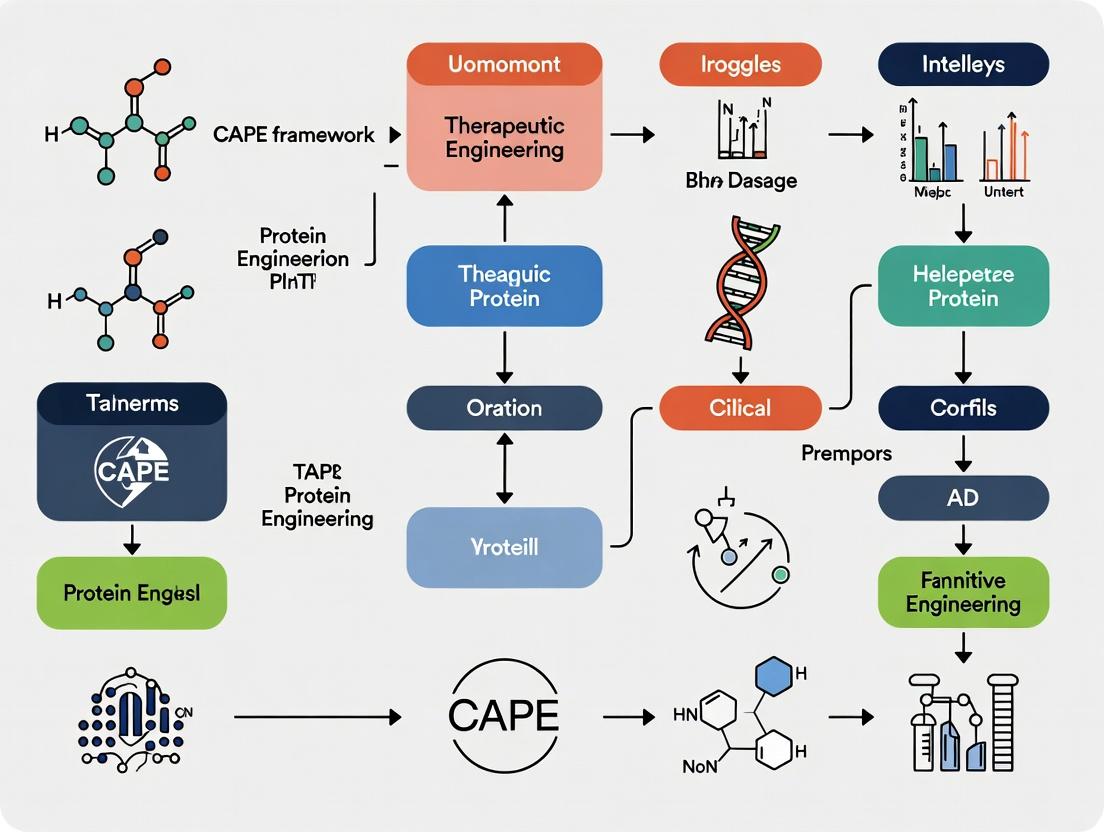
This article introduces and details the CAPE framework—Computation, Affinity, Pharmacokinetics, and Expression—a systematic, four-pillar approach for rational therapeutic protein engineering.
The CAPE Framework: A Next-Generation Strategy for Engineering Enhanced Therapeutic Proteins
Abstract
This article introduces and details the CAPE framework—Computation, Affinity, Pharmacokinetics, and Expression—a systematic, four-pillar approach for rational therapeutic protein engineering. Designed for researchers and drug development professionals, we explore the foundational concepts, practical methodologies, common optimization challenges, and comparative validation strategies of CAPE. By integrating computational design with experimental validation, this framework accelerates the development of biologics with improved efficacy, stability, and manufacturability, addressing key bottlenecks in modern biopharmaceutical pipelines.
What is the CAPE Framework? Demystifying the Four Pillars of Protein Design
Application Notes: The Current State & Challenges in Therapeutic Protein Engineering
Current therapeutic protein engineering often follows a reductionist, linear development path, focusing on isolated properties. This leads to high attrition rates in late-stage development due to unforeseen incompatibilities between engineered attributes. The following table summarizes key quantitative challenges identified in recent literature.
Table 1: Quantitative Challenges in Conventional Therapeutic Protein Development
| Challenge Area | Key Metric | Typical Impact/Attrition Rate | Primary Cause |
|---|---|---|---|
| Immunogenicity | Incidence of anti-drug antibodies (ADA) in Phase 3 | 5-40% of candidates | Non-human or aggregated sequences, T-cell epitopes. |
| Pharmacokinetics (PK) | Short half-life requiring frequent dosing | ~30% of mAbs require PK optimization | Inadequate FcRn binding, instability, aggregation. |
| Manufacturability | Low expression titers in CHO cells | < 1 g/L for many novel formats | Poor solubility, mis-folding, codon bias. |
| Stability | Aggregation propensity at high concentration | >10% aggregation for subcutaneous formulations | Weak conformational stability, colloidal instability. |
| Multi-Specificity | Correct chain pairing in multi-specifics | <50% correct format for unengineered molecules | Chain mis-assembly, hydrophobic interface mismatches. |
The CAPE (Comprehensive Assessment and Predictive Engineering) framework is proposed to address these interdependencies simultaneously through integrated computational and experimental cycles.
Experimental Protocols for CAPE Framework Validation
Protocol 2.1: Integrated High-Throughput Profiling of Engineered Variants
Purpose: To concurrently assess multiple developability and efficacy parameters for a library of protein variants, enabling the identification of candidates that balance desired traits.
Materials & Workflow:
- Generate Variant Library: Use site-saturation or directed evolution targeting multiple domains (e.g., Fc, CDR, linker regions).
- Parallel Expression: Express library in 96-deep well plates using a mammalian transient system (e.g., Expi293F).
- Clarification & Normalization: Centrifuge, filter supernatant, and normalize protein concentration via a high-throughput protein A capture step.
- Multi-Parameter Assay Plate Setup:
- Column 1-2: ELISA for target antigen binding (affinity).
- Column 3-4: ELISA for FcγRIIIa binding (effector function).
- Column 5-6: Thermal shift assay (Tm measurement) using differential scanning fluorimetry.
- Column 7-8: Hydrophobic interaction chromatography (HIC) analysis for aggregation propensity.
- Column 9-10: Peptide-based in silico immunogenicity screen (MHC-II binding assay).
- Column 11-12: Sample for SEC-MALS analysis (purity, aggregation).
- Data Integration: Compile all data into a unified matrix. Use multivariate analysis (e.g., PCA) to cluster variants and identify optimal performers.
Protocol 2.2:In SilicoRisk Assessment for Developability
Purpose: To predict developability risks of candidate molecules prior to experimental testing.
Methodology:
- Sequence Analysis: Input the FASTA sequence of the candidate.
- Run Computational Pipelines:
- Epitope Analysis: Run tools like NetMHCIIpan to predict T-cell epitopes.
- Surface Analysis: Use PDB file or homology model to calculate electrostatic potential (e.g., with APBS) and hydrophobic patches (using tools like Rosetta
calc_hydrophobic_sasa). - Structural Stability: Perform short molecular dynamics (MD) simulations (e.g., 50 ns) using GROMACS to assess backbone flexibility and identify aggregation-prone regions.
- Risk Scoring: Assign a quantitative risk score (1-5) for each parameter (Immunogenicity, Viscosity, Solubility, Stability). Aggregate into a holistic CAPE Developability Index (CDI).
Visualization of the CAPE Framework
Diagram Title: The Iterative CAPE Engineering Cycle
Diagram Title: Concurrent Module-Based Assessment in CAPE
The Scientist's Toolkit: Key Research Reagent Solutions for CAPE
Table 2: Essential Reagents & Tools for CAPE-Informed Experiments
| Item Name / Category | Supplier Examples | Function in CAPE Context |
|---|---|---|
| Mammalian HTP Expression System | Thermo Fisher (Expi293), Cytiva (HEK Expi) | Rapid, parallel production of variant libraries for multi-parameter screening. |
| Protein A Biosensor Tips | Sartorius (Octet), Molecular Devices (BLI) | Label-free, high-throughput quantitation and kinetics for binding assays (antigen/FcR). |
| Dye-Based Thermal Shift Kits | Thermo Fisher (Protein Thermal Shift), Unchained Labs (Stargazer) | Measure thermal stability (Tm) in plate format to predict aggregation propensity. |
| HIC HPLC Columns | Cytiva (Butyl-, Phenyl- FF), Tosoh Bioscience | Assess surface hydrophobicity and aggregation tendency of protein variants. |
| MHC-II Peptide Binding Assay Kits | ImmunoEpitope (IEDB tools), MBL International | Experimental screening of T-cell epitopes to de-risk immunogenicity. |
| CHO-K1 Stable Pool Generation Kit | Thermo Fisher (Gibco), Lonza | Evaluate manufacturability potential (titer, quality) of leads in relevant host. |
| AI/ML-Based Protein Design Software | Schrodinger (BioLuminate), Atomwise (AtomNet) | In silico design and risk prediction (solubility, affinity) integrated into CAPE cycle. |
| Multi-Angle Light Scattering (MALS) Detector | Wyatt Technology, Malvern Panalytical | Determine absolute molecular weight and detect aggregates (SEC-MALS) for purity assessment. |
Application Notes: Computational Strategies for Therapeutic Protein Optimization
Within the CAPE (Computational-Analytical-Predictive-Experimental) framework for therapeutic protein engineering, the first pillar establishes the in silico foundation. It leverages high-performance computing and artificial intelligence to transform protein design from an empirical, trial-and-error process into a rational, predictive discipline. This approach drastically reduces the experimental burden and accelerates the development timeline for novel biologics, including antibodies, enzymes, and cytokines.
Core Computational Modules & Performance Metrics
| Module | Primary Function | Key Algorithm/Platform (2024-2025) | Typical Success Metric (Benchmark) |
|---|---|---|---|
| Structure Prediction | Generate 3D models from sequence or homologs. | AlphaFold2, RoseTTAFold, ESMFold | TM-score >0.8 (indicative of correct fold). |
| Affinity Maturation | Optimize binding interfaces (e.g., CDRs) for higher target affinity. | RosettaAntibodyDesign, DeepAb, ProteinMPNN | Predicted ΔΔG < -1.5 kcal/mol (improvement). |
| Stability & Developability | Predict aggregation, viscosity, and chemical degradation hotspots. | Aggrescan3D, Spatial Aggregation Propensity (SAP), CamSol | Improve developability score by >20%. |
| De Novo Design | Generate entirely novel protein scaffolds or binders. | RFdiffusion, Chroma, ProteinSolver | Experimental validation rate >10% in vitro. |
Table 1: Quantitative Output from a Typical Multi-Parameter Optimization Run for an IgG1 Fc Region.
| Design Variant | Predicted ΔΔG (Stability) | Predicted pI | SAP Score (Aggregation) | Humanization Score (%) |
|---|---|---|---|---|
| Wild-Type Fc | 0.00 kcal/mol | 8.4 | 72.5 | 85.2 |
| Computational Design A | +1.2 kcal/mol | 7.1 | 65.1 | 99.5 |
| Computational Design B | +2.8 kcal/mol | 6.8 | 68.9 | 98.7 |
| Computational Design C | +2.1 kcal/mol | 6.5 | 67.3 | 99.8 |
Protocol: AI-Guided Affinity Maturation of a Therapeutic Antibody Fab Fragment
Objective: To computationally design and rank antibody Fab variants with improved binding affinity (lower Kd) for a soluble antigen target.
Materials & Computational Toolkit
| Research Reagent / Solution | Function in Protocol |
|---|---|
| Target Antigen PDB File | High-resolution 3D structure of the antigen. Serves as the static binding target. |
| Wild-Type Fab PDB Model | Experimentally solved or AlphaFold2-predicted structure of the parental Fab. |
| Rosetta Suite (v2024.xx) | Primary software for energy minimization, docking, and ΔΔG calculation. |
| ProteinMPNN Web Server | Neural network for generating sequence variants with high fold probability. |
| AlphaFold2 (ColabFold) | For rapid structural validation of designed sequence variants. |
| Custom Python Scripts | To automate batch jobs, parse Rosetta outputs, and manage sequence libraries. |
Step-by-Step Workflow:
System Preparation:
- Obtain or generate a high-quality structural model of the Fab-Antigen complex. Use HADDOCK or ClusPro for docking if no co-crystal structure exists.
- Refine the complex using Rosetta's
relaxprotocol. Solvate the system in an explicit TIP3P water box using a molecular dynamics (MD) setup tool (e.g., CHARMM-GUI).
Binding Interface Analysis:
- Run Rosetta's
binding_energyanalysis on the relaxed complex to identify per-residue energy contributions. - Select all Complementarity-Determining Region (CDR) residues within 8Å of the antigen for mutagenesis.
- Run Rosetta's
Sequence Space Exploration with ProteinMPNN:
- Fix the backbone of the Fab and antigen. Provide the wild-type sequence and specify the selected CDR positions as "designed" and all others as "fixed".
- Generate 500-1000 sequence variants. Use a low (0.1) temperature setting for conservative designs and a higher (0.3) setting for more diverse exploration.
High-Throughput Affinity Ranking with Rosetta:
- For each designed sequence, thread it onto the Fab backbone using Rosetta's
Fixbbapplication. - Perform a quick energy minimization (
FastRelax) of the mutated Fab within the complex. - Calculate the binding free energy difference (ΔΔG) between the wild-type and variant using Rosetta's
InterfaceAnalyzer. A more negative ΔΔG predicts stronger binding.
- For each designed sequence, thread it onto the Fab backbone using Rosetta's
Developability Filtering:
- Filter the top 100 variants by predicted ΔΔG.
- Input these sequences into in-house or web-based developability predictors (e.g., CamSol for solubility,
T20calculator for polyspecificity risk). - Eliminate variants with predicted liabilities (e.g., new deamidation motifs, high aggregation propensity).
Structural Validation & Final Selection:
- For the top 20-30 filtered variants, generate full de novo structures using AlphaFold2's ColabFold (with
amber_relax). - Visually inspect the predicted structures for maintenance of the overall fold and key binding interactions.
- Select 5-10 final candidate sequences for in vitro synthesis and validation (Pillar 4: Experimentation of the CAPE framework).
- For the top 20-30 filtered variants, generate full de novo structures using AlphaFold2's ColabFold (with
Diagram: CAPE Framework - Pillar 1 Computational Workflow
Diagram: AI-Driven Affinity Maturation Protocol
Within the CAPE framework (Computational-Analytical-Process Engineering) for therapeutic protein engineering, Pillar 2, Affinity, is dedicated to the systematic optimization of binding kinetics and molecular specificity. This pillar bridges the computational design (Pillar 1) and downstream developability assessment (Pillar 3). High-affinity, specific binding is non-negotiable for therapeutic efficacy, impacting dosing, safety, and ultimately clinical success. This Application Note details contemporary methodologies and protocols for affinity engineering.
Foundational Concepts & Key Metrics
The binding interaction between a therapeutic protein (e.g., antibody, engineered scaffold) and its target is quantifiably described by the following key parameters:
Table 1: Key Binding Parameters and Their Therapeutic Impact
| Parameter | Symbol | Definition | Preferred Direction | Impact on Therapeutic Profile |
|---|---|---|---|---|
| Association Rate | (k_{on}) (M⁻¹s⁻¹) | Speed of complex formation | Higher | Faster target engagement, potential for improved efficacy in some contexts. |
| Dissociation Rate | (k_{off}) (s⁻¹) | Speed of complex breakdown | Lower | Longer target residence time, sustained pharmacological effect. |
| Equilibrium Dissociation Constant | (K_D) (M) | (k{off}/k{on}) | Lower (pM-nM) | Overall binding affinity; primary driver of potency. |
| Specificity Ratio | - | (KD^{(off-target)} / KD^{(on-target)}) | Higher | Selectivity margin, reduces risk of adverse events. |
Core Experimental Methodologies
Protocol: High-Throughput Affinity Maturation via Yeast Surface Display
Objective: To screen mutant libraries for clones with improved target affinity.
Research Reagent Solutions & Essential Materials:
| Item | Function |
|---|---|
| pYD1 Yeast Display Vector | Display scaffold for fusion protein expression on S. cerevisiae surface. |
| Anti-c-myc FITC Antibody | Detection of expression level via N-terminal tag. |
| Biotinylated Target Antigen | Labeled target for binding measurement. |
| Streptavidin-PE (SA-PE) | Fluorescent detection of antigen binding. |
| Magnetic Anti-PE Beads | Positive selection of binding clones. |
| FACS Aria II/III | Fluorescence-Activated Cell Sorting for quantitative screening. |
| BG505 SOSIP.664 gp140 Trimer | Example of a complex antigen used for HIV bnAb maturation. |
Procedure:
- Library Transformation: Electroporate the mutagenized gene library into competent S. cerevisiae EBY100 cells.
- Induction: Culture transformed yeast in SG-CAA medium at 20°C for 36-48 hours to induce surface expression.
- Labeling: For a 1 mL sample at ~1x10⁷ cells/mL:
- Wash cells twice with PBSA (PBS + 0.1% BSA).
- Resuspend in 100 µL PBSA containing:
- Anti-c-myc FITC (1:100 dilution) to stain for expression.
- A titrated concentration of biotinylated antigen (e.g., 1 nM – 100 nM for stringent selection).
- Incubate on ice for 60 min.
- Wash twice with PBSA.
- Resuspend in 100 µL PBSA containing SA-PE (1:200 dilution).
- Incubate on ice for 30 min, protected from light.
- Wash twice and resuspend in 1 mL PBSA for analysis.
- Sorting: Analyze and sort using FACS. Gate for double-positive (FITC⁺, PE⁺) cells. For affinity maturation, sort the top 0.5-2% of binders at the lowest antigen concentration.
- Recovery & Iteration: Grow sorted populations, prepare plasmid DNA, and repeat cycles of mutagenesis and sorting for 3-5 rounds.
Diagram 1: Yeast Display Screening Workflow
Protocol: Kinetic Characterization by Surface Plasmon Resonance (SPR)
Objective: To determine precise binding kinetics ((k{on}), (k{off})) and affinity ((K_D)).
Research Reagent Solutions & Essential Materials:
| Item | Function |
|---|---|
| Biacore T200 / 8K Series S CM5 Chip | Gold sensor surface with carboxymethyl dextran for ligand immobilization. |
| Anti-His Capture Antibody | For oriented capture of His-tagged analytes, minimizing steric hindrance. |
| Series H Buffer HBSE-P+ (10 mM HEPES, 150 mM NaCl, 3 mM EDTA, 0.05% P20) | Standard running buffer for protein interactions. |
| Glycine-HCl, pH 1.5-2.5 | Regeneration solution to remove bound analyte without damaging the ligand. |
| GatorPrime | Microfluidic priming solution for Biacore systems. |
Procedure:
- System Setup: Prime the SPR instrument with filtered, degassed running buffer (e.g., HBSE-P+).
- Ligand Immobilization: Using a flow cell (Fc):
- Activate dextran matrix with 1:1 mixture of 0.4 M EDC and 0.1 M NHS for 420 sec.
- Inject anti-His antibody in sodium acetate buffer (pH 5.0) to achieve ~5000-8000 RU immobilized.
- Deactivate excess esters with 1 M ethanolamine-HCl (pH 8.5).
- Capture & Binding Analysis:
- Dilute His-tagged target protein (ligand) in running buffer. Inject over the anti-His surface for 60 sec to capture a consistent level (~50-100 RU).
- Injectedilutions of the therapeutic protein (analyte) in a series (e.g., 0.78 nM to 100 nM) over the captured ligand and a reference flow cell for 120 sec (association), followed by dissociation in buffer for 300+ sec.
- Regenerate the anti-His surface with two 30-sec pulses of glycine pH 2.0 to remove ligand/analyte complex.
- Data Analysis: Subtract reference cell sensorgrams. Fit processed data to a 1:1 Langmuir binding model using the instrument's evaluation software (e.g., Biacore Evaluation Software) to derive (k{on}), (k{off}), and (K_D).
Diagram 2: SPR Direct Binding Assay Concept
Advanced Applications: Engineering for Specificity
Negative Selection to De-Select Off-Target Binders
Protocol: Incorporate counter-targets (e.g., homologous proteins, membrane protein extracts from non-target tissues) during FACS screening or phage panning. Label the desired target with one fluorophore (e.g., PE) and the counter-target with another (e.g., Alexa Fluor 647). Sort populations that are PE⁺/AF647⁻ to eliminate cross-reactive clones.
Computational Specificity Prediction
Toolkit: Utilize tools like BLIS (Binder-Ligand Interaction Specificity) or DiscoTope-3.0 for epitope mapping to predict and avoid shared epitopes with off-target proteins. Integrate structural bioinformatics to identify paratope residues critical for specificity.
Diagram 3: Specificity Engineering Strategy in CAPE
Data Integration & Decision Making within CAPE
Table 2: Multi-Parameter Affinity Lead Selection Dashboard
| Clone ID | (K_D) (SPR) | (k_{off}) (s⁻¹) | Specificity Ratio (vs. Homolog) | Developability Score (Pillar 3) | Final Rank |
|---|---|---|---|---|---|
| C01 | 0.8 nM | 2.1e-4 | 450 | 78 | 2 |
| C05 | 1.2 nM | 8.5e-5 | >1000 | 85 | 1 |
| C12 | 0.3 nM | 5.0e-4 | 120 | 65 | 3 |
Conclusion: Clone C05, despite a slightly weaker (KD), exhibits superior residence time (lowest (k{off})) and exceptional specificity, coupled with high developability—embodying the holistic optimization goal of Pillar 2 within the CAPE framework.
Within the CAPE (Computational-Analytical-Platform-Engineering) framework for therapeutic protein engineering, Pillar 3 focuses on the systematic optimization of pharmacokinetic (PK) properties. The objective is to engineer proteins with extended in vivo half-life, enhanced stability, and tailored clearance profiles to improve dosing frequency, efficacy, and patient compliance. This document provides application notes and detailed protocols for key experiments in this domain.
Application Notes: Strategic Approaches to PK Optimization
1. Half-life Extension via FcRn Recycling: The neonatal Fc receptor (FcRn) mediates the long half-life of IgG antibodies by rescuing them from lysosomal degradation. Engineering the Fc region to modulate FcRn binding affinity at both acidic (endosomal) and neutral (bloodstream) pH is a primary strategy.
2. Stability Enhancement: Inherent biophysical stability correlates with resistance to chemical and physical degradation, reducing aggregation and fragmentation. This is achieved through computational design of stabilizing mutations (e.g., charge-charge interactions, disulfide bridge engineering) and formulation optimization.
3. Clearance Pathway Engineering: Therapeutic proteins can be cleared via renal filtration, target-mediated drug disposition (TMDD), proteolytic degradation, or immunogenic responses. Engineering aims to minimize non-specific clearance while preserving desired target engagement dynamics.
Table 1: Common Half-life Extension Modalities and Their Impact
| Modality | Mechanism | Typical Half-life Extension (vs. unmodified protein) | Key Considerations |
|---|---|---|---|
| Fc Fusion | Leverages IgG Fc domain for FcRn recycling. | 2- to 10-fold (e.g., from hours to days). | Can add steric bulk; potential for effector function. |
| PEGylation | Conjugation with polyethylene glycol increases hydrodynamic radius. | 5- to 100-fold (dose and PEG size dependent). | Potential loss of activity, immunogenicity of PEG. |
| Albumin Fusion/Binding | Utilizes long half-life of albumin (~19 days in humans) via fusion or binding domains. | Can extend to several days, matching albumin. | May affect albumin's natural functions; binding affinity critical. |
| Fc Engineering (e.g., YTE, LS) | Mutations (M252Y/S254T/T256E or M428L/N434S) to increase FcRn affinity at pH 6.0. | Up to 4-fold increase in human IgG half-life. | Must maintain pH-dependent release (pH 7.4). |
| Glycoengineering | Modifying Fc glycosylation (e.g., afucosylation, sialylation) can influence clearance. | Variable; primarily impacts effector function, can indirectly affect PK. | Complex manufacturing control required. |
Table 2: In Vitro Assays for Stability Assessment
| Assay | Parameter Measured | Typical Output Metrics | Relevance to In Vivo PK |
|---|---|---|---|
| Differential Scanning Calorimetry (DSC) | Thermal unfolding midpoint (Tm). | Tm1, Tm2 (for domains); ΔH. | Correlates with aggregation resistance and shelf-life. |
| Accelerated Stability Study | Degradation over time under stress (e.g., 40°C). | % Monomer loss, aggregates, fragments by SEC. | Predicts long-term chemical/physical stability. |
| Forced Degradation (pH, Oxidative) | Susceptibility to specific stressors. | Rate of degradation or modification. | Informs formulation and handling requirements. |
Experimental Protocols
Protocol 1: Surface Plasmon Resonance (SPR) for FcRn Binding Affinity Measurement
Objective: Quantify the binding affinity of engineered Fc domains to human FcRn at pH 6.0 and assess binding at pH 7.4.
Materials:
- Biacore or equivalent SPR instrument.
- Series S Sensor Chip CM5.
- Recombinant human FcRn protein.
- Purified IgG or Fc-fusion variants.
- HBS-EP+ running buffer (10 mM HEPES, 150 mM NaCl, 3 mM EDTA, 0.05% v/v Surfactant P20).
- pH 6.0 buffer: 50 mM MES, 50 mM NaCl.
- pH 7.4 buffer: PBS (10 mM Phosphate, 137 mM NaCl, 2.7 mM KCl).
- Amine coupling reagents: EDC, NHS, ethanolamine.
Procedure:
- Chip Preparation: Dilute FcRn to 10 µg/mL in sodium acetate buffer (pH 5.0). Immobilize on a CM5 chip using standard amine coupling to achieve ~1000 Response Units (RU).
- Sample Preparation: Dilute antibody variants to a series of concentrations (e.g., 0.5, 1, 2, 4, 8 µM) in pH 6.0 running buffer.
- Binding Kinetics at pH 6.0: Prime system with pH 6.0 buffer. Inject analyte series over FcRn and reference flow cells for 180s association, followed by 600s dissociation at a flow rate of 30 µL/min.
- Specificity/Relesse Check at pH 7.4: Inject a single high concentration (e.g., 4 µM) of variant in pH 7.4 buffer. Minimal binding should be observed for a properly engineered variant.
- Regeneration: Regenerate the surface with pH 7.4 buffer for 30s.
- Data Analysis: Subtract reference cell data. Fit the sensorgrams to a 1:1 Langmuir binding model to derive the association rate (ka), dissociation rate (kd), and equilibrium dissociation constant (KD = kd/ka).
Protocol 2: In Vivo Pharmacokinetic Study in Mice
Objective: Determine the serum half-life and clearance of a therapeutic protein variant.
Materials:
- C57BL/6 mice (6-8 weeks old).
- Test article (purified protein variant).
- Control article (e.g., wild-type protein).
- PBS for formulation.
- Microvette for serial blood collection (~50 µL per time point).
- ELISA or MSD kit for quantifying the protein in serum.
Procedure:
- Dosing: Formulate test and control articles in PBS. Administer a single 5 mg/kg intravenous bolus via the tail vein to groups of mice (n=5 per variant).
- Sample Collection: Collect blood samples via submandibular or retro-orbital bleed at pre-dose, 5 minutes, 1, 6, 24, 48, 96, 168, and 240 hours post-dose.
- Sample Processing: Allow blood to clot at room temperature for 30 min. Centrifuge at 10,000 x g for 10 min. Collect serum and store at -80°C.
- Bioanalysis: Quantify protein concentration in each serum sample using a validated, specific assay (e.g., anti-idiotype ELISA).
- PK Analysis: Perform non-compartmental analysis (NCA) using software (Phoenix WinNonlin, PK Solver). Key parameters: Terminal half-life (t1/2), Area Under the Curve (AUC), Clearance (CL), Volume of Distribution (Vd).
Visualization: Pathways and Workflows
The Scientist's Toolkit: Research Reagent Solutions
Table 3: Essential Materials for PK-Focused Protein Engineering
| Reagent/Material | Supplier Examples | Function in PK Studies |
|---|---|---|
| Recombinant Human FcRn | Sino Biological, AcroBiosystems | Key ligand for in vitro SPR binding assays to predict half-life potential. |
| SPR Instrument & Chips | Cytiva (Biacore), Sartorius | Gold-standard for label-free kinetic analysis of protein-protein interactions (e.g., Fc:FcRn). |
| PEGylation Kits (mPEG-NHS) | Creative PEGWorks, JenKem | For chemical conjugation to increase hydrodynamic size and reduce renal clearance. |
| Stability Assessment Buffers | Formulatrix, Hampton Research | For accelerated stability studies under varied pH, ionic strength, and temperature. |
| Species-Specific IgG ELISA Kits | Mabtech, Thermo Fisher | For quantifying therapeutic antibody concentrations in serum/plasma during PK studies. |
| PK Analysis Software | Certara (Phoenix), Simulations Plus | For non-compartmental analysis of concentration-time data to derive t1/2, CL, AUC. |
| CD/Spectroscopy Cuvettes | Hellma Analytics, Starna | For circular dichroism (CD) to assess secondary structure stability under stress. |
Within the CAPE (Comprehensive Analysis and Protein Engineering) framework for therapeutic protein engineering, Pillar 4 focuses on the translation of engineered constructs into viable bioprocesses. This pillar addresses the critical challenge of achieving high volumetric yield and stringent purity of the target biologic in a chosen production system, be it microbial, mammalian, or cell-free. Success in this pillar directly determines scalability, cost-of-goods, and regulatory viability. These application notes provide current methodologies for optimizing expression and purification.
Key Parameters for Production System Selection
Selecting the optimal expression host is a multivariate decision. The table below summarizes quantitative performance metrics for common systems.
Table 1: Comparative Metrics for Major Production Systems
| Production System | Typical Yield Range (g/L) | Time to Harvest | Key Strength | Primary Limitation | Ideal Protein Type |
|---|---|---|---|---|---|
| CHO (Chinese Hamster Ovary) Cells | 1 - 10 | 10 - 14 days | Native complex PTMs, scalability | High cost, longer timelines | mAbs, complex glycoproteins |
| HEK 293 (Human Embryonic Kidney) Cells | 0.5 - 5 | 7 - 10 days | Human-like PTMs, transient flexibility | Lower scalability than CHO | Research proteins, vaccines, some therapeutics |
| Pichia pastoris | 1 - 15 | 3 - 7 days | High density fermentation, secretion | Hypermannosylation (can be engineered) | Enzymes, single-chain proteins |
| Escherichia coli | 0.5 - 5 (inclusion bodies) 0.1 - 3 (soluble) | 1 - 3 days | Rapid, low cost, high titers | Lack of PTMs, frequent insolubility | Non-glycosylated proteins, peptides, antibody fragments |
| Cell-Free Protein Synthesis (CFPS) | 0.001 - 3 | Hours | Open system, non-natural amino acids | High reagent cost, scaling complexity | Toxic proteins, high-throughput screening, labeled proteins |
Core Experimental Protocols
Protocol 1: High-Throughput Microscale Transfection and Expression Screening in HEK293 Cells
Purpose: To rapidly screen multiple gene constructs for soluble expression and initial titer in a mammalian system.
Materials (Research Reagent Solutions):
- Expression Vector: pcDNA3.4 or similar, containing gene of interest with optimal signal peptide (e.g., IL-2 or native).
- Host Cells: Expi293F or HEK293T cells in log-phase growth.
- Transfection Reagent: Linear PEI (Polyethylenimine), MW 40,000, 1 mg/mL stock in PBS, pH 7.0.
- Culture Medium: Chemically defined, serum-free medium (e.g., Expi293 Expression Medium).
- Feed Solution: Commercial enhancer solution (e.g., ExpiFectamine 293 Feed).
- Deep-well 96-well plate: For small-scale culture.
Methodology:
- Cell Preparation: Seed deep-well plates with HEK293 cells at 2.5 x 10^6 cells/mL in 1 mL of pre-warmed medium. Maintain cultures on an orbital shaker in a humidified 37°C, 8% CO2 incubator.
- DNA-PEI Complex Formation (per well):
- Dilute 0.5 µg of plasmid DNA in 50 µL of Opti-MEM or plain medium.
- Dilute PEI at a 3:1 ratio (PEI:DNA, w/w) in 50 µL of the same diluent.
- Combine diluted PEI with diluted DNA, mix gently, and incubate at room temperature for 10-15 minutes.
- Transfection: Add the 100 µL DNA-PEI complex dropwise to each well. Return plate to shaker incubator.
- Feeding: At 18-24 hours post-transfection, add 100 µL of feed/enhancer solution to each well.
- Harvest: At 5-7 days post-transfection, centrifuge plates at 3000 x g for 20 minutes. Collect supernatant for titer analysis (e.g., via Octet or ELISA) and purity assessment (SDS-PAGE).
- Analysis: Normalize expression levels to cell viability (measured via trypan blue exclusion) and construct identity (via western blot).
Protocol 2: Purification and Analysis of His-Tagged Proteins via Immobilized Metal Affinity Chromatography (IMAC)
Purpose: A standardized, high-recovery protocol for purifying polyhistidine-tagged proteins from clarified cell lysate or supernatant.
Materials (Research Reagent Solutions):
- IMAC Resin: Ni-NTA (Nickel-Nitrilotriacetic Acid) agarose or Sepharose.
- Lysis/Binding Buffer: 50 mM Sodium Phosphate, 300 mM NaCl, 10-20 mM Imidazole, pH 8.0. (Protease inhibitors added fresh).
- Wash Buffer: 50 mM Sodium Phosphate, 300 mM NaCl, 25-50 mM Imidazole, pH 8.0.
- Elution Buffer: 50 mM Sodium Phosphate, 300 mM NaCl, 250-500 mM Imidazole, pH 8.0.
- Desalting/Exchange Column: PD-10 or HiTrap Desalting column for buffer exchange into formulation buffer.
- AKTA or FPLC System: For controlled, reproducible chromatography.
Methodology:
- Column Preparation: Pack a 1-5 mL column with Ni-NTA resin. Equilibrate with 10 column volumes (CV) of Lysis/Binding Buffer.
- Load Clarified Sample: Filter lysate/supernatant through a 0.45 µm filter. Load onto the column at a flow rate of 1 mL/min (gravity flow or peristaltic pump).
- Wash: Wash column with 10-15 CV of Wash Buffer until UV (A280) baseline stabilizes.
- Elution: Apply a step or linear gradient of Elution Buffer over 10-20 CV. Collect 1-2 mL fractions.
- Analysis & Pooling: Analyze fractions via SDS-PAGE. Pool fractions containing the target protein with minimal contaminants.
- Buffer Exchange & Concentration: Desalt pooled eluate into the desired formulation buffer (e.g., PBS, Tris-HCl). Concentrate using a centrifugal filter (e.g., Amicon Ultra) with appropriate MWCO.
- Quality Assessment: Determine final concentration (A280), purity (% by densitometry of SDS-PAGE gel), and aggregate content (by SEC-HPLC).
Key Pathways and Workflows
Diagram 1: Expression & Purification Workflow for CAPE
Diagram 2: Key Mammalian Cell ER Stress Pathways
Application Notes and Protocols
Within the CAPE framework (Comprehensive Assessment of Protein Engineering) for therapeutic protein engineering, four interdependent pillars are recognized: Clinical Efficacy, Analytical Developability, Process Manufacturing, and Economic Viability. This document outlines protocols and application notes for systematically studying perturbations across these pillars.
Protocol: Quantifying Developability-Efficacy Trade-offs via Forced Degradation and Bioassay
Aim: To measure how intentional changes to improve analytical developability (e.g., stability, viscosity) impact biological activity (Clinical Efficacy pillar).
Background: Engineering a monoclonal antibody (mAb) for higher thermal stability (Analytical pillar) may introduce mutations that alter target epitope affinity.
Materials & Workflow:
Diagram Title: Protocol for Developability-Efficacy Interplay Study
Detailed Protocol:
- Sample Preparation: Generate 3-5 engineered mAb variants with mutations known to affect stability (e.g., in Fc region). Include the wild-type (WT) control.
- Forced Degradation: Subject each variant to:
- Thermal Stress: 40°C for 1, 2, and 4 weeks.
- pH Stress: Incubate at pH 3.5 and 25°C for 1 hour, then neutralize.
- Analytical Characterization (Pillar A):
- Size Variants: Use SE-HPLC (TSKgel G3000SWxl column). Buffer: 100 mM Na phosphate, 100 mM Na₂SO₄, pH 6.8. Flow rate: 0.5 mL/min. Measure % high-molecular-weight species (%HMW).
- Thermal Stability: Use Differential Scanning Fluorimetry (DSF). Dilute protein to 0.2 mg/mL in formulation buffer. Use a dye-based kit (e.g., Protein Thermal Shift). Ramp from 25°C to 99°C at 0.05°C/s. Record melting temperature (Tm).
- Bioassay (Pillar C):
- Affinity: Perform Surface Plasmon Resonance (SPR) on a Biacore 8K. Immobilize target antigen (~50 RU) on a Series S CMS chip. Run kinetics for all stressed/unstressed samples. Report ka, kd, and KD.
- Cell-Based Potency: Perform a cytotoxicity assay (for an oncology mAb) using relevant effector and target cells. Report EC₅₀ relative to unstressed WT control.
- Data Correlation: Plot %HMW or Tm shift against % relative potency loss. Calculate correlation coefficients.
Quantitative Data Summary: Table 1: Example Data from Stability-Potency Interplay Study
| mAb Variant | Tm (°C) | %HMW after 4wk/40°C | KD (nM) post-stress | Relative Potency (%) |
|---|---|---|---|---|
| WT | 68.2 | 2.5% | 5.1 | 100 |
| Variant_1 | 71.5 | 1.2% | 5.3 | 98 |
| Variant_2 | 72.1 | 0.9% | 12.7 | 65 |
| Variant_3 | 66.8 | 8.7% | 4.9 | 102 |
Key Reagent Solutions: Table 2: Scientist's Toolkit for Protocol 1
| Item | Function & Rationale |
|---|---|
| TSKgel G3000SWxl Column | Size-exclusion chromatography for quantifying soluble aggregates (%HMW). |
| Protein Thermal Shift Dye Kit | Fluorescent dye for DSF to measure protein thermal unfolding temperature (Tm). |
| Series S CMS SPR Chip | Gold sensor surface for covalent immobilization of target antigen for kinetic analysis. |
| pH 3.5 Glycine-HCl Buffer | Provides low-pH environment for forced degradation to study chemical stability. |
Protocol: Assessing Process Changes on Product Quality and Economics
Aim: To evaluate how a process intensification (Pillar P) change affects critical quality attributes (Analytical Pillar A) and cost per gram (Pillar E).
Background: Shifting from a standard fed-batch to a concentrated fed-batch (CFB) process increases titers but may alter product glycosylation profiles.
Workflow Diagram:
Diagram Title: Process-Analytics-Economics Interplay Workflow
Detailed Protocol:
- Cell Culture: Run parallel 5L bioreactors for the same mAb-producing CHO cell line.
- Control: Standard fed-batch, peak VCD ~15 x 10⁶ cells/mL.
- Test: Concentrated fed-batch (using perfusion seed train), peak VCD ~40 x 10⁶ cells/mL.
- Harvest & Purification: Use identical downstream purification trains (Protein A affinity → Cation Exchange polish). Record yield at each step.
- Analytical Characterization (Pillars A & P):
- Glycan Analysis: Perform HILIC-UPLC (Waters ACQUITY UPLC Glycan BEH Amide column). Release N-glycans with PNGase F, label with 2-AB. Quantify % afucosylation (impacts ADCC) and % high-mannose (impacts clearance).
- Process Impurities: Use ELISA kits for Host Cell Protein (HCP) and residual Protein A. Measure clearance factors.
- Economic Modeling (Pillar E):
- Calculate Cost of Goods per gram (COG/g) using internal modeling software. Inputs: titer, purification yield, facility utilization, consumable costs.
- Model financial impact of a ±10% shift in afucosylation on required clinical dose.
Quantitative Data Summary: Table 3: Example Data from Process Change Impact Study
| Process Parameter | Standard Fed-Batch | Concentrated Fed-Batch | Impact Assessment |
|---|---|---|---|
| Pillar P: Output | |||
| Peak VCD (10⁶ cells/mL) | 14.8 | 41.2 | +178% |
| Final Titer (g/L) | 3.5 | 8.1 | +131% |
| DSP Yield | 72% | 68% | -4% |
| Pillar A: Quality | |||
| Main Isoform (%) | 92.5 | 90.1 | -2.4% |
| Afucosylation (%) | 6.2 | 9.8 | +3.6% |
| HCP (ppm) | 25 | 45 | +20 ppm |
| Pillar E: Economics | |||
| COG/g (Modeled) | $12,500 | $8,200 | -34% |
Key Reagent Solutions: Table 4: Scientist's Toolkit for Protocol 2
| Item | Function & Rationale |
|---|---|
| ACQUITY UPLC Glycan BEH Amide Column | HILIC separation of labeled glycans for critical quality attribute (CQA) monitoring. |
| 2-Aminobenzamide (2-AB) Glycan Labeling Kit | Fluorescent tag for sensitive detection and quantification of released N-glycans. |
| CHO HCP ELISA Kit | Quantifies host cell protein impurities, a key safety and purity attribute for regulators. |
| Protein A ELISA Kit | Quantifies residual leached Protein A ligand from the capture chromatography step. |
Implementing CAPE: A Step-by-Step Guide to Engineering Your Protein
This application note details a structured workflow for therapeutic protein engineering, from initial target identification to the nomination of a lead drug candidate. The process is framed within the CAPE (Characterize, Activate, Protect, and Enhance) framework, a systematic paradigm for engineering proteins with optimized therapeutic properties.
The CAPE framework provides the strategic context for the workflow:
- Characterize: Deeply understand the target biology, disease mechanism, and existing protein (or scaffold) properties.
- Activate: Engineer the protein to enhance its primary pharmacological activity (e.g., binding affinity, enzymatic potency).
- Protect: Improve developability properties, such as stability, solubility, and reduced immunogenicity.
- Enhance: Optimize additional drug-like functions, including pharmacokinetics (PK) and manufacturability.
Detailed Workflow & Protocols
The following table outlines the five-phase workflow aligned with the CAPE framework.
Table 1: Phased Workflow from Target to Lead Candidate
| Phase | CAPE Stage | Primary Objective | Key Activities & Outputs |
|---|---|---|---|
| 1. Target Selection & Validation | Characterize | Identify and biologically validate a druggable target linked to the disease. | - Genomic/proteomic data mining.- In vitro (cell-based) and in vivo (animal model) target validation.- Output: A validated molecular target with a defined role in disease pathology. |
| 2. Molecule Design & Generation | Activate | Design and produce initial protein variants (e.g., antibodies, engineered scaffolds). | - Rational design based on structural data or library generation (phage/yeast display).- Transient expression (HEK293, CHO cells) for small-scale production.- Output: A diverse panel of candidate molecules (100s-1000s). |
| 3. High-Throughput Screening & Characterization | Characterize/Activate | Identify clones with desired primary biological activity. | - High-throughput binding assays (ELISA, SPR, BLI).- Functional cell-based assays (e.g., reporter gene, cytotoxicity).- Output: A shortlist of potent hits (10s-100s). |
| 4. Lead Optimization & Engineering | Protect/Enhance | Improve developability and drug-like properties of hit molecules. | - Affinity maturation.- Stability engineering (e.g., Tm measurement, aggregation resistance).- PK/immunogenicity assessment (e.g., FcRn binding, in silico T-cell epitope prediction).- Output: 2-5 optimized lead candidates. |
| 5. Lead Candidate Profiling & Selection | Characterize/Protect/Enhance | Comprehensive in vitro and in vivo evaluation to select a single development candidate. | - In vitro specificity/safety panels (ortholog binding, cytokine release).- In vivo pharmacokinetics/pharmacodynamics (PK/PD) and efficacy studies in relevant animal models.- Output: A single lead candidate with a comprehensive data package for IND-enabling studies. |
Detailed Experimental Protocols
Protocol 4.1: High-Throughput Binding Kinetics using Biolayer Interferometry (BLI)
Objective: Quantify binding affinity (KD) and kinetics (kon, koff) of protein candidates against immobilized target antigen. Materials: See "The Scientist's Toolkit" (Section 6). Procedure:
- Sensor Hydration: Hydrate Streptavidin (SA) biosensors in kinetic buffer for at least 10 minutes.
- Baseline (60s): Immerse sensors in kinetic buffer to establish a baseline.
- Loading (300s): Immerse sensors in a biotinylated antigen solution (5 µg/mL) to load antigen onto the sensor surface. The target load level should be between 0.5-1 nm shift.
- Baseline 2 (60s): Return sensors to kinetic buffer to establish a second baseline.
- Association (180s): Immerse antigen-loaded sensors in wells containing serially diluted protein candidate (e.g., 100 nM to 1.56 nM, 2-fold dilutions).
- Dissociation (300s): Return sensors to kinetic buffer to monitor dissociation.
- Data Analysis: Reference sensor data (buffer only) is subtracted. Data is fitted to a 1:1 binding model using the BLI system's software to calculate kon, koff, and KD.
Protocol 4.2: Thermal Shift Assay for Protein Stability
Objective: Determine the melting temperature (Tm) as a measure of protein thermal stability. Materials: Purified protein candidate, fluorescent dye (e.g., SYPRO Orange), real-time PCR instrument, clear 96-well PCR plate. Procedure:
- Sample Preparation: In a PCR plate, mix 10 µL of protein sample (0.2-0.5 mg/mL in formulation buffer) with 10 µL of diluted SYPRO Orange dye (final dilution 5X).
- Plate Setup: Each candidate should be tested in triplicate. Include a buffer-only control (no protein) for background subtraction.
- Run Protocol: Seal the plate and run in a real-time PCR instrument with a gradient from 25°C to 95°C, with a ramp rate of 1°C/min, while monitoring fluorescence (ROX/FAM channel).
- Data Analysis: Plot fluorescence vs. temperature. The Tm is defined as the temperature at the midpoint of the protein unfolding transition, determined by the first derivative of the fluorescence curve.
Workflow & Pathway Diagrams
Diagram 1: Therapeutic Protein Engineering Workflow
Diagram 2: BLI Assay Step-by-Step Process
The Scientist's Toolkit
Table 2: Key Research Reagent Solutions for Protein Engineering Workflow
| Reagent / Material | Vendor Examples (Illustrative) | Primary Function in Workflow |
|---|---|---|
| HEK293 or CHO Expression Systems | Thermo Fisher, Sartorius | Transient or stable production of recombinant protein candidates for screening and characterization. |
| Biolayer Interferometry (BLI) Systems & Biosensors | Sartorius (Octet), Carterra | Label-free, high-throughput measurement of binding kinetics and affinity during screening and optimization. |
| Surface Plasmon Resonance (SPR) Systems | Cytiva (Biacore), Bruker | Gold-standard, label-free detailed kinetic and affinity analysis for lead characterization. |
| Fluorescent Dyes for Stability Assays | Thermo Fisher (SYPRO Orange) | Detect protein unfolding in thermal shift assays to determine melting temperature (Tm). |
| Phage or Yeast Display Libraries | Designed in-house or via partners (Twist Bioscience) | Generation of highly diverse protein variant libraries for initial discovery and affinity maturation. |
| High-Throughput Protein Purification Systems | Cytiva (ÄKTA), Tecan | Automated purification of 10s-100s of protein variants from small-scale expressions for screening. |
| PK Prediction Assay Kits | Roche (SPR-based FcRn binding), in silico tools | Assess potential serum half-life by measuring pH-dependent binding to the FcRn receptor (for Fc-fusions). |
The Computational Analysis for Protein Engineering (CAPE) framework integrates multi-scale computational tools to accelerate therapeutic protein design. This application note details the protocols for employing three core computational pillars: Rosetta for physics-based design, AlphaFold for structure prediction, and custom Machine Learning (ML) pipelines for data-driven property optimization.
Rosetta: Protocols for Physics-Based Design
Application Note
Rosetta is a suite of algorithms for high-resolution protein structure prediction, design, and docking. Within CAPE, it is primarily used for de novo binder design, affinity maturation, and stability optimization.
Key Protocols
Protocol 2.2.1: Affinity Maturation via Fixed-Backbone Design
Objective: Optimize binding interface residues to improve affinity for a target antigen. Workflow:
- Input Preparation: Generate the protein-antigen complex structure (experimental or predicted via AlphaFold-Multimer).
- Residue Selection: Define the designable residues (typically within 8Å of the antigen).
- RosettaScripts Configuration: Use the
FastDesignmover with a tailored residue-specific scoring function (e.g.,ref2015_cst). - Sequence Sampling: Perform combinatorial sequence optimization using the Packer.
- Filtering: Rank designs by total score, Interface Analyzer metrics (
dG_separated), and shape complementarity (sc). - Output: Generate a list of top-scoring variant sequences for experimental validation.
Protocol 2.2.2:De NovoProtein Scaffold Design
Objective: Generate novel, stable protein scaffolds that can bind a specified epitope. Workflow:
- Motif Placement: Define the target epitope and place "hotspot" residues (e.g., key side-chains) onto a parameterized backbone.
- Backbone Generation: Use the
BluePrintBDRprotocol to build secondary structures around the placed motifs. - Sequence Design: Apply the
FastDesignprotocol to populate the scaffold with a stabilizing amino acid sequence. - Validation: Filter designs using
Relax,ddGcalculations for stability, andDeepAbfor fold confidence.
Table 1: Typical Output Metrics from a Rosetta Affinity Maturation Protocol
| Metric | Description | Target Range (for improved binders) |
|---|---|---|
| Total Score (REU) | Overall Rosetta Energy Unit score. | Lower (more negative) than wild-type. |
| Interface ΔG (dG_separated) (REU) | Calculated binding energy. | Typically < -10 REU; lower is better. |
| Shape Complementarity (sc) | Surface geometric complementarity (0-1). | > 0.65 |
| Packstat | Packing quality at interface (0-1). | > 0.6 |
| SASA (Ų) | Buried solvent-accessible surface area. | > 800 Ų |
| RMSD to Wild-Type (Å) | Backbone atomic displacement. | < 2.0 Å (for minimal structural perturbation) |
AlphaFold: Protocols for Structure Prediction & Validation
Application Note
AlphaFold2 (AF2) provides highly accurate protein structure predictions. In CAPE, it is used for modeling targets without experimental structures, predicting the impact of mutations, and generating inputs for Rosetta.
Key Protocols
Protocol 3.2.1: Predicting Structures of Engineered Variants
Objective: Assess the structural impact of single or multiple point mutations. Workflow:
- Sequence Input: Provide the FASTA sequence of the designed variant.
- MSA Generation: Use the standalone AF2 with MMseqs2 to generate multiple sequence alignments (MSA) and templates.
- Model Inference: Run AF2 with default parameters (
model_1andmodel_2). - Analysis: Extract the predicted aligned error (PAE) matrix and per-residue confidence metric (pLDDT). Superimpose the predicted structure onto the wild-type to calculate Cα RMSD.
Protocol 3.2.2: Complex Prediction with AlphaFold-Multimer
Objective: Predict the structure of a designed protein in complex with its target. Workflow:
- Input: Create a multi-chain FASTA file (e.g., Chain A: binder, Chain B: target).
- Run Parameters: Use AlphaFold-Multimer v3. Set
--model_preset=multimer. - Output Interpretation: Analyze interface pLDDT and interface PAE. High pLDDT (>80) and low inter-chain PAE indicate a confident interface prediction.
Table 2: Key Metrics for Interpreting AlphaFold Predictions in CAPE
| Metric | Description | Confidence Threshold |
|---|---|---|
| pLDDT | Per-residue confidence score (0-100). | >90 (Very high), 70-90 (Confident), <70 (Low) |
| PAE (Predicted Aligned Error) | Expected positional error (Å) between residues. | Low inter-chain error for complexes. |
| ptm | Predicted TM-score (monomer). | >0.7 suggests correct fold. |
| iptm | Interface predicted TM-score (multimer). | >0.8 suggests high-confidence complex. |
| pTM | Multimer confidence score (older versions). | Higher is better. |
Custom ML Pipelines: Integrating Data for Property Prediction
Application Note
Custom ML pipelines within CAPE integrate high-throughput experimental data (e.g., deep mutational scanning, NGS) to build models predicting protein function (affinity, expression, stability). These models provide a fitness landscape to guide the next design cycle.
Key Protocol: Building a Regression Model for Affinity Prediction
Objective: Train a gradient-boosting model to predict binding affinity (KD) from sequence and structural features. Workflow:
- Dataset Curation: Assay a diverse library of variants (e.g., 10^4 - 10^5) for binding affinity.
- Feature Engineering:
- Sequence-based: One-hot encoding, physicochemical property embeddings.
- Structure-based (from AF2/Rosetta): Solvent accessibility, residue depth, per-residue energy terms.
- Evolutionary: MSA statistics from AF2's input.
- Model Training: Use XGBoost or Random Forest regressor. Perform an 80/20 train-test split with k-fold cross-validation.
- Validation: Evaluate using Mean Absolute Error (MAE), R² score, and Spearman's correlation on held-out test data.
- Deployment: The trained model is used to score in silico designed libraries before experimental testing.
Table 3: Performance of a Representative Custom ML Model for Affinity Prediction
| Model | Feature Set | Test Set R² | Test Set MAE (log10 KD) | Spearman's ρ |
|---|---|---|---|---|
| XGBoost | Sequence + Structural | 0.72 | 0.41 | 0.85 |
| Random Forest | Sequence Only | 0.58 | 0.53 | 0.76 |
| Linear Regression | Structural Only | 0.35 | 0.68 | 0.61 |
Integrated CAPE Workflow Diagram
Diagram Title: Integrated CAPE Computational Workflow
The Scientist's Toolkit: Essential Research Reagents & Solutions
Table 4: Key Reagents & Computational Resources for CAPE Experiments
| Item | Function in CAPE | Example/Provider |
|---|---|---|
| NGS Library Prep Kit | Enables deep mutational scanning by sequencing variant libraries pre- and post-selection. | Illumina Nextera Flex, Twist Library Prep. |
| SPR/BLI Biosensor Chips | Provides quantitative kinetic data (KD, kon, koff) for training and validating ML models. | Cytiva Series S sensor chips, ForteBio Streptavidin (SA) biosensors. |
| Mammalian Display Library | Platform for screening large (10^7-10^9) variant libraries under mammalian folding and secretion conditions. | Custom lentiviral libraries. |
| High-Performance Computing (HPC) Cluster | Runs compute-intensive Rosetta simulations and AlphaFold predictions. | Local Slurm cluster, AWS EC2 (p4d instances), Google Cloud TPUs. |
| Containerized Software | Ensures reproducibility of computational protocols (Rosetta, AF2). | Docker/Singularity containers from RosettaCommons, BioContainers. |
| Automated Liquid Handler | Enables high-throughput cloning, expression, and assay setup for generated variant libraries. | Beckman Coulter Biomek, Opentrons OT-2. |
Within the Comprehensive Assessment and Prioritization Engine (CAPE) framework for therapeutic protein engineering, affinity maturation is a critical functional enhancement phase. CAPE integrates computational analysis, high-throughput screening, and biophysical validation to prioritize lead candidates. This note details two core CAPE-aligned methodologies for improving antibody/antigen or protein/ligand binding affinity: Directed Evolution and Structure-Guided Mutagenesis. The choice between these strategies depends on the availability of structural data, throughput capacity, and project stage within the CAPE pipeline.
Technique Comparison & Data Presentation
Table 1: Core Comparison of Affinity Maturation Techniques
| Parameter | Directed Evolution | Structure-Guided Mutagenesis |
|---|---|---|
| Theoretical Basis | Darwinian evolution; random mutagenesis & selection. | Rational design based on 3D structural analysis of binding interface. |
| Structural Data Requirement | Not required (blind). | High-resolution structure (X-ray, Cryo-EM) of complex is essential. |
| Primary Method | Random mutagenesis (error-prone PCR, chain shuffling) followed by display technologies (phage, yeast). | Site-directed mutagenesis of specific residues (e.g., H-bond networks, steric clashes). |
| Library Size & Diversity | Very large (>10⁹ variants), diverse but mostly non-functional. | Focused and small (10²-10⁴ variants), enriched for functional clones. |
| Throughput Requirement | Very high-throughput screening/selection mandatory. | Medium-throughput screening sufficient. |
| Typical Affinity Gain (K_D) | 10 to 1000-fold improvement common. | 2 to 100-fold improvement, highly variable. |
| Key Risk | May introduce immunogenic or stability mutations. | Limited to known interface; may miss distant synergistic mutations. |
| Best Suited for CAPE Stage | Early-stage lead optimization when structural data is lacking. | Late-stage optimization of promising candidates with solved structures. |
Table 2: Recent Performance Data (2022-2024)
| Study (Source) | Target | Technique | Initial K_D (nM) | Matured K_D (nM) | Fold Improvement |
|---|---|---|---|---|---|
| J. Biol. Chem. (2023) | IL-6R | Yeast display DE | 4.5 | 0.05 | 90 |
| mAbs (2022) | PD-1 | Structure-guided (CDR grafting) | 12.3 | 0.8 | 15 |
| Nature Comm. (2023) | SARS-CoV-2 Spike | Phage display DE | 9.1 | 0.07 | 130 |
| Protein Sci. (2024) | TNF-α | Computational design + focused mutagenesis | 8.2 | 0.5 | 16 |
Detailed Protocols
Protocol 1: Directed Evolution via Yeast Surface Display
Objective: Generate and screen a large library of antibody variants for improved antigen binding affinity.
Materials (Key Reagent Solutions):
- S. cerevisiae EBY100 strain: Engineered for surface display of Aga2p-fused scFv/Fab.
- pYD1 Vector: Yeast display vector with inducible GAL1 promoter.
- Error-Prone PCR Kit (e.g., GeneMorph II): For introducing random mutations into the gene of interest.
- MACS Anti-c-Myc MicroBeads & LS Columns: For library enrichment via magnetic sorting.
- Fluorescently Labeled Antigen (e.g., Alexa Fluor 647 conjugate): For FACS analysis and sorting.
- SD/-Trp/-Ura & SG/-Trp/-Ura Media: For yeast selection and induction.
- FACS Buffer (PBS + 0.1% BSA): For staining and sorting procedures.
Procedure:
- Library Construction: Amplify your antibody gene (e.g., scFv) using error-prone PCR conditions to achieve 1-5 mutations/kb. Co-transform S. cerevisiae EBY100 with the PCR product and linearized pYD1 vector via homologous recombination.
- Library Induction: Grow transformed yeast in SD/-Trp at 30°C. Harvest, wash, and induce protein expression in SG/-Trp media at 20°C for 20-48 hours.
- MACS Enrichment: Label induced yeast with biotinylated antigen, followed by Streptavidin-MicroBeads and anti-c-Myc MicroBeads. Perform positive selection using an LS column placed in a magnetic field. Elute and recover bound yeast.
- FACS Sorting for Affinity: Perform iterative rounds of FACS. Stain induced yeast with a titrated concentration of fluorescent antigen (for equilibrium binding) and a fluorescent anti-c-Myc antibody (for expression normalization). Gate on double-positive cells and collect populations with the highest antigen/expression ratio (high affinity). Include a sort gate for lower antigen concentrations in later rounds to increase selection pressure.
- Characterization: Plate sorted cells, pick individual clones, and express in 96-well deep blocks. Screen supernatants or induced cells via flow cytometry or ELISA. Sequence hits and determine K_D using surface plasmon resonance (SPR) or bio-layer interferometry (BLI).
Protocol 2: Structure-Guided Saturation Mutagenesis
Objective: Systematically mutate key complementarity-determining region (CDR) residues to improve binding energy.
Materials (Key Reagent Solutions):
- High-Resolution Structure (PDB file): Of the antibody-antigen complex.
- Molecular Visualization Software (e.g., PyMOL, UCSF Chimera): For identifying hotspot residues.
- Rosetta or FoldX Software Suite: For computational prediction of stabilizing mutations.
- QuikChange or NEB Q5 Site-Directed Mutagenesis Kit: For constructing focused mutant libraries.
- BLI Instrument (e.g., Octet RED96e) & Anti-Human Fc Capture (AHC) Biosensors: For rapid kinetic screening.
- Expression Vector (e.g., pTT5 for HEK): Containing the parental IgG gene.
- Expi293F or ExpiCHO Cells: For transient mammalian expression.
Procedure:
- Hotspot Identification: Analyze the binding interface. Select 4-6 CDR residues contributing to: a) direct H-bond/salt bridges with antigen, b) solvent-exposed hydrophobic patches, or c) potential for improved shape complementarity. Use computational tools like Rosetta to score and prioritize single-point mutations.
- Focused Library Design: For each selected residue, design oligonucleotides for NNK (encodes all 20 aa) saturation mutagenesis. Use polymerase cycling assembly (PCA) or commercial kits to generate individual mutant plasmids.
- Parallel Expression: Transform or transfect individual mutant plasmids into a suitable expression system (e.g., E. coli for Fab, HEK293 for full IgG) in a 96-well format. Culture and harvest supernatants or lysates.
- High-Throughput Affinity Ranking: Use BLI for kinetic screening. Load standard anti-Fc biosensors with crude supernatants (containing mutant IgG). Dip into wells containing a fixed, low concentration of antigen. Monitor association and dissociation phases. Rank clones by response units (RU) at end of association or by calculated k_off from a single-concentration assay.
- Validation: Express top 10-20 hits at larger scale (e.g., 50 mL). Purify via protein A affinity. Determine precise kinetic parameters (kon, koff, K_D) using a full concentration series on SPR or BLI. Co-crystallize leading candidates to verify design hypotheses.
Visualizations
Diagram Title: CAPE Framework Affinity Maturation Decision Workflow
Diagram Title: Directed Evolution Iterative Cycle
The Scientist's Toolkit: Key Research Reagent Solutions
Table 3: Essential Materials for Affinity Maturation
| Item | Function & Role in Protocol | Example Vendor/Product |
|---|---|---|
| Yeast Display System | Eukaryotic display platform for screening scFv/Fab libraries with built-in quality control. | Thermo Fisher (pYD1 vector & EBY100 strain) |
| Phage Display System | Highly robust prokaryotic system for creating ultra-large antibody libraries. | New England Biolabs (Ph.D. Phage Display Libraries) |
| Error-Prone PCR Kit | Introduces controlled random mutations during gene amplification for library creation. | Agilent (GeneMorph II Random Mutagenesis Kit) |
| Site-Directed Mutagenesis Kit | Enables precise, rational mutation of specific codons in a plasmid. | NEB (Q5 Site-Directed Mutagenesis Kit) |
| MACS Cell Separation System | Magnetic-activated cell sorting for rapid, bulk enrichment of binding clones. | Miltenyi Biotec (Anti-c-Myc MicroBeads) |
| FACS Instrument | Fluorescence-activated cell sorting for high-resolution, quantitative selection based on affinity. | BD Biosciences (FACS Aria III) |
| BLI (Bio-Layer Interferometry) System | Label-free, real-time kinetic analysis of protein interactions in a high-throughput format. | Sartorius (Octet RED96e) |
| SPR (Surface Plasmon Resonance) System | Gold-standard for determining precise binding kinetics (kon, koff, K_D). | Cytiva (Biacore 8K) |
| Mammalian Transient Expression System | Produces glycosylated, properly folded full-length IgG for characterization. | Thermo Fisher (Expi293F System) |
| Protein A/G Purification Resin | Affinity capture of IgG from culture supernatants for purification. | Cytiva (HiTrap MabSelect PrismA) |
Application Notes
Within the CAPE (Computational-Analytical-Practical-Experimental) framework for therapeutic protein engineering, PK/PD optimization is a critical Practical phase that translates engineered protein properties into viable drug profiles. This note details three cornerstone strategies.
1. Fc Engineering: Harnessing the Neonatal Fc Receptor (FcRn) Pathway Engineering the fragment crystallizable (Fc) region of antibodies and Fc-fusion proteins to modulate interaction with the FcRn is a primary method for extending half-life. The natural IgG recycling pathway involves FcRn binding in the acidic endosome, preventing lysosomal degradation and facilitating release back into circulation at neutral pH. Strategic point mutations (e.g., M252Y/S254T/T256E [YTE], M428L/N434S [LS]) enhance FcRn affinity at pH 6.0 while maintaining weak binding at pH 7.4, dramatically improving recycling efficiency.
2. PEGylation: Conformational Shielding and Renal Filtration Avoidance Covalent attachment of polyethylene glycol (PEG) polymers is a well-established method to improve pharmacokinetics. PEGylation increases hydrodynamic radius, directly reducing renal clearance. It also masks protein surfaces, decreasing immunogenicity and proteolytic degradation. The size, branching, and site-specificity of PEG conjugation are key design parameters that influence both PK benefits and potential activity retention.
3. Albumin Binding: Hijacking Endogenous Carrier Physiology Fusing therapeutic proteins to albumin or engineering albumin-binding domains (ABDs) exploits the long half-life (~19 days in humans) and high concentration of endogenous serum albumin. This strategy uses albumin's FcRn-mediated recycling pathway and its large size to delay renal filtration. Small engineered proteins (e.g., antibody fragments, nanobodies) benefit significantly, with half-life extensions from minutes to days.
Quantitative Comparison of Strategy Impact Table 1: Representative PK Improvements from Clinical/Preclinical Candidates
| Strategy | Example Modification | Therapeutic Format | Half-Life Extension (vs. Unmodified) | Key Mechanism |
|---|---|---|---|---|
| Fc Engineering | YTE mutations (M252Y/S254T/T256E) | IgG1 Antibody | ~4-fold (Human) | Enhanced FcRn affinity at pH 6.0 |
| Fc Engineering | LS mutations (M428L/N434S) | IgG1 Antibody | ~3-fold (Human) | Enhanced FcRn affinity at pH 6.0 |
| PEGylation | 40 kDa branched PEG | Interferon α-2b | ~50-fold (Human) | Increased hydrodynamic radius |
| PEGylation | Site-specific 20 kDa PEG | Fab Fragment | ~20-30 fold (Rodent) | Reduced renal clearance |
| Albumin Binding | Conjugated Albumin-binding domain | Nanobody | ~30-60 fold (Rodent) | FcRn recycling via albumin |
| Albumin Binding | Genetic fusion to HSA | GLP-1 Analog | ~100-fold (Human) | Renal filtration avoidance |
Experimental Protocols
Protocol 1: In Vitro FcRn pH-Dependent Binding Affinity Assay (SPR/Biolayer Interferometry)
Purpose: To quantify engineered Fc variant binding to human FcRn at acidic (pH 6.0) and neutral (pH 7.4) conditions, predicting in vivo half-life potential.
Materials:
- Biacore T200/8K or Octet RED96e system
- Recombinant human FcRn (purified, his-tagged)
- Wild-type and engineered Fc-containing proteins
- HBS-EP+ buffer (10 mM HEPES, 150 mM NaCl, 3 mM EDTA, 0.05% v/v Surfactant P20)
- Acetate buffer (10 mM sodium acetate, pH 5.5) for ligand immobilization (SPR)
- Running buffers: HBS-EP+ adjusted to pH 6.0 and pH 7.4
- Regeneration buffer: HBS-EP+, pH 7.4 (for SPR)
Procedure:
- Immobilization (SPR): Dilute his-tagged FcRn in acetate buffer (pH 5.5) to 5 µg/mL. Inject over a pre-activated NTA sensor chip to achieve ~1000 RU capture. Use a reference flow cell with no protein.
- Binding Kinetics Analysis:
- Dilute Fc analyte samples in HBS-EP+ buffers at pH 6.0 and pH 7.4 (separately). Use a concentration series (e.g., 0, 25, 50, 100, 200 nM).
- For pH 6.0 run: Inject samples over FcRn and reference surfaces at 30 µL/min for 180s association, followed by 300s dissociation in pH 6.0 buffer.
- Regenerate surface with pH 7.4 buffer for 30s.
- For pH 7.4 run: Repeat injection series using pH 7.4 running buffer.
- Data Analysis: Double-reference sensorgrams (reference cell & buffer blank). Fit data to a 1:1 binding model. Key parameters: KD at pH 6.0 (target: 10-100 nM, stronger than WT), KD at pH 7.4 (target: >10 µM, weaker than WT). Calculate the ratio of KD(pH7.4)/KD(pH6.0).
Protocol 2: Site-Specific PEGylation via Engineered Cysteine
Purpose: To generate a homogeneous mono-PEGylated protein conjugate with retained activity.
Materials:
- Protein engineered with a singular surface-exposed cysteine (e.g., Ser→Cys mutation)
- Maleimide-functionalized PEG (e.g., 20 kDa or 40 kDa linear or branched)
- Reaction buffer: 50 mM Tris-HCl, 1 mM EDTA, pH 7.2-7.6 (degassed)
- Reducing agent: Tris(2-carboxyethyl)phosphine (TCEP)
- Quenching agent: Excess free L-cysteine
- Purification: Size-exclusion chromatography (SEC) columns (e.g., HiLoad 16/600 Superdex 75/200 pg)
Procedure:
- Protein Reduction: Incubate protein (1-5 mg/mL) in reaction buffer with 5-fold molar excess TCEP for 1h at 4°C to fully reduce the engineered cysteine.
- Desalting: Pass reduced protein through a desalting column (e.g., Zeba Spin) equilibrated with degassed reaction buffer to remove TCEP.
- PEG Conjugation: Add a 1.2-2 molar excess of maleimide-PEG to the reduced protein. React for 2h at 4°C under gentle agitation, protected from light.
- Reaction Quenching: Add a 10-fold molar excess (relative to PEG) of L-cysteine and incubate for 15 min to quench unreacted maleimide groups.
- Purification: Load reaction mixture onto an SEC column pre-equilibrated with formulation buffer (e.g., PBS). Collect the high molecular weight peak corresponding to mono-PEGylated protein. Analyze by SDS-PAGE and SEC-HPLC for purity and aggregation.
Protocol 3: In Vivo PK Study of Albumin-Binding Fusion Proteins in Rodents
Purpose: To compare the pharmacokinetic profiles of albumin-binding fusions against their native counterparts.
Materials:
- Test articles: Native protein, albumin-binding fusion protein
- Animals: Groups of n=6-8 Sprague-Dawley rats or C57BL/6 mice
- Formulation buffer (e.g., PBS, pH 7.4)
- Blood collection tubes (serum or plasma, depending on analyte)
- ELISA reagents: Capture antibody against the therapeutic protein, detection system
Procedure:
- Dosing & Sampling: Administer a single intravenous bolus dose (e.g., 1 mg/kg) via tail vein. Collect serial blood samples (e.g., at 2 min, 30 min, 2h, 8h, 24h, 48h, 72h, 96h, 120h post-dose) from a retro-orbital or submandibular route.
- Sample Processing: Centrifuge blood samples to obtain serum/plasma. Store at -80°C until analysis.
- Bioanalytical Assay: Develop a validated ELISA to quantify total therapeutic protein concentration in serum. Ensure assay detects both fused and non-fused protein equivalently.
- PK Analysis: Plot mean serum concentration vs. time. Use non-compartmental analysis (NCA) software (e.g., Phoenix WinNonlin) to calculate key parameters: Terminal half-life (t1/2), Area Under the Curve (AUC0-inf), Clearance (CL), and Volume of Distribution (Vss).
Visualizations
Diagram 1: FcRn-Mediated Recycling & Engineering Target
Diagram 2: PK/PD Strategies in the CAPE Framework
The Scientist's Toolkit
Table 2: Key Research Reagent Solutions for PK/PD Optimization Studies
| Item | Function & Application |
|---|---|
| Recombinant Human FcRn Protein | Critical reagent for in vitro binding assays (SPR, BLI) to screen and rank engineered Fc variants based on pH-dependent affinity. |
| Site-Specific Maleimide-PEG Reagents | Enable controlled, homogeneous conjugation of PEG polymers to engineered cysteine residues on proteins, minimizing heterogeneity. |
| Anti-PEG Detection Antibodies | Essential for quantifying PEGylated protein concentration in bioanalytical assays (ELISA) during PK studies, as PEG can mask protein epitopes. |
| Albumin Depletion Kits | Used to validate the strength and functionality of albumin-binding fusions by assessing their co-depletion from serum/plasma samples ex vivo. |
| Surface Plasmon Resonance (SPR) Chip (Series S, NTA) | Sensor chips for immobilizing his-tagged receptors (e.g., FcRn) to perform detailed kinetic analysis of protein-receptor interactions. |
| Size-Exclusion Chromatography (SEC) Columns (Superdex) | High-resolution columns for purifying PEGylated proteins or protein-albumin complexes away from unconjugated species and aggregates. |
| Non-Compartmental Analysis (NCA) Software | Software like Phoenix WinNonlin is standard for calculating PK parameters (AUC, CL, t1/2) from in vivo concentration-time data. |
Application Notes for CAPE Framework Integration
Within the CAPE (Computational-Analytical-Process-Engineering) framework for therapeutic protein engineering, selection and optimization of an expression host is a critical process engineering (PE) decision that profoundly impacts upstream analytical (A) characterization and computational (C) model accuracy. This document provides current application notes and protocols for three dominant systems: Chinese Hamster Ovary (CHO) cells, yeast (primarily Pichia pastoris), and prokaryotic cell-free protein synthesis (CFPS).
Quantitative System Comparison
Table 1: Performance Characteristics of Expression Systems (2023-2024 Data)
| Parameter | CHO Cells | Pichia pastoris | Prokaryotic Cell-Free (CFPS) |
|---|---|---|---|
| Typical Titers (Therapeutic Proteins) | 3-10 g/L | 1-5 g/L | 0.5-3 mg/mL (batch) |
| Timeline to Milligram Yields | 4-6 months | 2-3 months | 1-3 days |
| Post-Translational Modifications | Human-like N-/O-glycosylation, complex folding | High-mannose glycosylation, disulfide bonds | None (unless supplemented) |
| Key Cost Driver | Media, bioreactor operation, purification | Induction reagents, fermentation control | Enzyme/ribosome prep, NTPs |
| Throughput for Screening | Low to medium (transfection/cloning) | Medium (transformation/colony) | Very High (linear DNA template) |
| Scalability | Industrial (10,000 L+) | Industrial (100+ L) | Limited (primarily milliliter-scale for therapeutic batches) |
| Primary Therapeutic Suitability | Monoclonal antibodies, complex Fc-fusion proteins | Engineered proteins, peptides, viral-like particles | Toxins, personalized vaccines, proteins with non-natural amino acids |
Experimental Protocols
Protocol 2.1: CHO Cell Line Development via Site-Specific Integration (SSI)
Objective: To generate stable, high-producing CHO pools using CRISPR/Cas9-mediated targeted integration into a genomic safe harbor locus (e.g., AAVS1-like).
- Design & Cloning: Design a donor vector containing your gene of interest (GOI) flanked by homology arms (800-1200 bp) for the target locus and a selectable marker (e.g., puromycin resistance). Co-clone a guide RNA (gRNA) expression cassette targeting the locus into a Cas9-expressing plasmid.
- Transfection: Seed CHO-S or CHO-K1 cells in a 6-well plate. At 80-90% confluence, co-transfect with 1 µg of donor plasmid and 0.5 µg of Cas9/gRNA plasmid using a polymer-based transfection reagent. Incubate for 48-72 hours.
- Selection & Screening: Begin puromycin selection (2-5 µg/mL) 72 hours post-transfection. Maintain selection for 10-14 days, pooling resistant colonies.
- Analytical (A) Assessment: Screen pools via qPCR for copy number and ELISA for protein titer in 14-day batch cultures. Perform western blot for product integrity.
- CAPE Data Integration: Feed titer and copy number data into the C module's predictive model for clone productivity.
Protocol 2.2: High-Density Fermentation ofPichia pastoris
Objective: To express a recombinant protein using the methanol-inducible AOX1 promoter in a bioreactor.
- Glycerol Batch Phase: Inoculate a bioreactor containing basal salts medium with 4% glycerol. Maintain at 30°C, pH 5.0, with dissolved oxygen (DO) >30%. Allow cells to grow until glycerol is depleted (marked by a sharp DO spike).
- Glycerol Fed-Batch Phase: Initiate a limited glycerol feed (50% w/v) for 4-6 hours to increase cell density to ~150 g/L wet cell weight without induction.
- Methanol Induction Phase: Switch feed to 100% methanol containing 12 mL/L PTM1 trace salts. Ramp methanol feed rate gradually over 24 hours to a final rate of ~3-5 mL/L/h to prevent toxicity. Maintain for 72-96 hours.
- Monitoring & Harvest: Sample regularly for wet cell weight, product titer (ELISA), and potential methanol accumulation. Harvest by centrifugation when titer plateaus.
- CAPE Data Integration: Process parameters (feed rates, DO, pH) and temporal titer data are key for PE module optimization and A module kinetic modeling.
Protocol 2.3: Rapid Screening via High-Throughput Cell-Free Protein Synthesis
Objective: To screen 96 variants of a protein for solubility and yield using an E. coli-based CFPS system.
- Template Preparation: Generate linear DNA templates for each variant via PCR using primers with a T7 promoter and terminator. Purify using a magnetic bead-based cleanup system.
- CFPS Reaction Assembly: On ice, assemble 10 µL reactions in a 96-well plate: 3 µL E. coli lysate, 1.2 µL of 10x energy mix (ATP, GTP, etc.), 0.8 µL amino acids (1 mM), 0.5 µL T7 RNA polymerase, 0.5 µL DNA template (100 ng), and 4 µL nuclease-free water.
- Expression & Fractionation: Incubate plate at 30°C for 4-6 hours with shaking. Post-incubation, centrifuge an aliquot of each reaction at 15,000 x g for 10 min to separate soluble (supernatant) and insoluble (pellet) fractions.
- Analytical (A) Quantification: Use a fluorescence-based assay (e.g., GFP measurement, His-tag immunoassay) on total and soluble fractions to determine yield and solubility percentage.
- CAPE Data Integration: Yield/solubility data for all variants is fed into the C module for immediate structure-function machine learning analysis.
Visualizations
Title: CAPE Framework Interaction with Expression Platforms
Title: Expression System Selection Decision Logic
The Scientist's Toolkit
Table 2: Essential Research Reagent Solutions for Expression Optimization
| Reagent / Material | Primary Function | Example Application |
|---|---|---|
| CHO Serum-Free Media | Provides defined nutrients for growth and production; eliminates variability of serum. | Culturing CHO cells during stable pool development and fed-batch processes. |
| Polymer-based Transfection Reagent | Forms complexes with nucleic acids to facilitate efficient delivery into mammalian cells. | Transient transfection of CHO cells for rapid protein production and SSI protocol. |
| Methanol-Inducible Pichia Expression Kit | Includes vectors with AOX1 promoter, host strain, and protocols for secretory or intracellular expression. | Initial cloning and small-scale expression testing in Pichia pastoris. |
| PTM1 Trace Salts Solution | Supplies vital micronutrients (Cu, Mn, Fe, etc.) required for optimal metabolism and protein expression in yeast. | Supplementation during the methanol induction phase of Pichia fermentation. |
| E. coli-based CFPS Kit | Contains pre-made lysate, energy system, and buffers for in vitro transcription/translation. | Rapid screening of protein variants without the need for living cells. |
| Nuclease-Free Linear DNA Template Prep Kit | Efficiently generates and purifies PCR-amplified DNA templates free of RNases. | Preparing expression templates for high-throughput CFPS screening assays. |
| Anti-His Tag ELISA Kit | Quantifies histidine-tagged recombinant proteins from crude lysates or culture supernatants. | Titer measurement across all three systems when a His-tag is incorporated. |
| Glycan Analysis Kit (LC-MS Based) | Characterizes N-linked glycan profiles released from glycoproteins. | Critical analytical (A) step for comparing glycosylation in CHO vs. yeast products. |
Application Notes: CAPE Framework in mHalf-Life Engineering
The Computational, Analytical, Physicochemical, and Evaluative (CAPE) framework provides a structured, iterative platform for therapeutic protein optimization. This case study applies CAPE to engineer an IgG1 monoclonal antibody (mAb) targeting IL-6R for extended plasma half-life, a critical determinant of dosing frequency and patient convenience.
Thesis Context: This work exemplifies the core thesis that the CAPE framework systematically de-risks and accelerates therapeutic protein engineering by integrating in silico prediction with focused empirical validation, moving beyond heuristic approaches.
1.1 CAPE Phase Application:
- Computational: In silico tools identified amino acid residues in the fragment crystallizable (Fc) region for mutation to increase affinity to the neonatal Fc receptor (FcRn). This step prioritizes mutations (e.g., M252Y, S254T, T256E – the "YTE" variant) predicted to enhance pH-dependent binding.
- Analytical: Surface Plasmon Resonance (SPR) was used to quantitatively measure the binding affinity (KD) of engineered Fc variants to human FcRn at both pH 6.0 (endosomal) and pH 7.4 (plasma).
- Physicochemical: Stability assessments (Differential Scanning Calorimetry, DSC) and forced degradation studies were conducted to ensure mutations did not compromise structural integrity or induce aggregation.
- Evaluative: In vivo pharmacokinetic (PK) studies in humanized FcRn transgenic mice confirmed the extended half-life predicted by in vitro assays.
1.2 Key Quantitative Summary:
Table 1: In Vitro Binding Affinity of Fc Variants to Human FcRn
| Fc Variant | KD at pH 6.0 (nM) | KD at pH 7.4 (nM) | Fold Improvement vs. WT (pH 6.0) |
|---|---|---|---|
| Wild-Type (WT) | 300 | >10,000 | 1x |
| M252Y/S254T/T256E (YTE) | 15 | >10,000 | 20x |
| M428L/N434S (LS) | 40 | >10,000 | 7.5x |
Table 2: In Vivo Pharmacokinetic Parameters in hFcRn Tg Mice
| mAb Construct | Terminal Half-life (t1/2β, days) | AUC(0-inf) (day*μg/mL) | Clearance (mL/day/kg) |
|---|---|---|---|
| WT Anti-IL-6R | 6.2 | 420 | 5.95 |
| YTE-Modified Anti-IL-6R | 18.5 | 1250 | 2.00 |
Experimental Protocols
Protocol 2.1: SPR Analysis of Fc-FcRn Binding Kinetics Objective: Determine binding kinetics/affinity of engineered mAbs to human FcRn. Materials: Biacore T200 SPR system, Series S CMS chip, recombinant human FcRn, 10x HBS-EP+ buffer (pH 7.4), 10 mM sodium acetate buffer (pH 5.0), PBS-P+ buffer (pH 7.4), PBS-P+ buffer (pH 6.0). Procedure:
- Dilute mAb samples to 20 μg/mL in sodium acetate buffer (pH 5.0).
- Immobilize mAbs on CMS chip via amine coupling to achieve ~5000 RU response.
- Dilute FcRn analyte in PBS-P+ at pH 6.0 and pH 7.4 (concentration series: 0, 25, 50, 100, 200, 400 nM).
- Prime system with both running buffers (PBS-P+, pH 6.0 and 7.4).
- For pH 6.0 kinetics: Inject FcRn series over flow cells at 30 μL/min for 120s association, followed by 600s dissociation in PBS-P+ pH 6.0.
- Regenerate surface with PBS-P+ pH 7.4 for 30s.
- Repeat Step 5 for pH 7.4 kinetics using pH 7.4 running buffer.
- Process data using a 1:1 Langmuir binding model to calculate ka, kd, and KD.
Protocol 2.2: In Vivo PK Study in Humanized FcRn Transgenic Mice Objective: Evaluate pharmacokinetic profile of engineered mAb. Materials: Human FcRn transgenic mice (B6.Cg-Fcgrttm1Dcr Tg(FCGRT)32Dcr/DcrJ), test mAbs (WT and YTE), PBS, IVIS or similar micro-sampling system. Procedure:
- Formulate mAbs in sterile PBS. Filter sterilize (0.22 μm).
- Randomly assign mice (n=6/group) and administer a single 5 mg/kg intravenous bolus via tail vein.
- Collect serial blood samples (via micro-sampling) at: 10 min, 6h, 24h, day 3, 7, 14, 21, and 28 post-dose.
- Process plasma by centrifugation. Store at -80°C until analysis.
- Quantify human mAb concentrations using a validated ELISA (e.g., anti-human Fc capture).
- Perform non-compartmental PK analysis using Phoenix WinNonlin to estimate t1/2, AUC, and clearance.
Visualizations
Diagram Title: The Iterative CAPE Engineering Framework
Diagram Title: Mechanism of FcRn Recycling for mAb Half-Life Extension
The Scientist's Toolkit
Table 3: Key Research Reagent Solutions for Fc Engineering
| Reagent / Material | Function / Application |
|---|---|
| Human FcRn Protein (Recombinant) | Essential analyte for in vitro binding assays (SPR, BLI) to quantify pH-dependent interaction. |
| Human FcRn Transgenic Mouse Model | In vivo model with human FcRn expression pattern; critical for predictive PK studies of engineered mAbs. |
| Anti-Human Fc ELISA Kit | Quantifies human mAb concentrations in complex biological matrices (e.g., mouse serum) for PK analysis. |
| Biacore SPR System & CMS Chips | Gold-standard for label-free, real-time kinetic analysis of protein-protein interactions. |
| Differential Scanning Calorimeter (DSC) | Measures thermal stability (Tm) of mAb domains to ensure Fc mutations do not destabilize the molecule. |
| Site-Directed Mutagenesis Kit | Enables rapid construction of Fc variant plasmids for transient expression in mammalian cells (e.g., HEK293). |
Overcoming CAPE Challenges: Solutions for Common Engineering Pitfalls
Within the CAPE (Compute, Analyze, Prototype, Evaluate) framework for therapeutic protein engineering, iterative design cycles are governed by the need to balance competing molecular attributes. Two critical trade-offs are the enhancement of target binding affinity at the potential cost of increased immunogenicity, and the improvement of protein stability which can inadvertently reduce biological activity. This application note provides detailed protocols and data analysis for experiments designed to quantify and navigate these trade-offs, enabling rational design decisions.
Affinity vs. Immunogenicity
Improving binding affinity through mutations in the complementarity-determining regions (CDRs) can introduce novel T-cell epitopes, risking anti-drug antibody (ADA) responses.
Key Experiment: In Silico Immunogenicity Risk Assessment of Affinity-Matured Variants. Objective: To computationally predict the immunogenic potential of engineered high-affinity antibody variants relative to the parental clone.
Protocol:
- Sequence Alignment: Align the variable heavy (VH) and light (VL) chain amino acid sequences of the parental and affinity-matured variants.
- T-Cell Epitope Prediction: Submit FASTA sequences to the Immune Epitope Database (IEDB) Analysis Resource "MHC-II Binding Predictions" tool.
- Settings: Select a broad HLA-DR allele set (e.g., DRB1*01:01, 03:01, 04:01, 07:01, 11:01, 13:01, 15:01) representative of global populations. Use the recommended prediction method (e.g., NetMHCIIpan).
- Epitope Mapping: Identify all 15-mer peptide cores with a predicted binding affinity percentile rank <10. Flag core sequences unique to or significantly strengthened in the affinity-matured variants.
- Risk Scoring: Calculate an immunogenicity risk score per variant: (Number of novel strong-binding 15-mer cores) / (Total length of VH+VL).
Data Presentation: Table 1: Immunogenicity Risk Assessment for Affinity-Optimized Variants
| Variant | KD (pM) [SPR] | Novel T-cell Epitopes (Count) | Immunogenicity Risk Score |
|---|---|---|---|
| Parental | 1000 | Baseline (3) | 0.012 |
| Variant A | 50 | 5 | 0.032 |
| Variant B | 10 | 8 | 0.045 |
| Variant C | 5 | 1 | 0.008 |
Diagram:
Title: Affinity Maturation Can Trigger Immunogenic Risk
The Scientist's Toolkit: Table 2: Key Reagents for Affinity/Immunogenicity Studies
| Reagent/Material | Function & Rationale |
|---|---|
| IEDB Analysis Tools | Public resource for predicting HLA binding, a key step in T-cell epitope identification. |
| MHC Class II Tetramers | Experimental validation of predicted epitopes via binding to T-cell receptors. |
| Humanized Mouse Models (e.g., PBMC-engrafted) | In vivo evaluation of human immune responses to protein therapeutics. |
| SPR/Biacore with ADA Serum | Direct biosensing analysis of ADA binding to variant proteins. |
Stability vs. Activity
Introducing stabilizing mutations (e.g., in the protein core) can rigidify structure, potentially dampening conformational dynamics required for biological function.
Key Experiment: Differential Scanning Fluorimetry (DSF) vs. Cell-Based Activity Assay. Objective: To correlate the thermal stability (Tm) of engineered protein variants with their in vitro functional activity.
Protocol: A. DSF for Thermal Stability:
- Sample Preparation: Dilute purified protein variants to 0.2 mg/mL in assay buffer. Use a 96-well PCR plate.
- Dye Addition: Add SYPRO Orange dye (5X final concentration) to each well. Include a buffer + dye control.
- Run Melt Curve: Use a real-time PCR instrument. Ramp temperature from 25°C to 95°C at a rate of 1°C/min, with fluorescence measurements (ROX/FAM filter) taken at each interval.
- Data Analysis: Plot fluorescence vs. temperature. Calculate Tm as the inflection point of the sigmoidal curve using instrument software (e.g., Protein Thermal Shift Software).
B. Cell-Based Bioassay for Activity:
- Cell Line: Use a reporter cell line responsive to the protein therapeutic (e.g., PATHHunter for GPCRs, luciferase reporter for cytokines).
- Dose-Response: Treat cells with a serial dilution of each protein variant (parental and stabilized mutants) for 16-24 hours.
- Signal Detection: Measure luminescence/fluorescence according to reporter system protocol.
- Data Analysis: Fit dose-response curves using a 4-parameter logistic model. Determine relative potency (EC50) for each variant normalized to the parental protein.
Data Presentation: Table 3: Stability-Activity Correlation for Engineered Variants
| Variant | Stabilizing Mutation(s) | Tm (°C) [DSF] | Relative Potency (%) [Bioassay] | Fold-Stability vs. Fold-Activity |
|---|---|---|---|---|
| Parental | - | 62.1 | 100 | 1.00 / 1.00 |
| Mutant S1 | Core A16V | 67.5 | 95 | 1.09 / 0.95 |
| Mutant S2 | Core I23T, Surface D48R | 71.2 | 15 | 1.15 / 0.15 |
| Mutant S3 | Disulfide S54C-A61C | 75.8 | 120 | 1.22 / 1.20 |
Diagram:
Title: The Stability-Activity Trade-off Decision Tree
The Scientist's Toolkit: Table 4: Key Reagents for Stability/Activity Studies
| Reagent/Material | Function & Rationale |
|---|---|
| SYPRO Orange Dye | Environment-sensitive dye that binds hydrophobic patches exposed during protein unfolding in DSF. |
| Reporter Cell Line (e.g., Luciferase) | Provides a quantitative, biologically relevant readout of protein function. |
| Size-Exclusion Chromatography (SEC) | Assesses aggregation state (monomer %), a key metric of colloidal stability. |
| Accelerated Stability Storage Buffers | Formulation buffers of varying pH and ionic strength for forced degradation studies. |
Systematic evaluation within the CAPE framework requires parallelized protocols to measure conflicting properties. The data from these application notes enable engineers to construct Pareto frontiers, visualizing the optimal frontier where gains in one property (affinity, stability) incur minimal penalty in the other (immunogenicity, activity). This data-driven approach is essential for selecting developable candidate molecules.
The Computational-Analytical-Predictive-Experimental (CAPE) framework for therapeutic protein engineering is an iterative, closed-loop research paradigm. A critical failure point occurs during the transition from the Predictive (In Silico) phase to the Experimental (In Vitro) validation phase. This document details application notes and protocols for diagnosing and bridging this gap, ensuring that computational models are robustly grounded in experimental reality, thereby refining the overall CAPE cycle.
Table 1: Primary Causes of In Silico-In Vitro Discrepancies and Their Frequency
| Discrepancy Source | Estimated Frequency in Literature (%) | Key Impacted Metric | Typical Error Magnitude |
|---|---|---|---|
| Force Field Inaccuracy | 35-40% | Binding Affinity (ΔG), Stability (ΔΔG) | ±1.5 - 3.0 kcal/mol |
| Solvent/Ion Effects Neglect | 20-25% | Aggregation Propensity, Solubility | ≥ 2-fold in EC50 |
| Conformational Sampling Limits | 15-20% | Protein-Protein Interface Prediction | False Negative Rate: ~30% |
| Cellular Environment Omission | 10-15% | Expression Yield, Functional Activity | ≥ 10-fold in titer/activity |
| Post-Translational Modifications | 5-10% | Pharmacokinetics, Immunogenicity | Qualitative Shift |
Core Diagnostic and Bridging Protocols
Protocol 1: Differential Scanning Fluorimetry (DSF) for Rapid Stability Validation
Purpose: To experimentally validate computationally predicted changes in protein thermal stability (ΔTm). Reagents:
- Purified protein variant (≥ 0.2 mg/mL in PBS).
- SYPRO Orange dye (5000X concentrate in DMSO).
- Clear 96- or 384-well PCR plates.
- Real-time PCR instrument.
Procedure:
- Prepare a master mix of protein solution and SYPRO Orange diluted to a final 1X-5X concentration.
- Dispense 20-25 µL per well in triplicate for each variant and a buffer-only control.
- Seal plate and centrifuge briefly.
- Run melt curve protocol: 25°C to 95°C with a ramp rate of 1°C/min, monitoring fluorescence (ROX or HEX channel).
- Analyze data: Determine Tm as the inflection point of the fluorescence vs. temperature curve. Compare experimental ΔTm (variant - wild-type) to computationally predicted ΔΔG values.
Protocol 2: Surface Plasmon Resonance (SPR) for Binding Kinetics Calibration
Purpose: To obtain experimental binding kinetics (ka, kd, KD) for calibrating and retraining computational affinity prediction models. Reagents:
- Target antigen (>90% purity).
- Purified antibody/protein therapeutic variants.
- CMS sensor chip (for amine coupling).
- HBS-EP+ running buffer (10 mM HEPES, 150 mM NaCl, 3 mM EDTA, 0.05% v/v Surfactant P20, pH 7.4).
- Covalent coupling reagents (EDC, NHS, ethanolamine).
Procedure:
- Immobilize target antigen on a CMS chip via standard amine coupling to achieve ~50-100 RU.
- Dilute protein variants in HBS-EP+ in a 3- or 5-fold series (e.g., 100 nM to 0.8 nM).
- Program instrument method: Contact time 120-180s, dissociation time 300-600s, flow rate 30 µL/min.
- Inject series sequentially over the active and reference flow cells.
- Regenerate surface with 10 mM glycine, pH 2.0-2.5.
- Fit resulting sensograms to a 1:1 Langmuir binding model. Compare experimental log(KD) with predicted binding scores (e.g., MM/GBSA).
Visualization of Concepts and Workflows
Diagram 1: CAPE Cycle with Failure Point
Diagram 2: DSF Experimental Workflow
The Scientist's Toolkit: Research Reagent Solutions
Table 2: Essential Reagents for Bridging the In Silico-In Vitro Gap
| Reagent / Solution | Primary Function in Validation | Key Consideration for CAPE Framework |
|---|---|---|
| High-Purity (>95%) Protein Variants | Provides the precise molecule for in vitro biophysical/functional assays. | Essential for attributing discrepancies to design, not expression/purity artifacts. |
| Stability Probes (e.g., SYPRO Orange) | Reports on global protein unfolding in thermal shift assays. | Rapid, low-cost experimental proxy for computationally predicted stability. |
| Biosensor Chips (SPR, BLI) | Enables label-free, quantitative measurement of binding kinetics (ka, kd). | Generates high-quality kinetic data to calibrate affinity prediction algorithms. |
| Aggregation-Prone Buffers (e.g., Low pH, Arginine) | Stress formulations to assess colloidal and conformational stability. | Tests computational predictions of solubility and aggregation risk under non-ideal conditions. |
| Glycosylation & Modification Enzymes | Modifies proteins to mimic or remove key Post-Translational Modifications (PTMs). | Allows testing of computational models that ignore PTMs, isolating their effect. |
| Cell-Free Expression Systems | Rapid expression of multiple variants without cell culture. | Enables high-throughput in vitro functional screening of designed libraries. |
Addressing Aggregation and Solubility Issues in Engineered Constructs
Application Note APN-2024-01-CAPE: This document, framed within the Comprehensive Assessment and Protein Engineering (CAPE) framework for therapeutic protein research, details strategies and protocols to mitigate aggregation and solubility challenges—key determinants of developability, stability, and efficacy.
Protein aggregation, both soluble oligomers and insoluble precipitates, remains a major hurdle in biotherapeutic development. Within the CAPE framework, early-stage assessment of these properties is critical for downstream success. Key quantitative metrics are summarized below.
Table 1: Key Biophysical Parameters and Target Ranges for Developability
| Parameter | Target Range | High-Risk Indicator | Common Measurement Technique |
|---|---|---|---|
| Thermal Stability (Tm) | >55°C | <50°C | Differential Scanning Fluorimetry (DSF) |
| Aggregation Onset Temperature (Tagg) | >50°C | <45°C | Static Light Scattering (SLS) |
| Diffusion Interaction Parameter (kD) | >0 to +10 mL/g | < -10 mL/g | Dynamic Light Scattering (DLS) |
| Solubility (PBS, pH 7.4) | >50 mg/mL | <5 mg/mL | UV-Vis Absorbance / Nephelometry |
| % Monomer (SEC-HPLC) | >99% initial; >95% post-stress | <95% initial | Size-Exclusion Chromatography |
Research Reagent Solutions Toolkit
Table 2: Essential Materials for Aggregation & Solubility Studies
| Reagent / Material | Function & Rationale |
|---|---|
| SYPRO Orange Dye | Environment-sensitive fluorescent dye for DSF; detects protein unfolding. |
| L-Histidine HCl Buffer | Low ionic strength buffer for formulation screens; reduces viscosity and opalescence. |
| Arginine Hydrochloride | Common solution additive (0.4-0.8 M) to suppress protein aggregation and improve solubility. |
| Sucrose / Trehalose | Stabilizing osmolytes used in formulation (5-10% w/v) to inhibit aggregation. |
| Polysorbate 20/80 | Non-ionic surfactants (0.01-0.1% w/v) to prevent surface-induced aggregation. |
| SEC Column (e.g., AdvanceBio SEC 300Å) | For high-resolution separation of monomer from aggregates (dimers, HMW species). |
| 96-Well PCR Plates (Clear) | For high-throughput thermal stability (DSF) assays. |
| ZNano / Zetasizer System | For dynamic light scattering (DLS) to measure hydrodynamic radius and kD. |
Core Protocols
Protocol 3.1: High-Throughput Thermal Stability Screening via DSF
Objective: Determine melting temperature (Tm) and identify conditions that enhance conformational stability.
Materials: Purified protein (>0.5 mg/mL), SYPRO Orange dye (5000X stock), 96-well clear PCR plate, real-time PCR instrument.
Procedure:
- Prepare protein samples in 20 µL final volume across different buffer conditions (pH, salts, additives) in a 96-well plate.
- Add SYPRO Orange dye to a final dilution of 5X.
- Run the thermal ramp on the PCR instrument from 25°C to 95°C at a rate of 1°C/min, with fluorescence measurement (ROX channel).
- Analyze the first derivative of the fluorescence vs. temperature curve to determine Tm for each condition.
Protocol 3.2: Assessment of Solution Behavior via kD Measurement (DLS)
Objective: Determine the diffusion interaction parameter (kD), a predictor of colloidal stability and viscosity.
Materials: Purified protein, Zetasizer or equivalent DLS instrument, 40 µL quartz cuvette or 384-well plate.
Procedure:
- Dialyze protein into the desired formulation buffer and filter (0.1 µm).
- Prepare a concentration series (e.g., 1, 2, 5, 10, 20 mg/mL) from the same stock.
- For each concentration, perform DLS measurement at 25°C to obtain the diffusion coefficient (D).
- Plot D/D0 (or D) versus concentration. The slope of the linear fit is the kD value (mL/g).
Protocol 3.3: Forced Degradation & SEC Quantification of Aggregates
Objective: Quantify aggregation propensity under stress conditions (thermal, agitation).
Materials: Purified protein, SEC-HPLC system, thermoshaker, 0.22 µm spin filters.
Procedure:
- Prepare protein at 1 mg/mL in formulation buffer. Aliquot 100 µL into microcentrifuge tubes.
- Thermal Stress: Incubate one aliquot at 40°C for 7 days. Keep a control at 4°C.
- Agitation Stress: Subject another aliquot to continuous vortexing (1000 rpm) for 24h at 25°C.
- Centrifuge all samples at 14,000 x g for 10 min to pellet insoluble aggregates.
- Filter supernatant (0.22 µm) and inject onto SEC column. Integrate peak areas for monomer, dimer, and high-molecular-weight (HMW) species.
Visualization: The CAPE Framework for Solubility Optimization
Diagram 1: CAPE solubility optimization workflow.
Diagram 2: Aggregation pathway and intervention strategies.
Optimizing Glycosylation Profiles for Efficacy and Safety
Within the Comprehensive Analysis and Protein Engineering (CAPE) framework, glycosylation is a Critical Quality Attribute (CQA) that must be systematically optimized. The CAPE approach mandates a holistic view of protein engineering, where Glycan Optimization is a central pillar linking upstream process development to downstream clinical outcomes. This application note provides detailed protocols for analyzing and modulating glycosylation to enhance therapeutic efficacy (e.g., pharmacokinetics, target engagement) while minimizing safety risks (e.g., immunogenicity, off-target effects).
Key Quantitative Data on Glycan Impact
Table 1: Impact of Specific Glycan Features on Therapeutic Protein Properties
| Glycan Feature | Effect on Efficacy (PK/PD) | Effect on Safety | Representative Therapeutics |
|---|---|---|---|
| High Sialylation | ↑ Serum half-life (reduced clearance via asialoglycoprotein receptor) | ↓ Immunogenicity potential | Erythropoietin (EPO), Monoclonal Antibodies (mAbs) |
| Low/No Fucosylation | ↑ ADCC (Enhanced FcγRIIIa binding) | Potential ↑ Cytokine Release Syndrome risk | Obinutuzumab, Mogamulizumab |
| Galactosylation (α-2,6 linked) | Modulates CDC & anti-inflammatory activity | Potential link to immunogenicity in some populations | Infliximab, Rituximab |
| High Mannose (Man5-9) | ↓ Serum half-life (increased mannose receptor clearance) | ↑ Risk of immunogenicity | Some biosimilar mAbs, recombinant enzymes |
| Terminal Gal-α-1,3-Gal | Minimal direct effect | ↑ Risk of severe allergic reaction (IgE mediated) | Cetuximab (historical cell line issue) |
Table 2: Common Cell Line and Process Modulations for Glycan Control
| Modulation Target | Typical Method | Resulting Glycan Shift | Primary Goal |
|---|---|---|---|
| Afucosylation | KO/KD of FUT8 gene in CHO cells | Fuc <1% | Maximize ADCC for oncology mAbs |
| Sialylation | Overexpression of ST6GAL1; Feed with Mn2+, CMP-sialic acid | ↑ NANA, ↑ NGNA | Extend half-life |
| Galactosylation | Modulation of B4GALT1 expression; Control UDP-Gal feed | ↑ G1, G2 glycan species | Modulate CDC, improve consistency |
| Mannosylation | Inhibition of Mannosidase I/II; Use of glycosidase inhibitors | ↑ High Mannose types | Accelerate clearance (e.g., enzyme therapies) |
Experimental Protocols
Protocol 3.1: High-Throughput Glycan Release and UHPLC-FLD Analysis
Objective: Quantify N-glycan profile from purified protein samples (e.g., mAb harvest).
- Denaturation: Dilute protein to 1 mg/mL in PBS. Add 5 µL of 2% (w/v) SDS and 1 µL of 1M DTT per 100 µL sample. Heat at 65°C for 10 min.
- Enzymatic Release: Add 10 µL of 4% (v/v) Igepal CA-630 and 2 µL (20 mU) of PNGase F per 100 µL. Incubate at 37°C for 3 hours.
- Cleanup: Apply mixture to a porous graphitized carbon (PGC) solid-phase extraction plate. Wash with 5% ACN/0.1% TFA. Elute glycans with 40% ACN/0.1% TFA. Dry in a vacuum concentrator.
- Fluorescent Labeling: Reconstitute dried glycans in 20 µL of 0.1 M borane-ammonia complex in DMSO. Add 20 µL of 0.35 M 2-AB in acetic acid/DMSO (30:70 v/v). Heat at 65°C for 2 hours.
- UHPLC-FLD Analysis: Inject onto a PGC column (2.1 x 150 mm, 1.7 µm). Use gradient: 0-45% B over 60 min (A=50mM ammonium formate, pH 4.4; B=ACN). Detect fluorescence (Ex: 330 nm, Em: 420 nm). Identify peaks via GU values against a dextran ladder.
Protocol 3.2: Rapid Assessment of ADCC Enhancement via Afucosylation
Objective: Measure FcγRIIIa binding as a surrogate for ADCC potential.
- Surface Plasmon Resonance (SPR):
- Immobilize recombinant human FcγRIIIa (V158 variant) on a CMS chip via amine coupling to ~5000 RU.
- Dilute mAb samples (wild-type and afucosylated) in HBS-EP+ buffer (10mM HEPES, 150mM NaCl, 3mM EDTA, 0.05% P20, pH 7.4) to a series from 200 nM to 1.56 nM (2-fold dilutions).
- Inject samples at 30 µL/min for 180s association, followed by 600s dissociation.
- Analyze data using a 1:1 Langmuir binding model. The increase in binding affinity (KD) for the afucosylated sample directly correlates with enhanced ADCC potential.
The Scientist's Toolkit: Key Research Reagent Solutions
Table 3: Essential Reagents for Glycosylation Analysis and Engineering
| Item | Function | Example/Catalog # (Representative) |
|---|---|---|
| Recombinant PNGase F | Enzymatically releases N-glycans from protein backbone for analysis. | Promega, Cat# GKE-5006B |
| 2-AB Labeling Kit | Fluorescent tag for sensitive detection of released glycans by LC. | ProZyme, Cat# GK-4020 |
| GlycanRelease Cartridge | PGC-based 96-well plate for rapid cleanup of released glycans. | Waters, Cat# 186008840 |
| FUT8 Knockout CHO Pool | Host cell line for producing afucosylated antibodies. | Horizon Discovery, Cat# C631 |
| ST6GAL1 Overexpression Plasmid | Genetic tool to boost α-2,6 sialylation in mammalian cells. | GenScript, custom synthesis. |
| GlycoTape Sialic Acid Assay | Rapid, plate-based quantitation of total sialic acid. | BioGlyco, Cat# AST-1001 |
| FcγRIIIa (V158) Protein | Recombinant receptor for measuring binding kinetics via SPR or ELISA. | ACROBiosystems, Cat# CD3-H5259 |
Diagrams
Diagram 1: CAPE Framework for Glycan Optimization
Diagram 2: Afucosylation Enhances ADCC via FcγRIIIa
The development of therapeutic proteins within the CAPE (Computational-Analytical-Practical-Engineering) research framework culminates in the critical "Practical" phase: manufacturing scale-up. High-affinity binders designed and validated in discovery (Computational/Analytical phases) frequently encounter significant hurdles when transitioning to large-scale production. These hurdles manifest as yield loss, aggregation, altered glycosylation profiles, and reduced bioactivity, ultimately threatening clinical and commercial viability. This document outlines common scale-up challenges, provides quantitative analysis, and details protocols to identify and mitigate these issues within a CAPE-aligned workflow.
Table 1: Impact of Common Scale-Up Parameters on Product Critical Quality Attributes (CQAs)
| Scale-Up Parameter | Lab-Scale (Bench) | Pilot/Manufacturing Scale | Observed Impact on High-Affinity Binder (Typical Range) | Primary CQA Affected |
|---|---|---|---|---|
| Cell Density (cells/mL) | 5-10 x 10^6 | 20-40 x 10^6 | ↑ Aggregation by 15-40% | Purity, Stability |
| Bioreactor Shear Stress | Low (spinner flask) | Higher (impeller, sparging) | ↑ Fragmentation by 5-25% | Product Integrity, Bioactivity |
| Dissolved O2 Control | Less precise | Tight control required | Altered glycosylation (e.g., ↓ G0F by 10-30%) | Glycoform Profile, PK/PD |
| Harvest & Clarification Time | 1-2 hours | 8-24 hours | ↑ Host Cell Protein (HCP) levels by 2-5 fold | Purity, Immunogenicity Risk |
| Purification Loading Residence Time | Short | Long | ↓ Binding capacity by 10-30% on Protein A | Yield, Cost of Goods |
Table 2: Analytical Comparison of a High-Affinity (pM) mAb Across Scales
| Analytical Assay | Clone A (Research Lot) | Clone A (200L Pilot Lot) | Acceptable Margin |
|---|---|---|---|
| SEC-HPLC (% Monomer) | 99.5% | 92.8% | >95.0% |
| CE-SDS (Main Peak) | 99.0% | 97.5% | >97.0% |
| Binding Affinity (KD, SPR) | 50 pM | 210 pM | Within 3-fold of RLD* |
| N-Glycan (G0F %) | 32% | 45% | ±15% of target profile |
| HCP Level (ppm) | <10 ppm | 85 ppm | <100 ppm |
*RLD: Reference Listed Drug
Application Notes & Protocols
Application Note AN-101: Predicting and Monitoring Aggregation Propensity
Background: High-affinity mutations, particularly in the CDR regions, can increase surface hydrophobicity, leading to aggregation under bioreactor stresses.
Protocol 1.1: Microscale Thermal Denaturation Shift Assay
- Objective: Rapid, high-throughput screening of candidate variants for thermal stability during early engineering.
- Materials: See Scientist's Toolkit.
- Method:
- Dilute purified protein variants to 0.2 mg/mL in formulation buffer.
- Load samples into a 96-well plate compatible with a real-time PCR instrument with a high-resolution melt curve feature.
- Run a thermal ramp from 25°C to 95°C at 1°C/min, monitoring fluorescence (e.g., with SYPRO Orange dye).
- Determine the melting temperature (Tm) and the onset temperature of aggregation (Tagg) from the first derivative of the fluorescence curve.
- Data Interpretation: Variants with a ΔTm > 5°C lower than the parent or a lower Tagg are high-risk for scale-up aggregation.
Protocol 1.2: Static Light Scattering (SLS) during Fed-Batch Mimic
- Objective: Quantify aggregation kinetics under simulated production nutrient conditions.
- Method:
- In a micro-bioreactor or well plate, incubate the protein (1 mg/mL) in harvested cell culture fluid (HCCF) or a mimetic feed medium.
- Agitate at defined shear rates (using orbital shakers with controlled diameter).
- Sample at 0, 24, 48, and 72 hours.
- Analyze samples immediately via Size-Exclusion Chromatography with Multi-Angle Light Scattering (SEC-MALS) to determine absolute molecular weight and % aggregate.
Application Note AN-102: Controlling Critical Glycosylation Patterns
Background: High-affinity designs may have altered surface charges impacting enzyme accessibility. Bioreactor conditions (pH, dissolved O2, metabolites) profoundly influence glycosylation enzymes.
Protocol 2.1: Rapid Glycoform Profiling by HILIC-UPLC
- Objective: Monitor glycoform distribution (e.g., afucosylation, galactosylation) throughout process development.
- Method:
- Denature & Reduce: Incubate 20 µg of mAb with 1% SDS and 50mM DTT at 70°C for 10 min.
- Digest: Add PNGase F and incubate at 37°C for 3 hours to release N-glycans.
- Label: Fluorescently tag released glycans with 2-AB (2-aminobenzamide).
- Analyze: Inject onto a HILIC-UPLC column (e.g., Waters BEH Glycan). Use a gradient of 50mM ammonium formate (pH 4.4) and acetonitrile.
- Quantify: Compare peak areas to a dextran ladder and reference standards to assign and quantify glycoforms (G0F, G1F, G2F, Man5, etc.).
Visualizations
Diagram 1: CAPE Scale-Up Hurdle Identification Pathway
Diagram 2: Scale-Up Workflow for High-Affinity Proteins
The Scientist's Toolkit
Table 3: Key Research Reagent Solutions for Scale-Up Studies
| Item / Reagent | Function / Rationale | Example Vendor/Product |
|---|---|---|
| Micro-bioreactor Systems | Mimics large-scale bioreactor conditions (pH, DO, feeding) at < 250 mL scale for high-throughput process development. | ambr 250, DASGIP |
| Host Cell Protein (HCP) ELISA Kits | Quantifies process-related impurities that can increase with scale; critical for monitoring purification effectiveness. | Cygnus Technologies, F550 kits |
| Shear Stress Mimetics | Agents (e.g., Pluronic F-68) used to study and mitigate protein aggregation induced by bioreactor sparging and agitation. | Sigma-Aldrich |
| HILIC-UPLC Glycan Analysis Kits | Provides standardized reagents and columns for reproducible, high-resolution glycosylation profiling. | Waters, ProZyme GlykoPrep |
| Surface Plasmon Resonance (SPR) Chips (e.g., Series S) | Enables affinity (KD) and kinetic (ka, kd) measurement in crude samples (e.g., harvested broth) to track binding changes. | Cytiva, Biacore |
| High-Throughput SEC Plates | Allows for rapid, parallel analysis of aggregation and fragmentation in 96-well format during formulation screening. | Acquity UPLC with BEH SEC columns |
| Process-Specific Affinity Resins | Small-scale pre-packed columns of Protein A and other resins to model manufacturing purification performance. | Cytiva (MabSelect), Repligen (OPUS) |
This application note details a protocol for the iterative refinement of computational models using experimental screening data, a core pillar of the CAPE (Compute, Analyze, Predict, Experiment) framework for therapeutic protein engineering. The CAPE framework establishes a closed-loop cycle where computational predictions guide experimental design, and the resulting high-throughput data are fed back to improve model accuracy. This document focuses on the critical "Analyze-to-Compute" transition, wherein screening data (e.g., from deep mutational scanning or yeast display) are used to retrain and recalibrate predictive models for properties like binding affinity, stability, and immunogenicity.
Core Iterative Refinement Workflow
Conceptual Workflow Diagram
Diagram Title: Iterative Model Refinement Loop in CAPE Framework
Protocol: From Screening Data to Model Retraining
Objective: To process primary screening data, integrate it with existing computational models, and generate a refined, higher-accuracy prediction model for the next design cycle.
Materials & Inputs:
- Primary Data: Next-generation sequencing (NGS) count files (FASTQ) for pre- and post-selection libraries.
- Variant Map: A CSV file linking each DNA sequence to its amino acid mutation(s).
- Initial Model Scores: A CSV file containing previous computational predictions (e.g., ΔΔG, folding score) for all variants in the library.
- Computational Environment: Python/R environment with necessary libraries (scikit-learn, PyTorch/TensorFlow, pandas, NumPy).
Procedure:
Data Processing & Enrichment Score Calculation:
- Step 1: Use a tool like
Enrich2or a custom pipeline to align sequencing reads to the variant map. - Step 2: Calculate read counts for each variant in the input (pre-selection) and selected (post-selection) libraries. Apply a minimum count threshold (e.g., 30 reads) to filter low-count noise.
- Step 3: Compute an enrichment score (ES) or fitness score (φ) for variant i. A common metric is:
φ_i = log2( count_post_i / sum(count_post) ) - log2( count_pre_i / sum(count_pre) ) - Step 4: Normalize φ scores to a reference (e.g., wild-type = 0, non-functional control = -1). This yields the primary experimental metric (e.g.,
Normalized_Fitness).
- Step 1: Use a tool like
Data Integration & Feature Engineering:
- Merge the normalized experimental scores with the initial computational model predictions into a single dataframe.
- Generate additional in silico features if needed (e.g., structural features from FoldX, evolutionary features from EVcouplings).
- Split the data into a Training Set (80%) and a strict Hold-Out Test Set (20%) for final validation only.
Model Retraining Strategy (Active Learning):
- Step 1: Train a baseline model (e.g., Gradient Boosting Regressor, Neural Network) using only the initial computational features on the training set.
- Step 2: Incorporate experimental data by using the difference between the experimental score and the baseline prediction as a new target for a secondary "correction" model.
- Step 3: Implement a Bayesian approach (e.g., Gaussian Process Regression) to model both the predicted value and the associated uncertainty. Uncertainty estimates directly inform the design of the next library.
Validation & Convergence Criteria:
- Evaluate the final refined model on the held-out test set.
- Key performance metrics must be reported (see Table 1).
- Convergence is typically achieved when model improvement across iterations plateaus.
Table 1: Key Performance Metrics for Model Validation
| Metric | Formula | Target Threshold | Purpose |
|---|---|---|---|
| Pearson's r | Cov(X,Y)/(σX σY) | > 0.7 | Measures linear correlation between predicted and experimental values. |
| Spearman's ρ | Rank correlation coefficient | > 0.65 | Measures monotonic relationship, robust to outliers. |
| Mean Absolute Error (MAE) | (1/n) Σ |yi - ŷi| | Context-dependent | Average magnitude of prediction errors. |
| Root Mean Square Error (RMSE) | √[ (1/n) Σ (yi - ŷi)² ] | Context-dependent | Penalizes larger errors more heavily. |
| Coefficient of Determination (R²) | 1 - (SSres/SStot) | > 0.5 | Proportion of variance in experimental data explained by the model. |
Signaling Pathway Integration for Functional Models
When engineering proteins involved in cell signaling (e.g., cytokines, checkpoint modulators), models must predict not just binding but functional output. The pathway diagram below must be considered when designing assays and interpreting screening data for such systems.
Diagram Title: Cell Signaling Pathway with Assay Readout Point
The Scientist's Toolkit: Research Reagent Solutions
Table 2: Essential Reagents & Materials for Screening & Validation
| Item | Function in Protocol | Example Product/Catalog |
|---|---|---|
| Yeast Display Library Kit | Platform for surface display of protein variant libraries for selection by FACS. | Thermo Fisher: Yeast Display Toolkit (YD003) |
| Magnetic Beads (Streptavidin) | For in vitro selection rounds using biotinylated antigen. | Cytiva: MagStreptavidin beads (28985738) |
| NGS Library Prep Kit | Preparation of sequencing libraries from selected yeast or plasmid DNA. | Illumina: Nextera XT DNA Library Prep Kit (FC-131-1024) |
| Phospho-Specific Antibody | Key reagent for functional pathway assays (e.g., pSTAT, pERK detection). | Cell Signaling Tech: Phospho-Stat3 (Tyr705) (9145S) |
| Cell-based Reporter Assay | Validates functional activity of leads in a physiological context. | Promega: STAT-responsive Luciferase Reporter (E1091) |
| Surface Plasmon Resonance (SPR) Chip | Provides kinetic binding data (kon, koff) for final lead validation. | Cytiva: Series S Sensor Chip SA (29104992) |
| Differential Scanning Fluorimetry (DSF) Dye | Measures thermal stability (Tm) of purified protein variants. | Thermo Fisher: Protein Thermal Shift Dye (4461146) |
CAPE vs. Traditional Methods: Benchmarking Success in Preclinical Models
Within the ongoing thesis on the Computational Analysis and Protein Engineering (CAPE) framework, a systematic approach for designing and optimizing therapeutic proteins, quantifying its efficacy is paramount. This document provides detailed Application Notes and Protocols to rigorously measure the success of CAPE-driven engineering cycles. The goal is to transition from qualitative assessments to robust, quantitative metrics that correlate computational predictions with experimental outcomes, thereby validating and refining the CAPE framework itself.
I. Key Performance Indicator (KPI) Framework
The efficacy of the CAPE framework can be measured across three sequential phases: In Silico Design, In Vitro Characterization, and In Vivo/Functional Validation. The following table summarizes the primary quantitative metrics for each phase.
Table 1: Core Metrics for CAPE Framework Efficacy Assessment
| Phase | Primary Objective | Key Quantitative Metrics | Target/Benchmark |
|---|---|---|---|
| In Silico Design | Predictive Accuracy | 1. Sequence Recovery Rate (%): Percentage of experimentally beneficial mutations correctly predicted. 2. ΔΔG Prediction RMSD (kcal/mol): Root-mean-square deviation of predicted vs. experimental folding free energy changes. 3. Epitope/Binding Site Prediction Accuracy (AUC-ROC): Area under the curve for classifying binding vs. non-binding residues. | >70% recovery; <1.0 kcal/mol RMSD; AUC >0.85 |
| In Vitro Characterization | Experimental Validation | 1. Binding Affinity (KD): Measured by SPR/BLI. Fold-improvement over parent. 2. Thermal Stability (Tm, °C): Change in melting temperature. 3. Expression Titer (g/L): In relevant expression system. 4. Aggregation Propensity (% monomer): By SEC-MALS. | >10-fold KD improvement; ΔTm >+5°C; Titer increase >50%; >95% monomer |
| In Vivo / Functional | Biological Efficacy | 1. Potency (IC50/EC50): In cell-based assays. 2. Pharmacokinetic Half-life (t1/2, β): In relevant animal model. 3. Immunogenicity Risk Score: In silico T-cell epitope content reduction (%). 4. In Vivo Efficacy (ED50): Dose for 50% maximal effect in disease model. | >10-fold potency gain; t1/2 increase >2-fold; Epitope load reduction >30%; Improved ED50 vs. standard |
II. Detailed Experimental Protocols
Protocol A: High-Throughput SPR/BLI for Binding Kinetics Validation
Objective: To quantitatively validate CAPE-predicted affinity enhancements for novel protein variants against a target antigen.
Materials (Research Reagent Solutions):
- Biosensor Chips (CMS Series): Carboxymethylated dextran surface for amine coupling.
- Anti-His Capture Antibody: For oriented capture of His-tagged protein variants.
- HBS-EP+ Buffer (10x): Standard running buffer for SPR/BLI (10 mM HEPES, 150 mM NaCl, 3 mM EDTA, 0.05% v/v Surfactant P20, pH 7.4).
- Regeneration Solution (10 mM Glycine-HCl, pH 2.0): For chip surface regeneration.
- Purified Target Antigen: At high purity (>95%) and known concentration.
Methodology:
- Surface Preparation: Dilute anti-His antibody to 20 µg/mL in sodium acetate buffer (pH 5.0). Activate CMS chip with EDC/NHS mixture, inject antibody for 7 minutes, then deactivate with ethanolamine. Achieve a capture level of ~5000-8000 Response Units (RU).
- Variant Capture: Dilute each CAPE-designed His-tagged variant to 5 µg/mL in HBS-EP+. Inject for 60 seconds to achieve a consistent capture level (~100 RU).
- Kinetic Analysis: Inject a dilution series of target antigen (e.g., 100 nM, 33 nM, 11 nM, 3.7 nM, 1.2 nM) at a flow rate of 30 µL/min for 180 seconds association, followed by 600 seconds dissociation in HBS-EP+.
- Regeneration: After each cycle, regenerate the surface with two 30-second pulses of glycine pH 2.0.
- Data Processing: Double-reference all sensograms. Fit data globally to a 1:1 Langmuir binding model using the instrument's software (e.g., Biacore Insight Evaluation Software or Octet Analysis Studio) to extract association (ka) and dissociation (kd) rate constants. Calculate KD (M) as kd/ka.
Protocol B: Differential Scanning Fluorimetry (DSF) for Thermal Stability
Objective: To measure the change in thermal melting temperature (Tm) of CAPE-designed variants relative to the parent molecule.
Materials (Research Reagent Solutions):
- Protein Variants: Purified to >90% homogeneity, buffer-exchanged into a low-fluorescence buffer (e.g., PBS, pH 7.4).
- Fluorescent Dye (e.g., SYPRO Orange): 5000x concentrate in DMSO.
- Real-Time PCR Instrument: Capable of measuring fluorescence across a temperature gradient.
Methodology:
- Sample Preparation: Prepare a 96-well PCR plate. In each well, mix 20 µL of protein sample (0.2 mg/mL) with 5 µL of 50x SYPRO Orange dye (diluted from stock in buffer). Include a buffer + dye-only control.
- Thermal Ramp: Seal plate and centrifuge briefly. Program the RT-PCR instrument to ramp temperature from 25°C to 95°C at a continuous rate of 1°C per minute, with fluorescence measurement in the ROX/Texas Red channel at each step.
- Data Analysis: Export raw fluorescence (F) vs. Temperature (T) data. Normalize fluorescence for each well. Plot dF/dT vs. T. The Tm is defined as the temperature at the minimum of the first derivative curve. Calculate ΔTm as Tm(variant) - Tm(parent).
III. Visualization of Workflows and Relationships
Diagram 1: CAPE Efficacy Validation Workflow
Diagram 2: Key Signaling Pathway for Functional Potency Assay
IV. The Scientist's Toolkit: Essential Research Reagents
Table 2: Key Reagents for Quantifying CAPE Efficacy
| Reagent / Material | Primary Function in CAPE Validation | Example Vendor/Product |
|---|---|---|
| Biosensor Chips (Series S, CMS) | Immobilization matrix for label-free interaction analysis (SPR). | Cytiva (Biacore) |
| Anti-His Capture Kit | For uniform, oriented capture of His-tagged protein variants in SPR/BLI. | FortéBio (Octet) |
| SYPRO Orange Dye | Environment-sensitive dye for high-throughput thermal stability (Tm) measurement. | Thermo Fisher Scientific |
| SEC-MALS Columns | Size-exclusion columns coupled to multi-angle light scattering for aggregation analysis. | Wyatt Technology (BEH200) |
| Recombinant Target Antigen | High-purity antigen for binding and functional assays. | R&D Systems, ACROBiosystems |
| Cell-Based Reporter Assay Kit | Quantification of biological potency (IC50/EC50) via luciferase/GFP readout. | Promega, BPS Bioscience |
| PK Assay ELISA Kit | For measuring protein concentration in serum to determine pharmacokinetic half-life. | Various species-specific kits |
| In Silico Immunogenicity Tools | Computational prediction of T-cell epitopes for immunogenicity risk scoring. | EpiMatrix, netMHCpan |
1. Introduction Within the thesis framework of the Computational and AI-driven Protein Engineering (CAPE) paradigm, this application note provides a comparative analysis of proteins engineered through CAPE-driven design versus those from conventional high-throughput library screening. The CAPE framework integrates deep learning, molecular dynamics simulations, and multi-parameter fitness prediction to directly propose optimized sequences, moving beyond stochastic library generation and screening.
2. Quantitative Comparison Summary
Table 1: Key Performance Metrics Comparison
| Metric | Conventional Library Screening | CAPE-Driven Design | Notes |
|---|---|---|---|
| Development Timeline | 6-12 months | 2-4 months | From design to validated lead |
| Library Size Screened | 10^7 - 10^10 variants | 10^2 - 10^3 variants | Computationally prioritized |
| Hit Rate | 0.001 - 0.1% | 5 - 25% | Fraction of variants meeting target specs |
| Average Affinity Gain | 5-50 fold | 10-200 fold | KD improvement over parent |
| Thermostability (ΔTm) | +2 to +10°C | +5 to +25°C | Melting temperature increase |
| Expressibility (Yield) | Highly variable | Consistently high | In microbial or mammalian systems |
| Computational Resource Intensity | Low | Very High | Pre-screening investment |
| Experimental Resource Intensity | Very High | Moderate | Post-design validation |
3. Application Notes & Case Studies
3.1. Case Study: Therapeutic Antibody Affinity Maturation
- Conventional Method: Error-prone PCR and yeast display library of >10^8 clones. 3-4 rounds of FACS sorting yielded antibodies with a 20-fold KD improvement.
- CAPE Method: Generative model trained on antibody-antigen co-structures proposed 200 variants. 12 were synthesized, with 3 showing >100-fold improvement. The lead candidate also exhibited a +15°C ΔTm.
- Takeaway: CAPE delivered superior affinity and developability properties with orders-of-magnitude less experimental screening.
3.2. Case Study: Enzyme Thermostability for Industrial Catalysis
- Conventional Method: Site-saturation mutagenesis at 10 "hotspot" residues created a 6.4x10^6 variant library. Colony screening identified hits with +8°C ΔTm but frequent activity loss.
- CAPE Method: Molecular dynamics simulations identified flexible regions. A neural network predicted stabilizing mutations while maintaining active site geometry. Testing 48 designs yielded 7 with ΔTm >+15°C and unchanged specific activity.
- Takeaway: CAPE's structure-aware approach simultaneously optimized stability and function, avoiding the stability-activity trade-off.
4. Detailed Protocols
Protocol 1: CAPE-Driven Design & Validation Workflow for a Binding Protein Objective: Generate a high-affinity, stable variant of a scaffold protein (e.g., FN3 monobody). Computational Phase: 1. Input Data Curation: Compile structure (PDB) or AlphaFold2 model of scaffold, and sequence alignment of homologs. 2. Paratope Identification: Using RosettaDock or HADDOCK, model the interaction with the target epitope. Define residues within 10Å as the "designable paratope." 3. Generative Design: Run a fine-tuned ProteinMPNN or a joint sequence-structure model (like RFdiffusion) to generate 500 sequences predicted to fold into the scaffold and contact the epitope. 4. Fitness Ranking: Score all generated sequences using: * Affinity: RosettaFold2-ESM or AlphaFold-Multimer predicted interface score (pDockQ). * Stability: Calculate ΔΔG of folding using FoldX or Rosetta ddg_monomer. * Developability: Predict aggregation propensity (TANGO) and polyspecificity (PSAP). 5. Final Selection: Select top 20-50 sequences that Pareto-optimize affinity, stability, and developability scores for experimental testing. Experimental Validation Phase: 1. Gene Synthesis & Cloning: Synthesize selected genes and clone into an appropriate expression vector (e.g., pET for E. coli). 2. High-Throughput Expression & Purification: Use 96-well deep-well plates for expression, followed by immobilized metal affinity chromatography (IMAC) in a plate format. 3. Binding Analysis (Crude Lysate): Screen binding via Octet BLI or ELISA using crude lysates to identify top 10 binders. 4. Characterization of Purified Proteins: Purify lead candidates by FPLC. Determine: * Affinity (KD) via Surface Plasmon Resonance (Biacore). * Thermostability (Tm) via Differential Scanning Fluorimetry (nanoDSF). * Monodispersity via Size-Exclusion Chromatography (SEC-MALS).
Protocol 2: Conventional Yeast Surface Display Library Screening Objective: Isolate high-affinity binders from a large, diverse library. Library Construction: 1. Library Design: Design degenerate oligonucleotides for targeted regions (CDRs) using NNK or tailored codons. 2. Transformation: Electroporate the library DNA into S. cerevisiae (e.g., EBY100 strain) to achieve a library diversity >10^7. Screening (MACS/FACS): 1. Induction & Labeling: Induce expression with galactose. Label yeast with: * Biotinylated target antigen (at varying concentrations). * Anti-c-Myc-FITC (to detect expression). * Streptavidin-PE (to detect binding). 2. MACS Enrichment (Optional): Use anti-PE MicroBeads for initial magnetic enrichment of binders. 3. FACS Sorting: Gate on FITC+/PE+ double-positive cells. Sort the top 0.5-2% of binders for 3-4 iterative rounds, progressively decreasing antigen concentration to select for higher affinity. Analysis: 1. Clone Isolation: Plate sorted cells to obtain single colonies. 2. Sequence Analysis: Sanger sequence plasmids from individual clones to identify enriched sequences. 3. Validation: Express soluble protein from leads and characterize affinity (KD) via BLI or SPR.
5. Visualization: Workflow Diagrams
Diagram 1: CAPE vs Conventional Workflow Comparison
Diagram 2: Core CAPE In Silico Design Loop
6. The Scientist's Toolkit: Research Reagent Solutions
Table 2: Essential Materials for Comparative Studies
| Item | Function | Example Product/Kit |
|---|---|---|
| Yeast Display System | Platform for conventional library construction and display. | pYD1 Vector, S. cerevisiae EBY100 strain. |
| Mammalian Display System | For complex proteins requiring mammalian post-translational modifications. | pcDNA3.4 Vector, Expi293F cells. |
| Next-Gen Sequencing (NGS) Library Prep Kit | For deep sequencing of library diversity and enriched pools. | Illumina Nextera XT, MiSeq Reagent Kit v3. |
| High-Throughput Cloning System | Rapid parallel cloning of designed CAPE variants. | Gibson Assembly Master Mix, Golden Gate Assembly (BsaI). |
| Automated Protein Purification System | Parallel purification of multiple soluble protein variants. | ÄKTA pure with autosampler, 96-well IMAC plates. |
| Label-Free Binding Analysis Instrument | Accurate kinetic characterization (KD) of purified leads. | Biacore 8K (SPR), Octet RED384 (BLI). |
| Protein Stability Analyzer | Measure thermal stability (Tm) of low-volume samples. | Prometheus nanoDSF, Uncle Thermal Shift. |
| AI/Modeling Software Suite | Core computational tools for the CAPE pipeline. | Rosetta Suite, ProteinMPNN, AlphaFold2/3, FoldX. |
Within the CAPE (Characterize, Analyze, Prototype, and Engineer) framework for therapeutic protein engineering, the "Analyze" and "Characterize" phases critically rely on robust in vitro validation. This stage de-risks candidates by quantifying target engagement, biophysical resilience, and biological activity before costly cellular or in vivo studies. The following application notes and protocols detail essential methodologies.
Application Note 1: Quantifying Target Engagement via Biolayer Interferometry (BLI)
Objective: To determine the binding kinetics (ka, kd) and affinity (KD) of engineered protein variants to a soluble target antigen. CAPE Context: This directly analyzes the output of the "Prototype" phase, providing quantitative data to feed back into the "Engineer" cycle for affinity maturation or specificity refinement.
Protocol: Kinetics Assay on an Octet System
- Sensor Preparation: Hydrate Anti-Human Fc Capture (AHC) biosensors in kinetics buffer (e.g., 1X PBS, 0.01% BSA, 0.002% Tween20) for 10 min.
- Baseline: Establish a 60-sec baseline in kinetics buffer.
- Loading: Load the engineered monoclonal antibody (mAb) candidate onto the sensor by immersing it in a 10 µg/mL solution for 300 sec to achieve ~1 nm shift.
- Baseline 2: Return to buffer for 120 sec to stabilize the baseline.
- Association: Associate by immersing the sensor in wells containing a serial dilution of antigen (e.g., 100, 50, 25, 12.5, 0 nM) for 300 sec.
- Dissociation: Initiate dissociation by moving the sensor to a kinetics buffer well for 600 sec.
- Regeneration: Regenerate the sensor with 10 mM Glycine (pH 1.7) for two 15-sec cycles, followed by re-equilibration in buffer.
- Data Analysis: Reference-subtracted data is fit using a 1:1 binding model. The table below summarizes representative data for a lead candidate.
Table 1: Representative BLI Binding Kinetics for CAPE-Generated mAb Variants
| Variant | ka (1/Ms) | kd (1/s) | KD (nM) | Comment |
|---|---|---|---|---|
| Wild-type | 2.5 x 10⁵ | 1.0 x 10⁻³ | 4.0 | Baseline |
| CAPE-Round1 | 3.8 x 10⁵ | 5.2 x 10⁻⁴ | 1.37 | Improved kd |
| CAPE-Round2 | 4.1 x 10⁵ | 8.0 x 10⁻⁵ | 0.195 | High-affinity candidate |
Application Note 2: Assessing Biophysical Stability
Objective: To evaluate the conformational and colloidal stability of protein variants under thermal stress, informing developability. CAPE Context: Stability is a key "Characterize" parameter. Poor stability necessitates re-"Engineering." High-throughput stability assays are used early in screening.
Protocol: Differential Scanning Fluorimetry (NanoDSF)
- Sample Preparation: Dialyze protein variants into a suitable buffer (e.g., PBS). Dilute to a standard concentration (e.g., 0.5 mg/mL). Load 10 µL into premium coated nanoDSF capillaries.
- Instrument Setup: Place capillaries in the Prometheus NT.48. Set temperature ramp from 20°C to 95°C at a rate of 1°C/min.
- Data Collection: Monitor intrinsic tryptophan/tyrosine fluorescence at 350 nm and 330 nm simultaneously. The ratio (F350/F330) reports on protein unfolding.
- Analysis: The first derivative of the fluorescence ratio identifies the inflection point as the melting temperature (Tm). Aggregation onset is detected by scattered light at 330 nm.
Table 2: Thermal Stability Parameters from NanoDSF
| Variant | Tm1 (°C) | Tm2 (°C) | Tagg (°C) | ΔTm vs WT |
|---|---|---|---|---|
| Wild-type | 64.2 | 72.5 | 68.1 | - |
| CAPE-Stabilized1 | 68.7 | 76.1 | 74.3 | +4.5 |
| CAPE-Stabilized2 | 66.0 | 80.4 | 78.9 | +7.9 (Tm2) |
Application Note 3: Functional Readout in a Cell-Based Assay
Objective: To measure the ability of an engineered antagonist to inhibit a target-mediated signaling pathway. CAPE Context: This functional "Characterize" step validates that engineered binding translates to biological activity, closing the loop on design intent.
Protocol: Luciferase Reporter Gene Assay for NF-κB Inhibition
- Cell Culture: Seed HEK293 cells stably transfected with an NF-κB-responsive luciferase reporter into a 96-well plate (20,000 cells/well). Culture overnight.
- Stimulation & Inhibition: Prepare serial dilutions of the therapeutic protein candidate (e.g., antagonist mAb or soluble receptor). Pre-incubate with a constant stimulating concentration of agonist (e.g., TNF-α at EC80) for 30 min. Add mixture to cells.
- Incubation: Incubate cells for 6 hours to allow signal transduction and reporter activation.
- Detection: Add ONE-Glo Luciferase Reagent to each well. Measure luminescence after a 10-min incubation on a plate reader.
- Analysis: Plot luminescence (RLU) vs. log[inhibitor]. Fit a 4-parameter logistic curve to determine the IC50.
Table 3: Functional Potency (IC50) of CAPE-Optimized Antagonists
| Variant | NF-κB Inhibition IC50 (nM) | Potency Gain vs. WT |
|---|---|---|
| Wild-type | 15.4 | 1x |
| CAPE-Optimized A | 3.1 | 5x |
| CAPE-Optimized B | 0.82 | 18.8x |
Signaling Pathway & Experimental Workflow
Diagram 1: In Vitro Validation in the CAPE Cycle
Diagram 2: NF-κB Reporter Assay Signaling Pathway
The Scientist's Toolkit: Key Research Reagent Solutions
Table 4: Essential Materials for Featured In Vitro Assays
| Item | Function & Application | Example Vendor/Product |
|---|---|---|
| Anti-Human Fc (AHC) Biosensors | Capture IgG-formatted therapeutics for label-free kinetics/affinity measurements on BLI systems. | FortéBio (Sartorius) |
| Premium Coated NT.48 Capillaries | For nanoDSF; ensure minimal sample adhesion and high-sensitivity thermal unfolding measurements. | NanoTemper |
| ONE-Glo Luciferase Assay Reagent | Single-addition, "glow-type" reagent for sensitive, stable luminescent readout in reporter gene assays. | Promega |
| Recombinant Human TNF-α | High-quality, bioactive cytokine for stimulating the NF-κB pathway in cellular functional assays. | PeproTech |
| HEK293 NF-κB Reporter Cell Line | Engineered cell line providing a consistent, sensitive, and specific readout for pathway inhibition. | InvivoGen (HEK-Blue TNF-α) |
| Kinetics Buffer (PBS-BSAT) | Standard buffer for binding assays (PBS, pH 7.4, with BSA and Tween-20) to minimize non-specific interactions. | Various (in-house prep) |
| Glycine, pH 1.7 | Standard, low-pH regeneration solution for stripping bound analyte from BLI biosensors for reuse. | Various (in-house prep) |
Application Notes
Within the CAPE framework (Characterize, Analyze, Predict, Engineer), in vivo validation represents the critical experimental bridge confirming that in silico predictions and in vitro characterizations translate to a functional therapeutic in a living system. This phase directly tests two core engineered properties: Pharmacokinetics (PK), which assesses the engineered protein’s behavior in the body (exposure, stability, clearance), and Pharmacodynamics (PD)/Efficacy, which measures its biological effect on a disease phenotype. Successful validation provides the necessary proof-of-concept to advance a candidate lead.
Key Considerations:
- Model Selection: The choice of disease model (e.g., transgenic, chemically-induced, xenograft) must be rationally aligned with the therapeutic’s mechanism of action and the human disease pathophysiology.
- Route of Administration: Must reflect the intended clinical route (e.g., intravenous, subcutaneous) to generate relevant PK data.
- Biomarker Strategy: Incorporation of target engagement biomarkers (e.g., receptor occupancy, pathway modulation) alongside traditional efficacy readouts strengthens the causal link between PK exposure and PD effect.
- Data Integration: PK/PD modeling is essential for quantifying exposure-response relationships, informing dose selection for subsequent studies, and refining engineering goals (e.g., further increasing half-life).
Detailed Experimental Protocols
Protocol 1: Single-Dose Pharmacokinetic Study in Rodents
Objective: To determine the basic PK parameters of an engineered therapeutic protein following intravenous (IV) and subcutaneous (SC) administration.
Materials:
- Test article: Engineered therapeutic protein (lyophilized or in solution).
- Animals: Wild-type or disease-model mice/rats (n=3-4 per time point per route).
- Reagents: PBS (for dilution/dosing), appropriate assay buffers, heparinized blood collection tubes.
- Equipment: Microsyringes, animal scale, timer, microcentrifuge, -80°C freezer, analytical platform (ELISA, MSD, or Gyrolab).
Procedure:
- Formulation & Dosing: Reconstitute/test article in PBS to target concentration (e.g., 1 mg/mL). Confirm concentration via A280. Administer a single bolus dose (e.g., 5 mg/kg) via tail vein (IV) or scruff (SC). Record exact dose and time.
- Serial Blood Sampling: At pre-defined time points (e.g., 5 min, 15 min, 30 min, 1h, 4h, 8h, 24h, 48h, 72h, 96h post-dose), collect ~50 µL of blood via submandibular or retro-orbital route into heparinized tubes.
- Sample Processing: Immediately centrifuge blood at 5,000xg for 5 min at 4°C. Transfer plasma to a fresh tube and freeze at -80°C until analysis.
- Bioanalysis: Quantify protein concentration in all samples using a validated, target-specific ligand-binding assay (e.g., ELISA). Use the dosing formulation for standard curve generation.
- Non-Compartmental Analysis (NCA): Input concentration-time data into PK analysis software (e.g., Phoenix WinNonlin). Calculate key parameters.
Table 1: Representative PK Parameters for an Engineired Protein (5 mg/kg Dose)
| Parameter (Unit) | IV Administration | SC Administration | Interpretation |
|---|---|---|---|
| C₀ or Cmax (µg/mL) | 120.5 ± 10.2 | 45.3 ± 5.1 | Peak systemic concentration. |
| Tmax (h) | 0.08 (5 min) | 6.0 ± 1.5 | Time to reach Cmax. |
| AUC₀–∞ (h*µg/mL) | 1480 ± 105 | 980 ± 89 | Total systemic exposure. |
| t₁/₂ (h) | 28.5 ± 3.1 | 30.1 ± 2.8 | Terminal elimination half-life. |
| CL (mL/h/kg) | 3.38 ± 0.24 | - | Clearance rate. |
| Vss (mL/kg) | 65.2 ± 5.5 | - | Volume of distribution at steady state. |
| Bioavailability (F%) | 100 (by definition) | 66.2 ± 4.5 | Fraction of SC dose systemically absorbed. |
Protocol 2: Efficacy Study in a Mouse Xenograft Model of Cancer
Objective: To evaluate the in vivo antitumor efficacy and tolerability of an engineered antibody-drug conjugate (ADC).
Materials:
- Test articles: Engineered ADC, isotype control ADC, vehicle control.
- Cells: Human tumor cell line (e.g., NCI-N87 gastric carcinoma).
- Animals: Female athymic nude mice, 6-8 weeks old.
- Reagents: Matrigel, PBS, calipers, digital scale.
- Equipment: Biosafety cabinet, cell culture incubator, laminar flow cage rack.
Procedure:
- Tumor Inoculation: Harvest log-phase cells, resuspend in 50% PBS/50% Matrigel. Inoculate 5x10⁶ cells subcutaneously into the right flank of each mouse (Day 0).
- Randomization & Dosing: When tumors reach ~150 mm³ (Day 7), randomize mice into treatment groups (n=8-10). Administer treatments via IV injection once weekly for 4 weeks (Q7Dx4):
- Group 1: Vehicle control.
- Group 2: Isotype control ADC (10 mg/kg).
- Group 3: Engineered ADC (10 mg/kg).
- Monitoring: Measure tumor dimensions (length, width) and body weight 2-3 times weekly. Calculate tumor volume: V = (length x width²) / 2.
- Endpoint & Analysis: Terminate study when vehicle group tumors reach protocol limit (~2000 mm³). Plot mean tumor volume ± SEM over time. Perform statistical analysis (e.g., two-way ANOVA) on tumor volumes at final day.
Table 2: Efficacy Study Results in NCI-N87 Xenograft Model
| Treatment Group | Dose (mg/kg) | Final Tumor Volume (mm³, Mean ± SEM) | TGI (%)* | Body Weight Change (%) |
|---|---|---|---|---|
| Vehicle Control | - | 1850 ± 210 | - | +5.2 |
| Isotype Control ADC | 10 | 1720 ± 190 | 7.0 | +3.8 |
| Engineered ADC | 10 | 450 ± 75 | 75.7 | -2.1 (transient) |
TGI: Tumor Growth Inhibition = [1 - (ΔTreated/ΔControl)] x 100%. *p < 0.001 vs. Vehicle and Isotype Control.
Visualizations
In Vivo Validation Within the CAPE Framework
Integrated PK and Efficacy Study Workflow
ADC Mechanism of Action for Efficacy
The Scientist's Toolkit: Research Reagent Solutions
Table 3: Essential Materials for In Vivo Validation Studies
| Item | Function & Rationale |
|---|---|
| Species-Specific ELISA/MSD Kits | For precise, sensitive quantification of therapeutic protein or biomarker concentrations in complex biological matrices (serum, plasma, tissue homogenates). Critical for PK and target engagement data. |
| Validated Cell Line Repository | Well-characterized, mycoplasma-free cell lines for xenograft or syngeneic tumor models. Essential for reproducible efficacy studies. |
| Recombinant Target Protein | Used for assay development (standard curves, competition experiments), ex vivo analyses, and as a positive control. |
| Pharmacokinetic Analysis Software | Software like Phoenix WinNonlin or PK-Solver for performing non-compartmental analysis (NCA) to calculate AUC, t₁/₂, CL, Vss, and bioavailability. |
| High-Fidelity Matrigel | Basement membrane extract used to enhance engraftment rates and growth of subcutaneous tumor xenografts, improving study consistency. |
| Isoflurane/Oxygen Vaporizer | For safe and effective inhalation anesthesia during prolonged procedures (e.g., imaging, surgical implantation) or blood collections, ensuring animal welfare and procedural consistency. |
| Tail Vein Infusion Set (for mice) | Enables reliable, repeated intravenous dosing and substance administration in mice, critical for PK studies and therapeutic regimens. |
| Luminescent/Flourescent Substrate Kits | For in vivo imaging (IVIS) to track tumor burden, metastasis, or biodistribution in real-time when using engineered reporter cells or probes. |
Immunogenicity Risk Assessment for Engineered Proteins
Within the Collaborative Assessment and Protein Engineering (CAPE) framework, immunogenicity risk assessment is a critical, iterative phase. The CAPE thesis posits that de-risking immunogenicity must be integrated early and throughout the protein engineering lifecycle, not relegated to late-stage development. This proactive approach involves in silico, in vitro, and ex vivo analyses to predict, identify, and mitigate unwanted immune responses against engineered biologics, thereby increasing clinical success rates.
Immunogenicity risk is multifactorial. The following table summarizes primary risk factors and associated quantitative measures.
Table 1: Primary Immunogenicity Risk Factors for Engineered Proteins
| Risk Factor Category | Specific Element | Measurement/Assessment Method | Typical Risk Threshold/Indicator |
|---|---|---|---|
| Sequence-Based | T-cell Epitope Content | In silico MHC-II binding prediction (e.g., NetMHCIIpan) | >5 high-affinity predicted epitopes per protein |
| Sequence Homology to Self | BLAST against human proteome | >95% homology may indicate tolerance | |
| Aggregation Propensity | In silico predictors (Tango, Aggrescan), SEC-MALS | >2% aggregates in formulation is concerning | |
| Structural & Modification | Non-human Glycans | MS-based glycan profiling | Presence of α-Gal, Neu5Gc glycans |
| Oxidation/Deamidation Sites | In silico prediction (e.g., DeamidatePred), peptide mapping | Hotspots at critical residues (e.g., CDRs) | |
| Unpaired Cysteines | Mass spectrometry (intact and reduced) | Presence of free thiols | |
| Product-Related | High-Molecular-Weight Aggregates | Size-Exclusion Chromatography (SEC), Analytical Ultracentrifugation (AUC) | >1% HMW species is a red flag |
| Subvisible Particles | Micro-Flow Imaging (MFI), Light Obscuration | >10,000 particles ≥2µm per mL | |
| Host Cell Protein (HCP) Residuals | ELISA, LC-MS/MS | >100 ppm total HCP |
Experimental Protocols
Protocol 3.1: IntegratedIn SilicoT-cell Epitope Prediction Workflow
Objective: To computationally predict the density of MHC class II T-cell epitopes within an engineered protein sequence.
Materials: Protein FASTA sequence, internet connection for web servers or local installation of prediction tools.
Procedure:
- Sequence Pre-processing: Input the full-length amino acid sequence of the engineered protein. Consider analyzing both the mature sequence and any included fusion partners or linkers.
- Peptide Generation: Use tool settings to generate overlapping peptides (typically 15-mers overlapping by 10-12 residues) covering the entire sequence.
- MHC-II Allele Selection: Select a panel of human MHC-II alleles representative of global population coverage (e.g., DRB1*01:01, *03:01, *04:01, *07:01, *15:01). The Immune Epitope Database (IEDB) recommended allele set is commonly used.
- Prediction Execution: Run the prediction using the NetMHCIIpan 4.0 algorithm (or current version) on the IEDB analysis resource server or locally. Use the %Rank threshold as the primary output.
- Data Analysis: Classify peptides with a %Rank <2 (strong binders) and <10 (weak binders). Calculate the total number of unique strong binding peptides per protein. A cluster of predicted epitopes in a specific region (e.g., the engineered domain) flags a potential "hotspot."
Protocol 3.2:In VitroDendritic Cell (DC) Activation Assay
Objective: To assess the innate immune stimulatory potential of an engineered protein via its impact on human monocyte-derived dendritic cell (MoDC) maturation.
Materials:
- Research Reagent Solutions: See Table 2.
- Negative Control: Native, low-immunogenicity human IgG1.
- Positive Control: LPS (100 ng/mL).
Procedure:
- MoDC Differentiation: Isolate CD14+ monocytes from human PBMCs using magnetic beads. Culture for 5-7 days in complete RPMI-1640 medium supplemented with 800 U/mL GM-CSF and 500 U/mL IL-4. Refresh cytokines every 2-3 days.
- Protein Treatment: On day 6, harvest immature MoDCs and seed at 2x10^5 cells/well in a 96-well U-bottom plate. Treat cells with:
- Test protein at 100 µg/mL and 10 µg/mL.
- Negative control protein (100 µg/mL).
- Positive control LPS (100 ng/mL).
- Medium alone. Incubate for 24 hours at 37°C, 5% CO2.
- Flow Cytometry Analysis: Harvest cells, wash, and stain with fluorescent antibodies against surface markers: CD83-APC, CD86-PE-Cy7, HLA-DR-FITC, and a viability dye. Include appropriate isotype controls.
- Data Interpretation: Acquire data on a flow cytometer and analyze geometric mean fluorescence intensity (gMFI). A ≥2-fold increase in CD83 and CD86 gMFI compared to the negative control indicates significant DC activation and innate immunogenicity risk.
Protocol 3.2:Ex VivoT-cell Activation Assay (T-cell Proliferation/Antigen Presentation Assay)
Objective: To evaluate the ability of an engineered protein to be processed and presented by antigen-presenting cells (APCs) to activate naïve T-cells from a diverse donor pool.
Materials:
- Research Reagent Solutions: See Table 2.
- PBMCs from at least 10 HLA-typed, healthy donors.
Procedure:
- APC Preparation: Isolate CD14+ monocytes from a donor's PBMCs and differentiate into MoDCs as in Protocol 3.2. On day 6, irradiate MoDCs (30 Gy) or treat with mitomycin C to halt proliferation.
- T-cell Isolation: From the same donor's PBMCs, negatively isolate naïve CD4+ T-cells using a magnetic bead kit.
- Co-culture: Co-culture irradiated MoDCs (5x10^4 cells/well) with autologous naïve CD4+ T-cells (2x10^5 cells/well) in a 96-well round-bottom plate. Add the test protein, negative control, or positive control (e.g., tetanus toxoid) at 50 µg/mL. Include a negative control with MoDCs alone.
- Proliferation Readout: After 6 days, pulse cultures with ³H-thymidine (1 µCi/well) for 16-18 hours. Harvest cells and measure incorporated radioactivity via a beta-counter. Alternatively, use CFSE dilution measured by flow cytometry.
- Data Analysis: Calculate stimulation index (SI): (mean cpm of test sample) / (mean cpm of negative control). An SI >2 across multiple donors indicates a high risk of adaptive T-cell immunogenicity.
The Scientist's Toolkit
Table 2: Key Research Reagent Solutions for Immunogenicity Assays
| Item | Function/Benefit | Example Vendor/Product (Illustrative) |
|---|---|---|
| Human PBMCs (Cryopreserved) | Provides a source of primary immune cells from multiple donors, capturing human genetic diversity. | STEMCELL Technologies, AllCells |
| CD14+ MicroBeads, human | Magnetic bead-based isolation of monocytes for consistent MoDC differentiation. | Miltenyi Biotec |
| GM-CSF & IL-4 Cytokines | Essential cytokines for in vitro differentiation of monocytes into immature dendritic cells. | PeproTech |
| Flow Cytometry Antibody Panel (Anti-human CD83, CD86, HLA-DR) | Quantifies surface maturation markers on DCs to assess innate immune activation. | BioLegend, BD Biosciences |
| Naïve CD4+ T Cell Isolation Kit II, human | Negative selection kit to obtain untouched, highly pure naïve T-cells for antigen presentation assays. | Miltenyi Biotec |
| ³H-Thymidine | Radioactive nucleotide incorporated into DNA, allowing precise quantification of T-cell proliferation. | PerkinElmer |
| HCP ELISA Kit (Host-specific) | Quantifies residual host cell proteins, a key product-related impurity that can drive immunogenicity. | Cygnus Technologies, F. Hoffmann-La Roche |
| Predictive Software Suite (e.g., EpiMatrix, TCED) | Integrates in silico tools for T-cell epitope, deamidation, and aggregation prediction within the CAPE workflow. | Immune Epitope Database (IEDB), BioVia |
Visualizations
Diagram 1: Adaptive Immunogenicity Pathway
Diagram 2: CAPE Immunogenicity Assessment Workflow
Application Notes
Integration of CAPE with Bispecific T-cell Engagers (TCEs)
The CAPE (Computational Analysis and Protein Engineering) framework provides a systematic pipeline for designing multi-specific antibody formats. Recent applications in TCE development show a 50-70% reduction in lead identification time through in silico affinity maturation and interface design.
Table 1: CAPE-Optimized TCEs in Clinical Development (2023-2024)
| Target Pair (Cancer Type) | Format | CAPE-Optimized Parameter | Clinical Phase | Key Efficacy Metric (ORR) |
|---|---|---|---|---|
| CD19 x CD3 (B-ALL) | BiTE | CD3 scFv stability | Phase III | 78% |
| BCMA x CD3 (Multiple Myeloma) | DART | Anti-BCMA affinity (KD) | Phase II | 63% |
| HER2 x CD3 (Breast) | TandAb | Heterodimerization yield | Phase I/II | 41% |
| PSMA x CD3 (Prostate) | IgG-scFv | Fc silencing mutations | Phase II | 58% |
CAPE for CAR-T Cell Receptor Design
The framework integrates structural modeling with immunogenicity screening to de-risk chimeric antigen receptor (CAR) designs. Analysis of 120 clinical CAR constructs reveals that CAPE-predicted aggregation-prone regions correlate with in vivo persistence (R² = 0.82).
Table 2: CAPE-Enhanced CAR-T Properties (Preclinical Benchmarks)
| CAR Target | Generation | CAPE-Enhanced Component | Result vs. Benchmark | Key Improvement |
|---|---|---|---|---|
| CD19 | 4th | Hinge/spacer stability | +40% tumor killing at low E:T | Reduced fratricide |
| BCMA | 2nd | scFv linker flexibility | -2 log cytokine storm | Maintained efficacy |
| GD2 | 1st | Transmembrane domain | +300% in vivo expansion | Enhanced signaling |
| CLDN6 | 3rd | Co-stimulatory domain interface | -90% tonic signaling | Improved exhaustion profile |
Experimental Protocols
Protocol 1: CAPE-Driven Affinity Maturation for Multi-Specifics
Objective: Optimize binding kinetics of a bispecific antibody using computational screening. Materials:
- Structural models of target antigens
- RosettaCommons software suite
- BLI or SPR biosensor
- HEK293F cells for expression
Procedure:
- Generate Variant Library: Using the parent paratope sequence, create a mutational library focusing on CDR-H3 and L2 (5,000-10,000 variants).
- RosettaDDG Screening: Calculate binding energy (ΔΔG) for each variant-antigen complex. Filter for variants with ΔΔG < -10 kcal/mol.
- Clustering Analysis: Perform sequence-based clustering on top 200 hits. Select 30 representatives spanning diverse clusters.
- Transient Expression: Express selected variants in 50 mL HEK293F cultures (1x10^6 cells/mL).
- Kinetics Validation: Measure kon, koff, and KD via BLI. Accept variants with improved KD (>5-fold) and maintained kon (>1x10^5 M⁻¹s⁻¹).
- Specificity Profiling: Counter-screen against 3 homologous antigens to confirm specificity.
Protocol 2: CAPE-Informed CAR Signaling Domain Assembly
Objective: Assemble a CAR with optimized signaling domain geometry. Materials:
- pMP71 CAR expression vector
- K562 target cells
- Primary human T-cells
- Cytokine detection multiplex assay
Procedure:
- Domain Interface Modeling: Using MODELLER, generate 100 structures of the proposed CAR intracellular domain (CD28-4-1BB-CD3ζ).
- Identify Clashing Residues: Flag residues with <2Å atomic overlap. Design linker variants (GGGGS repeats, n=3-6).
- Construct Assembly: Clone 5 linker variants into pMP71 via Gibson assembly. Sequence verify.
- T-cell Transduction: Activate primary T-cells from 3 donors. Transduce with lentiviral vectors (MOI=5). Culture in IL-7/IL-15 (10 ng/mL).
- Functional Assay: At day 7, co-culture CAR-T with K562 targets (1:1 E:T). At 24h, measure:
- IFN-γ, IL-2, TNF-α by Luminex
- CD69+ activation by flow cytometry
- Incucyte-based killing (every 2h for 72h)
- Select Lead: Choose construct with highest killing slope and balanced cytokine profile (IFN-γ < 1000 pg/mL).
Diagrams
CAPE Integration with Therapeutic Platforms
CAR-T Signaling Pathway Activated by Antigen
CAPE-Driven Affinity Maturation Workflow
The Scientist's Toolkit: Research Reagent Solutions
Table 3: Essential Reagents for CAPE-Integrated Therapeutic Development
| Reagent/System | Vendor Examples | Primary Function in CAPE Integration |
|---|---|---|
| Rosetta Software Suite | University of Washington, Schrödinger | Protein energy calculations and design |
| HEK293F Cells | Thermo Fisher, ATCC | High-yield transient protein expression |
| Octet BLI System | Sartorius | Label-free kinetics screening |
| pMP71 Lentiviral Vector | Addgene, Miltenyi | CAR construct delivery to T-cells |
| Luminex Multiplex Assays | R&D Systems, Thermo Fisher | Cytokine secretion profiling |
| Incucyte Live-Cell Analysis | Sartorius | Real-time cytotoxicity monitoring |
| Structure Modeling Software | MOE, PyMOL | Visualization and analysis of designed proteins |
| CAR-T Activation Cocktail | STEMCELL Technologies | T-cell activation pre-transduction |
Conclusion
The CAPE framework provides a powerful, systematic paradigm for overcoming the multidimensional challenges of therapeutic protein engineering. By concurrently addressing Computation, Affinity, Pharmacokinetics, and Expression, it moves beyond iterative, single-parameter optimization to enable the rational design of superior biologics. As computational power and biological data expand, CAPE is poised to integrate more deeply with machine learning and automation, dramatically accelerating the design-build-test-learn cycle. Its adoption promises to enhance the success rate of biologic drug candidates, leading to more effective, stable, and accessible therapies for complex diseases, ultimately reshaping the landscape of biopharmaceutical development.