The Bacterial Bricklayer: Programming Microbes to Build Living Materials
Forget factories of the future; the next generation of advanced materials might be grown in a petri dish, one bacterium at a time.
Imagine a material that can sense toxins, heal itself when damaged, or even compute simple commands. This isn't science fiction; it's the promise of engineered living materials. Scientists are turning to biology's original master builders—microbes—to create such futuristic substances. Leading this charge is a humble aquatic bacterium, Caulobacter crescentus, which is being engineered to become a microscopic bricklayer, assembling itself into stable, two-dimensional sheets with incredible potential.
Key Insight: By reprogramming bacterial genetics, researchers can transform single-celled organisms into construction workers that build complex materials at the nanoscale.
Meet Caulobacter: Nature's Tile Layer
To understand the breakthrough, you first need to meet the microbe. Caulobacter crescentus is a fascinating bacterium that lives in freshwater streams and lakes. It has a unique life cycle and, most importantly for material science, a remarkable outer coat called the S-layer.
Think of it as a chainmail suit of armor, but made of protein. This S-layer is a single, dense sheet of identical protein molecules that perfectly tiles the entire surface of the bacterium. It's incredibly sturdy, porous, and self-assembling. Each protein unit has "sticky" edges that naturally click together with its neighbors, like a perfectly designed nanoscale puzzle.
For decades, scientists have seen the S-layer as a perfect foundation for building new materials because it's:
- Regular and Ordered: It forms a consistent, repeating pattern.
- Nanoscale: It allows for engineering at the level of billionths of a meter.
- Programmable: Its structure is determined by a single gene, meaning we can rewrite its code to change its properties.

The Genetic Blueprint for a 2D Living Fabric
The key to this innovation lies in a clever piece of genetic engineering. The researchers didn't just modify the S-layer; they transformed the entire bacterium into a self-replicating production and assembly unit.
Here's a simplified look at the core genetic toolkit they used:
| Research Reagent | Function in the Experiment |
|---|---|
| Wild-Type Caulobacter | The original, unmodified bacterium. Serves as the biological "chassis" and control. |
| S-layer Protein (RsaA) Gene | The natural gene that codes for the S-layer protein. The blueprint for the building block. |
| SpyTag | A short, engineered protein tag that acts like one half of a molecular snap fastener. |
| SpyCatcher | The other half of the molecular snap fastener. When SpyTag and SpyCatcher meet, they form an irreversible, ultra-strong covalent bond. |
| Fluorescent Protein Genes | Genes that make the bacteria glow (e.g., with green or red fluorescence). Used to visualize and track the engineered cells. |
The masterstroke was engineering the bacteria to do two things:
- Produce S-layer proteins that are displayed on their surface and also shed into the environment.
- Equip these shed proteins with the molecular snap-fastener system, SpyTag/SpyCatcher.
A bacterium displaying SpyTag on its surface would now shed S-layer proteins covered in SpyCatcher. These free-floating proteins could then snap onto the SpyTags on neighboring cells, creating a powerful, cross-linked protein matrix that glued the entire bacterial community together.
Genetic Engineering
Modify bacteria with SpyTag/SpyCatcher system
Protein Production
Bacteria produce and shed engineered S-layer proteins
Self-Assembly
Proteins cross-link cells into a cohesive material
2D Material Formation
Stable, high-density living sheets are created
A Closer Look: The Experiment That Built a Biofilm Bridge
To prove this concept worked, researchers designed a crucial experiment to visualize and quantify the formation of this engineered living material.
Strain Engineering
They created two main strains of Caulobacter:
- Strain A (Sender): Engineered to display SpyTag on its S-layer and to shed SpyCatcher-equipped S-layer proteins.
- Strain B (Receiver): Engineered to display SpyTag, but unable to shed any S-layer proteins. It could receive connections but not initiate them.
The Mixing Test
They mixed Strain A and Strain B in a liquid culture and let them grow.
Hypothesis: If the system worked, Strain A would shed "glue" proteins (SpyCatcher) that would cross-link with the SpyTags on both Strain A and Strain B cells, forming large, visible clumps or a solid pellicle at the air-liquid interface.
Visualization
To tell the strains apart, they tagged Strain A with a red fluorescent protein and Strain B with a green fluorescent protein. Using confocal microscopy, they could see if the red and green cells were truly integrated into a single structure or just floating separately.
Results and Analysis: Seeing the Structure
The results were striking. The mixture of Strain A and Strain B consistently formed a robust, leathery pellicle—a solid layer of living material—across the top of the liquid medium. Microscopy revealed a dense, interwoven network of red and green cells, proving that the shed S-layer proteins from Strain A were successfully cross-linking the two populations into a cohesive whole.
Control experiments, where strains lacked either the Tag or Catcher component, failed to form this stable material, confirming that the specific molecular interaction was the engine of assembly.
| Bacterial Strain Combination | Pellicle Formed? | Strength / Stability |
|---|---|---|
| Strain A (Sender) + Strain B (Receiver) | Yes | Strong, leathery, stable |
| Strain A Only | Yes | Moderate, self-crosslinking |
| Strain B Only | No | No pellicle formed |
| Wild-Type Caulobacter | No | No pellicle formed |
| Property | Engineered S-Layer Material | Natural Caulobacter Biofilm |
|---|---|---|
| Structural Integrity | High, cross-linked | Low, loosely associated |
| Density (cells/µm²) | ~150 | ~50 |
| Stability in Liquid | Remains intact for weeks | Easily disperses |
| Programmability | High (via genetic code) | None |

Bacterial Culture Setup
Engineered Caulobacter strains are cultured under controlled conditions.
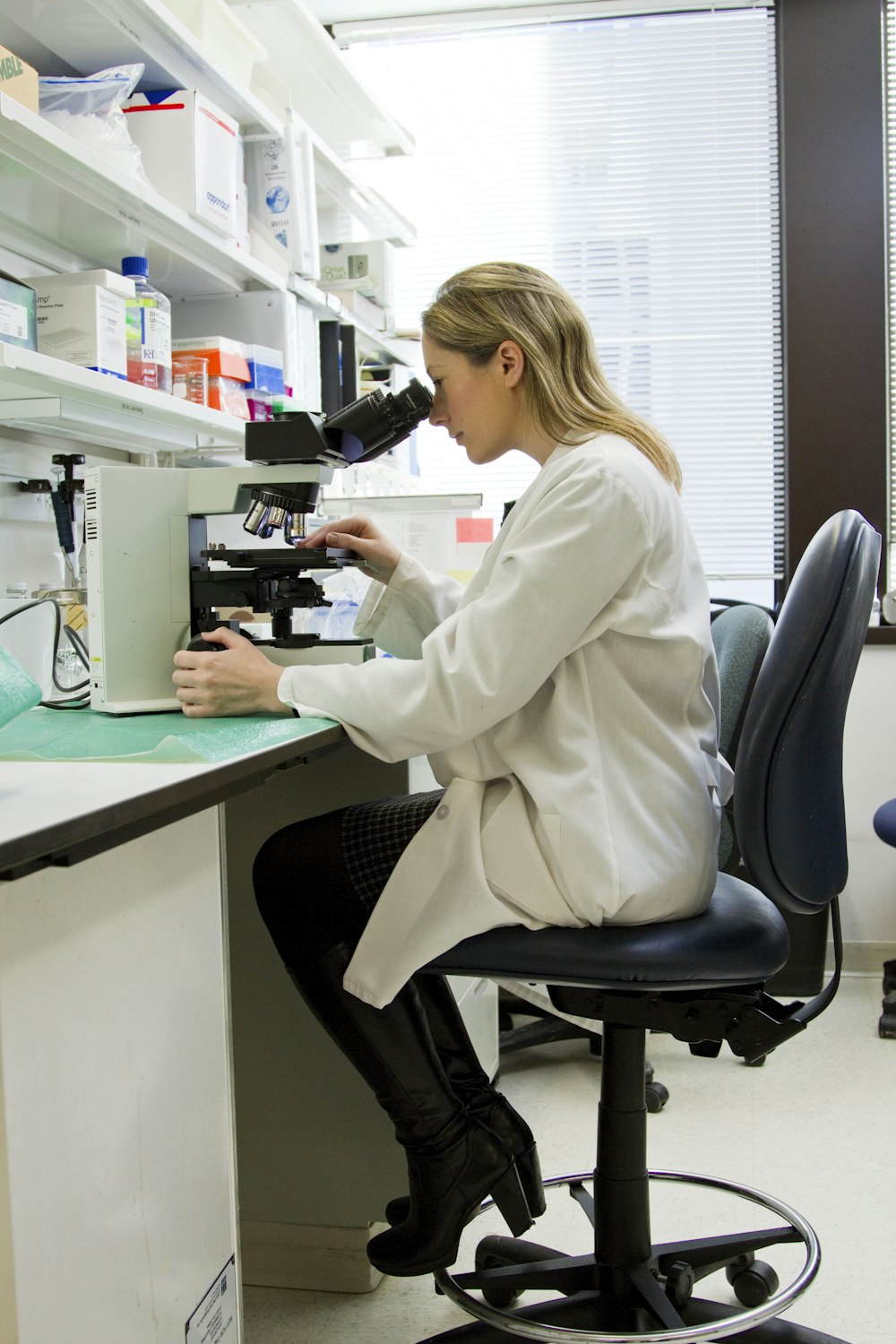
Microscopic Analysis
Confocal microscopy reveals the structure of the engineered living material.

Material Characterization
Testing the physical properties of the engineered living sheets.
A New Platform for Sustainable Technology
The ability to engineer Caulobacter into a stable, high-density, 2D living material is more than a laboratory curiosity; it opens a door to a new class of sustainable technologies.
| Added Function | How It's Done | Potential Application |
|---|---|---|
| Toxin Sensing | Integrate a fluorescent protein that lights up in the presence of heavy metals. | Environmental biosensors for water quality. |
| Drug Production | Engineer the bacteria to secrete a therapeutic enzyme into the matrix. | Living bandages or bioreactors. |
| Electrical Conduction | Display peptides that can assemble conductive nanowires. | Bio-hybrid electronics and circuits. |
Imagine a sheet of this material deployed in a water supply, changing color when it detects a specific contaminant.
Mats of these bacteria could be used to soak up and break down oil spills or industrial waste, actively cleaning the environment.
By incorporating different genetic modules, these living sheets could be designed to release therapeutics, catalyze specific reactions, or even interface with electronic devices.
We are moving from an era of extracting and processing materials to one of growing and programming them. By learning the construction rules of nature's smallest architects, we are laying the foundation for a future where our materials are not just inert substances, but dynamic, living, and responsive partners.