Rational Protein Design and Site-Directed Mutagenesis: A Modern Guide for Researchers
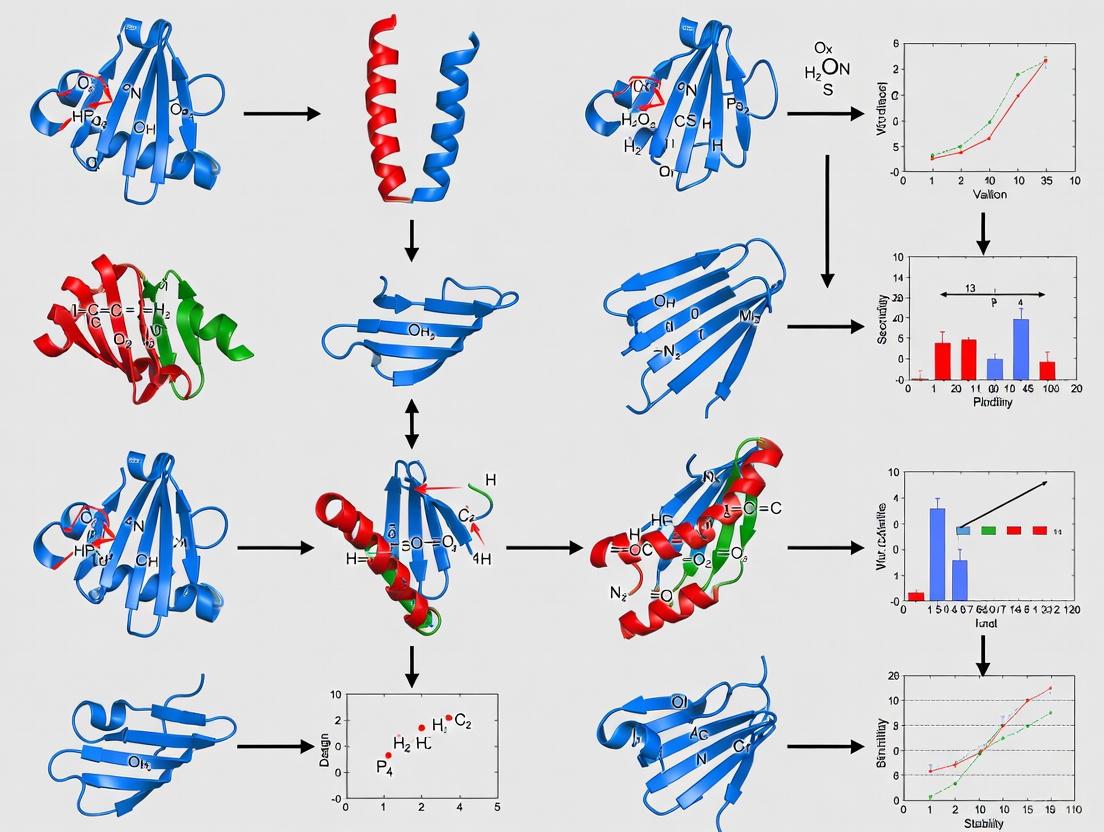
This article provides a comprehensive overview of rational protein design, with a specific focus on the pivotal role of site-directed mutagenesis (SDM).
Rational Protein Design and Site-Directed Mutagenesis: A Modern Guide for Researchers
Abstract
This article provides a comprehensive overview of rational protein design, with a specific focus on the pivotal role of site-directed mutagenesis (SDM). Tailored for researchers, scientists, and drug development professionals, it explores the foundational principles of using detailed protein structure and function knowledge to guide targeted mutations. The scope ranges from core methodologies and practical applications—including enhancing enzyme thermostability, activity, and specificity for industrial and therapeutic use—to advanced troubleshooting of SDM protocols. It also covers the validation of designed variants and offers a comparative analysis with other protein engineering strategies like directed evolution, concluding with an outlook on the transformative impact of computational tools and automation on the future of biomedical research.
The Principles and Power of Rational Protein Design
Rational protein design represents a foundational methodology in protein engineering that employs precise, knowledge-driven modifications to alter protein function. Unlike stochastic methods, this approach leverages detailed structural and functional insights to predict beneficial amino acid substitutions, typically achieved via site-directed mutagenesis (SDM). This application note delineates the core principles, methodologies, and practical protocols of rational design, contextualized within the broader paradigm of site-directed mutagenesis research. It provides a detailed framework for researchers and drug development professionals to implement these strategies for developing novel biocatalysts, therapeutics, and research tools.
Protein engineering is a powerful biotechnological process focused on creating new enzymes or proteins and improving the functions of existing ones by manipulating their natural macromolecular architecture [1]. Within this field, rational protein design stands as a classical method characterized by its hypothesis-driven nature. The core premise of rational design is the application of existing structural, functional, and mechanistic knowledge of a target protein to make precise, targeted changes to its amino acid sequence [1] [2]. This strategy aims to produce proteins with enriched activities, such as enhanced thermostability, catalytic efficiency, or altered substrate specificity, by focusing mutations on key regions known to influence these properties.
This approach contrasts sharply with methods like directed evolution, which introduces random mutations across the gene and relies on high-throughput screening to identify improved variants without requiring prior structural knowledge [1]. Rational design produces smaller, more focused mutant libraries, increasing the likelihood that screened variants will possess the desired function [2]. The method's success is intrinsically tied to the depth and accuracy of the available protein data, making it a highly focused and efficient strategy when such information is available.
Rational Design in the Context of Protein Engineering Strategies
The landscape of protein engineering is diverse, encompassing multiple strategies. Rational design is one of several key methodologies, each with distinct advantages and applications. The following table provides a comparative overview of major protein engineering approaches.
Table 1: Key Methods in Protein Engineering
| Method | Core Principle | Knowledge Requirement | Key Advantage | Typical Application |
|---|---|---|---|---|
| Rational Design | Site-directed mutagenesis based on structural/functional knowledge [1] | High (3D structure, mechanism) [1] | Precise; produces small, focused libraries [2] | Engineering protein-based vaccines, antibodies, and enzymes [1] |
| Directed Evolution | Random mutagenesis followed by screening/selection; mimics natural evolution [1] | Low | Does not require prior structural information [1] | General protein optimization when structural data is limited |
| Semi-Rational Design | Combines rational and directed evolution; uses computation to target specific sites for randomization [1] [2] | Moderate (e.g., bioinformatic data) | Balances library size and quality; increased chance of success [1] | Creating biocatalysts with wider substrate range and stability [1] |
| De Novo Design | Creating proteins with specific structural/functional properties from scratch [1] [3] | Principles of protein folding | Generates entirely novel proteins and folds [3] | Designing binders, symmetric assemblies, and new protein topologies [3] |
A specialized form of rational design is site-saturation mutagenesis (SSM), which randomizes a specific codon, or short sequence of codons, to produce libraries of mutants with all possible amino acid substitutions at the targeted positions [2]. While it creates a larger library than typical rational design, it remains semi-rational because the randomization is focused on specific, pre-selected sites, making it more efficient than sequence-agnostic random mutagenesis [2].
Core Principles and Workflow of Rational Protein Design
The rational design process is a systematic sequence of stages that transforms knowledge of a protein into a tested, improved variant. The workflow can be visualized as a logical pathway from target analysis to experimental validation.
Experimental Workflow for Rational Protein Design
The following diagram outlines the key stages in a rational protein design project, from initial target identification to the final experimental validation of designed variants.
Detailed Protocol for Site-Directed Mutagenesis
This protocol provides a step-by-step methodology for performing PCR-based site-directed mutagenesis, a cornerstone technique of rational protein design.
Objective: To introduce a specific point mutation into a gene of interest. Principle: Desired point mutations are incorporated into primers that are used to amplify the entire plasmid in a PCR reaction. The PCR product, containing the nicked plasmid with the mutation, is then transformed into a host strain where the nicks are repaired [2].
Materials:
- Template DNA: Plasmid containing the wild-type gene of interest.
- Oligonucleotide Primers: Forward and reverse primers designed to contain the desired mutation in their sequence.
- High-Fidelity DNA Polymerase: An enzyme suitable for PCR amplification of plasmids (e.g., PfuUltra, KAPA HiFi).
- Restriction Enzyme (DpnI): Specifically digests methylated and hemi-methylated DNA (used to selectively digest the parental DNA template).
- Competent Cells: Chemically or electrocompetent E. coli cells for transformation.
- LB Agar Plates: Containing the appropriate antibiotic for plasmid selection.
Procedure:
- Primer Design:
- Design primers that are complementary to the template sequence and anneal back-to-back.
- The desired mutation (base substitution, insertion, or deletion) should be located in the middle of the primer sequence.
- Primers should typically be 25-45 nucleotides long with a GC content of ~40-60%.
- The melting temperature (Tm) should be ≥78°C.
- Phosphorylation of the 5'-end is recommended if the polymerase used does not add an adenosine overhang.
PCR Amplification:
- Set up a PCR reaction mix containing:
- Template DNA (10-100 ng)
- Forward and reverse mutagenic primers (0.1-1 µM each)
- dNTPs
- High-fidelity DNA polymerase and corresponding buffer
- Run a thermal cycling program as follows:
- Initial Denaturation: 95°C for 2 minutes
- Denaturation: 95°C for 20 seconds
- Annealing: 55-65°C (based on Tm) for 30 seconds → 25-30 cycles
- Extension: 72°C for 2-6 minutes (depending on plasmid length)
- Final Extension: 72°C for 5-10 minutes
- Set up a PCR reaction mix containing:
Digestion of Template DNA:
- Following PCR, add 1 µL of DpnI restriction enzyme directly to the PCR tube.
- Mix gently and incubate at 37°C for 1-2 hours to digest the methylated parental DNA template.
Transformation:
- Transform 1-5 µL of the DpnI-treated DNA into 50 µL of competent E. coli cells following standard transformation protocols (heat-shock or electroporation).
Screening and Verification:
- Plate the transformed cells onto LB agar plates with the appropriate antibiotic.
- After overnight growth, pick several colonies for sequence verification to confirm the presence of the desired mutation and the absence of unintended mutations.
Advanced Applications and Data-Driven Extensions
Rational design is increasingly being augmented by artificial intelligence (AI) and machine learning (ML), leading to more powerful and efficient engineering pipelines. These advanced methods help bridge knowledge gaps, such as predicting the complex conformational changes that occur during molecular binding [1].
One innovative approach, termed Omni-Directional Multipoint Mutagenesis (ODM), fine-tunes a pre-trained protein language model (BERT) on homologous sequences of a target protein to generate thousands of mutant sequences [4]. A key screening metric in this pipeline is "Weakness screening" (Ws), which is based on the "Barrel Theory." This theory posits that the lowest predicted probability mutation in a sequence—the "shortest plank"—has the greatest impact on overall protein activity. By ranking mutants based on their highest minimal probability value, researchers can efficiently select the most promising variants for experimental testing [4].
The following table summarizes experimental outcomes from a study that employed this ODM pipeline to engineer two different enzymes, demonstrating the success rate achievable with advanced rational design methods.
Table 2: Experimental Outcomes from an AI-Augmented Rational Design Pipeline [4]
| Target Enzyme | Property Engineered | Screening Method | Success Rate | Key Finding |
|---|---|---|---|---|
| Protease (ZH1) | Thermostability | Weakness screening (Ws) & thermostability models | 62.5% of mutants showed increased thermostability | AI-driven ranking effectively identified stabilized variants. |
| Lysozyme (G732) | Bacteriolytic Activity | Weakness screening (Ws) & biological indicators | 50% of mutants showed increased activity | Introduction of additional basic residues enhanced function. |
The Scientist's Toolkit: Essential Research Reagent Solutions
Successful implementation of rational protein design relies on a suite of essential reagents and computational tools. The following table details key materials and their functions.
Table 3: Essential Reagents and Tools for Rational Protein Design
| Reagent / Tool | Function / Description | Application in Rational Design |
|---|---|---|
| High-Fidelity DNA Polymerase | PCR enzyme with low error rate for accurate amplification. | Critical for performing site-directed mutagenesis PCR to introduce specific mutations without introducing random errors [2]. |
| DpnI Restriction Enzyme | Cuts methylated and hemi-methylated DNA. | Used post-PCR to selectively digest the original, methylated parental DNA template, enriching for the newly synthesized, mutated plasmid [2]. |
| Competent E. coli Cells | Bacterial cells rendered permeable for DNA uptake. | Used for transforming the mutated plasmid DNA after PCR and DpnI digestion to amplify the plasmid and produce the mutant protein [2]. |
| Crystallography & Modeling Software | Determines and visualizes 3D protein structures (e.g., X-ray crystallography, AlphaFold2, RoseTTAFold) [1]. | Provides the structural insights essential for identifying key residues to mutate in rational design [1] [3]. |
| Structure Prediction Networks (e.g., RoseTTAFold, AlphaFold2) | Deep-learning networks for predicting protein structure from sequence [3]. | Informs the initial design hypothesis and is used for in silico validation of designed protein structures [3]. |
| Generative Models (e.g., RFdiffusion, Protein BERT) | AI models that can generate new protein structures or sequences based on constraints [3] [4]. | Enables de novo design of protein binders or scaffolds, and generates focused mutant libraries for specific properties [4]. |
Rational protein design remains a powerful and precise approach within protein engineering, distinguished by its foundational reliance on structural and functional knowledge. The method, centered on site-directed mutagenesis, allows for the direct testing of hypotheses about protein structure-function relationships. While the requirement for prior knowledge can be a limitation, the integration of advanced computational tools—from structure prediction networks like AlphaFold2 and RoseTTAFold to generative AI models—is dramatically expanding the scope and success rate of rational design. As these data-driven technologies continue to mature, they are forging a new paradigm that merges the precision of rationality with the explorative power of computation, thereby accelerating the development of novel enzymes, therapeutics, and biomaterials.
Site-directed mutagenesis (SDM) is a fundamental in vitro method that enables researchers to create specific, targeted changes in double-stranded plasmid DNA [5]. This technique serves as a cornerstone in molecular biology and protein engineering, allowing for the precise introduction of nucleotide substitutions, insertions, or deletions at defined locations within a known DNA sequence [6]. Within the context of rational protein design, SDM provides the essential experimental link between computational models and functional validation, permitting researchers to systematically test hypotheses about protein structure-function relationships.
The versatility of SDM extends across multiple research applications, including investigating protein activity changes resulting from DNA manipulation, screening for mutations with desired properties at the DNA, RNA, or protein level, and introducing or removing critical molecular features such as restriction endonuclease sites or affinity tags [5]. The development of SDM methodologies has evolved significantly from early approaches that relied on specialized bacterial strains to contemporary PCR-based methods that utilize standard primers and high-fidelity polymerases, dramatically increasing the accessibility and efficiency of protein engineering workflows [5].
Core Principles and Mechanisms
Site-directed mutagenesis operates on the principle of using custom oligonucleotide primers to confer desired mutations during amplification of a DNA template [5]. The most widely-used methods today employ inverse PCR with standard primers that can be designed in either overlapping or back-to-back orientations [5]. These approaches differ in their mechanisms and resulting products, with each offering distinct advantages for particular experimental needs.
In overlapping primer design, the primers are complementary to adjacent regions of the plasmid and include the desired mutation at their centers. This approach produces a PCR product that re-circularizes to form a doubly-nicked plasmid, which can be directly transformed into E. coli despite lower transformation efficiency compared to non-nicked plasmids [5]. In contrast, back-to-back primer design positions primers to bind on opposite strands facing away from each other, resulting in exponential amplification and generation of significantly more desired product [5]. This method produces linear, double-stranded DNA that requires circularization prior to transformation but offers the advantage of creating non-nicked plasmids with higher transformation efficiency [5].
Following PCR amplification, a critical step in the SDM workflow involves template removal using the restriction endonuclease DpnI, which selectively digests methylated DNA (i.e., the original plasmid propagated and isolated from E. coli) [7]. Because PCR products are generated in vitro, they lack methylation and remain resistant to DpnI activity, enabling selective elimination of the parental template [7] [8]. The resulting mutated plasmid is then transformed into competent E. coli cells, where cellular machinery repairs nicks and enables propagation of the engineered DNA [9].
Experimental Workflow
The following diagram illustrates the generalized site-directed mutagenesis workflow from primer design to sequence verification:
Critical Experimental Considerations
Primer Design Strategies
The most critical component for successful site-directed mutagenesis is proper primer design [7]. Multiple factors must be considered during this process, with the first consideration being the relative location of the two primers. Primers designed back-to-back have the benefit of exponential amplification but also propagate polymerase errors exponentially; therefore, only the highest fidelity enzymes should be used with this approach [7].
Melting temperature represents another crucial consideration, as forward and reverse primers should be designed with similar melting temperatures to ensure comparable annealing efficiency [7]. Standard melting temperature calculations prove challenging for SDM because most online tools cannot accurately account for alterations caused by mismatched nucleotides. Specialized tools such as NEBaseChanger address this limitation by providing annealing temperatures that incorporate adjustments for primer mismatches [7].
For traditional overlapping primer methods, primers should contain the desired mutation in the center, flanked by 12-18 complementary bases on both sides [8] [9]. The introduction or ablation of a restriction site through mutagenesis significantly facilitates subsequent screening for successfully mutated clones [9]. Additionally, primers longer than 40-50 nucleotides should undergo PAGE purification to minimize errors from incomplete synthesis [7].
Technical Optimization Parameters
Several technical parameters require careful optimization to ensure successful mutagenesis outcomes. The use of high-fidelity DNA polymerase with 5'→3' polymerase activity, 3'→5' exonuclease activity (for increased fidelity), and no 5'→3' exonuclease activity is essential to prevent introduction of undesired mutations [9]. The polymerase must produce blunt-ended PCR products, eliminating Taq polymerase from consideration due to its generation of A-overhangs that interfere with plasmid reconstitution [9].
Template quality and concentration significantly impact success rates. High-purity plasmid preparations isolated from methylation-competent bacterial strains (e.g., DH5α, which is dam+) are essential for effective DpnI digestion of the parental template [9]. Smaller plasmids (~3 kb) are generally amplified more efficiently than larger constructs, though plasmids up to ~6 kb can be successfully mutated with adjusted extension times [9]. For GC-rich templates, the addition of DMSO (typically ~3% final concentration) reduces secondary structures and may decrease primer annealing temperatures [9].
Following transformation, screening and validation represent critical quality control steps. If a restriction site was introduced or ablated, bacterial colonies can be screened by restriction fragment length polymorphism (RFLP) analysis [9]. Ultimately, sequencing the mutated region in both directions provides essential confirmation of the desired mutation and absence of unintended modifications [7] [8].
Research Reagent Solutions
The following table summarizes essential reagents and their functions in site-directed mutagenesis workflows:
| Reagent | Function | Key Considerations |
|---|---|---|
| Mutagenic Primers [7] [8] | Introduce specific mutations; anneal to plasmid template | 12-18 complementary bases flanking mutation; similar Tm for forward/reverse; PAGE purification if >40-50 nt |
| High-Fidelity DNA Polymerase [9] | Amplifies plasmid with mutation; maintains sequence accuracy | Must have 5'→3' polymerase activity, 3'→5' exonuclease activity, no 5'→3' exonuclease activity; produces blunt ends |
| DpnI Restriction Enzyme [7] [8] | Selectively digests methylated parental template | Critical for template removal; only cleaves methylated DNA (GATC sequences) |
| Competent E. coli Cells [7] [8] | Propagate mutated plasmid; repair nicked DNA | Chemically competent cells suitable for cloning; transformation efficiency varies by strain and preparation |
| DNA Ligase [7] | Circularizes linear PCR products | Required for back-to-back primer designs; intramolecular ligation recreates circular plasmid |
| Cloning Vector [10] | Replicates mutated DNA independent of host genome | Contains selective marker (antibiotic resistance); allows easy insertion/removal of desired DNA |
Quantitative Analysis of Mutation Effects
Large-scale mutagenesis studies provide invaluable insights into the functional consequences of amino acid substitutions, informing rational protein design strategies. Analysis of 34,373 mutations across 14 proteins revealed significant variation in how different amino acid substitutions impact protein function [11].
Table: Amino Acid Substitution Tolerance and Representation in Protein Mutagenesis
| Amino Acid | Tolerance Ranking | Disruptiveness | Representativeness | Interface Detection Utility |
|---|---|---|---|---|
| Methionine | Most tolerated | Low | Moderate | Low |
| Proline | Least tolerated | High | Low | High |
| Histidine | Moderate | Moderate | High (best) | Moderate |
| Asparagine | Moderate | Moderate | High (best) | High |
| Aspartic Acid | Low | High | Low | High (best) |
| Glutamic Acid | Low | High | Low | High (best) |
| Alanine | Moderate | Moderate | Moderate | Moderate |
This comprehensive analysis demonstrated that methionine substitutions were the most tolerated, while proline substitutions proved most disruptive to protein function [11]. Interestingly, histidine and asparagine substitutions best recapitulated the effects of other substitutions, even when considering wild-type amino acid identity and structural context [11]. For detecting ligand-binding interfaces, highly disruptive substitutions like aspartic acid and glutamic acid showed the greatest discriminatory power [11].
These findings challenge conventional assumptions in protein engineering, particularly the historical preference for alanine scanning mutagenesis. The data suggest that alternative substitution strategies may provide more representative information about position importance or better discrimination of binding interfaces depending on experimental goals [11].
Advanced Applications in Protein Engineering
Multi-Site and Combinatorial Mutagenesis
Advanced SDM applications extend beyond single amino acid substitutions to encompass multi-site mutagenesis and comprehensive analysis of functional residues. Efficient multi-site mutagenesis can be accomplished using assembly methods such as NEBuilder HiFi DNA Assembly, which enables simultaneous introduction of multiple mutations across a protein sequence [5]. This capability proves particularly valuable for exploring synergistic effects between distal residues or reconstructing evolutionary pathways.
Combinatorial approaches have revealed intricate functional connectivity within enzyme active sites. An extensive study of E. coli alkaline phosphatase involving nearly all possible combinations of five active site residues identified three energetically independent but structurally interconnected functional units with distinct cooperative modes [12]. This research demonstrated that despite structural connectivity among all five residues, only subsets directly influenced each other functionally, revealing a complex network of energetic interdependencies that would remain undetected through single-point mutations alone [12].
Integration with Rational Design and High-Throughput Methodologies
Modern protein engineering increasingly combines SDM with computational design and high-throughput screening methodologies. The DiRect method exemplifies this integration, achieving high performance (≥99% substitution efficiency) without recombinant DNA technology [13]. When combined with cell-free protein expression systems, this approach enabled rapid screening of 90 designed mutant proteins within two days, successfully identifying a previously unreported mutant (Q135I) with significantly enhanced thermostability [13].
Such methodologies facilitate the testing of rational design hypotheses while accommodating the exploration of sequence-function relationships beyond purely computational predictions. The continued development of these integrated approaches addresses key bottlenecks in protein engineering pipelines, particularly the reliance on traditional cloning and expression systems that limit throughput and scalability [13].
Detailed Protocol for Site-Directed Mutagenesis
Materials and Reagent Preparation
- Template DNA: High-purity plasmid preparation (0.1-1.0 ng/μl) isolated from a methylation-competent E. coli strain (e.g., DH5α) [9].
- Primers: Forward and reverse primers (10 μM each) containing desired mutation flanked by 12-18 complementary bases [8]. For back-to-back designs, ensure similar melting temperatures (Tm) [7].
- PCR Components: High-fidelity DNA polymerase (e.g., PfuTurbo, Phusion), corresponding reaction buffer, dNTP mix (10 mM each) [8] [9].
- Post-PCR Processing: DpnI restriction enzyme, T4 DNA ligase (for back-to-back designs), ligation buffer [7] [8].
- Transformation: Chemically competent E. coli cells, LB agar plates with appropriate antibiotic, LB broth with antibiotic [8].
Step-by-Step Procedure
PCR Amplification:
- Prepare 50 μl reaction containing: 5-50 ng plasmid template, 10 pmol each primer, 200 μM dNTPs, 1X polymerase buffer, 1-2 units high-fidelity DNA polymerase [8].
- Cycling parameters: Initial denaturation 95°C for 2 minutes; 18-30 cycles of: 95°C for 30 seconds, annealing temperature (Tm -5°C) for 30 seconds, extension at 68°C for 1 minute/kb of plasmid length; final extension 68°C for 5 minutes [8].
- For GC-rich templates, include DMSO to 3% final concentration [9].
Template Removal:
- Add 1 μl DpnI directly to PCR reaction mixture.
- Incubate at 37°C for 1-2 hours to digest methylated parental DNA [8].
Ligation (for back-to-back primer designs):
- Add ligase buffer and T4 DNA ligase to DpnI-treated PCR product.
- Incubate at room temperature for 5 minutes to circularize linear PCR products [7].
Transformation:
Screening and Validation:
- Select 3-5 colonies for screening via colony PCR or restriction analysis if site was introduced/ablated [9].
- Inoculate positive colonies in LB broth with antibiotic and culture overnight.
- Isolate plasmid DNA and sequence the mutated region to confirm desired mutation and absence of secondary mutations [8].
Troubleshooting Common Issues
- Low Efficiency: Optimize template concentration (0.1-1.0 ng/μl), ensure primer melting temperatures are similar, verify DpnI digestion efficiency, and use high-quality competent cells [7] [9].
- No Colonies: Check primer design for complementarity, verify template quality and concentration, ensure antibiotic selection is correct, test competent cell efficiency with control plasmid [8].
- Unintended Mutations: Use high-fidelity polymerase with proofreading activity, minimize PCR cycle number, sequence entire plasmid if critical regions outside target are essential for function [9].
- Primer Duplication: Screen for this artifact by performing restriction digest that excises a short region (<400 bp) proximal to the target site; separated fragments on high-percentage agarose gel (~3%) will show slightly larger band sizes if duplication occurred [9].
Site-directed mutagenesis remains an indispensable technique in the molecular biology toolkit, providing precise control over genetic sequences for protein engineering and functional analysis. The continued refinement of SDM methodologies has expanded their applications from single amino acid substitutions to comprehensive analysis of functional networks and multi-site combinatorial libraries. When strategically employed within rational protein design frameworks, SDM enables critical testing of structure-function hypotheses and provides experimental validation of computational predictions.
The integration of SDM with high-throughput screening technologies and cell-free expression systems represents a promising direction for accelerating protein engineering cycles. Furthermore, large-scale mutational sensitivity data increasingly inform rational design strategies, enabling more intelligent selection of target positions and substitutions. As protein engineering advances toward increasingly ambitious goals, site-directed mutagenesis will continue to provide the essential experimental bridge between digital designs and biological function.
Rational protein design through site-directed mutagenesis is a cornerstone of modern biotechnology and therapeutic development. Its success is fundamentally predicated on two critical pillars: comprehensive protein structural data and detailed functional information. Without these prerequisites, attempts to engineer proteins with enhanced properties, such as improved stability, novel catalytic activity, or regulated allosteric control, revert to random guesswork rather than informed design. This application note details the essential structural and functional data required and provides validated protocols for their implementation within a rational protein engineering framework, empowering researchers to systematically design and characterize novel protein variants.
Essential Structural Data for Informed Mutagenesis
A deep understanding of protein structure is indispensable for predicting the functional consequences of amino acid substitutions. The following structural data types provide complementary insights for guiding mutagenesis strategies.
Table 1: Essential Structural Data for Rational Mutagenesis
| Data Type | Description | Role in Mutagenesis Design | Source/Method |
|---|---|---|---|
| High-Resolution 3D Structure | Atomic-level coordinates from techniques like X-ray crystallography or cryo-EM. | Identifies active sites, binding interfaces, and spatial relationships between residues for targeted mutations. | X-ray, Cryo-EM, NMR [14] |
| Deep Mutational Scanning (DMS) | A comprehensive dataset quantifying the fitness effects of thousands of single-point mutations. | Reveals epistatic interactions between residues to infer structural contacts and functional constraints [14]. | High-throughput selection assays coupled with sequencing [14] |
| Evolutionary Coupling Analysis | Statistical analysis of co-evolving amino acid pairs in multiple sequence alignments. | Identifies residue pairs that are spatially proximal or functionally linked, guiding multipoint mutagenesis [14]. | Bioinformatics tools (e.g., EVcouplings) |
| Predicted Structural Features | Computationally derived data on secondary structure, solvent accessibility, and dynamics. | Pinpoints surface loops and flexible regions that may tolerate insertions or deletions [15]. | AI-based models (e.g., AlphaFold, ESMFold) [16] |
Critical Functional Data for Validating Design Outcomes
Structural data must be complemented by robust functional metrics to validate design hypotheses and quantify the success of mutagenesis experiments.
Table 2: Key Functional Assays for Mutant Characterization
| Functional Property | Key Assays | Measurable Output | Application Context |
|---|---|---|---|
| Thermostability | Thermal shift assays, Differential scanning calorimetry (DSC). | Melting temperature (Tm), change in free energy of unfolding (ΔΔG). | Engineering robust enzymes for industrial processes [4] [16]. |
| Catalytic Activity | Enzyme-specific kinetic assays (e.g., spectrophotometric, fluorometric). | Michaelis constant (Km), turnover number (kcat), catalytic efficiency (kcat/Km). | Optimizing biocatalysts for enhanced reaction rates or altered substrate specificity. |
| Binding Affinity | Surface Plasmon Resonance (SPR), Isothermal Titration Calorimetry (ITC). | Dissociation constant (Kd), enthalpy (ΔH), and entropy (ΔS) of binding. | Developing therapeutic antibodies or modulating protein-protein interactions [14]. |
| Allosteric Regulation | Dose-response or light-response assays in cellular or purified systems. | Half-maximal effective concentration (EC50), dynamic range (fold-induction). | Creating chemogenetic or optogenetic protein switches [15]. |
Experimental Protocols
Protocol: SPRINP Site-Directed Mutagenesis
The Single-Primer Reactions IN Parallel (SPRINP) method is a highly efficient and reliable PCR-based technique for introducing point mutations or small insertions, minimizing the primer-dimer formation common in other protocols [17].
Key Reagents:
- Template DNA: Methylated, dam+ plasmid DNA (e.g., purified from XL1-Blue E. coli).
- Primers: Forward and reverse primers (36-57 nt) containing the desired mutation in the center, designed with high Tm (75–85°C) and GC-clamps.
- Enzyme: High-fidelity DNA polymerase (e.g., Pwo DNA polymerase).
- Restriction Enzyme: DpnI.
Procedure:
- Reaction Setup: Prepare two separate 25 µL PCR reactions.
- Reaction 1: ~500 ng template DNA, 40 pmol forward primer.
- Reaction 2: ~500 ng template DNA, 40 pmol reverse primer.
- Common Mix: 0.2 mM dNTPs, 0.2 mM MgCl₂, 1.25 U Pwo DNA polymerase, 10 mM Tris buffer, pH 7.5.
- PCR Amplification:
- Initial Denaturation: 94°C for 2 min.
- 30 Cycles: Denaturation at 94°C for 40 s, Annealing at 55°C for 40 s, Extension at 72°C (1 min/kb of plasmid size).
- Final Extension: 72°C for 5–10 min.
- Hybridization:
- Combine the two PCR products (total volume 50 µL).
- Denature and reanneal using a slow cooling program: 95°C for 5 min, then step down to 37°C (90°C for 1 min, 80°C for 1 min, 70°C for 30 s, 60°C for 30 s, 50°C for 30 s, 40°C for 30 s, and hold at 37°C).
- Parental Template Digestion: Add 30 units of DpnI directly to the 50 µL hybridized product. Incubate at 37°C overnight to digest the methylated parental DNA strand.
- Transformation: Transform 5–10 µL of the DpnI-treated DNA into competent E. coli cells and plate on selective media for colony isolation.
Protocol: In Silico Prediction of Domain Insertion Sites Using ProDomino
The ProDomino machine learning pipeline rationalizes the engineering of allosteric protein switches by predicting permissive sites for domain insertion, a process that traditionally requires extensive screening [15].
Key Inputs:
- Effector Protein Sequence: The amino acid sequence of the protein to be engineered (the "parent").
- Insert Domain Information: The sequence or structural class of the domain to be inserted (e.g., a light-sensitive LOV domain).
Procedure:
- Data Curation: ProDomino was trained on a semisynthetic dataset derived from naturally occurring intradomain insertion events, encompassing 174,872 sequences with low pairwise identity [15].
- Sequence Encoding: Input the parent protein sequence. ProDomino uses ESM-2-derived protein language model embeddings to convert the sequence into a feature-rich numerical representation [15].
- Model Inference: The processed sequence is analyzed by the ProDomino model, which assigns an "insertion tolerance" score to each residue position in the sequence. High scores indicate sites predicted to tolerate domain insertion without disrupting the structural or functional integrity of the parent protein.
- Output Analysis: The output is a positional score profile. Positions with the highest scores are selected for experimental validation. The model shows no strong bias for surface-exposed loops and can accurately identify permissive sites within secondary structure elements [15].
Workflow Visualization
Diagram 1: Rational protein design workflow.
Diagram 2: SPRINP mutagenesis protocol steps.
The Scientist's Toolkit: Research Reagent Solutions
Table 3: Essential Research Reagents for Rational Protein Design
| Reagent / Material | Function / Application | Example Use Case |
|---|---|---|
| High-Fidelity DNA Polymerase (e.g., Pwo) | PCR amplification with low error rates for accurate mutant library generation. | SPRINP site-directed mutagenesis protocol [17]. |
| DpnI Restriction Enzyme | Selective digestion of methylated parental plasmid template post-PCR. | Enrichment for newly synthesized mutant strands in SPRINP [17]. |
| QresFEP-2 Software | A hybrid-topology Free Energy Perturbation (FEP) protocol. | Physics-based in silico prediction of mutation effects on protein stability and binding [16]. |
| ProDomino Pipeline | Machine learning model for predicting permissive domain insertion sites. | Rational engineering of allosteric protein switches [15]. |
| Omni-Directional Mutagenesis (ODM) Model | Fine-tuned protein language model (BERT) for generating multipoint mutant libraries. | AI-guided generation of 100,000s of mutant sequences with enhanced properties [4]. |
The intricate relationship between a protein's amino acid sequence, its three-dimensional structure, and its biological function represents a fundamental paradigm in molecular biology. Rational protein design seeks to manipulate this relationship to create novel proteins with enhanced or entirely new functions. Among the most powerful strategies in this endeavor is the use of evolutionary information encapsulated in multiple sequence alignments (MSAs) and consensus design, which leverages nature's vast experimental record to guide engineering efforts. This approach operates on the principle that evolutionary conservation across homologous sequences signals structural and functional importance.
The explosive growth of biological sequence data, coupled with advances in artificial intelligence (AI) and computational modeling, has dramatically expanded the toolkit available to protein engineers. Where earlier methods relied heavily on limited structural information, modern pipelines can now integrate evolutionary insights with deep learning to predict mutation effects and generate novel functional sequences with remarkable efficiency. These approaches have proven particularly valuable for optimizing key protein properties such as thermostability, catalytic efficiency, and expression yield, with applications spanning therapeutic development, industrial biocatalysis, and basic research.
This application note provides a structured framework for implementing MSA and consensus design strategies within rational protein engineering workflows. It details practical protocols, quantitative performance metrics, and computational tools to help researchers harness evolutionary insights for creating improved protein variants.
Theoretical Foundation
The Consensus Design Hypothesis
The core hypothesis underlying consensus design is that, at any given position in a multiple sequence alignment, the most frequently observed amino acid (the consensus residue) contributes more significantly to protein stability than non-conserved alternatives [18]. This premise stems from the evolutionary optimization process, where functionally important residues are maintained across homologous sequences, while less critical positions accumulate neutral mutations. By reconstructing a protein sequence with consensus residues at each position, engineers aim to capture the stabilizing interactions that have been evolutionarily selected throughout the protein family's history.
The theoretical basis for this approach connects evolutionary conservation with protein biophysics. Conserved residues often participate in critical structural roles, such as forming hydrophobic cores, stabilizing secondary structure elements, or maintaining active site architecture. Statistical analyses of consensus design outcomes reveal that approximately 50% of conserved residues are associated with improved stability, while ~10% are stability-neutral, and ~40% can be destabilizing [18]. This distribution underscores the importance of careful MSA construction and analysis rather than blind application of consensus rules.
Diversity of Implementation Strategies
Consensus design principles can be applied through several distinct methodological approaches, each with specific advantages and considerations:
Point Mutagenesis: Single or multiple point mutations are introduced at the most conserved amino acid positions in a target protein. This minimally invasive approach allows researchers to test the individual contribution of specific consensus residues and is particularly valuable when working with proteins that already possess desirable characteristics that should not be disrupted [18].
De Novo Sequence Design: Full-length consensus sequences are constructed entirely from consensus residues, creating novel proteins that represent the evolutionary average of the entire protein family. This approach avoids potential incompatibilities between native and consensus residues but requires recombinant expression and characterization of entirely new protein constructs [18].
Library Enhancement: Consensus residues are used to inform or bias directed evolution libraries, increasing the sampling of functionally relevant sequence space. This hybrid approach combines the broad exploration of random mutagenesis with the focused guidance of evolutionary information [18].
Computational Methods and Protocols
MSA Construction and Curation
The quality of the input MSA directly determines the success of any consensus design project. The following protocol outlines a systematic approach for acquiring and curating homologous sequences:
Table 1: Sequence Database Sources for MSA Construction
| Database | Content Type | Primary Use | Access Method |
|---|---|---|---|
| Pfam | Curated protein families and HMMs | Domain-specific consensus design | Web interface or HMMER |
| UniProtKB/Swiss-Prot | Manually annotated protein sequences | Full-length protein design | Direct download or API |
| NCBI Protein | Comprehensive protein sequences | Broad homology searches | BLAST/PSI-BLAST |
| Protein Data Bank (PDB) | Experimentally determined structures | Structure-informed design | Direct download |
| Rfam | RNA families | RNA consensus design | Web interface |
Step 1: Sequence Acquisition
- For well-characterized protein families, begin with curated alignment databases such as Pfam or PROSITE which provide pre-computed hidden Markov models (HMMs) and seed alignments [18].
- For novel or poorly characterized targets, use BLAST or PSI-BLAST against UniProtKB or NCBI databases to identify homologous sequences, using an initial E-value threshold of 0.001.
- For remote homology detection, employ iterative search tools like Jackhmmer with bit score thresholds of 0.5-1.0 bits per residue to balance sensitivity and specificity [4].
Step 2: MSA Curation
- Remove redundant sequences at 90-95% identity threshold to reduce taxonomic bias.
- Filter sequences by length to maintain domain architecture integrity.
- Manually inspect and correct alignment errors in functionally important regions.
- For challenging families with low sequence conservation (<30% identity), consider neutral drift experiments to generate functional diversity for alignment [18].
Step 3: Diversity Management
- Assess taxonomic representation to avoid over-representation of specific clades.
- If excessive diversity causes alignment errors, subclassify the MSA into taxonomic subgroups and perform separate consensus calculations [18].
- Balance sequence similarity (for accurate alignment) with diversity (for comprehensive sequence space sampling).
Advanced MSA Post-processing Methods
Recent methodological advances have significantly improved MSA quality through sophisticated post-processing approaches:
Table 2: MSA Post-processing Methods
| Method | Category | Algorithm | Applications |
|---|---|---|---|
| M-Coffee | Meta-alignment | Consistency library + T-Coffee | DNA/Protein sequences |
| TPMA | Meta-alignment | Two-pointer algorithm + SP scores | Large nucleic acid datasets |
| ReAligner | Realigner (Horizontal) | Single-type partitioning | DNA/RNA local optimization |
| AQUA | Automated pipeline | MUSCLE3 + MAFFT + RASCAL | High-throughput protein design |
Meta-alignment Methods: Tools like M-Coffee integrate multiple independent MSA results generated by different algorithms or parameters to produce a consensus alignment that captures the strengths of each input method. The algorithm constructs a consistency library that weights aligned character pairs according to their agreement across different alignments, then uses the T-Coffee algorithm to generate a final MSA that maximizes global support [19].
Realigner Methods: These tools locally optimize existing alignments without complete realignment. Horizontal partitioning strategies work by iteratively extracting sequences or subgroups and realigning them to the profile of remaining sequences. The single-type partitioning approach extracts one sequence at a time, while tree-dependent partitioning divides the alignment based on phylogenetic relationships before profile-to-profile realignment [19].
Consensus Calculation and Sequence Design
Once a high-quality MSA is obtained, consensus residues can be determined through multiple approaches:
Frequency Threshold Method: The most straightforward approach selects the amino acid with the highest frequency at each position, with optional minimum frequency thresholds (typically 25-40%) to avoid low-confidence calls.
Statistical Methods: More sophisticated approaches use pseudo-counts, sequence weighting, or entropy-based measures to account for sampling bias and phylogenetic relationships within the MSA.
Structure-Informed Filtering: Integrating structural information allows prioritization of consensus mutations in structurally important regions like hydrophobic cores or secondary structure elements, while avoiding surface residues that may be optimized for specific biological interactions.
Integration with AI and Machine Learning
The field of protein engineering has been transformed by the integration of evolutionary information with artificial intelligence methods. Modern pipelines now combine MSAs with deep learning models to generate and screen protein variants with unprecedented efficiency.
Language Model-Based Approaches
Protein language models, particularly those based on the BERT architecture, have demonstrated remarkable capability in capturing evolutionary principles from sequence data alone. The Omni-Directional Multipoint Mutagenesis (ODM) pipeline exemplifies this approach [4]:
Model Architecture and Training:
- Start with a pre-trained protein BERT model (e.g., Mindspore Protein BERT)
- Fine-tune on target-specific homologous sequences obtained from Jackhmmer searches
- Use masked language modeling to learn position-specific amino acid probabilities
- Generate mutant libraries by predicting multiple simultaneous mutations
Weakness Screening (Ws) Metric: Drawing from Barrel Theory, the pipeline identifies "the shortest plank" - the mutation with the lowest predicted probability in each sequence - as the primary limitation on protein activity. Sequences are ranked by their minimal probability value using the formula:
where S represents the sequence set, si is a mutant sequence, and Mi is the predicted probability set for si [4]. This approach enabled identification of protease mutants with 62.5% showing increased thermostability and lysozyme mutants with 50% displaying increased bacteriolytic activity [4].
Structure Prediction with Evolutionary Insights
AlphaFold2 has revolutionized structure prediction by leveraging co-evolutionary signals from MSAs. Recent methods like AF-Cluster extend this capability to predict multiple conformational states by clustering MSAs based on sequence similarity [20]. This approach has successfully predicted fold-switched states in metamorphic proteins and identified point mutations that flip conformational equilibria.
The AF-Cluster protocol involves:
- Generating a deep MSA using ColabFold
- Clustering sequences by edit distance using DBSCAN
- Running separate AlphaFold2 predictions for each cluster
- Analyzing the distribution of structures across clusters
This method has revealed that evolutionary couplings for alternative states can be segregated in sequence space, enabling prediction of both ground and fold-switched states with high confidence [20].
Experimental Validation and Applications
Quantitative Performance Metrics
Consensus design has demonstrated impressive success across diverse protein families, with particularly notable improvements in thermostability:
Table 3: Experimental Performance of Consensus Design
| Protein Target | Property Enhanced | Performance Improvement | Library Size | Success Rate |
|---|---|---|---|---|
| Protease ZH1 [4] | Thermostability | Significant increase in Tm | 100,000 variants | 62.5% |
| Lysozyme G732 [4] | Bacteriolytic activity | Increased activity | 100,000 variants | 50.0% |
| Various proteins [18] | Melting temperature | +10°C to +32°C | N/A | ~50% of mutations stabilizing |
| FN3con [18] | Stability | Well-folded, stable | Full consensus | Successful |
| cLRRTM2 [18] | Expression, stability | Well-expressed, stable | Full consensus | Successful |
Case Study: Bacterial Response Regulator Engineering
Evolutionary analysis of ~600,000 bacterial response regulator proteins revealed an unexpected structural relationship between helix-turn-helix (HTH) and winged helix (wH) DNA-binding domains [21]. Through detailed phylogenetic analysis and ancestral sequence reconstruction, researchers identified a covert evolutionary pathway between these two distinct folds.
The experimental workflow included:
- Identification of homologous sequences with different folds (FixJ vs KdpE)
- Statistical validation of homology (e-value 1e-07)
- Phylogenetic analysis of the massive sequence family
- Ancestral sequence reconstruction of key nodes
- Structural characterization of reconstructed ancestors
This study demonstrated how evolutionary insights can reveal unexpected structural plasticity and provide templates for engineering proteins with altered binding specificities [21].
Research Reagent Solutions
Table 4: Essential Research Reagents and Tools
| Reagent/Tool | Function | Application Notes |
|---|---|---|
| HMMER Suite | Hidden Markov Model construction | Build custom profiles from seed sequences |
| Jackhmmer | Iterative sequence search | Detects remote homologs; adjust bit score (0.5-1.0 bits/residue) for sensitivity [4] |
| M-Coffee | Meta-alignment | Integrates multiple alignment methods |
| R-scape | Covariation analysis | Statistical validation of RNA structures |
| SISSIz | RNA structure conservation | Z-scores based on shuffled alignments |
| AlphaFold2 | Structure prediction | Requires GPU resources; use ColabFold for accessibility |
| Protein BERT models | Sequence generation | Fine-tune on target-specific families |
| AF-Cluster | Conformational state prediction | DBSCAN clustering of MSA before AF2 prediction [20] |
Workflow Visualization
The integration of multiple sequence alignment analysis with consensus design represents a powerful strategy for rational protein engineering. By leveraging the vast experimental record of natural evolution, researchers can identify stabilizing mutations and functional patterns that would be difficult to predict from first principles alone. The continued development of AI methods, particularly protein language models and advanced structure prediction tools, is further enhancing our ability to extract meaningful signals from evolutionary data.
Successful implementation requires careful attention to MSA construction and curation, as the quality of evolutionary information directly impacts design outcomes. Taxonomic bias, alignment errors, and insufficient diversity can all compromise results. By following the protocols outlined in this application note and utilizing the appropriate computational tools, researchers can systematically harness evolutionary insights to create protein variants with enhanced properties for diverse applications in biotechnology, medicine, and basic research.
In the field of protein engineering, researchers primarily employ two distinct philosophies: rational design and directed evolution (which often utilizes random mutagenesis) [22] [23]. While directed evolution mimics natural selection by randomly generating diversity and selecting for desired functions, rational design takes a more targeted approach based on prior knowledge of protein structure and function [22]. The strategic decision to employ rational design over random mutagenesis is crucial for efficient resource allocation and project success, particularly when specific structural information is available, when engineering precise functional traits, or when high-throughput screening is impractical [24] [23].
Rational design operates on the principle that understanding the sequence-structure-function relationship enables researchers to make precise, predictive changes to a protein's amino acid sequence [22]. This approach contrasts with "irrational" methods that rely on generating large random variant libraries, acknowledging that even with structural data, the effects of multiple mutations on protein function are not easily predictable [23]. This application note provides a structured framework for selecting rational design strategies, complete with comparative analyses, detailed protocols, and practical visualization tools to guide researchers in leveraging rational design's strategic advantages.
Comparative Analysis: Rational Design Versus Alternative Methods
Technical Comparison and Decision Framework
The choice between rational design and random mutagenesis depends on multiple factors, including available structural knowledge, desired property, and resource constraints. The following table summarizes key decision parameters to guide method selection.
Table 1: Strategic Selection Framework for Protein Engineering Approaches
| Decision Parameter | Rational Design | Random Mutagenesis/Directed Evolution |
|---|---|---|
| Structural Knowledge Requirement | Requires high-quality structural data or reliable models [22] | No structural information needed [23] |
| Mutational Precision | Targets specific residues; introduces defined changes [25] | Random mutations across entire sequence [22] |
| Library Size & Screening Burden | Smaller, focused libraries; lower screening burden [24] | Very large libraries; requires high-throughput screening [22] |
| Ideal Application Scope | Engineering specific functions like catalytic activity, binding affinity, or stability when mechanism is understood [22] [24] | Optimizing complex phenotypes or when structure-function relationship is unknown [23] |
| Resource & Time Investment | Higher initial research investment; potentially faster optimization cycles [24] | Lower initial design cost; potentially more iterative testing rounds [22] |
| Risk of Functional Loss | Higher if structural predictions are inaccurate [22] | Lower; typically starts with functional parent sequence [23] |
| Ability to Explore Unknown Sequence Space | Limited to researcher's hypotheses and structural understanding [22] | Broad, unbiased exploration of functional sequence space [23] |
Quantitative Performance Metrics
Modern autonomous enzyme engineering platforms demonstrate the powerful synergy of computational and evolutionary approaches. Recent studies achieving 16- to 90-fold improvements in enzyme activity highlight how machine learning and large language models can guide the design of smart libraries, requiring construction and characterization of fewer than 500 variants for significant optimization [24]. This represents a substantial efficiency improvement over traditional random mutagenesis, which often requires screening thousands to millions of variants [22].
Table 2: Representative Outcomes from Hybrid Engineering Approaches
| Engineering Goal | Enzyme | Fold Improvement | Library Size | Key Method |
|---|---|---|---|---|
| Altered Substrate Preference | Arabidopsis thaliana halide methyltransferase (AtHMT) | 90-fold change in preference | <500 variants | AI-guided design [24] |
| Enhanced Activity | Yersinia mollaretii phytase (YmPhytase) | 26-fold at neutral pH | <500 variants | Protein LLM and epistasis model [24] |
| Ethyltransferase Activity | Arabidopsis thaliana halide methyltransferase (AtHMT) | 16-fold improvement | <500 variants | Autonomous engineering platform [24] |
Experimental Protocols for Rational Design
Core Site-Directed Mutagenesis Protocol: DREAM Method
The Designed Restriction Endonuclease-Assisted Mutagenesis (DREAM) method provides an efficient, cost-effective protocol for site-directed mutagenesis that facilitates straightforward mutant screening [25].
Principle: The DNA sequence encoding the target amino acid sequence is reverse-translated using degenerate codons, generating numerous silently mutated sequences containing various restriction endonuclease cleavage sites. A sequence with an appropriate restriction site is selected for mutagenic primer design, enabling easy screening of successful mutants without radioactive hybridization [25].
Materials:
- Template DNA: Double-stranded plasmid containing the target gene [25]
- Primers: Complementary primers containing desired mutation and silent restriction site
- Enzymes: High-fidelity DNA polymerase (e.g., Phusion DNA polymerase), T4 polynucleotide kinase (PNK), T4 DNA ligase, restriction endonuclease for screening [25]
- Supplies: dNTPs, ATP, agarose gel materials, transformation-competent E. coli cells [25]
Procedure:
- Silent Restriction Site Selection: Use computational tools (e.g., WatCut) to identify silent mutations that introduce a restriction site near the target mutation site [25].
- Primer Design: Design inverse PCR primers containing both the desired mutation and the silent restriction site. The primers should be perfectly complementary without overlapping regions when using high-fidelity polymerase [25].
- Inverse PCR: Set up 50μL reaction with:
- 1× HF PCR buffer (Mg²⁺ Plus)
- 200 μmol/L dNTPs
- 200 nmol/L forward and reverse primers
- 1 ng template DNA
- 1 U high-fidelity DNA polymerase
- PCR parameters: 98°C for 30s; 35 cycles of (98°C for 10s, 65°C for 20s, 72°C for 150s); 72°C for 10min [25]
- Product Verification: Separate PCR products on 1% agarose gel electrophoresis and extract correct-sized band [25].
- Phosphorylation: Treat purified PCR product with T4 PNK in 1× T4 PNK buffer with 200 μmol/L ATP at 37°C for 30min [25].
- Ligation: Circularize phosphorylated product using T4 DNA ligase (350 U) at 12°C for 16h [25].
- Transformation: Transform 10μL ligation mixture into competent E. coli cells and plate on selective media [25].
- Screening: Pick random colonies, prepare plasmid DNA, and digest with designed restriction enzyme. Successful mutants will display the expected digestion pattern [25].
- Sequencing: Verify mutation and ensure no secondary mutations in critical regions [25].
Critical Notes:
- Use high-fidelity polymerase (e.g., Phusion with error rate 4.4×10⁻⁷ bp⁻¹) to minimize unwanted mutations [25]
- Method applicable to point mutations, insertions, and deletions [25]
- Sequence broader regions to verify no unintended mutations in regulatory elements [25]
AI-Guided Rational Design Workflow
Modern rational design increasingly incorporates artificial intelligence and machine learning to predict beneficial mutations [24].
Procedure:
- Input Definition: Provide target protein sequence and quantifiable fitness assay [24].
- Variant Prediction: Utilize protein large language models (e.g., ESM-2) and epistasis models (e.g., EVmutation) to generate list of promising variants [24].
- Library Construction: Implement high-fidelity assembly mutagenesis without intermediate sequencing verification [24].
- Automated Characterization: Employ biofoundry platforms for high-throughput transformation, protein expression, and functional assays [24].
- Model Refinement: Use experimental data to retrain machine learning models for subsequent design cycles [24].
Visualization of Strategic Workflows
Protein Engineering Decision Pathway
The following workflow diagram illustrates the strategic decision-making process for selecting between rational design and directed evolution approaches, highlighting key decision points and methodology selection criteria.
Rational Design Experimental Workflow
The DREAM method implementation demonstrates a streamlined protocol for site-directed mutagenesis that facilitates efficient mutant screening through strategic incorporation of restriction sites.
Research Reagent Solutions
Successful implementation of rational design approaches requires specific reagents and tools optimized for precision mutagenesis and analysis.
Table 3: Essential Research Reagents for Rational Design Implementation
| Reagent/Tool | Specifications | Application & Function |
|---|---|---|
| High-Fidelity DNA Polymerase | Phusion DNA polymerase (error rate: 4.4×10⁻⁷ bp⁻¹) [25] | PCR amplification with minimal introduction of unwanted mutations during plasmid amplification for mutagenesis |
| Silent Mutation Design Tool | WatCut web-based software [25] | Identification of silent mutations that introduce restriction enzyme sites for streamlined mutant screening |
| Restriction Endonucleases | Specific to designed silent site (e.g., XhoI) [25] | Rapid screening of successful mutants through diagnostic digest pattern analysis |
| Phosphorylation/Ligation System | T4 Polynucleotide Kinase + T4 DNA Ligase [25] | Phosphorylation and circularization of PCR-amplified plasmid DNA for transformation |
| AI-Guided Design Tools | ESM-2 (protein LLM), EVmutation [24] | Prediction of beneficial mutations based on evolutionary sequence analysis and fitness prediction |
| Automated Biofoundry Platforms | iBioFAB with integrated robotic systems [24] | High-throughput implementation of mutagenesis, transformation, and screening workflows |
Rational design provides strategic advantages over random mutagenesis when structural information is available, when precise control over mutations is required, or when high-throughput screening capabilities are limited. The integration of AI-guided tools with traditional site-directed mutagenesis has created powerful hybrid approaches that maximize the benefits of both rational and evolutionary strategies [24]. The DREAM method exemplifies how thoughtful experimental design can streamline the rational design process, reducing screening burdens while maintaining precision [25].
As computational power and biological understanding advance, rational design continues to evolve from a purely structure-guided approach to an integrated discipline combining physical principles, evolutionary analysis, and machine learning. This progression enables researchers to tackle increasingly complex protein engineering challenges with greater efficiency and success rates, accelerating the development of novel enzymes for therapeutic, industrial, and research applications.
Core Methods and Real-World Applications in Biocatalysis and Therapeutics
Site-directed mutagenesis (SDM) serves as a cornerstone technology in rational protein design, enabling researchers to create specific, targeted changes in double-stranded plasmid DNA. This powerful approach allows scientists to establish direct causal relationships between protein sequence and function by making precise alterations including insertions, deletions, and substitutions [26]. In pharmaceutical and biotechnological applications, quantifying the effects of point mutations is of utmost interest, with reliable computational methods ranging from statistical and AI-based to physics-based approaches accelerating the protein engineering pipeline [16]. The integration of advanced SDM methodologies with high-throughput screening techniques has dramatically accelerated the pace of protein engineering for therapeutic development, enzyme optimization, and fundamental research into protein structure-function relationships.
Within rational protein design frameworks, SDM provides the experimental verification mechanism for hypotheses generated through computational analysis. As researchers aim to elucidate gene functions, engineer proteins with enhanced properties, or develop novel biotherapeutics, the accuracy and efficiency offered by modern SDM protocols become indispensable [26]. These techniques enable the systematic exploration of sequence space in a targeted manner, moving beyond random mutagenesis approaches to make precise alterations that test specific structural or mechanistic hypotheses. The continuing evolution of SDM methods reflects their critical role in bridging computational predictions with experimental validation in the protein engineering workflow.
Established Site-Directed Mutagenesis Methods
QuikChange Method and Its Evolution
The QuikChange methodology represents one of the most widely adopted approaches for site-directed mutagenesis in molecular biology laboratories. The QuikChange II system utilizes PfuUltra high-fidelity (HF) DNA polymerase for mutagenic primer-directed replication of both plasmid strands with the highest fidelity [27]. This method employs a supercoiled double-stranded DNA vector with an insert of interest and two synthetic oligonucleotide primers, both containing the desired mutation and each complementary to opposite strands of the vector.
During thermal cycling, these oligonucleotide primers are extended by DNA polymerase without primer displacement, generating a mutated plasmid containing staggered nicks. A critical selection step follows temperature cycling, where the product is treated with DpnI endonuclease, which specifically digests methylated and hemimethylated DNA (target sequence: 5´-Gm6ATC-3´) [27]. This enzyme efficiently cleaves the parental DNA template (isolated from dam-methylating E. coli strains), while selecting for the newly synthesized mutation-containing DNA. The nicked vector DNA carrying the desired mutations is then transformed into competent cells for propagation.
The QuikChange platform has evolved to address various experimental needs through specialized kits:
- QuikChange II Kit: Optimized for shorter targets (4kb – 8kb) and includes XL1-Blue competent cells
- QuikChange II XL Kit: Designed for longer (8kb – 14kb) or difficult targets and includes XL10-Gold ultracompetent cells
- QuikChange II-E Kit: Formulated for researchers performing mutagenesis via transformation into electroporation-competent cells [27]
Q5 Site-Directed Mutagenesis System
The Q5 Site-Directed Mutagenesis Kit developed by New England Biolabs represents an advancement in PCR-based mutagenesis approaches. This system employs a back-to-back primer design strategy rather than the overlapping primers used in traditional methods [26]. This orientation provides significant advantages, including the transformation of non-nicked plasmids and enabling exponential amplification, which generates substantially more of the desired product compared to overlapping primer approaches.
The back-to-back primer design also offers enhanced flexibility for genetic modifications. Because the primers do not overlap each other, deletion sizes are limited only by the plasmid itself, while insertions are constrained primarily by the practical limitations of modern primer synthesis [26]. By strategically splitting insertions between the two primers, researchers can routinely create insertions up to 100 bp in a single reaction step. The method utilizes high-fidelity Q5 polymerase, which ensures exceptional accuracy during amplification, followed by DpnI digestion to eliminate the methylated parental template prior to transformation.
Traditional Laboratory SDM Protocol
For individual research laboratories implementing site-directed mutagenesis, a standardized protocol utilizing commercially available components provides an accessible and cost-effective option. The following protocol uses KOD Xtreme Hot Start DNA Polymerase for high-fidelity PCR amplification followed by DpnI digestion and high-efficiency transformation [28].
Table: Traditional SDM Reaction Setup
| Component | Volume | Final Concentration |
|---|---|---|
| KOD Xtreme Buffer (2X) | 25 μL | 1X |
| Autoclaved Milli-Q water | 10 μL | - |
| dNTPs (2 mM) | 10 μL | 200 μM each |
| Template DNA (25 ng/μL) | 2 μL | ~50 ng |
| Forward primer | 1 μL | 0.2-1.0 μM |
| Reverse primer | 1 μL | 0.2-1.0 μM |
| KOD Xtreme Hot Start DNA Polymerase (1.0 U/μL) | 1 μL | 1.0 U/50 μL reaction |
| Total Volume | 50 μL |
The thermocycling conditions consist of an initial denaturation at 95°C for 2 minutes, followed by 25-35 cycles of denaturation at 95°C for 20 seconds, annealing at 60°C for 30 seconds, and extension at 70°C (with time adjusted according to the length of the template DNA, approximately 30 seconds per kb). A final extension at 70°C for 5 minutes completes the amplification [28]. Following PCR amplification, the product undergoes DpnI digestion by adding 5 μL of CutSmart Buffer and 1 μL of DpnI restriction enzyme directly to the PCR product, followed by incubation at 37°C for at least 15 minutes to digest methylated parental DNA.
Transformation is performed using high-efficiency competent cells (such as DH5α), with the entire digestion product added to thawed competent cells on ice. After 10-15 minutes incubation on ice, cells are heat-shocked at 42°C for 40-45 seconds, immediately returned to ice for 2 minutes, then supplemented with SOC media and incubated at 37°C with shaking for 1 hour before plating on selective media [28].
Diagram: Standard SDM Workflow. This flowchart illustrates the fundamental steps in traditional site-directed mutagenesis protocols, from primer annealing to mutant plasmid recovery.
Advanced Methodologies: The DiRect Protocol
DiRect-CF: Integrating SDM with Cell-Free Protein Synthesis
The Dimer-mediated Reconstruction by PCR (DiRect) method represents a significant advancement in site-directed mutagenesis technology, specifically designed to expedite rational design-based protein engineering (RDPE). This innovative approach addresses the major bottleneck in protein engineering workflows - the laborious and time-consuming process of preparing mutant proteins through conventional SDM followed by protein expression [29]. DiRect achieves nearly perfect mutation rates while eliminating the time-consuming steps required by conventional SDM methods, dramatically accelerating the creation of protein variants.
A particularly powerful implementation of this technology is DiRect-CF, which combines the DiRect mutagenesis method with an E. coli cell extract-based cell-free protein synthesis (eCF) system [29]. This integration creates a seamless pipeline from genetic design to protein characterization, bypassing the need for traditional cloning, transformation, and fermentation steps. The cell-free protein synthesis component uses PCR-amplified linearized DNA constructs and cell extracts to express target proteins, omitting multiple time-consuming procedures associated with recombinant DNA technology [29]. This combined approach enables researchers to progress from mutagenic primer design to functional protein analysis in a dramatically compressed timeframe compared to conventional methodologies.
DiRect Experimental Workflow
The DiRect protocol employs three consecutive PCR experiments to achieve high-fidelity mutagenesis: Mutagenesis PCR (MutPCR), Reconstruction PCR with outer primer (RecPCR-out), and Reconstruction PCR with inner primer (RecPCR-in) [29]. In the first stage reaction, both forward and reverse primers for MutPCR are designed with a 5' half comprising a 21-nt complementary sequence containing the mutation site in the middle, and a 3' half consisting of a 19-nt sequence complementary to the template. This design produces a dimer intermediate as the major product, which serves as the template for the subsequent reconstruction PCRs.
The reconstruction phase begins with RecPCR-out, which selectively amplifies the correctly assembled DNA fragment using primers that bind to the outer regions of the expression construct. This is followed by RecPCR-in, which further amplifies the product using primers binding to the inner regions. The final product is exceptionally pure and can be directly used for E. coli cell extract-based CF (eCF) without additional purification or cloning steps [29]. This streamlined workflow has been successfully applied to more than 200,000 construct generations without critical issues, demonstrating its robustness and reliability for high-throughput protein engineering applications.
Table: DiRect-CF Method Advantages
| Feature | Benefit | Application Impact |
|---|---|---|
| Three-step PCR process | Nearly perfect mutation rates | Eliminates need for cloning and sequencing |
| Integration with CFPS | Direct protein expression from PCR products | Reduces timeline from days to hours |
| Minimal background | Negligible original sequence contamination | High-fidelity mutant generation |
| High-throughput compatibility | Scalable for multi-variant studies | Accelerates protein engineering campaigns |
Diagram: DiRect-CF Workflow. This flowchart illustrates the integrated process of DiRect mutagenesis combined with cell-free protein synthesis for rapid protein engineering.
Computational Approaches for Mutation Effect Prediction
QresFEP-2: Hybrid-Topology Free Energy Protocol
In parallel with experimental advances in SDM methodologies, computational approaches for predicting mutational effects have seen significant development. The QresFEP-2 protocol represents a state-of-the-art physics-based method that combines excellent accuracy with high computational efficiency for quantifying the effects of point mutations [16]. This hybrid-topology free energy perturbation (FEP) protocol has been benchmarked on comprehensive protein stability datasets encompassing nearly 600 mutations across 10 protein systems, demonstrating robust performance in predicting mutation-induced thermodynamic changes.
QresFEP-2 employs a novel hybrid topology approach that combines a single-topology representation for conserved backbone atoms with separate topologies for variable side-chain atoms [16]. This methodology overcomes limitations of previous single-topology approaches that required annihilation of both wild-type and mutant side chains to a common alanine intermediate, a process that could introduce artifacts and require extensive simulation steps. The hybrid topology approach implemented in QresFEP-2 avoids transformation of atom types or any bonded parameters, enabling a rigorous and automatable FEP protocol that maintains high computational efficiency while delivering accurate predictions.
Applications in Protein Engineering and Drug Design
The QresFEP-2 protocol demonstrates wide applicability across multiple domains relevant to pharmaceutical development and protein engineering. The method has been validated for assessing the impact of mutations on protein stability through comprehensive domain-wide mutagenesis studies, including a systematic mutation scan of the 56-residue B1 domain of streptococcal protein G (Gβ1) involving over 400 mutations [16]. Additionally, the protocol has proven effective for evaluating site-directed mutagenesis effects on protein-ligand binding, as tested on a GPCR system, and for analyzing protein-protein interactions using the barnase/barstar complex as a model system.
These computational approaches provide valuable triaging tools for rational protein design, helping researchers prioritize which mutations to test experimentally. By accurately predicting the thermodynamic consequences of point mutations before laboratory implementation, these methods significantly reduce the experimental burden and accelerate the protein optimization process. The integration of such computational predictions with advanced SDM methods like DiRect creates a powerful framework for iterative protein engineering, combining in silico design with rapid experimental validation.
Table: Computational Protein Engineering Methods Comparison
| Method | Approach | Advantages | Limitations |
|---|---|---|---|
| QresFEP-2 | Hybrid-topology free energy perturbation | High accuracy, computational efficiency | Requires protein structure |
| Traditional FEP | Physics-based molecular dynamics | Rigorous thermodynamic calculations | Computationally intensive |
| Machine Learning | AI-based prediction from sequence/structure | Rapid prediction, no simulation required | Generalizability concerns |
| Statistical Potentials | Knowledge-based energy functions | Fast, simple implementation | Limited physical basis |
Research Reagent Solutions
Table: Essential Materials for Site-Directed Mutagenesis
| Reagent/Cell Line | Function | Application Context |
|---|---|---|
| PfuUltra HF DNA Polymerase | High-fidelity DNA synthesis | QuikChange mutagenesis [27] |
| KOD Xtreme Hot Start DNA Polymerase | High-fidelity PCR amplification | Traditional lab SDM protocol [28] |
| DpnI Restriction Enzyme | Digestion of methylated parental DNA | Selection against template plasmid [27] [28] |
| XL1-Blue Competent Cells | High-efficiency transformation | Standard plasmid propagation [27] |
| XL10-Gold Ultracompetent Cells | Highest transformation efficiency | Difficult templates or large plasmids [27] |
| DH5α Competent Cells | General cloning and propagation | Traditional laboratory transformation [28] |
| CutSmart Buffer | Optimal enzyme activity | Restriction enzyme reactions [28] |
| SOC Medium | Outgrowth after transformation | Enhanced cell recovery [28] |
The evolution of site-directed mutagenesis technologies from established methods like QuikChange to advanced approaches such as DiRect represents significant progress in protein engineering capabilities. These methodologies provide researchers with an expanding toolkit for precise genetic manipulations, enabling more efficient exploration of sequence-function relationships in proteins. The integration of computational prediction tools like QresFEP-2 with experimental SDM methods further enhances the rational design pipeline, creating opportunities for accelerated protein optimization and therapeutic development.
As the field advances, the growing demand for site-directed mutagenesis services across scientific research, gene therapy, and cell therapy applications underscores the strategic importance of these technologies [30]. The continued innovation in SDM methodologies will undoubtedly play a critical role in addressing complex challenges in protein engineering, drug discovery, and personalized medicine, providing researchers with increasingly sophisticated tools to manipulate biological systems with precision and efficiency.
In the field of rational protein design, the enhancement of thermostability is a critical objective for improving the efficacy of therapeutic proteins, industrial enzymes, and diagnostic reagents. Two principal structural strategies have emerged as particularly effective: the introduction of disulfide bonds and the rigidification of flexible residues or loops. Disulfide bonds confer stability by covalently crosslinking cysteine residues, reducing the conformational entropy of the unfolded state and thereby increasing the free energy barrier for denaturation [31] [32]. Conversely, rigidifying residues aims to stabilize flexible regions identified as potential weak points in the protein's architecture, often through mutations that fill cavities, enhance hydrophobic packing, or introduce proline residues to restrict backbone mobility [33] [34]. When applied within a site-directed mutagenesis framework, these strategies enable precise enhancement of protein stability without compromising biological function, making them indispensable tools for researchers and drug development professionals.
Computational Prediction and Design
Predicting Stabilizing Disulfide Bonds
The successful engineering of stabilizing disulfide bonds relies on computational tools that identify residue pairs capable of forming geometrically viable and energetically favorable crosslinks.
- Disulfide by Design 2.0 (DbD2): This web-based platform is a cornerstone tool for disulfide engineering. It analyzes a protein structure (via PDB file or ID) and identifies pairs of residues that, if mutated to cysteines, would meet strict geometric criteria for disulfide bond formation (χ3 and τ angles, Cα-Cα and Cβ-Cβ distances) [32]. A key feature of DbD2 is its integration of B-factor analysis. The software calculates the summed B-factor for each candidate residue pair, allowing users to prioritize disulfide bonds in regions of high mobility, which are more likely to confer a stabilizing effect [32]. The output provides an energy value for each candidate disulfide, enabling ranking from most to least favorable.
- MODIP Algorithm: Integrated within the DSDBASE2.0 database, the Modelling of Disulphides in Proteins (MODIP) algorithm performs a similar function, identifying stereochemically strain-free disulfide bonds and grading them (A, B, or C) based on their quality [35]. This database also serves as a resource for finding structural homologues and templates for modeling disulfide-rich systems.
The workflow and logical decision points for this process are outlined in the diagram below.
Identifying Targets for Rigidification
Strategies for rigidifying residues focus on identifying and modifying flexible or suboptimal sites within the protein structure.
- Short-Loop Engineering: This strategy targets "sensitive residues" within short, rigid loop regions. These residues, often with small side chains like alanine, can create cavities that destabilize the local hydrophobic core [33]. Virtual saturation mutagenesis using tools like FoldX to calculate unfolding free energy (ΔΔG) can identify positions where mutation to hydrophobic residues with larger side chains (e.g., Tyr, Phe, Trp) fills the cavity and enhances stability via improved hydrophobic packing, without necessarily forming new hydrogen bonds [33].
- B-Factor and Consensus Analysis: Flexible regions can be identified experimentally from crystallographic B-factors or computationally from molecular dynamics (MD) simulations via root-mean-square fluctuation (RMSF) [34]. Once identified, these flexible loops can be engineered using a "back-to-consensus" approach, mutating residues to those more commonly found in thermophilic homologs, or by computational design using Rosetta to calculate the change in folding free energy (ΔΔG) for potential mutations, selecting those predicted to be stabilizing (negative ΔΔG) [34].
Table 1: Computational Tools for Stability Engineering
| Tool Name | Type | Primary Function | Key Output |
|---|---|---|---|
| Disulfide by Design 2.0 [32] | Web Server | Predicts geometry- and energy-favored disulfide bonds. | Ranked list of cysteine pairs with energy and B-factor. |
| DSDBASE2.0 / MODIP [35] | Database & Algorithm | Catalogs native/disulfide bonds and identifies stereochemically possible bonds. | Graded (A/B/C) list of modelled disulfide bonds. |
| FoldX [33] | Software Suite | Calculates protein stability (ΔΔG) upon mutation. | Energetic effect of point mutations. |
| Rosetta [34] | Software Suite | Models protein structures and designs stable sequences. | ΔΔG of mutations and optimized 3D models. |
| MD Simulations [33] | Computational Method | Calculates atomic fluctuations (RMSF) to identify flexible regions. | Root-mean-square fluctuation (RMSF) per residue. |
Experimental Protocols
Protocol 1: Engineering and Validating a Disulfide Bond
This protocol details the experimental workflow for introducing and characterizing a novel disulfide bond based on computational predictions.
- Site-Directed Mutagenesis: Using a plasmid containing the wild-type gene, perform QuikChange or overlap-extension PCR to introduce cysteine codons (TGC or TGT) at the two selected residue positions. Verify the sequence of the mutated plasmid by DNA sequencing.
- Protein Expression and Purification: Transform the verified plasmid into an appropriate expression host (e.g., E. coli). For disulfide bond formation, the oxidizing environment of the endoplasmic reticulum is beneficial; thus, eukaryotic systems like P. pastoris or mammalian cells are often preferred [31]. Express the protein and purify it using standard chromatography methods (e.g., IMAC, SEC).
- Disulfide Bond Formation Check:
- Non-Reducing SDS-PAGE: Analyze the purified protein on SDS-PAGE gels with and without a reducing agent (e.g., β-mercaptoethanol or DTT). A successful intramolecular disulfide bond will cause the protein to migrate faster under non-reducing conditions due to a more compact structure. An intermolecular bond will show a higher molecular weight band.
- Mass Spectrometry (MS): Confirm the presence and connectivity of the disulfide bond using HPLC-MS/MS under non-reducing conditions. This provides precise mapping of the covalent linkage [31].
- Functional and Stability Characterization:
- Activity Assay: Perform a standard enzymatic or binding assay to ensure the introduced disulfide bond does not impair function.
- Thermal Stability Assessment: Use differential scanning calorimetry (DSC) or fluorimetry-based thermal shift assays to determine the melting temperature (Tm). A successful engineering attempt will result in an increased Tm.
- Thermostability Measurement: Incubate the protein at an elevated temperature and measure the residual activity over time. Calculate the half-life (t1/2) at that temperature. An increase in half-life indicates improved thermostability.
Protocol 2: Rigidifying Residues via Short-Loop Engineering
This protocol describes the process of stabilizing a protein by filling cavities in short loops with large, hydrophobic side chains.
- Identify Short Loops and Sensitive Residues: From the protein's 3D structure, identify short loops (e.g., 3-6 residues). Analyze these loops for residues with small side chains (e.g., Ala, Ser, Val) that are surrounded by hydrophobic residues and appear to create a cavity.
- Virtual Saturation Mutagenesis: Subject the identified "sensitive residue" to in silico saturation mutagenesis using a tool like FoldX. Calculate the ΔΔG for all 19 possible mutations.
- Library Construction and Screening: Construct a focused saturation mutagenesis library at the codon for the sensitive residue. Express the variant library and screen for clones that retain activity after heat challenge (e.g., incubate cell lysates at a defined temperature for 10 minutes, then assay for residual activity).
- Characterization of Positive Hits:
- Purification: Purify the positive variants.
- Stability Metrics: Determine the half-life (t1/2) at a relevant temperature and the Tm as described in Protocol 1.
- Structural Validation: Conduct molecular dynamics (MD) simulations on the wild-type and mutant structures. A successful mutation, such as A99Y, will show a reduced cavity volume (e.g., from 265 ų to <48 ų) and may enhance the rigidity of adjacent regions, as observed by reduced RMSF values in other flexible loops [33].
The following diagram illustrates the integrated experimental pipeline, combining computational design with experimental validation.
Data Presentation and Analysis
Quantitative data from stability engineering experiments should be systematically organized to evaluate the success of different mutations. The following tables provide templates for presenting key results.
Table 2: Exemplar Data for Engineered Disulfide Bonds
| Protein (Variant) | Residue Pair | Loop Length | Σ B-factor | Tm (°C) | ΔTm | t1/2 (min) | Activity (%) |
|---|---|---|---|---|---|---|---|
| Lipase B (WT) [32] | - | - | - | 50.0 | - | 30 | 100 |
| Lipase B (N169C-F304C) [32] | 169-304 | ~35 | 85.2 | 56.5 | +6.5 | 120 | ~95 |
| Aspartate Receptor [36] | Varies | Varies | Varies | Increase | +2 to +5 | Increased | Full (Lock-on/off) |
Table 3: Exemplar Data for Rigidifying Mutations in Loops
| Enzyme (Variant) | Mutation | Strategy | Cavity Volume Change (ų) | Tm (°C) | ΔTm | t1/2 Multiplier |
|---|---|---|---|---|---|---|
| PpLDH (WT) [33] | - | - | - | - | - | 1.0 x |
| PpLDH (A99Y) [33] | A99Y | Short-Loop | 265 → <48 | - | - | 9.5 x |
| PpLDH (A99F) [33] | A99F | Short-Loop | 265 → <48 | - | - | ~9.0 x |
| Transketolase (WT) [34] | - | - | - | 60.0 | - | 1.0 x |
| Transketolase (A282P) [34] | A282P | Consensus/Rosetta | - | 62.5 | +2.5 | ~2.0 x |
| Transketolase (A282P/H192P) [34] | A282P/H192P | Combined | - | 65.0 | +5.0 | 3.0 x |
The Scientist's Toolkit: Research Reagent Solutions
Table 4: Essential Reagents and Resources for Stability Engineering
| Reagent / Resource | Function / Application | Example / Note |
|---|---|---|
| Disulfide by Design 2.0 [32] | Computational prediction of stabilizing disulfide bonds. | Free web server. Key feature is B-factor analysis. |
| FoldX Software Suite [33] | Rapid in silico calculation of protein stability upon mutation (ΔΔG). | Used for virtual saturation mutagenesis. |
| Rosetta Software Suite [34] | Comprehensive protein structure modeling and design. | Used for ΔΔG calculations and de novo design. |
| DSDBASE2.0 [35] | Database of native and modelled disulfide bonds for structural homology. | Aids in finding templates for disulfide-rich peptides. |
| QuikChange Kit | Common method for site-directed mutagenesis. | Various commercial suppliers available. |
| Pichia pastoris Expression System | Eukaryotic host for expressing proteins requiring disulfide bond formation. | Provides oxidizing environment of the secretory pathway. |
| Thermal Shift Assay Dyes (e.g., SYPRO Orange) | Fluorescent dyes for measuring protein Tm using real-time PCR instruments. | High-throughput method for thermal stability screening. |
| Rapid Novor Services [31] | MS-based disulfide bond mapping and analysis for quality control. | Confirms correct disulfide bond formation and connectivity. |
The ability to alter enzyme specificity and enhance catalytic activity through substrate binding pocket remodeling represents a cornerstone of modern protein engineering. This capability is crucial for developing novel biocatalysts for industrial processes, therapeutic applications, and fundamental research. Enzymes possess remarkable catalytic proficiency, but their native substrate specificity often limits their utility in applied contexts [37]. The active site, a three-dimensional pocket where substrate binding and catalysis occur, plays a determining role in this specificity through its geometric constraints and chemical properties [38] [39]. Rational protein design and directed evolution approaches have emerged as powerful strategies for reprogramming enzyme function by systematically altering these active pocket characteristics. Within this framework, site-directed mutagenesis serves as an essential methodological foundation, enabling precise manipulation of the enzyme's architectural blueprint to achieve desired catalytic properties [40]. This application note provides detailed protocols and strategic frameworks for researchers engaged in rational protein design, focusing on practical methodologies for substrate binding pocket remodeling to control enzyme specificity and activity.
Background and Significance
Fundamental Principles of Enzyme Specificity
Enzyme specificity originates from complementary interactions between substrates and the enzyme's active site, including shape complementarity, electrostatic interactions, hydrogen bonding, and hydrophobic effects [39]. The three-dimensional structure of the enzyme active site and the complicated transition state of the reaction primarily determine this specificity [39]. Many enzymes exhibit catalytic promiscuity—the ability to catalyze reactions or act on substrates beyond those for which they originally evolved—providing a valuable starting point for engineering efforts aimed at refining or completely altering native specificity profiles [38] [39].
The geometric state of the active pocket cavity serves as a crucial indicator for engineering efforts, governing substrate recognition, entry, binding, and product release [38]. Research on nitrilase from Synechocystis sp. PCC6803 (Nit6803) demonstrates that aliphatic nitrile substrates bind relatively loosely due to their slender chain structures, while aromatic nitriles with sterically hindered aromatic rings bind more compactly, suggesting that tuning active pocket geometry can significantly influence substrate preference [38].
Analytical and Computational Foundations
Recent advances in computational prediction have dramatically accelerated enzyme engineering cycles. The EZSpecificity model, a cross-attention-empowered SE(3)-equivariant graph neural network architecture, exemplifies this progress, demonstrating 91.7% accuracy in identifying single potential reactive substrates for halogenases, significantly outperforming previous models [39]. Such tools enable more targeted and efficient engineering campaigns by predicting mutation effects before laboratory implementation.
Ultra-high-throughput experimental methods have also emerged as powerful tools for characterizing enzyme variants. The DOMEK (mRNA-display-based one-shot measurement of enzymatic kinetics) platform can accurately quantify kcat/KM values for hundreds of thousands of enzymatic substrates simultaneously, providing unprecedented datasets for understanding sequence-activity relationships [41].
Strategic Approaches for Binding Pocket Remodeling
Active Pocket Remodeling Strategies
Table 1: Comparison of Enzyme Engineering Strategies for Altering Specificity
| Strategy | Key Principle | Typical Applications | Advantages | Limitations |
|---|---|---|---|---|
| ALF-Scanning [38] | Systematic mutation to Ala, Leu, Phe to modulate steric bulk | Switching substrate preference (e.g., aromatic vs. aliphatic) | Comprehensive exploration of geometric space; identifies synergistic mutations | Requires structural information; medium throughput |
| Rational Design [37] | Structure-based targeting of specific residues | Precision engineering of key positions; introducing specific interactions | High efficiency with good structural data; provides mechanistic insights | Limited by structural knowledge; may miss distal effects |
| Directed Evolution [37] | Iterative rounds of randomization and screening | Broad optimization without required structural data | Can discover unexpected solutions; no structural knowledge needed | High-throughput screening required; can be labor-intensive |
| Computational Design [39] [37] | Machine learning predictions of specificity | De novo enzyme design; guiding library design | Rapid exploration of sequence space; increasingly accurate predictions | Training data dependent; limited explainability for some models |
ALF-Scanning: A Case Study in Nitrilase Engineering
The ALF-scanning strategy represents an advanced approach for systematic active pocket remodeling [38]. This method involves sequentially mutating target positions to alanine (small side chain), leucine (intermediate), and phenylalanine (large, aromatic) to comprehensively explore how side chain geometry influences substrate preference. In a landmark study on nitrilase, this approach identified key mutations (W170G, V198L, M197F, F202M) that dramatically shifted substrate preference toward aromatic nitriles [38].
The combination mutant V198L/W170G proved particularly effective, introducing a stronger π-alkyl interaction in the active pocket and expanding the substrate cavity volume from 225.66 ų to 307.58 ų [38]. This structural change made aromatic nitrile substrates more accessible to the catalytic center, resulting in specific activity increases of 11.10- to 26.25-fold for various aromatic nitrile substrates compared to wild-type enzyme [38]. The mechanistic insights from this study were successfully applied to engineer three additional nitrilases (LsNit, RsNit, and SmNit), demonstrating the generalizability of this approach across enzyme variants [38].
Figure 1: ALF-Scanning Workflow for Systematic Active Pocket Remodeling
Experimental Protocols and Methodologies
Site-Directed Mutagenesis Protocol
Site-directed mutagenesis (SDM) enables precise introduction of targeted amino acid changes in enzyme sequences and serves as the foundational technique for implementing rational design strategies [40].
Primer Design Guidelines
- Complementary sequence: Include at least 11 base pairs of complementary sequence on either side of the desired mutation for successful annealing [9]
- Restriction sites: Incorporate novel restriction sites or ablate existing ones to facilitate subsequent screening steps [9]
- Secondary structures: Avoid palindromic and repetitive sequences that may form secondary structures; minor extensions can ensure 3'-bases remain unpaired [9]
- Overlap requirements: Forward and reverse primers should be complementary with minimum 6 bp overlap to ensure PCR generates nicked circles rather than linear products [9]
PCR Amplification
- Polymerase selection: Use high-fidelity polymerases with 5'→3' polymerase activity, 3'→5' exonuclease activity (for fidelity), no 5'→3' exonuclease activity, and blunt-end generation capability (e.g., Phusion, Pfu, Vent) [9]
- Template preparation: Use high-purity plasmid prep from methylation-competent bacterial strains (e.g., DH5α, dam+) [9]
- Reaction conditions: For GC-rich templates, add DMSO to 3% final concentration to reduce secondary structures [9]
- Template amount: Test different concentrations (0.1-1.0 ng/μL) for optimal results [9]
Template Removal and Transformation
- DpnI digestion: Treat PCR products with DpnI restriction enzyme, which specifically cleaves methylated DNA (parental template) while leaving unmethylated PCR products intact [9]
- Transformation: Transform directly into competent E. coli without ligation; bacterial machinery repairs nicks in the PCR-generated plasmid [9]
- Selection: Use antibiotic resistance marker from parental plasmid for selection [9]
Screening and Validation
- Restriction analysis: Identify successful mutants by altered restriction patterns when novel sites are introduced or ablated [9]
- Sequence verification: Completely sequence functional regions of validated plasmids to confirm desired mutations and absence of unintended changes [9]
- Control for primer duplication: Perform additional restriction digest excising short regions (<400 bp) near target site to identify potential primer multimerization [9]
High-Throughput Kinetic Measurement (DOMEK Protocol)
The DOMEK platform enables ultra-high-throughput kinetic measurements for characterizing enzyme variants across vast substrate libraries [41].
Library Preparation
- Construct mRNA-display peptide library (>10¹² unique sequences) encoding potential substrates [41]
- Fusion design: Ensure genetic linkage between peptide substrate and encoding mRNA [41]
Enzymatic Reaction
- Set up time-course experiments with enzyme and mRNA-display library [41]
- Use appropriate controls to establish baseline conversion rates [41]
- Quench reactions at multiple timepoints for kinetic analysis [41]
Selection and Sequencing
- Isolate modified substrates using affinity selection or other capture methods [41]
- Reverse transcribe and amplify associated mRNA for next-generation sequencing [41]
- Quantify substrate enrichment across timepoints [41]
Data Analysis and kcat/KM Determination
- Apply yield quantification and correction strategies to sequencing data [41]
- Fit time-course data to determine kcat/KM values for each substrate [41]
- Implement reference-free analysis framework to extract sequence-activity relationships [41]
Quantitative Analysis of Engineering Outcomes
Table 2: Quantitative Results from Nitrilase Active Pocket Remodeling [38]
| Enzyme Variant | Substrate | Specific Activity (U/mg) | Fold Improvement vs. WT | Key Structural Changes |
|---|---|---|---|---|
| Wild-Type | 3-Phenylpropionitrile | 0.20 | 1.0× | Baseline (225.66 ų cavity) |
| V198L/W170G | 3-Phenylpropionitrile | 2.22 | 11.10× | Expanded cavity (307.58 ų); enhanced π-alkyl interactions |
| Wild-Type | 4-Phenylbutyronitrile | 0.21 | 1.0× | Baseline |
| V198L/W170G | 4-Phenylbutyronitrile | 2.54 | 12.10× | Expanded cavity; enhanced interactions |
| Wild-Type | 1-Naphthalenecarbonitrile | 0.16 | 1.0× | Baseline |
| V198L/W170G | 1-Naphthalenecarbonitrile | 4.20 | 26.25× | Expanded cavity; enhanced interactions |
| Wild-Type | Benzonitrile | 1.57 | 1.0× | Baseline |
| V198L/W170G | Benzonitrile | 4.00 | 2.55× | Expanded cavity; enhanced interactions |
The Scientist's Toolkit: Essential Research Reagents
Table 3: Key Research Reagents for Enzyme Specificity Engineering
| Reagent / Tool | Specifications | Application & Function |
|---|---|---|
| High-Fidelity DNA Polymerase [40] [9] | 5'→3' polymerase activity, 3'→5' exonuclease activity, blunt-end generation (e.g., Phusion, Pfu, Vent) | PCR amplification in site-directed mutagenesis without introducing unwanted mutations |
| DpnI Restriction Enzyme [9] | Methylation-dependent endonuclease; recognizes and cleaves GATC sequences with methylated adenosine | Selective digestion of parental plasmid template after PCR amplification |
| Methylation-Competent E. coli Strains [9] | dam+ strains (e.g., DH5α) | Template preparation for site-directed mutagenesis to ensure efficient DpnI digestion |
| Q5 Site-Directed Mutagenesis Kit [40] | Uses back-to-back primer design for exponential amplification | Efficient introduction of point mutations, deletions, and insertions |
| mRNA Display Platform Components [41] | Puromycin-linker, in vitro transcription/translation system, reverse transcription reagents | Ultra-high-throughput kinetic measurement of enzyme substrates via DOMEK method |
| Graph Neural Network Tools [39] | EZSpecificity or similar SE(3)-equivariant architectures | Prediction of enzyme substrate specificity and guiding mutagenesis strategies |
Implementation Workflow
Figure 2: Comprehensive Workflow for Engineering Enzyme Specificity
Troubleshooting and Optimization
Common SDM Challenges and Solutions
- Low mutation efficiency: Optimize primer design with longer flanking sequences (15-20 bp); adjust template concentration; verify DpnI digestion completeness [9]
- Primer duplication: Screen using restriction digest that excises small region (<400 bp) near target site; separate fragments on high-percentage agarose gel (~3%) [9]
- Unintended mutations: Always sequence entire functional regions of plasmid; use high-fidelity polymerase; minimize PCR cycle number [9]
- Poor PCR amplification: Add DMSO for GC-rich templates; optimize annealing temperature; ensure sufficient extension time for larger plasmids [9]
Optimization Guidelines
- Library design: For initial exploration, focus on residues lining the active pocket with side chains oriented toward the substrate [38]
- Screening strategy: Implement high-throughput methods such as mRNA display or microfluidic platforms when testing large variant libraries [41] [37]
- Multi-site mutagenesis: Use assembly methods like NEBuilder HiFi DNA Assembly for introducing multiple mutations simultaneously [40]
- Mechanistic analysis: Combine experimental results with molecular dynamics simulations to understand structural basis for altered specificity [38]
Substrate binding pocket remodeling through strategic mutagenesis provides a powerful approach for controlling enzyme specificity and activity. The integration of rational design strategies like ALF-scanning with advanced computational tools and high-throughput experimental methods creates a robust framework for enzyme engineering. As the field advances, several emerging trends promise to further accelerate progress: the integration of artificial intelligence and machine learning models for predicting mutation effects [39] [37], the development of ultra-high-throughput screening platforms [41] [37], and an increasing emphasis on ensemble-function relationships that consider conformational dynamics in enzyme catalysis [37]. By applying the systematic approaches and detailed methodologies outlined in this application note, researchers can effectively engineer enzyme specificity to meet the demands of both fundamental research and applied biocatalysis.
Rational protein design represents a structure-guided approach to engineering proteins for therapeutic applications. This methodology leverages detailed knowledge from X-ray crystallography, NMR, and in silico molecular modeling to make precise, targeted amino acid substitutions that enhance the function, stability, and safety of protein-based therapeutics [42]. For antibodies, vaccines, and other therapeutic proteins, site-directed mutagenesis is a cornerstone technique, enabling the creation of variants with improved pharmacokinetics, reduced immunogenicity, and enhanced efficacy [43] [42]. The transition from small-molecule drugs to biologics has been revolutionized by these technologies, with protein-based drugs now constituting a market approaching ~$400 billion [43]. This document outlines the key applications, methodologies, and reagents central to the rational design of next-generation protein therapeutics.
Engineering Antibodies
Key Engineering Strategies and Outcomes
The development of therapeutic monoclonal antibodies (mAbs) involves numerous engineering strategies to optimize their clinical potential. These modifications target both the variable regions for antigen binding and the constant Fc region for modulating effector functions and pharmacokinetics.
Table 1: Key Engineering Strategies for Therapeutic Antibodies
| Engineering Strategy | Therapeutic Goal | Specific Modifications | Example Therapeutics |
|---|---|---|---|
| Humanization | Reduce immunogenicity (HAMA response) | CDR grafting, SDR grafting, variable domain resurfacing [42] | Majority of modern therapeutic mAbs [42] |
| Fc Engineering | Modulate half-life & effector functions | M428L/N434S (LS), M252Y/S254T/T256E (YTE) substitutions [43] | Ravulizumab (Ultomiris) [43] |
| Affinity Maturation | Enhance binding affinity & specificity | Site-directed mutagenesis of CDRs, chain shuffling [44] | Various antibodies in development |
| De-immunization | Reduce T-cell epitopes | Identify and remove HLA class II binding peptides [42] | Investigational therapies |
Protocol: Fc Engineering for Extended Serum Half-Life
Objective: Introduce the "LS" mutations (M428L/N434S) into the Fc region of a human IgG1 antibody to enhance its binding to the neonatal Fc receptor (FcRn) at acidic pH, thereby prolonging its serum half-life [43].
Materials:
- Plasmid DNA containing the IgG heavy chain gene
- Q5 Site-Directed Mutagenesis Kit (NEB #E0554) or similar [45]
- High-efficiency chemocompetent DH5α cells [46]
- Primers designed with 3'-overhangs for high efficiency [46]
Methodology:
- Primer Design: Design mutagenic primers using the NEBaseChanger tool or equivalent. The forward and reverse primers should be in a "back-to-back" orientation and must encode the M428L and N434S mutations.
- PCR Amplification: Set up the mutagenic PCR reaction using a high-fidelity DNA polymerase. The reaction cyclically amplifies the entire plasmid, incorporating the desired mutations.
- Template Digestion: Following PCR, digest the methylated, non-mutated parental plasmid template with DpnI endonuclease.
- Transformation: Transform the nicked, mutated plasmid DNA into high-efficiency chemocompetent DH5α E. coli cells [46].
- Screening and Sequencing: Select transformed colonies, isolate plasmid DNA, and sequence the Fc region to confirm the introduction of the correct mutations without unintended errors.
Engineering Therapeutic Proteins
Optimization of Stability and Pharmacokinetics
Therapeutic proteins beyond antibodies, such as hormones, enzymes, and cytokines, are extensively engineered to overcome inherent limitations like aggregation, degradation, and short in vivo half-life [43].
Table 2: Engineering Strategies for Non-Antibody Therapeutics
| Therapeutic Protein | Engineering Strategy | Modification | Functional Outcome |
|---|---|---|---|
| Insulin | Site-specific mutagenesis [43] | Modification of pI (e.g., insulin glargine) [43] | Altered absorption rate; long-acting or fast-acting formulations [43] |
| Factor VIII | Peptide insertion for research [47] | Incorporation of OVA323–339 peptide [47] | Retained clotting activity; enabled study of antigen-specific immune responses [47] |
| Interferon β1b, Aldesleukin | Cysteine substitution [43] | Cys → Ser [43] | Prevention of aggregation via non-native disulfide bonds; improved stability [43] |
| General Proteins | PEGylation, Lipidation, Glycosylation [43] | Conjugation of polymers/lipids or glycan engineering [43] | Enhanced solubility, reduced immunogenicity, prolonged circulation half-life [43] |
Protocol: Enhancing Stability via Cysteine Substitution
Objective: Substitute a solvent-exposed cysteine residue with serine to prevent protein aggregation and oxidation during storage and in vivo application [43].
Materials:
- Q5 Site-Directed Mutagenesis Kit [45]
- Template plasmid for the target therapeutic protein
- Luria-Bertani (LB) broth and agar plates with appropriate antibiotic
Methodology:
- Aggregation Hotspot Identification: Use computational tools like Spatial Aggregation Propensity (SAP) to identify aggregation-prone regions, particularly around unstable cysteine residues [43].
- Mutagenic Primer Design: Design primers to change the TGT or TGC codon (Cysteine) to AGT or TCT (Serine).
- SDM Reaction: Perform site-directed mutagenesis via inverse PCR with back-to-back primers to amplify the plasmid with the mutation.
- Transformation and Cloning: Transform the PCR product into competent cells. The cell's repair machinery will seal the nicks in the circular plasmid.
- Expression and Validation:
- Express and purify the mutant protein.
- Validate stability using accelerated stability studies and size-exclusion chromatography to monitor aggregation.
- Confirm that the mutation does not impair the protein's therapeutic activity via functional assays (e.g., clotting assay for Factor VIII) [47].
The Scientist's Toolkit: Research Reagent Solutions
Table 3: Essential Reagents for Protein Engineering and Characterization
| Reagent / Solution | Function | Example Use Case |
|---|---|---|
| Q5 Site-Directed Mutagenesis Kit | Creates targeted insertions, deletions, and substitutions in plasmid DNA [45] | Introducing point mutations in antibody Fc regions [43] |
| DpnI Endonuclease | Selectively digests methylated parental DNA template post-PCR [45] | Essential step in SDM protocols to reduce background [45] |
| High-Efficiency Competent Cells | (>1 x 10⁹ cfu/μg) for transforming large, nicked, or fragile plasmids [46] | Critical for obtaining colonies after SDM protocols [46] |
| HEPES Buffered Saline | Buffer for protein storage and functional assays [47] | Used in Factor VIII activity and activation studies [47] |
| Thrombin | Serine protease for activating specific therapeutics [47] | Cleaving Factor VIII to analyze its subunit structure [47] |
Visualizing Workflows and Signaling Pathways
Workflow for Rational Antibody Design
Diagram 1: Rational antibody design workflow.
FcRn-Mediated Antibody Recycling Pathway
Diagram 2: FcRn recycling extends IgG half-life.
Industrial biocatalysis leverages enzymes as biological catalysts to drive chemical transformations in sectors ranging from pharmaceuticals to environmental technology. While natural enzymes are powerful, they often lack the stability, activity, or specificity required for industrial processes. Rational protein design, particularly site-directed mutagenesis, has emerged as a pivotal strategy for tailoring enzyme properties to meet these demands. This approach relies on a deep understanding of enzyme structure-function relationships to make targeted modifications, contrasting with directed evolution's more random, iterative mutagenesis and screening [48] [49]. These engineering efforts are essential for developing efficient and sustainable bioprocesses.
This application note details the principles and protocols of rational design, supported by specific case studies on lipases and phytases. It provides a practical toolkit for researchers aiming to engineer enzymes for enhanced industrial performance.
Principles and Methodologies of Rational Protein Design
Rational design is a knowledge-based approach where specific mutations are introduced into a protein sequence based on structural and mechanistic insights. The goal is to impart desired properties such as improved thermostability, catalytic efficiency, or substrate specificity [48] [49]. Its success is contingent upon a detailed understanding of the enzyme's three-dimensional structure, catalytic mechanism, and dynamics.
Key Strategies include:
- Structure-Based Design: Utilizing high-resolution structures to identify residues critical for catalysis, stability, or substrate binding. Common interventions include introducing disulfide bonds to increase rigidity, optimizing hydrophobic interactions in the protein core, and engineering salt bridges on the protein surface [50] [49].
- Sequence-Based Design: Analyzing multiple sequence alignments (MSA) of homologous enzymes to identify conserved residues or "consensus" amino acids that likely contribute to stability and function. Mutating non-consensus residues in the target enzyme to the consensus can improve stability [48] [49].
- Computational Protein Design: Employing molecular dynamics simulations and algorithms like FoldX or Rosetta to predict the thermodynamic impact of mutations (ΔΔG) on protein stability and function before experimental validation [51] [49].
The following workflow outlines the generalized process for a rational design campaign.
Experimental Workflow for Rational Design
Case Study 1: Engineering Phytases for Improved Thermostability and Catalytic Efficiency
Background: Phytases (myo-inositol hexakisphosphate phosphohydrolases) are crucial in animal feed and food processing. They hydrolyze phytic acid, an antinutrient that chelates essential minerals, thereby increasing mineral bioavailability [50] [52]. A major industrial challenge is the need for phytases that remain stable and active at the high temperatures used in feed pelleting.
Engineering Objective: To enhance the thermostability and catalytic activity of a phytase from Yersinia mollaretii (Ymphytase) via rational design for feed industry applications [50].
Application Note & Protocol
Key Experimental Results: Table 1: Summary of Engineered Ymphytase Variants and Their Improved Properties
| Variant Name | Amino Acid Substitutions | Residual Activity after 20 min at 58°C | Change in Melting Temperature (Tm) | Key Structural Rationale |
|---|---|---|---|---|
| Wild-Type | - | ~35% | Baseline | - |
| Optimum Mutant (M6) | T77K, Q154H, G187S, K289Q | ~89% | Increase of +3°C | Reduced flexibility in loops near helices B, F, and K; strengthened hydrogen bonding [50]. |
Detailed Experimental Protocol:
Step 1: Target Identification and In Silico Analysis
- Structural Analysis: Obtain a high-resolution crystal structure of Ymphytase (e.g., from PDB). Identify flexible surface loops and regions susceptible to thermal denaturation using molecular dynamics (MD) simulations [50].
- Mutation Prediction: Use a strategy like the KeySIDE technique, which combines directed evolution data with iterative substitution analysis to pinpoint critical positions for mutagenesis [50]. In this case, nine important spots were identified.
Step 2: Library Construction via Site-Directed Mutagenesis
- Primer Design: Design mutagenic primers for the target codons (e.g., T77K). Primers should be ~25-45 bases long, with the mutated codon in the center and complementary to the template DNA.
- PCR Amplification: Set up a site-directed mutagenesis PCR reaction.
- Template: Plasmid DNA containing the wild-type ymphytase gene.
- Primers: Forward and reverse mutagenic primers (125 ng each).
- Master Mix: Use a high-fidelity DNA polymerase (e.g., Phusion or Q5).
- PCR Cycle Conditions:
- Initial Denaturation: 95°C for 2 min
- 25 cycles of:
- Denaturation: 95°C for 30 sec
- Annealing: 55-65°C for 1 min
- Extension: 72°C for 1-2 min/kb
- Final Extension: 72°C for 5-10 min
- Template Digestion and Transformation: Digest the methylated template DNA with DpnI restriction enzyme (37°C for 1-2 hours) to selectively degrade the parental DNA. Transform the resulting reaction into competent E. coli cells [49].
Step 3: Expression and Purification
- Expression: Inoculate transformed colonies into LB medium with appropriate antibiotic. Induce protein expression with IPTG (e.g., 0.1-1.0 mM) when OD600 reaches ~0.6. Incubate for 4-16 hours at a suitable temperature (e.g., 20-37°C).
- Purification: Lyse cells via sonication or chemical methods. Purify the recombinant phytase variants using immobilized metal affinity chromatography (IMAC) if a His-tag is present, followed by size-exclusion chromatography for polishing [50].
Step 4: Functional Characterization
- Activity Assay: Measure phytase activity by incubating the enzyme with sodium phytate substrate in appropriate buffer (e.g., 100 mM citrate, pH 5.5) at 37°C. Terminate the reaction and quantify the released inorganic phosphate using the ammonium molybdate method [50].
- Thermostability Assessment:
- Residual Activity: Pre-incubate purified enzyme samples at 58°C. Withdraw aliquots at time points (e.g., 0, 5, 10, 20 min), cool on ice, and measure residual activity under standard assay conditions.
- Melting Temperature (Tm): Determine the Tm using differential scanning calorimetry (DSC) or a fluorescence-based thermal shift assay [50].
Case Study 2: Development of a Novel Lipase for Oil Hydrolysis
Background: Lipases (triacylglycerol acylhydrolases) are versatile biocatalysts. In the LIPES project (Horizon 2020), the goal was to develop a novel lipase for the enzymatic hydrolysis of specific vegetable oils, replacing an energy-intensive high-temperature process with a greener alternative [53].
Engineering Objective: To identify and engineer a lipase capable of efficiently hydrolyzing a specific type of vegetable oil for which no commercial lipase was available, achieving high yield under industrial process conditions [53].
Application Note & Protocol
Key Experimental Results: Table 2: Key Stages in the Industrial Development of a Novel Lipase
| Development Stage | Key Activity | Outcome / Metric | Industrial Relevance |
|---|---|---|---|
| Initial Screening & Panel Creation | Creation of a panel of lipase candidates based on substrate specificity. | Identification of a lead enzyme performing within selected parameters for the specific oil. | "Design for Manufacture" approach ensured scalability and regulatory compliance from the start [53]. |
| Lab-Scale Fermentation & DSP | Small-scale production of the lead lipase. | Production of commercially representative enzyme quantities. | Processes were designed to be scalable and transferable to full-scale manufacture [53]. |
| Process Scale-Up Trials | Hydrolysis testing at laboratory (<100 mL), small reactor (<5 L), and pilot (200 L) scales. | Confirmation of enzyme suitability and efficiency under conditions mimicking industrial production. | Projected 45% water saving and 80% energy saving compared to the existing process [53]. |
Detailed Experimental Protocol:
Step 1: Enzyme Identification and Initial Screening
- Library Generation: Create a diverse library of lipase candidates, which can be sourced from microbial isolates, metagenomic libraries, or through semi-rational design of known lipases [53] [54].
- High-Throughput Screening (HTS): Cultivate enzyme-producing clones in 96-well plates. Assay lipase activity using fluorogenic or chromogenic substrates (e.g., p-nitrophenyl palmitate) or a pH-based assay with the target vegetable oil. Identify hits based on hydrolytic activity.
Step 2: Bioprocess Optimization and Scale-Up
- Fermentation Optimization: Optimize medium composition (carbon/nitrogen sources) and physical parameters (pH, temperature, aeration) for the lead lipase in bench-top bioreactors.
- Downstream Processing (DSP): Develop a scalable DSP train. This typically includes:
- Cell Separation: Centrifugation or microfiltration.
- Concentration: Ultrafiltration.
- Purification: Chromatography steps if required (e.g., ion-exchange, hydrophobic interaction).
- Formulation: Stabilize the final enzyme product for storage and transport (e.g., as a liquid concentrate or lyophilized powder).
Step 3: Industrial Validation
- Bench-Scale Reactor Trials: Test the scaled-up enzyme in hydrolysis reactions at the 5-10L scale. Monitor the conversion of triglycerides to free fatty acids over time, typically by measuring the acid value or by gas chromatography (GC).
- Pilot-Scale Demonstration: Transfer the process to a 200L pilot reactor at an industrial partner's facility (e.g., Oleon). Validate the enzyme's performance, operational stability, and economic viability for full-scale commercial production [53].
The Scientist's Toolkit: Research Reagent Solutions
Table 3: Essential Reagents and Materials for Rational Design and Enzyme Engineering
| Reagent / Material | Function / Application | Example Use Case |
|---|---|---|
| High-Fidelity DNA Polymerase | PCR amplification for site-directed mutagenesis with low error rates. | Introducing specific point mutations in the phytase or lipase gene [50] [49]. |
| Structured Databases (e.g., 3DM) | Super-family platforms integrating sequence, structure, and mutation data for in-silico analysis. | Identifying correlated mutations and key functional residues in an α/β-hydrolase fold enzyme [48]. |
| Molecular Dynamics (MD) Software | Simulating protein dynamics to identify flexible regions and predict the impact of mutations. | Identifying flexible loops in Ymphytase for stabilization via proline substitution [50]. |
| Affinity Chromatography Resins | Rapid purification of recombinant enzymes fused with tags (e.g., His-tag, Strep-tag). | Purifying engineered phytase variants from E. coli or P. pastoris lysates [50] [55]. |
| Thermal Shift Assay Dyes | Measuring protein thermal stability by monitoring fluorescence as a function of temperature. | Determining the melting temperature (Tm) of engineered phytase variants to confirm improved thermostability [50]. |
The case studies on phytase and lipase engineering underscore the transformative potential of rational design in industrial biocatalysis. By moving from random mutagenesis to targeted, knowledge-driven strategies, researchers can efficiently tailor enzymes to meet specific process requirements, leading to more sustainable and economical industrial processes. The integration of advanced computational tools, structural biology, and high-throughput experimentation will further accelerate the development of next-generation biocatalysts for diverse applications.
Overcoming Challenges: Optimizing SDM Efficiency and Library Design
Site-directed mutagenesis (SDM) is an indispensable technique in rational protein design, enabling researchers to probe structure-function relationships and engineer proteins with novel properties. Despite its widespread use, several common pitfalls can compromise experimental success, particularly in the context of complex protein engineering projects. This application note details the primary challenges—low efficiency, primer dimerization, and incomplete digestion—and provides validated protocols to overcome them, ensuring reliable results for drug development and basic research.
The Pitfalls: Origins and Solutions
Low Efficiency and Primer Dimerization
Primer dimerization is a predominant cause of low efficiency in SDM. It occurs when the complementary mutagenic primers anneal to each other instead of the template DNA, leading to the amplification of short, unwanted products instead of the full-length plasmid. This problem is exacerbated in traditional methods, like the QuikChange protocol, which uses a pair of fully complementary primers in a single reaction tube [17] [56].
The SPRINP (Single-Primer Reactions IN Parallel) protocol effectively circumvents this issue by physically separating the primers until after the PCR amplification is complete [17]. This method involves two parallel PCRs, each containing only one of the two mutagenic primers. The reactions are combined after amplification, and the nicked, circular mutant strands are formed through denaturation and reannealing.
For large plasmids (e.g., >10 kb), low efficiency can also stem from the polymerase's inability to fully amplify the template. The SMLP (Site-directed Mutagenesis for Large Plasmids) method addresses this by dividing the amplification into two independent PCR reactions that generate large DNA fragments, which are then assembled in vitro via recombinational ligation [57]. This method has been successfully used to mutate plasmids as large as 17.3 kb.
Furthermore, a modified primer design can significantly enhance amplification efficiency. By incorporating extended non-complementary sequences at the primers' 3' ends, the newly synthesized DNA strands can serve as templates in subsequent PCR cycles, leading to exponential rather than linear amplification [56].
Table 1: Strategies to Overcome Low Efficiency and Primer Dimerization
| Challenge | Root Cause | Proposed Solution | Key Mechanism |
|---|---|---|---|
| Primer Dimerization | Complementary primers in same reaction anneal to each other [56] | SPRINP Protocol [17] | Physical separation of forward and reverse primers into parallel PCR reactions |
| Low Efficiency for Large Plasmids | Polymerase fails to amplify full-length plasmid [57] | SMLP Method [57] | Amplifies plasmid as two large fragments followed by recombinational ligation |
| Linear Amplification | Newly synthesized nicked DNA cannot serve as PCR template [56] | Modified Primer Design [56] | 3' non-overlapping primer ends enable use of PCR products as templates, enabling exponential amplification |
Incomplete Digestion
Incomplete digestion of the methylated parental template plasmid is another major hurdle. After PCR, the reaction mixture contains a mixture of the newly synthesized (unmethylated) mutant DNA and the original (methylated) template DNA. If the template is not completely digested by DpnI—a restriction enzyme that specifically targets methylated DNA—a high background of wild-type plasmids will result, making it difficult to isolate the desired mutant [58] [56].
The risk of incomplete digestion increases when high amounts of parental template DNA are used to compensate for low PCR efficiency [56]. Therefore, the most effective strategy is to ensure a highly efficient PCR, which reduces the required template input. Additionally, verifying the activity of the DpnI enzyme and ensuring an adequate digestion time (e.g., extending to 1-3 hours or overnight) can improve results [17] [59].
Experimental Protocols
SPRINP Mutagenesis Protocol
The SPRINP method is ideal for standard mutagenesis tasks (1–3 bp changes, insertions) and effectively prevents primer dimerization [17].
Reagents:
- Pwo DNA polymerase (or another high-fidelity polymerase)
- DpnI restriction enzyme
- Template plasmid (methylated, dam+)
- Forward and Reverse mutagenic primers (40 pmol each)
Procedure:
- Set Up Two Parallel PCRs:
- Reaction 1: ~500 ng template DNA, 40 pmol Forward primer.
- Reaction 2: ~500 ng template DNA, 40 pmol Reverse primer.
- Use a final volume of 25 µl per reaction with standard PCR components [17].
- PCR Amplification:
- Initial Denaturation: 94°C for 2 min.
- 30 cycles of:
- Denaturation: 94°C for 40 s
- Annealing: 55°C for 40 s
- Extension: 72°C for 1 min/kb of plasmid + insert
- Final Extension: 72°C for 5 min.
- Combine and Renature:
- Mix the two PCR products (total volume 50 µl).
- Denature at 95°C for 5 min, then slowly cool to 37°C using a step-down program (e.g., 90°C for 1 min, 80°C for 1 min, down to 37°C in 0.5–1 min steps) to allow complementary strands to anneal [17].
- Digest Template:
- Add 30 units of DpnI directly to the 50 µl reannealed product.
- Incubate at 37°C for 1 hour to overnight.
- Transform:
- Transform 2-10 µl of the DpnI-treated product into competent E. coli cells.
SMLP Protocol for Large Plasmids
This protocol is optimized for mutating large plasmids (>10 kb) where conventional PCR fails [57].
Reagents:
- Phanta Max Master Mix (Vazyme) or similar high-efficiency polymerase for long fragments
- Exnase II recombinase (Vazyme) or similar recombinational ligation kit
- Gel extraction kit
Procedure:
- Primer Design:
- Design two pairs of partially complementary primers: Mutation-Assisting Primers (MAFP, MARP) and Mutation Primers (MFP, MRP). The mutation site is in the MFP/MRP pair.
- Two Independent PCRs:
- PCR I: Template DNA, MAFP, and MRP.
- PCR II: Template DNA, MARP, and MFP.
- Perform PCR with a polymerase capable of amplifying long fragments.
- Purify Products:
- Run PCR products on an agarose gel and purify the correct-sized DNA fragments using a gel extraction kit.
- Recombinational Ligation:
- Mix the purified DNA fragments at a 1:1 molar ratio (minimum 30 ng each).
- Add Exnase II and incubate according to the manufacturer's instructions to assemble the circular plasmid.
- Transform:
- Transform the entire ligation reaction into competent E. coli cells.
Workflow Visualization
The following diagram illustrates the core logic for diagnosing and addressing the common pitfalls in SDM experiments.
SDM Pitfall Diagnosis and Solution Map
The Scientist's Toolkit: Research Reagent Solutions
Table 2: Essential Reagents for Robust Site-Directed Mutagenesis
| Reagent / Kit | Function / Application | Key Feature / Consideration |
|---|---|---|
| High-Fidelity DNA Polymerase (e.g., Pwo, Q5) | PCR amplification of template plasmid [17] [59] | Reduces introduction of secondary mutations during amplification. Essential for fidelity. |
| DpnI Restriction Enzyme | Selective digestion of methylated parental template DNA [58] | Critical for background reduction. Must be active; use sufficient units and incubation time. |
| Phanta Max Master Mix | PCR amplification of large plasmids [57] | Designed for long-range PCR, enabling amplification of fragments up to 20 kb. |
| Exnase II / Recombinase | In vitro assembly of linear DNA fragments into circular plasmids [57] | Used in the SMLP protocol; avoids reliance on in vivo repair mechanisms. |
| PAGE-Purified Primers | Provides high-quality oligonucleotides for PCR [58] | Recommended for primers >40-50 nt to avoid errors from incomplete synthesis. |
| NEBaseChanger Tool | Online primer design for SDM [58] | Calculates annealing temperatures accounting for mismatched bases, optimizing primer design. |
Successful site-directed mutagenesis in rational protein design relies on overcoming technical hurdles related to PCR primer design, enzymatic amplification, and template removal. By understanding the root causes of primer dimerization, low efficiency with large constructs, and incomplete digestion, researchers can select the most appropriate strategy—be it the SPRINP, SMLP, or a modified primer approach. The protocols and reagents outlined herein provide a robust framework for achieving high-efficiency mutagenesis, thereby accelerating research in protein engineering and therapeutic development.
Advanced Primer Design Strategies to Enhance PCR Amplification and Mutagenesis Success
In the field of rational protein design, the ability to precisely alter amino acid sequences through site-directed mutagenesis (SDM) is fundamental. The success of these experiments, which are crucial for elucidating protein function, engineering novel enzymes, and developing biotherapeutics, hinges overwhelmingly on the initial design of oligonucleotide primers. Advanced primer design extends beyond basic sequence complementarity to encompass a holistic consideration of thermodynamic properties, secondary structures, and the specific requirements of modern mutagenesis workflows. This application note provides detailed protocols and strategic frameworks for designing primers that maximize amplification efficiency and mutagenesis success, directly supporting rigorous academic research and industrial drug development processes.
Advanced Primer Design Strategies
Core Principles for Primer Design
The foundational principles of primer design ensure specific binding and efficient amplification, which are critical for both standard PCR and mutagenesis applications. Adherence to these parameters significantly increases the probability of experimental success.
Table 1: Core Primer Design Parameters and Their Optimal Ranges
| Parameter | General PCR Recommendation | Site-Directed Mutagenesis Considerations |
|---|---|---|
| Primer Length | 18–30 bases [60] | Minimum 18–25 nt complementary at 3' end; includes 15-nt 5' overlap for In-Fusion [61] |
| Melting Temperature (Tm) | 60–64°C; ideal 62°C [60] | Forward and reverse primers should have closely matched Tm (difference ≤ 2°C) [60] |
| Annealing Temperature (Ta) | ≤ 5°C below primer Tm [60] | Set based on polymerase and buffer system; requires optimization |
| GC Content | 35–65%; ideal ~50% [60] | Avoid regions of 4 or more consecutive G residues [60] |
| 3'-End Complementarity | Avoid self- and cross-dimers (ΔG > -9.0 kcal/mol) [60] | Critical to prevent primer-dimer artifacts and false amplification |
For quantitative PCR (qPCR) assays, probe design requires additional considerations. Probes should have a Tm 5–10°C higher than the primers, be 20–30 bases in length, and avoid a guanine base at the 5' end to prevent fluorophore quenching [60]. Double-quenched probes are recommended over single-quenched probes for their lower background and higher signal-to-noise ratio [60].
Specialized Strategies for Site-Directed Mutagenesis
Site-directed mutagenesis employs unique primer configurations to introduce point mutations, insertions, or deletions into plasmid DNA. The primer design strategy is intrinsically linked to the chosen methodological workflow.
Overlapping Primer Design (QuikChange-style): This traditional method uses two complementary primers, both containing the desired mutation, which are extended during a PCR that amplifies the entire plasmid. A key consideration is ensuring sufficient flanking sequence on both sides of the mutation; a common guideline is 11 bp of complementary sequence on either side of the mutated bases for successful annealing [9]. The final PCR product is a nicked circular DNA that can be directly transformed into E. coli.
Back-to-Back (Inverse PCR) Primer Design: In this approach, primers are oriented in opposite directions on the circular plasmid template [62] [61]. The mutation is incorporated into the primer sequence, typically within a 15-base pair homologous overlap at the 5' ends of the primers [61]. The 3' ends of the primers (18–25 nt) are complementary to the template for efficient amplification. This method, used in kits like NEB's Q5 SDM and Takara Bio's In-Fusion systems, generates non-nicked circular DNA upon recombination in vivo and allows for larger insertions and deletions [62] [61].
Megaprimer-Based Methods: For difficult-to-amplify templates, such as those with high GC content, a two-stage PCR method can be employed. In the first stage, a mutagenic primer and a non-mutagenic "antiprimer" generate a large, linear DNA fragment (the megaprimer). In the second stage, this megaprimer anneals to the template and completes the synthesis of the mutated plasmid [63]. This method is particularly useful for saturation mutagenesis in directed evolution experiments [63].
Table 2: Comparison of Site-Directed Mutagenesis Primer Design Strategies
| Strategy | Key Feature | Advantages | Limitations |
|---|---|---|---|
| Overlapping Primers | Complementary primers with central mutation | Well-established protocol | Limited to smaller mutations; can struggle with complex templates |
| Back-to-Back Primers (Inverse PCR) | Primers face away from each other; 5' overlaps | Handles larger insertions/deletions; higher efficiency; better for complex templates [62] [61] | Requires 5' homologous sequence design |
| Megaprimer/Antiprimer | Two-stage PCR using generated megaprimer | Effective for difficult-to-amplify templates (e.g., high GC%) [63] | More complex experimental workflow |
Computational and Machine Learning Approaches
Emerging technologies are leveraging machine learning to predict PCR success from primer and template sequences. One novel method uses a recurrent neural network (RNN) to learn from "pseudo-sentences" generated by encoding the complex relationships between primers and templates, including hairpins, dimer formation, and binding homology [64]. This model has demonstrated the ability to predict PCR amplification success with approximately 70% accuracy, offering a potential tool to reduce reliance on extensive preliminary experimentation during assay development [64].
Experimental Protocols
Core Workflow for Site-Directed Mutagenesis
The following diagram outlines the general workflow for a site-directed mutagenesis experiment, from primer design through to sequence validation.
Detailed Protocol: Inverse PCR with Back-to-Back Primers
This protocol is adapted from methodologies described by New England Biolabs (NEB) and Takara Bio for high-efficiency mutagenesis [62] [61].
I. Primer Design and Preparation
- Design: Using your plasmid sequence, design forward and reverse primers oriented back-to-back. The 3' ends (18–25 nt) must be fully complementary to the template. The 5' ends must contain a 15-nt homologous overlap with each other, incorporating the desired mutation in the center of this overlap [61].
- Synthesis and Reconstitution: Resusynthesized, salt-free primers in nuclease-free water or TE buffer to a stock concentration of 100 µM. Prepare a working mix of both primers at 10 µM.
II. PCR Amplification
- Reaction Setup:
- Template Plasmid (from dam+ E. coli): 1–10 ng (for plasmids < 6 kb) [9]
- High-Fidelity Blunt-End Polymerase (e.g., Q5, Pfu, PrimeSTAR Max): 1 unit
- Corresponding 2x Reaction Mix: 25 µL
- Forward Primer (10 µM): 1.25 µL
- Reverse Primer (10 µM): 1.25 µL
- Nuclease-Free Water: to 50 µL final volume
- Thermocycling Conditions:
- Initial Denaturation: 98°C for 30 seconds
- Amplification (25–30 cycles):
- Denature: 98°C for 10 seconds
- Anneal: 5°C below the calculated primer Tm or per polymerase guidelines for 30 seconds [60]
- Extend: 72°C (20–30 seconds/kb of plasmid size)
- Final Extension: 72°C for 2 minutes
- Hold: 4°C
III. Template Removal and Transformation
- DpnI Digestion: Add 1 µL of DpnI restriction enzyme directly to the PCR tube. Mix gently and incubate at 37°C for 1–2 hours. DpnI cleaves the methylated parental DNA template [9].
- Transformation: Use 1–5 µL of the DpnI-treated PCR product to transform 50 µL of competent E. coli cells via heat shock or electroporation. Plate cells on LB agar containing the appropriate antibiotic for plasmid selection and incubate overnight at 37°C.
IV. Screening and Validation
- Primary Screening: Pick 5–10 colonies. Screen for the mutation using restriction fragment length polymorphism (RFLP) if a site was introduced or ablated, or by colony PCR [9].
- Sequence Validation: Inoculate a positive culture for plasmid purification. Sanger sequence the entire modified region and any other functional elements of the plasmid to confirm the desired mutation and rule out spurious PCR-induced errors [9].
Workflow for Advanced Mutagenesis Methods
For more complex mutagenesis tasks such as saturation mutagenesis or handling difficult templates, the megaprimer-based method provides a robust alternative.
The Scientist's Toolkit: Essential Research Reagents
Table 3: Key Reagent Solutions for Site-Directed Mutagenesis
| Reagent / Solution | Function & Rationale |
|---|---|
| High-Fidelity, Blunt-End Polymerase (e.g., Q5, Phusion, Pfu, PrimeSTAR Max) | Amplifies plasmid with high accuracy and produces blunt ends necessary for efficient circularization in vivo. Lacks 5'→3' exonuclease activity ("strand displacement") [9]. |
| DpnI Restriction Enzyme | Selectively digests the methylated parental plasmid DNA template (isolated from dam+ E. coli), dramatically reducing background colonies [9]. |
| DMSO (Dimethyl Sulfoxide) | Additive (typically at 3–5% final concentration) that reduces secondary structure in GC-rich templates, improving amplification efficiency [9]. |
| Cloning Enhancer (e.g., Takara Bio) | Optional additive used with some systems to further degrade the parental vector post-PCR, increasing the rate of mutant recovery [61]. |
| High-Efficiency Competent E. coli | Essential for transforming the nicked or linear PCR product, which is repaired and circularized by the host cell's machinery. |
| In-Fusion or NEBuilder Assembly Mix | Enzymatic systems that can be used as an alternative to in vivo circularization, specifically joining the homologous 5' overhangs generated by inverse PCR [61]. |
Mastering advanced primer design is a critical determinant of success in site-directed mutagenesis for rational protein design. By moving beyond basic parameters to strategically select a mutagenesis method (overlapping, back-to-back, or megaprimer) and rigorously optimizing primer characteristics, researchers can achieve higher efficiency and reliability. The integration of sophisticated computational tools and a deep understanding of the underlying biochemical principles empowers scientists to tackle complex protein engineering challenges, accelerating the pace of discovery and therapeutic development in the biopharmaceutical industry.
Semi-rational design represents a transformative methodology in protein engineering that strategically integrates computational predictions with focused experimental screening. This approach bridges the gap between purely structure-based rational design and extensive random mutagenesis, enabling researchers to navigate protein sequence space more efficiently. By leveraging structural insights and advanced algorithms, semi-rational design identifies key positions for mutagenesis, then constructs smart libraries containing thousands to hundreds of thousands of variants for experimental validation. This paradigm has demonstrated remarkable success across diverse applications, including enhancing thermostability, improving catalytic activity, and creating novel allosteric switches for opto-chemogenetic applications [15] [4].
The fundamental advantage of semi-rational design lies in its balanced approach. While traditional rational design is limited by our incomplete understanding of protein structure-function relationships, and directed evolution requires massive screening efforts, semi-rational methods use computational power to prioritize mutations with higher probability of success. This significantly reduces experimental burden while maintaining diversity for discovering beneficial mutations. Recent advances in machine learning and free energy calculations have further accelerated this field, providing increasingly accurate predictions to guide library design [16] [4].
Computational Methods for Guiding Mutagenesis
Machine Learning-Driven Site Identification
Modern semi-rational design employs sophisticated computational pipelines to identify promising mutagenesis targets. The ProDomino pipeline exemplifies this approach, using a machine learning model trained on natural domain insertion events to predict optimal sites for domain insertion. This method has successfully identified allosteric insertion sites in proteins including CRISPR-Cas9 and Cas12a variants with approximately 80% success rate in experimental validation [15]. The model utilizes ESM-2-derived protein sequence representations and a masking strategy to fine-tune prediction sensitivity, enabling identification of insertion-tolerant sites that often defy conventional wisdom about surface-exposed flexible loops [15].
For point mutations, language model-based approaches like Omni-Directional Multipoint Mutagenesis (ODM) fine-tune pre-trained protein BERT models on homologous sequences to generate extensive mutant libraries. These models predict multiple simultaneous mutations by calculating the probability of amino acid substitutions at masked positions, prioritizing mutations that maintain structural and functional integrity while introducing diversity [4].
Physics-Based Stability Predictions
Free energy perturbation (FEP) protocols provide physics-based methods for predicting mutational effects on protein stability. QresFEP-2 represents a recent advance in this area, implementing a hybrid-topology approach that combines single-topology representation of conserved backbone atoms with dual-topology for variable side-chain atoms [16]. This method demonstrates exceptional accuracy in predicting stability changes across comprehensive benchmarks encompassing nearly 600 mutations across 10 protein systems, with additional validation through domain-wide mutagenesis of the 56-residue B1 domain of streptococcal protein G (Gβ1) [16].
Table 1: Computational Methods for Semi-Rational Design
| Method | Primary Application | Key Features | Experimental Validation |
|---|---|---|---|
| ProDomino [15] | Domain insertion site identification | Machine learning trained on natural domain insertions | ~80% success rate in creating functional allosteric switches |
| ODM Generation Model [4] | Multi-point mutant generation | Fine-tuned protein BERT model; uses Weakness screening | 62.5% of protease mutants showed increased thermostability |
| QresFEP-2 [16] | Stability effect prediction | Hybrid-topology FEP; spherical boundary conditions | Validated on 600+ mutations across 10 protein systems |
Experimental Protocols and Workflows
Protocol for Machine Learning-Guided Domain Insertion
Objective: Create functional allosteric protein switches through domain insertion at computationally identified sites [15].
Materials:
- Target protein plasmid
- Insert domain plasmid (e.g., photoreceptor or ligand-binding domain)
- Q5 Site-Directed Mutagenesis Kit (NEB) or similar
- DpnI restriction enzyme
- Chemically competent E. coli cells
- Sequencing primers
Procedure:
- Insertion Site Identification: Run ProDomino or similar prediction pipeline on target protein to identify potential insertion sites with high tolerance scores [15].
- Primer Design: Design back-to-back primers containing the insert sequence with appropriate overlaps (typically 15-20 bp) for the target sites. Use tools like NEBaseChanger for annealing temperature calculation accounting for mismatched nucleotides. For primers >40-50 nucleotides, specify PAGE purification to minimize synthesis errors [65].
- PCR Amplification: Set up site-directed mutagenesis reaction using high-fidelity polymerase (e.g., Q5 polymerase) with the following conditions:
- 98°C for 30 seconds (initial denaturation)
- 25 cycles of:
- 98°C for 10 seconds (denaturation)
- Optimized annealing temperature (calculated by NEBaseChanger) for 30 seconds
- 72°C for 2 minutes per kb of plasmid (extension)
- Final extension at 72°C for 5 minutes [65]
- Template Removal: Digest parental methylated template DNA by adding 1μL DpnI directly to PCR reaction and incubating at 37°C for 1 hour [65].
- Ligation: Circularize PCR product using intramolecular ligation. For protocols requiring phosphorylation, include T4 polynucleotide kinase and DNA ligase in appropriate buffer, incubating at room temperature for 5-60 minutes [65].
- Transformation: Transform 2μL of ligation product into chemically competent E. coli cells. If salt content is high, perform dialysis or buffer exchange before electroporation [65].
- Screening and Validation: Isolate plasmid from single colonies and sequence the mutation site in both directions. For allosteric switches, functionally validate regulation by intended stimulus (light or chemical inducer) [15].
Protocol for Multi-Point Mutagenesis with Weakness Screening
Objective: Generate and screen protein variants with multiple simultaneous mutations for enhanced properties like thermostability or activity [4].
Materials:
- Target protein gene or plasmid
- ODM generation model (fine-tuned protein BERT)
- Site-directed mutagenesis kit
- Expression system appropriate for target protein
- Assay reagents for functional validation
Procedure:
- Model Training: Curate homologous sequences from UniRef90 using Jackhmmer with bit score thresholds (0.5 or 1.0 bits/residue) to create training dataset. Fine-tune pre-trained protein BERT model on this dataset to create ODM generation model specific to target protein [4].
- Library Generation: Use ODM model to generate 100,000 mutant sequences by masking 10% of target positions and predicting substitutions with highest probabilities across all masked positions [4].
- Weakness Screening (Ws): Calculate the minimum prediction probability across all masked positions for each sequence. Rank all sequences in descending order of this minimum probability and select top 200 sequences for further analysis using the formula: Ws = sort(S, key = λsi: -min(Mi)) where S represents the original set of sequences, si represents a mutant within this set, and Mi is the predicted probability set for si [4].
- Property-Specific Filtering: Apply additional filters based on target properties (e.g., thermostability indicators, addition of basic residues for enhanced lysozyme activity) to select final candidates for experimental testing [4].
- Gene Synthesis and Cloning: Synthesize selected mutant genes and clone into appropriate expression vector.
- Expression and Purification: Express and purify mutant proteins using standard protocols appropriate for the target protein.
- Functional Validation: Test mutant proteins for desired properties (thermostability, enzymatic activity, etc.) and select best performers for further iterative design cycles [4].
Table 2: Research Reagent Solutions for Semi-Rational Design
| Reagent/Category | Specific Examples | Function in Workflow |
|---|---|---|
| Site-Directed Mutagenesis Kits | Q5 Site-Directed Mutagenesis Kit (NEB) | Introduction of specific mutations with high efficiency and fidelity [65] |
| High-Fidelity Polymerases | Q5 Polymerase | PCR amplification with minimal errors during library construction [65] |
| Template Removal Enzymes | DpnI restriction enzyme | Selective digestion of methylated parental template DNA [65] |
| Competent Cells | Chemically competent E. coli strains | Transformation of mutagenesis products for plasmid propagation [65] |
| Machine Learning Models | ProDomino, ODM generation models | Prediction of optimal mutation sites and generation of mutant libraries [15] [4] |
| Free Energy Calculation Tools | QresFEP-2 | Physics-based prediction of mutational effects on protein stability [16] |
Case Studies and Experimental Validation
Allosteric Control of CRISPR Systems
The ProDomino pipeline enabled creation of light- and chemically-regulated CRISPR-Cas9 and -Cas12a variants through strategic insertion of receptor domains into identified allosteric sites. This approach demonstrated that computational prediction could successfully identify insertion sites that maintain catalytic function while gaining allosteric control, with experimental validation in human cells showing potent regulation of genome editing activity [15]. The success rate of approximately 80% for creating functional allosteric switches highlights the power of machine learning to guide domain insertion engineering beyond traditional loop substitution approaches.
Enhanced Thermostability and Activity
The ODM generation model coupled with Weakness screening achieved significant improvements in protein properties through multi-point mutagenesis. For protease ZH1, 62.5% of tested mutants showed increased thermostability, while for lysozyme G732, 50% of mutants displayed increased bacteriolytic activity [4]. This demonstrates that semi-rational approaches can efficiently navigate sequence space to optimize complex properties that depend on multiple interacting residues.
Comprehensive Domain-Wide Mutagenesis
QresFEP-2 was validated through systematic mutation scanning of the 56-residue B1 domain of streptococcal protein G (Gβ1), assessing thermodynamic stability of over 400 mutations [16]. This comprehensive validation demonstrates the robustness of physics-based methods for predicting stability effects across diverse mutation types and positions, providing reliable guidance for focused library design.
Table 3: Performance Metrics of Semi-Rational Design Methods
| Method | Application | Success Rate | Library Size | Key Advantages |
|---|---|---|---|---|
| ProDomino [15] | Allosteric switch engineering | ~80% | Targeted variants | Generalizable across protein families |
| ODM with Ws Screening [4] | Protease thermostability | 62.5% | 100,000 generated, 200 tested | Identifies synergistic mutations |
| ODM with Ws Screening [4] | Lysozyme activity | 50% | 100,000 generated, 200 tested | Incorporates biological constraints |
| QresFEP-2 [16] | Stability prediction | High accuracy (benchmarked on 600+ mutations) | N/A | Physics-based, no training data required |
Implementation Considerations
Strategic Planning
Successful implementation of semi-rational design requires careful consideration of several factors. First, researchers should define clear objectives, as different computational approaches excel for different goals: ProDomino for allosteric control, ODM for multi-property optimization, and QresFEP-2 for stability engineering [15] [16] [4]. The choice between these methods depends on available structural information, computational resources, and desired protein properties.
Second, library design should balance diversity with screening capacity. While computational prioritization enables focused libraries, maintaining sufficient diversity is essential for discovering beneficial mutations. Typical semi-rational libraries range from hundreds to hundreds of thousands of variants, significantly smaller than random mutagenesis libraries but more diverse than single-variant rational design [4].
Experimental Optimization
Critical experimental parameters require optimization for successful implementation. Primer design for site-directed mutagenesis should ensure similar melting temperatures for forward and reverse primers, with special consideration for mismatched nucleotides affecting annealing efficiency [65]. For PAGE-purified primers longer than 40-50 nucleotides, proper handling is essential to maintain integrity [65].
Transformation efficiency varies with plasmid size and competent cell quality, with electroporation requiring careful salt management [65]. Functional validation should employ appropriate assays sensitive enough to detect the desired improvements, with sequencing confirmation of mutations to ensure library quality [65] [4].
Future Perspectives
Semi-rational design continues to evolve with advances in computational methods and experimental techniques. Integration of multiple computational approaches, such as combining stability predictions with language model-based generation, promises further improvements in success rates. Additionally, increased incorporation of structural dynamics and conformational ensembles may enhance prediction accuracy for allosteric regulation and distant functional sites [15] [16].
As machine learning models become more sophisticated and training datasets expand, semi-rational design will likely become the standard approach for protein engineering, enabling rapid development of novel biocatalysts, therapeutic proteins, and synthetic biology tools with customized properties.
In the field of rational protein design, computational tools have become indispensable for predicting and evaluating the effects of site-directed mutagenesis. Rosetta, FoldX, and Molecular Dynamics (MD) simulations represent three powerful approaches that enable researchers to move beyond traditional trial-and-error methods. By leveraging physics-based energy functions, empirical force fields, and dynamic simulations, these tools allow for the in silico screening and optimization of protein variants with enhanced stability, activity, and specificity. This application note provides detailed protocols and comparative analyses to guide researchers in employing these computational strategies effectively within rational protein design workflows, particularly for drug development applications where protein stability and function are paramount [66] [67].
Key Computational Tools
Rosetta is a comprehensive software suite for macromolecular modeling that uses a Monte Carlo approach to sample conformational space and a physics-based energy function to evaluate protein structures. Its protocols often combine repacking of side-chain rotamers with gradient-based minimization of backbone and side-chain torsion angles to accommodate mutations and identify low-energy sequences [68]. The FastRelax (or FastDesign when sequence changes are allowed) protocol applies multiple cycles of repacking and minimization with gradually increasing van der Waals repulsive forces, which has been shown to efficiently reach low-energy states [68]. Rosetta offers web-based tools through the Rosetta Online Server that Includes Everyone (ROSIE2) platform, making advanced protocols like point mutation evaluation and mutation cluster analysis accessible without requiring high-performance computing expertise [68].
FoldX utilizes an empirical force field derived from experimental protein engineering data to provide rapid quantification of protein stability and protein interactions. The FoldX energy function combines terms representing van der Waals forces, solvation effects, hydrogen bonding, electrostatic interactions, and entropic contributions [69]. The software calculates the free energy of unfolding (ΔG) and uses this to compute the change in stability upon mutation (ΔΔG), where negative values indicate stabilizing mutations [70]. The recent FoldX Suite integrates additional capabilities including loop reconstruction (LoopX) and peptide docking (PepX), expanding its utility in protein engineering projects [69].
Molecular Dynamics (MD) simulations employ physics-based force fields such as AMBER, CHARMM, and OPLS-AA to model the time-dependent behavior of proteins at atomic resolution [71]. By numerically solving classical equations of motion, MD can capture protein folding, conformational changes, and binding events that occur on timescales from femtoseconds to milliseconds. Enhanced sampling methods like Replica-Exchange MD (REMD) accelerate the exploration of conformational space by running multiple simulations at different temperatures and allowing exchanges between them [71]. MD serves as a "virtual microscope" that reveals dynamic processes and conformational ensembles crucial for understanding protein function [66].
Quantitative Comparison of Tools
Table 1: Performance Characteristics of Computational Tools
| Tool | Computational Speed | Accuracy (ΔΔG Prediction) | Key Strengths | Primary Applications |
|---|---|---|---|---|
| Rosetta | Medium (hours-days) | Varies; successful stabilization of diverse proteins [68] | Flexible backbone sampling, combinatorial design | Protein stabilization, de novo design, protein-protein interactions |
| FoldX | Fast (seconds-minutes) | Correlation with experiment: 0.19-0.81 [70] | Rapid screening, ease of use, explicit DNA modeling | High-throughput mutation scanning, initial stability assessment |
| MD Simulations | Slow (days-months) | Atomistic resolution; captures dynamics [71] | Time-resolved data, conformational ensembles, force field accuracy | Mechanism elucidation, allosteric regulation, flexible binding sites |
Table 2: Typical Stabilization Achieved by Different Protein Engineering Strategies
| Engineering Strategy | Average Stabilization (kcal/mol) | Examples in α/β-Hydrolase Fold Enzymes |
|---|---|---|
| Location-Agnostic (Error-prone PCR) | 3.1 ± 1.9 | 22°C increase in thermostability for Bacillus subtilis lipase A [67] |
| Structure-Based (Rosetta, FoldX) | 2.0 ± 1.4 | >20°C increase in unfolding temperature for multiple proteins [68] [67] |
| Sequence-Based (Consensus) | 1.2 ± 0.5 | Improved stability with high success rate [67] |
Practical Implementation Protocols
Protocol 1: Rosetta-Based Protein Stabilization
A. Structure Preparation and Relaxation
- Obtain an initial protein structure from either experimental sources (PDB) or AI-based prediction tools (AlphaFold2, RosettaFold) [66].
- Relax the structure to a local energy minimum using the FastRelax protocol with a combination of AtomTree and Cartesian minimization methods [68].
- Apply coordinate constraints to backbone atoms (>10 Å from mutation sites) to maintain global fold while allowing local flexibility [68].
B. Mutation Evaluation Using ROSIE2 Web Tools
- For point mutations, use the Site Saturation Mutagenesis (SSM) protocol to generate a heat map of predicted ΔΔG values for all possible mutations at selected positions [68].
- For combinatorial mutations, apply the Mutation Cluster (MC) protocol to evaluate sets of mutations within 7 Å of a user-defined "seed" position [68].
- Perform 5 independent trajectories for point mutations and 10 for mutation clusters to ensure adequate sampling [68].
C. Analysis and Variant Selection
- Compare mutant energies to similarly constrained native sequence simulations [68].
- Select mutations with improved calculated energies (negative ΔΔG values) for experimental testing.
- Combine top-performing mutations additively, as successful applications have demonstrated that combining stabilizing mutations can raise protein unfolding temperatures by more than 20°C [68].
Protocol 2: FoldX Stability Prediction with Uncertainty Quantification
A. System Setup
- Prepare protein structure files by repairing missing residues and standardizing atom nomenclature [70].
- For enhanced accuracy, run a 100 ns Molecular Dynamics simulation prior to FoldX analysis, capturing 100 snapshots (1 ns apart) to sample conformational diversity [70].
B. Mutation Scanning
- Use the BuildModel command to introduce single-point mutations or multiple mutations.
- Employ the PositionScan command to perform systematic saturation mutagenesis at selected positions.
- Run Stability and InteractionEnergy calculations to determine folding and binding stability changes respectively [69].
C. Uncertainty Assessment
- Calculate the standard deviation of ΔΔG predictions across MD snapshots [70].
- Apply a multiple linear regression model incorporating FoldX energy terms, biochemical properties, and variability across snapshots to estimate prediction uncertainty [70].
- Interpret results considering typical uncertainty bounds of ±2.9 kcal/mol for folding stability and ±3.5 kcal/mol for binding stability predictions [70].
Protocol 3: Molecular Dynamics for Conformational Analysis
A. Simulation Setup
- Select an appropriate force field (e.g., recent AMBER, CHARMM, or OPLS-AA versions with improved torsion parameters) [71].
- Solvate the protein in explicit solvent (TIP3P or TIP4P water models) using a triclinic box with at least 1.0 nm padding between the protein and box edges [71].
- Add ions to neutralize the system and achieve physiological salt concentration (150 mM NaCl).
B. Enhanced Sampling Simulation
- Perform energy minimization using steepest descent algorithm until convergence (<1000 kJ/mol/nm).
- Equilibrate the system first under NVT ensemble (constant Number, Volume, Temperature) for 100 ps, then under NPT ensemble (constant Number, Pressure, Temperature) for 100-500 ps.
- Run production simulation using Replica-Exchange MD (REMD) with 24-48 replicas spanning temperatures from 300 K to 500 K for enhanced conformational sampling [71].
- For large systems, consider accelerated MD or metadynamics with carefully selected collective variables [71].
C. Trajectory Analysis
- Identify conformational clusters using RMSD-based clustering algorithms [72].
- Calculate residue-residue distances and compare with coevolutionary coupling predictions from tools like trRosetta [72].
- Analyze dynamic networks and allosteric pathways using correlation matrices and community analysis.
- Relate conformational populations to catalytic efficiency or binding properties [66].
Research Reagent Solutions
Table 3: Essential Computational Tools and Resources
| Resource | Function | Access Information |
|---|---|---|
| ROSIE2 Portal | Web-based Rosetta protocols | https://r2.graylab.jhu.edu/ [68] |
| FoldX Suite | Protein stability and design | https://foldxsuite.crg.eu [69] |
| GROMACS | Molecular dynamics simulation | Open-source MD package [70] |
| AlphaFold Server | Protein structure prediction | Free for non-commercial use [73] |
| Boltz-2 | Structure and affinity prediction | Open-source model [73] |
| trRosetta | Deep learning-based structure prediction | Open-source [72] |
| DeepMSA | Multiple sequence alignment generation | Open-source [72] |
Workflow Integration and Visualization
The integration of Rosetta, FoldX, and Molecular Dynamics creates a powerful pipeline for rational protein design. The following workflow diagram illustrates how these tools can be combined to systematically engineer improved protein variants:
Diagram 1: Integrated computational protein design workflow. The pipeline begins with structure determination or prediction, proceeds through mutation scanning with Rosetta and FoldX, incorporates molecular dynamics for conformational sampling, and concludes with experimental validation in an iterative design cycle.
Advanced Applications and Future Directions
The field of computational protein design is rapidly evolving with the integration of machine learning approaches. Recent advances include the combination of MD simulations with ML to predict conformational ensembles [72], and the development of models like Boltz-2 that simultaneously predict protein structure and ligand binding affinity [73]. These tools are particularly valuable for capturing protein dynamics and multiple conformational states that are often critical for function but challenging for static structure prediction methods [73].
For enzyme engineering, computational tools can identify distal mutation sites that influence catalytic activity through conformational dynamics [66]. Tunnel engineering strategies use MD simulations to optimize substrate access channels, while consensus-based approaches leverage evolutionary information to identify stabilizing mutations [67] [66]. The emerging paradigm combines multiple strategies, using AI-predicted structures as starting points for Rosetta or FoldX design, followed by MD validation of promising variants [66].
As these computational tools become more accurate and accessible, they are reducing the time and cost of protein engineering projects. For instance, the integration of Boltz-2 in drug discovery pipelines has been reported to cut preclinical project timelines from 42 months to 18 months [73]. By providing detailed protocols and comparative analyses, this application note equips researchers with the knowledge to effectively implement these powerful computational strategies in their rational protein design efforts.
Integrating Cell-Free Protein Synthesis for High-Throughput Variant Screening
In the field of rational protein design, site-directed mutagenesis (SDM) is a cornerstone technique for probing and enhancing protein function. However, traditional SDM workflows, which rely on cell-based cloning and protein expression, are often laborious and time-consuming, creating a significant bottleneck for high-throughput applications [29]. The integration of cell-free protein synthesis (CFPS) with advanced SDM methods presents a transformative approach, dramatically accelerating the cycle of protein variant design, production, and testing. This application note details a streamlined pipeline that combines a high-efficiency SDM protocol with a CFPS system, enabling researchers to rapidly screen hundreds of protein variants. This methodology is particularly powerful for rational and semi-rational design projects, where structural data guides the creation of targeted mutant libraries, allowing for the exploration of sequence-function relationships with unprecedented speed [2].
Key Advantages of the Integrated Workflow
The synergy between advanced SDM and CFPS systems offers several compelling advantages over traditional, cell-based methods for screening protein variants. These benefits are critical for accelerating research and development timelines.
Table 1: Comparison of Protein Variant Screening Methodologies
| Feature | Traditional Cell-Based Workflow | Integrated SDM-CFPS Workflow |
|---|---|---|
| Typical Duration | Several days to weeks | Within a single day [29] |
| Cloning & Sequencing | Required, adding significant time [29] | Not required for the "DiRect" method [29] |
| Throughput | Lower, limited by transformation efficiency | High, amenable to 96-well plate formats [74] |
| Labor Intensity | High, involving multiple manual steps | Semi-automated, leveraging liquid handling robots [74] |
| Protein Expression System | In vivo (e.g., in E. coli cells) | Cell-free [29] |
| Screening Scalability | Challenging for large variant libraries | Ideal for parallel expression of dozens to hundreds of variants [74] |
Research Reagent Solutions
A successful high-throughput screening pipeline depends on carefully selected reagents and tools. The following table outlines key components used in the featured protocols.
Table 2: Essential Research Reagents and Materials
| Item | Function/Description | Example/Reference |
|---|---|---|
| Expression Vector | Plasmid for cloning and expressing the gene of interest. | pMCSG53 vector with a cleavable N-terminal hexa-histidine tag [74]. |
| Synthetic Genes | Codon-optimized genes for the target protein(s). | Commercial synthesis services (e.g., Twist Biosciences) [74]. |
| Expression Strain | Host for plasmid transformation and protein expression screening. | Escherichia coli strains [74]. |
| Cell-Free System | Extracts for protein synthesis without living cells. | E. coli cell extract–based CFPS (eCF) [29]. |
| SDM Primers | Oligonucleotides designed to introduce specific mutations. | Primers with 5' half complementary sequence and 3' half mutagenic sequence [29]. |
| Bioinformatics Tools | Software for target selection and optimization. | NCBI BLAST, ColabFold (AlphaFold2), XtalPred [74]. |
Experimental Protocols
Protocol 1: DiRect Site-Directed Mutagenesis
The "Dimer-mediated Reconstruction by PCR" (DiRect) method is a high-fidelity PCR-based technique that avoids the need for traditional cloning [29].
Step 1: Mutagenesis PCR (MutPCR)
- Procedure: Design forward and reverse primers where the 5' half (21 nucleotides) is complementary to the mutation site, and the 3' half (21-24 nucleotides) contains the desired mutation. Perform PCR using a high-fidelity DNA polymerase with the original plasmid as a template. This generates a double-stranded DNA fragment with the mutation at each end.
- Technical Note: The product of this PCR is a mixture of single-stranded and double-stranded DNA fragments.
Step 2: Reconstruction PCR with Outer Primer (RecPCR-out)
- Procedure: Add outer primers that bind to the regulatory regions flanking the gene of interest (e.g., promoter and terminator). These primers reconstruct the full-length plasmid. No thermocycling is needed for this step; simply incubate the mixture to allow the outer primers to bind.
Step 3: Reconstruction PCR with Inner Primer (RecPCR-in)
- Procedure: Add a primer pair that binds just inside the region covered by the outer primers. Then, run a PCR program to amplify the full-length, mutated plasmid.
- Key Advantage: The endogenous 3' -> 5' exonuclease activity of the DNA polymerase chews back the imperfect hetero-duplexes formed in previous steps, ensuring a nearly 100% mutation rate in the final product and negligible background of the original sequence [29].
Protocol 2: High-Throughput Transformation and Screening
This protocol is adapted for a 96-well plate format to maximize throughput [74].
Step 1: High-Throughput Transformation
- Materials: Chemically competent E. coli cells, reconstituted plasmid DNA (e.g., from a commercial synthetic clone plate), recovery medium, and LB agar plates with appropriate antibiotic.
- Procedure: Aliquot competent cells into a 96-well PCR plate. Add plasmid DNA to each well, incubate on ice, perform a heat-shock, and then add recovery medium. Following a short recovery incubation, spot or plate the transformation mixtures onto large LB-agar plates to form colonies.
Step 2: Protein Expression and Solubility Screening
- Materials: Deep-well 96-well blocks, LB medium with antibiotic, IPTG (inducer).
- Procedure:
- Pick colonies into deep-well blocks containing LB medium and grow with shaking until the culture reaches mid-log phase.
- Induce protein expression by adding IPTG to a final concentration of 200 µM. A typical expression condition is 25°C overnight.
- Harvest cells by centrifugation.
- For solubility analysis: Lyse the cell pellets and fractionate the lysate into soluble (supernatant) and insoluble (pellet) fractions by centrifugation. Analyze both fractions by SDS-PAGE to determine the expression level and solubility of each variant.
Protocol 3: Cell-Free Protein Synthesis
The mutated DNA templates generated by the DiRect method are used directly in a cell-free reaction for protein production [29].
- Procedure: Combine the PCR product (without purification) with E. coli cell extract, reaction buffer, amino acids, energy sources (e.g., ATP), and an energy regeneration system. Incubate the reaction for several hours at 30°C to synthesize the target protein.
- Outcome: This step produces crude protein extracts that can be used directly in functional or binding assays, bypassing the need for protein purification during initial screening phases.
Workflow Visualization
The following diagram illustrates the complete integrated pipeline for high-throughput variant screening, from mutagenesis to functional analysis.
High-Throughput Protein Variant Screening Pipeline
Data Analysis and Presentation
For high-throughput screens, effective data visualization is essential to interpret the performance of hundreds of variants. Common methods include:
- Boxplots: Used to compare the distribution of a quantitative variable (e.g., enzyme activity, binding affinity) across different groups of variants (e.g., different mutation sites). Boxplots display the median, quartiles, and potential outliers of the data, allowing for easy comparison of central tendency and variability [75].
- Summary Tables: Present key numerical summaries for each group, including the mean, median, standard deviation, and sample size (n). When comparing two groups, the difference between their means should be calculated and reported [75].
Table 3: Example Summary Table for Gorilla Chest-Beating Rate Data
| Group | Mean (beats/10 h) | Std. Dev. | Sample Size (n) |
|---|---|---|---|
| Younger Gorillas | 2.22 | 1.270 | 14 |
| Older Gorillas | 0.91 | 1.131 | 11 |
| Difference (Younger - Older) | 1.31 | - | - |
Adapted from example data on comparing quantitative data between groups [75]. In a protein engineering context, the groups would be different variant types.
Validating Designs and Strategic Comparisons with Directed Evolution
In rational protein design, site-directed mutagenesis serves as the foundational technique for testing hypotheses about protein function. However, the mere creation of a mutant protein is only the beginning; comprehensive biochemical and kinetic characterization truly determines the success of any mutagenesis campaign. This process reveals how specific amino acid substitutions alter protein stability, catalytic efficiency, and structural integrity, providing crucial feedback for the design cycle. Recent advances in artificial intelligence and machine learning, such as the Partial Order Optimum Likelihood (POOL) tool, have enhanced our ability to predict which mutations will functionally impact enzyme activity before characterization begins [76]. Similarly, innovative computational protocols like QresFEP-2 now enable accurate predictions of mutational effects on protein stability through hybrid-topology free energy calculations, bridging the gap between computational design and experimental validation [16]. The characterization data obtained not only validates specific mutations but also refines our fundamental understanding of structure-function relationships, ultimately accelerating protein engineering for therapeutic and industrial applications.
Methodological Approaches for Mutant Generation
Site-Directed Mutagenesis Techniques
The selection of an appropriate mutagenesis method critically impacts the efficiency and reliability of mutant generation. Several advanced techniques now overcome limitations of earlier approaches:
Q5 Site-Directed Mutagenesis Kit: This method utilizes back-to-back primer design rather than overlapping primers, enabling exponential amplification that generates significantly more desired product. This approach produces non-nicked plasmids that transform with higher efficiency and supports insertions up to 100 bp by splitting the insertion between two primers [77].
Primer Pairs with 3'-Overhangs: An optimized method that addresses the low efficiency and unwanted mutations associated with traditional QuickChange approaches. This protocol achieves an average efficiency of ~50%, with some instances approaching 100%, while requiring analysis of only 3 colonies per mutagenesis reaction. A skillful researcher can engineer 1-2 dozen mutant plasmids within a week using this approach [46] [78].
High-Throughput Two-Fragment PCR: Designed for creating systematic mutant libraries, this approach separates mutagenic primers into two different PCR reactions to decrease artifacts. The resulting linear plasmid fragments are joined using Gibson assembly, enabling efficient production of alanine-scanning libraries of 400 single-point mutations with complete protein sequence coverage [79].
High-Throughput Mutant Generation with AI Integration
The integration of artificial intelligence with mutagenesis has revolutionized library generation. The Omni-Directional Multipoint Mutagenesis (ODM) pipeline fine-tunes pre-trained protein BERT models to generate extensive mutant libraries—up to 100,000 mutant proteins—followed by Weakness screening (Ws) to rank sequences based on their predicted impact on protein activity [4]. This approach successfully improved thermostability in 62.5% of protease mutants and enhanced bacteriolytic activity in 50% of lysozyme mutants through iterative design cycles [4].
Core Characterization Techniques and Protocols
Kinetic Characterization of Enzyme Mutants
Kinetic analysis reveals how mutations affect catalytic efficiency, substrate binding, and turnover rates. The protocol below outlines essential steps for comprehensive kinetic characterization.
Basic Protocol: Steady-State Kinetic Analysis of Enzyme Mutants
Protein Purification:
- Express mutant proteins in an appropriate expression system (e.g., E. coli, mammalian cells)
- Purify using affinity chromatography (e.g., His-tag, GST-tag) followed by size-exclusion chromatography
- Verify purity via SDS-PAGE and concentrate to ≥1 mg/mL for assays
- Determine concentration using absorbance at 280 nm with calculated extinction coefficient
Initial Rate Determinations:
- Set up reactions with varying substrate concentrations (typically 0.2-5 × KM) in appropriate buffer
- Include necessary cofactors and maintain constant temperature (typically 25-37°C)
- Use substrate concentrations that bracket the expected KM value
- Initiate reactions with enzyme addition (use 0.5-100 nM depending on catalytic efficiency)
- Monitor product formation continuously (spectrophotometrically) or take timed aliquots
- Ensure linear initial velocity conditions (≤10% substrate conversion)
Data Collection:
- Measure initial velocities (v0) in triplicate at each substrate concentration
- Include negative controls without enzyme or substrate
- Use appropriate detection method (absorbance, fluorescence, radioactivity) calibrated with standard curves
Data Analysis:
- Fit v0 versus [S] data to Michaelis-Menten equation: v0 = (Vmax [S])/(KM + [S])
- Calculate kcat = Vmax/[E]total, where [E]total is molar enzyme concentration
- Determine catalytic efficiency as kcat/KM
- Compare mutant parameters to wild-type values to assess functional impact
Structural Stability Assessment
The structural integrity of mutant proteins must be evaluated to distinguish folding defects from active-site perturbations.
Alternate Protocol: Thermal Shift Assay for Protein Stability
Sample Preparation:
- Dilute purified protein to 0.1-0.5 mg/mL in appropriate buffer
- Add fluorescent dye (e.g., SYPRO Orange) at recommended concentration
- Dispense 20-50 μL aliquots into qPCR plate in triplicate
Thermal Denaturation:
- Run temperature gradient from 25°C to 95°C with 1°C increments
- Monitor fluorescence intensity continuously
- Identify melting temperature (Tm) as inflection point of fluorescence curve
Data Analysis:
- Calculate ΔTm values relative to wild-type protein
- Correlate stability changes with functional deficiencies
Table 1: Key Biochemical Parameters for Mutant Characterization
| Parameter | Method | Information Gained | Significance of Results |
|---|---|---|---|
| Catalytic Efficiency (kcat/KM) | Michaelis-Menten kinetics | Combines substrate binding & chemical steps | Decreases indicate impaired catalytic machinery or substrate access |
| Thermal Stability (Tm) | Thermal shift assay | Global structural stability | Reduced Tm suggests compromised folding or structural destabilization |
| Protein Expression Level | Quantitative Western blot | Folding efficiency & solubility | Low yields may indicate aggregation or degradation |
| Specific Activity | Enzyme assay at single substrate concentration | Overall functional output | Quick assessment of mutational impact |
Data Analysis and Interpretation
Correlating Mutational Effects with Structural Features
Effective interpretation of characterization data requires integrating kinetic results with structural information. Computational tools can provide valuable insights for this correlation:
Free Energy Perturbation (FEP): Protocols like QresFEP-2 use hybrid-topology molecular dynamics simulations to predict changes in protein stability (ΔΔG) resulting from point mutations. This approach has been benchmarked on nearly 600 mutations across 10 protein systems, providing atomic-level insights into destabilizing mechanisms [16].
DMS-Fold: This deep learning method incorporates residue burial restraints from deep mutational scanning to refine AlphaFold2 predictions, significantly improving structure prediction accuracy for 88% of protein targets. It helps identify whether mutations affect buried core residues or surface positions, informing stability analyses [80].
Chemical Rescue Analysis: For inactive mutants, chemical rescue techniques can provide mechanistic insights. Adding small molecules (e.g., imidazole for His mutants, amines for Arg mutants) that compensate for lost functional groups can restore activity, confirming the residue's role rather than global misfolding [81].
Functional Classification of Mutants
Characterized mutants can be categorized based on their biochemical profiles:
Table 2: Classification of Mutant Protein Phenotypes
| Mutant Class | Kinetic Profile | Stability Profile | Potential Interpretation |
|---|---|---|---|
| Catalytically Compromised | Reduced kcat/KM, normal KM | Normal Tm | Active-site disruption, altered transition state stabilization |
| Substrate Binding Defective | Elevated KM, normal kcat | Normal Tm | Impaired substrate recognition or binding pocket alterations |
| Destabilized Fold | Reduced specific activity | Decreased Tm | Global folding defect, aggregation propensity, reduced half-life |
| Allosteric Mutants | Altered cooperativity, modest kinetic changes | Normal or slightly reduced Tm | Communication pathway disruption, dynamic ensemble alteration |
Advanced Applications: From Characterization to Therapeutics
Comprehensive characterization of mutant proteins enables advanced applications in basic research and therapeutic development:
Disease Mechanism Elucidation: As demonstrated in OTC deficiency research, combining machine learning predictions with experimental characterization identified how specific mutations impair enzyme function. Notably, some mutations showed normal activity in test tubes but became impaired in cellular environments, highlighting the importance of context in characterization [76].
Chemical Rescue Therapeutics: For disease-associated mutations, characterization can identify candidates for "chemical rescue" - using small molecules as "molecular crutches" to restore function. This approach has therapeutic potential for genetic disorders caused by specific enzymatic deficiencies [82] [81].
Protein Engineering Validation: In the ODM pipeline, characterization data validated AI-generated designs, with 62.5% of protease mutants showing enhanced thermostability and 50% of lysozyme mutants displaying increased antibacterial activity [4].
The Scientist's Toolkit: Essential Research Reagents
Table 3: Key Research Reagent Solutions for Mutant Characterization
| Reagent/Kit | Application | Function | Example Use Case |
|---|---|---|---|
| Q5 Site-Directed Mutagenesis Kit | Mutant generation | Creates specific substitutions, deletions, insertions | Engineering active-site mutations with back-to-back primer design [77] |
| Gibson Assembly Master Mix | High-throughput mutagenesis | Joins PCR fragments for plasmid assembly | Constructing alanine-scanning libraries via two-fragment PCR [79] |
| Phusion High-Fidelity PCR Master Mix | Mutagenesis PCR | Amplifies plasmid DNA with high fidelity | Generating mutagenic fragments with minimal PCR errors [79] |
| SYPRO Orange Dye | Protein stability assays | Binds hydrophobic patches exposed during denaturation | Determining melting temperature (Tm) in thermal shift assays |
| Chemical Rescue Agents | Functional analysis | Compensates for missing functional groups | Imidazole for His mutants; amines for Arg mutants [81] |
Workflow Visualization
Protein engineering is a cornerstone of modern biotechnology, enabling the creation of novel enzymes, therapeutic proteins, and biosensors. Two primary strategies have emerged for tailoring proteins to human-defined applications: the meticulous, knowledge-driven rational design and the iterative, diversity-driven directed evolution. This analysis provides a detailed comparison of these methodologies, framed within the context of rational protein design and site-directed mutagenesis research. We will dissect their principles, strengths, limitations, and applications, providing structured protocols and resources to guide researchers in selecting and implementing the optimal approach for their projects.
Core Principles and Methodological Comparison
The fundamental distinction between rational design and directed evolution lies in their starting point and approach to navigating the vast sequence space of proteins.
Rational design operates like an architect. It relies on detailed knowledge of a protein's three-dimensional structure, catalytic mechanism, and structure-function relationships to predict and introduce specific amino acid changes via site-directed mutagenesis (SDM). The goal is to make precise, targeted alterations to enhance properties like stability, specificity, or activity [83] [49]. This method is knowledge-intensive and its success is contingent upon the quality and depth of available structural and mechanistic data [84].
In contrast, directed evolution mimics natural selection in a laboratory setting. Without requiring prior structural knowledge, it generates vast libraries of protein variants through random mutagenesis and/or gene recombination. These libraries are then subjected to high-throughput screening or selection to identify variants with improved functional traits. The process is iterative, with multiple rounds of mutation and selection leading to the accumulation of beneficial mutations [83] [85]. Its power lies in its ability to discover non-intuitive solutions that might be missed by rational approaches [85].
The following workflow diagrams illustrate the distinct, multi-step processes for each methodology.
Rational Design Workflow
Directed Evolution Cycle
The strengths and limitations of each approach are quantitatively summarized in the table below.
| Feature | Rational Design | Directed Evolution |
|---|---|---|
| Required Prior Knowledge | High (3D structure, mechanism) [49] | Low/None [85] |
| Library Size | Small (Targeted variants) [1] | Very Large (10³ - 10⁶ variants) [85] |
| Theoretical Mutational Precision | High | Low (Random) |
| Typical Development Speed | Faster (if knowledge is available) [1] | Slower (iterative rounds) [49] |
| Key Strength | Precision, understanding mechanism [84] | Discovers non-intuitive solutions [85] |
| Primary Limitation | Limited by knowledge gaps [83] [86] | High-throughput screening bottleneck [85] [49] |
| Best Suited For | Optimizing known active sites, altering specificity [84] | Complex traits, no structural data, novel functions [83] |
Application Notes and Detailed Protocols
Protocol for Rational Design via Site-Directed Mutagenesis
This protocol outlines the process of rationally engineering a lipase for altered fatty acid chain-length selectivity, a common industrial application [84].
Step 1: In Silico Analysis and Target Identification
- Objective: Identify residues lining the acyl-binding tunnel or crevice.
- Procedure:
- Obtain a high-resolution crystal structure of the target lipase (e.g., from RCSB PDB).
- Use molecular docking software (e.g., AutoDock, GOLD) to model the substrate (e.g., tributyrin vs. tricaprylin) into the active site.
- Analyze the binding mode to identify residues that interact with the substrate's aliphatic chain. Residues that create steric hindrance for longer chains are primary targets.
- Perform multiple sequence alignment (MSA) with homologous enzymes to identify conserved, structurally important residues to avoid [49].
- Design Hypothesis: Substituting a residue in the binding tunnel with a bulkier one (e.g., Gly → Trp) will sterically hinder longer-chain fatty acids, increasing selectivity for shorter chains [84].
Step 2: Site-Directed Mutagenesis
- Objective: Introduce the designed mutation (e.g., G237W) into the parent gene.
- Procedure (Using Kits such as Q5 Site-Directed Mutagenesis Kit):
- Primer Design: Design two complementary primers containing the desired mutation in their center.
- PCR Amplification: Set up a PCR reaction with the parent plasmid as template, high-fidelity polymerase, and the mutagenic primers.
- DpnI Digestion: Treat the PCR product with DpnI endonuclease to digest the methylated parent DNA template.
- Transformation: Transform the nicked vector DNA into competent E. coli cells.
- Sequence Verification: Pick colonies, culture, and isolate plasmid DNA for Sanger sequencing to confirm the mutation.
Step 3: Expression and Functional Assay
- Objective: Characterize the functional outcome of the mutation.
- Procedure:
- Express and purify the wild-type and mutant enzymes.
- Activity Assay: Measure enzyme activity using p-nitrophenyl esters of varying chain lengths (e.g., C4, C8, C12). Monitor the release of p-nitrophenol at 405 nm.
- Data Analysis: Calculate kinetic parameters (kcat, KM) for each substrate. A successful design will show a significant increase in catalytic efficiency (kcat/KM) for short-chain substrates (e.g., C4) relative to long-chain substrates (e.g., C12) compared to the wild-type [84].
Protocol for Directed Evolution for Enhanced Thermostability
This protocol describes using error-prone PCR (epPCR) to evolve a protein, such as the malaria vaccine candidate RH5, for improved thermal stability [86] [85].
Step 1: Library Generation via Error-Prone PCR
- Objective: Create a diverse library of mutant genes.
- Procedure:
- Reaction Setup: Set up a PCR reaction using the parent gene as a template with Taq polymerase (which lacks proofreading activity).
- Introducing Errors: Use biased dNTP concentrations (e.g., unequal ratios of A, T, G, C) and add 0.1-0.5 mM Mn²⁺ to the reaction buffer to reduce polymerase fidelity [85].
- Cycle Optimization: Adjust the number of PCR cycles to achieve a target mutation rate of 1-3 amino acid changes per gene [85].
- Clone Library: Ligate the epPCR product into an expression vector and transform into a bacterial host to create a library of thousands to millions of clones.
Step 2: High-Throughput Screening for Thermostability
- Objective: Identify variants that retain activity after heat challenge.
- Procedure:
- Culture and Express: Grow individual colonies in 96-well or 384-well microtiter plates and induce protein expression.
- Heat Challenge: Subject cell lysates or whole cells to a temperature that inactivates the wild-type enzyme (e.g., 55°C for 30 minutes).
- Activity Readout: Add a colorimetric or fluorogenic substrate to each well. Variants with improved thermostability will produce a stronger signal (e.g., higher absorbance or fluorescence) compared to inactivated variants [85].
- Selection: Identify the "hits" from the screen with the highest residual activity.
Step 3: Iteration and Analysis
- Objective: Accumulate beneficial mutations.
- Procedure:
- Gene Shuffling: Isolate the genes from the best hits from the first round and use DNA shuffling to recombine beneficial mutations [85].
- Repeat: Subject the shuffled library to another round of screening, potentially at a higher stringency (e.g., longer heat challenge or higher temperature).
- Characterization: Express and purify the final evolved variant(s). Use differential scanning fluorimetry (DSF) to measure the melting temperature (Tm) shift. A successful campaign, as with the RH5 protein, can result in a >10°C improvement in thermal resilience [86].
The Scientist's Toolkit: Essential Research Reagents and Solutions
The following table lists key reagents, materials, and software essential for executing the protocols described above.
| Category | Item | Specific Example / Function |
|---|---|---|
| Cloning & Mutagenesis | Site-Directed Mutagenesis Kit | Kits from NEB (Q5), Agilent (QuikChange). Facilitates precise primer-based mutagenesis. |
| Competent E. coli cells | DH5α for cloning; BL21(DE3) for protein expression. Essential for plasmid propagation. | |
| Library Construction | Error-Prone PCR Kit | Kits from companies like Takara Bio. Standardized reagents for introducing random mutations. |
| DNase I | Used in DNA shuffling to randomly fragment genes for recombination [85]. | |
| Expression & Purification | Expression Vector | pET vectors with T7 promoter for high-level protein expression in E. coli. |
| Affinity Chromatography Resin | Ni-NTA resin for purifying His-tagged recombinant proteins. | |
| Screening & Assay | Microtiter Plates | 96-well and 384-well plates for high-throughput culturing and screening. |
| Plate Reader | Instrument for measuring absorbance, fluorescence, or luminescence in HTS assays. | |
| Chromogenic/Fluorogenic Substrate | p-Nitrophenyl esters (for lipases/esterases); substrates yielding a fluorescent product. | |
| In Silico Analysis | Protein Structure Software | PyMOL, ChimeraX for 3D structure visualization and analysis. |
| Molecular Docking Software | AutoDock Vina, GOLD for predicting substrate-enzyme interactions [84]. | |
| Protein Design Software | Rosetta, FoldX for predicting stability changes (ΔΔG) of mutations [86] [49]. |
Emerging Trends and Integrated Approaches
The dichotomy between rational design and directed evolution is increasingly blurred by hybrid and next-generation methodologies.
- Semi-Rational Design: This approach leverages computational and bioinformatic data to target specific protein regions for randomization, creating "smarter" and smaller libraries. Techniques like CASTing (Combinatorial Active-Site Saturation Test) allow for the focused evolution of active site residues identified through rational analysis [48] [1].
- Machine Learning (ML) and Active Learning: ML models are revolutionizing both approaches. They can predict stabilizing mutations from sequence and structure data or model the complex fitness landscape of directed evolution libraries. Active Learning-assisted Directed Evolution (ALDE) iteratively uses experimental data to train ML models, which then propose the most informative batches of variants to test next, dramatically improving the efficiency of navigating epistatic landscapes [87].
- Consensus and Ancestral Design: These are powerful rational-adjacent strategies that use evolutionary information. Consensus design mutates residues in a target protein to the most frequent amino acid found at that position in a multiple sequence alignment of homologs, often improving stability [48]. Ancestral sequence reconstruction designs proteins based on inferred ancient sequences, which can exhibit enhanced stability and promiscuity [48].
- De Novo Design: Going beyond engineering natural proteins, de novo design aims to create entirely new proteins from scratch with tailored structures and functions, leveraging advanced computational tools like Rosetta and RFdiffusion [86] [1].
Both rational design and directed evolution are powerful, complementary pillars of protein engineering. Rational design offers precision and deep mechanistic insight but is constrained by the limits of our knowledge. Directed evolution is a versatile discovery engine that excels where knowledge is scarce but faces the bottleneck of high-throughput screening. The future of the field lies not in choosing one over the other, but in strategically integrating them—using rational insights to guide directed evolution campaigns and employing evolutionary data to inform new rational hypotheses. The adoption of machine learning and advanced computational tools is poised to further unify these approaches, enabling the more efficient and sophisticated design of proteins to address challenges in therapeutics, green chemistry, and beyond.
Semi-rational protein design represents a transformative methodology that integrates the computational precision of rational design with the exploratory power of directed evolution. This approach leverages artificial intelligence to analyze complex protein interaction networks and identify key residues for targeted mutagenesis, enabling efficient engineering of proteins with enhanced functions. By bridging these two strategies, semi-rational design accelerates the development of novel biocatalysts, therapeutics, and biomaterials while providing fundamental insights into protein structure-function relationships. This protocol outlines the theoretical framework, computational methodologies, and experimental procedures for implementing semi-rational design, with specific application to dissecting and optimizing catalytic networks in enzyme active sites.
Protein engineering has evolved through two dominant paradigms: rational design, which relies on detailed structural knowledge and computational modeling to make targeted mutations, and directed evolution, which employs random mutagenesis and screening to select improved variants. While rational design offers precise control, it requires comprehensive understanding of structure-function relationships. Directed evolution explores sequence space extensively but often requires high-throughput screening and can miss optimal solutions. Semi-rational design emerges as a synergistic approach that combines their strengths, using computational methods to identify limited sets of functionally important residues for experimental optimization [12].
The theoretical foundation of semi-rational design rests on understanding that protein function emerges from complex, interconnected residue networks rather than isolated catalytic residues. Research on Escherichia coli alkaline phosphatase (AP) revealed that despite an extensive hydrogen-bonded and metal-coordinating network of five residues in the active site, these residues form three energetically independent functional units with distinct cooperative modes [12]. This modular organization means that not all structurally connected residues function as a fully cooperative unit, providing an evolutionary advantage and engineering opportunity.
Advances in artificial intelligence (AI) have dramatically accelerated semi-rational design. Deep learning models such as RoseTTAFold and ProteinMPNN can now predict protein structure from sequence and design novel sequences for target structures [88]. These AI tools help identify patterns and interactions that would be difficult to detect through manual analysis, enabling more informed selection of residues for experimental mutagenesis [89].
Conceptual Framework and Workflow
Semi-rational design employs a structured workflow that cycles between computational analysis and experimental validation. The process begins with target identification and proceeds through iterative optimization, with each cycle informing the next.
Key Principles and Definitions
Rational Design: Structure-based approach using physical principles and computational modeling to predict mutations that will enhance function. Requires detailed structural knowledge and understanding of mechanism.
Directed Evolution: Mimics natural evolution through iterative rounds of random mutagenesis and screening to identify variants with improved properties.
Semi-Rational Design: Integrates elements of both approaches by using computational methods to identify limited sets of residues for experimental randomization and screening.
Functional Units: Structurally interconnected residues that operate as cooperative functional groups within larger catalytic networks. These units can be energetically independent despite structural connections [12].
Semi-Rational Design Workflow
The diagram below illustrates the integrated computational and experimental workflow for semi-rational protein design:
Case Study: E. coli Alkaline Phosphatase Active Site Engineering
Background and Objective
The alkaline phosphatase (AP) active site contains an extensive network of five residues (D101, D153, R166, E322, K328) that form hydrogen-bonded and metal-coordinating interactions [12]. The research objective was to quantitatively map the functional interconnectivity within this network and determine whether these residues function as a fully cooperative unit or as independent functional elements.
Computational Analysis and Mutant Library Design
Structural Analysis: Examination of X-ray crystal structures revealed a network of five residues involving D101, D153, R166, E322, K328, a Mg²⁺ ion liganded by E322, and two water molecules [12].
Library Design Strategy: A comprehensive mutagenesis approach was implemented, creating 28 out of 32 possible combinations of mutations at these five positions. This included individual mutations, paired mutations, and higher-order combinations to systematically map energetic couplings [12].
Quantitative Modeling: Rate constants for catalytic activity were measured for all mutants, enabling development of a quantitative model that predicted the functional effects of mutations and their combinations.
Key Quantitative Findings
Table 1: Functional Effects of Individual Residue Mutations in AP Active Site
| Residue | Mutation | Rate Reduction (fold) | Functional Impact |
|---|---|---|---|
| E322 | E322Y | 88,000 | Largest effect; disrupts Mg²⁺ binding |
| R166 | R166S | 6,300 | Critical for transition state stabilization |
| D153 | D153A | 370 | Modest contribution to catalysis |
| K328 | K328A | 120 | Involved in hydrogen-bonding network |
| D101 | D101A | 64 | Smallest individual effect |
Table 2: Energetically Independent Functional Units Identified in AP Active Site
| Functional Unit | Component Residues | Cooperative Mode | Primary Role |
|---|---|---|---|
| Unit 1 | R166, D101 | Direct coupling | Transition state stabilization |
| Unit 2 | D153, K328 | Indirect cooperation | Structural positioning |
| Unit 3 | E322, Mg²⁺ | Metal coordination | Cofactor binding |
The experimental results demonstrated that despite structural connections, the five residues formed three energetically independent functional units with distinct cooperative modes [12]. This modular organization has important implications for protein engineering, as it suggests that functional sites can be optimized by targeting specific units rather than requiring complete redesign.
Experimental Protocols
Protocol 1: In Silico Identification of Critical Residue Networks
Purpose: To identify interconnected residue networks for targeted mutagenesis using computational tools.
Materials:
- Protein Data Bank (PDB) structure file
- Molecular visualization software (PyMOL, ChimeraX)
- Protein design software (Rosetta, MOE)
- AI-based structure prediction tools (RoseTTAFold, AlphaFold)
Procedure:
- Obtain high-resolution crystal structure from PDB or generate homology model.
- Identify catalytic residues and potential interaction networks through structural analysis.
- Use molecular dynamics simulations to assess residue flexibility and correlations.
- Apply AI-based methods (e.g., RoseTTAFold) to predict functional important residues.
- Construct residue interaction network maps highlighting potential functional units.
- Select candidate residues for experimental mutagenesis based on network centrality and functional importance.
Protocol 2: Site-Directed Mutagenesis with 3'-Overhang Primers
Purpose: Efficient introduction of specific mutations using optimized primer design [46].
Materials:
- Template plasmid DNA
- High-fidelity DNA polymerase
- Partially complementary primer pairs with 3'-overhangs
- DpnI restriction enzyme
- Competent E. coli DH5α cells
- LB agar plates with appropriate antibiotic
Procedure:
- Primer Design:
- Design forward and reverse primers with 18-25 bp of complementary sequence
- Include 3'-overhangs of 4-6 non-complementary nucleotides
- Incorporate desired mutation in the center of complementary region
PCR Amplification:
- Set up 50μL reaction: 10-50 ng template DNA, 0.5μM each primer, 200μM dNTPs, 1U polymerase
- Cycling conditions: 95°C 2min; 18 cycles of 95°C 30s, 55-72°C 30s, 72°C 2-5min/kb; 72°C 5min
Template Digestion:
- Add 1μL DpnI to PCR product, incubate 37°C 1-2h to digest methylated template
Transformation:
- Transform 2-5μL reaction into 50μL competent DH5α cells
- Heat shock at 42°C for 30s, recover in SOC media 1h at 37°C
- Plate on selective media, incubate overnight at 37°C
Screening:
- Pick 3-6 colonies for sequencing verification
- Isolate validated mutant plasmids for protein expression
Protocol 3: Functional Characterization of AP Mutants
Purpose: To quantitatively assess catalytic activity of AP variants [12].
Materials:
- Purified AP mutant proteins
- p-Nitrophenyl phosphate (pNPP) substrate
- Alkaline phosphatase assay buffer (1M Tris-HCl, pH 8.0)
- 1M NaOH stop solution
- UV-Vis spectrophotometer or plate reader
Procedure:
- Express and purify AP variants using standard protein expression methods.
- Prepare reaction mixtures: 990μL assay buffer + 10μL enzyme solution.
- Pre-incubate at reaction temperature (25-37°C) for 5min.
- Initiate reaction by adding 10μL pNPP substrate (final concentration 0.1-10mM).
- Incubate for appropriate time (30s to 30min depending on activity).
- Stop reaction with 100μL 1M NaOH.
- Measure absorbance at 405nm, calculate reaction rate using ε₄₀₅ = 18,000 M⁻¹cm⁻¹.
- Determine kinetic parameters (kcat, KM) by measuring initial rates at varying substrate concentrations.
The Scientist's Toolkit: Essential Research Reagents
Table 3: Key Research Reagents for Semi-Rational Protein Design
| Reagent / Tool | Function | Example Applications |
|---|---|---|
| RoseTTAFold | AI-based protein structure prediction | Predict 3D structures from sequences [88] |
| ProteinMPNN | Neural network for protein sequence design | Generate sequences for target structures [90] |
| 3'-Overhang Mutagenesis Primers | High-efficiency site-directed mutagenesis | Introduce specific mutations with ~50% efficiency [46] |
| Coarse-Grained MD Simulations | Molecular dynamics with reduced complexity | Evaluate aggregation propensity of peptides [90] |
| Transformer-based AP Predictor | Deep learning aggregation propensity prediction | Design peptides with controlled assembly [90] |
| High-Efficiency Competent Cells | DH5α with >12 year stability | Reliable transformation of mutagenesis products [46] |
Data Analysis and Interpretation
Quantitative Model Development
The functional characterization of AP mutants enabled development of a quantitative model that accurately predicted catalytic rates for various mutant combinations [12]. This approach revealed:
- Energetic Independence: Despite structural connectivity, functional units operated with significant energetic independence.
- Additive Effects: Mutations in independent units produced approximately additive effects on catalysis.
- Cooperative Interactions: Residues within functional units showed strong cooperative effects.
Application to Protein Engineering
The semi-rational approach provides a blueprint for efficient protein engineering:
- Target Identification: Use structural and computational analysis to identify critical residue networks.
- Focused Library Design: Create limited libraries targeting key positions rather than complete randomization.
- Functional Mapping: Systematically characterize variants to develop quantitative models.
- Iterative Optimization: Use model predictions to guide subsequent design cycles.
Semi-rational design represents a powerful synthesis of computational and experimental approaches to protein engineering. By leveraging AI and structural analysis to identify critical functional networks, then employing focused mutagenesis and quantitative characterization, this approach enables efficient optimization of protein function. The case study of alkaline phosphatase demonstrates how systematic mapping of active site interactions reveals fundamental principles of catalytic organization while providing practical engineering insights. As AI methods continue to advance, semi-rational design will play an increasingly important role in developing novel proteins for therapeutic, industrial, and research applications.
The Impact of AI and Machine Learning on Predictive Accuracy in Protein Design
The field of protein design has been transformed by artificial intelligence (AI) and machine learning (ML), which have dramatically improved the predictive accuracy of protein structures and functions. This paradigm shift moves beyond traditional site-directed mutagenesis, enabling the computational creation of proteins with customized folds and functions that are not found in nature [91]. By learning from vast biological datasets, AI models establish high-dimensional mappings between sequence, structure, and function, systematically exploring regions of the functional landscape that natural evolution has not sampled [91]. This document details the quantitative advances, provides actionable experimental protocols, and outlines essential computational tools that constitute the modern AI-driven protein design workflow, framed within the context of rational protein design and site-directed mutagenesis research.
Performance Benchmarks of AI Tools in Protein Design
The integration of AI has led to step-change improvements in the accuracy and efficiency of protein design. The table below summarizes key performance metrics for state-of-the-art tools.
Table 1: Performance Metrics of AI Tools in Protein Design
| AI Tool | Primary Function | Key Performance Metric | Comparative Advantage |
|---|---|---|---|
| AlphaFold 3 [73] | Biomolecular complex prediction | ≥50% accuracy improvement on protein-ligand/nucleic acid interactions vs. prior methods | Predicts entire complexes (proteins, DNA, RNA, ligands) |
| Boltz-2 [73] | Structure & binding affinity prediction | ~0.6 correlation with experimental binding data; predicts in ~20 seconds/GPU | Unifies structure prediction and affinity estimation |
| RFdiffusion [3] | De novo protein backbone generation | Experimental success in designing binders, symmetric assemblies, and enzymes | Generates novel protein structures from simple specifications |
| Autonomous Platform [24] | End-to-end enzyme engineering | 90-fold improvement in substrate preference achieved in 4 weeks | Integrates ML with full laboratory automation |
These tools have overcome fundamental constraints of conventional protein engineering. Methods like directed evolution, while successful, are inherently limited as they perform a local search within the protein functional universe, confined to the "functional neighborhood" of a parent scaffold and requiring experimental screening of immense variant libraries [91]. AI-driven de novo design transcends these limits by freeing protein engineering from its historical reliance on natural templates.
Experimental Protocols for AI-Driven Protein Design
Protocol: AI-Driven De Novo Design of a Protein Binder
This protocol utilizes RFdiffusion and ProteinMPNN to design a protein that binds to a specific target epitope, a process foundational for therapeutic and diagnostic applications [3] [73].
1. Design (In silico)
- Step 1: Define Functional Motif: Specify the target protein's structural epitope (coordinates of key residues) that the designed binder must engage.
- Step 2: Generate Scaffold Backbones: Use RFdiffusion, conditioned on the fixed functional motif, to generate a diverse set of scaffold backbones that plausibly incorporate the motif.
- Step 3: Design Sequences: For each generated backbone, use ProteinMPNN to design multiple amino acid sequences that are predicted to fold into that structure. Typically, sample 8 sequences per design [3].
- Step 4: In silico Validation: Filter designs by running the designed sequences through AlphaFold 2 or ESMFold. Select models where the predicted structure is within 2 Å backbone RMSD of the design model and has high confidence (pLDDT > 80, pAE < 5) [3].
2. Build (Wet-lab)
- Step 5: Gene Synthesis: Order the nucleotide sequences encoding the top candidate proteins (typically 50-100) for laboratory testing.
- Step 6: Protein Expression: Clone genes into appropriate expression vectors (e.g., pET series for E. coli) and express proteins in a suitable host system.
- Step 7: Protein Purification: Purify expressed proteins using affinity chromatography (e.g., His-tag purification) followed by size-exclusion chromatography to ensure monodispersity.
3. Test (Wet-lab)
- Step 8: Binding Assay: Measure binding to the target protein using Surface Plasmon Resonance (SPR) or Bio-Layer Interferometry (BLI) to determine affinity (KD).
- Step 9: Structural Validation: For high-affinity binders, determine the high-resolution structure of the complex using X-ray crystallography or cryo-electron microscopy (cryo-EM). The structure of a designed binder in complex with influenza haemagglutinin was nearly identical to the design model, confirming high accuracy [3].
The following diagram illustrates the core iterative workflow of this design-build-test-learn cycle, which can be automated for high-throughput engineering [24].
Protocol: ML-Guided Combinatorial Mutagenesis for Enzyme Engineering
This protocol uses machine learning to efficiently navigate a vast mutational space, minimizing experimental screening while maximizing the discovery of improved enzyme variants [24] [92].
1. Design (In silico)
- Step 1: Select Target Sites: Identify 5-20 amino acid residues for mutagenesis based on structural knowledge (e.g., active site, binding interface).
- Step 2: Create Initial Library Design: Use a combination of unsupervised models (e.g., protein LLM like ESM-2 and an epistasis model like EVmutation) to generate a list of ~180 diverse and high-quality single and double mutants for initial testing [24].
2. Build & Test (Wet-lab)
- Step 3: Automated Library Construction: Use a biofoundry (e.g., iBioFAB) to perform high-fidelity assembly mutagenesis, transforming, and expressing the variant library in a host organism [24].
- Step 4: High-Throughput Screening: Assay the library for the desired functional property (e.g., enzymatic activity under specific conditions). Automation is critical for throughput and reproducibility.
3. Learn & Iterate (In silico & Wet-lab)
- Step 5: Train ML Model: Use the experimental fitness data from the initial screen (~180 variants) to train a machine learning model (e.g., Random Forest, Gaussian Process). This model learns the sequence-function relationship.
- Step 6: In silico Screen: Use the trained model to predict the fitness of all possible variants in the virtual combinatorial library (often 10^4 - 10^12 variants) and select the top 50-100 predicted performers for the next round.
- Step 7: Iterate: Go back to Step 3 ("Build") with the new candidate list. This cycle is typically repeated for 3-5 rounds. This approach has been shown to reduce the experimental screening burden by up to 95% while enriching top-performing variants by ~7.5-fold [92].
The logical relationship and data flow between the computational and experimental phases of this protocol are shown below.
Essential Research Reagent Solutions
The following reagents, software, and platforms are critical for implementing the aforementioned protocols.
Table 2: Key Research Reagent Solutions for AI-Driven Protein Design
| Category | Tool/Reagent | Function & Application |
|---|---|---|
| AI Design Software | RFdiffusion [3] [73] | Generates novel protein backbones conditioned on functional motifs or folds. |
| ProteinMPNN [3] [73] | Designs optimal amino acid sequences for a given protein backbone structure. | |
| AlphaFold 3 Server [73] | Predicts structures of biomolecular complexes (proteins, DNA, RNA, ligands). | |
| Modeling & Affinity | Boltz-2 [73] | Open-source model that co-folds protein-ligand pairs and predicts binding affinity. |
| Wet-lab Automation | iBioFAB / Biofoundry [24] | Automated platform for DNA assembly, transformation, protein expression, and assays. |
| Analysis Software | DIA-NN / Spectronaut [93] | Software for analyzing Data-Independent Acquisition (DIA) mass spectrometry data. |
| Molecular Biology | HiFi Assembly Mix [24] | Enables high-fidelity DNA assembly for mutagenesis library construction. |
| Analytical Assays | SPR/BLI Instruments | Measures real-time binding kinetics (KD, Kon, Koff) of designed proteins. |
| LC-MS/MS with FAIMS [93] | Mass spectrometry system for proteome-wide analysis of protein structural changes. |
AI and machine learning have fundamentally enhanced predictive accuracy in protein design, shifting the paradigm from modifying existing templates to generating entirely novel proteins. The integration of powerful generative models like RFdiffusion, accurate structure-and-affinity predictors like AlphaFold 3 and Boltz-2, and efficient ML-guided experimental protocols has created a robust toolkit for researchers. These advances are underpinned by quantitative improvements in success rates, binding affinities, and catalytic functions, as detailed in the provided protocols and benchmarks. As these tools continue to evolve, particularly in capturing protein dynamics and enabling fully autonomous design-test cycles, they promise to further accelerate the development of novel enzymes, therapeutics, and biomaterials, pushing the boundaries of rational protein design.
The field of protein engineering is undergoing a fundamental transformation, moving from an evolution-inspired approach to a generative, computational one. Traditional methods like directed evolution have proven powerful for optimizing existing proteins but remain inherently constrained by their reliance on natural templates and labor-intensive screening processes [22] [91]. This approach performs a local search in the vast "protein functional universe," confined to the immediate functional neighborhood of a parent scaffold [91]. In contrast, AI-driven de novo protein design enables the creation of entirely novel proteins with customized folds and functions unbound by evolutionary history [94] [95]. This paradigm shift is now being accelerated by the emergence of autonomous experimentation platforms, which integrate artificial intelligence with robotic biofoundries to execute self-directed cycles of protein design, build, test, and learning. These systems are demonstrating the capability to engineer complex enzymatic functions within remarkably compressed timelines, heralding a new era of programmable biology with profound implications for therapeutic development, biocatalysis, and synthetic biology [24].
Core Architectural Framework of Autonomous Platforms
Autonomous platforms for protein design represent the confluence of several advanced technologies, creating a closed-loop system that minimizes human intervention. The core architecture follows a Design-Build-Test-Learn (DBTL) cycle, with each phase augmented by specialized computational and robotic tools.
Integrated Workflow Architecture
The following diagram illustrates the logical relationships and workflow of a generalized autonomous platform for enzyme engineering, integrating machine learning, large language models, and robotic automation.
Autonomous Platform Components and Their Functions
| Platform Component | Function | Key Technologies |
|---|---|---|
| Computational Design | Generates diverse, high-quality protein variants | Protein language models (ESM-2), epistasis models (EVmutation), diffusion models (RFdiffusion) [24] [3] |
| Robotic Biofoundry | Executes physical laboratory operations automatically | Illinois Biological Foundry (iBioFAB), integrated robotic arms, automated liquid handling [24] |
| High-Throughput Screening | Quantifies variant fitness in target assays | Automated enzymatic assays, plate readers, cell-free expression systems [24] |
| Adaptive Learning | Improves design predictions based on experimental data | Low-N machine learning models, Bayesian optimization, fitness prediction algorithms [24] |
Quantitative Performance Metrics of Autonomous Engineering
Recent demonstrations of autonomous platforms have yielded impressive results, compressing development timelines that traditionally required months or years into weeks while achieving significant functional improvements.
Documented Engineering Outcomes
| Enzyme Target | Engineering Goal | Timeframe | Library Size | Functional Improvement |
|---|---|---|---|---|
| Arabidopsis thaliana Halide Methyltransferase (AtHMT) [24] | Improve substrate preference & ethyltransferase activity | 4 rounds over 4 weeks | <500 variants | 90-fold improved substrate preference; 16-fold higher ethyltransferase activity |
| Yersinia mollaretii Phytase (YmPhytase) [24] | Enhance activity at neutral pH | 4 rounds over 4 weeks | <500 variants | 26-fold higher activity at neutral pH |
| De Novo Drug Binders [96] | Create high-affinity PARP inhibitor binding proteins | N/A | Minimal experimental screening | Low nanomolar (≤5 nM) to micromolar binding affinity |
| RFdiffusion Applications [3] | Generate novel protein structures & binders | N/A | N/A | Experimentally validated diverse structures (monomers, binders, symmetric assemblies) |
Application Notes: Experimental Protocols for Autonomous Protein Design
Protocol 1: Initial Library Design Using Computational Models
Principle: Combine unsupervised learning models to maximize library diversity and quality before experimental testing [24].
Procedure:
- Input Preparation: Provide wild-type protein sequence in FASTA format. Define target properties (e.g., specific activity, pH optimum, substrate scope).
- ESM-2 Analysis: Process sequence through ESM-2 protein language model to calculate amino acid probabilities at each position. Select mutations with highest likelihood scores that maintain structural integrity.
- EVmutation Analysis: Run epistasis model focusing on local homologs to identify co-evolutionary patterns and structural constraints.
- Variant Ranking: Combine scores from both models to generate ranked list of single-point mutations. Note: In demonstrated platforms, 59.6% of AtHMT and 55% of YmPhytase variants designed this way performed above wild-type baseline [24].
- Library Finalization: Select top 150-200 variants for initial experimental testing, ensuring coverage of diverse mutation sites and amino acid substitutions.
Technical Notes:
- This approach successfully generated initial libraries where >50% of variants showed improved function over wild-type [24].
- Protein language models capture evolutionary constraints while enabling exploration beyond natural sequence space.
Protocol 2: Automated Library Construction via HiFi-Assembly Mutagenesis
Principle: Implement high-fidelity DNA assembly to create variant libraries without intermediate sequence verification, enabling continuous workflow [24].
Procedure:
- Primer Design: Design mutagenic primers for all selected variants with 25-30 bp homology arms.
- PCR Setup: Perform polymerase chain reactions in 96-well format using high-fidelity DNA polymerase. Critical: Use robotic liquid handling to ensure precision and reproducibility.
- DpnI Digestion: Add DpnI restriction enzyme directly to PCR reactions to digest methylated parental DNA template. Incubate at 37°C for 1 hour.
- HiFi Assembly: Combine digested PCR products with linearized vector backbone and HiFi DNA assembly master mix. Note: This method demonstrated ~95% accuracy in generating correct mutations without intermediate sequencing [24].
- Transformation: Transform assembled reactions into competent E. coli cells using high-throughput microbial transformation protocol.
- Colony Picking: Robotically pick individual colonies into 96-well deep-well plates containing appropriate growth medium.
Technical Notes:
- Elimination of intermediate sequencing verification steps reduces process time from days to hours.
- High-fidelity assembly enables generation of higher-order mutants through iterative cycles using the same primer set.
Protocol 3: High-Throughput Functional Characterization
Principle: Automate protein expression, purification, and assay to rapidly quantify variant fitness [24].
Procedure:
- Protein Expression: Induce protein expression in 96-well format with optimized temperature and shaking protocols.
- Cell Lysis: Perform chemical or enzymatic lysis using automated crude cell lysate removal from 96-well plates.
- Assay Configuration: Implement target-specific functional assays:
- For Methyltransferases: Monitor substrate conversion using coupled assays or chromatographic methods
- For Phytases: Measure phosphate release at target pH using colorimetric detection
- General Approach: Design assays for compatibility with plate readers and automated liquid handling
- Data Collection: Automate absorbance/fluorescence measurements with integrated plate readers.
- Fitness Quantification: Normalize activity measurements to cell density or total protein concentration. Calculate fold-improvement over wild-type control.
Technical Notes:
- Assays must be optimized for robustness and reproducibility in automated format.
- Include appropriate controls in each plate (wild-type, empty vector, known positive/negative variants).
Protocol 4: Adaptive Learning for Iterative Design Optimization
Principle: Use machine learning to predict variant fitness from sequence-activity relationships, guiding subsequent design cycles [24].
Procedure:
- Data Compilation: Combine variant sequences with corresponding fitness measurements from experimental testing.
- Model Training: Implement low-N machine learning models (Gaussian process regression, random forest) to learn sequence-function relationships even with limited data (~500 variants).
- Variant Prediction: Apply trained model to in silico virtual library of potential next-generation variants.
- Selection Strategy: Choose variants for next round using balanced exploration-exploitation strategy:
- Include top-predicted performers
- Include variants with high uncertainty (model exploration)
- Include combinations of beneficial mutations identified in previous rounds
- Iterative Refinement: Repeat design-build-test-learn cycle until target fitness metrics are achieved.
Technical Notes:
- This approach enabled 16-26 fold improvements in enzyme activity within just 4 iterative cycles [24].
- Model predictions typically improve with each cycle as more experimental data becomes available.
The Scientist's Toolkit: Research Reagent Solutions
| Category | Specific Solution | Function in Workflow |
|---|---|---|
| Computational Tools | ESM-2 Protein Language Model [24] | Predicts amino acid probabilities based on evolutionary context |
| RFdiffusion [3] | Generates novel protein backbones using diffusion models | |
| EVmutation Epistasis Model [24] | Identifies co-evolving residues and structural constraints | |
| DNA Construction | HiFi DNA Assembly Master Mix [24] | Enables high-efficiency, error-free plasmid construction |
| High-Fidelity DNA Polymerase | Ensures accurate amplification during mutagenesis PCR | |
| Expression Systems | Cell-Free Expression Systems [24] | Rapid protein synthesis without cellular constraints |
| Automated Microbial Bioreactors | High-yield protein production in 96-well format | |
| Screening Technologies | Fluorescence-Activated Cell Sorting (FACS) [22] | Ultra-high-throughput screening of displayed proteins |
| Robotic Plate Readers | Automated absorbance/fluorescence quantification | |
| Mass Spectrometry Interfaces | Direct coupling to analytical instrumentation for precise characterization |
The integration of AI-driven de novo protein design with autonomous experimental platforms represents a watershed moment in protein science. These systems demonstrate unprecedented efficiency, achieving significant functional improvements in enzymes within weeks rather than years while requiring orders of magnitude smaller library sizes than traditional approaches [24]. The ability to design proteins with no natural analogues opens up entirely new regions of the protein functional universe for exploration, with profound implications for therapeutic development, biocatalysis, and synthetic biology [91] [95].
As these platforms continue to mature, we anticipate several key developments: increased generalization to diverse protein classes, tighter integration of physics-based modeling with machine learning approaches [96], and expansion to increasingly complex multi-protein systems. The convergence of generative AI, robotic automation, and adaptive learning is poised to transform protein engineering from a specialized art to a generalizable, scalable technology platform capable of addressing some of the most challenging problems in biotechnology and medicine.
Conclusion
Rational protein design, empowered by precise site-directed mutagenesis, has matured into a powerful and indispensable strategy for tailoring protein functions to meet specific biomedical and industrial needs. By leveraging detailed structural knowledge and sophisticated computational tools, researchers can efficiently engineer proteins with enhanced stability, novel activities, and refined specificities. While challenges in predicting conformational dynamics remain, the integration of semi-rational approaches and artificial intelligence is rapidly closing this gap. The convergence of rational design with high-throughput methods and autonomous laboratories promises a future where the custom design of therapeutic antibodies, robust industrial enzymes, and novel biocatalysts becomes increasingly routine, significantly accelerating innovation in drug development and biotechnology.
References
- 1. Insights Into Protein Engineering: Methods and Applications [https://www.the-scientist.com/insights-into-protein-engineering-methods-and-applications-72286]
- 2. 3.2. Rational and Semi-Rational Mutagenesis [https://bio-protocol.org/exchange/minidetail?id=8808983&type=30]
- 3. De novo design of protein structure and function with ... [https://www.nature.com/articles/s41586-023-06415-8]
- 4. Rational protein engineering using an omni-directional ... [https://pmc.ncbi.nlm.nih.gov/articles/PMC12392658/]
- 5. Site Directed Mutagenesis [https://www.neb.com/en-us/applications/cloning-and-synthetic-biology/site-directed-mutagenesis?srsltid=AfmBOoqwhfGICHOQqTiIY1jjHt6WJ7ei7y-iHc7E8MuImJtKCX9JN-D3]
- 6. Site-directed Mutagenesis Methods | IDT [https://www.idtdna.com/page/support-and-education/decoded-plus/methods-for-site-directed-mutagenesis/]
- 7. Site-directed mutagenesis — experimental considerations [https://www.neb.com/en-us/applications/cloning-and-synthetic-biology/site-directed-mutagenesis/site-directed-mutagenesis-experimental-considerations?srsltid=AfmBOoonbinnKi5GYfvotKMwRyxoLCmsHKLE3pclPFsOx0pzhkbcztlP]
- 8. Site Directed Mutagenesis Protocol [https://bioinnovatise.com/articles/site-directed-mutagenesis-protocol/]
- 9. Site Directed Mutagenesis by PCR [https://blog.addgene.org/site-directed-mutagenesis-by-pcr]
- 10. 1.3: Designing Primers for Site-Directed Mutagenesis [https://bio.libretexts.org/Learning_Objects/Laboratory_Experiments/Biochemistry_Laboratory_Manual_-_An_Inquiry-Based_Approach_(Gerczei_and_Pattison)/01%3A_Labs/1.03%3A_Designing_Primers_for_Site-Directed_Mutagenesis]
- 11. Analysis of Large-Scale Mutagenesis Data To Assess ... [https://pmc.ncbi.nlm.nih.gov/articles/PMC5586385/]
- 12. Extensive site-directed mutagenesis reveals ... [https://elifesciences.org/articles/06181]
- 13. Site-directed mutagenesis method for protein engineering ... [https://pubmed.ncbi.nlm.nih.gov/33725571/]
- 14. Determining protein structures using deep mutagenesis - PMC [https://pmc.ncbi.nlm.nih.gov/articles/PMC7610650/]
- 15. Rational engineering of allosteric protein switches by in ... [https://www.nature.com/articles/s41592-025-02741-z]
- 16. Accurate predictions of protein mutational effects ... [https://www.nature.com/articles/s42004-025-01771-0]
- 17. Simple and efficient site-directed mutagenesis using two ... [https://pmc.ncbi.nlm.nih.gov/articles/PMC2711942/]
- 18. Consensus protein design - PMC [https://pmc.ncbi.nlm.nih.gov/articles/PMC4917058/]
- 19. Advances in post-processing methods for multiple ... [https://www.frontiersin.org/journals/genetics/articles/10.3389/fgene.2025.1722317/full]
- 20. Predicting multiple conformations via sequence clustering ... [https://www.nature.com/articles/s41586-023-06832-9]
- 21. Identification of a covert evolutionary pathway between two ... [https://www.nature.com/articles/s41467-023-38519-0]
- 22. A primer to directed evolution: current methodologies and ... [https://pmc.ncbi.nlm.nih.gov/articles/PMC10074555/]
- 23. Directed evolution: the 'rational' basis for 'irrational' design [https://www.sciencedirect.com/science/article/abs/pii/S0959440X00001093]
- 24. A generalized platform for artificial intelligence-powered ... [https://www.nature.com/articles/s41467-025-61209-y]
- 25. An easy-to-use site-directed mutagenesis method with a ... [https://pmc.ncbi.nlm.nih.gov/articles/PMC2689561/]
- 26. Site Directed Mutagenesis [https://www.neb.com/en-us/applications/cloning-and-synthetic-biology/site-directed-mutagenesis?srsltid=AfmBOopZ25T9ML-xVFij2nU8vE-5xGM3OGyphRHb-voeFfwVjYZ5YRHA]
- 27. QuikChange II Site-Directed Mutagenesis Kits [https://www.agilent.com/en/quikchange-ii-site-directed-mutagenesis-kits-details?srsltid=AfmBOopx2hG7vfX_KXtGUtaKIHOngvfNre2lG5X1xP8oVHTW089UPlgJ]
- 28. Site-Directed Mutagenesis [https://receptor.nsm.uh.edu/research/protocols/experimental/mutagenesis]
- 29. Site-directed mutagenesis method for protein engineering ... [https://www.sciencedirect.com/science/article/abs/pii/S0006291X21004034]
- 30. Site-directed Mutagenesis Service Growth Outlook 2025- ... [https://www.datainsightsmarket.com/reports/site-directed-mutagenesis-service-1443474]
- 31. Disulfide Bond Engineering [https://www.rapidnovor.com/disulfide-bond-engineering/]
- 32. Disulfide by Design 2.0: a web-based tool for disulfide ... [https://bmcbioinformatics.biomedcentral.com/articles/10.1186/1471-2105-14-346]
- 33. Short-loop engineering strategy for enhancing enzyme ... [https://pmc.ncbi.nlm.nih.gov/articles/PMC11982487/]
- 34. Two strategies to engineer flexible loops for improved ... [https://www.nature.com/articles/srep41212]
- 35. DSDBASE 2.0: updated version of DiSulphide dataBASE, a ... [https://pmc.ncbi.nlm.nih.gov/articles/PMC9216586/]
- 36. Use of Site-Directed Cysteine and Disulfide Chemistry to ... [https://pmc.ncbi.nlm.nih.gov/articles/PMC2896970/]
- 37. Approaches for regulating enzyme activities [https://www.sciencedirect.com/science/article/abs/pii/S0959440X25001423]
- 38. Geometric Remodeling of Nitrilase Active Pocket Based on ... [https://pmc.ncbi.nlm.nih.gov/articles/PMC10304902/]
- 39. Enzyme specificity prediction using cross-attention graph ... [https://www.nature.com/articles/s41586-025-09697-2]
- 40. Site Directed Mutagenesis [https://www.neb.com/en-us/applications/cloning-and-synthetic-biology/site-directed-mutagenesis?srsltid=AfmBOori7CPxHFUO9vasjEyWYVeJsELk_919W-NaLzyzE28cRuzIkhZv]
- 41. Measuring kcat/KM values for over 200000 enzymatic ... [https://www.sciencedirect.com/science/article/abs/pii/S2451929425003286]
- 42. Molecular engineering of antibodies for therapeutic and ... [https://pmc.ncbi.nlm.nih.gov/articles/PMC3499339/]
- 43. Engineering protein-based therapeutics through structural ... [https://www.nature.com/articles/s41467-023-38039-x]
- 44. Antibody Engineering for the Development of Therapeutic ... [https://www.sciencedirect.com/science/article/pii/S1016847823252450]
- 45. Site Directed Mutagenesis [https://www.neb.com/en-us/applications/cloning-and-synthetic-biology/site-directed-mutagenesis?srsltid=AfmBOoplc-hQF0lCrX0r9UINKIn36zYi2cxU_BTptaj7RzyHcyS8TzxM]
- 46. Efficient Site-Directed Mutagenesis Mediated by Primer ... [https://pubmed.ncbi.nlm.nih.gov/39945594/]
- 47. Engineering a Therapeutic Protein to Enhance the Study of ... [https://pmc.ncbi.nlm.nih.gov/articles/PMC9313379/]
- 48. Recent advances in rational approaches for enzyme ... [https://pmc.ncbi.nlm.nih.gov/articles/PMC3962183/]
- 49. Rational design of enzyme activity and enantioselectivity [https://www.frontiersin.org/journals/bioengineering-and-biotechnology/articles/10.3389/fbioe.2023.1129149/full]
- 50. Engineering phytase for improved thermostability and ... [https://journals.sbmu.ac.ir/afb/article/view/48493]
- 51. Protein Engineering for Industrial Biocatalysis: Principles ... [https://www.mdpi.com/2073-4344/15/2/147]
- 52. Engineered phytases for emerging biotechnological ... [https://pubmed.ncbi.nlm.nih.gov/31254000/]
- 53. Development of a Novel Lipase for European Funded… [https://www.biocatalysts.com/media-resources/novel-lipase-development-horizon2020-lipes]
- 54. Microbial lipases and their industrial applications [https://microbialcellfactories.biomedcentral.com/articles/10.1186/s12934-020-01428-8]
- 55. Microbial engineering for the production and application of ... [https://www.sciencedirect.com/science/article/abs/pii/S0269749122009174]
- 56. An efficient one-step site-directed deletion, insertion, single ... [https://bmcbiotechnol.biomedcentral.com/articles/10.1186/1472-6750-8-91]
- 57. A high-efficiency method for site-directed mutagenesis of ... [https://www.nature.com/articles/s41598-021-89884-z]
- 58. Site-directed mutagenesis — experimental considerations [https://www.neb.com/en-us/applications/cloning-and-synthetic-biology/site-directed-mutagenesis/site-directed-mutagenesis-experimental-considerations?srsltid=AfmBOor3ERG1c10Wpf0Y8YxvSYqEsjqFFuzb6GoG_5CkM_oVP-Ha_OMp]
- 59. Method to Overcome Inefficiencies in Site-Directed ... [https://pmc.ncbi.nlm.nih.gov/articles/PMC7351327/]
- 60. Rules and Tips for PCR & qPCR Primer Design | IDT [https://www.idtdna.com/page/support-and-education/decoded-plus/how-to-design-primers-and-probes-for-pcr-and-qpcr/]
- 61. designing primers for site-directed mutagenesis [https://www.takarabio.com/about/bioview-blog/tips-and-troubleshooting/designing-primers-for-site-directed-mutagenesis?srsltid=AfmBOorZISRF4Z9Ky_zElD7TaF6FtzXoVrAEMWjrJ7Oqy0cZFVnplyrF]
- 62. Site Directed Mutagenesis [https://www.neb.com/en-us/applications/cloning-and-synthetic-biology/site-directed-mutagenesis?srsltid=AfmBOootlUfy56SM01Ycm758ocwNbZ_ZB2YMkzO7figZzifj0xNbzTlV]
- 63. Improved PCR method for the creation of saturation ... [https://pmc.ncbi.nlm.nih.gov/articles/PMC7419347/]
- 64. Prediction of PCR amplification from primer and template ... [https://www.nature.com/articles/s41598-021-86357-1]
- 65. Site-directed mutagenesis — experimental considerations [https://www.neb.com/en-us/applications/cloning-and-synthetic-biology/site-directed-mutagenesis/site-directed-mutagenesis-experimental-considerations?srsltid=AfmBOopkWanTf8MWRW-U-hvaVel1zmisfGcvgyK-02kjv2f99XrjbcWn]
- 66. Cutting-edge computational approaches in enzyme design ... [https://www.sciencedirect.com/science/article/abs/pii/S1369703X24002973]
- 67. Comparison of five protein engineering strategies to ... [https://pmc.ncbi.nlm.nih.gov/articles/PMC5736438/]
- 68. Stabilizing proteins, simplified: A Rosetta‐based webtool ... [https://pmc.ncbi.nlm.nih.gov/articles/PMC9490798/]
- 69. Products [https://foldxsuite.crg.eu/products]
- 70. Statistical modeling to quantify the uncertainty of FoldX ... [https://pmc.ncbi.nlm.nih.gov/articles/PMC10642056/]
- 71. Applications of Molecular Dynamics Simulation in Structure ... [https://pmc.ncbi.nlm.nih.gov/articles/PMC6709365/]
- 72. Machine learning/molecular dynamic protein structure ... [https://www.nature.com/articles/s41598-022-13714-z]
- 73. 2025 Guide to AI-Driven Protein Design & Machine Learning ... [https://nanohelix.ai/blog/ai-protein-design-guide-2025]
- 74. High‐Throughput Pipeline for Protein Expression and ... [https://pmc.ncbi.nlm.nih.gov/articles/PMC12306927/]
- 75. 14 Comparing quantitative data between individuals [https://bookdown.org/pkaldunn/SRM-Textbook/BetweenQuantData.html]
- 76. Researchers use AI to predict OTC deficiency [https://news.northeastern.edu/2025/11/17/otc-deficiency-mechanisms-research/]
- 77. Site Directed Mutagenesis [https://www.neb.com/en-us/applications/cloning-and-synthetic-biology/site-directed-mutagenesis?srsltid=AfmBOooWLg7rykhq8Wtw2woGWy3Vh3LbL6vhlujt18dCT9YGHz110Lfk]
- 78. P3 site-directed mutagenesis: An efficient method based ... [https://www.sciencedirect.com/science/article/pii/S0021925825000663]
- 79. High-throughput Site-directed Scanning Mutagenesis ... [https://bio-protocol.org/en/bpdetail?id=3484&type=0]
- 80. Deep-learning structure elucidation from single-mutant ... [https://www.nature.com/articles/s41467-025-62261-4]
- 81. Mutant protein chemical rescue: From mechanisms to ... [https://pmc.ncbi.nlm.nih.gov/articles/PMC12018205/]
- 82. Mutant protein chemical rescue: From mechanisms to ... [https://www.sciencedirect.com/science/article/pii/S0021925825002662]
- 83. Rational Design vs Directed Evolution [https://synapse.patsnap.com/article/protein-engineering-showdown-rational-design-vs-directed-evolution]
- 84. Rational Design - an overview [https://www.sciencedirect.com/topics/agricultural-and-biological-sciences/rational-design]
- 85. A Technical Guide to Directed Evolution for Enhancing ... [https://www.ranomics.com/a-technical-guide-to-directed-evolution-for-enhancing-protein-stability-and-function]
- 86. Opportunities and challenges in design and optimization of ... [https://pmc.ncbi.nlm.nih.gov/articles/PMC7616297/]
- 87. Active learning-assisted directed evolution [https://www.nature.com/articles/s41467-025-55987-8]
- 88. AI-Powered Breakthrough in Protein Design Wins 2025 ... [https://www.apec.org/press/news-releases/2025/ai-powered-breakthrough-in-protein-design-wins-2025-aspire-prize]
- 89. Protein sequence design with a learned potential - PMC [https://pmc.ncbi.nlm.nih.gov/articles/PMC8826426/]
- 90. Artificial intelligence-driven approaches for the rational ... [https://www.nature.com/articles/s44431-025-00005-6]
- 91. The Role of AI-Driven De Novo Protein Design in the ... [https://pmc.ncbi.nlm.nih.gov/articles/PMC12467925/]
- 92. Machine learning-coupled combinatorial mutagenesis ... [https://pmc.ncbi.nlm.nih.gov/articles/PMC9039034/]
- 93. Benchmarking of Quantitative Proteomics Workflows for ... [https://pmc.ncbi.nlm.nih.gov/articles/PMC12022698/]
- 94. Beyond evolution: De novo designed protein toolkit ... [https://www.sciencedirect.com/science/article/pii/S2590053625001314]
- 95. How AI Is Transforming De Novo Protein Design in Drug ... [https://www.pharmasalmanac.com/articles/reprogramming-the-rules-how-ai-is-transforming-de-novo-protein-design-in-drug-development]
- 96. De novo design of drug-binding proteins with predictable ... [https://pmc.ncbi.nlm.nih.gov/articles/PMC11290694/]