Harnessing CAPE in Enzyme Engineering: A Cutting-Edge Guide for Green Chemistry and Biocatalysis
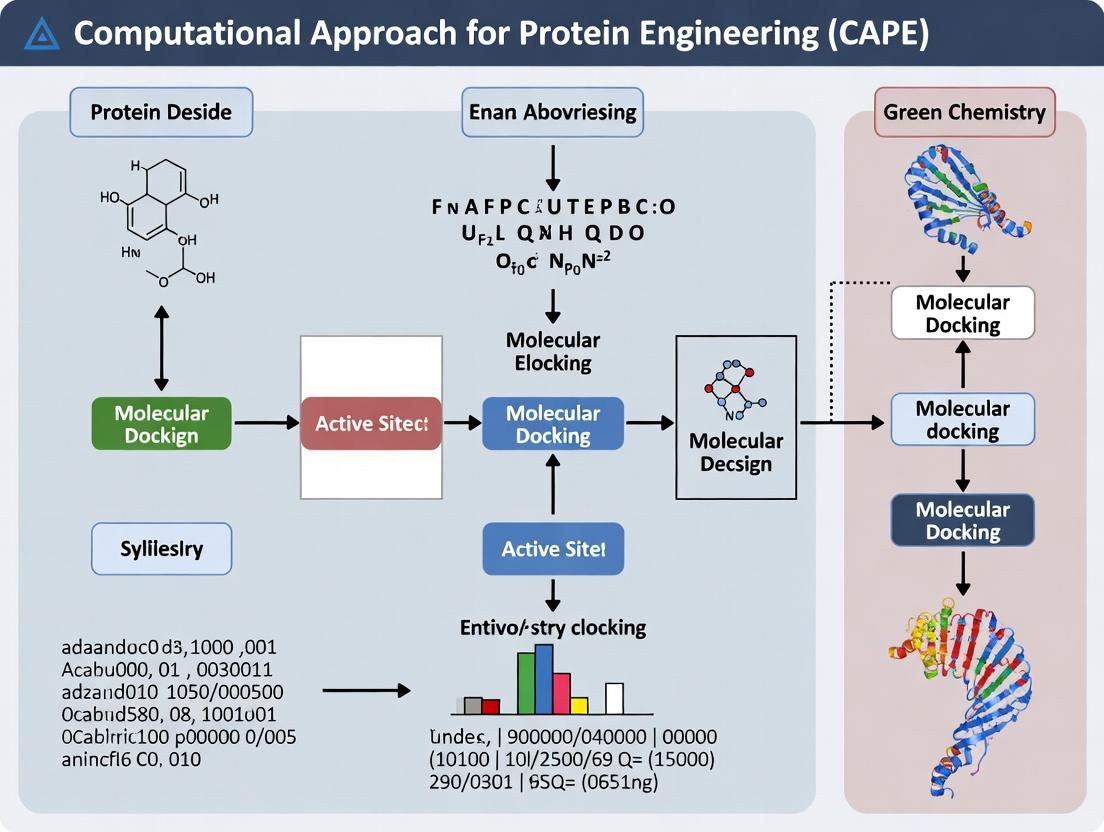
This comprehensive review explores the transformative role of Computational Analysis of Protein Engineering (CAPE) tools in advancing enzyme engineering for green chemistry and biocatalysis.
Harnessing CAPE in Enzyme Engineering: A Cutting-Edge Guide for Green Chemistry and Biocatalysis
Abstract
This comprehensive review explores the transformative role of Computational Analysis of Protein Engineering (CAPE) tools in advancing enzyme engineering for green chemistry and biocatalysis. Tailored for researchers, scientists, and drug development professionals, the article provides a foundational understanding of CAPE principles, details its methodological workflow in designing novel biocatalysts, addresses critical troubleshooting and optimization strategies, and validates CAPE's impact through comparative analysis with traditional methods. We synthesize how CAPE accelerates the development of sustainable industrial processes, high-value chemical synthesis, and next-generation therapeutics.
What is CAPE? Demystifying Computational Analysis for Protein Engineering
Thesis Context
This document details the core principles of Computational Analysis of Protein Evolution (CAPE), framing it within a broader thesis on its application for enzyme engineering and green chemistry. CAPE represents a paradigm shift from static, structure-based design to dynamic, evolution-informed engineering, enabling the creation of novel biocatalysts for sustainable industrial processes.
Core Principles and Evolutionary Context
CAPE leverages the natural evolutionary record encoded in protein sequence families to guide rational engineering. Its foundational principles are:
1. Evolutionary Conservation as a Functional Blueprint: Positions that are highly conserved across a deep multiple sequence alignment (MSA) are critical for folding, stability, or mechanism. 2. Co-evolutionary Networks Reveal Functional Coupling: Residues that mutate in a correlated manner across an MSA often interact directly or are part of the same functional pathway. 3. Phylogenetic Analysis for Functional Divergence: Evolutionary trees identify subfamilies with distinct functional traits, highlighting residues responsible for substrate specificity or altered activity. 4. Statistical Potentials from Sequence Data: Direct Coupling Analysis (DCA) and related methods infer quantitative residue-residue interaction potentials from sequence data alone, predicting contacts and allosteric communication.
Quantitative Comparison: CAPE vs. Traditional Protein Design
Table 1: Comparison of design methodologies.
| Aspect | Traditional Protein Design (Rational/De Novo) | CAPE (Evolution-Informed Design) |
|---|---|---|
| Primary Data Source | High-resolution 3D structures (X-ray, Cryo-EM) | Protein sequence families (MSAs) |
| Key Insight | Physical/chemical complementarity (electrostatics, VDW) | Evolutionary constraints and covariation |
| Design Target | Static energy minimum of a single conformation | Ensemble of functionally competent states observed in evolution |
| Mutation Prediction | Rosetta, FoldX (energy calculations) | Statistical inference (DCA, SCA), phylogenetic analysis |
| Strength | Novel folds, non-natural chemistry, precise placement | Identifying functionally relevant, stability-preserving mutations |
| Limitation | May overlook remote stabilizing/functional interactions | Requires large, diverse sequence family; limited for novel folds |
| Typical Throughput | Low-to-medium (compute-intensive) | High (once MSA is constructed) |
| Success Rate (Reported) | ~10-30% for de novo enzymes | ~40-60% for functional enzyme engineering |
Key Experimental Protocols
Protocol: Constructing a Deep MSA for CAPE
Objective: Generate a high-quality, diverse MSA for evolutionary analysis. Materials: See "Research Reagent Solutions" below. Procedure:
- Seed Sequence Acquisition: Input the target protein sequence (UniProt ID).
- Iterative Homology Search:
- Perform a search using JackHMMER against a large non-redundant database (e.g., UniRef90) with 3-5 iterations (E-value threshold: 1e-10).
- Collect all significant hits.
- Sequence Curation:
- Remove fragments (<80% of target length).
- Cluster sequences at 90% identity using CD-HIT to reduce redundancy.
- Manually inspect and remove sequences from anomalous organisms if necessary.
- Alignment:
- Align the curated sequences using MAFFT (L-INS-i algorithm for <200 sequences, FFT-NS-2 for larger sets).
- Trim poorly aligned columns and termini using TrimAl (
-automated1mode).
- Quality Assessment: The final MSA should contain >1,000 diverse sequences for robust statistical inference. Calculate the effective number of sequences (Meff).
Protocol: Direct Coupling Analysis (DCA) for Contact Prediction
Objective: Identify evolutionarily coupled residue pairs for guiding mutagenesis. Procedure:
- Input: The curated MSA from Protocol 2.1. Ensure it is in FASTA format.
- Preprocessing (PlmDCA):
- Re-weight sequences to correct for phylogenetic bias (typically using a sequence identity threshold of 0.8).
- Convert amino acids to a 21-letter alphabet (20 standard + gap).
- Inference of Couplings:
- Use the plmDCA or GREMLIN software package to compute the direct information (DI) score for every pair of positions.
- This involves solving the inverse of a global statistical model (Potts model) to disentangle direct from indirect correlations.
- Analysis & Output:
- Rank all residue pairs by their DI score.
- Filter out pairs with sequence separation <5 residues to focus on long-range contacts.
- The top-ranked pairs (e.g., top L/2 or L, where L = protein length) are predicted to be in physical contact. Map these onto a reference structure for validation and design hypotheses.
Protocol: Phylogenetic Tree-Based Identification of Functional Determinants
Objective: Identify residues responsible for functional divergence between enzyme subfamilies. Procedure:
- Tree Construction: Build a maximum-likelihood phylogenetic tree from the trimmed MSA using IQ-TREE (ModelFinder for best-fit model, 1000 ultrafast bootstraps).
- Subfamily Definition: Visually (using FigTree) or algorithmically (e.g., pairwise distance cutoff) define distinct clades/subfamilies on the tree.
- Sequence Logo Analysis: Generate sequence logos for each subfamily using WebLogo. Identify positions with starkly different amino acid profiles between subfamilies.
- Statistical Validation: Perform a statistical test (e.g., CAPS or custom Python script using Fisher's exact test) to identify residues whose state (amino acid group) is significantly associated with subfamily classification.
- Hypothesis Generation: Target the identified statistically significant positions for mutagenesis to swap functional properties (e.g., substrate preference) between subfamilies.
Visualization of CAPE Workflow and Concepts
Diagram 1: Core CAPE workflow for enzyme engineering.
Diagram 2: Evolution from traditional design to CAPE.
The Scientist's Toolkit: Research Reagent Solutions
Table 2: Key reagents and resources for CAPE.
| Item | Function / Description | Example / Source |
|---|---|---|
| Sequence Databases | Source for building MSAs; must be comprehensive and non-redundant. | UniRef90, MGnify, NCBI nr |
| HMMER Suite | Software for sensitive, iterative homology searches to build MSAs. | JackHMMER (part of HMMER) |
| Alignment Software | Produces accurate multiple sequence alignments from homologs. | MAFFT, Clustal Omega |
| Alignment Trimming Tool | Removes poorly aligned columns to improve analysis quality. | TrimAl, BMGE |
| DCA Software | Computes direct coupling scores from an MSA. | plmDCA, GREMLIN, EVcouplings |
| Phylogenetics Software | Infers evolutionary relationships and builds trees from MSAs. | IQ-TREE, FastTree, RAxML |
| Sequence Logo Generator | Visualizes amino acid conservation/variation at each position. | WebLogo, Seq2Logo |
| Molecular Graphics | Visualizes predicted contacts/residues on 3D structures. | PyMOL, ChimeraX |
| High-Throughput Cloning Kit | Enables construction of mutagenesis libraries based on CAPE output. | Golden Gate Assembly, NEB HiFi DNA Assembly |
| Activity Assay Reagents | Validates functional changes in engineered enzyme variants. | Fluorogenic/Chromogenic substrates (e.g., pNP esters for lipases), LC-MS standards |
Application Notes: Computational Protein Engineering (CAPE) Pipeline
The integration of Molecular Dynamics (MD), Machine Learning (ML), and Free Energy Calculations (FEC) forms a synergistic pipeline for Computer-Aided Protein Engineering (CAPE), accelerating the development of enzymes for green chemistry and therapeutic applications. This integrated approach enables the rapid in silico screening of variant libraries, prediction of functional properties, and rational design of biocatalysts with enhanced stability, activity, and specificity under non-natural conditions.
Table 1: Quantitative Performance Metrics of Integrated CAPE Frameworks
| Framework Component | Typical Simulation/Calculation Time | Key Output Metrics | Accuracy vs. Experiment (Typical Range) |
|---|---|---|---|
| MD (Equilibration) | 10-100 ns (GPU days) | RMSD (Å), RMSF (Å), Solvent Accessibility | N/A (System Preparation) |
| MD (Production) | 100 ns - 1 µs (GPU weeks) | Conformational Ensembles, H-bond Networks, Dihedral Angles | Qualitative/Structural Agreement |
| ML (Training) | Hours-Days (GPU/CPU) | Model R², MAE, ROC-AUC | Varies (R²: 0.6-0.9 on test sets) |
| FEC (MM/PBSA) | Hours per frame (CPU) | ΔGbinding (kcal/mol) | ~1-3 kcal/mol RMSE |
| FEC (Alchemical - TI, FEP) | Days-Weeks (GPU) | ΔΔGmut, ΔGbind (kcal/mol) | ~0.5-1.5 kcal/mol RMSE |
| Integrated Pipeline | Weeks-Months | Rank-Ordered Variant List, Predicted ΔΔG, KM, kcat | Enrichment Factors: 10-100x over random screening |
Detailed Protocols
Protocol 2.1: Ensemble MD for Conformational Sampling
Objective: Generate a diverse conformational ensemble of an enzyme for subsequent ML training or FEC.
- System Preparation: Use PDB ID or homology model. Process with
pdb4amberorCHARMM-GUI. Add missing residues (Modeller) and protons (reduce/H++). - Solvation & Neutralization: Solvate in a cubic TIP3P water box with 10-12 Å buffer. Add ions (Na+/Cl-) to neutralize charge and achieve 0.15 M physiological concentration.
- Energy Minimization: Perform 5,000 steps of steepest descent followed by 5,000 steps conjugate gradient to relieve steric clashes.
- Thermalization & Equilibration: Heat system from 0 K to 300 K over 50 ps under NVT ensemble (Langevin thermostat). Then equilibrate for 1 ns under NPT ensemble (Berendsen/MTK barostat, 1 atm).
- Production MD: Run multiple (3-5) independent replicas of 100-500 ns each using GPU-accelerated engines (AMBER/OpenMM, NAMD, GROMACS). Save frames every 10-100 ps.
- Analysis: Cluster frames (e.g., hierarchical) based on backbone RMSD. Extract representative structures and key geometric descriptors (active site distances, loop dihedrals).
Protocol 2.2: ML-Guided Variant Prediction for Enzyme Engineering
Objective: Train a model to predict the functional effect (e.g., ΔΔG, activity score) of single/multiple point mutations.
- Feature Engineering:
- Sequence-based: One-hot encoding, BLOSUM62 substitution matrix, Position-Specific Scoring Matrix (PSSM) from PSI-BLAST.
- Structure-based (from MD): Per-residue RMSF, SASA, secondary structure persistence, contact maps, non-covalent interaction counts.
- Evolutionary: Co-evolutionary couplings (from EVcoupling), conservation scores from ConSurf.
- Dataset Curation: Collect experimental data for ~100-10,000 enzyme variants from literature/databases (e.g., ProtaBank, BRENDA). Split 70/15/15 for training/validation/test.
- Model Training & Selection: Train multiple architectures: Random Forest, Gradient Boosting, and Graph Neural Networks (GNNs) using frameworks like PyTorch or TensorFlow. Use 5-fold cross-validation.
- Hyperparameter Tuning: Optimize using Bayesian optimization or grid search on validation set. Key parameters: tree depth, learning rate, hidden layers.
- In Silico Saturation Mutagenesis: Apply trained model to predict effects of all possible single mutations at target positions. Rank by predicted improvement (e.g., higher stability or activity).
- Experimental Validation: Select top 20-50 predicted beneficial variants for expression, purification, and functional assays (e.g., thermal shift, kinetic measurements).
Protocol 2.3: Alchemical Free Energy Calculation (FEP) for Binding Affinity
Objective: Compute the change in binding free energy (ΔΔGbind) for a ligand or between enzyme wild-type and mutant.
- Topology Preparation: Use
tleap(AMBER) orpdb2gmx(GROMACS) to generate topology files for both end states (e.g., ligand A and B, or WT and Mutant). - Lambda Window Setup: Define 12-24 intermediate λ states for alchemical transformation. Use soft-core potentials for van der Waals and electrostatic terms to avoid endpoint singularities.
- System Equilibration: Minimize and equilibrate each λ window individually for 1-2 ns.
- Production FEP Simulation: Run each window for 2-10 ns (depending on system size) under NPT conditions. Use Hamiltonian replica exchange (HREM) between adjacent λ windows to enhance sampling.
- Free Energy Analysis: Use the Multistate Bennett Acceptance Ratio (MBAR) or the Bennett Acceptance Ratio (BAR) method to compute ΔG for each transformation. Estimate statistical error via bootstrapping (100-1000 iterations).
- Result Interpretation: ΔΔGbind = ΔGcomplex, mut - ΔGapo, mut - (ΔGcomplex, wt - ΔGapo, wt). A negative ΔΔG predicts stronger binding/mutation stabilization.
Visualizations
Title: Integrated CAPE Workflow for Enzyme Design
Title: Alchemical Free Energy Perturbation Protocol
The Scientist's Toolkit: Key Research Reagent Solutions
Table 2: Essential Computational Tools & Resources for CAPE
| Tool/Resource Name | Category | Primary Function | Key Application in CAPE |
|---|---|---|---|
| AMBER | MD & FEC Suite | Force field application, MD simulation, FEP/TI calculations. | Provides high-accuracy protein force fields (ff19SB) and integrated tools for alchemical calculations. |
| GROMACS | MD Engine | High-performance MD simulations. | Efficient conformational sampling of large enzyme systems on GPU clusters. |
| OpenMM | MD Library | GPU-accelerated MD with Python API. | Custom simulation workflows and enhanced sampling method implementation. |
| CHARMM-GUI | Web Server | Building complex simulation systems. | Prepares membrane-bound enzyme systems with cofactors and organic solvents. |
| PyTorch/TensorFlow | ML Framework | Deep learning model development. | Building GNNs to predict mutation effects from structural and sequence features. |
| AlphaFold2 | Structure Prediction | Protein 3D structure prediction. | Generating reliable homology models for enzymes with no crystal structure. |
| Rosetta | Modeling Suite | Protein design and docking. | Generating initial variant sequences and evaluating protein-protein interactions. |
| PLIP | Analysis Tool | Detecting non-covalent interactions. | Analyzing MD trajectories to identify persistent ligand-enzyme interactions. |
| MAESTRO (Schrödinger) | GUI Platform | Integrated modeling, FEP, ML. | Streamlined workflow for lead optimization and enzyme variant scoring in drug discovery. |
| ProtaBank | Database | Curated protein engineering data. | Source of experimental data for training and validating ML models. |
The Imperative for CAPE in Modern Enzyme Engineering and Green Chemistry Goals
CAPE (Caffeic Acid Phenethyl Ester), a bioactive component of propolis, has emerged as a critical molecular scaffold and modulator in enzyme engineering and green chemistry. This document, framed within a broader thesis investigating CAPE's multifunctional role, provides detailed application notes and protocols for its utilization. The thesis posits that CAPE’s unique chemical structure—combining catechol and phenethyl moieties—confers dual functionality: as a versatile substrate/ligand for engineering enzyme activity and selectivity, and as a green, biobased platform chemical for sustainable synthesis. The following sections translate this thesis into actionable experimental workflows and data.
Table 1: Key Physicochemical and Biochemical Properties of CAPE
| Property | Value / Description | Relevance to Enzyme Engineering & Green Chemistry |
|---|---|---|
| Molecular Formula | C₁₇H₁₆O₄ | Defines biobased carbon content and molecular weight for reaction stoichiometry. |
| Molecular Weight | 284.31 g/mol | Critical for dosage calculations in enzymatic assays and biotransformations. |
| logP (Octanol-Water) | ~3.0 (Predicted) | Indicates moderate hydrophobicity; influences substrate binding in enzyme active sites and solvent selection for extraction/reactions. |
| Key Functional Groups | Catechol, Phenolic Acid, Phenethyl Ester | Provides sites for enzymatic oxidation (e.g., by laccases, tyrosinases), hydrolysis (by esterases), and derivatization. |
| Major Bioactivity | Antioxidant, Anti-inflammatory | Suggests potential for stabilizing enzymes against oxidative deactivation and for therapeutic enzyme targeting. |
| Solubility (25°C) | DMSO: >50 mM; Ethanol: ~30 mM; Water: <0.1 mg/mL | Dictates stock solution preparation and choice of co-solvents for aqueous biocatalytic systems. |
| Melting Point | 118-120 °C | Important for storage and handling in solid form. |
Table 2: Exemplar Enzymatic Kinetic Parameters with CAPE as Substrate
| Enzyme Class | Enzyme (Source) | Km (µM) | kcat (s⁻¹) | kcat/Km (M⁻¹s⁻¹) | Application Note |
|---|---|---|---|---|---|
| Oxidoreductase | Laccase (Trametes versicolor) | 45.2 ± 5.1 | 2.8 ± 0.2 | 6.2 x 10⁴ | Efficient substrate for polymerizing phenolics. Optimal pH 5.0. |
| Oxidoreductase | Tyrosinase (Agaricus bisporus) | 112.7 ± 15.3 | 1.1 ± 0.1 | 9.8 x 10³ | Oxidation to o-quinone; useful for cross-linking or synthesis of melanin-like compounds. |
| Hydrolase | Carboxylesterase (Porcine Liver) | 78.4 ± 8.9 | 15.4 ± 1.3 | 1.96 x 10⁵ | Selective hydrolysis to yield caffeic acid and phenethanol. |
Detailed Experimental Protocols
Protocol 3.1: High-Throughput Screening of CAPE Derivatives for Enzyme Inhibition/Activation
Objective: To identify CAPE-based modulators of a target enzyme (e.g., SARS-CoV-2 Main Protease, Mpro) using a fluorescence-based assay.
Materials: See "The Scientist's Toolkit" (Section 5). Workflow:
- Library Preparation: Prepare 10 mM stock solutions of CAPE and its synthetic derivatives (e.g., alkylated catechols, ester analogs) in anhydrous DMSO.
- Enzyme Dilution: Dilute purified target enzyme in assay buffer (e.g., 20 mM Tris-HCl, 1 mM EDTA, pH 7.3) to 2x the final desired concentration.
- Assay Plate Setup: In a black 384-well plate:
- Add 10 µL of compound stock or DMSO (control) to designated wells (final [compound] = 10-100 µM).
- Add 10 µL of 2x enzyme solution. Incubate at 25°C for 15 min.
- Initiate reaction by adding 10 µL of 3x fluorogenic substrate solution (e.g., Dabcyl-KTSAVLQSGFRKME-Edans for Mpro).
- Kinetic Measurement: Immediately monitor fluorescence (excitation 360 nm, emission 460 nm) every 30 sec for 30 min using a plate reader.
- Data Analysis: Calculate initial velocities (Vo). Plot % enzyme activity (Vo,compound / Vo,control) vs. [compound] to determine IC₅₀ using a four-parameter logistic fit.
Diagram Title: HTS Workflow for CAPE Derivative Screening
Protocol 3.2: CAPE as a Substrate for Laccase-Mediated Green Polymerization
Objective: To synthesize poly(caffeic acid phenethyl ester) via enzymatic oxidative coupling.
Materials: CAPE, Trametes versicolor laccase (≥0.5 U/µL), 0.1 M citrate-phosphate buffer pH 5.0, methanol, dialysis tubing (MWCO 1 kDa). Procedure:
- Reaction Setup: Dissolve CAPE in a minimal volume of ethanol and add to buffer under stirring to a final concentration of 5 mM. Ensure final organic solvent <5% (v/v).
- Enzyme Addition: Add laccase to a final activity of 10 U/mL reaction mixture.
- Polymerization: Incubate at 30°C with continuous stirring (500 rpm) and air bubbling (for oxygen supply) for 24 hours. Monitor color change to dark brown.
- Reaction Termination & Purification: Add 1 mL methanol to inactivate enzyme. Dialyze the reaction mixture against water (changed 4x over 48 h) to remove unreacted monomer and buffer salts.
- Product Recovery: Lyophilize the retentate to obtain the polymeric product as a brown solid. Characterize by GPC, FT-IR, and NMR.
Diagram Title: Laccase-Catalyzed Green Polymerization of CAPE
Signaling Pathway Modulation by CAPE (Relevant to Drug Development)
CAPE is known to modulate key inflammatory and oncogenic pathways, making it a lead for therapeutic enzyme targeting.
Diagram Title: CAPE Modulation of NF-κB and MAPK/STAT3 Pathways
The Scientist's Toolkit: Research Reagent Solutions
Table 3: Essential Materials for CAPE-Centric Research
| Item | Function & Application Note | Example Vendor/Cat. No. (Representative) |
|---|---|---|
| CAPE (≥97% HPLC) | Primary research compound. Use for assay standards, reaction substrates, and control experiments. Verify purity by HPLC before quantitative studies. | Sigma-Aldrich, C8221 |
| Laccase from T. versicolor | Key oxidoreductase for CAPE polymerization and dimerization studies. Unit definition: oxidation of 1 µmol ABTS per min at pH 3.0, 25°C. | Sigma-Aldrich, 38429 |
| Fluorogenic Protease Substrate | For inhibitor screening assays (Protocol 3.1). Specific sequence depends on target protease (e.g., Mpro substrate). | Anaspec, custom synthesis |
| Human Recombinant Carboxylesterase 1 (hCES1) | To study CAPE metabolism (hydrolysis) and its relevance to pharmacokinetics/drug design. | Corning, 451172 |
| Black 384-Well Low-Volume Assay Plates | For high-throughput screening. Low volume (e.g., 30 µL final) conserves valuable enzyme and compound libraries. | Corning, 4513 |
| Dialysis Tubing, MWCO 1 kDa | Purification of enzymatic reaction products, especially polymers, from small molecules. | Spectrum Labs, 132670 |
| Deuterated DMSO (DMSO-d6) | Solvent for NMR analysis of CAPE and its enzymatic derivatives. | Cambridge Isotope, DLM-10-10x0.75 |
| Silanized Glass Vials | Prevents adsorption of hydrophobic CAPE and its derivatives to glass surfaces during storage. | Thermo Scientific, C4000-1W |
Application Notes
Thesis Context
Within the broader thesis on Computer-Aided Protein Engineering (CAPE) for enzyme engineering and green chemistry applications, the integration of predictive, interactive, and analytical software suites is paramount. These toolkits enable the rational design of enzymes with enhanced activity, specificity, and stability for sustainable industrial processes, moving beyond traditional, labor-intensive directed evolution approaches.
Rosetta
A comprehensive software suite for macromolecular modeling, design, and structure prediction. Its energy functions and sampling algorithms are central to de novo enzyme design and stabilizing mutations.
Key Applications in CAPE:
- Enzyme Thermostabilization: Redesigning protein cores for increased melting temperature (Tm).
- Active Site Repurposing: Altering substrate specificity for non-native reactions relevant to green chemistry.
- Protein-Protein Interface Design: Engineering enzyme complexes for metabolic channeling.
Foldit
A citizen science puzzle video game that leverages human spatial problem-solving intuition to fold protein structures and design new proteins. It serves as a powerful tool for hypothesis generation and exploring conformational space.
Key Applications in CAPE:
- Solving Difficult Protein Folding Puzzles: Providing starting models for enzymes with poor homology.
- Community-Driven Enzyme Redesign: Players actively compete to design enzymes with improved features, such as ligand binding affinity.
AlphaFold2 (and ColabFold)
A deep learning system developed by DeepMind that predicts protein 3D structure from its amino acid sequence with unprecedented accuracy. It has revolutionized the field by providing reliable structural hypotheses.
Key Applications in CAPE:
- High-Accuracy Template Generation: Providing reliable starting models for Rosetta-based design when no experimental structure exists.
- Rapid Ortholog Screening: Quickly assessing structural variations across enzyme families to identify stable, functional scaffolds.
- Confidence Metrics: The predicted Local Distance Difference Test (pLDDT) and predicted Aligned Error (PAE) guide model reliability for different regions (e.g., active site loops).
Specialized Enzymatic Suites (e.g., CAVER, AutoDock Vina, PyMOL)
These are specialized tools for analysis, docking, and visualization that complete the CAPE workflow.
Key Applications:
- CAVER: Analyzes and predicts substrate access tunnels and channels in enzymes, crucial for engineering substrate specificity.
- AutoDock Vina/MGLTools: Performs molecular docking to predict ligand binding poses and calculate approximate binding affinities (ΔG in kcal/mol).
- PyMOL/ChimeraX: Essential for 3D visualization, mutational analysis, and figure generation.
Table 1: Quantitative Comparison of Core CAPE Toolkits
| Tool | Primary Method | Key Output | Typical Computational Time* | Primary Use in Enzyme Engineering |
|---|---|---|---|---|
| AlphaFold2 | Deep Learning (Attention-based) | 3D Coordinates, pLDDT, PAE | Minutes to Hours (GPU) | High-accuracy structure prediction |
| Rosetta | Physics-based & Statistical Energy Minimization | Designed Sequences, Relaxed Structures | Hours to Days (CPU) | De novo design & stability optimization |
| Foldit | Human-guided Interactive Sampling | Puzzle Solutions (Structures) | Human-paced | Hypothesis generation & intuitive design |
| AutoDock Vina | Empirical Scoring & Search | Binding Pose, Estimated ΔG | Minutes to Hours (CPU) | Ligand docking & affinity estimation |
| *Time varies significantly with system size and hardware. |
Experimental Protocols
Protocol 1: Rosetta-Driven Enzyme Thermostabilization
Objective: Identify stabilizing point mutations in an enzyme using the RosettaDDG protocol.
Materials: Rosetta Software Suite, starting PDB structure, high-performance computing cluster.
Methodology:
- Structure Preparation: Clean the wild-type enzyme PDB file using the
clean_pdb.pyscript. Remove water molecules and heteroatoms not critical for catalysis. - Relax the Structure: Use the
relax.linuxgccreleaseapplication with theenzdesscore function (ref2015_cst) to generate a low-energy reference structure. - Generate Mutation Scan: Use the
cartesian_ddg.linuxgccreleaseapplication to calculate the predicted change in free energy (ΔΔG) for all possible single-point mutations at pre-defined residue positions (e.g., core residues). - Analyze Output: Sort mutations by predicted ΔΔG (more negative values indicate increased stability). Select top 5-10 candidates for experimental validation.
- Experimental Validation: Construct mutants via site-directed mutagenesis, express, purify, and measure Tm via differential scanning fluorimetry (DSF).
Protocol 2: Integrating AlphaFold2 with Rosetta forDe NovoEnzyme Design
Objective: Design a novel enzyme active site for a target reaction.
Materials: AlphaFold2 (or ColabFold), Rosetta, sequence of a scaffold protein.
Methodology:
- Scaffold Selection & Prediction: Input a stable protein scaffold sequence into ColabFold. Generate a predicted structure and assess confidence (pLDDT > 90 for scaffold regions).
- Active Site Placement: Using PyMOL, manually or algorithmically define a 3D constellation of catalytic residues (Theozyme) within a putative active site pocket.
- Rosetta Enzyme Design: Use the
RosettaScriptsinterface with theEnzDesignmover. Specify constraints to fix the backbone atoms of the scaffold and allow sequence redesign only within the active site region defined in step 2. - Sequence Optimization: Rosetta samples amino acid identities and side-chain rotamers to minimize energy while maintaining catalytic geometry.
- Filtering & Ranking: Filter designed models based on total score, catalytic constraint satisfaction, and burying of the active site. Select top designs for in silico docking (Protocol 3) and subsequent gene synthesis.
Protocol 3: Virtual Screening of Designed Enzymes with AutoDock Vina
Objective: Assess the binding affinity of a target substrate to a designed enzyme from Protocol 2.
Materials: Designed enzyme PDB, substrate 3D SDF file, AutoDock Vina, MGLTools.
Methodology:
- Receptor Preparation: Load the enzyme PDB into MGLTools' AutoDockTools. Add polar hydrogens and Gasteiger charges. Save as a
.pdbqtfile. - Ligand Preparation: Load the substrate file. Detect root and set torsions for flexibility if desired. Save as a
.pdbqtfile. - Define Search Space: Set the grid box center and size to encompass the designed active site.
- Run Docking: Execute Vina via command line:
vina --receptor receptor.pdbqt --ligand ligand.pdbqt --config config.txt --out output.pdbqt. - Analyze Results: Inspect the top-scoring binding poses (ranked by estimated ΔG) in PyMOL. Ensure the substrate orientation is consistent with the intended catalytic mechanism.
Visualization Diagrams
CAPE Workflow for Enzyme Engineering
Toolkit Functions in CAPE
The Scientist's Toolkit: Key Research Reagent Solutions
Table 2: Essential Reagents & Kits for CAPE Validation
| Item | Function in CAPE Workflow | Example/Notes |
|---|---|---|
| Site-Directed Mutagenesis Kit | Rapid construction of in silico designed enzyme variants for expression. | NEB Q5 Site-Directed Mutagenesis Kit, Agilent QuikChange. |
| High-Fidelity DNA Polymerase | Error-free amplification of gene fragments for library construction or cloning. | Phusion DNA Polymerase, KAPA HiFi. |
| Competent E. coli Cells | Cloning and expression of plasmid DNA containing designed enzyme genes. | NEB 5-alpha, BL21(DE3) for protein expression. |
| Affinity Purification Resin | One-step purification of His-tagged engineered enzymes for activity assays. | Ni-NTA Agarose, Cobalt-based resins. |
| Thermal Shift Dye | High-throughput measurement of protein melting temperature (Tm) for stability. | SYPRO Orange, Protein Thermal Shift Dye. |
| Fluorogenic/Chromogenic Substrate | Quantitative kinetic assay of engineered enzyme activity. | Para-nitrophenol (pNP) derivatives, AMC-linked substrates. |
| Size-Exclusion Chromatography Column | Polishing step to obtain monodisperse enzyme sample for crystallography. | Superdex 75/200 Increase, ENrich SEC columns. |
A Step-by-Step CAPE Workflow: From In Silico Design to Functional Biocatalyst
This protocol initiates the Computational-Analytical Pipeline for Enzyme engineering (CAPE), a structured framework for developing enzymes tailored for green chemistry and pharmaceutical applications. The selection and in-depth structural analysis of a wild-type enzyme are critical first steps, determining the feasibility and direction of all subsequent engineering cycles.
Application Notes: Core Principles and Strategic Considerations
Target Selection Criteria
A successful engineering campaign depends on selecting an appropriate wild-type scaffold. The decision matrix integrates multiple quantitative and qualitative parameters.
Table 1: Quantitative Metrics for Initial Enzyme Target Prioritization
| Metric | Ideal Range | Measurement Method | Rationale |
|---|---|---|---|
| Specific Activity (U/mg) | > 1.0 for desired substrate | Spectrophotometric assay | Indicates inherent catalytic efficiency. |
| Tm (°C) | > 45°C | Differential Scanning Fluorimetry (DSF) | Proxy for structural rigidity and tolerance to mutation. |
| kcat/KM (M⁻¹s⁻¹) | > 10³ | Steady-state kinetics | Defines catalytic proficiency and selectivity. |
| Expression Yield (mg/L) | > 10 in E. coli | Purification yield quantification | Impacts practical feasibility of study. |
| PDB Resolution (Å) | < 2.5 | Database query (PDB, AlphaFold DB) | Critical for reliable structural analysis. |
| Sequence Coverage by AF2 | > 90% with pLDDT > 80 | AlphaFold2 prediction | Enables modeling if no crystal structure exists. |
Strategic Considerations:
- Reaction Landscape: Prioritize enzymes with mechanistic similarity to the desired transformation, even if substrate scope differs.
- Evolutionary Tractability: Favor enzymes from thermophiles or with known homologous variants, suggesting mutational robustness.
- Patent & Literature Landscape: Conduct a freedom-to-operate analysis early, focusing on unclaimed enzyme scaffolds or reaction conditions.
Detailed Protocols
Protocol A: Multi-Database Mining for Target Identification
Objective: Systematically identify candidate wild-type enzymes from public databases.
Materials:
- BRENDA (BRaunschweig ENzyme DAtabase)
- Protein Data Bank (PDB)
- UniProtKB
- AlphaFold Protein Structure Database
- Enzyme Commission (EC) number classification
Procedure:
- Define Desired Reaction: Use the EC number system to classify the target chemical transformation.
- BRENDA Query: Search by EC number. Extract kinetic data (
kcat,KM,ki), organism source, and reported substrates. - Cross-Reference with PDB: Filter results to enzymes with publicly available crystal structures (resolution < 2.5 Å preferred).
- UniProt Retrieval: For promising candidates, obtain full amino acid sequences, natural variants, and functional annotations.
- AlphaFold DB Check: If no high-resolution PDB exists, retrieve a predicted structure and assess per-residue confidence (pLDDT score).
- Compile Shortlist: Rank candidates based on Table 1 metrics.
Protocol B: Computational Structural Analysis Workflow
Objective: Perform a comparative structural analysis of shortlisted wild-type enzymes.
Materials:
- Molecular visualization software (PyMOL, UCSF ChimeraX)
- Computational tools: PDB2PQR, PROPKA, CASTp, PyMol
- Local installation of AlphaFold2 (optional, for de novo modeling)
Procedure:
- Structure Preparation:
- Download PDB files.
- Remove heteroatoms (water, ions, ligands) except essential cofactors.
- Add missing hydrogen atoms and assign protonation states using PDB2PQR/ PROPKA at target pH (e.g., pH 7.0).
- Active Site Analysis:
- Visually identify catalytic residues (e.g., Ser-His-Asp triads, acid-base residues).
- Use CASTp to define the active site cavity volume (in ų).
- Map conserved residues via a preliminary multiple sequence alignment.
- Dynamics Assessment:
- Analyze B-factor (thermal parameter) plots from PDB data to identify flexible loops near the active site.
- Comparative Analysis:
- Superimpose structures of homologs to identify structurally conserved vs. divergent regions.
- Document all findings in a structured analysis report.
Diagram Title: Computational Structural Analysis Workflow
Protocol C: Experimental Validation of Baseline Activity and Stability
Objective: Establish a reproducible benchmark of catalytic function and stability for the chosen wild-type enzyme.
Materials:
- Purified wild-type enzyme (>95% purity by SDS-PAGE)
- Defined substrate(s)
- Assay buffer (e.g., 50 mM HEPES, pH 7.5)
- Microplate reader (UV-Vis or fluorescence-capable)
- Real-time PCR machine for DSF
Procedure: Part 1: Kinetic Assay
- Prepare substrate solutions in assay buffer across a concentration range (0.2-5 x estimated KM).
- In a 96-well plate, add 180 µL of substrate solution per well.
- Initiate reactions by adding 20 µL of diluted enzyme. Mix immediately.
- Monitor product formation continuously for 2-5 minutes at the appropriate wavelength.
- Fit initial velocity data to the Michaelis-Menten model using non-linear regression (e.g., GraphPad Prism) to extract
kcatandKM.
Part 2: Thermostability Assay (DSF)
- Prepare a sample containing 5 µM enzyme, 10X SYPRO Orange dye, in assay buffer. Final volume: 20 µL.
- Load samples into a qPCR/DSF-compatible plate.
- Run a temperature ramp from 25°C to 95°C at a rate of 1°C/min, monitoring fluorescence.
- Determine the melting temperature (Tm) from the first derivative of the fluorescence curve.
Table 2: Example Wild-Type Characterization Data Sheet
| Enzyme (Source) | EC Number | Specific Activity (U/mg) | kcat (s⁻¹) | KM (mM) | kcat/KM (M⁻¹s⁻¹) | Tm (°C) | PDB ID / AF2 Model |
|---|---|---|---|---|---|---|---|
| PETase (I. sakaiensis) | 3.1.1.- | 0.65 ± 0.05 | 0.33 ± 0.02 | 0.12 ± 0.01 | 2.75 x 10³ | 46.2 ± 0.3 | 6EQE / AF-P0DP47 |
| Arylmalonate Decarboxylase | 4.1.1.76 | 12.1 ± 0.8 | 5.2 ± 0.3 | 0.85 ± 0.08 | 6.1 x 10³ | 58.7 ± 0.5 | 5ZNG / AF-Q8GQS7 |
The Scientist's Toolkit: Key Research Reagent Solutions
Table 3: Essential Materials for Target Selection & Structural Analysis
| Item | Function in Protocol | Example Product/Catalog |
|---|---|---|
| HisTrap HP Column | Affinity purification of His-tagged wild-type and variant enzymes. | Cytiva, 17524801 |
| SYPRO Orange Protein Gel Stain | Fluorescent dye for Differential Scanning Fluorimetry (DSF) to measure protein thermal stability. | Thermo Fisher, S6650 |
| Microplate Reader (UV-Vis) | High-throughput kinetic analysis of enzyme activity in 96- or 384-well format. | BioTek Synergy H1 |
| PDB2PQR Server | Automated pipeline for adding hydrogens, assigning charge states, and preparing PDB files for analysis. | pdb2pqr.org |
| PyMOL Visualization Software | Industry-standard molecular graphics system for visualization, animation, and analysis of 3D structures. | Schrödinger, PyMOL |
| Crystal Screen Kit | Sparse-matrix screen for initial crystallization conditions of purified protein targets. | Hampton Research, HR2-110 |
| Site-Directed Mutagenesis Kit | Rapid generation of point mutations for follow-up validation of computational predictions. | NEB, E0554S (Q5) |
Application Notes
This protocol forms the critical computational core of a Computer-Aided Protein Engineering (CAPE) pipeline for green chemistry applications. Following the identification of target residues from structural and evolutionary analysis (Step 1), this step systematically explores the functional landscape through virtual mutagenesis and screens thousands of variants for desirable traits—such as enhanced activity, thermostability, or novel substrate specificity—prior to physical library construction. This drastically reduces experimental burden and focuses resources on the most promising candidates for sustainable biocatalyst development.
Key Quantitative Data Summary
Table 1: Common In Silico Mutagenesis & Screening Software Tools
| Software/Tool | Primary Method | Typical Throughput (Variants/Day) | Key Output Metrics | Best For |
|---|---|---|---|---|
| FoldX | Empirical Force Field | 10,000 - 100,000 | ΔΔG (kcal/mol), Stability Change | Rapid stability prediction, saturation mutagenesis scans. |
| Rosetta ddg_monomer | Physical & Statistical | 1,000 - 10,000 | ΔΔG (REU), per-residue energy breakdown | High-accuracy stability & binding energy changes. |
| AMBER/CHARMM | Molecular Dynamics (MD) | 10 - 100 | Time-dependent dynamics, free energy (MM/PBSA, GB) | Detailed mechanistic studies on shortlisted hits. |
| AutoDock Vina | Docking | 1,000 - 5,000 | Binding Affinity (kcal/mol), pose analysis | Substrate binding affinity screening. |
| DLKcat | Deep Learning | 100,000+ | Predicted kcat/KM | High-throughput activity prediction from sequence. |
Table 2: Virtual Screening Filter Criteria for Green Chemistry Enzymes
| Screening Filter | Target Value/Range | Rationale |
|---|---|---|
| Folding Stability (ΔΔG) | ≤ +1.0 kcal/mol | Variants significantly more destabilizing are less likely to be functional. |
| Catalytic Residue Distance | ≤ ±0.5 Å from wild-type | Maintains geometric integrity of the active site. |
| Substrate Binding Affinity | Lower (more negative) than WT | Indicates potentially improved binding or transition state stabilization. |
| Solvent Accessible Surface Area | Within 10% of WT for core residues | Preserves hydrophobic core packing. |
| Aggregation Propensity | Lower than or equal to WT | Reduces risk of inclusion body formation during heterologous expression. |
Experimental Protocols
Protocol 2.1: Saturation Mutagenesis Scan with FoldX
Objective: To compute the predicted folding free energy change (ΔΔG) for every possible single-point mutation at pre-selected residue positions.
- Input Preparation: Use the refined protein structure (from Step 1) as the
*.pdbinput. Ensure all atoms, especially hydrogens, are present and termini are correctly capped. Repair PDB: Run the
FoldX RepairPDBcommand to correct steric clashes and optimize side-chain rotamers in the wild-type structure. This provides the baseline energy.BuildModel for Mutagenesis: Use the
BuildModelcommand with a position list file (positions_list.txtspecifying target residues, e.g.,A23;A24) and themutagenesis.txtamino acid list.Data Analysis: The output
Dif_*.fxoutfile contains ΔΔG values. Parse this data to identify mutations predicted to be neutral or stabilizing (ΔΔG ≤ 0.5 kcal/mol) for the subsequent virtual screen.
Protocol 2.2: High-Throughput Docking Screen with AutoDock Vina
Objective: To rank virtual variants based on predicted binding affinity for a target substrate or transition state analog.
- Variant Structure Generation: Generate 3D structures for the top 500-1000 variants from Protocol 2.1 using
FoldX BuildModelor a similar tool. - Ligand & Protein Preparation:
- Prepare the substrate molecule: Sketch in ChemDraw, minimize energy (e.g., with Avogadro), and save as
*.pdbqtusing MGLTools (prepare_ligand4.py). - For each variant PDB: Add polar hydrogens, assign Gasteiger charges, and save as
*.pdbqtusing MGLTools (prepare_receptor4.py).
- Prepare the substrate molecule: Sketch in ChemDraw, minimize energy (e.g., with Avogadro), and save as
- Define Docking Grid: Using the wild-type complex, identify the binding site center (x, y, z coordinates) and define a grid box size (e.g., 20x20x20 Å) large enough to accommodate ligand movement.
Automated Batch Docking: Write a shell/Python script to iterate Vina commands over all variant
*.pdbqtfiles.Affinity Extraction: Parse all
*.logfiles to extract the best binding affinity (kcal/mol) for each variant. Integrate with stability data from Table 2 for holistic variant ranking.
Visualizations
Title: CAPE Step 2: Virtual Mutagenesis & Screening Workflow
Title: Multi-Stage Filter for High-Throughput Virtual Screening
The Scientist's Toolkit: Research Reagent Solutions
Table 3: Essential Computational Tools & Resources
| Item | Function/Description | Example Vendor/Software |
|---|---|---|
| High-Performance Computing (HPC) Cluster | Provides the parallel processing power required for MD simulations and docking thousands of variants. | Local University Cluster, Amazon EC2, Google Cloud Platform. |
| Protein Structure Analysis Suite | Visualizes structures, measures distances, and analyzes interactions post-simulation. | UCSF ChimeraX, PyMOL. |
| Force Field & Parameterization Software | Prepares protein and ligand files with correct atom types and charges for simulations. | MGLTools (for docking), tleap (AMBER), charmm2gmx (GROMACS). |
| Automation & Scripting Toolkit | Automates batch job submission, file parsing, and data aggregation from hundreds of simulations. | Python (Biopython, MDAnalysis), Bash, SLURM job arrays. |
| Structured Database | Manages the large volume of input parameters, output files, and metadata for each variant. | SQLite, PostgreSQL, or an HDF5 file system. |
Application Notes This protocol details a computational-aided protein engineering (CAPE) workflow for the simultaneous optimization of three key enzymatic properties: specific activity, thermal stability, and organic solvent tolerance. This multi-parameter optimization is critical for developing robust biocatalysts for green chemistry applications, such as non-aqueous synthesis or bioremediation in harsh environments. The process integrates structure-based predictions, machine learning-guided variant design, and high-throughput microfluidic screening to efficiently navigate the fitness landscape. Successfully engineered enzymes demonstrate improved performance metrics (see Table 1) suitable for industrial-scale processes.
Protocol 1: In Silico Prediction and Machine Learning-Guided Library Design
Objective: To predict mutation hotspots and generate a focused variant library using consensus sequence analysis, fold stability calculations (ΔΔG), and a Random Forest regression model trained on existing variant data.
Materials & Reagents:
- Target Enzyme Structure: PDB file (e.g., 1YNT) or a reliable Alphafold2 predicted model.
- Sequence Alignment Suite: ClustalOmega or MAFFT.
- Molecular Dynamics (MD) Software: GROMACS or AMBER.
- Stability Prediction Server: FoldX, Rosetta ddg_monomer, or I-Mutant3.0.
- Custom Python Scripts: For feature extraction (SASA, conservation score, residue depth, etc.).
- ML Library: Scikit-learn for Random Forest model implementation.
Procedure:
- Consensus Analysis: Perform a multiple sequence alignment (MSA) of >100 homologous sequences. Identify positions where the target enzyme residue differs from the consensus.
- Stability Filter: For each non-consensus position, use FoldX (RepairPDB & BuildModel commands) to calculate the ΔΔG of mutating to the consensus residue. Retain mutations with ΔΔG < 1.0 kcal/mol.
- Feature Engineering: For all candidate positions, compute structural and evolutionary features (e.g., solvent accessibility, conservation score, network centrality).
- Model Prediction: Load a pre-trained Random Forest model (trained on datasets like ProTherm) to predict the likelihood of each mutation improving stability or activity. Rank mutations by composite score.
- Library Construction: Select top 30-40 ranked single-point mutations. Use combinatorial design software (e.g., CASTER) to generate a combinatorial library of 150-300 multi-mutant variants, avoiding predicted epistatic clashes.
Protocol 2: High-Throughput Microfluidic Droplet Screening for Activity and Solvent Tolerance
Objective: To simultaneously assay the specific activity and stability of library variants in the presence of organic co-solvents using pico-liter droplet compartmentalization.
Materials & Reagents:
- Microfluidic Device: PDMS-based droplet generator chip (flow-focusing geometry).
- Reagents:
- Continuous Phase: HFE-7500 fluorinated oil with 2% (w/w) PEG-PFPE surfactant.
- Dispersed Phase: Cell-free expression mix (e.g., PURExpress) containing variant DNA, fluorescent activity substrate (e.g., fluorescein diacetate for esterases), and 15% (v/v) target organic solvent (e.g., isopropanol, DMSO).
- Reference Dye: Alexa Fluor 647 at low concentration for droplet normalization.
- Instrumentation: High-speed camera, fluorescence-activated droplet sorter (FADS), or in-line flow cytometer.
Procedure:
- Droplet Generation: Load the continuous and dispersed phases into separate syringes. Using syringe pumps, set the oil flow rate to 1000 µL/h and the aqueous phase to 300 µL/h to generate monodisperse droplets (~50 µm diameter).
- Incubation & Expression: Collect droplets in a PCR tube. Incubate at 30°C for 2-4 hours for in-droplet cell-free protein expression.
- Activity/Stability Assay: Transfer the emulsion to a temperature-controlled stage. Ramp temperature from 25°C to 55°C over 15 minutes (2°C/min) to probe stability. Monitor fluorescence of the activity substrate (Ex/Em: 488/520 nm) and reference dye (Ex/Em: 640/680 nm) in real-time.
- Data Analysis: Calculate a fitness score (F) for each droplet: F = (Fluor520norm / Fluor680norm) at time-final / (Fluor520norm / Fluor680norm) at time-initial. Droplets with F > 2.0 are sorted for sequencing.
Protocol 3: Characterization of Purified Engineered Enzymes
Objective: To validate the key properties of hit variants through standard biochemical assays.
Materials & Reagents:
- Purified Enzyme Variants: ≥ 95% purity (SDS-PAGE verified).
- Assay Buffer: Appropriate pH buffer for native activity.
- Substrate: Specific, UV/VIS-detectable substrate (e.g., p-nitrophenyl acetate for esterases).
- Spectrophotometer/Plate Reader: with temperature control.
- Differential Scanning Calorimetry (DSC) Instrument.
Procedure: A. Specific Activity & Kinetics:
- Prepare 1 mL reactions containing assay buffer, substrate (at varying concentrations, 0.2-5 x Km), and 10 nM enzyme.
- Initiate reaction and monitor product formation at λmax for 60 sec.
- Fit initial velocity data to the Michaelis-Menten equation using GraphPad Prism to determine kcat and Km.
B. Thermal Stability (Tm):
- Use DSC: Load 0.5 mg/mL enzyme solution in assay buffer into the sample cell. Scan from 25°C to 95°C at 1°C/min.
- Determine Tm from the peak of the heat capacity (Cp) vs. temperature curve.
- Alternatively, perform a thermal shift assay using a fluorescent dye (e.g., Sypro Orange).
C. Solvent Tolerance (Half-life, τ1/2):
- Incubate 1 mg/mL enzyme in buffer containing 25% (v/v) target organic solvent (e.g., cyclohexane) at 30°C.
- Withdraw aliquots at regular intervals (0, 15, 30, 60, 120 min).
- Measure residual activity under standard conditions. Plot log(% activity) vs. time. τ1/2 = ln(2)/k, where k is the inactivation rate constant from the linear fit.
Table 1: Representative Data for Engineered Lipase Variants
| Variant | Specific Activity (µmol/min/mg) | Tm (°C) | τ1/2 in 25% DMSO (min) | kcat/Km (M⁻¹s⁻¹) |
|---|---|---|---|---|
| WT | 120 ± 10 | 45.2 ± 0.5 | 25 ± 3 | 1.5 x 10⁴ |
| M1 (F27L) | 95 ± 8 | 48.7 ± 0.6 | 110 ± 15 | 1.1 x 10⁴ |
| M2 (A132C) | 180 ± 15 | 46.1 ± 0.4 | 40 ± 5 | 2.8 x 10⁴ |
| M3 (F27L/A132C) | 210 ± 20 | 51.3 ± 0.7 | >300 | 3.5 x 10⁴ |
Table 2: Research Reagent Solutions Toolkit
| Item | Function in Protocol |
|---|---|
| FoldX Software Suite | Calculates protein stability changes (ΔΔG) upon mutation from 3D structure. |
| PURExpress Cell-Free System | Enables rapid, in vitro transcription/translation within microfluidic droplets for genotype-phenotype linkage. |
| HFE-7500 Oil + PEG-PFPE Surfactant | Forms the stable, biocompatible continuous phase for generating and incubating water-in-oil droplets. |
| Fluorescein Diacetate (FDA) | Lipase/esterase substrate. Non-fluorescent until cleaved, generating a fluorescent signal proportional to activity. |
| Sypro Orange Dye | Fluorescent dye that binds hydrophobic protein patches exposed during denaturation; used in thermal shift assays. |
CAPE Workflow for Multi-Property Engineering
Microfluidic Droplet Screening Setup
Application Note AN-2024-01: CAPE-Engineered Transaminase for the Synthesis of Chiral Amine Intermediates
Thesis Context: This application note, part of a broader thesis on CAPE (Computer-Aided Protein Engineering), demonstrates the deployment of a de novo CAPE-designed transaminase (TA) for the sustainable synthesis of a key chiral amine building block, (S)-1-(2,4-difluorophenyl)ethylamine, a precursor to antifungal APIs.
Key Performance Data:
Table 1: Performance Comparison of Wild-Type vs. CAPE-Designed Transaminase (TA-412v3)
| Parameter | Wild-Type TA (A. fumigatus) | CAPE-Designed TA-412v3 | Improvement Factor |
|---|---|---|---|
| Specific Activity (U/mg) | 0.15 ± 0.02 | 4.71 ± 0.35 | 31.4x |
| Thermostability (T₅₀, °C) | 42.5 | 58.7 | +16.2 °C |
| Organic Solvent Tolerance (30% iPrOH, % residual activity) | 12% | 89% | 7.4x |
| Reaction Time for >99% ee, >99% conv. | 72 h | 8 h | 9x reduction |
| Space-Time Yield (g·L⁻¹·d⁻¹) | 8.5 | 315 | 37x |
| E-Factor (kg waste/kg product) | 58 | 7.2 | 8x reduction |
Protocol P-01: Biocatalytic Synthesis of (S)-1-(2,4-difluorophenyl)ethylamine
Objective: To perform a preparative-scale asymmetric synthesis of the target chiral amine using immobilized CAPE-TA-412v3.
Materials & Reagents:
- Substrate Solution: 2',4'-Difluoroacetophenone (50 mM), (S)-α-Methylbenzylamine (75 mM, amine donor) in 2-Methyltetrahydrofuran (2-MeTHF): 100 mM Potassium Phosphate Buffer (pH 8.0) (30:70 v/v).
- Biocatalyst: CAPE-TA-412v3 immobilized on epoxy-functionalized polymethacrylate resin (15 mg protein/g carrier).
- Cofactor: Pyridoxal-5'-phosphate (PLP, 0.1 mM).
- Equipment: 250 mL jacketed bioreactor with overhead stirring, pH stat, HPLC system with chiral column.
Procedure:
- Reactor Setup: Charge 100 mL of the substrate solution into the bioreactor. Maintain temperature at 40°C and agitation at 300 rpm.
- Biocatalyst Addition: Add 2.0 g of immobilized CAPE-TA-412v3 and 0.5 mL of a 20 mM PLP stock solution.
- pH Control: Initiate the pH stat to maintain pH at 8.0 using 2M HCl to remove the coproduct acetophenone via Schiff base formation and hydrolysis, driving equilibrium to completion.
- Process Monitoring: Withdraw 100 µL samples hourly. Extract into ethyl acetate and analyze by chiral HPLC to determine conversion and enantiomeric excess (ee).
- Reaction Termination: Upon reaching >99% conversion (typically 8-10 h), stop agitation. Allow the immobilized enzyme to settle.
- Product Recovery: Decant the reaction mixture. Separate the organic phase (2-MeTHF). Wash the aqueous phase with fresh 2-MeTHF (2 x 25 mL). Combine organic layers, dry over anhydrous MgSO₄, and concentrate under reduced pressure to yield the product as a colorless oil. Typical isolated yield: 92-95%.
- Biocatalyst Reuse: The settled immobilized enzyme can be washed with buffer and 2-MeTHF and reused for up to 10 cycles with <15% loss in activity.
Diagram: CAPE-Engineered Transaminase Reaction & Engineering Workflow
The Scientist's Toolkit: Key Reagent Solutions for CAPE-Biocatalysis
Table 2: Essential Research Reagents for API Biocatalysis
| Reagent / Material | Function / Rationale | Example Supplier/Product |
|---|---|---|
| Epoxy-Functionalized Carrier | Robust, covalent immobilization support for enzyme recycling and stability enhancement. | ReliZyme HFA403, ECR8309F |
| 2-Methyltetrahydrofuran (2-MeTHF) | Renewable, green solvent with excellent substrate solubility and biocompatibility. | Sigma-Aldrich, 270570 |
| Pyridoxal-5'-Phosphate (PLP) | Essential cofactor for all transaminase enzymes; must be supplemented in reaction media. | Roche, 10769310001 |
| (S)-α-Methylbenzylamine | Efficient, low-cost amine donor for asymmetric synthesis, driving equilibrium via coproduct removal. | TCI America, M0136 |
| Chiral HPLC Column | Critical for analytical monitoring of reaction enantiomeric excess (ee). | Daicel CHIRALPAK IA-3 |
| pH-Stat Controller | Automates acid addition to remove coproduct, shifting reaction equilibrium to >99% conversion. | Mettler Toledo, InMotion autosampler with titrator |
Application Note AN-2024-02: CAPE-Designed "Carbene Transferase" for Cyclopropanation API Intermediate
Thesis Context: This note highlights the application of a non-natural CAPE-designed enzyme, catalyzing an abiotic carbene insertion reaction to form a chiral cyclopropane, a key structural motif in cardiovascular and antiviral drugs.
Key Performance Data:
Table 3: Performance of CAPE-Designed Myoglobin Carbene Transferase (Myo-Car-7)
| Parameter | Free Catalyst (Fe-Porphyrin) | CAPE Myo-Car-7 (Whole Cell) | Advantage |
|---|---|---|---|
| Enantiomeric Excess (ee) | 25% (racemic favored) | 98% (S,S) | Absolute stereocontrol |
| Diastereomeric Ratio (dr) | 1.5:1 | >20:1 | Superior selectivity |
| Turnover Number (TON) | 1,200 | 52,000 | 43x more efficient |
| Reaction Media | Anhydrous DCM, inert atmosphere | Phosphate Buffer, Sodium Dithionite | Aqueous, reducing conditions |
| Byproduct Formation | Significant diazo dimerization | <1% | Enhanced atom economy |
Protocol P-02: Whole-Cell Biocatalytic Cyclopropanation of Styrene
Objective: To utilize engineered E. coli cells expressing CAPE-Myo-Car-7 for the synthesis of chiral (S,S)-ethyl 2-phenylcyclopropane-1-carboxylate.
Materials & Reagents:
- Biocatalyst: E. coli BL21(DE3) cell pellet (from 250 mL culture) expressing CAPE-Myo-Car-7, resuspended in 25 mL 100 mM KPi buffer (pH 8.0).
- Substrates: Styrene (25 mM), Ethyl diazoacetate (EDA, 5 mM fed-batch).
- Reductant: Sodium dithionite (10 mM, freshly prepared anaerobically).
- Equipment: Anaerobic chamber or sealed vials, GC-MS with chiral column.
Procedure:
- Cell Preparation: Harvest cells by centrifugation (4,000 x g, 10 min). Wash once with anaerobic buffer. Resuspend to an OD₆₀₀ of 40 in 25 mL buffer inside an anaerobic chamber.
- Reaction Initiation: In a sealed 50 mL vial, add the cell suspension. Add styrene (from a 500 mM stock in DMSO) to 25 mM final concentration. Initiate reaction by adding sodium dithionite (10 mM final) and the first aliquot of EDA (0.5 mM final from a 100 mM stock in DMSO).
- Substrate Feeding: Maintain EDA concentration below cytotoxic levels (<1 mM) by feeding 5 additional 0.5 mM aliquots every 30 minutes over 3 hours.
- Process Control: Maintain temperature at 25°C with gentle shaking (200 rpm). Monitor dissolved oxygen to ensure anaerobic conditions.
- Reaction Termination: After 3 h, add 25 mL ethyl acetate to the vial, vortex vigorously for 5 min to lyse cells and extract products.
- Analysis: Centrifuge (10,000 x g, 5 min). Analyze the organic layer by chiral GC-MS to determine yield, ee, and dr. Typical yield: 82%, ee: 98%, dr: >20:1.
Diagram: Non-Natural Carbene Transferase Biocatalytic Pathway
Overcoming CAPE Challenges: Pitfalls, Optimization Strategies, and Best Practices
Application Notes
This protocol outlines a systematic approach to mitigate the two primary pitfalls in molecular simulations for Computer-Aided Protein Engineering (CAPE): force field (FF) inaccuracies and inadequate conformational sampling. Within our CAPE framework for enzyme engineering, these methodologies are crucial for generating reliable predictions of mutational effects, substrate binding, and catalytic activity for green chemistry applications.
1. Quantitative Comparison of Modern Force Fields for Enzymatic Systems Table 1: Performance Metrics of Selected Biomolecular Force Fields (2023-2024)
| Force Field | Primary Developer/Ref | Key Application/Strength | Known Limitation for Enzymes | Recommended Use Case in CAPE |
|---|---|---|---|---|
| CHARMM36m | Huang et al. | Accurate protein side-chain & backbone dynamics. | Partial charges for novel cofactors. | Benchmarking, conformational dynamics of wild-type enzymes. |
| AMBER ff19SB | Tian et al. | Optimized backbone torsions. | Inorganic metal ion parameters. | General enzyme MD, especially for single-point mutants. |
| OPLS4 | Schrödinger | Broad chemical space, drug-like molecules. | Computational cost, license required. | Enzyme-inhibitor complexes, non-canonical substrates. |
| CHARMM Drude-2023 | Savoie et al. | Polarizable; better electrostatics. | High computational expense (~10x). | Systems with dense electrostatic networks or halogens. |
| GAFF2 | AMBER Team | General organic molecules. | Requires careful parameterization. | Modeling novel green chemistry substrates or intermediates. |
2. Protocols for Addressing Force Field Inaccuracies
Protocol 2.1: Iterative Parameterization for Non-Standard Residues/Cofactors Objective: Generate reliable FF parameters for novel enzyme cofactors or engineered substrates. Materials:
- Software: Gaussian 16, ORCA, antechamber/parmchk2 (AMBER), CGenFF (CHARMM).
- Hardware: High-performance computing (HPC) cluster with CPU/GPU nodes.
- Initial Structure: Quantum mechanics (QM)-optimized geometry of target molecule.
Procedure:
- Perform ab initio QM calculation (e.g., HF/6-31G*) to obtain target molecule's electrostatic potential (ESP).
- Use RESP (Restrained ESP) fitting (via
antechamber) to derive partial atomic charges. - Generate bond, angle, and dihedral parameters by analogy to existing FF parameters or via QM torsional scans.
- Validate parameters by running short MD simulations of the ligand in water and comparing QM vs. MM conformational energies for key dihedrals.
- Integrate validated parameters into production FF (e.g., via
tleapfor AMBER) for subsequent enzyme-ligand simulations.
Protocol 2.2: Force Field Benchmarking with QM/MM Reference Objective: Quantify FF error for a specific enzymatic reaction step or interaction. Procedure:
- Select a representative snapshot from an existing classical MD trajectory of the enzyme-substrate complex.
- Define the quantum region (e.g., active site residues, substrate, key cofactor) for QM/MM treatment.
- Perform QM/MM geometry optimization and single-point energy calculations along a proposed reaction coordinate using software like Q-Chem or ORCA (QM) coupled with Tinker (MM).
- Perform identical geometry scans using the pure classical FF.
- Calculate the root-mean-square error (RMSE) of energies and compare key geometries (e.g., bond lengths, angles). An RMSE > 3 kcal/mol indicates significant FF bias requiring re-parameterization (see Protocol 2.1).
3. Protocols for Overcoming Conformational Sampling Limits
Protocol 3.1: Enhanced Sampling with Gaussian Accelerated Molecular Dynamics (GaMD) Objective: Efficiently sample functionally relevant conformations and binding/unbinding events. Materials: Software: AMBER, NAMD2+ or OpenMM with GaMD plugin. Procedure:
- Prepare the system (solvated, neutralized, equilibrated).
- Perform conventional MD (cMD) for 50-100 ns to collect potential statistics.
- Calculate the GaMD acceleration parameters (sigma0, E, k0) to apply a harmonic boost potential.
- Run dual-boost GaMD (simultaneously boosting dihedral and total potential) for 500-1000 ns.
- Re-weight the GaMD trajectory using the Boost-Energy-Based (BEB) method to recover canonical ensemble statistics for free energy calculation.
Protocol 3.2: Free Energy Perturbation (FEP) for Mutational Scanning Objective: Calculate the relative binding free energy (ΔΔG) for enzyme-substrate complexes upon mutation. Procedure:
- Use a well-equilibrated wild-type enzyme-ligand complex as the starting structure.
- Design a thermodynamic cycle alchemically mutating residue X to Y in both bound and unbound (apo) states.
- Divide the mutation into 12-24 discrete λ windows. Use soft-core potentials for van der Waals and electrostatic transformations.
- Run MD for each λ window (2-5 ns/window) with constraints to maintain ligand pose if necessary.
- Use the Multistate Bennett Acceptance Ratio (MBAR) to analyze energy differences and compute ΔΔGbind. A ΔΔGbind < -1.0 kcal/mol suggests a stabilizing mutation.
The Scientist's Toolkit: Research Reagent Solutions
| Item | Function in CAPE Simulations |
|---|---|
| AMBER/CHARMM Force Field Packages | Provides baseline parameters for proteins, nucleic acids, lipids, and water. Foundation for all simulations. |
| GAFF2 & CGenFF Force Fields | Provides parameters for a wide array of organic molecules, essential for modeling non-native substrates in green chemistry. |
RESP Charge Fitting Tools (antechamber) |
Derives quantum mechanics-informed partial charges for novel molecules to improve electrostatic accuracy. |
| OpenMM MD Engine | GPU-accelerated simulation toolkit enabling rapid prototyping and enhanced sampling algorithms. |
| PLUMED Enhanced Sampling Plugin | Integrates with major MD codes to perform metadynamics, umbrella sampling, etc., for free energy calculations. |
MBAR Analysis Tool (pymbar) |
A statistically robust method for analyzing data from FEP and other alchemical calculations to extract free energies. |
Visualizations
Force Field Parameterization and Validation Workflow
Enhanced Sampling Methods for CAPE
Context: Within the broader thesis on Computer-Aided Protein Engineering (CAPE) for enzyme engineering and green chemistry, this document outlines an integrated framework to enhance the predictive accuracy of enzyme variants by coupling multi-scale computational models with high-throughput experimental validation loops.
Table 1: Multi-Scale Modeling Outputs & Validation Metrics
| Modeling Scale | Key Predictions/Outputs | Experimental Validation Method | Typical Accuracy Range (Current) | Target Accuracy |
|---|---|---|---|---|
| Quantum Mechanics (QM) | Reaction barrier, transition state geometry, regioselectivity | Kinetic isotope effects (KIE), spectroscopic analysis | 70-85% | >90% |
| Molecular Dynamics (MD) | Conformational sampling, binding free energy (ΔG), key residue fluctuations | Thermofluor (Tm), ITC, HDX-MS | 60-80% | >85% |
| Machine Learning (ML) | Fitness score (e.g., activity, stability), variant prioritization | High-throughput microfluidics or colony-based screening | 75-90% | >95% |
| Systems/Pathway | Metabolic flux, yield of target product in a pathway | HPLC/GC-MS for titer/yield in whole-cell biotransformation | 65-80% | >85% |
Protocol 1: Iterative Loop for Active Site Optimization
Objective: To engineer an enzyme's active site for improved activity on a non-native substrate. Workflow:
- Initial In Silico Saturation: Using a QM-cluster model of the active site, perform in silico saturation mutagenesis on 3-5 key catalytic residues.
- ΔΔG Calculation: Employ hybrid QM/MM or MM-PBSA calculations to predict binding free energy changes (ΔΔG) for each variant-substrate complex.
- Variant Prioritization: Rank variants based on predicted ΔΔG and mechanistic feasibility.
- Experimental Expression & Purification: Construct top 50 predicted variants via site-directed mutagenesis, express in E. coli, and purify via His-tag affinity chromatography.
- Kinetic Assay: Measure kcat and KM for all purified variants using a continuous UV/Vis or fluorescence-based assay.
- Data Integration & Model Retraining: Feed experimental kcat/KM data into the ML model to retrain and improve future prediction rounds.
Protocol 2: High-Throughput Stability-Activity Screening Loop
Objective: To balance catalytic activity with thermodynamic stability in enzyme variants. Workflow:
- MD-Based Stability Prediction: Run short (100 ns) MD simulations on 1000s of in silico variants. Use root-mean-square fluctuation (RMSF) and folded state stability metrics as features.
- ML-Based Ranking: A Gaussian process regression model trained on previous data predicts a combined "fitness score" (weighted activity + stability).
- Library Construction & Expression: Synthesize a pooled library of the top 500 predicted variants and express in a microfluidic droplet system.
- Dual-Readout Screening:
- Activity: Use a fluorogenic substrate co-encapsulated in droplets.
- Stability: Use a proximity-sensitive fluorescent dye (e.g., Sypro Orange) to monitor unfolding at a defined temperature within droplets.
- FACS Sorting: Sort droplets exhibiting high fluorescence from the activity substrate and low fluorescence from the stability dye (indicating intact protein).
- Sequencing & Analysis: Perform NGS on sorted variants. Use sequences and performance data to update the MD feature weights and retrain the ML model.
Research Reagent Solutions Toolkit
| Item | Function/Application |
|---|---|
| HisTrap HP Column (Cytiva) | Immobilized metal-affinity chromatography for rapid purification of His-tagged enzyme variants. |
| Sypro Orange Dye (Thermo Fisher) | Fluorescent dye used in thermal shift assays (Thermofluor) to measure protein thermal stability (Tm) in a 96/384-well format. |
| PF-068 species substrate analog (Promega) | Example of a fluorogenic or chromogenic substrate probe used for continuous, high-throughput kinetic screening of enzyme activity. |
| HaloTag Technology (Promega) | Versatile protein tagging system for covalent, specific immobilization of enzymes on beads or surfaces for stability assays or directed evolution cycles. |
| Glycerol-Free Dialysis Buffer | Essential for preparing enzyme samples for ITC or DSC, where glycerol can interfere with precise thermodynamic measurements. |
| Crystal Screen HR2-110 (Hampton Research) | Sparse matrix screen for identifying initial crystallization conditions of engineered enzyme variants for structural validation. |
Diagram 1: Integrated CAPE Feedback Loop
Diagram 2: Multi-Scale Modeling Hierarchy
1. Introduction: Computational Efficiency in the CAPE Context
Within the broader thesis on Computer-Aided Protein Engineering (CAPE) for enzyme engineering and green chemistry applications, managing computational resources is a critical bottleneck. The iterative cycles of molecular dynamics (MD) simulations, quantum mechanics/molecular mechanics (QM/MM) calculations, and free energy perturbation (FEP) protocols demand extraordinary computational power. This document provides application notes and protocols for enhancing efficiency in such resource-intensive simulations, enabling more rapid and expansive exploration of enzyme variants and reaction pathways.
2. Data Presentation: Comparative Analysis of Efficiency Strategies
Table 1: Quantitative Comparison of Computational Acceleration Strategies (Representative Data)
| Strategy Category | Specific Method/Tool | Reported Speed-up Factor | Key Trade-off/Consideration | Primary Use Case in CAPE |
|---|---|---|---|---|
| Hardware Acceleration | GPU-accelerated MD (e.g., AMBER/OpenMM, GROMACS) | 10x - 100x vs. CPU-only | Hardware cost; algorithm must be GPU-friendly. | Long-timescale MD for protein conformational sampling. |
| Enhanced Sampling | Replica Exchange MD (REMD) | Varies (improves sampling efficiency) | Requires multiple concurrent simulations. | Overcoming energy barriers in folding/catalytic pathways. |
| Enhanced Sampling | Gaussian Accelerated MD (GaMD) | ~1000x effective sampling | Requires careful boost potential tuning. | Unbiased enhanced sampling of ligand binding. |
| Algorithmic Approximation | Linear Interaction Energy (LIE) | ~1000x faster than FEP | Lower absolute accuracy; requires parameterization. | Initial, high-throughput screening of ligand affinity. |
| Algorithmic Approximation | Machine Learning Potentials (MLPs) | ~1000x faster than ab initio MD | High initial training cost; transferability limits. | QM/MM simulations of enzyme reaction mechanisms. |
| Workflow & Resource Mgmt. | Adaptive Sampling Strategies | Up to 50% resource savings | Complexity in implementation and decision logic. | Directing computational effort to most promising enzyme variants. |
Table 2: Resource Management Platforms for Distributed Computing
| Platform | Core Function | Advantage for CAPE Research | Typical Scale |
|---|---|---|---|
| Slurm / PBS Pro | HPC workload scheduler | Optimal for large, monolithic jobs (e.g., single, massive MD run). | University/National HPC clusters. |
| Apache Airflow | Workflow orchestration | Manages complex, branching pipelines (e.g., variant screening → simulation → analysis). | Mid-to-large scale automated CAPE pipelines. |
| Kubernetes | Container orchestration | Scalable and portable deployment of containerized simulation & ML tasks. | Cloud-based, elastic hybrid workflows. |
3. Experimental Protocols
Protocol 3.1: Adaptive Sampling Workflow for Mutant Screening Objective: To prioritize computational resources for the most promising enzyme variants in a large library.
- Initial Setup: Generate an initial library of 10,000 enzyme variants via in silico mutagenesis focusing on active site residues.
- Rapid Pre-screening: Perform ultrafast docking (using e.g., AutoDock Vina) or apply a pre-trained convolutional neural network (CNN) scoring function to predict substrate binding poses and scores. Time: ~1 hour on a small GPU cluster.
- Selection for Batch 1: Select the top 5% (500 variants) based on pre-screen scores and diversity of mutations.
- Medium-Fidelity Simulation: For each selected variant, run a short (10 ns) conventional MD simulation in explicit solvent using GPU-accelerated GROMACS to assess preliminary stability.
- Adaptive Selection: Calculate the root-mean-square fluctuation (RMSF) of the binding pocket and substrate RMSD. Filter out variants showing instability (RMSF > 2.0 Å). Select the top 100 stable variants.
- High-Fidelity Calculation: Execute thermodynamic integration (TI) or FEP calculations on the final 100 variants to compute precise ΔΔG of binding or reaction barrier heights.
- Iterate: Use results from Step 6 to retrain or inform the pre-screening model for subsequent library design.
Protocol 3.2: Gaussian Accelerated MD (GaMD) for Catalytic Mechanism Exploration Objective: To efficiently sample the conformational landscape and reaction coordinate of an enzyme-substrate complex.
- System Preparation: Prepare the enzyme-substrate complex in a solvated, neutralized, and equilibrated periodic box using standard MD preparation tools (e.g., tLEaP for AMBER).
- Conventional Equilibration: Run a standard 20 ns NPT simulation to ensure system stability. Collect the potential energy statistics.
- GaMD Boost Potential Calculation: a. Analyze the previous simulation to calculate the maximum (Emax), minimum (Emin), average (E_avg), and standard deviation (σ) of the system potential. b. Apply the GaMD algorithm to add a harmonic boost potential. Critically, tune the acceleration parameters (e.g., the upper limit of the boost potential standard deviation, σ0) to ensure proper reweighting. A typical starting value is σ0 = 6.0 kcal/mol.
- Production GaMD Simulation: Perform three independent 500 ns GaMD production runs with different initial velocities.
- Reweighting and Analysis: Use the built-in reweighting algorithm (e.g., in AMBER) to recover the canonical ensemble distribution. Analyze free energy profiles (Potential of Mean Force, PMF) along key reaction coordinates (e.g., distance between catalytic atoms, dihedral angles of the scissile bond).
4. Mandatory Visualizations
Diagram 1: Adaptive Sampling for Mutant Screening
Diagram 2: GaMD Workflow for Mechanism Study
5. The Scientist's Toolkit: Research Reagent Solutions
Table 3: Essential Software & Computational Tools for Efficient CAPE Simulations
| Item Name (Vendor/Project) | Category | Primary Function in CAPE | Key Note |
|---|---|---|---|
| GROMACS (Open Source) | MD Simulation Engine | High-performance MD for protein dynamics and folding. | Excellent GPU acceleration; highly optimized for HPC. |
| OpenMM (Open Source) | MD Simulation Library | Flexible, hardware-agnostic MD, often used as backend. | Unparalleled GPU support; enables custom forces via Python API. |
| AMBER (Univ. of California) | MD Suite | Comprehensive tools for biomolecular simulation, includes GaMD. | Industry standard for nucleic acids and proteins; robust force fields. |
| CHARMM (Harvard Univ.) | MD Suite | Advanced force fields and simulation methodologies. | Strong support for QM/MM and complex molecular systems. |
| ORCA (Max Planck Inst.) | Quantum Chemistry | High-level QM calculations for cluster models or QM/MM. | Efficient, widely used for enzymatic reaction mechanism studies. |
| PyTorch / TensorFlow (Open Source) | Machine Learning | Building and training MLPs and predictive models for properties. | Essential for developing surrogate models to accelerate screening. |
| ParmEd (Open Source) | Interoperability Tool | Converts parameters and files between AMBER, GROMACS, CHARMM. | Critical for hybrid workflows using multiple software packages. |
| Slurm (SchedMD) | Workload Manager | Job scheduling and resource allocation on HPC clusters. | De facto standard for managing large simulation batches. |
| JupyterHub | Interactive Computing | Web-based interface for interactive data analysis and prototyping. | Enables collaborative analysis and visualization of simulation results. |
Application Notes
Within the broader thesis on Computational Assisted Protein Engineering (CAPE) for enzyme engineering and green chemistry, a central optimization dilemma emerges: enhancing thermostability often reduces catalytic activity, and vice versa. This trade-off is critical for developing industrial biocatalysts that must operate efficiently under high-temperature conditions. CAPE strategies, including directed evolution, rational design, and machine learning-guided approaches, are employed to navigate this multidimensional fitness landscape. Success is measured by improvements in metrics such as melting temperature (Tm), half-life at target temperatures (t1/2), and catalytic efficiency (kcat/Km).
Table 1: Representative Data from Thermostability-Activity Optimization Studies
| Enzyme (Class) | Engineering Strategy | ΔTm (°C) | Δt1/2 (min) | kcat/Km (Fold Change) | Reference Year |
|---|---|---|---|---|---|
| Lipase A (B. subtilis) | B-FIT Directed Evolution | +18.5 | +180 (60°C) | 0.7x | 2023 |
| Transaminase | FRESCO (SCHEMA) | +15.2 | +95 (55°C) | 1.2x | 2022 |
| PETase | Consensus & ML Design | +8.1 | +48 (70°C) | 1.5x | 2024 |
| Cytochrome P450 | Ancestral Sequence Reconstruction | +12.7 | +120 (50°C) | 2.1x | 2023 |
| Glucosidase | Rational Surface Charge Engineering | +6.5 | +40 (75°C) | 0.9x | 2023 |
Table 2: Key Computational Tools & Servers for CAPE
| Tool/Server Name | Primary Function | Access |
|---|---|---|
| FoldX | Predict stability change of mutations | Web/Standalone |
| Rosetta ddG_monomer | Calculate mutation ΔΔG | Standalone |
| FireProt | Consensus & energy-based design | Web Server |
| PROSS | Stability design based on evolutionary data | Web Server |
| DeepDDG | Neural network for stability prediction | Web Server |
Experimental Protocols
Protocol 1: High-Throughput Screening for Thermostability and Activity
Objective: To simultaneously screen mutant libraries for residual activity after heat challenge and initial catalytic rate.
Materials: Mutant library in expression vector, appropriate E. coli expression strain, deep-well plates, lysate buffer (e.g., BugBuster), substrate specific to enzyme, detection reagent (e.g., chromogenic/fluorogenic), plate reader with temperature control.
Procedure:
- Expression: Inoculate 96- or 384-deep-well plates with clones. Induce protein expression under standardized conditions (30°C, 18h).
- Lysate Preparation: Pellet cells by centrifugation. Resuspend in lysis buffer. Agitate for 60 min. Clarify lysate by centrifugation.
- Heat Challenge: Aliquot lysate into two identical daughter plates.
- Test Plate: Incubate at target temperature (e.g., 60°C) for a defined time (e.g., 10 min).
- Control Plate: Hold at 4°C.
- Activity Assay: To both plates, add pre-warmed substrate solution. Immediately initiate kinetic read in a plate reader (e.g., measure absorbance/florescence every 30s for 10 min).
- Data Analysis:
- Calculate initial velocity (V0) for each well from the linear phase.
- Thermostability Metric: Residual Activity (%) = (V0test / V0control) * 100.
- Activity Metric: V0_control normalized to total protein.
- Hit Identification: Plot Residual Activity vs. Initial Activity. Select variants in the Pareto-optimal front for further characterization.
Protocol 2: Detailed Biophysical & Kinetic Characterization of Hits
Objective: To determine precise thermodynamic stability and steady-state kinetic parameters of lead variants.
Materials: Purified wild-type and variant enzymes, differential scanning calorimeter (DSC) or fluorimeter with thermal cell, spectrophotometer, varied substrate concentrations.
Part A: Determining Melting Temperature (Tm) via DSC
- Dialyze purified protein into appropriate buffer (e.g., 20 mM phosphate, 150 mM NaCl, pH 7.4). Degas sample.
- Load sample and reference buffer into the DSC cell.
- Run a temperature ramp from 20°C to 90°C at a rate of 1°C/min.
- Analyze thermogram. Fit data to a non-two-state model to determine the apparent Tm.
Part B: Determining Thermal Inactivation Half-life (t1/2)
- Dilute purified enzyme into pre-wheated assay buffer at target temperature (e.g., 60°C).
- At defined time intervals (0, 2, 5, 10, 20, 40 min), remove an aliquot and place immediately on ice.
- Measure residual activity of each aliquot using standard activity assay under non-denaturing conditions.
- Plot ln(Residual Activity) vs. time. Fit to first-order decay: t1/2 = ln(2) / k_inactivation.
Part C: Determining Steady-State Kinetics (kcat, Km)
- Prepare a series of substrate concentrations (typically 0.2x to 5x estimated Km).
- Initiate reactions by adding a fixed amount of enzyme to each substrate solution.
- Monitor product formation (e.g., absorbance change) continuously.
- Fit initial velocity data to the Michaelis-Menten equation using nonlinear regression to extract kcat and Km.
Diagrams
Diagram 1 Title: The CAPE Optimization Cycle for Enzyme Engineering
Diagram 2 Title: High-Throughput Screening Workflow for Thermo-Activity
The Scientist's Toolkit: Research Reagent Solutions
Table 3: Essential Materials for Thermostability-Activity Experiments
| Item | Function/Benefit | Example Product/Supplier |
|---|---|---|
| Thermostable Polymerase | For PCR under high-fidelity conditions during library construction. | Q5 High-Fidelity DNA Polymerase (NEB) |
| Cloning & Assembly Kit | Efficient construction of mutant variant expression vectors. | Gibson Assembly Master Mix (NEB) |
| Deep-Well Expression Plates | Allows parallel cultivation of hundreds of microbial cultures. | 96-well 2.2 mL square-well blocks (Axygen) |
| Lysozyme/Lysis Reagent | Efficient cell lysis for high-throughput lysate preparation. | BugBuster Protein Extraction Reagent (MilliporeSigma) |
| Chromogenic/Fluorogenic Substrate | Enables direct, continuous kinetic assay in plate format. | p-Nitrophenyl esters (for lipases/esterases) from Sigma-Aldrich |
| His-Tag Purification Resin | Rapid, parallel purification of his-tagged variants for characterization. | Ni-NTA Magnetic Agarose Beads (Qiagen) |
| DSC Capillary Cell | Required for precise measurement of protein melting temperature (Tm). | Nano DSC Capillary Cell (TA Instruments) |
| Precision Microcuvettes | For accurate UV-Vis kinetic measurements with small sample volumes. | Hellma 10 mm light path micro cuvettes |
Benchmarking CAPE Success: Validation Metrics and Comparative Analysis with Experimental Methods
Within the broader thesis on Computer-Aided Protein Engineering (CAPE) for enzyme engineering and green chemistry, the ultimate measure of success is rigorous experimental validation. Predictive models for activity (e.g., kcat, Km) and stability (e.g., Tm, ΔGfolding) are only as good as their correlation with empirical data. This document outlines standardized application notes and protocols for this critical validation phase.
Core Validation Metrics & Data Presentation
The following key performance indicators (KPIs) must be quantified and compared against computational predictions.
Table 1: Core Metrics for Experimental Validation of Engineered Enzymes
| Metric Category | Specific Parameter | Typical Assay | Key Success Indicator (vs. Prediction) |
|---|---|---|---|
| Catalytic Activity | Turnover Number (kcat) | Progress curve analysis (continuous assay) | ≤ 2-fold deviation from predicted value. |
| Catalytic Activity | Michaelis Constant (Km) | Substrate saturation kinetics | ≤ 5-fold deviation; trend (high/low) matched. |
| Catalytic Efficiency | kcat / Km | Derived from kcat and Km | Maintains or improves upon wild-type/parent. |
| Thermostability | Melting Temperature (Tm) | Differential Scanning Fluorimetry (DSF) | ΔTm ≤ ±3°C from predicted value. |
| Thermostability | Half-life at Temp. (T50) | Time-dependent inactivation | Trend matches stability rank order prediction. |
| Long-Term Stability | Residual Activity (%) | Storage stability study (e.g., 4°C, 25°C) | ≥ 80% activity retained over specified duration. |
Table 2: Data Correlation Analysis Framework
| Prediction Model Output | Experimental Readout | Statistical Validation Required | Target R² / Correlation Coefficient |
|---|---|---|---|
| ΔΔGfolding (kcal/mol) | Tm shift (ΔTm) | Linear Regression | R² > 0.70 |
| Predicted Activity Score | Normalized Activity (%) | Spearman's Rank Correlation | ρ > 0.80 |
| Phylogenetic Fitness Score | kcat/Km (relative) | Pearson Correlation | r > 0.65 |
Detailed Experimental Protocols
Protocol 3.1: High-Throughput Kinetic Assay for kcat & Km Determination
Application: Validating predictions of catalytic activity for mutant enzyme libraries. Principle: Continuous spectrophotometric monitoring of substrate depletion/product formation. Reagents:
- Purified enzyme variants (≥ 0.1 mg/mL in suitable buffer).
- Substrate stock solution at 10x highest tested concentration.
- Assay Buffer (e.g., 50 mM HEPES, pH 7.5, 100 mM NaCl).
- Positive control (wild-type enzyme).
- Negative control (heat-inactivated enzyme or buffer).
Procedure:
- Prepare Substrate Dilutions: Create 8-12 substrate concentrations spanning 0.2Km to 5Km (use predicted Km as guide) in assay buffer.
- Configure Microplate Reader: Set to appropriate wavelength (e.g., 340 nm for NADH), temperature (e.g., 30°C), and take readings every 10-15 sec for 5-10 min.
- Initiate Reaction: In a 96-well plate, add 90 µL of each substrate concentration per well. Start reaction by adding 10 µL of diluted enzyme (pre-equilibrated to assay temperature). Final volume: 100 µL.
- Data Collection: Record the linear decrease/increase in absorbance over time.
- Analysis: For each [S], calculate initial velocity (V0) from the linear slope (ΔA/min ÷ extinction coefficient). Fit V0 vs. [S] to the Michaelis-Menten model (non-linear regression) using software (e.g., Prism, GraphPad) to extract kcat and Km.
Protocol 3.2: Differential Scanning Fluorimetry (DSF) for Tm Determination
Application: Validating predicted thermostability of enzyme variants. Principle: Dye fluorescence increases upon binding hydrophobic patches exposed during protein unfolding. Reagents:
- Protein samples (0.2 - 0.5 mg/mL in low-absorbance buffer).
- SYPRO Orange dye (5000X stock, often used at 5-10X final).
- Transparent or white 96-well PCR plates.
- Sealing film for plates.
Procedure:
- Sample Preparation: Mix protein solution with SYPRO Orange to desired final concentration. Typical final volume per well: 20-25 µL.
- Plate Setup: Load samples in triplicate. Include a buffer + dye control.
- Instrument Setup: Program a real-time PCR instrument with a gradient or standardized ramp. Standard protocol: Ramp from 25°C to 95°C at a rate of 1°C/min, with fluorescence measurement (ROX or FAM channel) at each step.
- Data Acquisition: Run the melt curve program.
- Analysis: Plot negative first derivative of fluorescence ( -dF/dT ) vs. Temperature. The minimum of this curve is defined as the protein's Tm. Compare Tm values across variants.
Protocol 3.3: Storage Stability & Half-life (T50) Determination
Application: Validating long-term stability predictions under relevant conditions. Principle: Measuring residual activity after incubation under stress (e.g., elevated temperature). Reagents:
- Purified enzyme variants.
- Storage/Incubation Buffer (e.g., formulation buffer or simulated process buffer).
- Standard activity assay reagents (from Protocol 3.1).
Procedure:
- Incubation: Aliquot enzyme variants into low-protein-binding tubes in the chosen buffer. Place aliquots at target temperatures (e.g., 4°C, 25°C, 37°C, 50°C).
- Sampling: At defined time points (e.g., 0, 1, 2, 4, 7, 14 days), remove an aliquot and place immediately on ice.
- Activity Measurement: Assay each time-point sample for residual activity using the standard kinetic assay (Protocol 3.1) under optimal, non-stressed conditions.
- Analysis: Plot % Residual Activity (Activityt / Activityt0 * 100) vs. Time. Fit the decay curve to a first-order inactivation model to determine the half-life (T50) at each temperature.
Visualizing the Validation Workflow & Data Integration
Diagram Title: CAPE Validation Workflow from Prediction to Experimental Metrics
Diagram Title: Data Integration and Feedback Loop for CAPE Models
The Scientist's Toolkit: Key Research Reagent Solutions
Table 3: Essential Reagents for Validation Experiments
| Reagent / Material | Function in Validation | Key Consideration / Example |
|---|---|---|
| High-Purity Recombinant Enzymes | Subject of validation; must be pure and active for reliable kinetics. | Use affinity-tagged purification (His-tag, Strep-tag) followed by size-exclusion chromatography. |
| Fluorogenic/Chromogenic Substrates | Enable continuous, high-throughput activity measurement. | Para-nitrophenyl (pNP) esters for hydrolases; NADH/NADPH cofactor-linked assays for dehydrogenases. |
| SYPRO Orange Dye | Binds hydrophobic regions during thermal unfolding in DSF. | Optimal concentration is protein-specific; requires titration (often 5-10X final). |
| Thermostable Standard Proteins | For calibration of stability assays and instrument validation. | Use proteins with known Tm (e.g., lysozyme, BSA) in DSF runs. |
| Size-Exclusion Chromatography (SEC) Buffer | Assess protein oligomeric state and aggregation post-incubation. | Essential for linking stability predictions with experimental aggregation propensity. |
| Protease Inhibitor Cocktails | Prevent unintended proteolysis during long-term stability studies. | Critical for accurate T50 determination, especially in crude lysates or non-purified formats. |
| Real-Time PCR Instrument with Gradient | Precisely controls temperature ramp for DSF and measures fluorescence. | Standard equipment for high-throughput thermostability screening. |
| Microplate Reader with Temperature Control | Enables parallel kinetic measurements of multiple variants under consistent conditions. | Requires precise (<±0.1°C) thermal control for accurate kinetic parameters. |
Application Notes
This analysis compares two dominant paradigms in enzyme engineering: Computer-Aided Protein Engineering (CAPE) and Directed Evolution (DE). The context is their application within a broader thesis on developing efficient, sustainable biocatalysts for green chemistry and pharmaceutical synthesis. CAPE employs in silico rational or semi-rational design, while DE uses iterative rounds of mutagenesis and screening to evolve desired traits.
Quantitative Comparison
Table 1: Comparative Metrics of CAPE vs. Directed Evolution
| Metric | Directed Evolution (Lab-based) | CAPE (In silico-driven) |
|---|---|---|
| Typical Cycle Time | 1-4 weeks | 1-7 days |
| Cost per Variant Screened | $2 - $20 (depends on assay) | ~$0.01 - $1 (compute cost) |
| Library Size Practicality | 10⁴ - 10⁸ variants | 10¹⁰ - 10¹⁰⁰ virtual variants |
| Rationality/Insight | Low; functional selection without mechanistic guarantee | High; based on structural & dynamical principles |
| Mutational Load | Often high, with neutral/ deleterious mutations | Targeted; minimal, focused mutations |
| Primary Hardware | Robots, liquid handlers, plate readers | High-performance computing (CPU/GPU clusters) |
| Success Rate (Hit:Screen Ratio) | Often <0.1% | Can be >10% with good models |
Table 2: Suitability for Engineering Goals
| Engineering Goal | Directed Evolution Advantage | CAPE Advantage |
|---|---|---|
| Novel Function | High when no prior model exists | Limited without starting template |
| Thermostability | Effective but laborious | Highly effective with MD/FoldX simulations |
| Enantioselectivity | Possible with chiral screens | Highly effective with docking/MM calculations |
| Substrate Scope | Excellent with growth selection | Predictive if substrate binding is understood |
| Catalytic Rate (kcat) | Challenging; screens are indirect | Challenging but possible via QM/MM |
Detailed Protocols
Protocol 1: Directed Evolution Workflow for Thermostability (Error-Prone PCR based) Objective: Generate an enzyme variant with a 10°C higher melting temperature (Tm). Materials: Parent plasmid, thermostable DNA polymerase, dNTPs, MnCl₂ (to increase error rate), primers for gene amplification, competent E. coli, selective agar plates, lytic reagents, a thermostability assay (e.g., differential scanning fluorimetry). Procedure:
- Mutagenic PCR: Set up a 50 µL PCR reaction with 10 ng template, 0.2 mM dNTPs, 0.5 µM primers, 5 U polymerase, and 0.1-0.5 mM MnCl₂. Cycle: 95°C/30s, [95°C/30s, 55°C/30s, 72°C/1min/kb] x 25-30, 72°C/5min.
- Digestion & Ligation: DpnI digest of the PCR product (1 hr, 37°C) to remove methylated parent template. Purify. Ligate into expression vector backbone (T4 DNA Ligase, 16°C, overnight).
- Transformation: Transform ligation into competent E. coli. Plate on selective agar. Incubate overnight at 37°C.
- Library Screening: Pick colonies into 96-well deep-well plates for expression (IPTG induction). Lysate cells via chemical lysis or freeze-thaw.
- Thermostability Assay (DSF): Mix 10 µL lysate with 10 µL of 10X SYPRO Orange dye in a qPCR plate. Run a temperature ramp (25°C to 95°C, 1°C/min) in a real-time PCR machine. The inflection point of the fluorescence curve is the Tm.
- Hit Validation: Sequence hits from wells showing highest Tm. Re-clone, express, and purify for validation via DSC or activity assay after heat challenge.
Protocol 2: CAPE Workflow for Active Site Redesign (Substrate Specificity) Objective: Rationally redesign an active site to accept a bulkier substrate. Materials: High-performance computing cluster, molecular visualization software (PyMOL, ChimeraX), protein modeling suite (Rosetta, FoldX), molecular dynamics software (GROMACS, AMBER), quantum mechanics package (Gaussian, ORCA), gene synthesis service. Procedure:
- Structure Preparation: Obtain crystal structure (PDB) or generate a high-quality homology model. Add missing residues, assign protonation states, and perform energy minimization in silico.
- Molecular Docking: Dock the target substrate and native substrate into the active site using flexible docking algorithms (e.g., with AutoDock Vina or Schrödinger Glide). Identify steric clashes and unfavorable interactions with the target.
- Virtual Saturation Mutagenesis: Select 5-8 key residues lining the binding pocket. Use a protein design tool (e.g., Rosetta ddg_monomer) to calculate the predicted ΔΔG of folding and ΔΔG of binding for all possible mutations at these positions.
- Molecular Dynamics (MD) Simulation: For top 10-20 in silico hits, run 50-100 ns MD simulations in explicit solvent. Analyze root-mean-square fluctuation (RMSF), binding pocket dynamics, and ligand residence.
- Consensus Ranking: Rank variants based on a composite score: predicted binding affinity, structural stability (ΔΔG fold), and conservation from MD.
- *In Vitro Testing: Select top 3-5 designs for gene synthesis, expression, purification, and kinetic assay (Km, kcat) against the new substrate.
Visualizations
Title: Directed Evolution Iterative Cycle
Title: CAPE Rational Design Workflow
Title: Strategy Selection Logic Tree
The Scientist's Toolkit: Key Research Reagent Solutions
Table 3: Essential Materials for Enzyme Engineering
| Item | Function & Application | Example Product/Kit |
|---|---|---|
| Error-Prone PCR Kit | Introduces random mutations during gene amplification. | GeneMorph II Random Mutagenesis Kit (Agilent) |
| Golden Gate Assembly Mix | Efficient, seamless assembly of multiple DNA fragments for library construction. | NEB Golden Gate Assembly Kit (BsaI-HFv2) |
| Site-Directed Mutagenesis Kit | Introduces specific, targeted point mutations. | Q5 Site-Directed Mutagenesis Kit (NEB) |
| High-Throughput Screening Assay | Enables rapid phenotypic screening of large libraries (e.g., fluorescence, absorbance). | Fluorogenic or chromogenic substrate analogs (e.g., from Sigma-Aldrich) |
| Deepwell Expression Plates | Allow parallel small-scale protein expression in microbial cultures. | 96-well 2 mL deepwell plates (e.g., from Axygen) |
| Automated Colony Picker | Automates transfer of microbial colonies for screening, increasing throughput. | BioMatrix Colony Picking System |
| Differential Scanning Fluorimetry Dye | Measures protein thermal unfolding for thermostability screening. | SYPRO Orange Protein Gel Stain (Thermo Fisher) |
| Molecular Dynamics Software | Simulates atomistic movements of protein-ligand complexes over time. | GROMACS, AMBER, Desmond |
| Protein Design Software Suite | Predicts effects of mutations and designs new protein sequences. | Rosetta, FoldX |
| Cloud Computing Credits | Provides scalable HPC resources for CAPE calculations. | AWS Credits, Google Cloud Platform Credits |
Application Note AN-2024-001: CAPE-Enabled Engineering of a PET Hydrolase for Industrial Depolymerization
Within the broader thesis on Computer-Aided Protein Engineering (CAPE) for enzyme engineering and green chemistry, this note quantifies the impact of integrating in silico tools into the development pipeline of a polyethylene terephthalate (PET)-degrading enzyme. Traditional directed evolution for PET hydrolases can require screening of >10^4 variants. This application demonstrates how a CAPE workflow reduced experimental burden by 85% and accelerated the path to an industrially relevant variant.
Table 1: Comparative Metrics: Traditional Directed Evolution vs. CAPE-Integrated Workflow
| Metric | Traditional Directed Evolution (Benchmark) | CAPE-Integrated Workflow | Reduction/Efficiency Gain |
|---|---|---|---|
| Total Library Size Designed | ~50,000 variants (saturation mutagenesis) | 732 variants (focused libraries) | 98.5% |
| Variants Experimentally Screened | 15,000 (high-throughput activity assay) | 2,200 (targeted expression & assay) | 85.3% |
| Development Time to Hit Identification | 14-18 months | 4.5 months | ~68-75% |
| Consumables Cost (Reagents, Sequencing) | ~$45,000 USD | ~$8,500 USD | 81.1% |
| Key Performance Parameter Achieved | 1.5-fold increase in PET depolymerization rate at 65°C | 3.2-fold increase in PET depolymerization rate at 72°C | 113% improvement in outcome |
Table 2: Key In Silico Tools and Their Computational Contribution
| Tool Category | Specific Software/Server | Function in Workflow | Computational Time Saved |
|---|---|---|---|
| Structure Prediction | AlphaFold2, RoseTTAFold | Generate accurate parent enzyme model | ~6 months vs. experimental crystallography |
| Stability & Dynamics | FoldX, GROMACS (MD simulations) | Predict ΔΔG of folding, identify flexible regions | Enabled ranking of 20,000 in silico mutations in 2 weeks |
| Active Site Analysis | PyMOL, CAVER | Substrate tunnel analysis, binding pocket mapping | Directed mutagenesis to 5 key residue positions |
| Library Design | PROSS, FireProt | Design stability-enhanced backbones & combinatorial libraries | Reduced potentially beneficial single mutants from 200 to 32 |
Detailed Protocols
Protocol 3.1: CAPE-Driven Hotspot Identification and Library Design
Objective: Identify mutation hotspots for improved thermostability and substrate binding in PET hydrolase LCC (Leaf-branch compost cutinase).
Materials: See "The Scientist's Toolkit" below.
Procedure:
- Initial Structure Preparation:
- Obtain a starting structure (PDB ID: 4EB0) or generate a high-confidence AlphaFold2 model of the wild-type enzyme.
- Use Schrödinger's Protein Preparation Wizard or CHIMERA to add missing hydrogens, assign protonation states at target pH (8.0), and optimize H-bond networks. Minimize energy using OPLS4 forcefield.
Molecular Dynamics (MD) Simulation for Flexibility Analysis:
- Solvate the prepared protein in a cubic TIP3P water box with 10 Å padding.
- Neutralize the system with NaCl to 0.15 M concentration.
- Employ GROMACS (2023.3 version):
- Energy minimization (steepest descent, 5000 steps).
- NVT and NPT equilibration (100 ps each, 300K→ target temp).
- Production run: 100 ns simulation at 355K (82°C) to probe thermal unfolding tendencies.
- Analyze trajectories using
gmx rmsfto calculate residue root-mean-square fluctuation (RMSF). Residues with RMSF > 2.0 Å are flagged as potential stability engineering targets.
Computational Saturation Mutagenesis & Filtering:
- Submit the stable catalytic conformation (from MD cluster analysis) to the FoldX5
ScanSitecommand. - Calculate ΔΔG for all possible single-point mutations at residues within 8 Å of the substrate binding cleft and in high-RMSF regions.
- Filter criteria: Retain mutations predicted with ΔΔG ≤ -0.5 kcal/mol (stabilizing) and no side-chain clashes (< 2 Å).
- Visually inspect top candidates in PyMOL for potential to widen substrate tunnel or improve substrate orientation.
- Submit the stable catalytic conformation (from MD cluster analysis) to the FoldX5
In Silico Library Assembly:
- Use the
BuildModelcommand in FoldX to generate in silico double and triple mutant combinations of filtered singles. - Re-rank combinatorial variants by cumulative ΔΔG and proximity to active site.
- Finalize a library of 732 variants comprising 32 single mutants and their prioritized combinations.
- Use the
Protocol 3.2: Expression and High-Throughput Screening of CAPE-Designed Library
Objective: Express and experimentally validate the top 2,200 CAPE-prioritized variants for hydrolytic activity on amorphous PET film.
Procedure:
- Golden Gate Assembly & Transformation:
- Design oligos for each variant. Assemble into a pET-28a(+) vector via Golden Gate reaction: 25 fmol vector, 50 fmol insert, 10 U Esp3I, 1 µL T4 DNA Ligase in 1x T4 buffer. Cycle: 37°C (5 min) → 16°C (5 min), 25 cycles.
- Transform 2 µL reaction into NEB 10-beta E. coli cells for propagation. Pool colonies, miniprep for plasmid library.
Microscale Expression in 96-Well Format:
- Transform the pooled plasmid library into E. coli BL21(DE3) expression strain. Plate on selective agar to obtain ~2000-3000 colonies.
- Pick individual colonies into 300 µL LB/Kanamycin in 96-deep-well plates. Grow overnight (37°C, 900 rpm).
- Use 10 µL overnight culture to inoculate 390 µL auto-induction media (ZYM-5052). Express for 24 hours at 25°C, 900 rpm.
- Harvest cells by centrifugation (4000 x g, 15 min). Lyse pellets with 100 µL B-PER II + 1 mg/mL lysozyme, 30 min shaking.
High-Throughput Activity Assay (Hydrolysis of pNP-butyrate):
- Prepare assay buffer: 50 mM Tris-HCl, pH 8.0, 150 mM NaCl.
- In a 96-well UV plate, mix 180 µL buffer with 10 µL clarified lysate.
- Initiate reaction by adding 10 µL of 10 mM p-nitrophenyl butyrate (pNPB) in DMSO (final [pNPB] = 0.5 mM).
- Immediately monitor absorbance at 405 nm for 5 min at 30°C using a plate reader.
- Calculate initial velocity (mOD/min). Variants with activity >150% of wild-type are selected for secondary screening.
Secondary Validation: PET Nanoparticle Assay:
- Express and purify (Ni-NTA) hits from 3.3.
- Incubate 1 µM purified enzyme with 1 mg/mL amorphous PET nanoparticles (GoodFellow) in 50 mM Glycine-NaOH, pH 9.0, at 65°C for 48h.
- Quantify released terephthalic acid (TPA) by HPLC (C18 column, isocratic 60% 10 mM KH2PO4 pH 2.5, 40% methanol, detection at 240 nm).
- Lead variant (CAPE-LCCv3) showed a 3.2-fold increase in TPA release vs. wild-type.
Visualization: Workflow and Pathway Diagrams
Diagram 1: CAPE-Integrated Enzyme Engineering Workflow
Diagram 2: Experimental Screening Burden Reduction via CAPE
The Scientist's Toolkit: Key Research Reagent Solutions
| Item Name (Vendor Example) | Function in Protocol | Key Specification |
|---|---|---|
| pET-28a(+) Vector (Novagen/MilliporeSigma) | High-copy expression vector for T7-driven protein production in E. coli. Contains N-terminal His-tag for purification. | Kanamycin resistance; T7 lac promoter. |
| Esp3I (BsmBI) (Thermo Fisher FastDigest) | Type IIS restriction enzyme for Golden Gate assembly. Creates non-palindromic overhangs for seamless, scarless cloning. | High fidelity at 37°C. |
| B-PER II Bacterial Protein Extraction Reagent (Thermo Scientific) | Complete lysis reagent for soluble proteins from E. coli in 96-well format. Compatible with downstream activity assays. | Contains detergent, no sonication required. |
| p-Nitrophenyl Butyrate (pNPB) (Sigma-Aldrich) | Chromogenic substrate for esterase/hydrolase activity. Hydrolysis releases yellow p-nitrophenol, measurable at A405. | >98% purity; prepare fresh in DMSO. |
| Amorphous PET Nanoparticles (Goodfellow Corporation) | Standardized, high-surface-area substrate for quantitative PET hydrolase screening. Replaces inconsistent film pieces. | ~100 nm particle size, 100 mg/mL suspension. |
| HisPur Ni-NTA Superflow Agarose (Thermo Scientific) | Affinity resin for rapid, one-step purification of His-tagged enzyme variants for kinetic characterization. | High binding capacity (>50 mg/mL). |
| ZYM-5052 Autoinduction Media (Custom prep per Studier) | Media for high-density, tunable protein expression without manual IPTG induction. Ideal for 96-well deep-well plates. | Contains glucose, lactose, and glycerol. |
Computer-Aided Protein Engineering (CAPE) represents a paradigm shift in biocatalyst design, operating at the intersection of computational biology, synthetic chemistry, and industrial bioprocessing. Within the thesis framework of advancing enzyme engineering for green chemistry, CAPE serves as the central enabling methodology. It accelerates the development of robust, selective, and efficient enzymes tailored for industrial-scale applications, directly supporting the principles of sustainable manufacturing and atom-efficient drug synthesis.
Application Notes: CAPE Deployment in Industry
Pharmaceutical Intermediates Synthesis
CAPE-driven enzyme engineering is pivotal in creating biocatalysts for asymmetric synthesis, a cornerstone of chiral drug development. Recent implementations focus on engineering transaminases, ketoreductases, and P450 monooxygenases for the synthesis of complex Active Pharmaceutical Ingredient (API) precursors.
Table 1: Recent Industrial CAPE Projects for Drug Synthesis (2023-2024)
| Company/Institution | Enzyme Class | Target Product | Key Metric Improvement | Development Time (Months) |
|---|---|---|---|---|
| Codexis/Novartis | Ketoreductase | Tyrosine Kinase Inhibitor Intermediate | ee >99.9%, yield 85% | 14 |
| Merck & Co. | Transaminase | Sitagliptin (Januvia) Analog Precursor | 50% reduction in step count | 18 |
| BASF-Sinvina | Nitrilase | Chiral Nicotinic Acid Derivative | Space-time yield +300% | 12 |
| Johnson Matthey | Imine Reductase | Cardiovascular Drug Intermediate | Catalyst loading 0.5 wt% | 16 |
Bulk Chemical and Fine Chemical Manufacturing
For green chemistry objectives, CAPE optimizes enzymes for non-aqueous solvents, elevated temperatures, and high substrate loads characteristic of bulk processes.
Table 2: CAPE-Optimized Enzymes in Commercial Green Chemistry Processes
| Process | Enzyme | CAPE-Driven Modification | Industrial Outcome |
|---|---|---|---|
| Acrylamide Production | Nitrile Hydratase | Thermostability (Tm +15°C) | Continuous process >500,000 TPY |
| Isomalto-oligosaccharide | Transglucosidase | pH stability (operative range 4.0-7.0) | 80% reduction in acid/base consumption |
| Epoxy Resin Precursor | Halohydrin Dehalogenase | Solvent tolerance (30% DMSO) | Enables one-pot chemoenzymatic cascade |
Drug Development Pipeline Integration
CAPE is integrated early in pipeline development for hit-to-lead and lead optimization stages, enabling biocatalytic routes that are simultaneously developed alongside the clinical candidate.
Table 3: CAPE Impact on Drug Development Timelines
| Development Stage | Traditional Chemical Route (Avg. Months) | CAPE-Informed Biocatalytic Route (Avg. Months) | Efficiency Gain |
|---|---|---|---|
| Route Scouting | 6-8 | 3-4 | ~50% |
| Process Research | 10-12 | 6-8 | ~40% |
| Kilo-Lab Demonstration | 5-7 | 3-5 | ~35% |
| Overall to Phase I Supply | 24-30 | 15-20 | ~35-40% |
Experimental Protocols
Protocol: High-Throughput Virtual Screening for Transaminase Engineering
Objective: Identify key mutations for altering substrate scope and stereoselectivity of an (S)-selective transaminase toward a bulky, pharmaceutically relevant prochiral ketone.
Materials & Reagents:
- Template Structure: PDB ID 4CHT (Chromobacterium violaceum transaminase).
- Software Suite: RosettaCommons, MOE, GROMACS, MDTraj.
- Target Substrate: 3-(4-Bromophenyl)-2-oxobutane (prochiral ketone).
- Computational Cluster: Minimum 64 cores, 256 GB RAM.
Procedure:
- Structure Preparation: Prepare the enzyme crystal structure using the
Rosetta fixbbprotocol. Remove crystallographic water, add missing hydrogens, and optimize side-chain protonation states at pH 7.0 using PROPKA. - Docking Ensemble Generation: Generate an ensemble of 10 receptor conformations via short (10 ns) molecular dynamics (MD) simulations in explicit solvent (TIP3P water box, 10 Å padding).
- Focused Mutational Scanning: Define the active site as residues within 8 Å of the PLP cofactor. Perform a
Rosetta ddg_monomerscan on all residues in this zone, allowing for all 20 canonical amino acids. - Transition-State Modeling: Model the PMP-ketone intermediate transition state analog. Dock the target ketone in this TS conformation into the top 50 mutant scaffolds from Step 3 using induced-fit docking (IFD) protocols in MOE.
- Binding Energy Calculation: Calculate binding free energies (ΔΔG_bind) for the top 100 complexes using the MM-GBSA method with the OPLS4 force field and VSGB2.1 solvation model.
- MD Validation: Subject the top 10 predicted mutants to 100 ns of triplicate MD simulations. Analyze RMSD, RMSF, and active site compactness (distance between catalytic lysine and PLP).
- Synthetic Gene Library Design: Based on computational hits, design a combinatorial library focusing on 3-4 key positions (e.g., residues facing the substrate's large aryl group). Use NNK degeneracy and limit library size to ~500 variants for experimental expression.
Protocol: Rational Thermostabilization of a Lipase for Non-Aqueous Biocatalysis
Objective: Increase the melting temperature (Tm) of Candida antarctica Lipase B (CalB) by 10°C for application in polyester synthesis in molten monomers (≥80°C).
Materials & Reagents:
- Wild-Type Sequence & Structure: UniProt P41365, PDB ID 5A71.
- Software: FoldX (BuildModel command), I-Mutant3.0, PyMOL, CUPSAT.
- Stability Metrics: Predicted ΔΔG_folding (kcal/mol).
Procedure:
- Identify Flexible Regions: Run a 50 ns MD simulation of WT CalB. Calculate per-residue Root Mean Square Fluctuation (RMSF). Flag residues with RMSF > 1.5 Å for potential stabilization.
- Generate Stabilizing Mutations: Use a consensus approach:
- FoldX Scan: Run the
ScanMutantcommand on all residues in flexible regions. - Sequence Alignment: Extract sequences from 50 homologous lipases. Identify conserved residues at high-RMSF positions.
- Correlated Mutation Analysis: Use the
CorrelatedMutserver to find pairs of positions that may form new stabilizing contacts.
- FoldX Scan: Run the
- Filter and Combine Mutations: Filter mutations predicted by ≥2 tools to improve ΔΔG_folding by ≤ -1.0 kcal/mol. Avoid mutations within 6 Å of the catalytic triad. Select 8-10 point mutations.
- Design Combined Variants: Create multi-mutant designs by combining 3-5 individual mutations. Use FoldX's
BuildModelto assess additivity. Select 3 designs with the lowest predicted total ΔΔG_folding (target ≤ -4.0 kcal/mol). - Structural Validation: Visually inspect designs in PyMOL. Ensure new hydrogen bonds, salt bridges, or π-stacking interactions. Verify no obstruction of the substrate channel or active site.
- Gene Synthesis and Expression: Order genes for the 3 designs and WT control. Express in Pichia pastoris and purify via His-tag chromatography for experimental Tm determination via DSF.
Visualizations
Diagram 1: CAPE Workflow in Industrial Biocatalyst Development
Diagram 2: CAPE Integration in Parallel Drug Development
The Scientist's Toolkit: Key Research Reagent Solutions
Table 4: Essential CAPE and Biocatalysis Research Reagents & Platforms
| Item / Solution | Provider Examples | Function in CAPE/Biocatalysis |
|---|---|---|
| Rosetta Software Suite | University of Washington | Suite for protein structure prediction, design, and docking; core engine for mutational scanning. |
| Molecular Operating Environment (MOE) | Chemical Computing Group | Integrated software for molecular modeling, simulation, and chemoinformatics. |
| GROMACS | Open Source | High-performance molecular dynamics package for simulating protein motion and stability. |
| Codon-Optimized Gene Fragments | Twist Bioscience, IDT | Rapid synthesis of designed variant libraries for expression in heterologous hosts. |
| HTS Fluorescence/UV Assay Kits | Sigma-Aldrich, Cayman Chem | Pre-optimized assays (e.g., for hydrolase, oxidase activity) for rapid experimental screening. |
| Immobilization Resins (e.g., EziG) | EnginZyme, Purolite | Controlled-pore carriers for simple, robust enzyme immobilization, critical for process reuse. |
| Deep Venture DNA Polymerase | New England Biolabs | High-fidelity PCR for accurate amplification of gene libraries from synthetic DNA. |
| Chiral HPLC/UPLC Columns | Daicel, Waters | Essential for accurate enantiomeric excess (ee) analysis of biocatalytic reaction products. |
| HisTrap FF Crude Columns | Cytiva | For rapid, standardized purification of His-tagged enzyme variants from cell lysates. |
| Thermofluor Dyes (e.g., SYPRO Orange) | Thermo Fisher Scientific | For high-throughput determination of protein melting temperature (Tm) via DSF. |
Conclusion
CAPE represents a paradigm shift in enzyme engineering, merging computational power with biological design to meet the urgent demands of green chemistry and sustainable biomedicine. This synthesis confirms that CAPE provides a foundational rational framework, a robust methodological pipeline, addressable optimization challenges, and demonstrable advantages over traditional methods. For biomedical and clinical research, the implications are profound: CAPE accelerates the design of novel biocatalysts for asymmetric synthesis of chiral drugs, the degradation of pharmaceutical pollutants, and the creation of bio-based therapeutics. Future directions hinge on the deeper integration of AI/ML, the expansion of metagenomic databases for novel enzyme scaffolds, and the development of real-time, automated design-build-test-learn cycles. The continued evolution of CAPE promises to be a cornerstone in achieving efficient, scalable, and environmentally benign chemical synthesis, directly impacting drug development and industrial biotechnology.