Green Factories: How Plant Chloroplasts Are Revolutionizing Medicine and Agriculture
Harnessing the power of chloroplast engineering to transform plants into sustainable pharmaceutical factories
Introduction: The Hidden Power in Plant Cells
In the quiet green of a laboratory greenhouse, a humble tobacco plant is hard at work producing not nicotine, but a potential life-saving vaccine.
This remarkable feat isn't science fiction—it's the reality of chloroplast engineering, a cutting-edge biotechnology that turns ordinary plants into powerful pharmaceutical factories. While genetic engineering has traditionally focused on altering a plant's core DNA in its nucleus, scientists have unlocked even greater potential by reprogramming the countless tiny chloroplasts within each plant cell.
These microscopic solar-powered factories are now being transformed to produce everything from cost-effective vaccines to disease-resistant crops, offering solutions to some of humanity's most pressing challenges in medicine and agriculture. The journey from initial experiments to today's sophisticated applications represents one of the most exciting frontiers in plant biotechnology.
Vaccine Production
Plants engineered to produce vaccines for diseases like hepatitis B, malaria, and cholera.
Therapeutic Proteins
Production of complex human proteins for treating conditions like diabetes and hemophilia.
The Chloroplast Advantage: Why These Tiny Factories Are Perfect for Protein Production
What Exactly Are Chloroplasts?
Chloroplasts are small structures within plant cells that perform photosynthesis, but they're far more than just energy converters. They're actually evolved from ancient bacteria that were engulfed by early plant cells billions of years ago, and they still retain their own separate DNA and protein-making machinery. This evolutionary history makes them ideal for genetic engineering because their bacterial-like systems are perfectly suited for producing foreign proteins efficiently 1 3 .
Chloroplast Structure
The Compelling Benefits of Chloroplast Engineering
Extreme Production Capacity
A single plant cell can contain up to 100 chloroplasts, and each chloroplast can hold about 100 copies of its genome. This means thousands of copies of a transgene can exist in every cell, enabling massive protein production that dwarfs what's possible through conventional nuclear genetic engineering 5 .
Natural Biocontainment
Unlike genes inserted into the nucleus, those placed in chloroplasts are not transmitted through pollen. This maternal inheritance prevents engineered traits from spreading to wild plant populations, addressing significant environmental safety concerns 5 .
Complex Protein Assembly
Chloroplasts can correctly fold and assemble complex human-style proteins that bacteria cannot produce, making them suitable for a wide range of medical therapeutics 5 .
Comparison of Chloroplast vs. Nuclear Genetic Engineering
| Feature | Chloroplast Engineering | Nuclear Engineering |
|---|---|---|
| Gene Copy Number | Thousands per cell | Typically 1-2 per cell |
| Gene Silencing | Not observed | Common issue |
| Position Effects | Eliminated via homologous recombination | Random insertion affects expression |
| Gene Containment | Maternal inheritance, no pollen transmission | Transgenes spread via pollen |
| Protein Yield | Can reach over 40% of total soluble protein | Usually less than 1% of total soluble protein |
| Multiple Gene Expression | Possible as operons | Technically challenging |
Inside the Lab: How Scientists Engineer Chloroplasts
The Transformation Toolkit
Creating transplastomic plants (plants with engineered chloroplasts) requires specialized methods and tools. The most common approach is biolistic transformation—using a "gene gun" to shoot microscopic gold or tungsten particles coated with DNA directly into plant cells 1 3 . Once inside, the DNA integrates into the chloroplast genome through natural homologous recombination processes.
Key Components of Chloroplast Transformation Vectors
Scientists carefully design genetic "vectors" containing all the elements needed for successful chloroplast engineering:
- Flanking sequences: DNA segments that match the target site in the chloroplast genome, enabling precise integration 1 3
- Promoters and UTRs: Genetic switches that turn on gene expression and regulate protein production levels 9
- Selectable marker genes: Genes that allow researchers to identify successfully transformed plants, typically providing resistance to antibiotics like spectinomycin 1 3
- Gene excision systems: Technology to remove marker genes after selection, addressing safety and public acceptance concerns 3

Biolistic Transformation
Using a gene gun to deliver DNA into plant cells

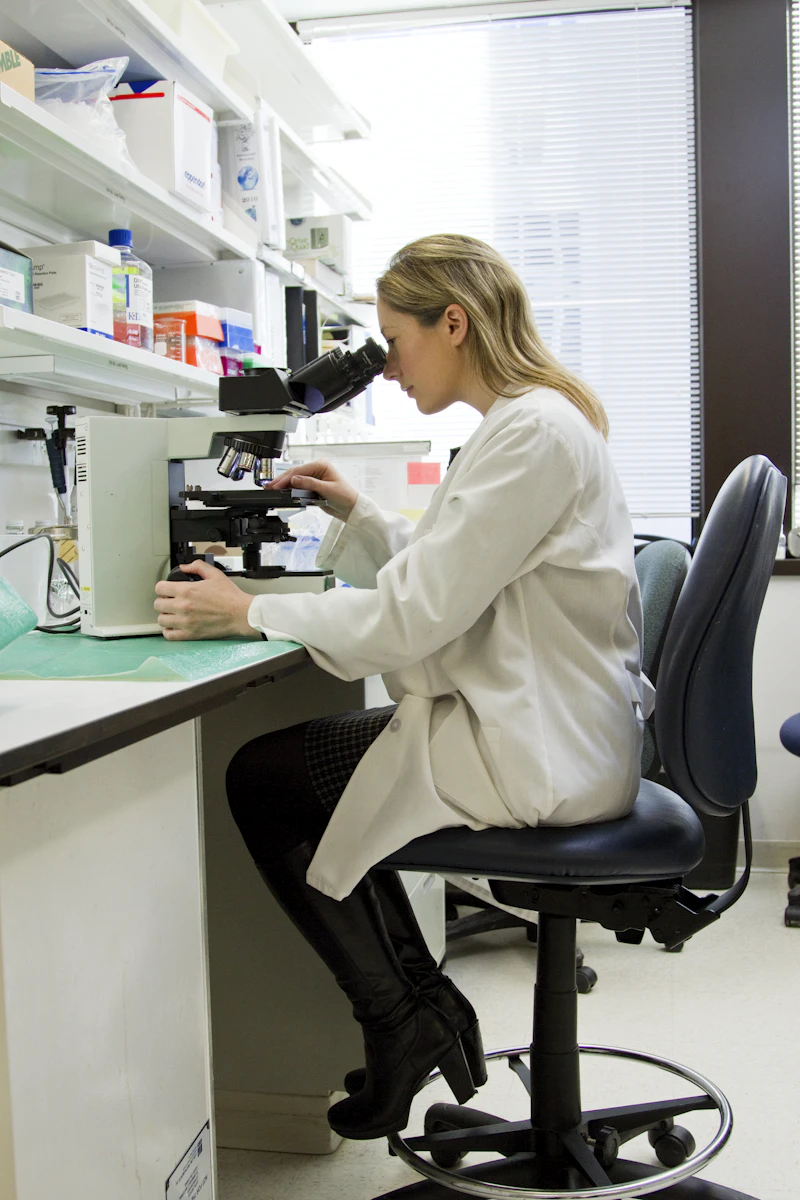
Chloroplast Analysis
Examining transformed chloroplasts under microscope
Plant Tissue Culture
Growing transformed plant cells in controlled conditions
Essential Tools in Chloroplast Biotechnology
| Research Tool | Function | Application Examples |
|---|---|---|
| Biolistic Gene Gun | Delivers DNA into chloroplasts using microscopic particles | Standard method for transforming tobacco, lettuce, oilseed rape |
| Homologous Recombination | Precisely inserts genes at specific locations | Targeted integration at trnI-trnA or rbcL-accD sites in plastome |
| aadA Marker Gene | Provides resistance to spectinomycin/streptomycin | Selection of transformed chloroplasts in most higher plants |
| Codon Optimization | Adjusts gene sequence for optimal expression in chloroplasts | Enhanced production of human therapeutic proteins |
| Polycistronic Vectors | Allows multiple genes to be expressed together | Metabolic engineering of complex biosynthetic pathways |
Case Study: Engineering Algae to Produce a Veterinary Vaccine
The Experimental Breakthrough
A recent study demonstrates the practical application of chloroplast engineering. Researchers at Zhejiang Sci-Tech University successfully expressed the capsid (Cap) antigen of porcine circovirus type 2 in the chloroplasts of Chlamydomonas reinhardtii, a green algae 8 . This virus causes significant economic losses in the swine industry, and an effective vaccine is urgently needed.
Step-by-Step Methodology
Gene Optimization
They synthesized the ORF2 gene that codes for the Cap protein, optimizing its sequence for expression in algal chloroplasts 8 .
Vector Construction
The optimized gene was inserted into a chloroplast-specific expression vector containing the necessary regulatory elements 8 .
Transformation
Using the biolistic method, they introduced the vector into algal cells and grew them on selective media containing spectinomycin 8 .
Selection and Analysis
Surviving colonies were rigorously analyzed using PCR, RT-PCR, Western blotting, and ELISA to confirm gene integration and protein expression 8 .
Results and Significance
The experiment yielded stable transgenic algal lines that produced the Cap antigen. Immunological tests confirmed that the chloroplast-produced protein was structurally correct and could potentially trigger an effective immune response 8 .
This successful production of a veterinary vaccine in algae chloroplasts highlights several advantages:
- Low production costs
- Rapid scalability
- Elimination of animal-derived contaminants that can be present in conventional vaccine production systems
Production Efficiency Comparison
Successfully Engineered Plant Species via Chloroplast Transformation
| Plant Species | Transformation Method | Key Genes Expressed | Application Area |
|---|---|---|---|
| Nicotiana tabacum (Tobacco) | Biolistics | Human therapeutic proteins, vaccine antigens | Pharmaceutical production |
| Solanum lycopersicum (Tomato) | Biolistics | aadA marker gene | Crop improvement research |
| Oryza sativa (Rice) | Biolistics | aadA, gfp | Cereal crop transformation |
| Lactuca sativa (Lettuce) | Biolistics, PEG | gfp | Pharmaceutical production |
| Glycine max (Soybean) | Biolistics | aadA | Legume crop transformation |
| Chlamydomonas reinhardtii (Algae) | Biolistics | Porcine circovirus Cap antigen | Vaccine production |
The Future of Chloroplast Biotechnology
Emerging Technologies and Applications
The field of chloroplast engineering continues to advance rapidly, with several exciting developments on the horizon:
Challenges and the Road Ahead
Despite significant progress, chloroplast biotechnology faces hurdles. The technology remains predominantly applied to model species like tobacco and algae, with limited success in major food crops 1 . Transformation efficiency varies significantly between species, and the regulatory pathway to commercialization remains complex 1 3 .
Current Research Focus Areas
A Greener Future for Biotechnology
Chloroplast engineering represents a powerful convergence of nature's wisdom and human ingenuity. By harnessing the innate protein-making capabilities of these photosynthetic organelles, scientists are developing sustainable solutions to challenges in medicine, agriculture, and industry.
The vision of plants serving as green factories—producing everything from life-saving medicines to climate-resilient crops—is steadily moving from laboratory curiosity to practical reality. As research advances, these biological factories may ultimately provide us with safer medicines, more affordable therapeutics, and more sustainable agriculture—all powered by the humble chloroplast.
This article was based on current scientific literature through 2025, including research from Frontiers in Plant Science, Nature Communications, and other peer-reviewed journals.