From Sequence to Structure: The Power of 3D Geometric Representations in Protein Research and Drug Discovery
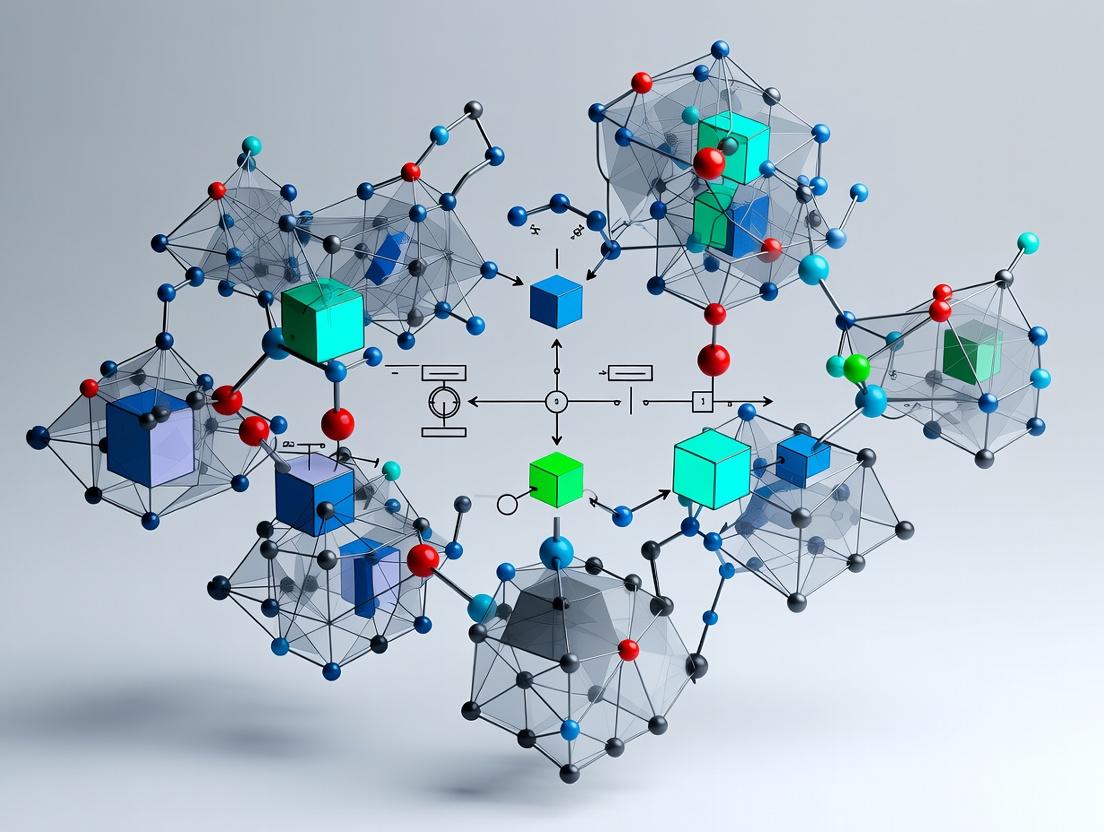
This article provides a comprehensive guide to 3D geometric representations of protein sequences for researchers and drug development professionals.
From Sequence to Structure: The Power of 3D Geometric Representations in Protein Research and Drug Discovery
Abstract
This article provides a comprehensive guide to 3D geometric representations of protein sequences for researchers and drug development professionals. It covers foundational concepts, exploring why moving beyond 1D sequences to 3D geometric embeddings is crucial for understanding protein function. We detail current methodological approaches, including graph neural networks and voxel-based techniques, and their applications in structure prediction, function annotation, and ligand discovery. The article addresses common challenges, optimization strategies, and validation frameworks for model performance. Finally, we compare leading tools and discuss how these advancements are accelerating biomedical research, from target identification to rational drug design.
Beyond the String: Why 3D Geometry is the True Language of Protein Function
This application note addresses the central challenge in modern protein science: the insufficiency of one-dimensional amino acid sequences (1D sequences) for predicting and understanding three-dimensional (3D) structure and biological function. Framed within a broader thesis on 3D geometric representation of protein sequences, we detail the specific failure modes of linear code, supported by current quantitative data, and provide experimental protocols to bridge this dimensionality gap.
Quantitative Evidence: 1D vs. 3D Predictive Power
The following table summarizes key performance metrics of leading 1D-sequence-based predictors versus experimental or 3D-structure-derived data, highlighting the performance gap.
Table 1: Comparison of 1D Sequence-Based Predictions vs. Experimental/3D-Derived Data
| Prediction Task | Top 1D Method (e.g., AlphaFold2, ESMFold) | Performance Metric | Experimental/3D Ground Truth Benchmark | Key Limitation Revealed |
|---|---|---|---|---|
| All-Atom Accuracy | AlphaFold2 (without templates) | Local Distance Difference Test (lDDT) ~0.85 | High-Resolution X-ray Crystal Structures | Struggles with disordered regions, conformational flexibility. |
| Protein-Protein Interaction Interfaces | Sequence co-evolution methods (e.g., EVcouplings) | Interface Residue Precision ~40-60% | Cryo-EM or Cross-linking Mass Spec Structures | Misses transient, non-evolutionarily coupled interfaces. |
| Functional Site (Active Site) Geometry | Hidden Markov Model (HMM) profiles | Catalytic Residue Recall >90%, Geometry Precision <30% | Enzymatic Assays & Bound Ligand Structures | Accurate residue identification but poor spatial arrangement prediction. |
| Protein Dynamics & Allostery | Molecular Dynamics from predicted structures | Limited by static starting model | HDX-MS, NMR Relaxation Data | Fails to capture multi-state ensembles and allosteric pathways. |
| Neo-antigen MHC Binding | NetMHCPan (sequence-based) | AUC ~0.90 | Peptide-MHC Crystal Structures & Cellular Assays | Overlooks structural mimicry and TCR engagement geometry. |
Experimental Protocols for Validating 3D Functional Insights
Protocol 1: Cross-linking Mass Spectrometry (XL-MS) for Validating Predicted Protein Complexes
Purpose: To experimentally verify protein-protein interaction interfaces predicted from 1D sequences or 3D models. Materials:
- Purified proteins of interest.
- BS³ (bis(sulfosuccinimidyl)suberate) or DSSO (disuccinimidyl sulfoxide) cross-linker.
- Liquid Chromatography-Tandem Mass Spectrometry (LC-MS/MS) system.
- Data processing software (e.g., XlinkX, pLink2). Procedure:
- Cross-linking Reaction: Mix purified proteins at physiological pH and buffer. Add amine-reactive cross-linker (e.g., BS³) at a 100:1 molar excess (cross-linker:protein). Incubate for 30 min at 25°C. Quench with Tris-HCl.
- Enzymatic Digestion: Denature with urea, reduce with DTT, alkylate with iodoacetamide. Digest with trypsin/Lys-C overnight.
- LC-MS/MS Analysis: Inject peptides onto a C18 column coupled to a high-resolution mass spectrometer. Use a data-dependent acquisition method with stepped collision energy.
- Data Analysis: Search spectra against protein sequences using XL-dedicated software. Identify cross-linked peptide pairs, assigning residue numbers.
- Validation: Map cross-linked residues (Cα–Cα distance constraint: ~20-30 Å) onto the predicted 3D model of the complex. Inconsistencies indicate a failure of the 1D-based model.
Protocol 2: Hydrogen-Deuterium Exchange Mass Spectrometry (HDX-MS) for Probing Dynamics
Purpose: To measure solvent accessibility and dynamics, challenging static 1D/3D predictions. Materials:
- Deuterated buffer (D₂O-based).
- Automated HDX robot (optional).
- UPLC system with pepsin column.
- High-resolution mass spectrometer. Procedure:
- Deuterium Labeling: Dilute protein 10-fold into D₂O buffer. Incubate for various time points (e.g., 10s, 1min, 10min, 1hr) at 4°C.
- Quenching & Digestion: Lower pH to 2.5 with quench solution (e.g., cold, low-pH formic acid/guandine). Immediately pass over immobilized pepsin column at 0°C.
- Mass Analysis: Trap and separate peptides on a C18 UPLC column at 0°C. Analyze with high-resolution MS.
- Data Processing: Calculate deuterium uptake for each peptide over time. Map peptides of altered dynamics onto the predicted structure. Regions showing high/unexpected dynamics indicate functional or allosteric sites not apparent from sequence alone.
Visualizing the Functional Prediction Workflow and Its Gaps
Diagram 1: From 1D Code to 3D Function: Gaps & Validation
Diagram 2: Allosteric Pathway: Invisible to 1D Sequence
The Scientist's Toolkit: Research Reagent Solutions
Table 2: Essential Reagents for 3D Functional Validation Experiments
| Reagent / Material | Supplier Examples | Function in Protocol |
|---|---|---|
| Amine-reactive Cross-linkers (BS³, DSSO) | Thermo Fisher, Creative Molecules | Covalently links proximal lysines/N-termini in proteins, providing spatial constraints for XL-MS. |
| Deuterium Oxide (D₂O), 99.9% | Sigma-Aldrich, Cambridge Isotopes | Labeling solvent for HDX-MS; allows measurement of backbone amide hydrogen exchange rates. |
| Immobilized Pepsin Column | Thermo Fisher, Trajan Scientific | Provides rapid, reproducible digestion under quenched (low pH, cold) conditions for HDX-MS. |
| Size-Exclusion Chromatography (SEC) Columns | Cytiva, Agilent | Purification of protein complexes prior to structural validation experiments (e.g., Cryo-EM). |
| Cryo-EM Grids (Quantifoil R1.2/1.3) | Quantifoil, Electron Microscopy Sciences | Support film for flash-freezing purified protein samples for single-particle Cryo-EM analysis. |
| Nucleotide Analogs/Inhibitors | Tocris, MedChemExpress | Used to trap proteins in specific functional states for structural and dynamic studies. |
| Fluorescent / FRET Probes | Lumiprobe, ATTO-TEC | Site-specific labeling for single-molecule or bulk assays monitoring conformational changes. |
| Stable Isotope-labeled Amino Acids (¹⁵N, ¹³C) | Cambridge Isotopes, Silantes | Essential for multidimensional NMR spectroscopy to assign structure and measure dynamics. |
Within the broader context of 3D geometric representation research for protein sequences, the choice of data structure is foundational. This field seeks to computationally capture the intricate three-dimensional reality of proteins—complex biomolecules whose function is dictated by their folded structure. Moving beyond the one-dimensional amino acid sequence, researchers employ diverse geometric representations, each with distinct advantages for tasks like structure prediction, protein-protein interaction modeling, and drug design. This application note details the core representations—atomic coordinates, residue-level models, graphs, and point clouds—and provides protocols for their generation and application in modern computational pipelines.
Core 3D Geometric Representations
Proteins are inherently three-dimensional objects. The following table summarizes the primary computational representations used to model their geometry.
Table 1: Core 3D Geometric Representations for Proteins
| Representation | Basic Unit | Data Structure | Typical Use Case | Key Advantage | Key Limitation |
|---|---|---|---|---|---|
| Atomic Model | Atom (N, Cα, C, O, etc.) | Set of 3D coordinates (Tensor: N_atoms x 3) | Molecular dynamics, detailed docking, energy calculation | High physical fidelity, chemically precise | High dimensionality, computationally expensive |
| Residue-Level (Backbone) | Amino Acid Residue (Cα or centroid) | Set of 3D coordinates (Tensor: N_residues x 3) | Protein folding (e.g., AlphaFold2), fold classification | Reduced complexity, focuses on chain topology | Loss of side-chain and atomic detail |
| Graph | Node: Atom or Residue; Edge: Interaction | Adjacency matrix + Node features (coordinates, types) | Protein-protein interaction networks, functional site prediction | Explicitly encodes relationships (bonded, spatial) | Graph construction parameters (cut-off distance) are critical |
| Point Cloud | Atom or Pseudo-Atom | Unordered set of 3D points with features (type, charge) | Deep learning for binding affinity, surface property prediction | Permutation invariant, suitable for CNNs/Transformers | Lacks explicit edge information unless dynamically computed |
Experimental Protocols
Protocol 2.1: Generating a Residue-Level Point Cloud from a PDB File
Objective: Convert a standard Protein Data Bank (PDB) file into a residue-level geometric representation suitable for machine learning models.
Materials & Software:
- Input: A protein structure file (format: .pdb or .cif).
- Software: Python 3.8+, Biopython library, NumPy.
Procedure:
- Parse the PDB File:
Extract Cα Coordinates:
Extract Node Features (Optional):
Output: The final dataset is the tuple (
coordinates,residue_types), forming a labeled point cloud.
Protocol 2.2: Constructing a K-Nearest Neighbor (KNN) Graph from Atomic Coordinates
Objective: Represent a protein structure as a graph where nodes are atoms and edges connect spatially proximate atoms.
Materials & Software:
- Input: Atomic coordinates tensor (N_atoms x 3).
- Software: Python, PyTorch Geometric (PyG) or Deep Graph Library (DGL), SciPy.
Procedure:
- Compute Pairwise Distances:
Build KNN Adjacency Matrix:
Assign Edge Features (Optional): Can include distance, or difference vector.
Output: A graph object with
node_features(atom types, coordinates),edge_index, andedge_features.
Protocol 2.3: Voxelization of a Protein Structure for 3D Convolutional Networks
Objective: Convert a protein structure into a 3D voxel grid for processing with 3D CNNs.
Materials & Software:
- Input: Atomic coordinates and element types.
- Software: Python, NumPy,
trimeshor custom voxelizer.
Procedure:
- Define Grid Parameters:
Populate Voxel Grid with Channels:
Output: A 3D or 4D (multi-channel) tensor of shape
(D, H, W)or(C, D, H, W).
Visualizing Workflows and Relationships
Workflow: From PDB to Geometric Representations and Tasks
Thesis Context: Integrating Representations for Function Prediction
The Scientist's Toolkit: Essential Research Reagents & Software
Table 2: Key Research Reagent Solutions for 3D Geometric Protein Analysis
| Item Name | Type (Software/Data/Database) | Primary Function | Relevance to Field |
|---|---|---|---|
| Protein Data Bank (PDB) | Public Database | Repository for experimentally determined 3D structures of proteins and nucleic acids. | The foundational source of ground-truth 3D coordinates for all representations. |
| AlphaFold DB | Public Database | Provides highly accurate predicted protein structures for nearly all cataloged proteins. | Supplies reliable structural models for proteins without experimental data, enabling large-scale geometric analysis. |
| PyTorch Geometric (PyG) | Software Library | An extension library for PyTorch designed for deep learning on graphs and other irregular structures. | The standard toolkit for implementing and training Graph Neural Networks (GNNs) on molecular graphs. |
| OpenMM | Software Library | A high-performance toolkit for molecular simulation using high-level Python scripts. | Enables generation of dynamic 3D conformational data (trajectories) for atomic representations via molecular dynamics. |
| PDBfixer / BIOVIA Discovery Studio | Software Tool | Prepares and cleans PDB files (adds missing atoms, removes clashes, adds hydrogens). | Ensures input structural data is physically plausible and complete before conversion to geometric representations. |
| MDAnalysis / MDTraj | Software Library | Python tools to analyze molecular dynamics trajectories. | Used to process time-series 3D coordinate data, calculate geometric features, and sample conformations for point clouds/graphs. |
| ESMFold / RoseTTAFold | Web Server/Software | Protein structure prediction tools (alternative/complement to AlphaFold2). | Generates initial 3D residue-level point clouds from sequence alone, crucial for proteins of unknown structure. |
| PLIP | Software Tool | Analyzes protein-ligand interactions at the atomic level from PDB structures. | Provides ground-truth interaction labels (edges) for training graph-based binding site prediction models. |
This Application Note details protocols for the computational analysis and experimental validation of key 3D structural features in proteins—binding sites, pockets, and allosteric networks. Framed within the broader thesis that protein function is a product of its 3D geometric representation rather than its linear sequence alone, we provide standardized methods for their characterization. These insights are critical for structure-based drug design and understanding allosteric regulation.
Application Note: Quantitative Characterization of Binding Pockets
Identifying and characterizing ligand-binding pockets is the first step in structure-based drug discovery. This involves geometric detection, physicochemical profiling, and druggability assessment.
Table 1: Common Metrics for Binding Pocket Analysis
| Metric | Description | Typical Range (Drug-like Pockets) | Tool Example |
|---|---|---|---|
| Volume (ų) | Total enclosed volume of the pocket. | 200 - 1000 ų | FPocket, POVME |
| Surface Area (Ų) | Solvent-accessible surface area. | 150 - 800 Ų | CASTp, MSMS |
| Depth (Å) | Maximum distance from pocket mouth to interior. | 8 - 20 Å | CAVER |
| Hydrophobicity Score | Proportion of non-polar residues lining pocket. | 0.5 - 0.8 | MOE SiteFinder |
| Druggability Score | Probability pocket can bind drug-like molecules. | 0.7 - 1.0 (High) | DoGSiteScorer |
Table 2: Comparative Performance of Pocket Detection Algorithms (PPI Test Set)
| Algorithm | Recall (%) | Precision (%) | Average Runtime (s) | Key Principle |
|---|---|---|---|---|
| FPocket | 92 | 85 | 60 | Voronoi tessellation & alpha spheres |
| SiteMap | 88 | 91 | 300 | Grid-based flood-fill & property mapping |
| DoGSiteScorer | 90 | 88 | 45 | Difference of Gaussian smoothing |
| CASTp 3.0 | 95 | 80 | 120 | Alpha shape theory |
Protocol: Geometric and Energetic Pocket Profiling with FPocket & PyMOL
Objective: To detect and rank potential binding pockets in a protein structure and visualize the top candidate.
Materials:
- Input: Protein structure file (PDB format).
- Software: FPocket suite, PyMOL.
- Hardware: Standard Linux/Unix compute node.
Procedure:
- Structure Preparation: Remove non-protein atoms (heteroatms, water) unless critical. Add missing hydrogen atoms using PyMOL's
h_addcommand. - Pocket Detection: Run FPocket from the command line:
fpocket -f <input.pdb>. This generates an output directory. - Analysis: Examine the
summary.txtfile. Pockets are ranked by a druggability score. Analyzepocket<pocket_index>_info.txtfor metrics like volume, polarity, and residue composition. - Visualization: In PyMOL, load the protein. Open the generated
pockets.pqrfile. Color pockets by thefpocketselection (e.g.,select fpocket, resn STP). The top-ranked pocket (usuallypocket1) can be visualized as spheres.
Expected Output: A ranked list of pockets with quantitative descriptors and a 3D visualization highlighting the most druggable cavity.
Application Note: Mapping Allosteric Networks
Allosteric communication involves propagation of structural and dynamic changes between distant sites. Network models based on 3D structures can predict these pathways.
Table 3: Methods for Allosteric Network Analysis
| Method | Input | Output (Pathway) | Theory Basis |
|---|---|---|---|
| Dynamic Cross-Correlation (DCC) | MD Trajectory | Residue pairs with correlated motion | Pearson correlation of atomic fluctuations |
| Structure-Based Network Model | Single PDB Structure | Shortest path of contacting residues | Graph theory (residues as nodes, contacts as edges) |
| Anisotropic Network Model (ANM) | Single PDB Structure | Collective modes of motion | Elastic network model & normal mode analysis |
| Mutual Information (MI) | MD Trajectory / MSA | Co-evolving residue pairs | Information theory (sequence covariation) |
Table 4: Key Metrics from Allosteric Network Analysis of PDB: 1EX6 (Phosphofructokinase)
| Network Metric | Catalytic Site | Allosteric Inhibitor Site | Effector Site (ATP) |
|---|---|---|---|
| Betweenness Centrality (Avg) | 0.12 | 0.08 | 0.15 |
| Shortest Path Length (to Catalyst) | 0 | 4 | 3 |
| Communities (Modularity Class) | 1 | 3 | 2 |
| Correlated Motions (DCC > 0.7) | 15 residues | 8 residues | 10 residues |
Protocol: Identifying Allosteric Pathways with Python (NetworkX) and MDTraj
Objective: To construct a residue interaction network from a structure and calculate the shortest path between an allosteric and active site.
Materials:
- Input: PDB file.
- Software: Python 3.x with libraries: BioPython, NetworkX, MDTraj, NumPy.
- Hardware: Standard workstation.
Procedure:
- Load Structure & Define Sites: Use BioPython to parse the PDB. Manually define residue numbers for the orthosteric (active) site (e.g.,
active_site = [50, 51, 52]) and putative allosteric site (e.g.,allo_site = [120, 121]). - Build Residue Contact Network: For each residue
iandj(Ca atoms), calculate distance. If distance < 6.5 Å, add an edge between nodesiandjin a NetworkX graph. - Calculate Shortest Path: For each residue in the allosteric site, compute the shortest network path to each residue in the active site:
networkx.shortest_path(G, source=allo_res, target=active_res). - Compute Betweenness Centrality: Calculate residue centrality:
networkx.betweenness_centrality(G). - Visualize: Export the network in GEXF format and visualize in Gephi, or create a schematic in PyMOL highlighting the shortest path residues.
Expected Output: A list of shortest paths connecting the sites, highlighting intermediary residues critical for allosteric communication, and a centrality score for each residue in the protein graph.
The Scientist's Toolkit: Research Reagent Solutions
Table 5: Essential Materials for 3D Structural & Functional Analysis
| Item / Reagent | Function / Application | Example Product / Vendor |
|---|---|---|
| Cryo-EM Grids (Gold, 300 mesh) | Support film for vitrified protein samples in single-particle cryo-EM. | Quantifoil R1.2/1.3, Protochips. |
| Size-Exclusion Chromatography (SEC) Column | Final polishing step for protein purification to ensure monodispersity for crystallization or Cryo-EM. | Superdex 200 Increase, Cytiva. |
| Crystallization Screening Kit | Sparse-matrix screens to identify initial conditions for protein crystallization. | JC SG Core I-IV, Qiagen; MemGold, Molecular Dimensions. |
| Hydrogen-Deuterium Exchange (HDX) Buffers | Buffers prepared in D₂O for labeling protein backbone amides to study dynamics/solvent accessibility. | Tris or Phosphate Buffers in 99.9% D₂O, Cambridge Isotopes. |
| Cysteine-Reactive Probes (e.g., Maleimides) | For covalent labeling of cysteines to introduce fluorophores or spin labels for FRET/EPR studies of dynamics. | Alexa Fluor 488 C5-Maleimide, Thermo Fisher; MTSSL, Toronto Research Chemicals. |
| Molecular Dynamics (MD) Simulation Software | All-atom simulation of protein motion in explicit solvent over time. | GROMACS (open-source), AMBER, CHARMM. |
| Structure Analysis Suite | Integrated software for visualization, analysis, and modeling of 3D structures. | PyMOL (Schrödinger), UCSF ChimeraX. |
Visualization: Workflow and Pathway Diagrams
Diagram: From Structure to Functional Insight Workflow
Title: Computational Analysis of Protein 3D Structure Workflow
Diagram: Allosteric Signal Propagation Network
Title: Hypothetical Allosteric Signal Propagation Pathway
The central thesis of modern structural bioinformatics posits that protein function is an emergent property of 3D geometry. This research framework requires integration of three foundational data types: experimentally determined structures (PDB), highly accurate predicted structures (AlphaFold DB), and dynamic conformational ensembles (Molecular Dynamics trajectories). Together, they enable a multi-scale, geometric understanding of sequence-structure-function relationships critical for drug discovery.
Data Source Comparative Analysis
Table 1: Core Data Source Characteristics and Current Statistics (as of latest data)
| Data Source | Primary Content | Current Volume (Approx.) | Resolution/Accuracy | Key Access Method | Update Frequency |
|---|---|---|---|---|---|
| Protein Data Bank (PDB) | Experimentally determined 3D structures (X-ray, NMR, Cryo-EM) | ~220,000 entries | X-ray: ~2.0 Å (median); Cryo-EM: ~3.5 Å (median) | RCSB PDB API, FTP download | Daily |
| AlphaFold DB | AI-predicted protein structures | >200 million entries (proteome-scale) | Global Distance Test (GDT): >85 for many targets | UniProt search, Direct download | Major updates quarterly |
| Molecular Dynamics (MD) Trajectories | Time-series atomic coordinates from simulation | Varies (GBs to TBs per trajectory) | Temporal: femtosecond resolution; Spatial: force-field dependent | Public repositories (e.g., MoDEL, GPCRmd), custom simulation | Project-dependent |
Table 2: Quantitative Metrics for Geometric Analysis Suitability
| Metric | PDB | AlphaFold DB | MD Trajectories |
|---|---|---|---|
| Static Geometry Fidelity | High (experimental) | Very High (pLDDT >90) | Variable (sampling dependent) |
| Conformational Diversity | Low (snapshots) | Low (single state) | High (ensemble) |
| Temporal Data | No | No | Yes (inherent) |
| Coverage (Human Proteome) | ~40% of proteins | ~98% of proteins | Sparse (targeted) |
| Typical File Size per Entry | 0.1 - 10 MB | 1 - 100 MB | 10 GB - 10 TB |
| Key Limitation | Experimental bias, missing residues | Static prediction, no ligands | Computational cost, force field accuracy |
Application Notes & Protocols
Protocol: Integrating PDB and AlphaFold DB for Comparative Geometry Analysis
Objective: To generate a consensus structural model and identify confident and variable regions by comparing experimental and predicted geometries.
Materials (Research Reagent Solutions):
- Software Toolkit: PyMOL or ChimeraX (visualization), Biopython (structure parsing), DSSP (secondary structure assignment).
- Computational Environment: Python 3.9+ with NumPy, SciPy, and MDAnalysis libraries.
- Data Sources: Target protein ID (e.g., UniProt P00734), RCSB PDB API, AlphaFold DB download portal.
Procedure:
- Data Retrieval:
- Query the RCSB PDB REST API (
https://data.rcsb.org/rest/v1/core/entry/) for all experimental structures matching the target UniProt ID. Download the highest-resolution file (PDB format). - Fetch the corresponding AlphaFold prediction via the EBI AlphaFold API (
https://alphafold.ebi.ac.uk/api/prediction/) or direct download from the AlphaFold website.
- Query the RCSB PDB REST API (
- Structural Alignment:
- Using Biopython's
Superimposer, align the AlphaFold model to the experimental PDB structure based on Cα atoms of the core domain. - Calculate the root-mean-square deviation (RMSD) of the alignment.
- Using Biopython's
- Per-Residue Geometry Comparison:
- Extract the AlphaFold per-residue confidence metric (pLDDT) and the experimental B-factor (temperature factor) from the respective files.
- Compute the local Cα distance difference between the aligned structures for each residue.
- Consensus Model Generation:
- For each residue, assign the coordinate source based on a decision matrix: If pLDDT > 90 and experimental B-factor < 50, keep the experimental coordinate. If the experimental structure has missing residues (indicated by "REMARK 465" in PDB), graft the high-confidence (pLDDT > 80) AlphaFold-predicted loops/termini.
- Validation:
- Run the final consensus model through MolProbity web server to check for steric clashes and Ramachandran outliers.
Protocol: From Static Structure to Dynamic Ensemble with MD
Objective: To initiate and analyze an MD simulation starting from a PDB or AlphaFold-derived structure to explore conformational dynamics.
Materials (Research Reagent Solutions):
- Simulation Engine: GROMACS 2023.x or AMBER 22.
- Force Field: CHARMM36m or AMBER ff19SB for proteins.
- Solvation & Ionization: TIP3P water model, appropriate salt concentration (e.g., 0.15 M NaCl).
- Hardware: GPU cluster (e.g., NVIDIA A100) recommended for production runs.
- Analysis Tools: MDAnalysis, VMD, PyTraj, MDTraj.
Procedure:
- System Preparation:
- Use
pdb2gmx(GROMACS) ortleap(AMBER) to add missing hydrogens, assign force field parameters, and place the protein in a periodic simulation box (e.g., dodecahedron) with at least 1.2 nm buffer from the protein. - Solvate the system with water and add ions to neutralize charge and achieve desired physiological concentration.
- Use
- Energy Minimization and Equilibration:
- Perform steepest descent energy minimization (5000 steps) to remove steric clashes.
- Equilibrate in the NVT ensemble (constant Number, Volume, Temperature) for 100 ps, restraining protein heavy atoms. Target temperature: 310 K (Berendsen thermostat).
- Equilibrate in the NPT ensemble (constant Number, Pressure, Temperature) for 100 ps, with position restraints. Target pressure: 1 bar (Parrinello-Rahman barostat).
- Production Simulation:
- Run unrestrained production MD for a target length (e.g., 100 ns to 1 µs). Write trajectory frames every 10 ps. Use a 2-fs integration time step.
- Trajectory Analysis for Geometric Features:
- Root Mean Square Fluctuation (RMSF): Calculate per-residue Cα fluctuations to identify flexible regions.
- Principal Component Analysis (PCA): Perform on Cα coordinates after alignment to the starting structure to identify major collective motions.
- Distance/Dihedral Timeseries: Monitor specific geometric parameters relevant to function (e.g., active site residue distances, hinge-bending angles).
Visualization of Workflows and Data Relationships
Data Integration Pathway for Geometric Research
MD Simulation Protocol Workflow
The Scientist's Toolkit: Essential Research Reagent Solutions
Table 3: Key Software & Resources for Geometric Analysis
| Item Name | Category | Function in Research | Access/Example |
|---|---|---|---|
| RCSB PDB API | Data Retrieval | Programmatic access to query, fetch, and search PDB metadata and structures. | REST API: data.rcsb.org |
| AlphaFold DB Download | Data Retrieval | Access to predicted structures, confidence scores (pLDDT), and predicted aligned error (PAE) matrices. | alphafold.ebi.ac.uk |
| MDAnalysis | Analysis Library | Python library to load, manipulate, and analyze trajectories from PDB, AlphaFold, and MD simulations in a unified framework. | mdanalysis.org |
| GROMACS | Simulation Engine | High-performance molecular dynamics package for simulating Newtonian equations of motion. Essential for generating trajectories. | www.gromacs.org |
| PyMOL/ChimeraX | Visualization | Interactive 3D visualization and rendering of static structures and trajectory frames. Critical for geometric intuition. | Open-Source/Commercial |
| Biopython | Programming Toolkit | Provides modules (Bio.PDB) for parsing PDB files, structural alignment, and calculating geometric measures. |
biopython.org |
| CHARMM36m Force Field | Simulation Parameter | A state-of-the-art force field for simulating proteins, providing parameters for bonds, angles, and dihedrals. | Integrated in GROMACS/AMBER |
| MolProbity | Validation Server | Validates geometric quality of structures (experimental or models) by checking sterics, rotamers, and Ramachandran plots. | molprobity.biochem.duke.edu |
Application Notes: Integrating Evolutionary, Structural, and Functional Data
Understanding how genetic variation translates to changes in protein structure and, ultimately, function is a central goal in biomedical research. This application note outlines a framework for integrating multi-scale data to bridge sequence and structure.
Core Concept: Single Amino Acid Polymorphisms (SAAPs) and other variants are not isolated events. Their impact is mediated through the 3D geometric and physicochemical environment of the protein. The effect of a variant (e.g., V66M) depends on its location in the folded structure—whether it's in the core, at a binding interface, or in a flexible loop.
Key Workflow: The process involves 1) collating variants from population genomics (e.g., gnomAD) and disease databases (e.g., ClinVar), 2) mapping them to high-resolution experimental or predicted 3D structures (from PDB or AlphaFold DB), 3) performing computational analysis of structural and energetic consequences, and 4) validating predictions via experimental biophysics.
Table 1: Prevalence and Predicted Impact of Missense Variants in Human Proteome (Representative Data)
| Variant Source | Total Variants | Predicted Deleterious (SIFT) | Predicted Damaging (PolyPhen-2) | Resolved in 3D Structure (Swiss-Model Coverage) |
|---|---|---|---|---|
| gnomAD v4.0 | ~15 million | ~4.1 million (27%) | ~4.8 million (32%) | ~11 million (73%) |
| ClinVar (Pathogenic/Likely Pathogenic) | ~45,000 | ~41,000 (91%) | ~40,500 (90%) | ~39,000 (87%) |
| COSMIC v99 | ~6 million | ~4.2 million (70%) | ~4.5 million (75%) | ~4.8 million (80%) |
Table 2: Experimental Metrics for Validating Structural Consequences
| Experimental Method | Throughput | Resolution (Size Limit) | Key Output Metric | Typical Cost per Sample |
|---|---|---|---|---|
| Circular Dichroism (CD) Spectroscopy | Medium | Secondary Structure | Mean Residual Ellipticity ([θ]) | $50-$200 |
| Differential Scanning Fluorimetry (DSF) | High | Global Fold Stability | Melting Temperature (Tm, ΔTm) | $20-$100 |
| Surface Plasmon Resonance (SPR) | Medium | Binding Affinity | Dissociation Constant (Kd) | $300-$800 |
| Size Exclusion Chromatography (SEC) | Medium | Oligomeric State | Elution Volume / Apparent MW | $100-$300 |
| Hydrogen-Deuterium Exchange MS (HDX-MS) | Low | Local Dynamics/ Solvent Access | Deuteration % / Protection Factor | $1000-$3000 |
Experimental Protocols
Protocol 3.1:In SilicoSaturation Mutagenesis and Stability Analysis
Purpose: To computationally predict the change in folding free energy (ΔΔG) for every possible single-point mutation in a protein of interest.
Materials: Wild-type protein structure (PDB file or AlphaFold model), FoldX Suite (v5.0), RosettaDDGPrediction application, high-performance computing cluster.
Procedure:
- Structure Preparation: Use
FoldX --command=RepairPDBto optimize hydrogen bonding networks, remove clashes, and correct rotamers in the input PDB file. - Generate Mutant Models: Run
FoldX --command=BuildModelwith the--mutant-fileflag. The mutant file should list all 19 possible substitutions at each residue position (e.g.,A30C;). - Energy Calculation: For each mutant model, FoldX calculates the total energy of the folded state. The ΔΔG is derived as: ΔΔG_folding = Energy(mutant) - Energy(wild-type).
- Rosetta Refinement (Optional, Higher Accuracy): For a subset of mutations, run the
ddg_monomerapplication in Rosetta. This performs backbone minimization and side-chain packing. - Analysis: Classify mutations as stabilizing (ΔΔG < -1 kcal/mol), neutral (-1 ≤ ΔΔG ≤ 1 kcal/mol), or destabilizing (ΔΔG > 1 kcal/mol). Map results onto the 3D structure.
Protocol 3.2: Experimental Validation of Variant Stability using NanoDSF
Purpose: To measure the thermal unfolding curve and determine the melting temperature (Tm) of purified wild-type and variant proteins.
Materials: Purified protein samples (>0.5 mg/mL, in low-absorbance buffer), Prometheus Panta or Tycho NT.6 system, 384-well capillary plates, phosphate-buffered saline (PBS), pH 7.4.
Procedure:
- Sample Preparation: Dialyze or dilute all protein samples into the same buffer (e.g., PBS). Centrifuge at 16,000 x g for 10 minutes to remove aggregates. Measure absorbance at 280 nm for precise concentration adjustment. Load 10 µL of each sample into a capillary.
- Instrument Setup: Place capillaries in the nanoDSF instrument. Set temperature ramp from 20°C to 95°C with a linear gradient of 1°C/min.
- Data Acquisition: The instrument records the intrinsic tryptophan/tyrosine fluorescence at 350 nm and 330 nm simultaneously as a function of temperature. The ratio F350/F330 is calculated.
- Data Analysis: Export the ratio data. Fit the sigmoidal unfolding transition to a Boltzmann equation to determine the inflection point (Tm). Calculate ΔTm = Tm(variant) - Tm(wild-type). A decrease of >2°C is typically considered significant destabilization.
- Quality Control: Ensure replicates (n=3) have a standard deviation of <0.5°C. Include a buffer-only blank.
Visualizations
Title: Sequence to Structure to Function Analysis Workflow
Title: NanoDSF Experimental Protocol Steps
The Scientist's Toolkit: Research Reagent Solutions
Table 3: Essential Materials for Structural Consequence Studies
| Item / Reagent | Vendor Examples | Function & Critical Notes |
|---|---|---|
| FoldX Software Suite | (Academic) | Computes protein stability changes (ΔΔG) upon mutation from 3D structure. Requires a high-resolution PDB file. |
| Rosetta Commons Software | (Academic/Commercial) | Suite for high-accuracy protein structure prediction, design, and energy calculation. ddg_monomer is key. |
| Prometheus Panta (nanoDSF) | NanoTemper Technologies | Measures thermal protein stability via intrinsic fluorescence. Requires minimal sample volume (10 µL). |
| Series S Sensor Chip CM5 | Cytiva | Gold standard for Surface Plasmon Resonance (SPR) binding assays. Carboxylated dextran surface for ligand immobilization. |
| HiLoad Superdex 75 pg | Cytiva | Size-exclusion chromatography column for protein purification and assessing aggregation/oligomeric state post-mutation. |
| Q Sitefinder Module | MOE (Chem. Comp. Group) | Identifies potential binding pockets and calculates structural interaction fingerprints to predict disruption by variants. |
| PyMOL Educational | Schrödinger | 3D molecular visualization essential for mapping variants, measuring distances, and creating publication-quality figures. |
| Strep-tag II Purification System | IBA Lifesciences | Affinity tag for gentle, one-step purification of recombinant wild-type and variant proteins under native conditions. |
| PBS, pH 7.4 (10X) | Gibco | Standard buffer for protein dialysis, dilution, and biophysical assays to ensure consistent ionic strength and pH. |
| Pierce BCA Protein Assay Kit | Thermo Fisher Scientific | Colorimetric method for accurate protein concentration determination, critical for normalizing samples before assays. |
Building the 3D Blueprint: Methods, Tools, and Real-World Applications in Biomedicine
This document provides application notes and protocols for representation paradigms central to modern 3D geometric representation research for protein sequences. The development of effective computational models for protein structure and function prediction is a core objective in structural biology and drug discovery. This work is framed within a broader thesis aiming to unify sequence-based and structure-based protein modeling through advanced geometric deep learning.
Quantitative Comparison of Representation Paradigms
The following table summarizes the key characteristics, performance metrics, and computational demands of the four primary representation paradigms, based on recent literature and benchmark studies (e.g., PDB, AlphaFold DB, CASP assessments).
Table 1: Quantitative Comparison of 3D Representation Paradigms for Protein Modeling
| Paradigm | Key Advantages | Common Model Architectures | Typical Resolution/Accuracy* | Computational Cost (Relative) | Major Applications in Protein Research |
|---|---|---|---|---|---|
| Graphs | Preserves relational topology; invariant to translation/rotation; memory efficient. | Graph Neural Networks (GNNs), Message Passing Networks. | ~0.5-2.0 Å RMSD (on local tasks) | Low | Protein-protein interaction prediction, functional site detection, flexibility analysis. |
| Voxels | Regular structure compatible with CNNs; straightforward to process. | 3D Convolutional Neural Networks (3D CNNs), U-Net variants. | ~1.0-3.0 Å (limited by grid size) | Very High | Density map interpretation, volumetric segmentation, coarse docking. |
| Surfaces | Explicitly models solvent accessibility; crucial for interactions. | Point Cloud Networks, Geometric Deep Learning on meshes. | N/A (surface quality metrics) | Medium | Binding pocket prediction, ligand docking, antibody design. |
| Equivariant Networks | Built-in SE(3) equivariance; optimal for physical learning. | SE(3)-Transformers, Tensor Field Networks, e3nn. | ~0.5-1.5 Å RMSD (state-of-the-art) | Medium-High | State-of-the-art structure prediction, molecular dynamics, symmetry-aware design. |
*Accuracy metrics are task-dependent. RMSD (Root Mean Square Deviation) is cited for structure-related tasks where applicable.
Application Notes & Experimental Protocols
Protocol: Constructing a Protein Graph for GNN Training
Objective: To convert a 3D protein structure (from PDB file) into a graph representation suitable for input into a Graph Neural Network.
Materials: Protein Data Bank (PDB) file, Python environment with biopython, numpy, torch_geometric libraries.
Procedure:
- Data Acquisition & Preprocessing:
- Download target PDB file (e.g.,
7a2p.pdb). - Use
Biopythonto parse the file. Extract coordinates and atom/ residue types for all heavy atoms or Cα atoms only, depending on granularity.
- Download target PDB file (e.g.,
- Node Definition & Featurization:
- Define each atom/residue as a graph node.
- Assign node features: e.g., atom type (one-hot), residue type (one-hot), physicochemical properties (charge, hydrophobicity index).
- Edge Construction:
- Compute the pairwise Euclidean distance matrix between all node coordinates.
- Establish an edge between two nodes if their distance is below a defined cutoff (e.g., 4.5 Å for residue-level graphs, 5.0 Å for atom-level graphs).
- Alternatively, connect nodes based on covalent bonds (from PDB CONECT records or inferred distances).
- Edge Featurization:
- Assign edge features: e.g., distance (scalar or binned), bond type (covalent, ionic, van der Waals).
- Graph Labeling (For Supervised Learning):
- Annotate nodes or the entire graph with target properties (e.g., mutation effect, functional label, binding affinity).
- Output:
- Save the graph as a PyTorch Geometric
Dataobject with attributes:x(node features),edge_index(edge connections),edge_attr(edge features),y(labels).
- Save the graph as a PyTorch Geometric
Protocol: Voxelization of Protein Structure for 3D CNN
Objective: To rasterize a protein structure into a 3D volumetric grid (voxel) for processing by a 3D Convolutional Neural Network.
Materials: PDB file, Python environment with biopython, numpy, scipy.
Procedure:
- Define Grid Parameters:
- Determine the 3D bounding box encompassing the protein. Add a margin (e.g., 10 Å) on all sides.
- Set voxel resolution (e.g., 1.0 Å per voxel side). Compute grid dimensions:
dim = ceil((box_max - box_min) / resolution).
- Atom Representation & Density Mapping:
- For each atom in the structure, map its coordinates to the nearest grid point.
- Assign a value to the voxel. Options include:
- Binary: 1 if any atom centroid is within the voxel, else 0.
- Gaussian Smearing: For each atom
i, add a densityexp(-d^2 / (2σ^2))to all voxels within a cutoff, wheredis distance to the atom center andσis the atom's Van der Waals radius. - Channels: Use multiple channels to represent different atom types (C, N, O, S) or chemical properties.
- Label Generation (For Segmentation Tasks):
- For tasks like binding site prediction, create a separate label volume where voxels inside a defined binding site are marked as 1.
- Data Augmentation (Optional):
- Apply random rotations, translations, or elastic distortions to the voxel grid during training to improve model generalization.
- Output:
- A 4D numpy array of shape
(Channels, Depth, Height, Width).
- A 4D numpy array of shape
Protocol: Employing an SE(3)-Equivariant Network for Side-Chain Packing
Objective: To predict the optimal rotamer conformations of amino acid side chains given a protein backbone, using an SE(3)-equivariant network.
Materials: Backbone coordinates (N, Cα, C, O atoms), PyTorch environment with e3nn or SE(3)-Transformer library.
Procedure:
- Input Representation:
- Represent the protein backbone as a set of vectors located at Cα positions. Node features include residue type and backbone dihedral angles.
- Define the local coordinate frame at each residue using the N, Cα, C atoms.
- Model Architecture Setup:
- Initialize an SE(3)-equivariant network. The first layer embeds scalar node features into equivariant features (type-
lvectors,l=0,1,...). - Stack multiple equivariant message-passing layers. In each layer, messages are computed as functions of relative positions (which are SE(3)-invariant) and equivariant features, then aggregated.
- Use Clebsch-Gordan tensor products to guarantee equivariance during feature transformation.
- Initialize an SE(3)-equivariant network. The first layer embeds scalar node features into equivariant features (type-
- Output Head & Loss Function:
- The final layer outputs, for each residue, parameters defining a probability distribution over rotamer angles (χ1, χ2, ...).
- The loss function is the negative log-likelihood of the true rotamer angles under the predicted distribution.
- Training & Inference:
- Train on a dataset like
rotamer_libor derived from PDB. - During inference, the model predicts rotamer distributions for a novel backbone. The most likely rotamer can be selected, or side chains can be packed via sampling to avoid clashes.
- Train on a dataset like
Visualizations
Title: Workflow for 3D Protein Representation Learning
Title: Protein Graph Construction via Distance Cutoff
The Scientist's Toolkit: Research Reagent Solutions
Table 2: Essential Computational Tools & Resources for 3D Protein Representation Research
| Item Name | Type/Source | Primary Function in Research |
|---|---|---|
| AlphaFold DB / Model Server | Database & Software (DeepMind) | Provides state-of-the-art predicted protein structures (via Evoformer/SE3 modules) for benchmarking, training data, or direct use. |
| PDB (Protein Data Bank) | Database (RCSB) | The primary repository of experimentally determined 3D protein structures for training, validation, and structural analysis. |
| PyTorch Geometric (PyG) | Software Library | Facilitates the implementation and training of Graph Neural Networks (GNNs) on protein graph data structures. |
| e3nn / SE(3)-Transformers | Software Library (Meta, etc.) | Provides implementations of SE(3)-equivariant neural network layers and architectures, critical for rotation-aware learning. |
| Rosetta | Software Suite (Baker Lab) | A comprehensive platform for comparative modeling, protein design, and docking; used for generating structural data and benchmarks. |
| ChimeraX / PyMOL | Visualization Software | Essential for visualizing 3D protein structures, surfaces, and model predictions to interpret results and generate figures. |
| DSSP | Algorithm (CMBI) | Assigns secondary structure and solvent accessibility from 3D coordinates, a key featurization step for graphs and surfaces. |
| HDX-MS Data | Experimental Technique (Mass Spectrometry) | Provides experimental data on protein dynamics and solvent exposure, used for validating surface accessibility predictions. |
Application Notes
Core Technologies in 3D Geometric Representation of Protein Sequences
The advancement of protein structure prediction has been revolutionized by deep learning methods that treat protein sequences and structures as objects in a 3D geometric space. This paradigm shift, central to modern structural biology, leverages two primary approaches: end-to-end neural networks (AlphaFold2, RoseTTAFold) and modular geometric deep learning libraries (PyTorch Geometric, DGL). These tools enable the translation of one-dimensional sequence information into three-dimensional atomic coordinates by learning the complex spatial and evolutionary relationships inherent in proteins.
AlphaFold2 (DeepMind) employs an Evoformer module for processing multiple sequence alignments (MSAs) and pair representations, followed by a Structure Module that iteratively refines a 3D backbone trace. RoseTTAFold (Baker Lab) uses a three-track network (1D sequence, 2D distance, 3D coordinates) simultaneously, allowing information flow between different geometric representations. Both systems produce highly accurate protein models, as evidenced by their performance in the Critical Assessment of Protein Structure Prediction (CASP) experiments.
PyTorch Geometric (PyG) and Deep Graph Library (DGL) provide foundational frameworks for implementing custom geometric deep learning architectures. They offer optimized operations (message passing, graph convolutions) on irregular data structures like graphs and point clouds, which are natural representations for molecular systems. Researchers use these libraries to build novel models for tasks beyond static structure prediction, such as modeling protein dynamics, protein-protein interactions, and ligand docking.
Quantitative Performance Comparison
The table below summarizes key performance metrics and characteristics of the primary tools, drawing from recent benchmarks and publications.
Table 1: Comparative Analysis of Protein Structure Prediction and GDL Tools
| Tool / Library | Primary Developer | Key Metric (CASP14/15) | Typical Inference Time (CPU/GPU) | Key Strengths | Common Use-Case in Research |
|---|---|---|---|---|---|
| AlphaFold2 | DeepMind | GDT_TS ~92 (CASP14) | 10-30 min (GPU, V100) | Unmatched accuracy, integrated MSA & templating | De novo structure prediction, high-confidence models |
| RoseTTAFold | Baker Lab | GDT_TS ~85 (CASP14) | 5-15 min (GPU, V100) | Faster, three-track design, good with limited MSA | Rapid prototyping, protein complexes |
| PyTorch Geometric | Technical University of Dortmund | N/A (Framework) | Framework-dependent | Flexibility, extensive GNN layer library, fast sparse ops | Custom GNNs for molecular property prediction, dynamics |
| Deep Graph Library | NYU, AWS | N/A (Framework) | Framework-dependent | Multi-backend support, efficient batch processing | Large-scale graph networks, heterogeneous protein graphs |
GDT_TS: Global Distance Test Total Score; MSA: Multiple Sequence Alignment; Inference time is approximate for a 400-residue protein.
Experimental Protocols
Protocol A: Running AlphaFold2 forDe NovoMonomer Prediction
This protocol details the steps to predict the structure of a single protein chain using a local AlphaFold2 installation.
Materials & Requirements:
- Hardware: NVIDIA GPU (≥16GB VRAM), ≥32GB RAM, multi-core CPU.
- Software: Docker, AlphaFold2 source code and parameters (from DeepMind GitHub), sequence database (e.g., BFD, MGnify, UniRef90, PDB70/100).
Procedure:
- Sequence Input & Database Setup:
- Prepare a FASTA file containing the target protein sequence.
- Ensure all required genetic (MSA) and structural (template) databases are downloaded and indexed on a high-speed storage volume.
MSA Generation & Feature Construction:
- Run
run_alphafold.pywith the--db_preset=full_dbs(orreduced_dbs) flag. - The pipeline will call JackHMMER and HHblits to search sequence databases and generate MSAs.
- Concurrently, HHSearch/HHblits will be run against the PDB template database.
- All features (MSA, template info, residue indices) are compiled into a single feature dictionary (TensorFlow
.pklfile).
- Run
Model Inference & Relaxation:
- The compiled features are passed through the AlphaFold2 neural network (using one or more of the 5 provided model parameters).
- The model outputs a predicted Distogram, per-residue pLDDT confidence score, and a set of 3D atomic coordinates in a
.pdbfile. - Run an Amber-based energy minimization ("relaxation") on the raw predicted structure to correct minor steric clashes. The final model is the relaxed structure.
Protocol B: Building a Custom Equivariant GNN for Binding Site Detection with PyG
This protocol outlines creating a graph neural network that respects rotational and translational equivariance to identify functional sites on a protein surface.
Materials:
- Pre-computed dataset of protein structures (e.g., from PDB) annotated with binding site residues.
- Workstation with CUDA-enabled GPU.
Procedure:
- Graph Representation:
- For each protein structure, generate a graph
G = (V, E). - Nodes (V): Represent amino acid residues. Node features can include amino acid type, dihedral angles, surface accessibility.
- Edges (E): Connect residues if Cα atoms are within a cutoff distance (e.g., 10Å). Edge features can include distance and directional vector.
- For each protein structure, generate a graph
Model Architecture (PyG):
- Implement an Equivariant Graph Convolution Layer. Use
torch_geometric.nn.MessagePassingas a base. The message function operates on edge vectors, and the update function must be invariant to maintain overall equivariance (e.g., using vector norms or scalar updates). - Stack 4-6 such layers with skip connections. Follow with a global pooling layer and a multi-layer perceptron (MLP) head for node-wise classification (binding site vs. non-binding site).
- Implement an Equivariant Graph Convolution Layer. Use
Training & Validation:
- Loss Function: Use a weighted binary cross-entropy loss to handle class imbalance.
- Optimizer: AdamW optimizer with an initial learning rate of 1e-3.
- Validation: Monitor metrics like AUC-ROC and F1-score on a held-out validation set of protein graphs. Early stopping is recommended.
Visualization of Workflows
AlphaFold2 End-to-End Prediction Pipeline
Title: AlphaFold2 Prediction Workflow
Custom Equivariant GNN with PyTorch Geometric
Title: Equivariant GNN for Binding Site Detection
The Scientist's Toolkit: Research Reagent Solutions
Table 2: Essential Digital Research Reagents for Geometric Protein Modeling
| Reagent / Resource | Type | Primary Function | Source / Package |
|---|---|---|---|
| ColabFold | Software Suite | Streamlined, faster implementation of AlphaFold2 and RoseTTAFold with MMseqs2 for MSAs. | GitHub: sokrypton/ColabFold |
| OpenFold | Software Suite | A trainable, open-source implementation of AlphaFold2 for research and fine-tuning. | GitHub: aqlaboratory/openfold |
| ESMFold | Model | Language model-based fold that predicts structure from single sequence, bypassing MSA. | GitHub: facebookresearch/esm |
| PDB Datasets | Data | Curated sets of protein structures and sequences for training and benchmarking. | RCSB PDB, PDBj |
| ProteinMPNN | Model | Inverse folding model for designing sequences for a given backbone (used with AF2/RF). | GitHub: dauparas/ProteinMPNN |
| PyRosetta | Library | Python interface to Rosetta molecular modeling suite, for advanced structure analysis & design. | PyRosetta.org |
| MD Simulation Packages (OpenMM, GROMACS) | Software | For molecular dynamics validation and refinement of predicted models. | openmm.org, gromacs.org |
| ChimeraX, PyMOL | Visualization | Interactive 3D visualization and analysis of predicted structures and confidence metrics. | RBVI, Schrödinger |
This application note details methodologies for high-accuracy protein structure prediction and refinement, framed within the broader research thesis on 3D Geometric Representation of Protein Sequences. The core thesis posits that representing protein sequences as evolving 3D geometric graphs, where nodes (residues) possess inherent spatial and chemical attributes, enables more physiologically accurate modeling. This moves beyond traditional 1D sequence analysis to a native 3D paradigm, directly informing structure prediction, functional annotation, and drug discovery.
Core Quantitative Performance Metrics
The field's progress is benchmarked by performance in the Critical Assessment of protein Structure Prediction (CASP) experiments. The following table summarizes key quantitative results from recent high-performing methods.
Table 1: Performance Metrics of Leading Structure Prediction Methods (CASP14 & CASP15)
| Method / System | Core Algorithm | Global Accuracy (GDT_TS Range)* | Local Accuracy (lDDT Range)* | Model Ranking Metric (Used in CASP) | Computational Resource Requirement (Approx. GPU hours) |
|---|---|---|---|---|---|
| AlphaFold2 (DeepMind) | Evoformer & Structure Module | 85-95 | 85-95 | lDDT-Cα | 2,000 - 5,000 |
| RoseTTAFold (Baker Lab) | 3-track Neural Network | 75-85 | 78-88 | lDDT-Cα | 1,000 - 2,000 |
| OmegaFold (HeliXon) | Single-sequence Transformer | 70-82 (on single-seq targets) | 72-85 | lDDT-Cα | < 100 |
| REFINER (Refinement Protocol) | Graph Neural Network on 3D Geometric Scaffold | Improves initial models by 2-5 GDT_TS points | Improves by 3-7 lDDT points | CAD-score, MolProbity | 50 - 200 |
| ESMFold (Meta AI) | Protein Language Model (ESM-2) | 65-80 | 68-83 | lDDT-Cα | < 50 |
*Ranges are indicative for top-ranked models on typical CASP targets. GDT_TS: Global Distance Test Total Score; lDDT: local Distance Difference Test.
Detailed Protocols
Protocol: Full-Structure Prediction with an AlphaFold2-like Pipeline
This protocol outlines the steps for de novo protein structure prediction using a geometric deep learning framework.
Materials & Reagents:
- Input: Amino acid sequence(s) in FASTA format.
- Software: Local installation of OpenFold or ColabFold (open-source implementations).
- Hardware: High-performance computing node with multiple GPUs (e.g., NVIDIA A100, 40GB+ VRAM).
- Databases: Local or cloud-hosted copies of UniRef90, UniProt, and the MGnify database for MSA generation. PDB70 and PDB for template search.
Procedure:
- Input Representation: Convert the target amino acid sequence into a 1D tokenized representation and a pairwise residue graph.
- Multiple Sequence Alignment (MSA) Generation:
- Use HHblits or MMseqs2 to search the sequence against protein sequence databases (e.g., UniRef90).
- Output: An MSA represented as a 2D array, informing co-evolutionary constraints.
- Template Search (Optional but recommended):
- Use HMMer or HHSearch to find structural homologs in the PDB.
- Extract templates and generate a 2D profile of backbone atom distances and dihedral angles.
- Evoformer Processing (Geometric Graph Inference):
- Feed the MSA and template features into the Evoformer neural network stack.
- The network iteratively refines a pairwise residue interaction graph, integrating 1D sequence, 2D MSA, and implicit 3D geometric information.
- Structure Module Execution (3D Coordinate Generation):
- The refined graph from the Evoformer is processed by the Structure Module.
- This module explicitly predicts the 3D coordinates (x, y, z) for all backbone and side-chain heavy atoms, iteratively refining from a random initial state.
- Output: Five predicted structures (ranked by predicted lDDT, pLDDT) and per-residue confidence metrics.
- Relaxation: Apply a constrained energy minimization (e.g., using Amber or OpenMM) to the top-ranked predicted model to remove steric clashes and improve local geometry.
Protocol: Structure Refinement Using a 3D Graph Neural Network (GNN)
This protocol refines an initial, often low-accuracy, protein model by treating it as a 3D geometric graph.
Materials & Reagents:
- Input: Initial protein structure model in PDB format.
- Software: REFINER or similar GNN-based refinement package (e.g., using PyTorch Geometric).
- Hardware: GPU-enabled workstation.
- Force Field Parameters: CHARMM36 or AMBER ff19SB for subsequent physical validation.
Procedure:
- Graph Construction:
- Define each residue as a node. Node features include amino acid type, dihedral angles, and solvent accessibility.
- Define edges based on both sequence proximity (k-nearest neighbors) and spatial proximity (radial cutoff, e.g., 10Å).
- Edge features include distance, vector direction, and bond type (if covalent).
- GNN Processing:
- Pass the constructed graph through multiple layers of message-passing neural networks.
- At each layer, nodes aggregate information from their neighbors, updating their feature vectors to represent increasingly complex geometric and chemical contexts.
- Coordinate Update:
- The final node embeddings are fed into a regression head that predicts a residual update (Δx, Δy, Δz) to each atom's coordinates.
- Iterative Refinement Cycle:
- Apply the coordinate updates to generate a new 3D structure.
- Reconstruct the graph based on the new coordinates.
- Repeat steps 2-4 for a fixed number of cycles (e.g., 5-10).
- Selection & Validation:
- Select the refined model with the lowest predicted energy or highest predicted score.
- Validate using geometry assessment tools (MolProbity) and physical force fields.
Visualizations
Title: AlphaFold2-like Prediction Workflow
Title: GNN-Based Structure Refinement Cycle
The Scientist's Toolkit: Research Reagent Solutions
Table 2: Essential Digital Tools & Resources for High-Accuracy Prediction
| Item / Resource | Category | Function & Purpose |
|---|---|---|
| ColabFold | Software Suite | Cloud-based, accessible pipeline combining MMseqs2 for fast MSA and AlphaFold2/ RoseTTAFold for prediction. Lowers entry barrier. |
| AlphaFold DB | Database | Repository of pre-computed AlphaFold2 predictions for the human proteome and major model organisms. Enables immediate lookup. |
| OpenMM | Molecular Dynamics Engine | Toolkit for running molecular dynamics simulations and energy minimization (relaxation) on predicted structures. |
| PyMOL / ChimeraX | Visualization Software | Critical for visualizing, analyzing, and comparing predicted models, confidence metrics (pLDDT), and structural alignments. |
| PyTorch Geometric | Machine Learning Library | Specialized library for building and training Graph Neural Networks (GNNs) on 3D structural data. Essential for custom refinement. |
| HH-suite | Bioinformatics Tool | Standard software for generating deep MSAs and detecting remote homologs (templates) via HMM-HMM comparison. |
| MolProbity / Phenix | Validation Suite | Provides comprehensive validation of protein geometry (clashes, rotamers, Ramachandran) to assess model quality. |
| Rosetta | Modeling Suite | Provides powerful, physics-based methods for de novo design, docking, and refinement complementary to deep learning. |
Within the broader thesis on 3D geometric representation of protein sequences, this application focuses on translating structural fingerprints into functional annotations. Predicting functional sites (e.g., catalytic residues, binding pockets) and assigning Enzyme Commission (EC) numbers are critical for deciphering protein mechanism and supporting drug discovery. This protocol details how to leverage state-of-the-art geometric deep learning models for these tasks.
Key Quantitative Benchmarks
Table 1: Performance comparison of recent geometric deep learning methods for functional site prediction and EC number annotation.
| Method | Core Architecture | Functional Site Prediction (F1 Score) | EC Number Prediction (Top-1 Accuracy) | Key Dataset(s) Used |
|---|---|---|---|---|
| DeepFRI | Graph Convolutional Network (GCN) + Language Model | 0.78 (Catalytic sites) | 0.81 (Molecular Function) | PDB, STRING |
| MaSIF | Surface-Based Geometric CNN | 0.85 (Protein-Protein Interface) | N/A | PDB, EPI |
| TALE | Transformer + Equivariant GNN | 0.82 (General binding sites) | 0.88 (Full EC Number) | PDB, UniProt |
| GNN-VML | Variational Metric Learning on Graphs | 0.80 (Allosteric sites) | 0.84 (First EC Digit) | PDB, CASP |
Table 2: Breakdown of EC number prediction accuracy by hierarchy level (representative model: TALE).
| EC Hierarchy Level | Prediction Task | Accuracy | Notes |
|---|---|---|---|
| First Digit (Class) | e.g., Oxidoreductases (1) | 96.5% | Broad functional class |
| Second Digit (Subclass) | e.g., Acting on CH-OH group (1.1) | 91.2% | General reaction type |
| Third Digit (Sub-subclass) | e.g., With NAD/NADP as acceptor (1.1.1) | 88.0% | Specific cofactor/chemical |
| Fourth Digit (Serial #) | e.g., Alcohol dehydrogenase (1.1.1.1) | 82.5% | Specific substrate |
Experimental Protocols
Protocol 1: Functional Site Prediction Using a Pretrained Geometric GNN Objective: Identify catalytic and binding residues from a protein structure.
- Input Preparation: For a given PDB file, generate a graph representation. Nodes represent amino acid residues. Edges connect residues within a 10Å cutoff. Node features include 3D coordinates, dihedral angles, and surface accessibility. Edge features include distance and direction vectors.
- Model Inference: Load a pretrained model (e.g., DeepFRI or TALE). Feed the protein graph into the model. The model outputs a probability score for each residue belonging to a functional site category (catalytic, binding, allosteric).
- Post-processing: Apply a threshold (typically 0.5) to the probability scores to obtain binary predictions. Cluster spatially proximal residues to define contiguous binding pockets or catalytic clefts.
- Validation: Compare predictions against annotated databases like Catalytic Site Atlas (CSA) or BioLiP. Use metrics: Precision, Recall, F1-score, and Matthews Correlation Coefficient (MCC).
Protocol 2: Hierarchical EC Number Annotation from Structure Objective: Assign a four-digit EC number to an enzyme structure of unknown function.
- Multi-Scale Feature Extraction:
- Local Motif: Extract geometric and chemical features from the predicted active site pocket (from Protocol 1).
- Global Fold: Encode the global tertiary structure using a 3D convolutional neural network or an equivariant GNN to capture fold-level characteristics.
- Hierarchical Classification: Employ a multi-level neural network classifier. The first layer predicts the EC Class (first digit). Subsequent layers use the previous prediction and refined features to predict the Subclass, Sub-subclass, and Serial number sequentially.
- Consensus with Sequence: Integrate the geometric prediction with a sequence-based prediction (e.g., from BLAST or DeepEC) using a simple weighted average or a learned meta-classifier to improve robustness.
- Confidence Scoring: Output a confidence score for each digit level based on the classifier's probability margin. Flag low-confidence predictions (<0.7) for manual inspection.
Visualizations
Diagram Title: Functional Annotation Workflow from 3D Structure
Diagram Title: Hierarchical EC Number Prediction Cascade
The Scientist's Toolkit
Table 3: Key Research Reagent Solutions for Geometric Functional Annotation.
| Item | Function in Protocol | Example/Provider |
|---|---|---|
| Protein Data Bank (PDB) | Source of experimental 3D structures for input and training. | RCSB PDB (https://www.rcsb.org/) |
| Catalytic Site Atlas (CSA) | Curated database of enzyme active sites for validation. | European Bioinformatics Institute (EBI) |
| PyTorch Geometric (PyG) | Library for building and training geometric deep learning models on graphs. | PyTorch Geometric Team |
| BioPython PDB Module | Python library for parsing, manipulating, and analyzing PDB files. | BioPython Project |
| DSSP | Program to calculate secondary structure and solvent accessibility from 3D coordinates. | CMBI, University of Nijmegen |
| AlphaFold Protein Structure Database | Source of highly accurate predicted structures for proteins lacking experimental ones. | EMBL-EBI / DeepMind |
| DeepFRI Model Weights | Pretrained model for fast functional site prediction and Gene Ontology annotation. | Available on GitHub |
Within the broader thesis on 3D geometric representation of protein sequences, a critical application is the prediction of molecular interactions for drug discovery. Traditional methods are slow and expensive. Advanced deep learning models that leverage 3D structural and geometric features—such as atomic coordinates, surface curvature, and electrostatic potentials—are transforming the prediction of protein-ligand binding affinities and protein-protein interaction (PPI) interfaces. These methods significantly accelerate virtual screening and the identification of novel drug candidates.
Table 1: Performance Comparison of Recent Geometric Deep Learning Models for Protein-Ligand Binding Affinity Prediction
| Model Name | Core Architectural Principle | Key Datasets (PDBbind/CASF) | RMSD (↓) | Pearson's r (↑) | Spearman's ρ (↑) | Key Advantage |
|---|---|---|---|---|---|---|
| EquiBind | SE(3)-Equivariant Graph Matching | PDBbind 2020 | 1.39 Å (RMSD) | 0.83 | 0.81 | Ultra-fast blind docking |
| DiffDock | SE(3)-Equivariant Diffusion | PDBbind 2020 | 1.67 Å (RMSD) | 0.85 | 0.84 | State-of-the-art accuracy |
| GraphBind | Geometric Graph Neural Network | PDBbind 2016, CASF-2016 | 1.29 (pK) | 0.858 | 0.863 | Incorporates binding site context |
| AlphaFold 3 | Diffusion-based, Unified Architecture | Proprietary Benchmark | N/A (Interface Prediction) | 0.76 (pLDDT) | N/A | Joint prediction of complexes |
Table 2: Performance Metrics for Protein-Protein Interaction (PPI) Site Prediction
| Tool/Method | Prediction Target | Dataset | AUC-ROC | Precision | Recall | Basis of Prediction |
|---|---|---|---|---|---|---|
| MaSIF | Protein Interaction Sites | DB5, Docking Benchmark 5 | 0.78 | 0.71 | 0.68 | Molecular surface fingerprints |
| PInet | PPI Interface Residues | SKEMPI 2.0 | 0.81 | 0.75 | 0.70 | Geometric graph attention networks |
| DeepInterface | Interface Residues & Docking | DIPS-Plus | 0.79 | 0.73 | 0.65 | 3D convolutional neural networks |
| AF3 Complex | Full Complex Structure | Newly released complexes | >0.8 (pTM) | N/A | N/A | Generalized AlphaFold architecture |
Experimental Protocols
Protocol 1: High-Throughput Virtual Screening Using Equivariant Docking (DiffDock)
Objective: To screen a large library of small molecules against a fixed protein target to identify high-affinity binders.
- Input Preparation:
- Protein Target: Obtain the 3D structure (e.g., from PDB or AlphaFold2 prediction). Preprocess with
PDBfixerto add missing hydrogens and side chains. - Ligand Library: Prepare an SDF file of candidate molecules. Generate 3D conformers using
RDKit(rdkit.Chem.rdDistGeom.EmbedMolecule).
- Protein Target: Obtain the 3D structure (e.g., from PDB or AlphaFold2 prediction). Preprocess with
- Docking Execution:
- Load the pre-trained DiffDock model.
- Specify the protein's pocket coordinates or perform blind docking over the entire surface.
- Run the diffusion-based docking pipeline for each ligand. The model generates multiple pose hypotheses with associated confidence scores (pLDDT or model confidence metric).
- Post-processing & Ranking:
- Cluster top poses based on RMSD.
- Rank compounds primarily by the model's confidence score.
- Optional: Refine top-ranked poses using molecular mechanics (MMFF94) or short MD simulations.
- Validation:
- For a subset, compare predicted binding poses to known crystallographic complexes (if available) using Ligand RMSD.
Protocol 2: Predicting Protein-Protein Interaction Interfaces with Surface Fingerprinting (MaSIF)
Objective: To identify putative interaction patches on a protein's solvent-accessible surface.
- Surface Generation and Featurization:
- Compute the molecular surface using
MSMSorPyMOL. Mesh resolution: 1.5 Å per vertex. - For each vertex, compute geometric (shape index, curvature) and chemical (hydrophobicity, electrostatic potential) features.
- Compute the molecular surface using
- Data Preparation for MaSIF:
- Split the surface into overlapping geodesic patches of radius 12 Å.
- Represent each patch as a point cloud with associated features. This forms the input tensor.
- Model Inference:
- Process the protein's surface through the pre-trained MaSIF-site neural network.
- The model outputs a probability score (0-1) for each surface vertex indicating its likelihood of being part of an interaction interface.
- Interface Identification:
- Apply a probability threshold (e.g., 0.7) to select vertices.
- Cluster selected vertices into contiguous patches using a distance-based algorithm (e.g., DBSCAN).
- The largest or highest-scoring patches are predicted as the primary interaction sites.
Mandatory Visualizations
Title: Geometric Deep Learning for Virtual Screening Workflow
Title: PPI Interface Prediction from Protein Surface
The Scientist's Toolkit
Table 3: Essential Research Reagent Solutions for Geometric Interaction Prediction
| Item | Function/Application | Example Tools/Sources |
|---|---|---|
| High-Quality 3D Structural Data | Training and benchmarking models for protein-ligand and PPI prediction. | PDB, AlphaFold Protein Structure Database, PDBbind, CASF, DIPS-Plus. |
| Ligand/Compound Libraries | Source of small molecules for virtual screening. | ZINC20, ChEMBL, MCULE, Enamine REAL. |
| Geometric Deep Learning Frameworks | Implement and run state-of-the-art equivariant models. | PyTorch Geometric (PyG), DGL-LifeSci, TensorFlow with GNN add-ons. |
| Molecular Dynamics (MD) Simulation Suite | Refine docked poses and assess binding stability. | GROMACS, AMBER, NAMD, OpenMM. |
| Free Energy Perturbation (FEP) Software | Accurately calculate binding free energies for top candidates. | Schrödinger FEP+, OpenFE, PMX. |
| Molecular Visualization & Analysis | Visualize predicted poses, surfaces, and interaction networks. | PyMOL, ChimeraX, VMD, NGL Viewer. |
| Cheminformatics Toolkit | Prepare, standardize, and featurize small molecule libraries. | RDKit, Open Babel. |
| High-Performance Computing (HPC) / GPU Cloud | Provide computational power for training and large-scale inference. | Local GPU clusters, AWS EC2 (P3/G4 instances), Google Cloud TPU/GPU. |
Within the broader thesis on 3D geometric representation of protein sequences, interpreting the pathogenicity of missense variants presents a critical application. This framework bridges primary sequence alterations with resultant 3D structural perturbations, enabling mechanistic predictions of dysfunction relevant to disease etiology and therapeutic targeting.
Quantitative Data on Variant Impact
Table 1: Comparative Performance of Major Pathogenicity Prediction Tools (2023-2024 Benchmarks)
| Tool Name | Core Methodology | AUC-ROC (ClinVar Benchmark) | Specificity | Sensitivity | Key Strength |
|---|---|---|---|---|---|
| AlphaMissense | Protein Language Model + Structure | 0.94 | 0.92 | 0.86 | Integrates evolutionary & structural context |
| REVEL | Ensemble of 13 individual tools | 0.91 | 0.89 | 0.80 | Robust meta-prediction |
| PolyPhen-2 HDIV | Sequence conservation & structure | 0.88 | 0.90 | 0.75 | Handles solvent accessibility well |
| CADD | 63 diverse genomic annotations | 0.87 | 0.85 | 0.78 | Genome-wide scoring |
| SIFT | Sequence homology | 0.83 | 0.88 | 0.72 | Fast, conservation-based |
Table 2: Structural Disruption Metrics Correlated with Pathogenicity
| Metric | Pathogenic Variant Mean (Δ) | Benign Variant Mean (Δ) | p-value | Measurement Method |
|---|---|---|---|---|
| ΔΔG (kcal/mol) | +2.1 | +0.3 | <0.001 | Folding free energy change |
| RMSD (Å) (backbone) | 1.8 | 0.4 | <0.001 | Molecular Dynamics simulation |
| Buried Charge Introduction | 85% frequency | 12% frequency | <0.001 | Structural analysis |
| H-bond Network Loss (# bonds) | 3.2 | 0.7 | <0.001 | Static structural comparison |
| Surface Hydrophobicity Change | 45% | 8% | <0.01 | DSSP/Solvent Accessible Area |
Core Experimental Protocols
Protocol 3.1: Integrated Computational Pipeline for Variant-to-Structure Analysis
Objective: To predict the structural and functional impact of a missense variant. Materials: Wild-type protein sequence (UniProt ID), variant coordinates (HGVS notation), high-performance computing cluster, software suites (FoldX, Rosetta, GROMACS). Procedure:
- Input & Retrieval: Input the variant in HGVS format (e.g.,
NP_001123456.1:p.Arg168His). Use theBioPythonEntrez module to fetch the canonical wild-type sequence and any available experimental structures (PDB ID). - Homology Modeling (if needed): If no experimental structure exists, generate a 3D model using MODELLER or AlphaFold2 via the ColabFold pipeline.
- In Silico Saturation Mutagenesis: Use FoldX5 (BuildModel command) or Rosetta ddg_monomer to introduce the specific mutation and calculate the predicted change in folding free energy (ΔΔG). Run each variant in triplicate.
- Molecular Dynamics (MD) Simulation Setup:
- Prepare the protein structure file using the
pdb2gmxtool in GROMACS 2024. - Solvate the protein in a cubic water box (SPC/E model) with a 1.2 nm minimum distance to the box edge.
- Add ions to neutralize the system using the
geniontool. - Perform energy minimization using the steepest descent algorithm until convergence (<1000 kJ/mol/nm).
- Prepare the protein structure file using the
- MD Production & Analysis:
- Run an equilibration phase (NVT and NPT ensembles, 100 ps each).
- Execute a production MD run (100 ns minimum) for both wild-type and mutant structures.
- Analyze trajectories for Root Mean Square Deviation (RMSD), Root Mean Square Fluctuation (RMSF), radius of gyration (Rg), and intermolecular hydrogen bonds using GROMACS tools (
gmx rms,gmx rmsf,gmx gyrate,gmx hbond).
- Consensus Prediction: Integrate ΔΔG, MD stability metrics, and scores from at least three AI-based pathogenicity predictors (AlphaMissense, REVEL) into a final pathogenicity call.
Protocol 3.2: Experimental Validation via Cellular Thermal Shift Assay (CETSA)
Objective: To experimentally measure the impact of a variant on protein thermal stability in a cellular context. Materials: Isogenic cell lines (wild-type vs. variant), lysis buffer (PBS with 0.8% NP-40 and protease inhibitors), quantitative Western blot or MSD immunoassay setup, thermal cycler. Procedure:
- Cell Preparation: Culture ~10 million cells per isogenic line. Harvest and wash twice in PBS.
- Heat Challenge: Aliquot cell suspensions into PCR tubes. Expose each aliquot to a gradient of temperatures (e.g., 37°C to 67°C in 3°C increments) for 3 minutes in a thermal cycler, followed by 3 minutes at room temperature.
- Lysis & Clarification: Lyse cells with ice-cold lysis buffer. Centrifuge at 20,000 x g for 20 minutes at 4°C to separate soluble protein.
- Quantification: Detect the protein of interest in the soluble fraction using a quantitative method (e.g., Wes/Jess capillary electrophoresis or ELISA). Normalize to a stable loading control.
- Data Analysis: Plot the fraction of soluble protein remaining vs. temperature. Fit a sigmoidal curve. Calculate the melting temperature (Tm) and compare between wild-type and variant proteins. A significant ΔTm indicates a destabilizing mutation.
Visualization: Workflows & Pathways
Title: Integrated Variant Interpretation Workflow
Title: Structural Disruption to Disease Mechanisms
The Scientist's Toolkit: Research Reagent Solutions
Table 3: Essential Resources for Variant-to-Structure Research
| Item/Resource | Function/Application | Example Vendor/Platform |
|---|---|---|
| AlphaFold Protein Structure Database | Provides instant, high-accuracy predicted 3D models for any protein, serving as a starting point for variant modeling. | EMBL-EBI / DeepMind |
| FoldX Suite | Fast, computationally inexpensive tool for in silico mutagenesis, ΔΔG calculation, and analyzing interaction networks. | The FoldX Web Server |
| Rosetta3 (ddg_monomer) | More sophisticated, physics-based suite for protein energy calculation and design; used for rigorous ΔΔG prediction. | Rosetta Commons |
| GROMACS 2024 | Open-source, high-performance molecular dynamics package for simulating atomic-level protein movements post-mutation. | www.gromacs.org |
| ClinVar / gnomAD | Critical public archives of human genetic variation with clinical assertions (ClinVar) and population frequency data (gnomAD) for benchmarking. | NCBI / Broad Institute |
| CETSA Kits | Reagent kits optimized for Cellular Thermal Shift Assays to experimentally measure protein thermal stability changes in cell lysates or live cells. | Thermo Fisher Scientific |
| Isogenic Cell Line Engineering Services | CRISPR-Cas9 gene editing services to create precise missense mutations in relevant cell backgrounds for controlled experimental studies. | Synthego, Horizon Discovery |
| UNIPROT | Comprehensive, high-quality protein sequence and functional annotation database, essential for retrieving canonical sequences. | UniProt Consortium |
| PDB (Protein Data Bank) | Primary repository for experimentally determined 3D structures of proteins, nucleic acids, and complexes. | RCSB.org |
Navigating the Challenges: Optimization Strategies for Robust and Generalizable Models
Application Notes
Within the research on 3D geometric representation of protein sequences, the Protein Data Bank (PDB) serves as the foundational data source. However, its intrinsic structural and compositional biases severely limit the generalizability of trained models. These biases represent a critical pitfall, as models may learn spurious correlations from skewed data rather than fundamental principles of protein folding and function.
Key Sources of PDB Imbalance:
- Taxonomic Bias: Over-representation of model organisms (e.g., Homo sapiens, Mus musculus, Escherichia coli).
- Protein Family Bias: Dense sampling of historically interesting or druggable families (e.g., kinases, globins) and under-representation of membrane proteins and disordered regions.
- Experimental Resolution Bias: Prevalence of structures solved by X-ray crystallography under favorable conditions, lacking conformational diversity.
- Functional & Ligand Bias: Abundance of structures bound to specific cofactors or inhibitors, creating artifacts in binding site prediction.
| Bias Category | Quantitative Example from PDB (as of 2023) | Impact on Geometric Representation Learning |
|---|---|---|
| Taxonomic | ~47% of structures are from humans, mice, or E. coli (PDB Statistics). | Models fail on protein sequences from underrepresented evolutionary branches. |
| Protein Type | Membrane proteins constitute < 3% of PDB entries despite being >20% of genomes. | Poor performance on critical drug targets like GPCRs and ion channels. |
| Experimental Method | ~89% solved by X-ray crystallography; ~9% by Cryo-EM (PDB 2023 Annual Report). | Geometric features are biased toward crystal packing contacts. |
| Structural State | Severe under-representation of intrinsically disordered regions (IDRs) and folding intermediates. | Models cannot accurately represent conformational dynamics and disorder. |
These imbalances cause models to exhibit high performance on validation splits drawn from the same biased distribution but fail in real-world applications on novel protein classes or orphan sequences.
Protocols for Mitigating PDB Bias in Research
Protocol 1: Data Audit and Stratified Sampling for Training
Objective: To create a training set that minimizes bias and maximizes structural diversity. Materials:
- PDB metadata file (from RCSB).
- Clustering database (e.g., PDB clusters at 90%, 70%, 30% sequence identity from RCSB).
- Python environment with pandas, NumPy, scikit-learn. Procedure:
- Download and Filter: Download the latest PDB list. Filter for structures with resolution ≤ 3.0 Å and an R-factor ≤ 0.25. Remove obsolete entries.
- Stratify by Taxonomy: Map each entry to its major taxonomic group (Eukaryota, Bacteria, Archaea, Viruses). Calculate the proportion of entries per group.
- Stratify by CATH/SCOP Class: Annotate each entry with its CATH (Class) or SCOP (Class) identifier.
- Perform Representative Clustering: Use the PDB's 30% sequence identity cluster list. Select one representative chain from each cluster.
- Balanced Subset Selection: From the representative set, perform stratified sampling across taxonomic and structural class bins to create a balanced training dataset. Aim for roughly equal representation across major categories, not proportional to PDB abundance.
- Create Explicit Hold-Out Test Sets: Reserve entire protein families (e.g., from CATH Superfamilies not in the training clusters) and taxonomic groups for final model evaluation.
Protocol 2: Synthetic Data Augmentation for Underrepresented Geometries
Objective: To generate synthetic structural data for underrepresented protein classes (e.g., membrane proteins, multi-domain complexes). Materials:
- AlphaFold2 or RoseTTAFold installation (local or via API).
- UniProt database.
- List of underrepresented protein families (e.g., from Pfam). Procedure:
- Identify Sequence Space: Compile FASTA sequences for a target underrepresented family (e.g., GPCRs) from UniProt, excluding any with existing PDB structures.
- Generate Predicted Structures: Use AlphaFold2 to generate predicted 3D models for a curated subset of these sequences. Use the predicted local distance difference test (pLDDT) score for quality control (retain models with mean pLDDT > 70).
- Perturbation for Diversity: For high-confidence predicted models, run short, constrained molecular dynamics (MD) simulations (e.g., 10-50 ns) using a tool like GROMACS to sample minor conformational variations.
- Curate Augmentation Dataset: Extract snapshots from the MD trajectory. Annotate these synthetic structures clearly to avoid contamination with experimental data.
- Integrate with Training: Mix a controlled percentage (e.g., 10-20%) of augmented synthetic data with the balanced experimental dataset from Protocol 1. Weight the loss function to prevent the model from over-relying on synthetic data.
The Scientist's Toolkit: Research Reagent Solutions
| Item | Function in Bias Mitigation |
|---|---|
| RCSB PDB API & Metadata | Programmatic access to download structures, sequence clusters, and taxonomic/experimental metadata for stratified sampling. |
| CATH or SCOP Database | Provides hierarchical, functional classification of protein domains for stratifying data by fold and function. |
| AlphaFold2/ColabFold | Generates high-accuracy predicted structures for sequences lacking experimental data, enabling data augmentation. |
| GROMACS/OpenMM | Molecular dynamics simulation suites for generating conformational ensembles from static structures, adding geometric diversity. |
| PDB-tools/BIOPython | Software libraries for processing and analyzing PDB files at scale (e.g., filtering, extracting chains, computing descriptors). |
| Weights & Biases (W&B) / MLflow | Experiment tracking tools to log dataset composition, model performance per stratified test set, and monitor for bias. |
Visualizations
Title: Protocol for Creating a Bias-Reduced Training Set
Title: Synthetic Data Augmentation Workflow for Geometric Models
Within the broader thesis on 3D geometric representation of protein sequences, a fundamental challenge arises from biological ambiguity. Traditional static structural models struggle with two key phenomena: intrinsically disordered regions (IDRs) that lack a fixed 3D geometry, and the dynamic equilibria of multimeric complexes. This application note details experimental and computational strategies to resolve these ambiguities, transforming nebulous conformational ensembles into quantifiable, actionable data for drug discovery.
Table 1: Comparative Analysis of Techniques for Ambiguity Resolution
| Technique | Primary Application | Resolution (Spatial/Temporal) | Key Quantitative Output | Throughput |
|---|---|---|---|---|
| Cryo-EM (SPA) | Large Complexes, Conformational States | 2-4 Å / Static Snapshots | 3D Density Map, Particle Class Distributions | Medium |
| Integrative Modeling (w/XL-MS) | IDR Complexes, Flexible Assemblies | 5-25 Å / Ensemble | Ensemble of Models, Satisfaction Scores | Low-Medium |
| Native Mass Spectrometry | Stoichiometry, Ligand Binding | N/A / Gas-Phase | Mass-to-Charge (m/z) Ratio, Oligomer Mass | High |
| Single-Molecule FRET | IDR Dynamics, Conformational Changes | N/A / µs-ms | FRET Efficiency (E), Distance Distributions | Low |
| Molecular Dynamics (aMD) | IDR Sampling, Allostery | Atomic / ns-µs | Free Energy Landscapes, RMSD/RMSF Metrics | Computational |
Table 2: Key Metrics from smFRET Analysis of an IDR-Ligand Interaction (Hypothetical Data)
| Condition | Mean FRET Efficiency (E) | Peak Distance (Å) from E | Population State 1 (%) | Population State 2 (%) |
|---|---|---|---|---|
| IDR Alone | 0.25 | 68 | 100 | 0 |
| IDR + Small Molecule | 0.55 | 52 | 30 | 70 |
| IDR + Partner Protein | 0.80 | 42 | 10 | 90 |
Experimental Protocols
Protocol 1: Integrative Modeling of an IDR-Containing Complex Using Crosslinking Mass Spectrometry (XL-MS)
Objective: To generate an ensemble of 3D structural models for a protein complex with significant disordered regions. Materials: Purified protein complex, DSSO crosslinker, LC-MS/MS system, computing cluster. Procedure:
- Crosslinking: Incubate 50 µg of purified complex with 1 mM DSSO (in anhydrous DMSO) in PBS pH 7.5 for 30 min at 25°C. Quench with 50 mM Tris-HCl, pH 7.5 for 15 min.
- Proteolysis & MS: Denature, reduce, and alkylate. Digest with trypsin (1:50 w/w) overnight. Desalt peptides and analyze by LC-MS/MS on an Orbitrap instrument with data-dependent acquisition and MS3 triggers for crosslink identification.
- Data Processing: Use XlinkX or pLink3 software to identify crosslinked peptides. Filter for a false-discovery rate (FDR) < 5%.
- Model Generation: Input crosslink distance constraints (Cα-Cα, max 30 Å for DSSO), any available SAXS data, and subunit homology models into HADDOCK or IMP (Integrative Modeling Platform).
- Sampling & Scoring: Perform rigid-body docking followed by flexible refinement of IDR termini. Score models based on satisfaction of crosslink constraints and physical energy terms.
- Ensemble Analysis: Cluster the top-scoring models. Analyze interface residues and the conformational space of IDRs across the ensemble.
Protocol 2: Native Mass Spectrometry for Determining Oligomeric State Heterogeneity
Objective: To determine the exact stoichiometry and ligand-binding status of a purified multimeric complex in solution. Materials: Desalted protein complex in volatile buffer (e.g., 200 mM ammonium acetate), nano-electrospray capillaries, Quadrupole-Time-of-Flight (Q-TOF) mass spectrometer with native ionization source. Procedure:
- Sample Preparation: Buffer-exchange the protein complex into 200 mM ammonium acetate, pH 7.0, using multiple cycles of centrifugal concentration or size-exclusion chromatography. Adjust concentration to 2-10 µM.
- Instrument Setup: Install nano-ESI capillaries on the source. Set instrument parameters for native MS: low declustering potential (50-150 V), low collision energy, elevated pressure in the first vacuum stages.
- Data Acquisition: Acquire spectra over an appropriate m/z range (e.g., 2000-12000). Optimize voltages for optimal desolvation without inducing dissociation.
- Deconvolution: Use instrument software (e.g., MassLynx, Protein Metrics Intact Mass) to deconvolute the multiply-charged spectrum to a zero-charge mass spectrum.
- Interpretation: Identify peaks corresponding to different oligomeric states (monomer, dimer, hexamer, etc.). Calculate mass differences to identify bound ligands (e.g., nucleotides, co-factors). Quantify relative populations from peak intensities.
Visualization
Title: Integrative Modeling Workflow for Ambiguity Resolution
Title: Multi-Source Data Integration for 3D Geometric Representation
The Scientist's Toolkit: Research Reagent Solutions
Table 3: Essential Materials for Ambiguity Resolution Studies
| Item | Function | Application Example |
|---|---|---|
| DSSO / BS3 Crosslinkers | Amine-reactive crosslinkers with defined spacer arm length; provide spatial proximity constraints. | Mapping interfaces in dynamic complexes for integrative modeling (XL-MS). |
| Monofunctional Maleimide Dyes (Cy3/Cy5) | Thiol-reactive fluorophores for site-specific labeling of cysteine residues. | Preparing samples for single-molecule FRET studies of IDR dynamics. |
| Ultra-Pure Ammonium Acetate | Volatile salt for buffer exchange; enables preservation of non-covalent interactions during ionization. | Preparing samples for native mass spectrometry analysis. |
| GraFix Glycerol Gradient Kits | Stabilize weak, transient complexes via gentle chemical crosslinking during gradient centrifugation. | Isolating specific oligomeric states for subsequent structural analysis. |
| 3C Protease / TEV Protease | High-specificity proteases for cleaving affinity tags; minimizes heterogeneous tails that interfere with analysis. | Generating clean, native-like protein samples for all structural biology methods. |
| Nanodiscs (MSP, Styrene Maleic Acid) | Membrane mimetics that solubilize membrane proteins in a native-like lipid environment. | Studying the structure of membrane protein complexes with disordered regions. |
In the domain of 3D geometric representation of protein sequences, the drive for higher predictive accuracy fuels increasingly complex machine learning models. However, real-world drug discovery research operates under stringent hardware constraints. This application note details practical protocols for achieving computational efficiency without sacrificing model fidelity in protein structure and function prediction.
Key Metrics & Benchmark Data
Recent benchmarks (2024) illustrate the trade-offs between model performance and resource consumption in popular protein structure prediction frameworks.
Table 1: Model Performance vs. Resource Requirements for Protein Structure Prediction
| Model / Framework | Avg. RMSD (Å) (Lower is better) | GPU Memory (GB) | Inference Time (secs) | Parameters (Billions) | Primary Use Case |
|---|---|---|---|---|---|
| AlphaFold2 (full) | 0.96 | 16 - 32 | 30 - 600 | 0.93 | De novo structure |
| AlphaFold2 (reduced) | 1.15 | 4 - 8 | 10 - 120 | 0.21 | Rapid screening |
| ESMFold | 1.25 | 10 - 12 | 2 - 10 | 0.68 | High-throughput |
| RoseTTAFold | 1.45 | 8 - 10 | 20 - 180 | 0.48 | Hybrid modeling |
| OpenFold | 0.98 | 12 - 16 | 25 - 300 | 0.90 | Custom training |
Table 2: Hardware Efficiency for Training on Common Cloud Instances (Single Node)
| Instance Type (Cloud) | vCPUs | GPU Memory (GB) | Cost per Hour ($) | Time to Train (Days) (ESMFold-like) | Estimated Total Cost ($) |
|---|---|---|---|---|---|
| NVIDIA A100 (40GB) | 12 | 40 | 3.67 | 14 | 1,233 |
| NVIDIA A100 (80GB) | 16 | 80 | 5.32 | 12 | 1,532 |
| NVIDIA H100 (80GB) | 16 | 80 | 8.00 | 7 | 1,344 |
| NVIDIA L4 (24GB) | 8 | 24 | 0.53 | 28 | 356 |
Experimental Protocols
Protocol 3.1: Model Complexity Pruning for Protein Embeddings
Objective: Reduce the parameter count of a transformer-based protein language model (e.g., ESM-2) while preserving embedding quality for downstream geometric tasks.
Materials:
- Pre-trained ESM-2 model (e.g.,
esm2_t33_650M_UR50D). - Protein Sequence Dataset (e.g., CATH or PDB select sets).
- Hardware: Single GPU with ≥12GB memory (e.g., NVIDIA RTX 3090/4090).
- Software: PyTorch, PyTorch Lightning,
transformerslibrary.
Procedure:
- Baseline Evaluation: Extract embeddings for a validation set of 1000 protein sequences using the full model. Compute the average cosine similarity between embeddings of structurally homologous pairs (TM-score > 0.7).
- Structured Pruning: Apply magnitude-based pruning to the attention matrices and feed-forward layers. Target 30%, 50%, and 70% sparsity levels separately.
- Knowledge Distillation: Use the original model's embeddings as "teacher" signals. Fine-tune the pruned "student" model using a mean-squared error loss between teacher and student embeddings for the same input sequence.
- Validation: Re-evaluate the pruned model's embedding quality on the validation set. Assess the impact on downstream task performance (e.g., secondary structure prediction accuracy).
- Deployment Testing: Benchmark inference speed and memory usage for the original and pruned models on the target hardware.
Protocol 3.2: Mixed-Precision Training for 3D Coordinate Regression
Objective: Train a gradient-boosted tree model or a small neural network to predict residue distances using mixed-precision arithmetic, optimizing for consumer-grade GPUs.
Materials:
- Dataset: Pre-computed protein MSAs and pairwise distance maps (e.g., from PDB).
- Model: LightGBM or PyTorch model with ≤10M parameters.
- Hardware: GPU with Tensor Cores (e.g., NVIDIA RTX 2070 or newer).
- Software: APEX (PyTorch) or native
amp(Automatic Mixed Precision).
Procedure:
- Data Preparation: Load and normalize distance maps. Convert data to PyTorch tensors.
- FP32 Baseline: Train the model for 10 epochs using full FP32 precision. Record training time per epoch, final loss, and GPU memory usage.
- Mixed-Precision Setup: Enable AMP using
torch.cuda.amp.GradScaler()andautocast(). - AMP Training: Repeat training within the
autocastcontext. Scale loss before backward pass. - Analysis: Compare training time, memory footprint, and model convergence (loss curve) between FP32 and AMP runs. Verify numerical stability by checking for NaN or Inf values in gradients.
Visualization of Workflows
Diagram 1: Efficient Protein Structure Prediction Pipeline
Diagram 2: Decision Logic for Model Selection Under Constraints
The Scientist's Toolkit: Research Reagent Solutions
Table 3: Essential Computational Reagents for Efficient Protein Modeling
| Item / Solution | Function & Purpose | Example/Version |
|---|---|---|
| Pre-trained Protein LMs | Provide foundational sequence representations, eliminating need for training from scratch. | ESM-2, ProtT5 |
| Structure Prediction Suites | Integrated frameworks for end-to-end 3D coordinate prediction. | OpenFold, ColabFold |
| Mixed-Precision Libraries | Enable FP16/FP32 hybrid training, reducing memory and speeding computation. | PyTorch AMP, NVIDIA Apex |
| Model Compression Tools | Prune, quantize, or distill large models for efficient deployment. | SparseML, Torch Prune |
| Hardware-Accelerated Kernels | Optimized linear algebra operations for specific hardware (GPU/TPU). | cuDNN, OneDNN |
| Geometric Learning Libs | Specialized layers for handling 3D rotations and translations equivariantly. | PyTorch Geometric, e3nn |
| HPC Job Schedulers | Manage computational workloads across clusters for optimal resource use. | SLURM, AWS Batch |
| Cloud Spot Instances | Drastically reduce cloud computing costs for interruptible training jobs. | AWS EC2 Spot, GCP Preemptible VMs |
1. Introduction Within a thesis exploring 3D geometric representation of protein sequences, a critical challenge is the accurate generalization to novel protein folds absent from training data. This document outlines application notes and protocols for transfer learning (TL) and few-shot learning (FSL) techniques to address this, enabling predictive models to leverage knowledge from known folds and adapt rapidly to new structural paradigms.
2. Core Methodologies and Protocols
2.1. Pre-training Protocol for Geometric Foundation Models
- Objective: To learn a general-purpose, fold-agnostic representation of protein geometry from a large, diverse dataset (e.g., AlphaFold DB, PDB).
- Model Architecture: A Evoformer-based or Graph Neural Network (GNN) backbone that processes residues as nodes with geometric attributes (dihedral angles, distances, coordinate frames).
- Input Representation: Nodes: Embeddings of amino acid type, positional index. Edges: Pairwise distances, relative orientations. 3D coordinates are used as ground truth.
- Pre-training Task: Masked Coordinate Modeling. Randomly mask a subset of residue backbone coordinates (Cα, C, N, O) and train the model to reconstruct them from the context of unmasked residues and sequence.
- Loss Function: Mean Squared Error (MSE) between predicted and true 3D coordinates for masked residues.
- Output: A pre-trained model with weights capturing fundamental principles of protein structural geometry.
2.2. Transfer Learning Protocol for Novel Fold Adaptation
- Objective: Fine-tune the pre-trained model on a limited dataset of a target novel fold family.
- Data Split: For a target novel fold with N (>100) structures: 70% training, 15% validation, 15% test.
- Procedure:
- Initialization: Load weights from the geometric foundation model.
- Task Head Replacement: Replace the pre-training head (coordinate decoder) with a task-specific head (e.g., for stability prediction, function annotation, or binding site detection).
- Fine-tuning Strategy:
- Stage 1 (Feature Extractor): Freeze all backbone layers. Train only the new task head for 10-20 epochs.
- Stage 2 (Full Fine-tuning): Unfreeze all layers and train the entire model with a low learning rate (e.g., 1e-5) for an additional 20-30 epochs, using the validation set for early stopping.
- Evaluation: Compare performance against a model trained from scratch on the same target data.
2.3. Few-Shot Learning Protocol with Prototypical Networks
- Objective: Predict properties or classify proteins of a novel fold using only K examples per class (K-shot learning).
- Setup: Episodic training. Each episode samples a "support set" (K examples per class) and a "query set" for a subset of classes (folds or functions).
- Procedure:
- Embedding: Use the pre-trained geometric encoder (frozen) to map each protein in the support and query sets to a fixed-dimensional embedding vector.
- Prototype Computation: For each class c in the episode, compute its prototype as the mean vector of its support embeddings: pc = (1/|Sc|) Σ f(x_i).
- Distance Metric: For each query embedding f(x), compute its Euclidean distance to each class prototype.
- Loss & Update: Use a softmax over distances to produce a distribution over classes. Train using negative log-probability loss, updating only the parameters of a small adapter network or the embedding function's final layers.
3. Data Summary & Performance Benchmarks
Table 1: Benchmark Performance of TL/FSL on Novel Fold Tasks (Hypothetical Data)
| Model Type | Pre-training Dataset | Novel Fold Target (Example) | Few-Shot Setting | Key Metric | Performance (vs. Baseline) |
|---|---|---|---|---|---|
| From Scratch | None | TIM Barrel (<= 100 str.) | N/A | RMSD (Å) | 8.5 ± 0.7 |
| Transfer Learning | AlphaFold DB (1M str.) | TIM Barrel (<= 100 str.) | N/A | RMSD (Å) | 4.1 ± 0.3 |
| ProtoNet (FSL) | AlphaFold DB (1M str.) | Novel Knotted Fold | 5-shot, 5-class | Accuracy (%) | 82.5 ± 3.1 |
| Matching Net (FSL) | AlphaFold DB (1M str.) | Novel Knotted Fold | 5-shot, 5-class | Accuracy (%) | 78.2 ± 4.0 |
Table 2: Key Research Reagent Solutions
| Item | Function in Protocol | Example/Description |
|---|---|---|
| Pre-trained Geometric Model | Provides foundational knowledge of protein structural space. | ESMFold, OmegaFold, or custom GNN trained on PDB. |
| Novel Fold Dataset | Target data for adaptation/evaluation. | Curated set from SCOP or ECOD for folds absent from pre-training. |
| Few-Shot Episode Sampler | Creates training episodes for meta-learning. | Custom dataloader that samples N-way K-shot tasks. |
| Metric Learning Layer | Computes distances/similarities for FSL. | Euclidean distance, cosine similarity, or learnable relation module. |
| Adapter Modules | Lightweight networks for efficient fine-tuning. | Small MLPs inserted into pre-trained model; only their weights are updated. |
| Structural Visualization Suite | Validates model predictions qualitatively. | PyMOL, ChimeraX for superimposing predicted vs. true structures. |
4. Visualized Workflows
Title: TL and FSL Pathways from Pre-trained Model
Title: Prototypical Network for Few-Shot Classification
This document provides application notes and protocols for hyperparameter optimization (HPO) of geometric deep learning networks, specifically within the context of a broader thesis on 3D geometric representation of protein sequences. The accurate prediction of protein function, structure, and interaction landscapes relies on models that can effectively learn from irregular, non-Euclidean data. Geometric networks, such as Graph Neural Networks (GNNs) and Equivariant Neural Networks, are paramount for this task. Their performance is critically sensitive to hyperparameters including learning rate schedules, the depth of message-passing steps, and the design of invariant/equivariant feature layers. This guide consolidates current best practices and experimental methodologies for systematic HPO in this domain, targeting researchers and drug development professionals.
Core Hyperparameters: Theoretical & Practical Implications
Learning Rate & Schedule
The learning rate (LR) is arguably the most critical hyperparameter. For geometric networks processing 3D protein data, an inappropriate LR can lead to instability during training due to the complex, high-dimensional loss landscapes.
- Thesis Relevance: Protein representations often involve multi-scale features (atomic, residue, surface). Adaptive LR schedules can help the model converge on coarse-grained features before fine-tuning on atomic-level details.
- Common Schedules: Cosine annealing with warm restarts (SGDR), One-cycle policies, and ReduceLROnPlateau are prevalent. Warm-up phases are often essential to stabilize early training.
Number of Message-Passing Steps
This defines the depth of the network and the radius of the "receptive field" for a given node (e.g., an atom or residue).
- Thesis Relevance: In proteins, the influence between residues can be long-range (e.g., allosteric sites). Too few steps limit model capacity; too many can lead to over-smoothing, where node features become indistinguishable, and excessive computational cost.
- Key Consideration: This parameter is tightly coupled with the graph's connectivity. For densely connected protein graphs (e.g., based on spatial proximity), fewer steps may be sufficient.
Invariant & Equivariant Features
Geometric networks require specific architectures to respect or exploit symmetries (rotation, translation, permutation).
- Invariant Features: Scalar outputs (e.g., energy, binding affinity) must be invariant to rotations of the input protein. This is often enforced by using only invariant inputs (distances, angles) or through invariant aggregation.
- Equivariant Features: Vector/tensor outputs (e.g., force vectors, gradient fields) must rotate equivariantly with the input. Networks like SE(3)-Transformers or Tensor Field Networks learn these representations.
- Thesis Relevance: Predicting both invariant properties (binding affinity) and equivariant properties (molecular forces or conformational changes) is essential for a complete 3D protein modeling pipeline.
Summarized Quantitative Data from Recent Studies
Table 1: Impact of Hyperparameters on Protein-Related Benchmarks (2023-2024)
| Model Class (Example) | Task (Dataset) | Optimal LR Range | Optimal MP Steps | Key Invariant Feature Design | Reported Performance Gain vs. Baseline |
|---|---|---|---|---|---|
| Equivariant GNN (EGNN) | Protein-Ligand Affinity (PDBBind) | 1e-4 to 5e-4 | 4 - 7 | Pairwise distances + spherical harmonics | 18-22% RMSE improvement |
| Message-Passing Neural Network | Protein Folding (CASP) | 5e-5 (w/ warmup) | 6 - 8 | Dihedral angles, orientation frames | 3-5% GDT_TS improvement |
| Geometric Transformers | Protein-Protein Interface Prediction (DockGround) | 2e-4 (cosine decay) | 3 - 5 | Attention based on relative positional encoding | 15% F1-score improvement |
| SchNet-like | Molecular Dynamics Force Field (QM9-protein) | 1e-3 (cyclic) | 5 - 6 | Continuous-filter convolutional layers | 30% force prediction MAE reduction |
Table 2: HPO Algorithm Efficiency Comparison
| HPO Method | Typical Trials Needed | Parallelizable | Best For | Software Library |
|---|---|---|---|---|
| Random Search | 50-100 | Yes | Initial exploration, high-dimensional spaces | Optuna, Ray Tune |
| Bayesian Optimization (TPE) | 30-50 | Limited | Expensive-to-evaluate models, limited budget | Optuna, Hyperopt |
| Population-Based Training (PBT) | Concurrent Population | Yes | Joint optimization of LR & architecture online | Ray Tune |
| Multi-fidelity (ASHA, BOHB) | 100+ (early stops) | Yes | Large-scale searches, quickly discarding poor configs | Optuna, Ray Tune |
Experimental Protocols
Protocol 4.1: Systematic HPO for a Protein Classification Task
Aim: Optimize a GNN for classifying protein function from 3D structure.
Materials: Protein structure dataset (e.g., from Protein Data Bank), computing cluster with GPU nodes, HPO framework (Optuna).
Procedure:
- Search Space Definition:
- Learning Rate: Log-uniform distribution between 1e-5 and 1e-3.
- Message-Passing Steps: Integer uniform distribution between 3 and 9.
- Hidden Feature Dimension: Categorical choice from [32, 64, 128, 256].
- Invariant Feature Set: Categorical choice from [
[distances],[distances, angles],[distances, dihedrals]].
- Objective Function:
- Implement a function that, given a hyperparameter set, instantiates the model, trains for a fixed number of epochs (e.g., 50) on a training set, and returns the validation loss (e.g., cross-entropy).
- Optimization Loop:
- Initialize an Optuna study with a Tree-structured Parzen Estimator (TPE) sampler.
- Run 50 trials. Each trial suggests a hyperparameter set, runs the objective function, and reports the result.
- Implement pruning (e.g.,
MedianPruner) to terminate underperforming trials early.
- Validation & Final Training:
- Select the top 3 trial configurations. Retrain each from scratch on the combined training/validation set for a longer period (e.g., 200 epochs).
- Evaluate the final models on the held-out test set. Report mean and standard deviation of performance.
Protocol 4.2: Ablation Study on Invariant Features
Aim: Isolate the contribution of different invariant geometric features to model performance and stability.
Materials: Trained model from Protocol 4.1, fixed hyperparameter set.
Procedure:
- Feature Set Construction:
- Baseline: Only Euclidean distances between node (e.g., Cα atoms) pairs.
- Set A: Distances + Internal angles (formed by triplets of nodes).
- Set B: Distances + Dihedral angles (formed by quadruplets of nodes).
- Set C: Distances + Angles + Dihedrals.
- Controlled Re-training:
- For each feature set, re-initialize and train the model 5 times with different random seeds, keeping all other hyperparameters (LR, steps, etc.) constant.
- Use identical data splits and training epochs.
- Analysis:
- Record final test accuracy, training convergence speed (epochs to plateau), and training loss variance across seeds for each set.
- Perform statistical testing (e.g., ANOVA) to determine if performance differences are significant.
Visualization & Workflows
Diagram Title: Hyperparameter Optimization Workflow for Geometric Networks
Diagram Title: Geometric Network Architecture with Key Hyperparameters
The Scientist's Toolkit: Research Reagent Solutions
Table 3: Essential Software & Libraries for HPO in Geometric Protein Modeling
| Item Name (Library/Tool) | Primary Function | Key Application in Thesis Research |
|---|---|---|
| PyTorch Geometric (PyG) | A library for deep learning on graphs and irregular structures. | Core implementation of geometric message-passing layers. |
| Deep Graph Library (DGL) | Another high-performance library for graph neural networks, with strong support for 3D graphs. | Building and training protein graph models. |
| Optuna | A hyperparameter optimization framework supporting pruning and various samplers (TPE, CMA-ES). | Automating the search for optimal LR, steps, and architecture. |
| Weights & Biases (W&B) / MLflow | Experiment tracking and visualization platforms. | Logging HPO trials, comparing results, and managing model versions. |
| OpenMM / MDTraj | Molecular dynamics simulation and trajectory analysis tools. | Generating and processing 3D protein conformational data. |
| Biopython / ProDy | Libraries for computational structural biology. | Parsing PDB files, calculating geometric features. |
| Equivariant Library (e3nn, SE(3)-Transformer) | Specialized libraries for building SE(3)-equivariant neural networks. | Implementing advanced invariant/equivariant feature layers. |
| Ray Tune | A scalable framework for distributed hyperparameter tuning and training. | Large-scale HPO on compute clusters. |
Benchmarking Success: Validation Frameworks and Comparative Analysis of Leading Approaches
The accurate computational representation and prediction of protein three-dimensional structure from sequence is a central challenge in structural biology. A critical component of this research is the rigorous evaluation of predicted models against experimentally determined reference structures. This article details the application and protocols for key metrics—Root Mean Square Deviation (RMSD), TM-score, local Distance Difference Test (lDDT), and functional accuracy scores—that form the gold standard for assessing the quality of 3D geometric representations of protein sequences. Their collective application drives progress in fields ranging from fundamental protein science to AI-driven drug discovery.
Metric Definitions and Quantitative Comparison
Table 1: Core Structural Assessment Metrics
| Metric | Full Name | Evaluates | Range | Threshold for "Good" Model | Key Strength |
|---|---|---|---|---|---|
| RMSD | Root Mean Square Deviation | Global backbone atom positional error | 0Å to ∞ | <2.0Å (high-res) | Intuitive, measures strict atomic alignment. |
| TM-Score | Template Modeling Score | Global fold topology similarity | 0 to ~1 | >0.5 (same fold) >0.8 (high accuracy) | Length-independent, emphasizes fold topology. |
| lDDT | local Distance Difference Test | Local residue-wise structural integrity | 0 to 1 | >0.7 (acceptable) >0.8 (good) | Model-only, evaluates local distance networks. |
| FunAcc | Functional Accuracy Scores | Functional site geometry | Varies (e.g., 0-1) | Depends on specific function | Directly relevant to biological application. |
Application Notes
Root Mean Square Deviation (RMSD)
Application: RMSD measures the average distance between the backbone atoms (N, Cα, C) of a predicted model and a native reference structure after optimal superposition. It is most meaningful for comparing structures of very high similarity, such as refined models or alternative conformations of the same protein.
Limitations: Highly sensitive to local structural deviations and outliers; global RMSD can be dominated by poor alignment of a small subset of residues, misrepresenting the overall fold quality.
TM-Score
Application: TM-score is designed to assess the global fold similarity, with a value normalized between 0 and 1. A score >0.5 indicates the same fold in SCOP/CATH classification, while a score >0.8 denotes a model of high accuracy suitable for detailed biological analysis. It is less sensitive than RMSD to local errors and is length-normalized, enabling comparison across proteins of different sizes.
Local Distance Difference Test (lDDT)
Application: lDDT is a model-only metric that evaluates the local distance consistency of all heavy atoms within a model, without requiring a superposition to a reference. It is calculated by checking the preservation of distances between residues within a certain cutoff (typically 15Å). This makes it ideal for assessing models where no single native reference exists (e.g., conformational ensembles) and is the official metric for the CASP (Critical Assessment of Structure Prediction) experiment.
Functional Accuracy Scores (FunAcc)
Application: This category includes metrics tailored to specific biological functions. Examples include:
- Ligand RMSD: Measures the accuracy of a predicted binding pocket by superposing the co-crystallized ligand.
- Interface RMSD (I-RMSD): Evaluates protein-protein or protein-ligand interface accuracy.
- Dihedral Angle Error: Assesses the accuracy of side-chain packing for docking or design.
- Electrostatic Potential Correlation: Computes the similarity of computed electrostatic maps.
Experimental Protocols
Protocol 1: Comprehensive Model Evaluation Workflow
- Input: Predicted protein model (PBD format), experimental reference structure (PDB format).
- Step 1 - Preparation: Pre-process structures using
pdb-toolsor BIOVIA Discovery Studio: remove water, heteroatoms, and alternate conformations. Retain only standard amino acids for core metrics. - Step 2 - Global Alignment & RMSD Calculation:
- Use
USalign(orTM-align) to perform optimal structural alignment. - Extract the overall RMSD (in Ångströms) from the output.
- Extract the TM-score from the same output. Note the normalized value.
- Use
- Step 3 - Local Quality (lDDT) Calculation:
- Use the
lddtexecutable from the PISCES suite or thescikit-learnimplementation. - Run:
lddt -c model.pdb -r reference.pdb - Record the global lDDT score and analyze per-residue scores to identify local errors.
- Use the
- Step 4 - Functional Site Assessment:
- Isolate functional residues (e.g., catalytic triad, binding pocket) in both model and reference.
- Superpose structures based on these functional atoms only.
- Calculate Ligand RMSD or Interface RMSD for the superposed functional atoms.
- Step 5 - Integrated Analysis: Combine metrics: Use TM-score for overall fold, lDDT for local reliability, and functional RMSD for biological relevance.
Protocol 2: CASP-like Benchmarking for Method Development
- Design: Use a curated set of protein targets with experimentally solved structures withheld as a benchmark.
- Procedure: For each target, generate models using your method. Evaluate each model against the hidden reference using the full suite of metrics (RMSD, TM-score, lDDT).
- Analysis: Compute Z-scores or percentiles for your method's performance relative to other state-of-the-art methods (e.g., AlphaFold2, RoseTTAFold) on the same benchmark set. Focus on lDDT as the primary metric for model accuracy ranking.
Visualization of Metric Relationships and Workflow
Title: Protein Model Evaluation Workflow
Title: Metrics in 3D Protein Representation Research
The Scientist's Toolkit: Research Reagent Solutions
Table 2: Essential Software Tools for Metric Calculation
| Tool / Resource | Primary Function | Access / Source |
|---|---|---|
| USalign / TM-align | Optimal structural alignment; computes RMSD & TM-score. | https://zhanggroup.org/US-align/ |
| OpenStructure | Library for structural bioinformatics; includes lDDT and RMSD modules. | https://openstructure.org/ |
| Biopython | Python library with PDB parsing and basic structural analysis modules. | https://biopython.org/ |
| PDB-tools | Swiss Army knife for cleanly manipulating PDB files (e.g., removing waters, selecting chains). | http://www.bonvinlab.org/pdb-tools/ |
| Mol* Viewer | Web-based 3D visualization tool for interactive model vs. reference comparison. | https://molstar.org/ |
| PyMOL / ChimeraX | Desktop molecular graphics for visualization, scripting, and custom analysis. | Commercial / https://www.cgl.ucsf.edu/chimerax/ |
| CASP Assessment Server | Official lDDT and per-target evaluation; benchmark for new methods. | https://predictioncenter.org/ |
Within the broader thesis on 3D geometric representation of protein sequences, benchmark datasets are fundamental for training, validating, and stress-testing computational models. CASP, CAMEO, and ProteinNet represent three critical, community-driven resources that provide standardized, high-quality data for the development and rigorous evaluation of protein structure prediction and design algorithms. Their systematic use is indispensable for advancing geometric deep learning approaches that map sequence space to fold space.
Dataset Application Notes & Comparative Analysis
The table below summarizes the quantitative and functional characteristics of each benchmark.
Table 1: Core Dataset Specifications
| Feature | CASP (Critical Assessment of Structure Prediction) | CAMEO (Continuous Automated Model Evaluation) | ProteinNet |
|---|---|---|---|
| Primary Purpose | Blind, biannual competition for rigorous assessment of state-of-the-art methods. | Continuous, weekly, fully automated server evaluation platform. | Providing standardized, machine-learning ready training/validation splits aligned with CASP. |
| Frequency | Biannual (every 2 years). | Continuous (weekly targets). | Releases tied to CASP cycles (e.g., ProteinNet12, 11, 10...). |
| Data Type | Experimental targets (sequence) with withheld structures. Publishes predictions post-assessment. | Experimental targets from PDB queue with soon-to-be-released structures. | Integrated dataset of sequence, alignment (MSA), and structure data. |
| Key Metrics | GDTTS, GDTHA, lDDT, RMSD for tertiary structure. Distance-based metrics for contacts. | lDDT, GDT_TS, QCS, TM-score. Real-time leaderboard. | Provides pre-computed training/validation/test splits, MSAs, and distance maps. |
| Phase Coverage | Full assessment cycle (prediction, collection, evaluation). | Evaluation only (for participating servers). | Primarily Training & Validation. Test set is the current CASP targets. |
| Access | Post-experiment public release via official website (predictionarchive.org). | Public leaderboard and data download (cameo3d.org). | Public GitHub repository with multiple versions. |
Role in 3D Geometric Representation Research
- CASP serves as the definitive gold-standard test for any new geometric model. It prevents overfitting by providing a temporally withheld test set, ensuring evaluations reflect true predictive power.
- CAMEO provides a rapid, iterative feedback loop for model tuning and monitoring performance on recent, diverse folds before major CASP assessments.
- ProteinNet solves the data engineering problem by providing curated, chronologically split datasets that mimic the CASP blind-test condition for training, enabling reproducible development of machine learning models, including those using E(n)-Equivariant Graph Neural Networks or Transformers.
Experimental Protocols for Benchmark Utilization
Protocol: Training a Geometric Neural Network Using ProteinNet
Objective: To train a model that predicts 3D coordinates or inter-residue distances from a protein sequence and multiple sequence alignment (MSA). Materials: ProteinNet dataset (specific CASP-aligned version), deep learning framework (e.g., PyTorch, TensorFlow/JAX), hardware with GPU acceleration. Procedure:
- Data Acquisition & Selection: Download a ProteinNet version (e.g., ProteinNet12 for CASP12 targets). The dataset is already partitioned into training, validation, and test sets based on release date.
- Feature Engineering: For each protein entry, extract or compute:
- Primary Sequence: Encode as integers (amino acid indices).
- Evolutionary Profile: Use the provided MSA to create a Position-Specific Scoring Matrix (PSSM) or feed the MSA directly into an auxiliary network.
- Secondary Structure (Optional): Predict using tools like DSSP on the true structure (for training) or from PSIPRED.
- Target Output: For distance-based models, generate a Cβ-Cβ distance map (N x N matrix). For coordinate-based models, use the 3D coordinate matrix (N x 3).
- Model Architecture: Implement a geometric deep learning model. Example: An E(3)-Equivariant Graph Neural Network.
- Represent each residue as a node. Initialize node features with sequence and profile embeddings.
- Connect nodes within a spatial cutoff (e.g., 10Å) in the true structure for the training graph, or use a fully connected/linearized graph.
- Use equivariant layers that update both scalar (chemical) and vector (geometric) features.
- Training Loop: Minimize a loss function (e.g., Mean Squared Error for distance maps, or RMSD loss with a Kabsch alignment step for coordinates) on the training set. Use the validation set for early stopping and hyperparameter tuning.
- Internal Evaluation: Validate model performance on the ProteinNet validation set using standard metrics (e.g., precision of long-range contact prediction, lDDT).
Protocol: Blind Testing on CASP Targets
Objective: To evaluate the trained model's performance on the most recent, held-out CASP targets in a manner consistent with the official assessment. Materials: Trained model, CASP target sequences (published at predictionarchive.org during the active phase), computational resources for inference. Procedure:
- Target Acquisition: Obtain the official FASTA sequences for the current CASP division (e.g., Regular Tertiary Structure).
- Feature Generation: For each target:
- Generate an MSA using tools like HHblits or JackHMMER against a standard database (e.g., UniClust30).
- Compute the same features as in the training protocol (PSSM, predicted secondary structure).
- Model Inference: Feed the features into the trained model to generate predictions. This could be:
- A distance map or contact map, which must then be converted to 3D coordinates via methods like multidimensional scaling (MDS) or gradient descent.
- Direct 3D atomic coordinates (e.g., for all heavy atoms or Cα only).
- Prediction Submission: Format the predicted coordinates according to CASP specifications (PDB format) and submit to the CASP prediction server before the deadline.
- Post-Assessment Analysis: After the CASP experiment concludes, download the official assessment results from the CASP website. Compare your model's performance (GDT_TS, lDDT) against other state-of-the-art groups.
Protocol: Continuous Monitoring via CAMEO
Objective: To benchmark model performance weekly on recently solved structures. Materials: A publicly accessible prediction server or automated script, CAMEO target list. Procedure:
- Server Registration (Optional): Register a prediction server with CAMEO to participate in the automated weekly evaluation.
- Target Processing: Each Friday, CAMEO releases target sequences. Automatically:
- Fetch the target sequence.
- Run the internal prediction pipeline (MSA generation, feature computation, model inference).
- Generate a predicted 3D model in PDB format.
- Prediction Submission: Automatically submit the predicted model to the CAMEO evaluation server before the deadline (typically Tuesday).
- Performance Review: Monitor the publicly available CAMEO leaderboard to view performance metrics (lDDT, TM-score) for your server compared to others, allowing for rapid model diagnostics.
Visualizations
Dataset Workflow in Geometric ML Research
From Sequence to 3D Structure Model
The Scientist's Toolkit: Research Reagent Solutions
Table 2: Essential Research Tools & Resources
| Item / Resource | Category | Primary Function in Benchmark Research |
|---|---|---|
| ProteinNet (GitHub Repository) | Curated Dataset | Provides chronologically split, machine-learning-ready training/validation data with MSAs and distance maps, essential for reproducible model development. |
| HH-suite3 (HHblits) | Software Tool | Generates high-quality Multiple Sequence Alignments (MSAs) from a query sequence against large protein databases (e.g., UniClust30), a critical input feature. |
| PyTorch Geometric / JAX-MD | Software Library | Frameworks with specialized libraries for implementing E(n)-Equivariant Graph Neural Networks and other geometric deep learning architectures. |
| DSSP | Software Tool | Calculates secondary structure and solvent accessibility from 3D coordinates. Used for feature generation and result analysis. |
| ColabFold (MMseqs2) | Software Tool/Serve r | Rapidly generates MSAs and runs AlphaFold2-like inference. Useful for creating baseline comparisons or initial features. |
| CASP Prediction Archive | Database | The official repository for all CASP target sequences, predictions, and assessment results. The source of ground-truth for final model testing. |
| CAMEO Live Benchmark | Web Service/API | Provides a platform for automated, weekly model evaluation, enabling continuous performance monitoring against competitors. |
| AlphaFold2 Protein Structure Database | Database | Provides pre-computed models for most of the proteome. Used for transfer learning, as prior knowledge, or as a source of pseudo-labels for additional training data. |
The prediction of a protein's three-dimensional structure from its amino acid sequence is a central challenge in computational biology. This analysis, situated within a broader thesis on 3D geometric representation of protein sequences, examines three principal computational paradigms: end-to-end deep learning (exemplified by AlphaFold2), template-based modeling (TBM), and ab initio or free modeling. Each approach offers distinct methodologies for transforming a one-dimensional symbolic sequence into a three-dimensional geometric object with atomic precision, which is critical for understanding function and enabling rational drug design.
Core Methodologies and Recent Performance Data
Quantitative Performance Comparison (CASP15 & Recent Benchmarks)
Table 1: Performance Metrics of Protein Structure Prediction Methods (CASP15 & Recent Assessments)
| Method Category | Representative Tool | Avg. GDT_TS (Hard Targets) | Avg. TM-score (Hard Targets) | Computational Cost (GPU hours/model) | Template Dependency | Key Strength |
|---|---|---|---|---|---|---|
| End-to-End Folding | AlphaFold2 (v2.3.1) | 73.5 (CASP15) | 0.77 (CASP15) | 2-10 (ColabFold) | None (de novo) | High accuracy, atomic confidence (pLDDT), ease of use. |
| Template-Based Modeling | SWISS-MODEL, MODELLER, I-TASSER (TBM mode) | 65-70 (with good template) | 0.70-0.75 | 1-5 | High (≥30% seq. identity) | Reliable when good template exists, physically plausible folds. |
| Ab Initio / Physics-Based | Rosetta (ab initio), QUARK, AlphaFold2-ptm | 50-60 (hard targets) | 0.55-0.65 | 100-10,000+ | None | True de novo prediction, explores novel folds, provides folding pathways. |
| Hybrid/Consensus | D-I-TASSER, Zhang-Server | ~71 (CASP15) | ~0.74 | 20-100 | Moderate | Leverages multiple methods for robustness. |
Note: GDT_TS (Global Distance Test Total Score): 0-100 scale, higher is better. TM-score: >0.5 indicates correct fold, 1 is perfect. Data synthesized from CASP15 results, recent literature (2023-2024), and server benchmarks.
Key Research Reagent Solutions & Computational Tools
Table 2: The Scientist's Toolkit for Protein Structure Prediction Research
| Item/Tool Name | Category | Primary Function | Access/Provider |
|---|---|---|---|
| AlphaFold2 (ColabFold) | End-to-End Software | Provides a streamlined, cloud-based pipeline for running AlphaFold2 and AlphaFold-Multimer. | Google Colab, GitHub |
| RoseTTAFold | End-to-End Software | An alternative three-track network DL model for protein structure and complex prediction. | GitHub, Baker Lab |
| HH-suite3 & PDB70 | TBM Database & Search | Tool and curated database for sensitive sequence homology detection and template identification. | MPI Bioinformatics Toolkit |
| SWISS-MODEL Server | TBM Pipeline | Fully automated, web-based protein structure homology modeling server. | Expasy |
| Rosetta3 | Ab Initio Suite | A comprehensive software suite for ab initio structure prediction, docking, and design. | Rosetta Commons |
| Molecular Dynamics Software (AMBER, GROMACS) | Refinement/Validation | Refines predicted models and assesses stability using physics-based force fields. | Open Source |
| PDB (Protein Data Bank) | Validation Database | Repository of experimentally solved structures for template sourcing and method benchmarking. | RCSB.org |
| ESMFold | End-to-End Software | A large language model-based fold for rapid, high-throughput structure prediction. | Meta AI |
Detailed Experimental Protocols
Protocol A: Running an End-to-End Prediction with ColabFold (AlphaFold2)
Objective: To generate a 3D structural model and per-residue confidence metric (pLDDT) for a single protein sequence using a simplified, accelerated pipeline.
Workflow Diagram:
Diagram Title: ColabFold End-to-End Prediction Workflow
Procedure:
- Input Preparation: Prepare a single protein sequence in FASTA format.
- Environment Setup: Access the ColabFold notebook (https://github.com/sokrypton/ColabFold) via Google Colab. Ensure GPU runtime is enabled.
- Sequence Submission: Paste the FASTA sequence into the designated cell. Select parameters (e.g., use AlphaFold2_ptm, amber_relax, number of models=5).
- MSA Generation: Execute the cell. ColabFold uses MMseqs2 to search against UniRef and Environmental databases to generate a Multiple Sequence Alignment (MSA). Optional template information from PDB may be fetched.
- Structure Inference: The processed MSA and templates are fed into the AlphaFold2 neural network. The model iteratively generates a distogram, then a 3D atomic coordinates (PDB format).
- Model Relaxation: The top-ranked models (by predicted TM-score) are subjected to a brief energy minimization using a restrained AMBER force field to correct minor steric clashes.
- Analysis: Download the results: ranked PDB files, a per-residue confidence plot (pLDDT), and a predicted aligned error (PAE) matrix for assessing inter-domain confidence.
Protocol B: Template-Based Modeling with SWISS-MODEL
Objective: To build a comparative model for a target sequence using experimentally determined structures (templates) of homologous proteins.
Workflow Diagram:
Diagram Title: Template-Based Modeling Pipeline
Procedure:
- Input & Search: Submit the target amino acid sequence to the SWISS-MODEL web server (https://swissmodel.expasy.org). The server automatically runs BLAST and HHblits against the SWISS-MODEL template library (derived from PDB).
- Template Selection: From the list of potential templates, manually or automatically select based on sequence identity (>30% is reliable), coverage, and quality of the experimental template. Review the target-template alignment.
- Model Building: The server uses ProMod3 to generate the 3D model by copying coordinates from conserved regions of the template and building loops de novo for non-conserved regions. Sidechains are then placed.
- Quality Assessment: The server calculates global and local quality estimates (QMEAN score, per-residue estimates) by comparing the model's structural features to high-resolution experimental structures.
- Output & Validation: Download the final model. Cross-validate using external tools like MolProbity to check for steric clashes, rotamer outliers, and backbone geometry.
Protocol C:Ab InitioFolding using Rosetta
Objective: To predict the structure of a protein without using homologous templates, by sampling conformations guided by a physics-based energy function.
Workflow Diagram:
Diagram Title: Rosetta Ab Initio Folding Cycle
Procedure:
- Pre-processing: Generate fragment libraries for the target sequence using server like Robetta or the nnmake application. Fragments are short structure stretches from the PDB that are compatible with the target's predicted local sequence and secondary structure.
- Fragment Assembly Simulation: Run the Rosetta ab initio protocol (e.g.,
run.plor RosettaScripts). This is a multi-stage Monte Carlo simulation where the chain grows via random insertion of 3-mer and 9-mer fragments. The conformation is perturbed and accepted/rejected based on the Rosetta all-atom energy function. - Decoy Generation: Produce tens of thousands of structural decoys.
- Clustering and Selection: Cluster all generated decoys based on Cα root-mean-square deviation (RMSD). The centroid of the largest cluster of low-energy models is typically selected as the final prediction.
- Full-Atom Refinement: (Optional) Subject the selected coarse-grained model to a high-resolution refinement protocol with side-chain packing and gradient-based energy minimization.
This comparative analysis underscores a paradigm shift driven by end-to-end deep learning models like AlphaFold2, which have effectively solved the general protein folding problem for single domains when evolutionary information is abundant. However, template-based modeling remains crucial for providing physically realistic models in high-identity scenarios and for teaching fundamental principles of structure. Ab initio methods retain their importance for exploring novel folds, conformational dynamics, and folding mechanisms where MSAs are sparse.
Within the thesis on 3D geometric representation, these methods represent different strategies for learning the mapping f: Sequence (ℤ^L) → Structure (ℝ^{L×3×3}). Future research will likely focus on integrating the geometric biases learned by deep networks with the explicit physical principles of ab initio methods to tackle outstanding challenges: predicting multi-protein complexes with high accuracy, modeling conformational changes and disorder, and designing novel proteins with bespoke functions—the ultimate test of our geometric understanding of the protein universe.
Within the thesis on 3D geometric representation of protein sequences, interpretability (the ability to understand a model's mechanics) and explainability (the ability to articulate its decisions) are paramount. As models like AlphaFold2 and RoseTTAFold predict protein structures with high accuracy, the "why" behind these predictions is critical for validation, trust, and actionable insights in drug development. This document provides application notes and protocols for key methods used to visualize and validate the decisions of geometric deep learning models in structural proteomics.
Key Quantitative Metrics for Model Decision Assessment
Table 1: Quantitative Metrics for Evaluating Model Interpretability & Performance
| Metric | Formula/Description | Ideal Range (in Structural Context) | Purpose |
|---|---|---|---|
| Local Distance Difference Test (lDDT) | Score measuring local distance differences between predicted and experimental structures. | > 0.7 (High Confidence) | Validates local structural accuracy, model self-assessment. |
| pLDDT (predicted) | Per-residue confidence score output by AlphaFold2. | > 90 (Very high), < 50 (Low) | Visualizes model's internal confidence in its 3D coordinate decisions. |
| Protein-Ligand Interaction (PLI) Attention Weight | Mean attention weight from protein residue tokens to ligand token in a transformer model. | 0 to 1 (Higher indicates stronger focus) | Quantifies which residues the model "attends to" for binding site prediction. |
| Gradient-based Class Activation (Grad-CAM) Intensity | Mean gradient magnitude for a specific convolutional filter w.r.t. a structural output. | Context-dependent; used for relative comparison. | Highlights important regions in a 2D distance map or 1D sequence for a prediction. |
| Shapley Value (for a residue) | Average marginal contribution of a residue's feature to the prediction score across all possible coalitions. | Can be positive or negative. | Fairly assigns credit/blame to each residue for the final predicted property (e.g., stability, binding affinity). |
Experimental Protocols
Protocol 3.1: Visualizing pLDDT Confidence on a Predicted Structure
Objective: To map the per-residue confidence metric (pLDDT) onto a 3D protein model for intuitive assessment of reliable vs. uncertain regions. Materials: AlphaFold2 or ColabFold output (PDB file and JSON file containing pLDDT scores), molecular visualization software (PyMOL, ChimeraX). Procedure:
- Load the Structure: Open the predicted protein structure (
.pdbfile) in PyMOL. - Map pLDDT as B-factor: In the AlphaFold2 output, pLDDT scores are often stored in the B-factor column. Use the command
alter all, b=pLDDT_valueif not pre-loaded, referencing the JSON file. - Apply Color Spectrum: Visualize using a spectrum coloring based on B-factor. In PyMOL:
spectrum b, rainbow_rev, minimum=50, maximum=90. - Interpretation: Residues colored blue (high pLDDT) are high-confidence; red (low pLDDT) indicate low confidence, often in flexible loops or disordered regions.
Protocol 3.2: Extracting and Visualizing Protein Self-Attention Maps
Objective: To identify which residues a geometric transformer model considers interdependent when folding a protein. Materials: Trained model checkpoint (e.g., AlphaFold2's Evoformer), target protein sequence in FASTA format, Python scripts (using JAX/PyTorch, BioPython). Procedure:
- Run Model with Attention Capture: Modify the model inference script to extract attention weights from key self-attention layers (e.g., the triangle attention layers in the Evoformer).
- Aggregate Attention: For a given residue pair (i, j), aggregate attention heads across a specified layer or block to create a 2D attention map
A[i,j]. - Filter for Specific Task: Focus on attention from residues to a specific "class" token (if used) or average attention for a particular region (e.g., the binding pocket).
- Visualization: Plot the 2D attention matrix alongside the protein's contact map or sequence. Overlay high-attention residue pairs on the 3D structure.
Protocol 3.3: Performing a Gradient-Based Saliency Map on a 2D Distance Map
Objective: To determine which input distances most influence the model's prediction of a specific structural feature. Materials: A trained neural network that takes a predicted distance map as input, a specific output node (e.g., "β-sheet content"), automatic differentiation library. Procedure:
- Forward Pass: Input the predicted distance matrix
Dfor a protein into the model. - Compute Gradient: Calculate the gradient of the target output score (e.g., β-sheet probability) with respect to the input distance matrix:
Saliency = ∂(Output) / ∂(D). - Absolute Aggregate: Take the absolute mean of the gradient across the channel dimension (if any) to create a 2D saliency map
S. - Threshold and Map: Threshold
Sto identify the most influential distances. Map these critical distance pairs back to their corresponding residues on the 3D structure.
Mandatory Visualizations
Title: Interpretability Workflow for 3D Protein Models
Title: Hypothesis-Driven Model Validation Loop
The Scientist's Toolkit
Table 2: Research Reagent Solutions for Interpretability Experiments
| Item | Function & Role in Interpretability |
|---|---|
| PyMOL / UCSF ChimeraX | Primary molecular graphics software for visualizing 3D structures with overlaid interpretability data (pLDDT, saliency, attention). |
| AlphaFold2 (ColabFold) / RoseTTAFold | Pre-trained geometric deep learning models for protein structure prediction. Serve as the primary "black box" to be interpreted. |
| SHAP (SHapley Additive exPlanations) Library | Python library for computing Shapley values, providing consistent and theoretically sound feature attribution for any model. |
| Captum (for PyTorch) / tf-explain | Model interpretability libraries specifically designed for deep learning, offering Grad-CAM, saliency maps, and integrated gradients. |
| Jupyter / Colab Notebooks | Interactive computing environment for running model inferences, extracting attention/activations, and creating custom visualization scripts. |
| PDB Files (Experimental Structures) | Gold-standard experimental data (from X-ray crystallography, Cryo-EM) used as ground truth to validate model decisions and explanations. |
| MMseqs2 / HMMER | Tools for generating multiple sequence alignments (MSAs), a critical input whose influence on predictions can be analyzed. |
| DSSP | Algorithm for assigning secondary structure to 3D coordinates. Used to validate if the model's reasoning about local geometry (e.g., via gradients) aligns with physical reality. |
The central thesis of modern computational biophysics posits that 3D geometric representation of protein sequences is the critical bridge between raw sequence data and predictable biological function. This paradigm shift moves beyond 1D amino acid statistics to model the spatial and physico-chemical landscape that dictates molecular recognition. Benchmarking AI models within this 3D geometric framework is therefore essential for progressing therapeutic design. This document provides application notes and protocols for evaluating model performance on the triad of therapeutic design tasks: Binding Affinity prediction, Target Specificity assessment, and Developability profiling.
Application Notes: Task Definitions & Quantitative Benchmarks
Task 1: Binding Affinity Prediction
Objective: Quantify the strength of interaction (often reported as ΔG, Kd, or IC50) between a designed therapeutic molecule (e.g., antibody, peptide, small molecule) and its target. 3D Geometric Relevance: Performance depends on modeling atomic-level interactions: hydrogen bonds, van der Waals contacts, hydrophobic burial, and electrostatic complementarity within the binding interface.
Task 2: Target & Off-Target Specificity
Objective: Evaluate a therapeutic candidate's binding preference for the intended target over phylogenetically similar or structurally analogous off-targets. 3D Geometric Relevance: Requires models to discern subtle geometric and electrostatic differences in binding pockets across the proteome, emphasizing shape and chemical feature matching.
Task 3: Developability Profiling
Objective: Predict biophysical properties critical for manufacturing, stability, and in vivo delivery, including aggregation propensity, viscosity, thermal stability (Tm), and immunogenicity risk. 3D Geometric Relevance: Relies on accurate surface property characterization (e.g., patches of hydrophobicity, charge distribution) and overall protein fold stability derived from the 3D structure.
Data synthesized from recent publications (2023-2024) on PDBbind, CASP, and the TDC benchmark suites.
Table 1: Model Performance on Therapeutic Design Benchmarks
| Model Class | Affinity (RMSE on ΔG, kcal/mol) | Specificity (AUC-ROC on Off-Target) | Developability (Accuracy on High-Risk Classification) | Key 3D Representation |
|---|---|---|---|---|
| Geometric GNNs | 1.2 - 1.5 | 0.89 - 0.93 | 78% - 82% | Graph of atoms/residues |
| Equivariant NNs | 1.1 - 1.4 | 0.91 - 0.95 | 80% - 85% | 3D coordinates + vectors |
| Diffusion Models | 1.3 - 1.7 | 0.87 - 0.90 | 75% - 79% | Atomic density fields |
| Rosetta (Physics) | 1.0 - 1.8 | 0.85 - 0.88 | 82% - 86% | All-atom energy scoring |
| AlphaFold2/3 | N/A (Not trained for affinity) | 0.88* (via interface confidence) | Limited | Pairwise distances + frames |
Note: RMSE = Root Mean Square Error; AUC-ROC = Area Under the Receiver Operating Characteristic Curve.
Experimental Protocols
Protocol A: In Silico Affinity & Specificity Screen
Purpose: To computationally rank designed variants by predicted binding affinity and cross-reactivity.
Materials: See Scientist's Toolkit, Section 5.
Workflow:
- Structure Preparation: For each designed therapeutic-target complex, generate an all-atom 3D model using a folding engine (e.g., AlphaFold2, RoseTTAFold) or docking suite (e.g., HADDOCK). Protonate structures at pH 7.4 using PDB2PQR.
- Energy Minimization: Subject each complex to constrained minimization (500 steps steepest descent, 500 steps conjugate gradient) using the AMBER FF14SB force field via OpenMM to relieve steric clashes.
- Affinity Scoring: Submit the minimized complex to three distinct scoring functions:
- Physics-based: Calculate binding ΔG using the MM-PBSA method with
gmx_MMPBSA. - Knowledge-based: Score using RFScore or ΔVina.
- Deep Learning-based: Score using models like EquiBind or Atom3D.
- Physics-based: Calculate binding ΔG using the MM-PBSA method with
- Specificity Profiling:
- Target List: Compile a list of potential off-targets from databases like UniProt (sequence similarity >40%) or PDBe (structural similarity via FoldSeek).
- Homology Modeling: Generate 3D models for each off-target using Modeller.
- Cross-Docking: Perform rigid-body docking of the therapeutic candidate to each off-target using ZDOCK.
- Consensus Scoring: Rank off-target hits by the consensus of the top 3 scoring functions from Step 3.
- Data Integration: Aggregate scores into a multi-parameter ranking sheet (see Table 2).
Table 2: Example Output for Variant Ranking
| Variant ID | Predicted ΔG (kcal/mol) | Rank (Affinity) | Top Off-Target | ΔG Off-Target | Selectivity Index (ΔΔG) | Developability Alert |
|---|---|---|---|---|---|---|
| V001 | -11.2 | 2 | PKM2 | -8.1 | -3.1 | None |
| V002 | -12.5 | 1 | HSP90 | -12.0 | -0.5 | Hydrophobic Patch |
Protocol B: Developability Profiling Pipeline
Purpose: To assess biophysical risks from 3D structural models.
Workflow:
- Surface Analysis: Calculate electrostatic potential (APBS) and hydrophobic patches (using Naccess SASA) for the isolated therapeutic model.
- Aggregation Propensity: Run
CamSolto identify aggregation-prone linear and surface-exposed regions. Submit structure toAggrescan3D. - Immunogenicity Risk: Predict potential T-cell epitopes via
netMHCIIpanfrom sequence. For structural context, map high-risk epitopes onto surface-exposed loops in the 3D model. - Stability Assessment: Perform short (10ns) molecular dynamics simulation (GROMACS) to assess global flexibility (RMSF). Predict thermal stability (Tm) shift using
MAESTROorDUET.
Visualizations: Workflows & Relationships
Title: Therapeutic Design Evaluation Workflow
Title: 3D Representations Link to Design Tasks
The Scientist's Toolkit: Research Reagent Solutions
Table 3: Essential Resources for 3D Therapeutic Benchmarking
| Resource Name | Type | Primary Function in Protocol | Source/Link |
|---|---|---|---|
| AlphaFold2/3 | Software | Generates high-accuracy 3D protein structures from sequence for targets and designs. | GitHub: deepmind/alphafold |
| OpenMM | Library | Provides GPU-accelerated molecular dynamics and energy minimization for structure refinement. | openmm.org |
| HADDOCK | Web Server/Software | Performs data-driven, flexible docking to model therapeutic-target complexes. | bonvinlab.science.uu.nl/haddock2.4 |
| gmx_MMPBSA | Software Tool | Calculates binding free energies (MM-PBSA/GBSA) from MD trajectories for affinity estimates. | GitHub: Valdes-Tresanco/gmx_MMPBSA |
| EquiBind / DiffDock | Deep Learning Model | Rapid, deep learning-based molecular docking for affinity and specificity screening. | GitHub: FLAGlab/equibind, GitHub: gcorso/DiffDock |
| FoldSeek | Web Server | Searches for structurally similar off-targets in the PDB at extremely high speed. | foldseek.com |
| CamSol | Web Server | Predicts intrinsic solubility and aggregation propensity from sequence and structure. | camsol.zmb.uni-due.de |
| AbYsis | Database | Curated database of antibody structures and sequences for developability benchmarks. | abysis.org |
| Therapeutic Data Commons (TDC) | Benchmark Suite | Provides standardized datasets and evaluation metrics for all three therapeutic design tasks. | tdc.io |
| ROGUE | Database | Repository of clinically advanced biologics for real-world developability property correlation. | github.com/atomwise/rogue |
Conclusion
The shift from sequential to 3D geometric representations marks a paradigm change in computational biology, providing a more natural and powerful framework for understanding protein function. As outlined, mastering the foundational concepts, diverse methodologies, and optimization strategies is essential for leveraging these tools. Robust validation confirms that these models are not just academic exercises but are driving real progress in predicting structures, annotating functions, and identifying drug candidates with unprecedented speed. The future lies in integrating these geometric models with multimodal data—including genomics, transcriptomics, and cellular imaging—to create holistic digital twins of biological systems. For biomedical researchers and drug developers, adopting and contributing to this 3D representation ecosystem is no longer optional; it is fundamental to unlocking the next generation of precision therapeutics and personalized medicine.