From Sequence to Cure: How AI and Machine Learning Are Revolutionizing Protein Therapeutic Discovery
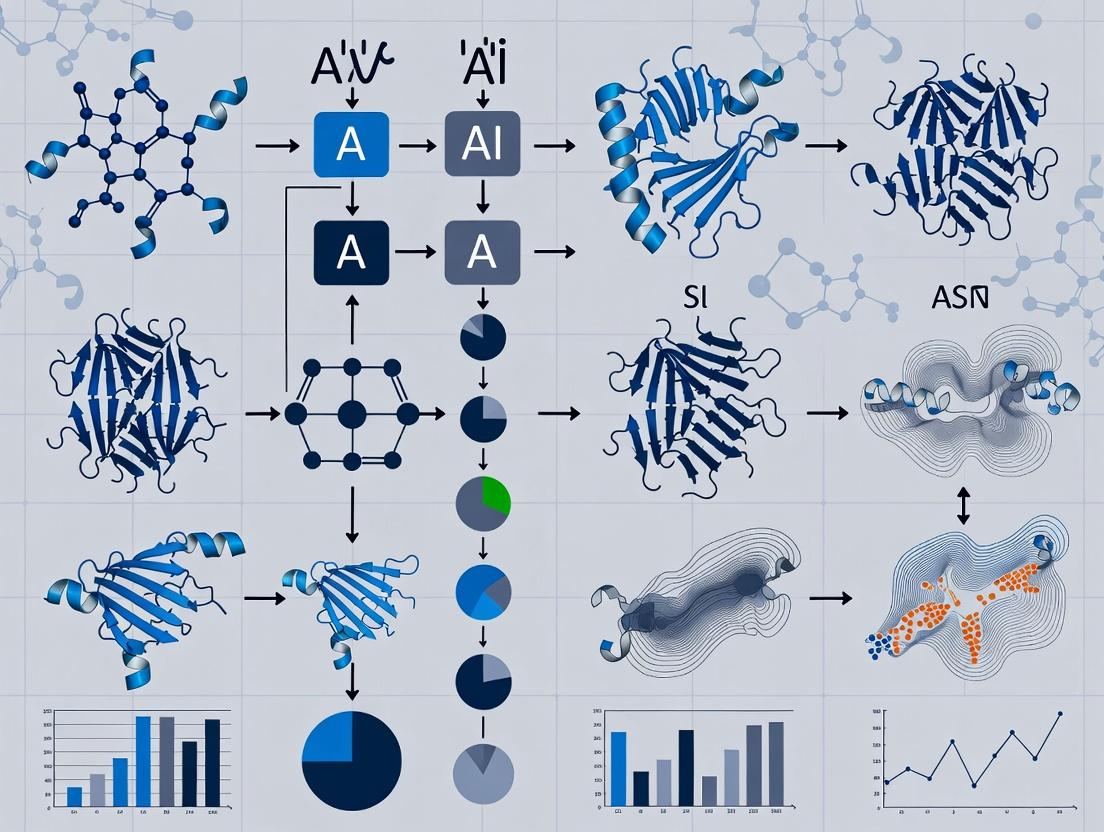
This article provides a comprehensive overview of the transformative role of artificial intelligence (AI) and machine learning (ML) in protein therapeutic discovery.
From Sequence to Cure: How AI and Machine Learning Are Revolutionizing Protein Therapeutic Discovery
Abstract
This article provides a comprehensive overview of the transformative role of artificial intelligence (AI) and machine learning (ML) in protein therapeutic discovery. Targeting researchers, scientists, and drug development professionals, it explores the foundational principles of AI/ML in biotherapeutics, details cutting-edge methodologies for protein design and optimization, addresses common challenges in model training and data integration, and critically evaluates the validation benchmarks and competitive landscape against traditional methods. The synthesis offers a roadmap for integrating computational intelligence into the next generation of biologic drug development.
The AI-Driven Paradigm Shift: Core Concepts Redefining Protein Therapeutics
The development of traditional biologic therapeutics, particularly monoclonal antibodies (mAbs), is characterized by immense financial investments and protracted timelines, posing significant barriers to innovation. This whitepaper details the core processes, costs, and methodologies, framing them within the emerging paradigm of AI and machine learning (ML) in protein therapeutic discovery. By quantifying these challenges, we highlight the transformative potential of computational approaches.
The Economic and Temporal Burden of Biologics Discovery
The journey from target identification to a clinical candidate is a multi-year, capital-intensive endeavor. The table below summarizes key cost and timeline metrics for traditional biologic discovery.
Table 1: Cost and Timeline Breakdown for Traditional mAb Discovery
| Phase | Typical Duration | Estimated Direct Costs (USD) | Success Rate |
|---|---|---|---|
| Target Identification & Validation | 1-2 years | $500,000 - $2,000,000 | ~10% proceed |
| Lead Discovery (Immunization/Hybridoma or Library Screening) | 6-12 months | $1,000,000 - $3,000,000 | |
| Lead Optimization & In Vitro Characterization | 1-2 years | $2,000,000 - $5,000,000 | ~20-30% of leads |
| Preclinical Development (CMC & In Vivo Studies) | 1.5-2 years | $5,000,000 - $20,000,000 | |
| IND-Enabling Studies | 1-1.5 years | $3,000,000 - $10,000,000 | |
| Total (Pre-IND) | 5-8 years | $10M - $40M+ | < 5% to clinic |
Data synthesized from recent industry analyses (2023-2024) of biopharmaceutical R&D expenditures.
Core Experimental Methodologies in Traditional Biologic Discovery
Hybridoma Technology for Murine mAb Discovery
This remains a gold standard, particularly for novel antigens with unknown immunogenicity.
Protocol: Murine Hybridoma Generation
- Immunization: BALB/c mice are injected with the purified antigen (e.g., recombinant protein) emulsified in adjuvant (e.g., Freund's) over 4-8 weeks with boosts.
- Fusion: Spleenocytes from immunized mice are harvested and fused with immortal myeloma cells (e.g., SP2/0) using polyethylene glycol (PEG).
- Selection & Cloning: Cells are plated in HAT (hypoxanthine-aminopterin-thymidine) medium to select for fused hybridomas. Surviving clones are screened for antigen-specific antibody secretion via ELISA.
- Subcloning & Expansion: Positive clones are subcloned by limiting dilution to ensure monoclonality, then expanded for antibody production and characterization.
Diagram Title: Hybridoma Workflow for Monoclonal Antibody Discovery
Phage Display Library Screening
A key in vitro display technology enabling human antibody discovery.
Protocol: Panning a Phage-Displayed scFv Library
- Biopanning: A library of phage displaying single-chain variable fragments (scFvs) is incubated in a target-coated immunotube or well. Non-binding phage are washed away.
- Elution & Amplification: Bound phage are eluted (using low pH or competitive antigen) and used to infect E. coli (e.g., TG1 strain) for amplification.
- Iteration: The amplified phage output is subjected to 3-5 rounds of panning with increasing wash stringency to enrich high-affinity binders.
- Screening: Output from final rounds is used to produce monoclonal phage or soluble scFv for screening via monoclonal phage ELISA or FACS.
Table 2: Key Research Reagent Solutions for Biologics Discovery
| Reagent / Material | Function & Rationale |
|---|---|
| Freund's Adjuvant (Complete/Incomplete) | Potent immune stimulant for animal immunizations, enhances antibody titers and affinity maturation. |
| HAT Selection Medium | Selective medium containing hypoxanthine, aminopterin, and thymidine. Allows only hybridoma cells (with functional HGPRT enzyme) to survive post-fusion. |
| Protein A/G/L Beads | Affinity chromatography resins for purifying antibodies based on species/isotype-specific binding to Fc regions. Critical for obtaining pure material for assays. |
| ELISA Plates (e.g., Nunc MaxiSorp) | High protein-binding polystyrene plates for immobilizing antigens or antibodies in immunoassays. Essential for screening binding events. |
| HEK293 or CHO Cell Lines | Mammalian expression workhorses for transient or stable production of recombinant antibodies and target proteins for functional assays. |
| Surface Plasmon Resonance (SPR) Chips (e.g., CM5) | Gold sensor chips functionalized with carboxymethyl dextran for immobilizing target molecules to measure binding kinetics (ka, kd, KD) of leads. |
The AI/ML Thesis: A Paradigm Shift
Traditional discovery is a linear, low-throughput, and often empirical process. AI/ML introduces a data-driven, iterative cycle that can dramatically compress early discovery phases. The logical shift is depicted below.
Diagram Title: Traditional vs AI-Augmented Biologic Discovery Pathway
Table 3: Comparative Metrics: Traditional vs. AI-Augmented Lead Discovery
| Metric | Traditional Approach | AI/ML-Augmented Approach | Potential Impact |
|---|---|---|---|
| Lead Identification Time | 6-12 months | Weeks to months | ~2-5x acceleration |
| Library Size Screened | 10^3 - 10^6 variants | 10^8 - 10^20 in silico | Vastly expanded sequence space |
| Primary Screening Cost | High (reagents, labor) | Low (computational) | ~10-50x cost reduction |
| Affinity Maturation Cycles | 3-6+ rounds (months) | 1-2 rounds guided by models | Reduced animal use & time |
| Developability Assessment | Late-stage, experimental | Early, sequence-based prediction | Lower late-stage attrition |
Detailed Experimental Protocol: Surface Plasmon Resonance (SPR) for Kinetics
A critical step in lead optimization is the precise measurement of binding kinetics.
Protocol: SPR Analysis of Antibody-Antigen Binding (Direct Capture)
- Chip Preparation: Using a Biacore or similar system, activate a CM5 sensor chip with a 1:1 mixture of 0.4 M EDC and 0.1 M NHS for 7 minutes.
- Ligand Immobilization: Dilute the capture reagent (e.g., anti-human Fc antibody) to 10-30 µg/mL in 10 mM sodium acetate pH 4.5. Inject over the activated surface to achieve a target immobilization level (e.g., 5000-10000 RU). Deactivate with 1 M ethanolamine-HCl pH 8.5.
- Analyte Binding: Capture the test antibody (as analyte) onto the ligand surface at low density (<100 RU). Inject serial dilutions of the antigen (analyte) in HBS-EP+ buffer at a high flow rate (e.g., 30 µL/min) for 2-3 minutes association, followed by 5-10 minutes dissociation.
- Regeneration: Regenerate the surface with a 30-60 second pulse of 10 mM glycine pH 2.0-3.0 to remove bound antigen and antibody without damaging the capture ligand.
- Data Analysis: Double-reference sensorgrams (reference surface & buffer blank). Fit data to a 1:1 binding model using the system software to calculate association (ka) and dissociation (kd) rate constants, and the equilibrium dissociation constant (KD = kd/ka).
The high costs and extended timelines outlined herein create a compelling mandate for innovation. AI and machine learning are not merely incremental improvements but foundational technologies enabling a shift from empirical, low-throughput experimentation to predictive, in silico-first discovery. This integration promises to increase success rates, reduce animal use, and ultimately deliver novel biologics to patients faster and at lower cost.
Within the broader thesis of AI/ML in protein therapeutic discovery, three core computational paradigms are redefining the research landscape. This technical guide details their integration, experimental validations, and translational impact on accelerating and de-risking biopharmaceutical R&D.
Deep Learning for Protein Structure & Function Prediction
Deep learning (DL), particularly deep neural networks (DNNs), excels at identifying complex, hierarchical patterns in high-dimensional biological data, such as amino acid sequences and electron density maps.
Key Applications & Quantitative Impact
Table 1: Impact of Deep Learning on Protein Modeling Tasks (2022-2024)
| Task | Model/System | Key Metric | Performance | Pre-DL Benchmark |
|---|---|---|---|---|
| Structure Prediction | AlphaFold2, RoseTTAFold | Median TM-score (CASP15) | >0.90 (High accuracy) | ~0.60 (Moderate) |
| Protein Design | ProteinMPNN | Sequence Recovery Rate | ~52% | ~35% (Rosetta) |
| Binding Affinity | DeepBindGCN | Pearson's r (SKEMPI 2.0) | 0.82 | ~0.65 |
| Function Annotation | DeepFRI | F1-Score (Gene Ontology) | 0.65 | ~0.45 |
Experimental Protocol: In-silico Validation of DL-Predicted Protein Structures
- Input: Target amino acid sequence (FASTA format).
- Prediction: Run through a pre-trained AlphaFold2 or RoseTTAFold model using multiple sequence alignment (MSA) and template data.
- Output Analysis: Assess predicted local distance difference test (pLDDT) per residue and predicted aligned error (PAE) for confidence estimation.
- Experimental Cross-check:
- Cryo-EM Validation: Purify the expressed protein, prepare grids, and collect cryo-EM data. Reconstruct 3D map at <4Å resolution. Align DL-predicted model to map using ChimeraX and calculate cross-correlation coefficient.
- SPR Binding Assay: If a binder is designed, immobilize the target on a sensor chip. Flow the designed protein over the surface. Compare the measured binding kinetics (KD) to the DL-predicted affinity score.
Title: Workflow for validating deep learning protein structure predictions.
The Scientist's Toolkit: Key Reagents for DL-Guided Protein Characterization
Table 2: Essential Research Reagents
| Reagent / Material | Function in Validation |
|---|---|
| HEK293F or Sf9 Insect Cells | Mammalian or insect expression systems for producing complex, post-translationally modified therapeutic protein candidates. |
| Ni-NTA or Strep-Tactin Affinity Resin | For purification of His-tagged or Strep-tagged designed proteins after expression. |
| Cryo-EM Grids (Quantifoil R1.2/1.3) | Ultrathin carbon substrates for flash-freezing purified protein samples for cryo-electron microscopy. |
| CM5 or Series S Sensor Chip (Biacore) | Gold surfaces for immobilizing target proteins to measure binding kinetics of designed binders via Surface Plasmon Resonance. |
Generative Models for De Novo Protein Design
Generative AI models, including Variational Autoencoders (VAEs), Generative Adversarial Networks (GANs), and diffusion models, learn the latent space of protein sequences and structures to create novel, stable, and functional proteins.
Key Applications & Quantitative Impact
Table 3: Performance of Generative Models in Protein Design (2023-2024)
| Model Type | Exemplar | Application | Success Rate (Experimental) | Design Cycle Time |
|---|---|---|---|---|
| Protein-Specific Diffusion | RFdiffusion | Symmetric Oligomers | 80% (High-resolution cryo-EM) | Weeks vs. months (traditional) |
| Conditional VAE | cVAE-ProDesign | Target-binding Proteins | 1 in 4 designs bind (vs. 1 in 1000 random) | Days for in-silico screening |
| Language Model | ProGen2 | Functional Enzyme Design | 50-70% express soluble, active enzyme | Rapid sequence generation |
Experimental Protocol: Designing a Target-Specific Binder with RFdiffusion
- Define Objective: Specify target protein (e.g., a cytokine receptor) and desired binding interface (e.g., a specific epitope).
- Conditional Generation: Use RFdiffusion with the target structure as a "scaffold" condition. Apply symmetry and protein-protein interface constraints. Generate 1000s of novel backbone structures.
- Sequence Design: Pass generated backbones through ProteinMPNN to obtain optimal amino acid sequences.
- In-silico Filtering: Score designs using AlphaFold2 (to check fold confidence) and docking simulations (to check binding pose). Select top 50-100 candidates.
- High-Throughput Experimental Screening:
- Expression & Purification: Express designs in E. coli or cell-free systems via high-throughput cloning (e.g., Golden Gate).
- Affinity Screen: Use biolayer interferometry (BLI) or yeast/mammalian surface display to screen for target binding.
- Validation: Characterize hits with SPR (for kinetics) and X-ray crystallography/cryo-EM for structural validation.
Title: Generative AI workflow for de novo protein binder design.
Reinforcement Learning for Optimizing Therapeutic Properties
Reinforcement Learning (RL) frames the drug discovery process as a sequential decision-making problem, where an agent learns to optimize molecular designs towards multi-objective rewards (e.g., high affinity, low immunogenicity, good developability).
Key Applications & Quantitative Impact
Table 4: Reinforcement Learning in Therapeutic Optimization
| RL Algorithm | Application Scope | Key Performance Gain | Metric |
|---|---|---|---|
| Proximal Policy Optimization (PPO) | Optimizing antibody affinity maturation in-silico. | 10-100 fold affinity improvement over initial lead in 5-10 RL steps. | Simulated KD (nM) |
| Deep Q-Network (DQN) | Multi-parameter optimization (potency, solubility, specificity). | Achieves >80% success rate in meeting 4+ desired property thresholds. | Pareto Front Coverage |
| Model-Based RL | Guiding long-term cell culture or fermentation processes for biologics production. | Increases titer yield by 15-25% over traditional DOE. | g/L of product |
Experimental Protocol: RL-Guided Affinity Maturation of an Antibody
- Environment Setup: Define the "environment" as the antibody variable region (CDRs). The "state" is the current amino acid sequence, and an "action" is a point mutation.
- Reward Function: Design a composite reward R = w1ΔΔG(binding) + w2(developability score) + w3*(-immunogenicity risk). ΔΔG is predicted by a pre-trained DL model.
- Training: Initialize RL agent (e.g., PPO) with a known antibody lead sequence. The agent proposes mutations, receives a reward from the computational function, and updates its policy over millions of simulated steps.
- In-vitro Loop:
- Synthesis: Select top 20-50 RL-designed variant sequences for gene synthesis.
- Expression & Screening: Express as monoclonal antibodies, then screen via Octet BLI for binding kinetics against the target antigen.
- Feedback: Integrate experimental binding data (KD) to retrain or fine-tune the reward predictor, closing the iterative loop.
Title: Reinforcement learning loop for antibody affinity maturation.
Synthesis and Future Outlook
The convergence of deep learning (for prediction), generative models (for creation), and reinforcement learning (for optimization) creates a powerful, iterative engine for protein therapeutic discovery. This integration, framed within the thesis of AI/ML's transformative role, is shifting the paradigm from high-throughput screening to high-precision, knowledge-driven design, significantly compressing pre-clinical timelines from years to months. The future lies in closing the loop between in-silico design and high-throughput experimental validation, creating self-improving discovery systems.
The acceleration of AI-driven protein therapeutic discovery is fundamentally dependent on the quality, scale, and integration of underlying biological databases. Genomic, proteomic, and structural data repositories provide the essential training substrates for machine learning models, enabling the prediction of protein function, stability, interaction, and de novo design. This whitepaper details the core databases, their quantitative attributes, and the experimental protocols that validate the AI models they fuel, all within the context of discovering and optimizing biologic drugs.
Core Database Landscape: Quantifying the Fuel
The following tables summarize the key publicly accessible databases that form the backbone of modern therapeutic AI.
Table 1: Foundational Genomic & Proteomic Databases
| Database Name | Primary Content | Estimated Size (as of 2024) | Key Application in AI Models |
|---|---|---|---|
| UniProtKB (Swiss-Prot/TrEMBL) | Manually/automatically annotated protein sequences & functions. | ~ 220 million sequences (TrEMBL); ~ 570,000 (Swiss-Prot). | Training embeddings for sequence-function relationships, predicting subcellular localization, functional sites. |
| AlphaFold Protein Structure Database | AI-predicted protein structures from multiple organisms. | > 200 million structures. | Providing structural features for models where experimental data is absent; training fold recognition models. |
| Protein Data Bank (PDB) | Experimentally determined 3D structures of proteins/nucleic acids. | ~ 220,000 structures. | Ground truth for training & validating structure prediction AI (e.g., AlphaFold, RoseTTAFold). |
| gnomAD | Human genomic variation aggregated from sequencing cohorts. | v4.0: ~ 730,000 exomes, ~ 76,000 genomes. | Training variant effect predictors (e.g., AlphaMissense) to distinguish pathogenic from benign mutations. |
| MassIVE / PRIDE | Mass spectrometry-based proteomics data (raw & processed). | > 1.4 million datasets (PRIDE). | Training models to predict post-translational modifications (PTMs) and protein expression levels. |
Table 2: Key Therapeutic & Functional Databases
| Database Name | Primary Content | Key Metrics | AI Application in Therapeutics |
|---|---|---|---|
| Therapeutic Target Database (TTD) | Known & explored therapeutic protein/nucleic acid targets. | ~ 3,600 targets; ~ 42,000 drugs. | Prioritizing targets, identifying polypharmacology, and drug repurposing predictions. |
| SAbDab (Structural Antibody Database) | Annotated antibody and nanobody structures (Fv/Fab). | ~ 6,000 structures from ~ 1,900 PDB entries. | Training antibody-specific structure prediction (e.g., IgFold, ABodyBuilder) and humanization models. |
| ClinVar | Human variation linked to health status (clinical significance). | ~ 2.5 million submissions. | Benchmarking variant effect prediction models for clinical relevance in target safety assessment. |
| STRING | Known and predicted protein-protein interactions. | ~ 67.6 million proteins from > 20,000 organisms. | Constructing interaction networks for target pathway identification and off-target effect prediction. |
From Data to Model: Key Experimental Protocols for Validation
AI model predictions require rigorous experimental validation. Below are detailed protocols for key assays cited in AI-driven therapeutic papers.
Protocol 1: Surface Plasmon Resonance (SPR) for Binding Affinity (KD) Measurement Objective: Quantitatively validate AI-predicted protein-protein or antibody-antigen interactions. Materials: Biacore or comparable SPR instrument, CMS sensor chip, running buffer (e.g., HBS-EP: 10 mM HEPES, 150 mM NaCl, 3 mM EDTA, 0.05% v/v Surfactant P20, pH 7.4), ligand protein, analyte protein. Procedure:
- Immobilization: Activate CMS chip surface with EDC/NHS mixture. Dilute ligand in sodium acetate buffer (pH 4.0-5.5) and inject to achieve desired immobilization level (~50-100 RU for small molecules, ~5000-10,000 RU for proteins). Deactivate with ethanolamine.
- Binding Kinetics: Set flow rate to 30 µL/min. Inject a series of analyte concentrations (e.g., 0.5 nM to 500 nM) over ligand and reference surfaces for 120-180s (association), followed by running buffer for 300-600s (dissociation).
- Regeneration: Strip bound analyte with a 30s pulse of regeneration buffer (e.g., 10 mM Glycine-HCl, pH 2.0).
- Analysis: Subtract reference sensorgram. Fit data to a 1:1 Langmuir binding model using instrument software to derive association (ka) and dissociation (kd) rate constants. KD = kd/ka.
Protocol 2: Thermal Shift Assay (Differential Scanning Fluorimetry) for Protein Stability Objective: Validate AI-predicted stabilizing mutations or ligand binding by measuring thermal stability shift (ΔTm). Materials: Real-time PCR instrument, 96-well PCR plate, purified protein, SYPRO Orange dye (5000X stock), assay buffer. Procedure:
- Plate Setup: In each well, mix 10 µL of protein (0.2-0.5 mg/mL) with 10 µL of 2X SYPRO Orange dye (final 5X) in assay buffer. Include buffer-only controls.
- Run Melt Curve: Seal plate, centrifuge. Program instrument to heat from 25°C to 95°C with a ramp rate of 1°C/min, measuring fluorescence (ROX/FAM channel) continuously.
- Data Analysis: Plot fluorescence vs. temperature. Determine melting temperature (Tm) as the inflection point of the sigmoidal curve (first derivative peak). Compare Tm of wild-type vs. mutant or apo vs. ligand-bound protein to calculate ΔTm.
Protocol 3: Deep Mutational Scanning (DMS) for Functional Validation Objective: Generate large-scale experimental fitness scores for thousands of variants to benchmark AI variant effect predictors. Materials: Gene library (saturation mutagenesis), expression system (yeast/E. coli/mammalian), FACS sorter, NGS platform. Procedure:
- Library Construction: Use PCR-based mutagenesis to create a library covering all single-point mutants in a gene of interest. Clone into an appropriate display (phage/yeast) or expression vector.
- Selection: Subject the library to a functional selection pressure (e.g., binding to a fluorescently labeled target, antibiotic resistance, enzymatic activity).
- Sorting & Sequencing: Use FACS to separate cells/virions into bins based on fluorescence (proxy for function). Isolate genomic DNA from pre-selection and each post-selection bin.
- Analysis: Amplify variant region and perform NGS. For each variant, compute an enrichment score (log2(frequencypost/frequencypre)) across bins. Map scores to the protein structure for model comparison.
Visualizing the AI-Database-Experiment Pipeline
Title: AI-Driven Therapeutic Discovery Pipeline
The Scientist's Toolkit: Essential Research Reagent Solutions
Table 3: Key Reagents for Validation Experiments
| Reagent / Material | Vendor Examples | Function in Protocol |
|---|---|---|
| CMS Sensor Chip (Series S) | Cytiva | Gold surface with carboxymethylated dextran matrix for covalent ligand immobilization in SPR. |
| SYPRO Orange Protein Gel Stain | Thermo Fisher Scientific | Environment-sensitive fluorescent dye used in DSF to monitor protein unfolding. |
| Nextera XT DNA Library Prep Kit | Illumina | Prepares amplicon libraries from DMS samples for high-throughput sequencing on Illumina platforms. |
| Anti-His Tag Antibody (Capture) | Cytiva, Sartorius | Used for oriented immobilization of His-tagged ligand proteins on SPR sensor chips (e.g., Ni-NTA chips). |
| HBS-EP+ Buffer (10X) | Cytiva | Standard running buffer for SPR, provides consistent pH and ionic strength, minimizes non-specific binding. |
| Gibson Assembly Master Mix | NEB | Enables seamless cloning of mutant libraries for DMS by assembling multiple DNA fragments in a single reaction. |
| Protease Inhibitor Cocktail (EDTA-free) | Roche, Sigma | Added to protein purification buffers to maintain protein integrity prior to SPR or DSF assays. |
| Size Exclusion Chromatography Column (HiLoad Superdex 75/200) | Cytiva | For final polishing step of protein purification to obtain monodisperse sample critical for reproducible assays. |
Within the thesis that artificial intelligence and machine learning are fundamentally restructuring the paradigm of protein therapeutic discovery, this guide examines the technical mechanisms by which these tools are expanding the druggable universe. Traditional drug discovery has been constrained to a small fraction of the proteome, primarily targeting pockets with favorable physicochemical properties. AI-driven approaches are now enabling systematic exploration beyond these limits, identifying and engineering ligands for previously "undruggable" targets, including large protein-protein interfaces, intrinsically disordered regions, and novel biological modalities.
Core AI Methodologies in Target and Ligand Discovery
Target Identification and Validation
AI integrates multi-omics data (genomics, transcriptomics, proteomics) to infer novel disease-associated targets and assess their druggability. Graph neural networks (GNNs) model biological networks to identify critical nodes for intervention.
Table 1: Quantitative Performance of AI Target Identification Platforms
| Platform/Model Type | Data Sources | Validation Rate (%) | Novel Target Yield (%) | Key Metric (AUC-ROC) |
|---|---|---|---|---|
| GNN (Deeptarget) | PPIN, GWAS, Expression | 42 | 35 | 0.91 |
| Multimodal Transformer | scRNA-seq, Proteomics, Literature | 51 | 28 | 0.94 |
| Causal ML Framework | CRISPR screens, EHRs, Metabolomics | 38 | 41 | 0.89 |
Experimental Protocol for AI-Driven Target Validation:
- Data Curation: Assemble a knowledge graph integrating protein-protein interactions (BioGRID), disease associations (OpenTargets), gene expression (GTEx), and chemical interactions (ChEMBL).
- Model Training: Train a GNN using a message-passing architecture. The node features include protein sequences (embedded), tissue expression profiles, and known disease links. Edges represent interaction strengths.
- Inference: For a given disease phenotype, the model ranks candidate proteins by predicted causal influence score.
- Experimental Triangulation: Top candidates undergo parallel validation:
- CRISPR Knockout: In disease-relevant cell lines, measure phenotype change (e.g., proliferation, apoptosis).
- Transcriptomic Profiling: Perform RNA-seq post-perturbation to confirm expected pathway modulation.
- Literature Mining: Use NLP models to scan for emerging independent evidence.
Ligand Discovery: From Small Molecules to Macrocycles and Beyond
AI models now generate and optimize chemical matter across a wide molecular weight spectrum.
Table 2: AI Models for Diverse Ligand Classes
| Ligand Class | Typical MW (Da) | Key AI Model | Success Rate (Experimental Hit) | Primary Advantage |
|---|---|---|---|---|
| Small Molecule | 200-500 | 3D-CNN, Equivariant GNN | 5-15% | High oral bioavailability |
| Peptide (cyclic) | 500-2000 | RNN, VAEs | 10-25% | Targeting shallow interfaces |
| Macrocycle | 700-2000 | Reinforcement Learning (RL) | 12-30% | Bridging small molecule & biologic properties |
| Protein (nanobody, miniprotein) | 12k-25k | AlphaFold2, RFdiffusion | 20-40%* (in silico) | High specificity & affinity |
Experimental Protocol for De Novo Ligand Design with Diffusion Models:
- Structure Preparation: Obtain a high-resolution crystal structure or an AlphaFold2-predicted model of the target binding site.
- Conditional Diffusion: Employ a 3D diffusion model (e.g., analogous to RFdiffusion) conditioned on the target pocket's atomic point cloud and physicochemical features (hydrophobicity, electrostatics).
- Ligand Generation: The model iteratively denoises a random atom cloud to generate a stable ligand pose within the pocket.
- In Silico Screening: Generated molecules are filtered by:
- Docking Score: Re-dock using molecular dynamics (MD) simulations (e.g., OpenMM).
- Pharmacokinetic Prediction: Use ADMET-predicting models (e.g., graph-based).
- Synthetic Accessibility: Assess via a learned scoring function (e.g., SAscore).
- Synthesis & Testing: Top-ranking designs are synthesized using automated flow chemistry (for small molecules) or solid-phase peptide synthesis/FPLC (for biologics) and tested via SPR for binding and functional assays.
Engineering Novel Protein Therapeutics
AI has revolutionized the design of protein-based therapeutics, such as enzymes, antibodies, and de novo binders.
Diagram 1: AI-Driven Protein Therapeutic Design Workflow
Experimental Protocol for De Novo Miniprotein Binder Design:
- Scaffold Generation: Using RFdiffusion, specify the target protein's surface as a "condition." The model generates backbone scaffolds that geometrically complement the site.
- Sequence Design: Pass the generated backbone through ProteinMPNN to propose optimal amino acid sequences that stabilize the fold and the target interface.
- In Silico Affinity Maturation: A classifier model predicts binding affinity. Low-scoring designs are mutated virtually, and the process iterates using a Monte Carlo tree search.
- Stability Assessment: Predict folding stability (ΔΔG) using tools like ESMFold and FoldX.
- Expression & Characterization: Clone genes into E. coli expression vectors. Express, purify via His-tag chromatography, and characterize binding (BLI/SPR), specificity (target vs. homolog), and thermostability (DSF).
The Scientist's Toolkit: Research Reagent Solutions
Table 3: Key Reagents & Platforms for AI-Driven Therapeutic Discovery
| Item Name | Vendor/Platform (Example) | Function in Workflow |
|---|---|---|
| AlphaFold2 Protein Structure Database | EMBL-EBI | Provides high-confidence predicted structures for targets lacking experimental data. |
| RFdiffusion | RoboFlow (Academic) | Open-source tool for de novo protein backbone generation conditioned on 3D constraints. |
| ProteinMPNN | University of Washington | Neural network for designing sequences for given protein backbones, optimizing stability and function. |
| OpenMM Molecular Dynamics Toolkit | Stanford | GPU-accelerated simulation suite for rigorous in silico validation of binding dynamics and stability. |
| Biolayer Interferometry (BLI) Octet System | Sartorius | High-throughput, label-free kinetic binding analysis for validating AI-designed ligands. |
| Stable Cell Line Pools (for CRISPR validation) | Synthego | Pre-designed sgRNA libraries for rapid knockout validation of AI-predicted targets. |
| mRNA Display Library Kits | Profusa (Custom) | Enable experimental screening of vast peptide/protein libraries, complementing AI generation. |
| Automated Flow Chemistry Platform | Syrris, Vapourtec | Enables rapid synthesis of diverse AI-generated small molecule leads for testing. |
Case Study: Targeting a "Undruggable" Transcription Factor Interface
Target: MYC transcription factor, which lacks a deep binding pocket. AI Approach: A hybrid pipeline combining a diffusion model for macrocycle backbone generation and a GNN for side-chain optimization to disrupt the MYC-MAX protein-protein interaction. Result: De novo designed macrocycles achieved sub-micromolar binding (Kd = 450 nM, SPR) and disrupted the interaction in a TR-FRET assay (IC50 = 780 nM), a milestone for this target class.
Diagram 2: MYC-MAX Disruption via AI-Designed Macrocycle
AI and machine learning are not merely incremental tools but are foundational technologies expanding the druggable universe. By providing predictive power across scales—from atomic-level small molecule interactions to the de novo design of complex protein therapeutics—they enable a systematic, physics-informed exploration of biological space. This transition, central to the thesis of AI in therapeutic discovery, is moving the field from a reliance on serendipity and high-throughput screening to a rational, target-agnostic engineering discipline, dramatically increasing the probability of addressing previously intractable diseases.
The convergence of artificial intelligence (AI) and machine learning (ML) with structural biology and biophysics is fundamentally restructuring the therapeutic discovery pipeline. The central thesis of this transformation is that high-fidelity computational models, trained on vast biological datasets, can accurately predict and simulate molecular interactions, thereby drastically reducing the empirical guesswork and time associated with traditional methods. This whitepaper provides a technical overview of key players, their pioneering technologies, and the experimental protocols underpinning this revolution, focusing on protein therapeutic discovery.
Landscape of Key Players and Technological Capabilities
This section details the primary entities driving innovation, categorized by their core technological focus.
AI-First Protein Structure Prediction & Design
| Entity | Core Technology/Initiative | Key Achievement/Model | Reported Performance Metric |
|---|---|---|---|
| DeepMind/Google | AlphaFold series | AlphaFold2 (AF2) | >90% of residues in CASP14 targets predicted with RMSD <2Å. |
| Meta | ESMFold (Evolutionary Scale Modeling) | ESM-2 & ESMFold | Predicts structure from single sequence at speeds 6-60x faster than AF2, with comparable accuracy for many targets. |
| David Baker Lab (UW)/IPD | RoseTTAFold & RFdiffusion | RoseTTAFold (Three-track network) | Achieved accuracy comparable to AF2 in CASP14. RFdiffusion enables de novo protein design from scratch. |
| Generate Biomedicines | Generative Biology Platform | Chroma (Diffusion model) | Platform capable of generating novel, functional protein binders and enzymes across multiple therapeutic modalities. |
Integrated Drug Discovery Platforms
| Entity | Core Technology/Initiative | Key Focus Area | Notable Partnership/Candidate |
|---|---|---|---|
| Isomorphic Labs | AlphaFold-derived foundational biology models | From target identification to candidate design | Strategic collaborations with Lilly and Novartis. |
| Recursion | OS (Operational System) - Phenomics | Mapping cellular phenotypes to disease | Multiple candidates in oncology and neurology clinical trials. |
| Exscientia | CentaurAI Platform | Automated, patient-first precision drug design | First AI-designed immuno-oncology drug (EXS-21546) entered clinical trials. |
| Insilico Medicine | Pharma.AI (Biology, Chemistry, Medicine) | Target discovery, generative chemistry | First fully AI-generated drug (ISM001-055 for fibrosis) in Phase II trials. |
| Absci | Integrated Drug Creation Platform | Zero-shot generative AI for de novo antibody design | Platform demonstrated in silico design of antibodies against multiple targets with experimental validation. |
Detailed Experimental Methodologies
The validation of AI/ML predictions requires rigorous wet-lab experimentation. Below are generalized protocols for key validation steps.
Protocol for Validating AI-Generated Protein Structures (X-ray Crystallography)
- Gene Synthesis & Cloning: DNA encoding the predicted protein sequence is synthesized and cloned into an expression vector (e.g., pET series) with an affinity tag (e.g., His-tag).
- Protein Expression: The vector is transformed into E. coli (e.g., BL21(DE3)) cells. Expression is induced with IPTG, and cells are harvested by centrifugation.
- Purification: Cell pellets are lysed, and the soluble fraction is applied to an immobilized metal affinity chromatography (IMAC) column. The eluted protein is further purified by size-exclusion chromatography (SEC).
- Crystallization: Purified protein is concentrated and subjected to high-throughput screening using commercial sparse-matrix screens (e.g., Hampton Research) via sitting-drop vapor diffusion.
- Data Collection & Refinement: Cryo-cooled crystals are exposed to X-rays at a synchrotron. Diffraction data is indexed, integrated, and scaled. The AI-predicted model is used as a molecular replacement search model in refinement software (e.g., PHENIX, Refmac).
- Validation: The refined experimental structure is compared to the AI prediction using root-mean-square deviation (RMSD) of Cα atoms and Global Distance Test (GDT) scores.
Protocol for Assessing AI-Designed Protein Function (Surface Plasmon Resonance)
- Immobilization: A target antigen is covalently immobilized onto a CMS sensor chip using amine-coupling chemistry in a Biacore or equivalent SPR instrument.
- Analyte Preparation: Purified, AI-designed antibody or binder protein is serially diluted in running buffer (e.g., HBS-EP+).
- Binding Kinetics Measurement: Dilutions are injected over the chip surface at a constant flow rate. The association phase (on-rate, kon) is monitored in real-time, followed by buffer flow to monitor dissociation (off-rate, koff).
- Data Analysis: Sensorgrams are double-referenced and fitted to a 1:1 binding model using the instrument's software. The equilibrium dissociation constant (KD) is calculated as koff/kon.
Visualizing Key Workflows and Relationships
Diagram 1: AI Foundation Models Drive Multiple Discovery Applications
Diagram 2: AI-Powered de Novo Therapeutic Design Workflow
The Scientist's Toolkit: Key Research Reagent Solutions
| Reagent/Material | Supplier Examples | Function in AI/ML Validation |
|---|---|---|
| Expression Vectors (pET series) | Novagen, Addgene | High-yield protein expression in bacterial systems for structural and biophysical studies. |
| Affinity Purification Resins (Ni-NTA, Protein A/G) | Cytiva, Thermo Fisher, Qiagen | Rapid, tag-based purification of recombinant proteins for characterization and assay use. |
| Size-Exclusion Chromatography Columns | Cytiva (Superdex), Bio-Rad | Polishing step to isolate monodisperse, correctly folded protein populations. |
| Crystallization Screening Kits | Hampton Research, Molecular Dimensions | Enable systematic search for conditions that yield diffraction-quality protein crystals. |
| SPR Sensor Chips (CMS, Series S) | Cytiva | Gold-standard surface for label-free, real-time kinetic analysis of molecular interactions. |
| Mammalian Display Libraries | Twist Bioscience, Distributed Bio | Provide a physical library for screening or validating AI-designed protein sequences. |
| Cell-Based Reporter Assay Kits | Promega, Invitrogen | Functional validation of therapeutic candidates (e.g., modulation of signaling pathways). |
AI in Action: Practical Workflows for De Novo Design, Optimization, and Engineering
The accurate prediction of protein three-dimensional structures from amino acid sequences has been a grand challenge in biology for over 50 years. The advent of deep learning-based tools, notably AlphaFold2 (AF2) by DeepMind and RoseTTAFold (RF) by the Baker lab, has revolutionized the field, achieving accuracy comparable to experimental methods. This whitepaper details their technical architectures, protocols for application in therapeutic discovery, and integration into the drug development pipeline, framed within the broader thesis that AI is transitioning from an auxiliary tool to a core driver of biological hypothesis generation and validation.
Technical Architectures and Comparative Performance
Core Architectural Principles
AlphaFold2 employs an end-to-end deep neural network based on an Evoformer-Stacked Axial Attention mechanism, followed by a structure module. It ingests multiple sequence alignments (MSAs) and pairwise features, using self-attention to reason about spatial and evolutionary relationships.
RoseTTAFold utilizes a three-track neural network architecture (1D sequence, 2D distance, 3D coordinates) that simultaneously processes sequence, distance, and structural information, allowing iterative refinement. It is less computationally intensive than AF2 and is designed for de novo protein design as well as prediction.
Quantitative Performance Benchmarking
The following table summarizes key performance metrics from the CASP14 assessment and subsequent independent analyses.
Table 1: Comparative Performance of AlphaFold2 and RoseTTAFold (CASP14 & Post-CASP Benchmarks)
| Metric | AlphaFold2 (Median) | RoseTTAFold (Median) | Experimental Method (Typical Resolution) |
|---|---|---|---|
| Global Distance Test (GDT_TS) | 92.4 (CASP14 Targets) | ~85-90 (on CASP14) | N/A |
| RMSD (Å) on High-Accuracy Predictions | 0.5 - 1.5 Å | 1.0 - 2.5 Å | X-ray: 1.0-2.5 Å Cryo-EM: 2.0-4.0 Å |
| TM-Score | >0.9 (on most single-chain) | >0.8 (on most single-chain) | N/A |
| Prediction Speed (Model Inference) | Minutes to hours* | Minutes to hours* | Days to years |
| Key Computational Requirement | 128 TPUv3 cores (~weeks training) | 4 GPUs (1-2 weeks training) | N/A |
*Dependent on sequence length and MSA depth. Availability through cloud services (ColabFold) has drastically reduced user compute time.
Experimental Protocols for Therapeutic Insight
Protocol: Predicting and Validating a Drug Target Structure
Objective: Generate a reliable in silico model of a novel therapeutic target (e.g., a human kinase or viral protease) for virtual screening and epitope mapping.
Materials & Workflow:
- Input Sequence: Obtain the canonical amino acid sequence from UniProt.
- MSA Generation: Use MMseqs2 (via ColabFold) or JackHMMER to search against genomic databases (UniRef, BFD, MGnify).
- Template Identification (Optional): Use HHsearch for potential homologs in PDB.
- Model Inference:
- For AF2: Run via local installation, Google ColabFold notebook, or AlphaFold Protein Structure Database. Use 5 model seeds and 3 recycles minimum.
- For RF: Run via Robetta server or local installation. Utilize the three-track network with iterative refinement.
- Model Selection: Rank predictions by predicted confidence score (pLDDT for AF2, estimated RMSD/confidence for RF). Inspect per-residue confidence plots.
- Validation:
- Internal: Check stereochemical quality with MolProbity (Ramachandran outliers, rotamer outliers, clashscore).
- Comparative (if possible): Compare with any low-resolution experimental data (SAXS, cryo-EM map) using UCSF ChimeraX fit-in-map function.
Protocol: Predicting Protein-Protein Interaction (PPI) Interfaces
Objective: Model the complex between a target protein and its endogenous protein partner or a therapeutic antibody Fab fragment.
Materials & Workflow:
- Input Preparation: Provide sequences for both binding partners as a single FASTA file. For antibody-antigen, include paired heavy and light chains.
- Complex Prediction:
- AF2-multimer: Use the specific multimer version of AF2. Specify the chain breaks. Utilize multiple seeds (≥5).
- RF: RoseTTAFold has inherent complex modeling capability. Input the concatenated sequence.
- Analysis: Extract the interface from the top-ranked model by predicted interface score (ipTM+pTM for AF2). Identify key interacting residues.
- Mutagenesis Design: Use the model to design point mutations (e.g., alanine scanning) predicted to disrupt or enhance binding. Validate computationally with FoldX or Rosetta ddG calculations.
Workflow for AI-Powered Protein Structure Prediction & Application
The Scientist's Toolkit: Essential Research Reagents & Solutions
Table 2: Key Reagents and Computational Tools for AI-Driven Structure-Based Discovery
| Item / Solution | Category | Function in Workflow | Example / Provider |
|---|---|---|---|
| AlphaFold2 ColabFold Notebook | Software/Service | Cloud-based, accelerated AF2/RF prediction with MMseqs2. Lowers barrier to entry. | GitHub: sokrypton/ColabFold |
| RoseTTAFold Web Server | Software/Service | User-friendly web interface for RoseTTAFold predictions, including protein complexes. | Robetta Server (robetta.bakerlab.org) |
| ChimeraX | Visualization/Analysis | Interactive visualization, model validation (fit-to-map), and analysis of predicted structures. | RBVI, UCSF |
| PyMOL / PyMOL2 | Visualization/Analysis | High-quality rendering, figure generation, and structural analysis of models. | Schrödinger |
| FoldX Suite | Computational Biology | Rapid energy calculations for assessing protein stability and protein-protein interaction ΔΔG. | FoldX Web Server (foldxsuite.org) |
| Rosetta3 | Computational Suite | Advanced suite for de novo design, docking, and energy minimization. Can refine AI predictions. | RosettaCommons |
| MolProbity | Validation Server | Comprehensive stereochemical quality check for protein structures (clashscore, rotamers). | molprobity.biochem.duke.edu |
| GPUs (NVIDIA A100/V100) | Hardware | Essential for local training/fine-tuning of models and high-throughput inference. | NVIDIA, Cloud Providers (AWS, GCP) |
Beyond Prediction: Applications in Therapeutic Discovery
Mapping Pathogenic Mutations
AI-predicted structures enable the precise mapping of missense mutations from genomic studies (e.g., GWAS) onto 3D models, distinguishing disruptive mutations at functional sites (active sites, interaction interfaces) from benign ones.
From Genetic Variant to Mechanistic Hypothesis
Accelerating Epitope Mapping for Antibody Discovery
Predicted structures of antigen-antibody complexes can identify critical paratope-epitope residues, guiding affinity maturation and humanization campaigns in silico before experimental testing.
3De NovoProtein and Peptide Therapeutic Design
RoseTTAFold and RFdiffusion (a subsequent development) enable the design of novel proteins and peptides that bind to specific targets, opening avenues for new biologic modalities (mini-binders, enzymes).
Limitations and Future Directions
Current limitations include: 1) Dynamic States: Predicting conformational ensembles and allostery remains challenging. 2) Ligand Effects: Most models predict apo structures; incorporating small molecules, ions, and post-translational modifications is an active area. 3) Membrane Proteins: Performance can be lower due to sparse MSA coverage. 4) Large Complexes: Accurate prediction of mega-Dalton assemblies is not yet routine.
The future lies in integrative, multi-scale models that combine physics-based simulations with AI, and in generative models that not only predict but design functional proteins with therapeutic intent. This trajectory solidifies the thesis that machine learning is becoming the foundational lens through which we understand and engineer biological systems for medicine.
The integration of artificial intelligence (AI) and machine learning (ML) into protein therapeutic discovery represents a paradigm shift, moving from iterative screening to rational, first-principles design. This whitepaper examines de novo protein design—the creation of novel protein structures and functions not found in nature—through the lens of generative AI. Positioned within the broader thesis that AI is transitioning from an analytical tool to a generative engine in biotherapeutics, we detail how models trained on the laws of structural biology are now generating viable, novel protein scaffolds and binders from scratch, accelerating the timeline for therapeutic development.
Foundational Models and Architectural Approaches
The field is driven by several complementary generative AI architectures, each learning different aspects of protein physics and sequence-structure-function relationships.
1. Protein Language Models (pLMs): Trained on millions of natural protein sequences from databases like UniProt, pLMs (e.g., ESM-2, ProtGPT2) learn evolutionary constraints and latent "grammar" of proteins. They generate novel, natural-like sequences but do not explicitly model 3D structure.
2. Structure-Conditioned Generative Models: These models, such as RFdiffusion and Chroma, invert the protein folding problem. Instead of predicting structure from sequence, they generate sequences or full atomic coordinates conditioned on desired structural motifs (e.g., symmetry, pocket shape) or functional specifications (e.g., "bind to this target").
3. Diffusion Models for Protein Backbones: Inspired by image generation (e.g., DALL-E 2, Stable Diffusion), these models treat a protein's 3D backbone as a point cloud. They gradually denoise from random coordinates to a coherent, novel fold under the guidance of learned or user-defined constraints.
Table 1: Comparison of Core Generative AI Models for De Novo Design
| Model Name | Architecture Type | Primary Input | Primary Output | Key Capability |
|---|---|---|---|---|
| ESM-2 / ProtGPT2 | Protein Language Model (Transformer) | Sequence or prompt | Novel amino acid sequence | Generates plausible, diverse sequences; can fill in masked regions. |
| RFdiffusion | Structure Diffusion Model | 3D backbone scaffold, motif constraints | Full atom protein structure | Designs proteins around user-defined functional sites/symmetries. |
| Chroma | Diffusion Model (Multimodal) | Text description, structural constraints | 3D backbone & sequence | "Text-to-protein" generation; conditioned on properties like stability. |
| ProteinMPNN | Inverse Folding Neural Network | 3D protein backbone | Optimal amino acid sequence | Fast, robust sequence design for a given backbone structure. |
Core Experimental Protocol: From AI Generation to Laboratory Validation
The standard pipeline for validating AI-generated proteins involves computational filtration followed by rigorous in vitro and in vivo testing.
Protocol: Validation of a De Novo Generated Protein Binder
Step 1: In Silico Generation & Specification.
- Tool: Use a structure-conditioned model (e.g., RFdiffusion). Input a 3D "motif" of the target protein's binding site (from crystal structure or AlphaFold2 prediction).
- Constraint: Specify the motif residues must remain fixed, while the generative model designs a novel, stable protein scaffold that encapsulates them.
- Output: Generate 1,000-10,000 candidate backbone structures.
Step 2: Computational Filtering & Sequence Design.
- Folding Validation: Process all candidates with a structure predictor (e.g., AlphaFold2, RoseTTAFold) to confirm they "fold" into the designed conformation. Discard designs with low confidence (pLDDT < 70) or high predicted aligned error (PAE).
- Sequence Design: Pass the filtered backbones through an inverse folding model (e.g., ProteinMPNN) to generate stable, expressible amino acid sequences.
- Aggregation & Stability Check: Use tools like Aggrescan3D and FoldX to predict solubility and thermodynamic stability. Filter out designs with high aggregation propensity or destabilizing mutations.
Step 3: Gene Synthesis & Cloning.
- Codon Optimization: Optimize the AI-generated DNA sequence for expression in the desired system (e.g., E. coli). Order synthetic genes.
- Cloning: Clone genes into an appropriate expression vector (e.g., pET series for bacterial expression with a His-tag for purification).
Step 4: Protein Expression & Purification.
- Expression: Transform vector into expression cells (e.g., BL21(DE3) E. coli). Induce expression with IPTG.
- Purification: Lyse cells, purify protein via immobilized metal affinity chromatography (IMAC) using the His-tag, followed by size-exclusion chromatography (SEC) to isolate monomeric species.
Step 5: Biophysical Characterization.
- Circular Dichroism (CD): Confirm secondary structure matches the AI-predicted fold.
- Differential Scanning Calorimetry (DSC) or Thermal Shift Assay: Measure melting temperature (Tm) to confirm thermodynamic stability (>60°C desired).
- Size-Exclusion Chromatography with Multi-Angle Light Scattering (SEC-MALS): Confirm monodispersity and correct oligomeric state.
Step 6: Functional Assay (Binding).
- Surface Plasmon Resonance (SPR) or Bio-Layer Interferometry (BLI): Measure binding kinetics (ka, kd) and affinity (KD) to the target protein. A successful de novo binder typically achieves KD in nM to µM range.
- Competitive ELISA: Confirm binding specificity and ability to disrupt natural protein-protein interactions.
AI-Driven De Novo Protein Design and Validation Workflow
The Scientist's Toolkit: Key Research Reagent Solutions
Table 2: Essential Reagents and Materials for Experimental Validation
| Item | Supplier Examples | Function in Protocol |
|---|---|---|
| Codon-Optimized Gene Fragments | Twist Bioscience, IDT, GenScript | Source of the AI-designed DNA sequence for cloning. |
| High-Efficiency Cloning Cells | NEB 5-alpha, DH5α | For plasmid propagation and library construction. |
| Protein Expression Cells | BL21(DE3), Expi293F | Cellular machinery for producing the protein of interest. |
| Affinity Purification Resin | Ni-NTA Agarose (Qiagen), HisPur Resin (Thermo) | Captures polyhistidine-tagged protein during purification. |
| Size-Exclusion Chromatography Columns | Superdex 75 Increase (Cytiva) | Separates monomeric protein from aggregates. |
| SPR/BLI Biosensors | Series S Sensor Chip (Cytiva), Anti-His Biosensors (Sartorius) | Immobilizes target or capture tag for binding kinetics measurement. |
| Stability Assay Dyes | SYPRO Orange (Thermo) | Fluorescent dye used in thermal shift assays to measure Tm. |
Quantitative Benchmarks and State-of-the-Art Performance
Recent studies provide quantitative evidence of generative AI's success in de novo design.
Table 3: Published Performance Metrics of AI-Designed Proteins
| Study / Model | Design Goal | Experimental Success Rate | Key Metric Achieved | Year |
|---|---|---|---|---|
| RFdiffusion | Novel protein binders to various targets | 21% (high-affinity binders) | Generated binders with sub-nM to µM affinity for previously untargeted sites. | 2023 |
| Chroma | Novel symmetric oligomers & enzymes | >50% (correct fold) | High-resolution crystal structures matching designs; some designs showed enzymatic activity. | 2023 |
| ESM-2 (Inverse) | Fluorescent protein from scratch | Low single-digit % | Generated a novel, functional fluorescent protein not homologous to known ones. | 2022 |
| ProteinMPNN + AF2 | Novel folds & symmetric assemblies | ~50% (near-atomic accuracy) | X-ray and cryo-EM structures deviating <1.5Å from computational models. | 2022 |
Signaling Pathways for Functional Designs
For generative models designing functional proteins (e.g., enzyme inhibitors, signaling modulators), conditioning on pathway knowledge is crucial. The diagram below abstracts a pathway-informed design process for an inhibitor.
Pathway-Informed AI Design of a Signaling Inhibitor
Generative AI has moved de novo protein design from a speculative endeavor to a reproducible engineering discipline. As evidenced by the high experimental success rates for novel scaffolds and binders, these models have internalized the fundamental principles of structural biology. Within the broader thesis of AI in therapeutic discovery, generative models represent the pinnacle of the shift from analysis to creation. The next frontiers include the generation of complex multi-domain proteins, the integration of dynamic and allosteric control, and the seamless design of proteins with non-canonical amino acids or small molecule co-factors, promising a new era of programmable biomolecular therapeutics.
The discovery and optimization of protein therapeutics, including monoclonal antibodies and single-domain nanobodies, represent a paradigm shift in treating complex diseases. Within the broader thesis of AI and machine learning (AI/ML) in protein therapeutic discovery, these molecules serve as prime test cases. Traditional optimization cycles—spanning library construction, panning, screening, and characterization—are inherently resource-intensive and low-throughput. AI/ML frameworks are now being integrated at each stage to predict mutations for enhanced affinity and specificity, forecast developability liabilities (e.g., aggregation, immunogenicity), and in silico design novel paratopes, thereby compressing development timelines from years to months. This guide details the core experimental and computational techniques for optimizing antibodies and nanobodies, framed by their integration with modern AI/ML pipelines.
Core Optimization Targets: Affinity, Specificity, and Developability
Affinity: Governed by the binding free energy (ΔG), typically targeting sub-nanomolar to picomolar dissociation constants (KD). Affinity maturation often involves mutating residues in the complementarity-determining regions (CDRs). Specificity: The ability to bind the target epitope while minimizing off-target interactions. Critical for therapeutic safety. Developability: A suite of biophysical properties ensuring a molecule is suitable for manufacturing, formulation, and administration. Key metrics include stability, solubility, low self-interaction, and low immunogenicity risk.
Table 1: Key Developability Metrics and Target Ranges
| Metric | Method | Ideal Range for Development | Rationale |
|---|---|---|---|
| Thermal Stability (Tm) | DSF, DSC | >65°C | Predicts shelf-life and resistance to degradation. |
| Aggregation Propensity | SEC-MALS, DLS | Monomeric peak >95% | Reduces immunogenicity risk and viscosity issues. |
| Isoelectric Point (pI) | IEF, cIEF | 7.0-9.2 (for mAbs) | Influences solubility, viscosity, and clearance. |
| Hydrophobic Interaction | HIC Retention Time | Low (relative scale) | Indicator of colloidal stability and low self-attraction. |
| Poly-Specificity (PSR) | ELISA vs. irrelevant antigens | <15% of signal | Predicts fast clearance and potential off-target effects. |
| Charge Variants | CE-SDS | Acidic/Basic <30% total | Ensures product homogeneity. |
Experimental Protocols for Optimization
Protocol 3.1: Yeast Surface Display for Affinity Maturation
Objective: Isolate variants with improved KD from a mutagenic library. Materials: Induced yeast library (e.g., EBY100), biotinylated antigen, anti-c-Myc-FITC, streptavidin-PE, magnetic sorting tools, FACS. Procedure: 1. Library Induction: Grow yeast library in SG-CAA media at 20°C for 24-48h to display scFv/nanobody on surface. 2. Labeling: Incubate 107 cells with a concentration gradient of biotinylated antigen (e.g., 100 nM to 0.1 nM) on ice for 1h. Wash. 3. Detection: Label with streptavidin-PE (binds antigen) and anti-c-Myc-FITC (binds display tag). Wash. 4. FACS Sorting: Use gates for Myc-positive cells. Sort the top 1-5% of PE signal (high binders) at the lowest antigen concentrations for the highest stringency. 5. Recovery & Iteration: Grow sorted populations, induce, and repeat sorting for 2-4 rounds with increasing stringency. 6. Clone Isolation: Plate final sort and pick individual colonies for sequence analysis and validation.
Protocol 3.2: Bio-Layer Interferometry (BLI) for Kinetic Characterization
Objective: Determine association (kon) and dissociation (koff) rates and KD. Materials: Octet RED96e, Anti-Human Fc Capture (AHC) or Streptavidin (SA) biosensors, purified antibody/nanobody, purified antigen. Procedure: 1. Baseline: Hydrate biosensors in kinetics buffer for 10 min. 2. Loading: Immerse biosensors in 10 µg/mL antibody solution for 300s to capture molecule. 3. Baseline 2: Immerse in buffer for 60s to establish a stable baseline. 4. Association: Immerse in antigen solution (serial dilution, e.g., 100 nM to 1.56 nM) for 300s. 5. Dissociation: Immerse in buffer for 600s to monitor dissociation. 6. Analysis: Fit data to a 1:1 Langmuir binding model using system software to extract kon, koff, and KD (KD = koff/kon).
Protocol 3.3: Differential Scanning Fluorimetry (DSF) for Thermal Stability
Objective: Determine melting temperature (Tm) as a proxy for conformational stability. Materials: Real-time PCR instrument, SYPRO Orange dye, 96-well PCR plate, purified protein in formulation buffer. Procedure: 1. Mix: Combine 20 µL of protein sample (0.2-0.5 mg/mL) with 5 µL of 50X SYPRO Orange dye in a well. 2. Run Program: Heat from 25°C to 95°C with a gradual ramp (e.g., 1°C/min) while monitoring fluorescence (ROX channel). 3. Analysis: Plot fluorescence vs. temperature. Calculate Tm as the inflection point of the unfolding curve (first derivative peak).
The AI/ML Integration: Predictive Optimization
The modern optimization pipeline leverages AI/ML at multiple nodes:
- Library Design: Generative models (VAEs, GANs, Protein Language Models) create focused, diverse mutational libraries rather than purely random ones.
- In-Silico Affinity Prediction: Tools like AlphaFold-Multimer or fine-tuned EquiBind predict binding poses and rank variants.
- Developability Prediction: Trained classifiers predict aggregation-prone regions (APRs), polyspecificity, and immunogenic HLA-II epitopes from sequence.
Table 2: AI/ML Tools for Antibody/Nanobody Optimization
| Tool/Model | Primary Application | Input | Output |
|---|---|---|---|
| AbLang | Language model for antibodies | Antibody sequence | Per-residue likelihood, restoration. |
| IgLM | Generative language model | Germline context & prompts | Novel, in-frame antibody sequences. |
| DeepAb | Structure prediction | VH/VL sequence | Predicted 3D structure of Fv region. |
| SKEMPI 2.0 | Database for ML training | Kinetic/thermodynamic data | Used to train affinity prediction models. |
| TAP (Therapeutic Antibody Profiler) | Developability risk | Fv structure/sequence | Aggregation, hydrophobicity, charge risk scores. |
Visualization of Workflows and Pathways
Diagram Title: AI-Integrated Antibody Optimization Workflow
Diagram Title: In-Silico Developability and Affinity Assessment
The Scientist's Toolkit: Key Research Reagent Solutions
Table 3: Essential Research Reagents & Materials
| Item | Function in Optimization | Example Vendor/Product |
|---|---|---|
| Biotinylated Antigen | Critical for labeling in display technologies and BLI/SPR. Enables precise capture and detection. | Thermo Fisher Pierce EZ-Link Sulfo-NHS-Biotin |
| Anti-Epitope Tag Antibodies | Detection of displayed scaffolds (e.g., anti-c-Myc, anti-FLAG) during FACS or phage ELISA. | BioLegend Anti-c-Myc-FITC (Clone 9E10) |
| Streptavidin Conjugates | Detection of biotinylated antigen in panning and sorting (e.g., Streptavidin-PE, -APC). | Miltenyi Biotec Streptavidin-Phycoerythrin |
| Octet or SPR Biosensors | Label-free kinetic analysis. AHC for mAbs, SA for biotinylated molecules, Ni-NTA for His-tagged nanobodies. | Sartorius Octet AHC Biosensors |
| DSF Dye | Fluorescent dye for thermal stability assays. Binds hydrophobic patches exposed upon unfolding. | Thermo Fisher SYPRO Orange Protein Gel Stain |
| Size-Exclusion Columns | Assess aggregation state and monomeric purity (HPLC/SEC). | TOSOH Bioscience TSKgel G3000SWxl |
| Yeast Display Vectors | For library construction and surface display (e.g., pYD1 for S. cerevisiae). | Invitrogen pYD1 Yeast Display Vector |
| Phagemid Vectors | For phage display library construction (e.g., pComb3X). | Addgene pComb3X System |
| Next-Gen Sequencing Kits | Deep sequencing of selection outputs to track enriched sequences. | Illumina MiSeq Reagent Kit v3 |
| AI-Ready Datasets | Curated data for model training (affinity, developability metrics). | SAbDab (Structural Antibody Database) |
Multi-Specific and Fusion Protein Engineering with Computational Tools
The integration of Artificial Intelligence (AI) and Machine Learning (ML) into protein therapeutic discovery represents a paradigm shift, moving from iterative screening to predictive design. Within this broader thesis, computational protein engineering stands as a cornerstone, enabling the de novo creation of complex multi-specific and fusion proteins with tailored functionalities. These molecules—including bispecific antibodies, immunocytokines, and receptor traps—demand precise control over structure, affinity, and stability, which is now achievable through advanced in silico tools. This guide details the computational methodologies, experimental validation protocols, and reagent toolkit essential for modern researchers in this AI-driven field.
Core Computational Tools and Workflows
Key Computational Platforms & Data
Table 1: Quantitative Comparison of Leading Computational Protein Design Platforms
| Platform/Tool | Primary Developer | Core Methodology | Typical Success Rate* (%) | Key Application in Multi-Specifics |
|---|---|---|---|---|
| Rosetta | University of Washington | Physics-based & knowledge-based scoring, conformational sampling | ~15-25 (for de novo interfaces) | Interface design, affinity optimization, fusion linker design |
| AlphaFold2 | DeepMind/Isomorphic Labs | Deep learning (Evoformer, structure module) | >50 (for structure prediction) | Accurate prediction of component structures, complex assembly modeling |
| RFdiffusion | University of Washington / Baker Lab | Diffusion models on protein backbones | ~10-20 (for novel binders) | De novo generation of binding proteins and interfaces |
| ProteinMPNN | University of Washington / Baker Lab | Message Passing Neural Networks | >50 (for sequence design on fixed backbones) | Rapid sequence design for stable backbones of fusion proteins |
| ESM-2/ESMFold | Meta AI | Large Language Model (Transformer) | ~30-40 (for structure prediction & design) | Identifying functional sequence motifs, predicting mutation effects |
*Success rate defined as experimental validation of designed function (e.g., binding, expression) in initial screening.
Integrated Computational Workflow Diagram
Title: Computational Multi-Specific Protein Design Workflow
Experimental Validation Protocols
Protocol: High-Throughput Expression and Screening of Designed Constructs
Objective: To experimentally validate computationally designed multi-specific protein constructs for expression, stability, and binding.
Materials: See "Scientist's Toolkit" in Section 5.
Detailed Methodology:
Gene Synthesis & Cloning:
- Synthesize the top 50-100 ranked gene sequences in parallel, codon-optimized for mammalian expression (e.g., HEK293 cells).
- Clone genes into a mammalian expression vector (e.g., pcDNA3.4) containing a secretion signal peptide (e.g., IL-2SS) and a dual-affinity tag (e.g., His-AviTag) via Golden Gate or Gibson assembly.
Small-Scale Transfection & Expression:
- Seed HEK293F cells at 1x10^6 cells/mL in Freestyle 293 Expression Medium in 24-deep well plates.
- Transfect each construct using PEI MAX (1 µg DNA : 3 µL PEI per mL culture). Maintain cultures at 37°C, 8% CO2, 125 rpm for 5-7 days.
High-Throughput Purification:
- Centrifuge cultures at 4000xg for 20 min to pellet cells.
- Pass supernatants through a 96-well filter plate (0.22 µm).
- Purify proteins using a 96-well Ni-NTA plate. Perform binding (50 mM NaH2PO4, 300 mM NaCl, 10 mM Imidazole, pH 8.0), washing (25 mM Imidazole), and elution (250 mM Imidazole). Buffer exchange into PBS using desalting plates.
Primary Screening – Affinity Capture Assay (AlphaLISA/HTRF):
- Target 1 Binding: Biotinylate Target 1 protein. Incubate purified constructs with biotinylated-Target1 and Anti-His Acceptor beads. Detect binding via AlphaLISA signal.
- Simultaneous Target 1 & 2 Binding (Bridging): Coat Streptavidin Donor beads with biotinylated-Target1. Incubate with purified constructs and His-tagged-Target2. Add Anti-His Acceptor beads. A signal confirms bispecific bridging.
- Data Analysis: Normalize signals to positive/negative controls. Identify "hits" with >70% of positive control signal for both assays.
Secondary Characterization:
- SEC-MALS: Analyze hits via Size Exclusion Chromatography coupled to Multi-Angle Light Scattering to confirm monodispersity and expected molar mass.
- BLI/SPR: Determine binding kinetics (ka, kd, KD) for each target individually and in a sequential injection format to confirm simultaneous binding.
Protocol: Cellular Potency Assay for a T-Cell Engaging Bispecific
Objective: To assess the functional activity of a CD3 x Tumor Antigen bispecific antibody.
Materials: Effector cells (Jurkat-Lucia NFAT cells), Target cells (Tumor cell line expressing antigen), designed bispecific proteins, IL-2 Quantification Kit (e.g., Quanti-Luc).
Detailed Methodology:
Cellular Co-culture:
- Harvest and count Jurkat-Lucia NFAT cells (reporter T-cells) and target tumor cells.
- Seed target cells in a 96-well white walled plate at 10,000 cells/well in 50 µL complete RPMI.
- Add a titration series of the purified bispecific protein (e.g., 0.001-100 nM) in triplicate.
- Add Jurkat cells at an Effector:Target (E:T) ratio of 5:1 (50,000 cells in 50 µL). Include target-only, effector-only, and no-bispecific controls.
Incubation and Readout:
- Incubate plate for 24 hours at 37°C, 5% CO2.
- Transfer 20 µL of supernatant to a new assay plate.
- Add 50 µL of Quanti-Luc substrate per manufacturer's instructions.
- Measure luminescence immediately on a plate reader.
Data Analysis:
- Subtract background luminescence from target-only wells.
- Plot luminescence (relative light units, RLU) vs. bispecific concentration.
- Fit a 4-parameter logistic curve to determine the EC50 value for T-cell activation.
Pathway & Mechanism Visualization
Bispecific T-Cell Engager (BiTE) Mechanism
Title: Mechanism of a Bispecific T-Cell Engager (BiTE)
The Scientist's Toolkit: Research Reagent Solutions
Table 2: Essential Reagents for Computational Design and Validation
| Category | Item | Function & Rationale |
|---|---|---|
| Expression System | Expi293F or Freestyle 293-F Cells | Highly transferable mammalian cell line for transient expression of complex human proteins with proper folding and glycosylation. |
| Transfection Reagent | PEI MAX (Polyethylenimine) | Cost-effective, high-efficiency cationic polymer for transient transfection in suspension cultures at multi-well scale. |
| Purification | Ni-NTA Magnetic Beads (96-well format) | Enables high-throughput, parallel purification of His-tagged constructs directly from culture supernatants for initial screening. |
| Purification | Strep-Tactin XT Resin | High-affinity, gentle purification for AviTagged proteins, often used as a second step for high-purity samples. |
| Analytical | Bio-Layer Interferometry (BLI) Dip & Read Sensors (e.g., Anti-His, Streptavidin) | Label-free, real-time kinetic analysis of binding interactions directly from crude supernatants or purified samples. |
| Analytical | SEC Column (e.g., Superdex 200 Increase 5/150 GL) | Fast size-exclusion chromatography to assess aggregation state and purity of designed proteins. |
| Assay | AlphaLISA or HTRF Anti-His Detection Kits | Homogeneous, no-wash bead-based assays for highly sensitive quantification of His-tagged protein binding in a 384-well format. |
| Cloning | Gibson Assembly or Golden Gate Assembly Master Mix | Modular, seamless assembly of multiple protein domains and linkers into expression vectors. |
| Gene Source | Array-synthesized Oligo Pools (e.g., Twist Bioscience) | Cost-effective source for obtaining hundreds of designed gene variants in parallel for library construction. |
Within the transformative thesis of integrating artificial intelligence (AI) and machine learning (ML) into protein therapeutic discovery, this guide details technical approaches to two interconnected challenges: the quantitative prediction of pharmacokinetic (PK) half-life and the mitigation of immunogenicity risk driven by anti-drug antibodies (ADAs). Success in these areas is critical for developing safe, effective, and durable biologic therapies.
AI/ML-Driven Prediction of Protein Therapeutic Half-life
The half-life of a therapeutic protein directly influences dosing frequency, patient compliance, and clinical efficacy. Traditional in vivo studies are low-throughput and costly. AI/ML models now enable rapid in silico prediction based on protein sequence and structural features.
Key Determinants of Half-life
The following physicochemical and biological factors are primary model inputs:
Table 1: Key Features for Half-life Prediction Models
| Feature Category | Specific Parameter | Influence on Half-life |
|---|---|---|
| Molecular Size | Molecular Weight (kDa) | Larger proteins (>~60 kDa) exhibit reduced renal clearance. |
| Glycosylation | N-/O-glycan presence, sialic acid content | Increases hydrodynamic size, masks proteolytic sites, engages FcRn via Fc region. |
| FcRn Binding | Affinity to FcRn at acidic pH (pH 6.0) | Higher affinity increases recycling, extending half-life (critical for IgG, Fc-fusions). |
| Isoelectric Point (pI) | Calculated net charge at physiological pH | Lower pI reduces nonspecific electrostatic interactions with cells/matrix, may increase half-life. |
| Hydrodynamic Radius | Predicted from 3D structure | Correlates with glomerular filtration rate. |
| Sequence Motifs | Protease cleavage sites, deamidation, oxidation motifs | Presence reduces stability and half-life. |
| Effector Function | FcyR binding affinity | Can increase clearance via target-mediated drug disposition (TMDD). |
Experimental Protocol for Generating Training Data
Protocol: Terminal Half-life Determination in a Murine Model
- Therapeutic Administration: Administer a single intravenous (IV) bolus of the protein therapeutic to groups of mice (n=5-8) at a dose ensuring plasma concentrations are above the assay quantitation limit but below saturation of clearance pathways.
- Serial Blood Sampling: Collect blood samples at predefined time points (e.g., 2 min, 5 min, 15 min, 30 min, 1, 2, 4, 8, 12, 24, 48, 72, 96, 120 hours post-dose) via a suitable method.
- Bioanalytical Quantification: Process plasma samples and quantify therapeutic concentration using a validated method (e.g., ELISA, MSD, or LC-MS/MS).
- Non-Compartmental Analysis (NCA): Plot mean plasma concentration vs. time. Calculate terminal elimination rate constant (λz) by linear regression on the log-linear terminal phase. Compute terminal half-life as: t₁/₂ = ln(2) / λz.
AI/ML Model Development Workflow
Diagram 1: AI/ML workflow for half-life prediction.
Computational Deimmunization to Reduce ADA Risk
Immunogenicity arises when T-cell epitopes within the therapeutic sequence are presented by MHC II, activating helper T-cells and triggering ADA production. In silico deimmunization involves identifying and silencing these epitopes.
Key Steps in theIn SilicoDeimmunization Pipeline
Table 2: Core Components of a Deimmunization Pipeline
| Component | Purpose | Common Tools/Data Sources |
|---|---|---|
| T-cell Epitope Prediction | Identify 9-mer peptides with high affinity to common MHC II alleles. | NetMHCIIpan, IEDB consensus tools, HLA-DR allele databases. |
| B-cell Epitope Prediction | Identify linear/discontinuous antibody binding regions. | DiscoTope, Ellipro, BepiPred. |
| Immunogenicity Scoring | Rank epitopes by likelihood to elicit response. | Integration of MHC binding affinity, T-cell receptor contact potential, prevalence of HLA allele in population. |
| Mutation Design | Propose point mutations to disrupt MHC binding while preserving structure/function. | Structure-based modeling (Rosetta), sequence entropy analysis. |
| ADA Risk Classifier | Integrate multiple features into a final immunogenicity score. | Machine learning classifiers (Random Forest, SVM) trained on clinical immunogenicity data. |
Experimental Protocol forIn VitroImmunogenicity Assessment
Protocol: T-cell Activation Assay (Peripheral Blood Mononuclear Cell - PBMC - Assay)
- Donor Selection: Isolate PBMCs from at least 50 healthy human donors representing diverse HLA alleles.
- Antigen Preparation: Prepare the wild-type and deimmunized variant proteins. Include positive controls (e.g., anti-CD3 antibody, recall antigens) and negative controls (vehicle).
- Co-culture: Seed PBMCs in culture plates and stimulate with a range of therapeutic protein concentrations (e.g., 1-100 μg/mL) for 7-9 days.
- Readout Measurement: Quantify T-cell activation markers.
- ELISpot: Measure IFN-γ or IL-2 secreting cells.
- Flow Cytometry: Identify proliferating (CFSE-diluted) CD4+ T-cells or activation markers (CD25, CD134).
- Data Analysis: Calculate stimulation index (SI = response to therapeutic / response to negative control). A variant is considered improved if it shows a significant reduction in the frequency of responsive donors or mean SI.
Integrated AI Pipeline for Deimmunization
Diagram 2: AI-driven deimmunization and optimization pipeline.
The Scientist's Toolkit: Research Reagent Solutions
Table 3: Essential Reagents and Tools for PK/PD & Immunogenicity Research
| Item | Function & Application |
|---|---|
| Surface Plasmon Resonance (SPR) Biosensor (e.g., Biacore) | Label-free quantification of binding kinetics (ka, kd, KD) for FcRn and FcyR interactions critical for half-life. |
| Human FcRn Transgenic Mouse Model | In vivo PK model to evaluate human-FcRn dependent recycling and predict human half-life. |
| Pan-HLA DR Tetramer Libraries | Direct ex vivo detection of therapeutic-specific CD4+ T-cells from immunized subjects or in vitro assays. |
| HEK293F Cells with α-2,6 Sialyltransferase Overexpression | Production of therapeutic proteins with hyper-sialylated glycans to enhance half-life via reduced asialoglycoprotein receptor clearance. |
| PBMCs from Diverse HLA-Typed Donors | Critical for in vitro immunogenicity risk assessment (T-cell activation assays) to capture population diversity. |
| Anti-drug Antibody (ADA) Assay Kit (Bridging ELISA/MSD) | Validated platform to detect and quantify ADAs in preclinical and clinical serum/plasma samples. |
| AI/ML Cloud Platforms (e.g., Google Vertex AI, AWS SageMaker) | Infrastructure for training, deploying, and managing custom PK/PD and immunogenicity prediction models. |
| Protein Structure Prediction Software (e.g., AlphaFold2, RosettaFold) | Generate accurate 3D models for feature extraction (solvent accessibility, epitope mapping) when crystal structures are unavailable. |
Navigating the Challenges: Data Limitations, Model Pitfalls, and Translational Gaps
The discovery of protein therapeutics is undergoing a paradigm shift driven by artificial intelligence (AI) and machine learning (ML). These models promise to expedite the identification, optimization, and development of biologics, from antibodies to enzymes. However, the performance of any AI/ML model is fundamentally constrained by the data on which it is trained. In protein therapeutic research, the challenge is twofold: acquiring sufficient quantity of relevant biological data and ensuring its inherent quality and fidelity. This whitepaper addresses this critical bottleneck, outlining technical strategies for curating high-fidelity training sets tailored for AI applications in drug development.
Defining "High-Fidelity" in a Biological Context
For protein therapeutic discovery, "high-fidelity" data accurately represents the complex, multi-dimensional relationships between protein sequence, structure, function, and in vitro/in vivo outcomes.
Key dimensions of fidelity include:
- Experimental Accuracy: Precision and reproducibility of the source assay (e.g., SPR, BLI for affinity, cell-based assays for potency).
- Contextual Relevance: Data must be physiologically or therapeutically relevant (e.g., binding kinetics at human body temperature, pH).
- Annotation Richness: Comprehensive metadata including expression system, purification tags, buffer conditions, and assay parameters.
- Bias Awareness: Explicit acknowledgment of biases in public datasets (e.g., over-representation of certain protein families, under-representation of membrane proteins).
Strategies for Data Curation
Proactive Experimental Design for ML
Traditional experiments optimize for hypothesis testing. ML-ready experiments must also optimize for data generation.
Protocol: Multi-Parameter Parallel Affinity Screening
- Objective: Generate a high-quality dataset of antibody-antigen binding affinities (KD) with minimal batch effect.
- Methodology:
- Expression: Use a single, consistent expression system (e.g., Expi293F) for all antibody variants.
- Purification: Employ a standardized His-tag purification protocol on an automated FPLC system.
- Analysis: Characterize purity via SDS-PAGE and concentration via A280 absorbance.
- Binding Assay: Run simultaneous Bio-Layer Interferometry (BLI) on an Octet RED96e system.
- Load antigen onto anti-His (HIS1K) biosensors.
- Dip sensors into a 96-well plate containing purified antibodies at a fixed concentration (e.g., 200 nM).
- Record association and dissociation in kinetics buffer for 300 seconds each.
- Data Processing: Fit sensorgrams globally using the Octet Analysis Studio software (1:1 binding model). Export raw sensorgram data alongside fitted parameters.
Intelligent Data Sourcing and Integration
Curate data from diverse, complementary sources to balance quantity and quality.
Table 1: Data Sources for Protein Therapeutic AI
| Source Type | Example Databases | Key Quantitative Metrics | Fidelity Considerations |
|---|---|---|---|
| Public Repositories | RCSB PDB, SAbDab, UniProt | Resolution (Å), Affinity (KD), EC50 (nM) | Structural coverage, assay heterogeneity, missing metadata. |
| Proprietary (Pharma) | Internal HTS, Lead Optimization | IC50, Ki, Thermal Shift (ΔTm) | Consistent protocols, rich internal metadata, potential IP restrictions. |
| Literature Mining | PubMed, Patent filings | Reported pIC50, in vivo efficacy (%) | Extraction errors, non-standard reporting, incomplete details. |
| Consortium Data | CASP, Critical Assessment of PREDICTIONS | Model accuracy scores (e.g., GDT_TS) | Standardized benchmarks, blind test conditions. |
Rigorous Data Validation and Cleaning
Implement computational and statistical pipelines to flag anomalies.
Protocol: Anomaly Detection in Binding Kinetics Data
- Rule-Based Filtering: Remove entries where kinetic parameters violate physical laws (e.g.,
kon > 10^9 M⁻¹s⁻¹,KD < 0). - Statistical Outlier Detection: For datasets from a single assay plate, apply Rosner's test or IQR method to
kon,koff, andKDvalues to identify technical outliers. - Cross-Reference Validation: For a given antibody-antigen pair with multiple reported values, calculate the coefficient of variation (CV). Flag pairs with CV > 50% for manual review.
- Sequence Verification: Ensure protein sequences correspond to canonical isoforms and contain no undefined residues (X).
Contextual Metadata Annotation
A datum without context is noise. Enforce a strict metadata schema.
Table 2: Essential Metadata Schema for a Protein-Protein Interaction Entry
| Field | Format | Example | Purpose for ML |
|---|---|---|---|
| Protein A ID | UniProt ID | P0DTC2 (SARS-CoV-2 Spike) | Correct sequence sourcing. |
| Protein B ID | UniProt ID | P01857 (IgG1 heavy chain) | Correct sequence sourcing. |
| Assay Type | Controlled Vocabulary | Bio-Layer Interferometry | Informs noise model. |
| Assay Temperature | Float (°C) | 25.0 | Context for kinetic parameters. |
| Buffer pH | Float | 7.4 | Context for kinetic parameters. |
| Measurement Value | Float + Unit | 2.5e-9 (M) | Target variable. |
| Measurement Error | Float + Unit | 0.3e-9 (M) | Informs loss weighting. |
| Citation DOI | String | 10.1016/j.cell.2020.XX.YYY | Provenance tracking. |
The Scientist's Toolkit: Research Reagent Solutions
Table 3: Essential Reagents and Tools for Curating High-Fidelity Data
| Item | Function in Curation | Key Consideration |
|---|---|---|
| HEK293 or CHO Expression Systems | Consistent, high-yield production of recombinant therapeutic proteins (mAbs, Fc-fusions). | Glycosylation patterns impact function; choose system relevant to final product. |
| Anti-His (HIS1K) Biosensors | For standardized capture and kinetics measurement of His-tagged proteins in BLI. | Minimizes immobilization variability compared to amine-coupling. |
| Reference Standard Protein | A well-characterized protein used as an inter-assay control across experiments and batches. | Critical for normalizing data and identifying assay drift. |
| Automated Liquid Handlers | Enables high-throughput, reproducible plate setup for binding and functional assays. | Reduces manual pipetting error, increasing data precision. |
| Next-Generation Sequencing (NGS) | For deep mutational scanning or phage display libraries, providing vast sequence-function landscapes. | Provides quantity; fidelity depends on library design and selection pressure. |
| Differential Scanning Calorimetry (DSC) | Measures protein thermal stability (Tm). A key quality attribute for developability. | High Tm correlates with lower aggregation propensity; a useful filter for training sets. |
From Data to Model: A Curated Workflow
Quantifying the Impact of Curation
Table 4: Impact of Data Curation on Model Performance (Hypothetical Case Study)
| Dataset Version | Size (Entries) | Data Source Heterogeneity | Metadata Completeness | Model Test MAE (pKD) | Model Generalizability (External Set R²) |
|---|---|---|---|---|---|
| v1.0 (Raw Aggregate) | 15,000 | High (SPR, BLI, ELISA) | Low (< 20% fields populated) | 0.85 | 0.12 |
| v2.0 (Cleaned) | 9,500 | Medium (BLI & SPR only) | Medium (50% fields populated) | 0.62 | 0.45 |
| v3.0 (Curated) | 7,200 | Low (Single, optimized BLI protocol) | High (> 95% fields populated) | 0.41 | 0.78 |
In AI-driven protein therapeutic discovery, the axiom "garbage in, garbage out" is paramount. Overcoming the data bottleneck requires a disciplined, strategic shift from viewing data as a byproduct of research to treating it as a primary, high-value asset. By implementing proactive experimental design, intelligent multi-source integration, rigorous validation, and exhaustive metadata annotation, research teams can construct high-fidelity training sets. These curated datasets empower more accurate, generalizable, and trustworthy AI models, ultimately accelerating the path to novel biologics and improved patient outcomes. The future of therapeutic AI will be won not only by superior algorithms but by those who master the science of superior data.
The application of deep learning (DL) in protein therapeutic discovery—encompassing tasks like target identification, protein structure prediction, de novo protein design, and binding affinity prediction—has yielded models of remarkable predictive power. However, their inherent complexity and nonlinearity render them as "black boxes," limiting trust and hindering regulatory adoption in drug development. This whitepaper provides a technical guide to interpretability and explainability (I&E) methods, contextualized within the rigorous demands of biomedical research, to transform these opaque models into validated, interpretable tools for scientists.
Core Interpretability Methodologies: A Technical Taxonomy
Interpretability methods are broadly categorized as intrinsic (models designed to be transparent) or post-hoc (applied after model training). The table below summarizes quantitative performance metrics for key post-hoc methods evaluated on protein-ligand binding prediction tasks.
Table 1: Quantitative Performance of Post-Hoc Explainability Methods on Protein-Ligand Binding Models
| Method | Class | Primary Metric (Avg. Fidelity) | Spatial Resolution | Computational Overhead | Key Strength in Protein Context |
|---|---|---|---|---|---|
| Gradient-weighted Class Activation Mapping (Grad-CAM) | Gradient-based | 0.78 | Amino acid residue | Low | Identifies critical structural motifs in input protein sequence/structure. |
| Integrated Gradients | Gradient-based | 0.82 | Atom/Residue | Medium | Attributes binding affinity predictions to specific atoms, satisfies implementation invariance. |
| SHAP (DeepExplainer) | Perturbation-based | 0.85 | Residue/Site | High | Provides theoretically sound Shapley values for feature importance, useful for mutational analysis. |
| Layer-wise Relevance Propagation (LRP) | Propagation-based | 0.80 | Atom/Residue | Low | Propagates prediction backward through network layers, highlighting contributory pathways. |
| Attention Weights Analysis | Intrinsic/Post-hoc | 0.70* | Token/Residue | Negligible | Directly from Transformer models; shows context-dependence in protein language models. |
| SmoothGrad | Gradient-based | 0.79 | Atom/Residue | High (due to sampling) | Reduces visual noise in saliency maps, clarifying key binding site residues. |
Note: Fidelity measures how well the explanation predicts the model's output change upon perturbation. Attention weights are not strictly post-hoc for Transformers and may not correlate directly with feature importance.
Experimental Protocols for Validating Explanations in Biomedical Contexts
Generating an explanation is insufficient; validation against domain knowledge and controlled experiments is paramount.
Protocol 3.1: In Silico Saturation Mutagenesis Coupled with Explanation
Objective: To validate residue importance maps generated by methods like SHAP or Integrated Gradients. Workflow:
- Model: A trained DL model (e.g., CNN or Graph Neural Network) for predicting protein function or binding.
- Explanation Generation: Compute importance scores for each residue in the wild-type protein sequence/structure.
- Controlled Perturbation: Perform in silico saturation mutagenesis—generate all possible single-point mutants for the top N highlighted residues and a random set of control residues.
- Prediction & Correlation: Use the DL model to predict the functional outcome (e.g., ΔΔG of binding, probability of function) for each mutant.
- Validation Metric: Calculate the rank correlation (Spearman's ρ) between the explanation-derived importance score and the absolute value of the predicted functional change. A high correlation validates the explanation.
Protocol 3.2: In Vitro Functional Assay of Explanation-Driven Mutants
Objective: Experimental, wet-lab validation of computational explanations. Workflow:
- Generate Explanations: Identify top k residues critical for a model's prediction of high binding affinity for a designed antibody.
- Hypothesis Formulation: Design mutants (e.g., alanine scans) for these residues. The hypothesis is that mutating explanation-important residues will significantly degrade function, while muting control residues will have minimal effect.
- Cloning & Expression: Perform site-directed mutagenesis, express, and purify wild-type and mutant proteins.
- Binding Assay: Measure binding affinity (e.g., via Surface Plasmon Resonance) or functional activity (e.g., enzymatic inhibition) for all variants.
- Statistical Analysis: Compare the measured ΔΔG or IC50 shift for explanation-targeted mutants versus controls. Statistical significance (p < 0.05, ANOVA with post-hoc test) confirms the explanation's biological relevance.
Protocol 3.3: Contrastive Explanation for Target Specificity
Objective: Explain why a therapeutic protein binds Target A but not the homologous Target B. Workflow:
- Model Inputs: Create paired inputs: (Protein, Target A) and (Protein, Target B).
- Explanation Method: Apply a contrastive explanation method (e.g., Contrastive Integrated Gradients) or compute the difference between saliency maps for the two predictions.
- Output: A differential importance map highlighting the structural/chemical features that drive specificity for A over B.
- Validation: Cross-reference highlighted features with known biophysical principles or co-crystal structures of related specific/off-target complexes.
Visualization of Workflows and Logical Frameworks
Title: Workflow for Generating & Validating DL Model Explanations
Title: Integrating I&E into the DL Model Development Pipeline
The Scientist's Toolkit: Research Reagent Solutions for Explanation Validation
Table 2: Essential Tools for Experimental Validation of Model Explanations
| Category | Item/Reagent | Function in Validation | Example Vendor/Product |
|---|---|---|---|
| Mutagenesis & Cloning | Site-Directed Mutagenesis Kit | Creates specific point mutations in plasmid DNA to test importance of residues highlighted by explanations. | NEB Q5 Site-Directed Mutagenesis Kit |
| Protein Expression | Competent Cells (e.g., BL21(DE3)) | High-efficiency cells for expressing recombinant wild-type and mutant therapeutic protein variants. | Thermo Fisher One Shot BL21(DE3) |
| Protein Purification | Affinity Chromatography Resin | Purifies His-tagged or GST-tagged protein variants to homogeneity for functional comparison. | Cytiva HisTrap Excel |
| Binding Affinity | Biacore Series S Sensor Chip | Gold-standard for label-free, real-time measurement of binding kinetics (KA, KD) between protein variants and targets. | Cytiva CMS Sensor Chip |
| Binding Affinity | Biolayer Interferometry (BLI) Tips | Alternative for kinetic binding assays using Octet systems, suitable for high-throughput screening of mutants. | Sartorius Anti-His Capture (HIS1K) Biosensors |
| Structural Validation | Crystallization Screening Kits | For obtaining high-resolution structures of explanation-driven mutants to confirm predicted structural changes. | Hampton Research Crystal Screen |
| Data Analysis | Statistical Software (e.g., Prism) | Performs statistical tests (t-test, ANOVA) to determine significance of functional changes between mutant and wild-type. | GraphPad Prism |
Within the broader thesis of AI in protein therapeutic discovery, a critical juncture exists where computational predictions encounter biological reality. This whitepaper examines the persistent in silico-in vitro gap, analyzing its origins and presenting technical strategies for validation and reconciliation to advance robust therapeutic development.
The Nature of the Gap: Quantitative Discrepancies
The divergence between AI-predicted and experimentally observed protein behavior is quantifiable across key metrics.
Table 1: Common Discrepancies Between Predicted and Observed Protein Properties
| Property | Typical In Silico Prediction Error Range | Primary Experimental Validation Method | Common Source of Discrepancy |
|---|---|---|---|
| Binding Affinity (KD) | 1-3 log units (ΔΔG: 1-4 kcal/mol) | Surface Plasmon Resonance (SPR) / ITC | Solvation model inaccuracies, conformational dynamics |
| Protein Stability (Tm) | 5-15°C | Differential Scanning Fluorimetry (DSF) | Force field limitations, omitted co-factors |
| Expression Yield (mg/L) | Often >1 order of magnitude | Small-scale bioreactor expression | Codon optimization, post-translational modifications |
| Aggregation Propensity | Low specificity (high FP/FN) | SEC-MALS / DLS | Implicit solvent models, kinetic factors |
Root Causes of Predictive Failure
- Oversimplified Energy Functions: AI/ML models trained on static structural data often fail to capture the thermodynamic complexity of solvated, flexible proteins.
- Ignored Cellular Context: Predictions for expression, folding, and secretion frequently overlook translational kinetics, chaperone interactions, and organelle-specific environments.
- Training Data Bias: Public structural databases are skewed toward stable, crystallizable proteins, creating a representation gap for disordered regions or membrane proteins.
- Epistatic Interactions: Models predicting the effect of single mutations often fail non-additive, higher-order interactions in multi-variant therapeutics.
Experimental Protocols for Validation & De-Risking
To bridge the gap, in silico predictions must be systematically stress-tested with orthogonal wet-lab assays.
Protocol 1: Tiered Affinity and Specificity Validation
Aim: Corroborate AI-predicted protein-ligand or protein-protein interactions. Methodology:
- Primary Screen (High-Throughput): Use Biolayer Interferometry (BLI) for kinetic screening (kd, ka) of top 100-200 candidates. Immobilize target protein on anti-His capture biosensors. Use 1µM analyte concentration in kinetic buffer (PBS, 0.1% BSA, 0.02% Tween20).
- Secondary Validation (Quantitative): Perform Surface Plasmon Resonance (SPR) on a Biacore/Cytiva series S chip (CM5). Ligand is amine-coupled to achieve 50-100 RU. Analyze analyte concentrations in a 3-fold dilution series (e.g., 100 nM to 0.5 nM). Fit data to a 1:1 binding model to extract KD, kon, koff.
- Tertiary Specificity Assay: Conduct off-target screening using a protein microarray or cellular binding assay (e.g., FACS with related receptor family members) to check for predicted specificity failures.
Protocol 2: Stability and Expression Benchmarking
Aim: Evaluate in vivo folding and expression yield predicted by algorithms like AlphaFold2 or Rosetta. Methodology:
- Transient Expression: Clone gene of interest into a mammalian expression vector (e.g., pcDNA3.4). Transfect Expi293F cells using Expifectamine, following vendor protocol. Harvest supernatant (secreted) or lysate (intracellular) at 120 hours.
- Yield Quantification: Purify via HisTrap excel column, elute with 300 mM imidazole. Quantify by A280 and run SDS-PAGE for purity assessment.
- Thermal Stability Assay: Use nano-DSF (Prometheus NT.48). Load purified protein at 0.5 mg/mL in formulation buffer. Ramp temperature from 20°C to 95°C at 1°C/min. Monitor intrinsic fluorescence at 330 nm and 350 nm. Derive Tm from the first derivative of the 350/330 nm ratio.
Visualizing the Validation Workflow
Title: Multi-Tiered Experimental Validation Workflow for AI Predictions
The Scientist's Toolkit: Research Reagent Solutions
Table 2: Essential Reagents for Bridging the In Silico-In Vitro Gap
| Reagent / Material | Vendor Examples | Function in Validation |
|---|---|---|
| Biolayer Interferometry (BLI) Biosensors | Sartorius (Octet), FortéBio | Label-free, high-throughput kinetic screening of binding interactions (ka, kd). |
| SPR Chip (CM5) | Cytiva | Gold sensor surface for covalent ligand immobilization and precise KD determination. |
| Mammalian Expression System (Expi293F) | Thermo Fisher | High-yield transient expression system for producing humanized protein therapeutics. |
| nanoDSF Capillary Chips | NanoTemper (Prometheus) | For measuring protein thermal stability (Tm) and aggregation onset with minimal sample. |
| Size-Exclusion Chromatography Columns (SEC) | Tosoh Bioscience, Cytiva | Assess monomeric purity and aggregation state post-purification. |
| Cryo-Electron Microscopy Grids | Quantifoil, Thermo Fisher | High-resolution structural validation of predicted conformations, especially for complexes. |
Strategic Integration: A Closed-Loop AI Development Cycle
The ultimate solution is a closed-loop system. All experimental data generated from the above protocols must be curated into a dedicated "failure database" that records the nature of each predictive failure. This database then becomes the cornerstone for retraining and fine-tuning the next-generation AI models, explicitly teaching them the constraints of the wet lab.
Title: Closed-Loop AI Training Cycle with Experimental Feedback
Bridging the in silico-in vitro gap is not merely a validation exercise but a fundamental requirement for the maturation of AI-driven protein therapeutic discovery. By implementing robust, tiered experimental protocols, systematically analyzing failures, and feeding this data back into model training, researchers can transform this gap from a stumbling block into a powerful engine for iterative improvement and more predictive, reliable AI tools.
In the field of protein therapeutic discovery, the strategic allocation of computational resources has become a critical bottleneck. The pursuit of accurate models for protein structure prediction, binding affinity estimation, and de novo design is perpetually balanced against the practical constraints of time and financial expenditure. This guide provides a technical framework for researchers to systematically optimize this balance, ensuring maximal scientific return on computational investment.
The Computational Trilemma: Complexity, Speed, Cost
The core challenge is a trilemma: increasing model complexity generally improves predictive performance but at a non-linear cost in computational time and infrastructure, directly translating to monetary expense.
Table 1: Quantitative Comparison of Model Archetypes in Protein Discovery
| Model Archetype | Typical Use Case | Relative Complexity (FLOPs) | Approx. Training Time (GPU-hrs) | Est. Cloud Cost (USD) | Key Performance Metric (e.g., pLDDT / RMSE) |
|---|---|---|---|---|---|
| GCN / GAT | Protein-Ligand Interaction | 10^9 - 10^10 | 50 - 200 | $200 - $800 | Binding Affinity RMSE: 1.2 - 1.8 pKd |
| Transformer (Base) | Sequence-Function Mapping | 10^11 - 10^12 | 500 - 2,000 | $2,000 - $8,000 | Accuracy: 85-92% |
| ESM-2 (3B params) | Structure Prediction | 10^13 | 10,000+ (pre-trained) | $40,000+ (fine-tuning) | pLDDT: 80-85 |
| AlphaFold2 (Full) | De Novo Folding | 10^14 - 10^15 | 128 TPUv3-years (initial) | >$1,000,000 (R&D) | pLDDT: >90 (on CAMEO) |
| Equivariant NN (e.g., SE(3)-Transformer) | Protein Design | 10^12 - 10^13 | 1,000 - 5,000 | $4,000 - $20,000 | Recovery Rate: 15-25% |
Experimental Protocols for Benchmarking
To make informed optimization decisions, standardized benchmarking is essential.
Protocol 1: Ablation Study for Model Simplification
- Objective: Determine the performance drop from reducing model dimensions.
- Methodology:
- Start with a high-performing baseline model (e.g., a protein language transformer).
- Systematically reduce key parameters: number of attention heads, hidden layer dimensions, and residual blocks.
- Train each ablated model on a fixed, curated dataset (e.g., CATH or PDBbind) for a fixed number of epochs.
- Evaluate on a held-out test set using domain-specific metrics (pLDDT for structure, AUC-ROC for binding prediction).
- Output: A Pareto frontier curve plotting model size (parameters) against performance metric.
Protocol 2: Inference Speed vs. Batch Size Profiling
- Objective: Characterize the trade-off between throughput and latency for deployment.
- Methodology:
- Deploy the trained model on a fixed hardware instance (e.g., NVIDIA A100 40GB).
- Measure average inference time per sample across batch sizes from 1 to the maximum supported by GPU memory.
- Record memory utilization and compute (SM) activity.
- Calculate cost per 1,000 inferences using cloud spot instance pricing.
- Output: A table identifying the optimal batch size for either minimum latency or maximum throughput per dollar.
Visualizations
Optimization Workflow for Model Selection
Pathways: Training from Scratch vs. Fine-Tuning
The Scientist's Toolkit: Research Reagent Solutions
Table 2: Essential Computational Reagents for Protein Discovery
| Reagent / Solution | Function & Rationale | Example / Vendor |
|---|---|---|
| Pre-Trained Foundation Models | Provide a strong, transferable prior of protein sequences/structures, drastically reducing needed data and compute for new tasks. | ESM-2 (Meta), AlphaFold2 (DeepMind), OpenFold |
| Curated Benchmark Datasets | Standardized datasets enable fair model comparison and reliable ablation studies. | PDBbind (binding affinities), CATH (folds), Therapeutic Data Commons (TDC) |
| Differentiable Simulators | Allow gradient-based optimization through physics-based simulations, blending ML accuracy with biophysical realism. | OpenMM (with PyTorch/TensorFlow plug-in), JAX-MD |
| Automated Hyperparameter Optimization (HPO) Suites | Systematically search for optimal training configurations, maximizing performance per compute hour. | Ray Tune, Weights & Biayas Sweeps, Optuna |
| Model Compression Libraries | Reduce model size and accelerate inference via quantization, pruning, and distillation with minimal accuracy loss. | NVIDIA TensorRT, PyTorch Quantization, DistilBERT-like frameworks |
| Cloud & HPC Orchestrators | Manage complex multi-node training jobs and resource scaling across heterogeneous hardware. | Kubernetes with Kubeflow, SLURM for on-prem HPC, AWS Batch |
Strategic Recommendations
- Embrace Transfer Learning: Leverage pre-trained models as a starting point. Fine-tuning a model like ESM-2 for a specific antibody design task is often 10-100x more cost-effective than training from scratch.
- Implement Multi-Fidelity Modeling: Use fast, low-fidelity models (e.g., coarse-grained molecular dynamics or a simple scoring function) to screen vast libraries. Reserve high-fidelity, costly models (e.g., explicit-solvent MD or a large equivariant NN) only for top-ranked candidates.
- Architect for Inference: Optimize the model architecture specifically for the inference workload. Knowledge distillation can create a smaller, faster "student" model from a large "teacher" with >90% retained performance.
- Monitor Realized Cost: Use cloud cost management tools to attribute spending to specific projects and experiments. Set automated alerts for budget overruns to avoid unexpected expenses.
By applying these structured approaches, researchers in protein therapeutic discovery can navigate the computational trilemma effectively, accelerating the path from sequence to viable drug candidate while maintaining fiscal and temporal responsibility.
Integrating AI with High-Throughput Experimentation (HTE) for Rapid Iterative Loops
The discovery and optimization of protein therapeutics, such as antibodies, enzymes, and peptides, is a multidimensional challenge requiring the simultaneous optimization of affinity, specificity, stability, expression yield, and developability. High-Throughput Experimentation (HTE) has emerged as a critical platform for generating vast experimental datasets on protein variant libraries. However, the true acceleration lies in integrating AI/ML with HTE to create rapid, closed-loop iterative systems. This paradigm, often termed "self-driving laboratories" or "closed-loop discovery," leverages AI to design experiments, HTE to execute them, and the resulting data to retrain and refine the AI models, creating a continuous cycle of learning and optimization.
Foundational Architecture: The AI-HTE Closed Loop
The core of rapid iterative discovery is a feedback loop comprising four integrated modules. This section outlines the technical architecture and workflow.
The AI-HTE Workflow Cycle
Diagram Title: The AI-HTE Rapid Iterative Loop Architecture
Detailed Methodology of the Iterative Loop:
- AI-Driven Design: An AI model (e.g., a variational autoencoder, protein language model, or Bayesian optimization controller) proposes a set of protein sequences (e.g., 10^2 - 10^4 variants) predicted to improve target properties. For the first cycle, the library may be based on sequence diversity or preliminary hypotheses.
- HTE Execution: DNA sequences are synthesized via oligo pools or gene assembly methods (e.g., Golden Gate, Gibson Assembly). Proteins are expressed in a high-throughput microbial (e.g., E. coli) or mammalian (e.g., HEK293) system, typically in 96-, 384-, or 1536-well plates. Parallel assays measure key properties: binding affinity (via HT-SPR or flow cytometry), expression titer (via HPLC or plate-based analytics), and thermal stability (via differential scanning fluorimetry).
- Data Acquisition & Curation: Raw assay data is automatically processed, normalized, and aggregated into a structured database. Each variant is tagged with a unique identifier and linked to its full feature set (sequence, physicochemical descriptors, experimental readouts). Outlier detection and batch-effect correction are applied.
- AI Model Training & Prediction: The updated dataset trains or fine-tunes the AI model. For regression tasks (predicting binding energy), gradient-boosted trees or deep neural networks are common. For generative tasks, a conditioned model samples the sequence space towards optimal regions. The model then proposes the next batch of experiments, focusing on exploration (uncertain regions) or exploitation (predicted high-performance regions).
Core AI/ML Methodologies and Experimental Protocols
Machine Learning for Predictive Modeling
Quantitative data from HTE is used to build predictive models correlating sequence to function.
Table 1: Performance Comparison of ML Models for Predicting Antibody Affinity
| Model Type | Key Features Used | Avg. R² (Test Set) | Key Advantage for HTE |
|---|---|---|---|
| Gradient Boosted Trees (e.g., XGBoost) | AA composition, physicochemical descriptors | 0.72 - 0.85 | Handles mixed data types, robust to noise |
| Convolutional Neural Net (CNN) | One-hot encoded sequence, structural features | 0.78 - 0.88 | Captures local spatial dependencies in sequence |
| Graph Neural Net (GNN) | Graph of residue contacts (from homology model) | 0.81 - 0.90 | Incorporates structural relationships |
| Protein Language Model (e.g., ESM-2) Fine-tuning | Learned embeddings from pre-trained model | 0.85 - 0.93 | Leverages evolutionary information; requires less data |
Protocol: Training a Predictive Model from HTE Data
- Input Feature Generation: For each variant, compute (1) one-hot encoded sequence, (2) a vector of 50+ physicochemical descriptors (net charge, hydrophobicity index, etc.) using tools like
protrorBioPython, and (3) if available, structural features from a homology model (e.g., SASA, residue contacts). - Data Splitting: Split data 70/15/15 into training, validation, and hold-out test sets, ensuring no data leakage between related variants (use cluster-based splits).
- Model Training & Validation: Train model on the training set. Use the validation set for hyperparameter tuning (e.g., via Bayesian optimization). Evaluate final performance on the unseen test set using R², RMSE, and Pearson correlation.
- Active Learning Loop: Use an acquisition function (e.g., Expected Improvement, Upper Confidence Bound) on the model's predictions to select the next batch of variants that maximize both predicted performance and model uncertainty.
Generative AI for Sequence Design
Generative models create novel, optimized protein sequences de novo.
Diagram Title: Generative AI Design Workflow for Proteins
Protocol: Generating a Conditioned Library with a VAE
- Model Setup: Implement a Variational Autoencoder (VAE) with an encoder (3 CNN layers) mapping sequences to a latent vector
z, and a decoder (LSTM or transformer layers) reconstructing the sequence fromz. Pre-train on a large natural sequence corpus (e.g., UniRef). - Conditioning: Integrate property prediction heads (e.g., for affinity, stability) that take the latent vector
zas input. Jointly train the VAE and predictors on the HTE-derived dataset. - Controlled Generation: Sample latent vectors
zfrom a distribution. To optimize for propertyP, use gradient ascent in the latent space:z_new = z + α * ∇_z P(z). Decode the optimizedz_newto obtain novel sequences. - In-silico Validation: Pass all generated sequences through a computational pipeline: 1. Structure Prediction (AlphaFold2, ESMFold), 2. Developability Assessment (Aggregation propensity via
TANGO, polyreactivity risk), 3. Specificity Check (BLAST against human proteome). Filter out candidates with poor scores.
The Scientist's Toolkit: Essential Research Reagent Solutions
Table 2: Key Research Reagents & Platforms for AI/HTE Integration
| Item | Function in AI/HTE Workflow | Example Product/Platform |
|---|---|---|
| Oligo Pool Synthesis | Enables synthesis of thousands of unique DNA variants for library construction in a single tube. | Twist Bioscience Variant Libraries, Agilent SurePrint Oligo Pools |
| High-Throughput Cloning & Assembly | Rapid, parallel assembly of variant genes into expression vectors. | NEB Golden Gate Assembly Mix, In-Fusion HD Cloning |
| Automated Microfluidic Expression | Nanoscale cell-free or cell-based protein expression for ultra-high-throughput screening. | Berkeley Lights Beacon Optofluidic System, Ligandal CONSTRUCT |
| High-Throughput Affinity Screening | Measures binding kinetics/affinity for thousands of variants in parallel. | Carterra LSA SPR Imaging, Sartorius Octet HTX BLI System |
| Stability Assessment Reagents | Dyes for plate-based thermal shift assays to measure protein stability. | Thermo Fisher Protein Thermal Shift Dye, NanoTemper Prometheus Panta |
| Cell-free Expression Mix | For rapid expression without living cells, compatible with automation. | NEB PURExpress, Promega S30 T7 High-Yield Protein Expression System |
| Barcoded Sequencing Library Prep Kits | For post-HTE sequence verification and linkage of phenotype to genotype via NGS. | Illumina Nextera XT, IDT for Illumina UMI kits |
Case Study & Data: AI-Directed Antibody Affinity Maturation
Experimental Protocol: One Cycle of Affinity Maturation
- Starting Point: A parent antibody with moderate affinity (KD ~10 nM).
- AI Design (Cycle 1): A Bayesian optimization model, using amino acid descriptors of the CDR regions, proposed 384 single and double mutants within the CDRH3 and CDRL3.
- HTE Execution: Variants were expressed in 384-well deep-well blocks in HEK293 cells transiently transfected by automated liquid handling. Supernatants were screened via a high-throughput SPR imaging (SPRi) platform against the immobilized antigen.
- Results & Next Cycle: 12 variants showed improved KD (<5 nM). Data from all 384 variants was used to retrain a graph neural network incorporating homology model features. The updated model proposed 192 new variants focusing on combinations of beneficial mutations and exploring uncertain regions of the fitness landscape.
Table 3: Results from Iterative AI-HTE Affinity Maturation Campaign
| Iteration Cycle | Library Size | Expression Success Rate (>0.5 mg/L) | Top Variant KD (nM) | Improvement over Parent |
|---|---|---|---|---|
| Initial Parent | 1 | 100% | 10.0 | 1x (baseline) |
| Cycle 1 | 384 | 89% | 4.2 | 2.4x |
| Cycle 2 | 192 | 92% | 0.78 | 12.8x |
| Cycle 3 | 96 | 95% | 0.21 | 47.6x |
The integration of AI with HTE creates a powerful engine for protein therapeutic discovery, transforming it from a linear, trial-and-error process into a directed, learning-driven one. Success hinges on robust experimental data generation, meticulous data curation, and the selection of appropriate AI models that can effectively navigate the vast protein sequence-structure-function landscape. As these technologies mature—with advances in cell-free expression, microfluidics, and foundational protein AI models—the iterative loops will become faster, more efficient, and capable of optimizing increasingly complex multi-attribute therapeutic profiles, significantly accelerating the journey from concept to clinic.
Benchmarks and Real-World Impact: Validating AI-Generated Candidates Against Traditional Methods
The systematic application of artificial intelligence (AI) and machine learning (ML) to protein therapeutic discovery represents a paradigm shift in biopharmaceutical research. This analysis is framed within a broader thesis arguing that AI is not merely an accelerant but a transformative force, enabling the exploration of novel therapeutic modalities and biological mechanisms beyond the reach of conventional methods. By examining clinically advanced candidates, we move beyond in silico validation to assess AI's impact on the translational pipeline, from design to clinic.
Core Methodologies in AI-Driven Protein Design
Foundational Models and Architectures
AI-discovered protein therapeutics leverage several core architectures:
- Protein Language Models (pLMs): Trained on evolutionary sequence data from databases like UniProt, these models (e.g., ESM-2, ProtGPT2) learn latent representations of protein structure and function, enabling sequence generation and fitness prediction.
- Diffusion Models: Adapted from image generation, these models iteratively denoise random amino acid chains into stable, novel protein structures conditioned on specified functional motifs or backbone geometries.
- Generative Adversarial Networks (GANs): A generator network creates novel protein sequences, while a discriminator network evaluates their plausibility, leading to highly optimized designs.
- Geometric Deep Learning (GNNs): Operates directly on 3D graph representations of proteins (nodes as residues, edges as interactions), crucial for designing binders targeting specific epitopes.
Integrated Workflow for Therapeutic Design
The standard integrated pipeline merges generative AI with biophysical simulation.
Diagram Title: Integrated AI Protein Design Workflow
Case Studies of Clinically Advanced Candidates
Live search results identify several AI-discovered protein therapeutics in Phase I/II clinical trials. The following table summarizes key quantitative data.
Table 1: Clinically Advanced AI-Discovered Protein Therapeutics
| Therapeutic Name (Company) | AI Platform / Model | Target & Modality | Key AI-Generated Property | Highest Clinical Phase | Reported Efficacy Metric (Preclinical/Early Clinical) |
|---|---|---|---|---|---|
| INS018_055 (Insilico Medicine) | Chemistry42, PandaOmics | TNF-α / Anti-fibrotic small molecule | Novel scaffold with optimized binding affinity | Phase II (Idiopathic Pulmonary Fibrosis) | Significant reduction in lung fibrosis score in animal models. |
| RSLV-132 (Biolojic Design) | AI-based antibody design platform | FcRN / agonistic antibody (Ab) | Precisely engineered Fc region for prolonged half-life | Phase II (Autoimmune Disease) | Demonstrated target engagement and pharmacodynamic effect. |
| BIO-11006 (BioXcel Therapeutics) | EVAI AI platform | IL / Immune-modulating biologic | De novo design of a novel immunomodulatory protein | Phase I/II (Oncology) | Preclinical data shows potent immune cell activation. |
| N/A (Generate Biomedicines) | Generative Machine Learning | Multiple (undisclosed) / De novo protein | Completely novel protein folds and functions | Phase I (Multiple Programs) | Platform validated by generating binders to multiple targets. |
Detailed Experimental Protocol for Validation
The transition from in silico design to in vitro and in vivo validation follows a critical, standardized pathway.
Protocol: In Vitro and In Vivo Validation of AI-Designed Therapeutic Protein
- Objective: To express, purify, and functionally characterize an AI-designed therapeutic protein candidate, assessing binding affinity, biological activity, and preliminary efficacy.
- Materials: See "The Scientist's Toolkit" (Section 5.0).
- Methodology:
- Gene Synthesis & Cloning: The DNA sequence encoding the AI-designed protein is codon-optimized for the chosen expression system (e.g., HEK293 for complex proteins, E. coli for simpler scaffolds) and cloned into an appropriate expression vector (e.g., pcDNA3.4 for mammalian systems).
- Transfection & Expression: For mammalian systems, HEK293 or CHO cells are transfected using polyethylenimine (PEI) or electroporation. Stable pools are selected using the relevant antibiotic (e.g., puromycin). Protein is expressed in suspension culture.
- Purification: Culture supernatant is harvested, clarified, and applied to an affinity column (e.g., Ni-NTA for His-tagged proteins, Protein A for Fc-fusions). Eluted protein is further purified by size-exclusion chromatography (SEC) on an ÄKTA system to isolate monomeric species.
- Biophysical Characterization:
- SEC-MALS: Confirms molecular weight and monodispersity.
- Differential Scanning Calorimetry (DSC): Measures thermal stability (Tm).
- Circular Dichroism (CD) Spectroscopy: Assesses secondary structure integrity.
- Binding Affinity Measurement: Binding kinetics to the immobilized target antigen are quantified using Surface Plasmon Resonance (SPR, e.g., Biacore) or Bio-Layer Interferometry (BLI, e.g., Octet). A 1:1 Langmuir binding model is typically fitted to determine KD, kon, and koff.
- Functional Cell-Based Assay: Activity is tested in a reporter cell line engineered with a pathway responsive to the target. For an antagonist, luciferase reporter activity is measured after pathway stimulation with and without the AI protein. IC50/EC50 values are calculated.
- In Vivo Pharmacokinetics/Pharmacodynamics (PK/PD): A single intravenous or subcutaneous dose is administered to rodent models (e.g., C57BL/6 mice). Serum is collected over time to measure protein concentration (via ELISA) and determine half-life. Relevant PD biomarkers (e.g., cytokine levels) are also monitored.
The Scientist's Toolkit
Table 2: Key Research Reagent Solutions for AI Protein Validation
| Item | Function in Validation | Example Product / Vendor |
|---|---|---|
| Codon-Optimized Gene Fragment | Provides the DNA template for expression of the AI-designed sequence. Ensures high yield in chosen host system. | Integrated DNA Technologies (IDT) gBlocks, Twist Bioscience genes. |
| Mammalian Expression Vector | Plasmid for transient or stable expression in mammalian cells. Contains promoters (CMV), secretion signals, and selection markers. | Thermo Fisher pcDNA vectors, GenScript vectors. |
| Polyethylenimine (PEI) Transfection Reagent | A cost-effective cationic polymer for transient transfection of suspension HEK293 cells. | Polysciences Linear PEI (MW 40,000). |
| Affinity Chromatography Resin | For capturing and purifying tagged proteins from complex culture supernatants. | Cytiva HisTrap excel (Ni-NTA), MabSelect PrismA (Protein A). |
| Size-Exclusion Chromatography (SEC) Column | Critical polishing step to remove aggregates and ensure protein homogeneity. | Cytiva HiLoad 16/600 Superdex 200 pg. |
| SPR/BLI Biosensor Chips | Immobilize the target molecule to measure binding kinetics of the AI-designed protein. | Cytiva Series S CM5 chips (SPR), Sartorius Streptavidin (SA) biosensors (BLI). |
| Reporter Assay Kit | Quantifies the biological activity of the therapeutic protein in a cellular context. | Promega Dual-Luciferase Reporter Assay System. |
| Quantitative ELISA Kit | Measures protein concentration in serum for PK studies or detects specific biomarkers for PD analysis. | R&D Systems DuoSet ELISA Kits. |
Key Signaling Pathways for Major Target Classes
The efficacy of AI-designed proteins hinges on precise modulation of disease-relevant pathways.
Diagram Title: TNF-α Signaling Pathway Modulation
The clinical advancement of the candidates analyzed substantiates the core thesis: AI-driven discovery is a mature, productive paradigm. Success hinges on the tight integration of generative models, high-throughput physical validation, and iterative learning. The future trajectory points toward fully autonomous, closed-loop systems where in vitro experimental data directly retrain models, accelerating the optimization cycle for increasingly complex multi-specific and cell-penetrating therapeutics.
The integration of artificial intelligence (AI) and machine learning (ML) into protein therapeutic discovery represents a paradigm shift, promising to de-risk and accelerate the arduous journey from target identification to clinical candidate. This whitepaper provides a quantitative analysis of this disruption, benchmarking AI-driven methodologies against conventional structural and combinatorial approaches across the critical axes of success rates, speed, and cost.
Experimental Protocols & Methodologies
2.1 Conventional de novo Protein Design Protocol
- Target Identification: Validate biological target via cellular assays and omics data.
- Structural Characterization: Obtain target structure via X-ray crystallography or cryo-EM (3-24 months).
- Rational Design: Use computational tools (e.g., Rosetta) for manual, energy-based scaffold design.
- Library Construction: Generate designed variants via site-directed mutagenesis (SDM) or gene synthesis.
- High-Throughput Screening (HTS): Screen library (10^4-10^6 variants) using display technologies (phage/yeast) or functional assays.
- Hit Characterization: Express and purify top hits for in vitro binding/activity assays (SPR, ELISA).
- Iterative Optimization: Multiple rounds (3-8) of steps 3-6 for affinity/ stability maturation.
2.2 AI/ML-Driven Protein Design Protocol
- Target Featurization: Encode target epitope or active site as 3D graph or geometric constraints.
- Generative Model Inference: Use a pretrained protein language model (e.g., ProteinMPNN, RFdiffusion, ESMFold) to generate sequence-scaffolds or backbones conditioned on target.
- In silico Filtration & Ranking: Score generated candidates (10^5-10^7) using ML-based predictors for foldability (pLDDT), stability (ΔΔG), and affinity (docking scores).
- Construct Selection & Synthesis: Select top 50-200 diverse candidates for physical gene synthesis and expression.
- Multiplexed Validation: Test all candidates in parallel using high-content binding assays (e.g., SPR plate, NGS-coupled display).
- Lead Identification: Directly advance top-performing constructs to in vitro characterization and in vivo studies.
Quantitative Benchmark Data
Table 1: Benchmark Comparison: AI/ML vs. Conventional Approaches
| Metric | Conventional Approach (Average) | AI/ML-Driven Approach (Average) | Data Source & Notes |
|---|---|---|---|
| Design-to-Bind Success Rate | 0.1% - 1% | 10% - 50% | Nature 2023, 620: 1089–1100; Rate of designs exhibiting measurable binding to target. |
| Timeline: Lead Candidate | 24 - 48 months | 6 - 18 months | Industry case studies (e.g., Absci, Generate Biomedicines); From target to validated in vitro lead. |
| Experimental Screening Burden | 10^4 - 10^6 variants | 10^2 - 10^3 variants | Science 2021, 373: 871–876; Number of physical experiments required. |
| Affinity Maturation Rounds | 4 - 8 cycles | 1 - 2 cycles | BioRxiv 2022.11.10.515933; Rounds of library design/screening to achieve nM/pM affinity. |
| All-atom RMSD of Designs (Å) | 1.5 - 3.0 | 0.5 - 1.5 | CASP15 & RFdiffusion results; Backbone accuracy relative to predicted structure. |
| Computational Cost per Project | $5K - $50K | $20K - $200K | Cloud computing estimates (AWS/GCP); Primarily GPU/TPU costs for AI training/inference. |
| Wet-Lab Cost per Project | $2M - $10M+ | $0.5M - $2M | Industry analyst reports; Significant reduction due to smaller, higher-quality libraries. |
Table 2: Performance of Specific AI Models in Protein Design (2023-2024)
| Model/Tool | Primary Function | Benchmark Performance | Reference |
|---|---|---|---|
| RFdiffusion | De novo backbone generation | >50% success rate for novel protein design, <1 Å RMSD for symmetric assemblies. | Nature 2023, 620: 1089–1100 |
| ProteinMPNN | Fixed-backbone sequence design | 2.5x higher recovery rate vs. Rosetta, <1 second per sequence. | Science 2022, 378(6615):49-56 |
| ESMFold | Protein structure prediction | ~6x faster than AlphaFold2, enables large-scale in silico screening. | Science 2022, 379(6637):1123-1130 |
| AlphaFold2 | Structure prediction & docking | Accurately predicts protein-ligand and some protein-protein interactions. | Nature 2021, 596: 583–589 |
Visualization of Workflows and Pathways
Diagram 1: Conventional Protein Design Workflow (76 chars)
Diagram 2: AI-Driven Protein Design Workflow (62 chars)
Diagram 3: Therapeutic Protein Signaling Pathway (63 chars)
The Scientist's Toolkit: Key Research Reagent Solutions
Table 3: Essential Materials for AI-Driven Protein Therapeutic Discovery
| Item/Reagent | Function in AI/ML Workflow | Example Product/Provider |
|---|---|---|
| NGS-coupled Display System | Enables deep, multiplexed functional readout of small, high-quality AI-designed libraries. | T7 Select Display & NGS (New England Biolabs), Yeast Display & Seq (CloneSifter) |
| Cell-Free Protein Synthesis Kit | Rapid, high-throughput expression of AI-designed variants for validation without cloning. | PURExpress In Vitro Protein Synthesis Kit (NEB), Expressway Cell-Free System (Thermo) |
| High-Throughput SPR System | Label-free, quantitative binding kinetics for dozens of leads in parallel. | Biacore 8K (Cytiva), Sierra SPR (Bruker) |
| Automated Gene Synthesis & Cloning | Turns digital AI designs into physical DNA constructs rapidly and at scale. | Twist Bioscience Gene Fragments, Integrated DNA Technologies (IDT) |
| ML-Optimized Protein Stability Assay | High-throughput thermal shift or aggregation measurement for in silico model validation. | NanoTemper Dianthus, Uncle (Unchained Labs) |
| Cloud GPU/TPU Compute Instance | Essential for running large generative models (RFdiffusion) and training custom predictors. | NVIDIA A100/AWS, Google Cloud TPU v4 |
The integration of AI and machine learning (ML) into protein therapeutic discovery has accelerated the identification and design of novel biologics. However, the in silico predictions of these models demand rigorous experimental validation in the laboratory. This guide details the critical assays required for the functional and biophysical characterization of AI-generated protein candidates, ensuring that computational promise translates to therapeutic reality.
Biophysical Characterization Assays
These assays assess the fundamental physical properties of a protein therapeutic, crucial for stability, manufacturability, and in vivo behavior.
Analytical Size-Exclusion Chromatography (SEC)
Purpose: Evaluates monomeric purity and quantifies soluble aggregates. Detailed Protocol:
- Equilibrate an analytical SEC column (e.g., Superdex 200 Increase 10/300 GL) with running buffer (e.g., PBS, pH 7.4) at 0.5-0.75 mL/min.
- Centrifuge the protein sample at 14,000 x g for 10 minutes to remove particulates.
- Load 50-100 µg of protein in a volume ≤ 100 µL onto the column.
- Monitor elution at 280 nm. Integrate peak areas corresponding to high-molecular-weight (HMW) species, monomer, and low-molecular-weight (LMW) fragments.
- Calculate percentage monomer: (Area of monomer peak / Total integrated area) x 100.
Differential Scanning Calorimetry (DSC)
Purpose: Measures thermal stability and unfolding transitions (Tm). Detailed Protocol:
- Dialyze protein sample extensively into a suitable buffer (e.g., PBS).
- Degas both sample and reference (buffer) using a degassing station.
- Load ~400 µL of sample (0.5-1 mg/mL) and reference into the DSC cells.
- Run a temperature ramp from 20°C to 110°C at a scan rate of 1°C/min.
- Analyze the thermogram using instrument software, subtracting the buffer reference scan. Identify the inflection point (Tm) of the major unfolding transition.
Dynamic Light Scattering (DLS)
Purpose: Determines hydrodynamic radius (Rh) and polydispersity index (PDI). Detailed Protocol:
- Filter protein sample (≥ 0.5 mg/mL) through a 0.02 µm syringe filter into a clean, low-volume cuvette.
- Place cuvette in instrument equilibrated at 25°C.
- Perform 10-15 measurements, each of 10 seconds duration.
- Analyze correlation function using cumulants method to report Z-average diameter (based on Rh) and PDI. A PDI < 0.1 indicates a monodisperse sample.
Table 1: Summary of Key Biophysical Assays and Target Metrics
| Assay | Key Parameter(s) Measured | Target for Therapeutic Proteins | Typical Throughput |
|---|---|---|---|
| Analytical SEC | % Monomer, % HMW, % LMW | >95% monomer, <5% aggregates | Medium (30-60 min/sample) |
| DSC | Melting Temperature (Tm) | Tm > 55°C (depends on format) | Low (60-90 min/sample) |
| DLS | Hydrodynamic Radius (Rh), PDI | PDI < 0.2, Rh consistent with expected size | High (5 min/sample) |
| DSF | Apparent Tm (Tmapp) | Used for ranking thermal stability | High (96-well plate) |
| SV-AUC | Sedimentation coefficient (s), MW | Gold standard for aggregation and mass | Low |
Title: Biophysical Characterization Workflow for AI Candidates
Functional Characterization Assays
These assays confirm the protein's intended biological activity and mechanism of action.
Surface Plasmon Resonance (SPR) or Bio-Layer Interferometry (BLI)
Purpose: Quantifies binding kinetics (ka, kd) and affinity (KD) to the target antigen. Detailed SPR Protocol:
- Immobilize the target antigen onto a CMS sensor chip using standard amine coupling to achieve ~50-100 Response Units (RU).
- Use HBS-EP+ (10 mM HEPES, 150 mM NaCl, 3 mM EDTA, 0.05% v/v Surfactant P20, pH 7.4) as running buffer.
- Dilute a 2-fold serial dilution series of the protein therapeutic in running buffer.
- Inject samples over the flow cells for 180-300 seconds (association), followed by buffer for 600+ seconds (dissociation). Flow rate: 30 µL/min.
- Regenerate the surface with a 30-second pulse of 10 mM Glycine, pH 1.5-2.0.
- Fit the double-reference subtracted sensograms to a 1:1 binding model to calculate ka, kd, and KD.
Cell-Based Potency Assay (e.g., Reporter Gene)
Purpose: Measures the ability to modulate a target pathway in a biologically relevant system. Detailed Protocol for an Antagonist:
- Seed cells expressing the target receptor and a pathway-specific reporter (e.g., NF-κB luciferase) in a 96-well plate.
- After 24 hours, pre-incubate cells with a 4-fold serial dilution of the therapeutic candidate for 1 hour.
- Stimulate the pathway by adding the natural agonist/ligand (e.g., cytokine) at its EC80 concentration.
- Incubate for 6-18 hours, then lyse cells and measure luciferase signal.
- Fit dose-response data to a 4-parameter logistic model to determine the half-maximal inhibitory concentration (IC50).
Table 2: Summary of Key Functional Assays
| Assay | Key Parameter(s) Measured | Information Gained | Typical Throughput |
|---|---|---|---|
| SPR/BLI | KD, ka (kon), kd (koff) | Binding affinity & kinetics | Medium-High |
| ELISA / MSD | EC50 for binding | Confirm target engagement, epitope binning | High |
| Cell-Based Potency | IC50 or EC50 | Functional activity in a cellular context | Medium |
| FACS Binding | Mean Fluorescence Intensity (MFI) | Binding to cells expressing native target | Medium |
| ADCC/CDC Assays | % Lysis (e.g., for mAbs) | Effector function potential | Low |
Title: Generalized Signaling Pathway for a Receptor-Targeting Therapeutic
The Scientist's Toolkit: Key Research Reagent Solutions
Table 3: Essential Materials for Characterization Assays
| Item | Function & Application | Example Vendor/Product |
|---|---|---|
| ProteOn GLM Sensor Chip | Gold surface for immobilizing ligands in SPR kinetics studies. | Bio-Rad |
| Anti-Human Fc Capture (AHC) Biosensors | For capturing Fc-containing therapeutics in BLI assays, enabling solution kinetics. | FortéBio (Sartorius) |
| MSD GOLD 96-Well Small Spot Streptavidin Plates | High-sensitivity, low-volume plates for bridging or cell-based assays using electrochemiluminescence detection. | Meso Scale Discovery |
| AlphaLISA/AlphaScreen Beads | Bead-based proximity assay technology for no-wash, high-throughput binding or enzymatic assays. | Revvity |
| CHO-K1 Cells Expressing Human Target X | Recombinant cell line providing a consistent, relevant system for cell-based potency and FACS binding assays. | ATCC or internal generation |
| Stable Reporter Cell Line (e.g., NF-κB Luciferase) | Engineered cell line for quantitative, high-throughput measurement of specific pathway modulation. | Promega, or internal generation |
| Size-Exclusion Columns (U/HPLC) | High-resolution columns for separating monomers, aggregates, and fragments. | Tosoh Bioscience (TSKgel), Cytiva (Superdex) |
| Uncle or Prometheus NT.48 Capillaries | Pre-formulated, nanoDSF capillaries for high-throughput thermal and chemical stability screening. | NanoTemper Technologies, Unchained Labs |
The application of artificial intelligence (AI) and machine learning (ML) to protein therapeutic discovery represents a paradigm shift in biopharmaceutical research. This whitepaper provides an in-depth technical analysis of the unique advantages and current limitations of contemporary AI platforms within this specific domain, offering researchers a critical framework for their deployment.
Core Advantages of AI Platforms
2.1 Accelerated De Novo Protein Design AI models, particularly deep generative models (Diffusion Models, Protein Language Models), can explore the vast sequence-structure-function space beyond human intuition or traditional directed evolution. Platforms like RFdiffusion and Chroma enable the design of proteins with novel folds and precise functional sites.
2.2 High-Accuracy Structure and Function Prediction AlphaFold2 and RoseTTAFold have revolutionized structure prediction. Emerging models like ESMFold and OmegaFold offer speed advantages. For function, models predict binding affinities (pIC50, pKd), stability (ΔΔG), and immunogenicity from sequence or structure alone.
2.3 Intelligent Library Generation and Optimization AI moves beyond random mutagenesis, using variational autoencoders (VAEs) and reinforcement learning to generate focused, high-quality variant libraries predicted to satisfy multiple property constraints (expression, stability, activity).
2.4 Multimodal Data Integration Advanced platforms integrate heterogeneous data—genomic, proteomic, structural, biophysical, and clinical—to uncover latent relationships and generate holistic hypotheses about protein behavior in silico.
Current Technical Limitations and Challenges
3.1 Data Scarcity and Bias High-quality, well-annotated experimental data for specific protein classes (e.g., membrane proteins, multi-specific biologics) remain limited. Models trained on public datasets (e.g., PDB) inherit their biases, performing poorly on underrepresented folds or functionalities.
3.2 Limited Generalization to In Vivo Complexity In silico predictions often fail to fully account for in vivo factors: post-translational modifications, cellular localization, pharmacokinetics/pharmacodynamics (PK/PD), and long-term immunogenicity.
3.3 The "Black Box" Problem The interpretability of complex deep learning models is low. Understanding why a model made a specific design or prediction is critical for scientific validation and regulatory approval, but remains challenging.
3.4 High Computational Resource Demands Training state-of-the-art models requires extensive GPU/TPU clusters, making cutting-edge tools inaccessible to many academic labs. Fine-tuning on proprietary data also carries significant infrastructure costs.
Quantitative Comparison of Leading AI Platforms
Table 1: Performance Benchmarks for Protein Structure Prediction Platforms (as of 2024)
| Platform/Model | Developer | Reported CASP15 Average GDT_TS | Typical Inference Time (for 400aa) | Key Distinguishing Feature |
|---|---|---|---|---|
| AlphaFold2 | DeepMind | ~90 (CASP14) | 10-30 min (GPU) | End-to-end geometry, MSA-based |
| RoseTTAFold2 | UW/Baker Lab | ~87 | 5-15 min (GPU) | Triformer architecture, faster |
| ESMFold | Meta AI | ~85 | < 1 min (GPU) | Single-sequence, language model |
| OmegaFold | Helixon | ~84 | ~2 min (GPU) | Single-sequence, no MSA needed |
Table 2: *De Novo Protein Design Platform Capabilities*
| Platform | Core Methodology | Typical Design Cycle | Validated Experimental Success Rate | Primary Application Focus |
|---|---|---|---|---|
| RFdiffusion | Diffusion on SE(3) | Hours | ~10-20% (novel scaffolds) | Binders, enzymes, symmetric oligos |
| Chroma | Diffusion + Energy Guiding | Hours | Data emerging | Multimodal conditioning (e.g., text) |
| ProteinMPNN | Graph Neural Network | Minutes | ~50% (fixed-backbone sequence design) | High-probability sequences for a fold |
Detailed Experimental Protocol: Validating an AI-Designed Protein Therapeutic Candidate
Protocol Title: In Vitro and Ex Vivo Validation of an AI-Designed Monoclonal Antibody (mAb) Candidate.
5.1 Objective: To express, purify, and functionally characterize an mAb variant designed by an AI platform for enhanced affinity against a soluble disease target (e.g., TNF-α).
5.2 Materials & Reagents: See The Scientist's Toolkit below.
5.3 Methodology:
Step 1: In Silico Design & Selection
- Use ProteinMPNN for sequence design on an AlphaFold2-predicted antibody-antigen complex structure.
- Use a trained affinity prediction model (e.g., using SKEMPI 2.0 database) to rank variants by predicted ΔΔG of binding.
- Select top 10-20 sequences for synthesis, including a wild-type control.
Step 2: Gene Synthesis & Cloning
- Perform codon optimization for mammalian expression (e.g., HEK293 cells).
- Synthesize gene fragments (gBlocks) for heavy and light chains.
- Clone fragments into mammalian expression vectors (e.g., pcDNA3.4) via Gibson Assembly. Transform into competent E. coli, plate, and sequence-validate clones.
Step 3: Transient Expression & Purification
- Co-transfect Expi293F cells with heavy and light chain plasmids using PEI Max reagent.
- Incubate for 5-7 days at 37°C, 8% CO2.
- Harvest supernatant, clarify via centrifugation and 0.22µm filtration.
- Purify mAbs using Protein A affinity chromatography (e.g., MabSelect SuRe column).
- Buffer exchange into PBS using desalting columns. Determine concentration by A280.
Step 4: Biophysical Characterization
- Affinity Measurement: Perform kinetic analysis via Surface Plasmon Resonance (SPR) on a Biacore 8K. Immobilize antigen on a Series S CM5 chip. Use a multi-cycle kinetics program to inject purified mAbs at 5 concentrations. Fit data to a 1:1 binding model to determine KD, kon, koff.
- Thermal Stability: Use Differential Scanning Fluorimetry (nanoDSF). Load samples into capillary tubes, ramping temperature from 25°C to 95°C at 1°C/min. Record intrinsic tryptophan fluorescence at 350nm and 330nm. Determine melting temperature (Tm) from the first derivative of the 350/330 ratio.
Step 5: Ex Vivo Functional Assay
- Isolate human peripheral blood mononuclear cells (PBMCs) from donor blood via density gradient centrifugation (Ficoll-Paque).
- Pre-incubate recombinant human TNF-α (10 ng/mL) with serially diluted purified mAbs (or control) for 1 hour.
- Add mAb/TNF-α mixture to PBMCs and culture for 24 hours.
- Measure IL-6 and IL-8 secretion in supernatant by ELISA as a readout of TNF-α pathway inhibition.
- Calculate IC50 values for each variant.
Visualizing the AI-Driven Discovery Workflow
AI-Driven Protein Design and Testing Loop
The Translational Prediction Gap in AI
The Scientist's Toolkit: Key Research Reagent Solutions
Table 3: Essential Materials for AI-Driven Protein Therapeutic Validation
| Item | Example Product/Source | Function in Protocol |
|---|---|---|
| Mammalian Expression System | Expi293F Cells, Gibco | High-density, transient host for human-like post-translational modification of mAbs. |
| Expression Vector | pcDNA3.4, Thermo Fisher | Robust mammalian expression plasmid with strong promoter for high protein yield. |
| Transfection Reagent | PEI MAX, Polysciences | Cost-effective polyethylenimine polymer for efficient DNA delivery into suspension cells. |
| Affinity Chromatography Resin | MabSelect SuRe, Cytiva | Protein A-derived resin for high-purity, single-step capture of IgG-class mAbs. |
| SPR Chip & Instrument | Series S CM5 Chip, Biacore 8K, Cytiva | Gold-standard for label-free, real-time measurement of binding kinetics (KD, kon, koff). |
| nanoDSF Instrument | Prometheus NT.48, NanoTemper | Measures thermal protein stability (Tm, ΔG) using intrinsic fluorescence with minimal sample. |
| Cytokine ELISA Kit | Human IL-6/IL-8 DuoSet, R&D Systems | Quantifies specific cytokine secretion in functional cellular assays with high sensitivity. |
The competitive edge offered by AI platforms in protein therapeutic discovery is substantial, primarily through the acceleration of design cycles and the exploration of novel chemical space. However, their current limitations—rooted in data quality, biological complexity, and interpretability—require a rigorous, iterative "design-make-test-learn" framework. The future lies in developing more physiologically aware models, improving data generation pipelines, and creating closer feedback loops between in silico predictions and multifaceted experimental validation. Success will belong to interdisciplinary teams that can effectively wield these powerful yet imperfect tools.
The integration of artificial intelligence (AI) and machine learning (ML) into protein therapeutic discovery represents a paradigm shift, moving from a target-centric to a data-first approach. This transition demands a parallel evolution in regulatory science. This guide examines the emergent regulatory considerations specific to AI-derived biologics, framed within a broader thesis that AI/ML is not merely a tool, but a transformative component of the research lifecycle that necessitates novel validation frameworks.
Quantitative Landscape of AI-Derived Therapeutics in Development
Table 1: Current Pipeline of AI-Discovered Therapeutic Proteins (2023-2024)
| Therapeutic Area | Number of Candidates (Clinical) | Leading Discovery Platforms | Avg. Time to IND (vs. Traditional) |
|---|---|---|---|
| Oncology | 18 (Phase I/II) | AlphaFold2, RFdiffusion, Generative Models | ~3.5 years (-40%) |
| Infectious Diseases | 9 (Phase I) | Language Models, In silico Affinity Maturation | ~4 years (-35%) |
| Rare Diseases | 12 (Preclinical/Phase I) | Structure Prediction, Variant Effect Prediction | Data Incomplete |
| Autoimmune Disorders | 7 (Phase I/II) | Molecular Dynamics, De novo Design | ~4.2 years (-30%) |
Table 2: Key Regulatory Submission Metrics and Outcomes
| Regulatory Agency | AI-Derived Biologics Reviewed | Major Query Areas | Approval Rate (to date) |
|---|---|---|---|
| FDA (CBER) | 24 IND applications | 1. Training Data Provenance 2. Model Explainability 3. In vitro/in vivo Correlation | 92% (IND clearance) |
| EMA | 18 MAA/IND equivalents | 1. Algorithmic Stability 2. Cross-population Validation 3. Change Control Protocols | 88% (Positive Opinion) |
| PMDA (Japan) | 9 | 1. Dataset Bias Assessment 2. Reproducibility of Digital Twins | 85% |
Core Regulatory Considerations & Validation Methodologies
AI Model Validation as a Critical Reagent
Regulators now view the AI/ML model itself as a pivotal, non-physical "reagent." Its validation is as critical as characterizing a cell line.
Experimental Protocol: Validation of a Generative Protein Design Model
- Objective: To demonstrate the robustness, reproducibility, and generalizability of an AI model (e.g., ProteinMPNN, RFdiffusion) used for de novo protein scaffold design.
- Materials: See "Scientist's Toolkit" below.
- Procedure:
- Training Data Audit: Document the source, version, and curation steps for all protein sequence and structural data used for training. Perform bias analysis across taxonomic and functional classes.
- Hold-Out Validation: Reserve 15% of the dataset prior to any training. Use it solely for final model evaluation.
- Stability Testing: Run the model 100 times with identical input prompts/constraints (e.g., a specified binding pocket). The top 10 proposed sequences per run are compared. Acceptable stability is defined as >80% sequence similarity across runs.
- In Silico/In Vitro Correlation (IVIVC) Establishment: a. Generate 200 novel protein variants predicted to bind Target X. b. Express and purify all 200 variants. c. Measure binding affinity (e.g., SPR, BLI) and compare to in silico predicted ΔG. d. Establish a statistically significant correlation (e.g., Pearson r > 0.7, p < 0.01). This correlation model then allows for in silico screening of subsequent generations with higher confidence.
- Negative Control Generation: The model must be prompted to generate sequences predicted to be non-binders. A minimum of 95% of these must confirm lack of activity in vitro.
- Change Control Documentation: Any retraining, fine-tuning, or hyperparameter adjustment is logged in a version-controlled "Model Lifecycle Record," analogous to a cell banking system.
Title: AI Model Validation and Lifecycle Workflow
Explainability (XAI) for High-Consequence Predictions
For critical attributes like immunogenicity or toxicity, "black box" predictions are insufficient.
Experimental Protocol: Explainability Analysis for Immunogenicity Risk Prediction
- Objective: To elucidate which features of an AI-designed protein sequence contribute to a high predicted immunogenicity score from an in silico T-cell epitope mapping model.
- Method - SHAP (SHapley Additive exPlanations) Analysis:
- Model: A trained neural network (e.g., NetMHCpan) that predicts MHC-II binding affinity for a given peptide.
- Input: The amino acid sequence of the AI-designed therapeutic protein, sliced into 15-mer overlapping peptides.
- Background Dataset: A representative set of 1000 human protein sequences.
- Procedure:
a. For each 15-mer peptide input to the model, calculate SHAP values using the
shapPython library. b. SHAP values quantify the contribution of each amino acid position (and its biochemical properties) to the final binding score. c. Aggregate contributions across all peptides to identify "hotspot" regions in the protein structure driving the immunogenicity signal. - Output: A feature importance map that directs protein engineering efforts (e.g., de-immunization) to specific residues, providing a transparent, auditable rationale for design changes submitted in regulatory filings.
Title: Explainable AI (XAI) Workflow for Immunogenicity Assessment
The Scientist's Toolkit: Key Research Reagent Solutions
Table 3: Essential Reagents & Platforms for AI Therapeutic Development & Validation
| Reagent/Platform Category | Example Product/Service | Primary Function in AI-Derived Therapeutic Workflow |
|---|---|---|
| AI Model Platforms | RFdiffusion, ProteinMPNN, ESMFold, AlphaFold Server | De novo protein design, sequence optimization, and structure prediction. |
| High-Throughput Expression | CHO or HEK293 Transient Transfection Pools, Cell-Free Systems (e.g., PURExpress) | Rapid production of hundreds of AI-generated protein variants for in vitro validation. |
| Affinity & Kinetics | Biolayer Interferometry (BLI) systems (e.g., Octet), Surface Plasmon Resonance (SPR - Cytiva) | High-throughput quantitative measurement of binding (KD, kon, koff) to establish IVIVC. |
| Structural Validation | Cryo-EM Services, Synchrotron Crystallography Beamtime | Experimental determination of AI-predicted protein structures for pivotal batch characterization. |
| In Silico Safety | DNAStar Epitope Analysis, NetMHC/NetMHCpan, DREAMM Toxicity Predictors | Computational assessment of immunogenicity and toxicity risks prior to in vivo studies. |
| Data Management | CDISC Standards, FAIR Data Repositories, Model Version Control (e.g., DVC, MLflow) | Ensuring audit-ready, reproducible, and traceable data and model pipelines for regulatory submission. |
Conclusion
AI and machine learning are rapidly moving from auxiliary tools to central engines in protein therapeutic discovery. The journey from foundational models to validated candidates demonstrates significant gains in speed, novelty, and rational design. However, successful translation requires overcoming persistent challenges in data integration, model interpretability, and experimental validation. The future lies in tighter, closed-loop integrations where AI-driven design is continuously refined by experimental feedback, pushing towards fully automated, high-throughput discovery platforms. For biomedical research, this signals a shift towards a more predictive engineering discipline, promising a new wave of previously unimaginable protein therapies for complex diseases. The convergence of computational and biological intelligence is not just optimizing the process—it is fundamentally redefining what is possible in drug discovery.