Engineering a Molecular Assassin
How Scientists Programmed a Cancer-Killing Switch
Introduction: A Trojan Horse for Cancer Cells
Imagine if we could trick cancer cells into assembling their own executioners. Picture a molecular Trojan horse—a weapon that lies dormant in healthy cells but springs to life only inside cancerous ones, delivering a lethal blow with precision that current treatments can only dream of. This isn't science fiction; it's the revolutionary approach scientists are taking to combat one of medicine's most persistent challenges: drug-resistant leukemia.
In 2013, a team of researchers unveiled a groundbreaking strategy that forcibly triggers cell death specifically in leukemic cells. Their approach was as ingenious as it was simple: rather than inhibiting the cancer-causing protein, they would hijack its machinery to activate a cellular suicide program.
This article explores how these scientific innovators engineered a BCR-ABL-activated caspase that selectively eliminates leukemic cells while sparing healthy ones—a potential game-changer for patients who have developed resistance to conventional treatments 2 6 .
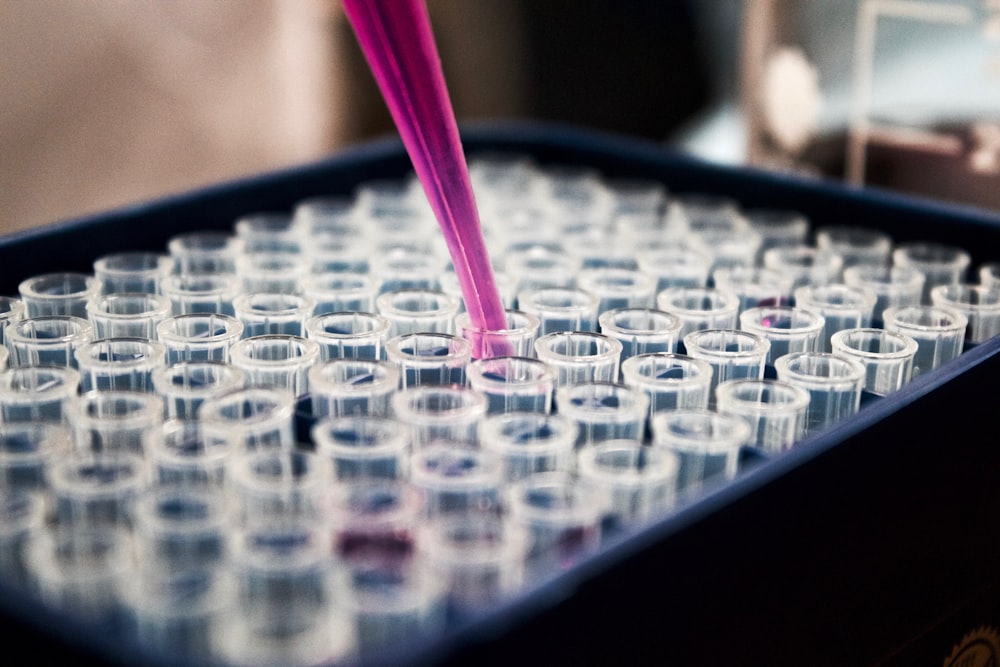
Molecular biology research in a laboratory setting
The CML Problem: When Targeted Therapy Fails
To appreciate this breakthrough, we must first understand the enemy. Chronic Myelogenous Leukemia (CML) is a blood cancer characterized by a genetic anomaly called the Philadelphia chromosome—the result of an aberrant swap of genetic material between chromosomes 9 and 22. This translocation creates the BCR-ABL fusion gene, which produces a hyperactive tyrosine kinase protein that drives uncontrolled cell division and suppresses natural cell death processes 1 5 7 .
Targeted Therapy
For decades, the frontline treatment for CML has been tyrosine kinase inhibitors (TKIs) like imatinib (Gleevec). These drugs work by binding near the ATP pocket of the BCR-ABL protein, effectively switching off its signaling function and restoring normal cell death mechanisms.
Drug Resistance
However, a formidable challenge emerged: drug resistance. In some patients, particularly those with advanced disease, BCR-ABL mutates—changing its shape just enough that imatinib can no longer bind effectively. The most stubborn of these mutations is the T315I "gatekeeper" mutation.
BCR-ABL Mutation Resistance to TKIs
The T315I mutation accounts for approximately 20% of drug resistance cases .
A Radical Strategic Shift: From Inhibition to Assassination
Faced with this challenge, researchers asked a bold question: Instead of trying to block the malfunctioning BCR-ABL protein, what if we could repurpose it as a trigger for a deadly countermeasure? This approach would turn cancer's greatest strength—its hyperactive signaling—into its greatest vulnerability.
The Apoptosis Strategy
The strategy capitalizes on a natural cellular process called apoptosis, or programmed cell death. In healthy organisms, apoptosis serves as a quality control mechanism, eliminating damaged or unnecessary cells. Central to this process are caspases—enzyme precursors that, when activated, initiate a cascade of events that systematically dismantle the cell. Think of caspases as molecular scissor-hand precursors that remain harmless until given the correct activation signal 3 .
Cancer Signal
BCR-ABL provides constant "don't die" signals
Repurpose
Hijack the signal as an activation trigger
Execute
Activate caspase to induce apoptosis
In CML cells, BCR-ABL provides constant "don't die" signals that overwhelm the natural apoptotic machinery. The scientific insight was to create a caspase that would remain inert in normal cells but activate specifically in response to BCR-ABL signaling.
Engineering the Molecular Assassin: A Masterpiece of Bioengineering
The research team designed a brilliant two-component system dubbed "iCaspase" (inducible caspase) that functions like a molecular switch. Here's how they built it:
The Sensor Module
The team used Crk, an adaptor protein known to be phosphorylated by BCR-ABL. In its inactive state, Crk maintains a closed conformation. When BCR-ABL phosphorylates it at tyrosine residue 221, Crk undergoes a dramatic shape change, folding into a new configuration 2 .
The Effector Module
To this dynamic sensor, researchers attached two copies of the caspase-8 protease domain (without its natural regulatory prodomain). Caspase-8 was chosen because it can be directly activated by proximity-induced dimerization—meaning when two caspase molecules are brought close together, they automatically activate each other 2 .
The Complete iCaspase Assembly
Caspase-8 - Crk - Caspase-8
In Healthy Cells
iCaspase remains inactive and harmless.
In BCR-ABL-Positive Cells
The oncoprotein phosphorylates the Crk component, causing it to fold.
Activation
This forced folding juxtaposes the two caspase domains, triggering their activation.
Execution
Activated caspases initiate the apoptotic cascade that leads to cellular suicide 2 .
Component Breakdown of the iCaspase Molecular Machine
| Component | Role | Mechanism of Action |
|---|---|---|
| Crk Adaptor | BCR-ABL Sensor | Changes conformation when phosphorylated at Tyr221 by BCR-ABL |
| Caspase-8 Domains | Executioners | Activate through proximity-induced dimerization |
| Linker Regions | Structural Connectors | Allow flexibility for proper folding and caspase alignment |
The Experiment: Putting the Assassin to the Test
To validate their design, the researchers conducted a series of elegant experiments using multiple cell lines:
Cell Models Used
- Ba/F3 cells: Normal murine blood cells that require interleukin-3 for survival
- Ba/F3-BCR-ABL cells: Ba/F3 cells transformed with the BCR-ABL oncogene
- K562 cells: Human CML cells derived from a patient in blast crisis
- Cells with other oncoproteins: FLT3D835Y and TEL-PDGFRβ (associated with other leukemias)
Experimental Procedure
- The iCaspase construct was introduced into all cell types using genetic engineering techniques
- Cells were monitored for viability, apoptotic markers, and caspase activation
- Specificity was tested by comparing effects in BCR-ABL-positive versus BCR-ABL-negative cells
- Control experiments used mutated versions of iCaspase
Key Findings
The results were striking. iCaspase-8 triggered massive apoptotic death specifically in BCR-ABL-positive cells while leaving normal cells unscathed. The specificity was remarkable—iCaspase-8 did not kill cells transformed by other leukemic oncoproteins like FLT3D835Y or TEL-PDGFRβ, demonstrating its unique response to BCR-ABL 2 .
Specificity of iCaspase-8 in Different Cell Types
| Cell Type | Oncoprotein Present | iCaspase Effect | Explanation |
|---|---|---|---|
| Normal Ba/F3 | None (requires IL-3) | No cell death | Insufficient c-ABL to activate iCaspase |
| Ba/F3-BCR-ABL | BCR-ABL | Massive apoptosis | BCR-ABL phosphorylates and activates iCaspase |
| Ba/F3-FLT3D835Y | FLT3D835Y (AML) | No cell death | FLT3 doesn't phosphorylate Crk at Tyr221 |
| Ba/F3-TEL-PDGFRβ | TEL-PDGFRβ (CMML) | No cell death | PDGFRβ doesn't phosphorylate Crk at Tyr221 |
Perhaps most importantly, iCaspase worked effectively against multiple BCR-ABL mutants, including those that confer resistance to imatinib. Since iCaspase activation depends on BCR-ABL's kinase activity rather than its precise structure, it bypasses the mutation problem that plagues traditional TKIs 2 6 .
The mechanism was further confirmed through size-exclusion chromatography, which showed that the activated iCaspase underwent proteolytic processing but remained as an intramolecular complex—exactly as predicted by the design model. Meanwhile, the control mutants (iCaspase-8Y/F and iCaspase-8C/S) showed significantly reduced killing ability, confirming that both BCR-ABL phosphorylation and caspase activity were essential for the effect 2 .
The Scientist's Toolkit: Essential Research Reagents
Building and testing a revolutionary therapeutic like iCaspase requires a sophisticated array of research tools and reagents. Here are the key components that made this research possible:
| Reagent/Tool | Function in Research | Application in iCaspase Study |
|---|---|---|
| Bicistronic Retroviral Vectors (MIGR1) | Gene delivery system | Introduced iCaspase genes into target cells |
| Cell Lines (K562, Ba/F3 variants) | Disease models | Provided BCR-ABL-positive and control cells for testing |
| Site-Directed Mutagenesis Kits | Genetic engineering | Created control mutants (Y221F, C/S) to confirm mechanism |
| Apoptosis Detection Assays | Cell death measurement | Quantified iCaspase effectiveness (Annexin V, caspase activity) |
| Size-Exclusion Chromatography | Protein separation | Confirmed intramolecular activation mechanism |
| Phospho-Specific Antibodies | Detection of phosphorylation | Verified Crk phosphorylation by BCR-ABL |
| Caspase Activity Assays | Enzyme function measurement | Confirmed caspase activation only in BCR-ABL+ cells |
Conclusion: A New Paradigm for Cancer Therapy
The development of BCR-ABL-activated caspases represents more than just a potential new treatment—it signals a fundamental shift in therapeutic philosophy. Instead of inhibiting cancer-causing proteins, we can now consider repurposing them as triggers for precision countermeasures. This approach effectively turns cancer's greatest strength against itself.
Therapeutic Resistance Solution
While still in the experimental stages, the iCaspase strategy offers hope for addressing one of oncology's most persistent problems: therapeutic resistance. Because this method harnesses rather than inhibits BCR-ABL activity, it remains effective regardless of mutations that might arise in the kinase domain 2 6 .
Broader Implications
The implications extend beyond CML. The core concept—designing molecular machines that activate only in diseased cells based on their specific signaling activities—could be adapted to many other cancers. Similar strategies might target mutant EGFR in lung cancer, hyperactive BRAF in melanoma, or other disease-specific signals.
As research advances, we move closer to a future where cancer treatments are not just broadly cytotoxic but intelligently selective—therapies that distinguish between healthy and diseased cells with molecular precision. The iCaspase approach represents a bold step toward that future, demonstrating how creative engineering can transform our biological understanding into powerful therapeutic strategies.
In the words of the researchers, this strategy "forcibly induces apoptosis" in leukemic cells by "harnessing, rather than inhibiting, the activity of leukemogenic kinases" 2 —an elegant solution that might eventually overcome the persistent challenge of treatment resistance in cancer therapy.