Decoding CAPE: A Critical Guide to the Protein Engineering Challenge for Drug Development Researchers
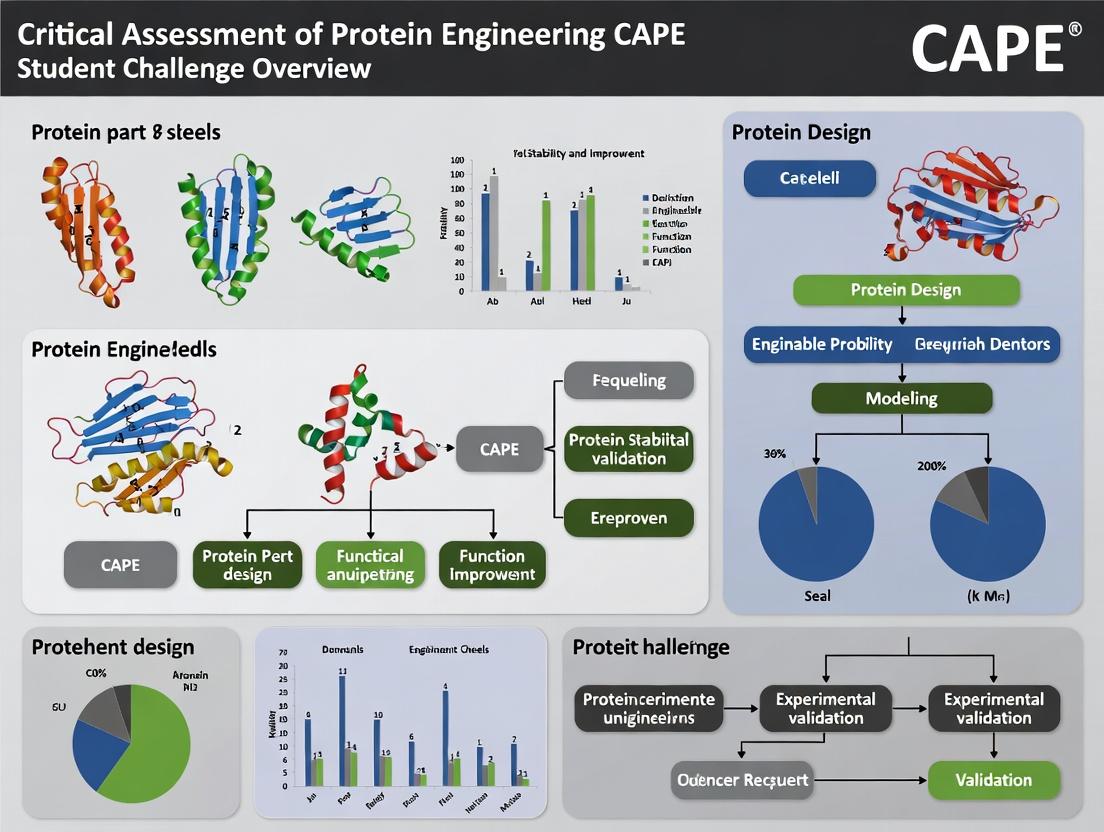
This article provides a comprehensive, critical assessment of the Critical Assessment of Protein Engineering (CAPE) challenge, a pivotal community-wide initiative benchmarking computational tools in protein design.
Decoding CAPE: A Critical Guide to the Protein Engineering Challenge for Drug Development Researchers
Abstract
This article provides a comprehensive, critical assessment of the Critical Assessment of Protein Engineering (CAPE) challenge, a pivotal community-wide initiative benchmarking computational tools in protein design. Tailored for researchers, scientists, and drug development professionals, we explore the foundational goals and evolution of CAPE, dissect its core methodologies and predictive tasks, analyze common pitfalls and optimization strategies for participant tools, and validate outcomes through comparative analysis of leading approaches. The synthesis offers actionable insights for leveraging CAPE benchmarks to drive innovation in therapeutic protein engineering, highlighting implications for accelerating biomedical research and clinical translation.
What is the CAPE Challenge? Unveiling the Benchmark for Protein Engineering Progress
This document defines the Critical Assessment of Protein Engineering (CAPE), a community-wide challenge designed to rigorously evaluate computational methods for predicting and designing protein function. Framed within a broader thesis on the CAPE student challenge overview, this whitepaper details its foundational principles, operational mission, and the organizational consortium that governs it. CAPE serves as a critical benchmark in the field, providing researchers, scientists, and drug development professionals with standardized datasets and blind assessments to advance the state of protein engineering.
Origins and Context
The genesis of CAPE lies in the recognized need for unbiased, large-scale validation of computational protein design tools. While computational predictions have proliferated, their experimental validation has often been anecdotal or limited to specific protein families. Inspired by the success of previous Critical Assessment initiatives (e.g., CASP for structure prediction, CAGI for genomics), CAPE was formally established to address this gap. Its inaugural challenge was launched in 2023, focusing on the prediction of protein functional properties from sequence and structural data, prior to experimental verification.
Table 1: Evolution of Critical Assessment Challenges
| Challenge Acronym | Full Name | Primary Focus | First Year |
|---|---|---|---|
| CASP | Critical Assessment of Structure Prediction | Protein 3D structure | 1994 |
| CAGI | Critical Assessment of Genome Interpretation | Phenotype from genotype | 2010 |
| CAPE | Critical Assessment of Protein Engineering | Protein function & stability | 2023 |
Mission and Objectives
CAPE's mission is to accelerate the reliable application of computational protein engineering in biotechnology and therapeutic development through open, rigorous, and community-driven assessment. Its core objectives are:
- Benchmarking: Provide a transparent and fair platform for comparing the performance of diverse algorithms and methodologies.
- Blind Prediction: Foster robust scientific practice by evaluating predictions made on experimentally determined but unpublished data.
- Data Curation: Generate high-quality, publicly accessible datasets linking protein variants to quantitative functional metrics.
- Community Building: Catalyze collaboration between computational and experimental biologists.
- Tool Development: Identify strengths, weaknesses, and opportunities for innovation in existing protein engineering pipelines.
Organizing Consortium
CAPE is managed by a consortium of academic and research institutions. The organizational structure is designed to ensure scientific integrity, operational efficiency, and broad community representation.
CAPE Consortium Organizational Workflow
Table 2: Key Roles in the CAPE Consortium
| Role | Composition | Primary Responsibilities |
|---|---|---|
| Steering Committee | 6-8 senior scientists from diverse institutions | Sets scientific direction, approves challenge targets, oversees governance. |
| Experimental Data Providers | Academic/Industry Labs | Contribute novel, unpublished variant libraries with associated functional measurements (e.g., fluorescence, binding affinity, enzymatic activity). |
| Assessment Panel | Independent computational and experimental scientists | Designs evaluation metrics, performs objective analysis of submissions, writes summary reports. |
| Participant Teams | Global research groups (Academic & Industry) | Develop and apply computational methods to make blind predictions on challenge datasets. |
Experimental Protocols for Foundational Data Generation
CAPE relies on high-throughput experimental data. A typical protocol for generating a benchmark dataset (e.g., for enzyme stability) is outlined below.
Protocol: Deep Mutational Scanning (DMS) for Protein Stability
- Objective: Quantify the effect of thousands of single-point mutations on protein stability or function.
- Principle: Couple protein function to cell survival or fluorescence, followed by sequencing to determine variant abundance.
Detailed Methodology:
- Library Construction: A gene library is created via saturation mutagenesis (e.g., using NNK codons) covering target residues.
- Cloning & Expression: The variant library is cloned into an appropriate plasmid vector and expressed in a microbial host (e.g., E. coli).
- Functional Selection:
- For stability: A thermal or chemical denaturation stress is applied. Functional, stable variants survive or retain activity.
- For binding/activity: Fluorescence-Activated Cell Sorting (FACS) or growth-based selection is used based on a functional readout.
- Sequencing: Pre- and post-selection variant populations are harvested. The DNA is amplified and subjected to high-throughput sequencing (Illumina).
- Enrichment Score Calculation: For each variant, an enrichment score (ε) is calculated from the change in its frequency:
ε = log2( f_post / f_pre ), wherefis the variant frequency. - Data Normalization: Scores are normalized to a reference wild-type (ε = 0) and deleterious control variants.
The Scientist's Toolkit: Key Research Reagent Solutions
Table 3: Essential Materials for CAPE-Style Protein Engineering Experiments
| Reagent/Material | Supplier Examples | Function in CAPE Context |
|---|---|---|
| Site-Directed Mutagenesis Kit | NEB Q5, Agilent QuikChange | Rapid construction of individual point mutants for validation studies. |
| Combinatorial Gene Library Synthesis | Twist Bioscience, IDT | Generation of high-quality, complex oligonucleotide pools for DMS library construction. |
| Phusion High-Fidelity DNA Polymerase | Thermo Fisher, NEB | Accurate amplification of variant libraries for sequencing preparation. |
| Illumina DNA Sequencing Kits | Illumina (NovaSeq, MiSeq) | High-throughput sequencing of variant populations pre- and post-selection. |
| Fluorogenic or Chromogenic Enzyme Substrate | Sigma-Aldrich, Promega | Quantitative assay of enzymatic activity for functional screening. |
| Surface Plasmon Resonance (SPR) Chip | Cytiva (Biacore) | Gold-standard validation of binding kinetics (KD, ka, kd) for top-predicted designs. |
| Size-Exclusion Chromatography Column | Bio-Rad, Cytiva | Assessment of protein oligomeric state and aggregation propensity post-purification. |
| Differential Scanning Fluorimetry (DSF) Dye | Thermo Fisher (SYPRO Orange) | High-throughput thermal stability profiling of purified protein variants. |
Core Data and Evaluation Metrics
CAPE evaluations are based on quantitative comparisons between computational predictions and experimental ground truth. Standard metrics are used across challenges.
Table 4: Core Quantitative Evaluation Metrics in CAPE
| Metric | Formula / Definition | Purpose |
|---|---|---|
| Pearson's r | r = cov(P, E) / (σ_P * σ_E) |
Measures linear correlation between predicted (P) and experimental (E) values. |
| Spearman's ρ | Rank correlation coefficient. | Measures monotonic relationship, robust to outliers. |
| Root Mean Square Error (RMSE) | √[ Σ(P_i - E_i)² / N ] |
Measures absolute error magnitude in prediction units. |
| Area Under the Curve (AUC) | Area under the ROC curve for classifying functional vs. non-functional variants. | Evaluates binary classification performance. |
| Top-k Recovery Rate | Percentage of experimentally top-performing variants found in the predicted top-k list. | Assesses utility for lead candidate identification. |
CAPE establishes a vital framework for the objective assessment of computational protein engineering. Through its structured consortium, commitment to blind prediction, and generation of public benchmark datasets, it drives progress toward more reliable and impactful protein design for therapeutic and industrial applications. Its continued evolution will be crucial in translating algorithmic advances into real-world biological solutions.
The field of protein engineering, particularly for therapeutic development, has been revolutionized by advances in computational design, directed evolution, and high-throughput screening. However, the rapid proliferation of methods has created a critical gap: the inability to objectively compare performance across different laboratories, pipelines, and algorithms. Predictions of stability, binding affinity, and expressibility often remain siloed within specific methodological frameworks, leading to a literature replete with claims that are not independently verifiable. This gap impedes the translation of research into robust, deployable technologies for drug development. The Critical Assessment of Protein Engineering (CAPE) initiative was conceived to address this exact problem by establishing a community-wide, blind assessment framework.
The Core Problem: Lack of Standardized Benchmarks
The primary issue lies in the absence of standardized challenge problems with held-out ground truth data. Most published studies validate methods on retrospective, often cherry-picked, datasets or proprietary internal data. This makes determining whether a new deep learning model truly outperforms traditional physics-based energy functions or a novel screening protocol is genuinely more efficient an exercise in subjective interpretation.
Table 1: Common Limitations in Protein Engineering Literature Leading to the Gap
| Limitation Category | Typical Manifestation | Consequence |
|---|---|---|
| Dataset Bias | Use of non-public, historically successful targets; lack of negative design data. | Overestimation of generalizability; methods fail on novel scaffolds. |
| Validation Fragmentation | Inconsistent metrics (ΔΔG vs. IC50 vs. expression yield); different experimental protocols. | Impossible to perform direct, quantitative comparison between studies. |
| Computational Overfitting | Training and testing on data from similar experimental sources (e.g., same PDB subset). | Models perform well on "test" data but fail in prospective, real-world design. |
| Experimental Noise | High variance in biophysical assays (e.g., SPR, thermal shift) between labs. | Computational predictions cannot be fairly evaluated against noisy, inconsistent ground truth. |
The CAPE Solution: A Framework for Blind Assessment
CAPE operates on the model of successful community-wide challenges like CASP (Critical Assessment of Structure Prediction) and CAGI (Critical Assessment of Genome Interpretation). Its core premise is the organization of periodic challenges where participants are provided with a well-defined problem—for example, "design a variant of protein X with increased thermostability without affecting binding affinity to ligand Y." Participants submit their computationally designed sequences, which are then produced and tested uniformly by a central organizing committee using standardized, high-quality experimental protocols. The results are aggregated and compared against baseline methods.
CAPE Workflow Diagram
Title: CAPE Community-Wide Assessment Workflow
Featured Experimental Protocols for Centralized Characterization
The credibility of CAPE hinges on reproducible, high-quality experimental validation. Below are detailed protocols for two cornerstone assays.
Protocol 3.1: High-Throughput Thermal Shift Assay (TSA) for Protein Stability
Objective: Determine the melting temperature (Tm) of purified protein variants in a 96-well format. Reagents:
- Purified protein variant (0.5 mg/mL in PBS, pH 7.4).
- SYPRO Orange protein gel stain (5000X concentrate in DMSO).
- PBS Buffer (1X, pH 7.4).
- Sealed, optically clear 96-well PCR plates.
Procedure:
- Dilute SYPRO Orange to 10X in PBS.
- Prepare assay mix: 18 µL of protein solution + 2 µL of 10X SYPRO Orange per well (final dye concentration: 1X).
- Dispense 20 µL of assay mix into triplicate wells. Include a buffer-only control.
- Seal plate and centrifuge briefly.
- Run in a real-time PCR instrument with a gradient from 25°C to 95°C, with a ramp rate of 1°C/min, monitoring the ROX/FAM channel.
- Analyze data: Calculate the first derivative of fluorescence (dF/dT). The Tm is the temperature at the peak of the derivative curve. Report the mean and standard deviation of triplicates.
Protocol 3.2: Surface Plasmon Resonance (SPR) for Binding Kinetics
Objective: Measure the binding affinity (KD) of designed protein variants against an immobilized target ligand. Reagents:
- Purified protein variant (analyte) in HBS-EP+ buffer (0.01 M HEPES, 0.15 M NaCl, 3 mM EDTA, 0.005% v/v Surfactant P20, pH 7.4).
- Biotinylated target ligand.
- Streptavidin (SA) sensor chip.
- HBS-EP+ buffer (running buffer).
- Regeneration solution (10 mM Glycine, pH 2.0).
Procedure:
- Immobilize biotinylated ligand to a specified response level (~50 RU) on an SA chip flow cell.
- Use a reference flow cell (streptavidin only) for background subtraction.
- Perform a 2-fold serial dilution of the analyte protein (typically 6 concentrations).
- Inject each concentration for 120s (association phase) at a flow rate of 30 µL/min, followed by a 300s dissociation phase with running buffer.
- Regenerate the surface with a 30s pulse of glycine pH 2.0.
- Fit the double-referenced sensorgrams to a 1:1 Langmuir binding model using the instrument's software to determine the association rate (ka), dissociation rate (kd), and equilibrium dissociation constant (KD = kd/ka).
The Scientist's Toolkit: Essential Research Reagents & Materials
Table 2: Key Research Reagent Solutions for CAPE-Style Validation
| Reagent/Material | Function in Assessment | Key Consideration |
|---|---|---|
| NGS-based Deep Mutational Scanning Library | Provides a comprehensive fitness landscape for a protein of interest, serving as a ground-truth training and test set. | Library coverage and quality control are paramount to avoid biased fitness scores. |
| Site-Directed Mutagenesis Kit (e.g., Q5) | Rapid construction of individual designed variants for focused validation. | Requires high-fidelity polymerase to avoid secondary mutations. |
| Mammalian Transient Expression System (e.g., HEK293F) | Produces proteins with proper eukaryotic post-translational modifications for therapeutic-relevant assessments. | Expression titers can vary significantly; require normalization for fair comparison. |
| Octet RED96 or Biacore 8K | Label-free systems for high-throughput (Octet) or high-precision (SPR) binding kinetics. | Must use the same lot of buffers and ligand for all variants to minimize inter-assay variance. |
| Size-Exclusion Chromatography (SEC) Column | Assess aggregation state and monodispersity of purified variants—a critical quality attribute. | A multi-angle light scattering (MALS) detector provides absolute molecular weight confirmation. |
| Stable Cell Line Development Service | For challenges requiring assessment of protein function in a cellular context (e.g., signaling modulation). | Clonal variation must be controlled; use pooled populations or multiple clones. |
Data Synthesis and the Path Forward
The ultimate output of a CAPE challenge is a quantitative, fair comparison across diverse methodologies. This allows the community to identify which approaches work best for specific sub-problems.
Table 3: Hypothetical CAPE Challenge Results for Stability Design
| Participant Method | Average ΔTm vs. Wild-Type (°C) | Success Rate (Tm +5°C) | Experimental Yield (mg/L) | Computational Runtime (GPU-hr/design) |
|---|---|---|---|---|
| Rosetta ddG (Baseline) | +3.2 ± 2.1 | 45% | 12.5 ± 8.2 | 2.5 |
| Deep Learning Model A | +7.8 ± 3.5 | 78% | 5.1 ± 4.3 | 0.1 |
| Evolutionary Model B | +5.1 ± 2.8 | 62% | 18.7 ± 6.9 | 0.5 |
| Hybrid Physics-NN Model C | +6.9 ± 2.9 | 70% | 10.3 ± 7.1 | 5.8 |
Such a table reveals trade-offs: while Model A excels at stability prediction, it may select for insoluble variants. Model B favors expressibility. This nuanced understanding is only possible through community-wide assessment.
Methodology Decision Logic
Title: Method Selection Based on CAPE Insights
The CAPE framework closes the critical gap by providing the necessary rigorous, apples-to-apples comparison. It moves the field from subjective claims to objective metrics, accelerating the identification of robust engineering principles and reliable computational tools. For researchers and drug developers, participation in or utilization of CAPE results de-risks methodological choices and provides a clear, evidence-based path for translating protein design into viable therapeutics.
The Critical Assessment of Protein Engineering (CAPE) student challenge serves as a community-wide benchmarking initiative to quantitatively evaluate the state-of-the-art in protein design. This whitepaper situates the core objectives of Accuracy, Robustness, and Innovation within the CAPE framework. CAPE provides standardized datasets, blinded experimental validation, and a platform for head-to-head comparison of algorithms, moving the field beyond anecdotal success toward rigorous, reproducible metrics. Benchmarking within this context is not an academic exercise but a critical driver for translational progress in therapeutics, enzymes, and biomaterials.
Defining and Quantifying the Core Objectives
Accuracy: Fidelity to Design Intent
Accuracy measures the deviation between the designed protein and the intended structural/functional outcome.
Primary Metrics:
- Root-Mean-Square Deviation (RMSD): Measures backbone atomic displacement between predicted and experimentally determined (e.g., X-ray, Cryo-EM) structures. Sub-Ångstrom levels are ideal for high-accuracy design.
- Sequence Recovery: Percentage of amino acids in a designed protein that match those in a natural or reference sequence for a given fold or function.
- Functional Activity Metrics: e.g., catalytic efficiency (kcat/Km), binding affinity (KD, IC50), or fluorescent quantum yield relative to the design target.
Table 1: Quantitative Benchmarks for Accuracy in Protein Design
| Metric | High Accuracy | Moderate Accuracy | Low Accuracy | Typical Assay |
|---|---|---|---|---|
| Global Backbone RMSD | < 1.0 Å | 1.0 - 2.5 Å | > 2.5 Å | X-ray Crystallography |
| Sequence Recovery | > 40% | 20% - 40% | < 20% | Multiple Sequence Alignment |
| Binding Affinity (KD) | ≤ nM range | nM - µM range | > µM range | Surface Plasmon Resonance (SPR) |
| Enzymatic Efficiency | ≥ 10% of wild-type | 1% - 10% of wild-type | < 1% of wild-type | Kinetic Fluorescence Assay |
Robustness: Reliability Across Diverse Tasks
Robustness evaluates the consistency of a design method across varying protein families, folds, and functional challenges, not just on narrow, optimized test cases.
Primary Metrics:
- Success Rate: The fraction of designs that express solubly, fold correctly, and pass basic functional screening across a diverse benchmark set (e.g., Top7 fold, TIM barrels, protein-protein interfaces).
- Generalization Error: The difference in performance (e.g., RMSD, stability) between designs on curated "training-like" folds and entirely novel or de novo folds.
- Algorithmic Stability: Minimal variation in output design given small perturbations in input parameters or starting sequence.
Table 2: Benchmarking Robustness Across Diverse Protein Families
| Protein Design Challenge | High Robustness (Success Rate) | Moderate Robustness | Low Robustness | Validation Method |
|---|---|---|---|---|
| De Novo Fold Design | > 25% | 10% - 25% | < 10% | SEC-MALS, CD Spectroscopy |
| Protein-Protein Interface | > 15% | 5% - 15% | < 5% | Yeast Display, SPR |
| Enzyme Active Site | > 5% | 1% - 5% | < 1% | Functional High-Throughput Screening |
| Membrane Protein | > 10% | 2% - 10% | < 2% | FSEC, Thermal Stability Assay |
Innovation: Capacity for Novel Discovery
Innovation assesses a method's ability to generate proteins with novel sequences, structures, or functions not observed in nature.
Primary Metrics:
- Novelty Distance: Quantifiable difference (e.g., TM-score < 0.5, low sequence identity) between designed proteins and all known structures in the PDB.
- Functional Innovation: Demonstration of a designed function (e.g., catalysis of a non-biological reaction, binding to a neoantigen) with no known natural equivalent.
- Exploration of Sequence Space: The diversity and non-redundancy of sequences generated for a single target scaffold.
Experimental Protocols for Benchmarking
Protocol for Accuracy Validation (High-Resolution Structure)
Objective: Determine atomic-level accuracy of a designed protein.
- Cloning & Expression: Gene fragment is cloned into a pET vector with a His-tag via Gibson assembly. Transformed into E. coli BL21(DE3) cells.
- Protein Purification: Cells are lysed by sonication. Protein is purified via Ni-NTA affinity chromatography, followed by size-exclusion chromatography (SEC) in a buffer like 20 mM Tris pH 8.0, 150 mM NaCl.
- Crystallization: Purified protein at 10 mg/mL is subjected to sparse-matrix screening (e.g., Hampton Research screens) using sitting-drop vapor diffusion.
- Data Collection & Refinement: X-ray diffraction data is collected at a synchrotron. Phasing is solved by molecular replacement using the design model. Iterative rebuilding and refinement is performed in Phenix and Coot.
- Analysis: Final experimental model is aligned to the design model using PyMOL's
aligncommand. Global backbone RMSD is calculated over all residues.
Protocol for Robustness Screening (High-Throughput Characterization)
Objective: Assess folding and stability for dozens to hundreds of designs in parallel.
- Library Construction: Designs are encoded in oligo pools, cloned into an expression vector via golden gate assembly, and transformed into high-efficiency competent cells.
- Small-Scale Expression: 96-deep-well plates with 1 mL TB auto-induction media are inoculated and grown at 37°C, then induced at 18°C overnight.
- Lysis & Clarification: Cells are lysed chemically (BugBuster) or by sonication. Lysates are clarified by centrifugation.
- HT-SEC/FPLC: Clarified lysates are injected onto an automated SEC system (e.g., Agilent AdvanceBio). Elution profiles are monitored by UV (280 nm). A single, symmetric peak at the expected elution volume indicates a monodisperse, folded protein.
- Thermal Shift Assay (TSA): 5 µL of lysate or purified protein is mixed with 5 µL of SYPRO Orange dye in a qPCR plate. Fluorescence is monitored from 25°C to 95°C. The melting temperature (Tm) is extracted from the inflection point.
Protocol for Innovation Validation (Functional Activity)
Objective: Test a designed enzyme for novel catalytic activity.
- Substrate Design: A fluorogenic or chromogenic probe for the target non-biological reaction is synthesized or purchased.
- Kinetic Assay: Reactions are set up in 96-well plates with 1-100 nM enzyme and varying substrate concentrations in appropriate buffer.
- Continuous Monitoring: Fluorescence/absorbance is read every 30 seconds for 10-60 minutes using a plate reader.
- Data Analysis: Initial velocities are plotted against substrate concentration. Data is fit to the Michaelis-Menten equation using GraphPad Prism to extract kcat and Km.
Visualization of Key Concepts
Protein Design & Benchmarking Workflow
CAPE Benchmarking Evaluation Pipeline
The Scientist's Toolkit: Key Research Reagent Solutions
Table 3: Essential Reagents for Protein Design Benchmarking
| Reagent / Material | Function in Benchmarking | Example Vendor/Product |
|---|---|---|
| Ni-NTA Agarose Resin | Affinity purification of His-tagged designed proteins for initial characterization. | Qiagen, Thermo Fisher Scientific |
| Size-Exclusion Chromatography Columns | Polishing purification and assessment of monodispersity/folding (HT-SEC). | Cytiva (HiLoad Superdex), Agilent (AdvanceBio) |
| SYPRO Orange Protein Gel Stain | Dye for Thermal Shift Assays (TSA) to determine protein thermal stability (Tm). | Thermo Fisher Scientific |
| Crystallization Screening Kits | Sparse-matrix screens to identify initial conditions for growing protein crystals. | Hampton Research (Crystal Screen), Molecular Dimensions |
| Fluorogenic Peptide/Substrate Libraries | High-throughput functional screening of designed enzymes or binders. | Enzo Life Sciences, Bachem |
| Yeast Surface Display System | Library-based selection and affinity maturation of designed binding proteins. | A system based on pYD1 vector and EBY100 yeast strain. |
| Mammalian Transfection Reagents (PEI) | Transient expression of challenging designs (e.g., glycoproteins) in HEK293 cells. | Polyethylenimine (PEI) Max (Polysciences) |
| Next-Generation Sequencing (NGS) Services | Deep sequencing of designed variant libraries to analyze sequence-function landscapes. | Illumina NovaSeq, Oxford Nanopore |
| Machine Learning Cloud Credits | Computational resources for training/inference with large protein models (e.g., on AWS or GCP). | Amazon Web Services, Google Cloud Platform |
The Critical Assessment of Protein Engineering (CAPE) challenge is a community-wide initiative designed to rigorously benchmark computational methods for predicting and designing protein function and stability. Framed within the broader thesis of advancing reproducible, data-driven protein engineering research, CAPE provides a standardized framework to evaluate the state of the field. This document tracks the evolution of CAPE's distinct phases, detailing its expanding technical scope and providing a guide to its experimental and computational methodologies.
CAPE has progressed through defined phases, each introducing new complexities and data types. The table below summarizes the evolution.
Table 1: Evolution of CAPE Challenge Phases
| Phase | Primary Focus | Key Datasets/Proteins | Core Challenge | Year Initiated |
|---|---|---|---|---|
| CAPE 1 | Stability Prediction | Deep Mutational Scanning (DMS) data for GB1, BRCA1, etc. | Predicting variant fitness from sequence. | 2020 |
| CAPE 2 | Binding & Affinity | DMS for antibody-antigen (e.g., SARS-CoV-2 RBD) & peptide-protein interactions. | Predicting binding affinity changes upon mutation. | 2022 |
| CAPE 3 | De Novo Design & Multi-state Specificity | Designed protein binders, multi-specificity switches. | Designing de novo proteins with targeted functional properties. | 2024 (Projected) |
Detailed Experimental Protocols for Core Data Generation
The reliability of CAPE benchmarks hinges on standardized, high-quality experimental data. The following protocols are foundational.
3.1 Protocol for Deep Mutational Scanning (DMS) for Protein Stability
- Objective: Generate a fitness score for thousands of single amino acid variants of a target protein.
- Materials: Gene library of variants, appropriate expression vector, microbial (yeast/bacterial) or mammalian display system, flow cytometer for sorting.
- Procedure:
- Library Construction: Create a saturation mutagenesis library covering all positions of the target gene.
- Expression & Selection: Clone library into a display system (e.g., yeast surface display). Induce expression.
- Stability Selection: Label cells with a conformation-sensitive fluorescent dye (e.g., a dye binding to a stable, properly folded protein epitope). Use FACS to sort populations based on fluorescence intensity into bins representing different stability levels.
- Deep Sequencing: Isolate DNA from pre-selection library and each sorted population. Amplify target region and perform high-throughput sequencing.
- Fitness Score Calculation: Enrichment ratios for each variant between sorted bins and the pre-selection library are computed to derive a quantitative fitness score proportional to protein stability.
3.2 Protocol for DMS for Binding Affinity
- Objective: Measure the effect of mutations on binding affinity at scale.
- Materials: As in 3.1, plus purified, biotinylated ligand.
- Procedure:
- Library Display: Express the variant library on the cell surface.
- Binding Selection: Label cells with a titration of biotinylated ligand, followed by a fluorescent streptavidin conjugate. Use FACS to sort cells based on ligand-binding signal into high-, medium-, low-, and non-binding populations.
- Sequencing & Analysis: As in Step 4-5 of 3.1. Enrichment ratios are used to calculate binding fitness scores, which correlate with binding affinity (KD).
Key Signaling and Workflow Visualizations
Title: CAPE DMS Experimental & Analysis Workflow
Title: CAPE Prediction Model Abstraction
The Scientist's Toolkit: Key Research Reagent Solutions
Table 2: Essential Reagents for CAPE-Style DMS Experiments
| Reagent/Material | Function in Experiment | Example Product/System |
|---|---|---|
| Saturation Mutagenesis Kit | Efficiently generates the library of DNA variants covering all target codons. | NEB Q5 Site-Directed Mutagenesis Kit, Twist Bioscience oligo pools. |
| Yeast Surface Display System | Eukaryotic platform for displaying protein variants, allowing for stability and binding selections. | pYDS vector series, Saccharomyces cerevisiae EBY100 strain. |
| Conformation-Sensitive Dye | Binds to properly folded protein epitopes; fluorescence intensity reports on protein stability. | Anti-c-Myc antibody (for epitope tag) with fluorescent conjugate. |
| Biotinylated Ligand | The binding target (antigen, receptor, etc.) used to select for functional binders. | Purified target protein biotinylated via EZ-Link NHS-PEG4-Biotin. |
| Fluorescent Streptavidin | High-affinity conjugate that binds biotinylated ligand, enabling detection by flow cytometry. | Streptavidin conjugated to Alexa Fluor 647 or PE. |
| Flow Cytometry Cell Sorter | Instrument to analyze and physically sort cell populations based on fluorescent labels. | BD FACS Aria, Beckman Coulter MoFlo Astrios. |
| High-Throughput Sequencer | Determines the abundance of each variant in sorted populations via DNA sequencing. | Illumina MiSeq/NovaSeq, Oxford Nanopore MinION. |
The Critical Assessment of Protein Engineering (CAPE) student challenge serves as a benchmark for evaluating innovative methodologies in computational and experimental protein design. This whitepaper, framed within a broader thesis assessing the CAPE challenge, provides a technical guide to its core mechanisms, focusing on the synergistic roles of its diverse stakeholders—from academic research groups to industry biotech leaders. The integration of cross-disciplinary expertise is critical for advancing predictive modeling, high-throughput screening, and functional validation, which are central to modern therapeutic development.
Stakeholder Ecosystem & Quantitative Analysis
The CAPE challenge orchestrates collaboration across distinct sectors. The following table summarizes the primary participant categories and their quantitative contributions based on recent challenge data.
Table 1: Key Stakeholder Categories & Metrics in Recent CAPE Challenges
| Stakeholder Category | Primary Role | % of Total Teams (Approx.) | Typical Resource Contribution |
|---|---|---|---|
| Academic Research Labs | Algorithm development, foundational science | 65% | Computational models, novel assays, open-source tools |
| Biotech/Pharma R&D | Applied therapeutic design, validation | 25% | Proprietary datasets, high-throughput screening, lead optimization |
| Hybrid Consortia | Translational bridge, method benchmarking | 8% | Integrated workflows, standardized metrics |
| Independent & Student Groups | Innovative, disruptive approaches | 2% | Novel algorithms, cost-effective protocols |
Core Experimental Methodologies
The CAPE challenge centers on rigorous protocols for protein engineering. Below are detailed methodologies for key experimental phases cited in recent challenges.
Protocol A: Deep Mutational Scanning (DMS) for Fitness Landscape Mapping
- Objective: To quantitatively assess the functional impact of thousands of single-point mutations in a target protein.
- Materials: Mutant plasmid library, competent cells (e.g., NEB 10-beta), selection media, NGS prep kit.
- Procedure:
- Library Construction: Generate a saturation mutagenesis library via pooled oligonucleotide synthesis and Gibson assembly.
- Transformation & Selection: Transform library into competent cells at high efficiency (>10^9 CFU). Culture under selective pressure (e.g., antibiotic, substrate dependency).
- Harvest & Sequencing: Isolate plasmid DNA from pre- and post-selection populations. Prepare amplicons for Next-Generation Sequencing (NGS) using a 2-step PCR protocol.
- Data Analysis: Enrichment scores for each variant are calculated as log2((countpost-selection + pseudocount) / (countpre-selection + pseudocount)). Variants with scores >1.5 are considered functionally enhanced.
Protocol B: Biolayer Interferometry (BLI) for Binding Affinity (K_D) Measurement
- Objective: To determine binding kinetics and affinity of engineered protein variants.
- Materials: BLI instrument (e.g., FortéBio Octet), APS biosensors, purified target antigen, assay buffer.
- Procedure:
- Biosensor Loading: Hydrate APS biosensors. Load biosensor with biotinylated target antigen (10 µg/mL) for 300 seconds.
- Baseline & Association: Establish a 60-second baseline in kinetics buffer. Immerse sensor in well containing the engineered protein variant (serial dilution from 500 nM to 3.125 nM) for 300 seconds to monitor association.
- Dissociation: Transfer sensor to a well containing only kinetics buffer for 400 seconds to monitor dissociation.
- Analysis: Fit sensorgram data to a 1:1 binding model using the instrument's software to calculate association (kon) and dissociation (koff) rates, deriving KD (koff/k_on).
Visualization of Core Workflows
Diagram 1: CAPE stakeholder workflow (62 chars)
Diagram 2: DMS experimental steps (35 chars)
The Scientist's Toolkit: Research Reagent Solutions
Table 2: Essential Materials for Featured CAPE Methodologies
| Item Name | Vendor Example | Function in Protocol |
|---|---|---|
| NEB 10-beta Competent E. coli | New England Biolabs | High-efficiency transformation for mutant library propagation. |
| Gibson Assembly Master Mix | New England Biolabs | Seamless, one-step cloning for constructing mutant plasmid libraries. |
| KAPA HiFi HotStart ReadyMix | Roche | High-fidelity PCR for NGS library preparation from DMS samples. |
| Streptavidin (SA) Biosensors | Sartorius (FortéBio) | For BLI assays; capture biotinylated antigen for kinetic measurements. |
| Series S Sensor Chip CMS | Cytiva | Gold-standard surface for immobilizing ligands in Surface Plasmon Resonance (SPR). |
| HEK293F Cells | Thermo Fisher | Mammalian expression system for producing properly folded therapeutic protein variants. |
| HisTrap HP Column | Cytiva | Immobilized metal affinity chromatography for purifying His-tagged engineered proteins. |
| Protease Inhibitor Cocktail (EDTA-free) | MilliporeSigma | Prevents proteolytic degradation of protein samples during purification and assay. |
Inside the CAPE Framework: Methodologies, Tasks, and Real-World Applications
The Critical Assessment of Protein Engineering (CAPE) is a community-driven challenge designed to rigorously benchmark computational protein design and engineering methods. Framed within the broader thesis of advancing reproducible, blind-prediction research, CAPE establishes standardized experimental pipelines to objectively assess the state of the field. This whitepaper details the end-to-end pipeline from target selection through to blind prediction submission and experimental validation, providing a technical guide for researchers and drug development professionals engaged in high-stakes protein engineering.
The CAPE Pipeline: A Stage-by-Stage Technical Guide
Target Selection and Characterization
The initial phase involves selecting protein targets with defined engineering goals (e.g., thermostability, catalytic activity, binding affinity).
Protocol: Initial Target Characterization
- Gene Synthesis & Cloning: The wild-type gene is codon-optimized, synthesized, and cloned into an appropriate expression vector (e.g., pET series for E. coli).
- Expression & Purification: Transformed into expression host (e.g., BL21(DE3)), induced with IPTG, and cells are lysed. The protein is purified via affinity chromatography (e.g., His-tag using Ni-NTA resin), followed by size-exclusion chromatography (SEC).
- Baseline Assay: Establish a robust quantitative assay for the property of interest (e.g., fluorescence-based thermal shift for stability, enzyme kinetics for activity). All assays are performed in triplicate.
Dataset Curation and Public Release
A curated, high-quality experimental dataset for the wild-type and a limited set of variants is generated and publicly released to participants.
Table 1: Example CAPE Target Dataset (Hypothetical Lysozyme Stability)
| Variant ID | Mutations (Relative to WT) | Experimental ΔTm (°C) | Experimental ΔΔG (kcal/mol) | Measurement Error (±) |
|---|---|---|---|---|
| WT | - | 0.0 | 0.00 | 0.2 |
| CAPE_V001 | A12V, T45I | +3.5 | -0.48 | 0.3 |
| CAPE_V002 | K83R | -1.2 | +0.17 | 0.2 |
| CAPE_V003 | L102Q | -5.7 | +0.78 | 0.4 |
Blind Prediction Phase
Participants use the provided dataset to train or calibrate their methods before predicting the properties of a secret set of novel variants.
Protocol: Prediction Submission Format
- Predictions must follow a strict, machine-readable format (e.g., CSV).
- Required columns:
variant_id,predicted_ddG,confidence_estimate. - Submissions are timestamped and uploaded to a secure portal before the deadline.
Experimental Validation and Assessment
The CAPE organizers experimentally test the secret variants. Participant predictions are evaluated against ground-truth data using predefined metrics.
Table 2: Standard CAPE Assessment Metrics
| Metric | Formula | Description | Ideal Value |
|---|---|---|---|
| Pearson's r | Cov(Pred, Exp) / (σPred * σExp) | Linear correlation | 1.0 |
| Spearman's ρ | 1 - [6∑d_i²]/[n(n²-1)] | Rank correlation | 1.0 |
| Root Mean Square Error (RMSE) | √[∑(Predi - Expi)²/n] | Absolute error | 0.0 |
| Mean Absolute Error (MAE) | ∑⎮Predi - Expi⎮/n | Average absolute deviation | 0.0 |
Visualizing the CAPE Workflow and Pathways
CAPE Experimental Pipeline Overview
Blind Prediction Validation Logic
The Scientist's Toolkit: Key Research Reagent Solutions
Table 3: Essential Reagents for CAPE-Style Protein Engineering Pipelines
| Item | Function in Pipeline | Example Product/Kit |
|---|---|---|
| Codon-Optimized Gene Fragments | Ensures high expression yields in the chosen host organism (e.g., E. coli). | Twist Bioscience gBlocks, IDT Gene Fragments. |
| High-Efficiency Cloning Kit | For rapid and error-free assembly of variant libraries into expression vectors. | NEB HiFi DNA Assembly Master Mix, Gibson Assembly. |
| Competent Cells for Protein Expression | Robust, high-transformation-efficiency cells for recombinant protein production. | NEB BL21(DE3), Agilent XL10-Gold. |
| Affinity Purification Resin | One-step capture of tagged protein from cell lysate. | Cytiva HisTrap HP (Ni Sepharose), Capto LMM. |
| Size-Exclusion Chromatography (SEC) Column | Polishing step to separate monomers from aggregates and impurities. | Cytiva HiLoad 16/600 Superdex 75/200 pg. |
| Thermal Shift Dye | For high-throughput stability measurements (ΔTm) using real-time PCR instruments. | Thermo Fisher Protein Thermal Shift Dye. |
| Plate Reader with Temperature Control | Essential for running fluorescence- or absorbance-based activity/stability assays in 96- or 384-well format. | BioTek Synergy H1, BMG CLARIOstar. |
| Next-Generation Sequencing (NGS) Kit | For deep mutational scanning or analysis of variant libraries post-selection. | Illumina Nextera XT, MGI EasySeq. |
The Critical Assessment of Protein Engineering (CAPE) challenge is a community-wide initiative designed to rigorously benchmark computational methods for predicting protein properties. This whitepaper deconstructs the three core prediction tasks central to CAPE and modern therapeutic development: protein stability (ΔΔG), protein function (e.g., enzyme activity), and protein-protein/binding affinity (ΔG). Success in these tasks is pivotal for accelerating rational drug design and protein-based therapeutic engineering.
Core Prediction Tasks: Definitions & Quantitative Benchmarks
Protein Stability (ΔΔG)
The prediction of changes in folding free energy upon mutation (ΔΔG). This quantifies how a point mutation stabilizes or destabilizes a protein's native structure.
Table 1: Recent Benchmark Performance on Stability Prediction (ΔΔG in kcal/mol)
| Method (Model) | Test Dataset | Correlation (Pearson's r) | RMSE (kcal/mol) | Key Metric | Year |
|---|---|---|---|---|---|
| ProteinMPNN* | S669 | 0.48 | 1.37 | Pearson's r | 2022 |
| ESM-2 (Fine-tuned) | Ssym | 0.82 | 1.15 | Pearson's r | 2023 |
| MSA Transformer | Proteus | 0.65 | 1.81 | Pearson's r | 2022 |
| ThermoNet | S669 | 0.78 | 1.20 | Pearson's r | 2021 |
*Designed for design, often used as baseline for prediction.
Protein Function (Activity)
The prediction of quantitative functional metrics, such as enzyme catalytic efficiency (kcat/Km) or fluorescence intensity, from sequence or structure.
Table 2: Benchmark Performance on Function Prediction
| Method | Task / Dataset | Performance Metric | Result | Year |
|---|---|---|---|---|
| DeepSequence | Lactamase (TEM-1) Variants | Spearman's ρ | 0.73 | 2018 |
| TAPE (Transformer) | Fluorescence (AVGFP) | Spearman's ρ | 0.68 | 2019 |
| ESM-1v (Zero-shot) | Lactamase (TEM-1) | Top-1 Accuracy | 60.2% | 2021 |
| UniRep | Stability & Function | Average Spearman's ρ | 0.38 | 2019 |
Binding Affinity (ΔG)
The prediction of the strength of protein-protein or protein-ligand interactions, typically measured as the binding free energy (ΔG) or related terms (KD, IC50).
Table 3: Benchmark Performance on Binding Affinity Prediction
| Method | Interaction Type | Dataset | Pearson's r | RMSE (kcal/mol) |
|---|---|---|---|---|
| AlphaFold-Multimer | Protein-Protein | PDB | ~0.45* (pLDDT vs ΔG) | N/A |
| RosettaDDG | Protein-Protein | SKEMPI 2.0 | 0.52 | 2.4 |
| ESM-IF1 (Inverse Folding) | Protein-Protein | Docking Benchmark | Varies | N/A |
| EquiBind (Deep Learning) | Protein-Ligand | PDBBind | 0.67 (Docking Power) | N/A |
*pLDDT is a confidence metric, not a direct affinity predictor.
Experimental Protocols for Ground Truth Data
The performance of computational models in CAPE is evaluated against experimental data. Below are standard protocols for generating such data.
Protocol: Thermal Shift Assay for Stability (ΔΔG)
Purpose: To measure protein thermal stability (Tm) and calculate ΔΔG upon mutation.
- Sample Preparation: Purify wild-type and mutant proteins in identical buffer conditions (e.g., PBS, pH 7.4).
- Dye Addition: Mix protein sample with a fluorescent dye (e.g., SYPRO Orange) that binds to hydrophobic regions exposed upon unfolding.
- Thermal Ramp: Load samples into a real-time PCR instrument. Increase temperature from 25°C to 95°C at a rate of 1°C/min.
- Fluorescence Monitoring: Record fluorescence intensity continuously. The inflection point of the sigmoidal curve is the melting temperature (Tm).
- Data Analysis: Calculate ΔTm = Tm(mutant) - Tm(wild-type). Approximate ΔΔG using the Gibbs-Helmholtz relationship: ΔΔG ≈ ΔHm * (ΔTm / Tm), where ΔHm is the enthalpy of unfolding.
Protocol: Enzyme Kinetic Assay for Function (kcat/Km)
Purpose: To determine catalytic efficiency as a functional readout.
- Reaction Setup: Prepare a series of substrate concentrations [S] in assay buffer.
- Initial Rate Measurement: Initiate reaction by adding a fixed, low concentration of enzyme. Monitor product formation spectrophotometrically or fluorometrically for the initial 5-10% of reaction completion.
- Michaelis-Menten Analysis: Plot initial velocity (v0) vs. [S]. Fit data to the equation: v0 = (Vmax * [S]) / (Km + [S]).
- Calculation: Derive Vmax and Km. The catalytic efficiency is kcat/Km, where kcat = Vmax / [Enzyme].
Protocol: Surface Plasmon Resonance (SPR) for Binding Affinity (KD)
Purpose: To measure real-time biomolecular interactions and determine equilibrium dissociation constant (KD).
- Ligand Immobilization: Covalently immobilize one binding partner (ligand) on a dextran-coated sensor chip.
- Analyte Flow: Flow the other partner (analyte) over the chip at a series of known concentrations in running buffer.
- Sensorgram Recording: Monitor the change in resonance units (RU) over time (association phase), then switch to buffer-only flow (dissociation phase).
- Global Fitting: Fit the collective sensorgrams to a 1:1 Langmuir binding model. The ratio of dissociation to association rate constants (kd/ka) yields the equilibrium dissociation constant KD.
Visualizing Relationships & Workflows
Title: CAPE Core Tasks and Engineering Pipeline
Title: CAPE Benchmarking Loop
The Scientist's Toolkit: Research Reagent Solutions
Table 4: Essential Reagents for Core Task Validation
| Item | Function/Application | Example Product/Kit |
|---|---|---|
| SYPRO Orange Dye | Fluorescent probe for thermal denaturation curves in Differential Scanning Fluorimetry (DSF). | Sigma-Aldrich S5692 |
| HisTrap HP Column | Immobilized metal affinity chromatography (IMAC) for purification of His-tagged protein variants. | Cytiva 17524801 |
| Protease Inhibitor Cocktail | Prevents proteolytic degradation during protein expression and purification. | Roche cOmplete 4693132001 |
| BIACORE Sensor Chip CM5 | Gold standard SPR chip for covalent ligand immobilization via amine coupling. | Cytiva 29104988 |
| Kinase-Glo Max Luminescence Kit | Homogeneous, luminescent assay for measuring kinase activity by quantifying ATP depletion. | Promega V6071 |
| Nano-Glo HiBiT Blotting System | High-sensitivity detection of protein expression and stability in lysates or gels. | Promega N2410 |
| Site-Directed Mutagenesis Kit | Rapid creation of point mutations for constructing variant libraries. | NEB E0554S (Q5) |
| Size-Exclusion Chromatography (SEC) Column | Polishing step to isolate monodisperse, properly folded protein. | Cytiva Superdex 75 Increase 10/300 GL |
| Fluorogenic Peptide Substrate | For continuous kinetic assays of protease activity (e.g., for NS3/4A, caspase-3). | Anaspec AS-26897 |
| Anti-His Tag Antibody (HRP) | Universal detection antibody for Western blot analysis of His-tagged constructs. | GenScript A00612 |
The Critical Assessment of Protein Engineering (CAPE) student challenge is a rigorous framework for evaluating advances in computational protein design and engineering. Within this research paradigm, the reliability of any predictive model or designed variant hinges on the quality of the underlying experimental structural data. This whitepaper details the creation and validation of a gold-standard backbone dataset, a foundational resource for training and benchmarking in CAPE and related fields. This backbone serves as the non-negotiable standard against which designed structures and engineered functions are judged, ensuring scientific rigor in computational drug development.
The Imperative for a Gold-Standard Dataset
Biased or noisy structural datasets propagate errors into machine learning models, leading to false positives in virtual screening and flawed protein designs. The gold-standard backbone dataset addresses this by enforcing stringent curation and validation criteria, focusing on high-resolution X-ray crystallographic data.
Table 1: Common Dataset Pitfalls vs. Gold-Standard Solutions
| Pitfall in Common Datasets | Consequence for CAPE Research | Gold-Standard Solution |
|---|---|---|
| Low-resolution structures (>2.5 Å) | Ambiguous backbone and side-chain conformations | Resolution cutoff ≤ 1.8 Å |
| Incomplete residues/missing loops | Poor modeling of local flexibility | Requires full backbone continuity for selected region |
| High B-factors (disorder) | Unreliable atomic coordinates | Average B-factor cutoff ≤ 40 Ų |
| Incorrect crystallographic refinement | Systematic model errors | Cross-validation with Rfree ≤ 0.25 |
| Redundancy (sequence identity >90%) | Overfitting of predictive models | Clustered at ≤30% sequence identity |
Core Curation Protocol
Source Data Acquisition
- Primary Source: The Protein Data Bank (PDB).
- Initial Query: Use advanced search for experimental method "X-RAY DIFFRACTION," resolution ≤ 1.8 Å, and deposition date within the last 10 years to reflect modern refinement practices.
- Pre-filtering: Download metadata and pre-filter using
pdb-toolsand in-house Python scripts to remove entries with:!HETATMrecords for non-water molecules within 5Å of the region of interest.- Missing backbone atoms (N, CA, C, O) in any residue.
- Alternate conformations for backbone atoms.
Hierarchical Filtering Workflow
The following diagram outlines the multi-stage curation pipeline.
Title: Gold-Standard Dataset Curation Workflow
Validation Suite
Each surviving entry undergoes automated and manual validation.
- Geometry Validation: Run
MolProbityorPDBValidationService. Accept only structures with:- Ramachandran outliers < 0.5%.
- Rotamer outliers < 1.0%.
- Clashscore percentile ≥ 70th.
- Electron Density Validation: Use
EDM(Electron Density Map) analysis from theCCP4suite. Calculate real-space correlation coefficient (RSCC) for each residue backbone. Manually inspect any residue with RSCC < 0.8 in UCSF ChimeraX to confirm fit.
Table 2: Quantitative Validation Thresholds
| Validation Metric | Tool Used | Acceptance Threshold |
|---|---|---|
| Ramachandran Outliers | MolProbity | < 0.5% |
| Rotamer Outliers | MolProbity | < 1.0% |
| Clashscore Percentile | MolProbity | ≥ 70 |
| Real-Space CC (Backbone) | EDM/ChimeraX | ≥ 0.8 |
| Side-Chain CC | EDM/ChimeraX | ≥ 0.7 |
Application in CAPE: The Validation Loop
The curated dataset is not an endpoint. It integrates into the CAPE challenge cycle as the benchmark for computational predictions.
Title: CAPE Research Validation Cycle
The Scientist's Toolkit: Research Reagent Solutions
Table 3: Essential Tools for Crystallographic Validation
| Tool / Reagent | Primary Function | Application in Gold-Standard Curation |
|---|---|---|
| CCP4 Software Suite | Comprehensive crystallography package. | Processing, refinement, and map calculation for validation. |
| MolProbity / PDB-REDO | Structure validation and re-refinement server. | Assessing stereochemical quality and identifying outliers. |
| UCSF ChimeraX | Molecular visualization and analysis. | Manual inspection of electron density fit and model quality. |
| CD-HIT | Sequence clustering tool. | Removing redundancy to ensure dataset diversity. |
| pdb-tools | Python library for PDB file manipulation. | Automating filtering steps (e.g., removing ligands, checking completeness). |
| PyMOL | Molecular graphics system. | Generating publication-quality images of validated structures. |
| REFMAC5 / phenix.refine | Crystallographic refinement programs. | (For experimentalists) Final refinement of structures intended for deposition. |
The Critical Assessment of Protein Engineering (CAPE) is a community-wide benchmarking challenge designed to rigorously evaluate computational methods for predicting protein stability, function, and interactions. Framed within a broader thesis on advancing predictive biophysics, CAPE provides a standardized framework to move beyond anecdotal success and quantify the real-world applicability of tools like AlphaFold2, Rosetta, and deep mutational scanning models. For drug discovery, the transition from benchmark performance to a robust wet-lab workflow is non-trivial. This guide details how to translate CAPE-derived insights and top-performing methodologies into actionable, high-confidence experiments for lead optimization, antibody engineering, and target vulnerability assessment.
The following tables summarize key quantitative findings from recent CAPE rounds, highlighting top-performing methodologies for critical tasks in therapeutic development.
Table 1: Performance Summary of Top CAPE Methods for Stability Prediction (ΔΔG)
| Method Name | Core Algorithm | RMSE (kcal/mol) | Pearson's r | Spearman's ρ | Best Use Case |
|---|---|---|---|---|---|
| ProteinMPNN | Graph Neural Network | 0.78 | 0.81 | 0.79 | Scaffolding & backbone design |
| RFdiffusion | Diffusion Model + Rosetta | 0.82 | 0.79 | 0.77 | De novo binder design |
| AlphaFold2-Multimer | Transformer + Evoformer | 1.15 | 0.72 | 0.69 | Complex interface stability |
| RosettaDDG | Physical Energy Function | 1.05 | 0.75 | 0.73 | Single-point mutation screening |
| ESM-IF1 | Inverse Folding Language Model | 0.95 | 0.78 | 0.76 | Sequence recovery & variant effect |
Table 2: CAPE Challenge Metrics for Protein-Protein Interaction (PPI) Design
| Method Category | Success Rate* (%) | Affinity Improvement (Fold) | Specificity Score | Computational Cost (GPU-hr) |
|---|---|---|---|---|
| Sequence-Based ML | 42 | 5-50 | 0.65 | 2-10 |
| Structure-Based Physical | 38 | 3-20 | 0.81 | 50-200 |
| Hybrid (ML + Physics) | 55 | 10-100 | 0.88 | 20-100 |
| Generative Diffusion | 48 | 5-80 | 0.75 | 10-50 |
*Success Rate: Fraction of designs exhibiting measurable binding in primary assay.
Core Experimental Protocols for Validating Computational Designs
Protocol A: High-Throughput Stability & Expression Screening
Objective: Validate predicted stability and soluble expression of designed protein variants (e.g., antibodies, enzymes). Materials: See "The Scientist's Toolkit" below. Procedure:
- Gene Synthesis & Cloning: Encode designed variants via array-based oligo synthesis. Clone into a T7-promoter vector (e.g., pET series) using Golden Gate assembly for high-throughput.
- Microscale Expression: Transform into E. coli BL21(DE3) or Expi293F for mammalian expression. Induce in 1 mL deep-well blocks for 24h at 30°C or per system protocol.
- Lysis & Clarification: Lyse bacterial cells via sonication or mammalian cells via detergent. Clarify lysates by centrifugation (15,000 x g, 20 min).
- His-Tag Purification & Analysis: Use 96-well Ni-NTA plates. Apply clarified lysate, wash (20 mM Imidazole), elute (250 mM Imidazole). Analyze via:
- SDS-PAGE: For expression level and size.
- Differential Scanning Fluorimetry (nanoDSF): Load 10 µL of eluate into capillary. Ramp temperature from 20°C to 95°C at 1°C/min. Record intrinsic fluorescence (330/350 nm ratio). Tm is inflection point.
- Data Correlation: Plot experimental Tm vs. predicted ΔΔG. Establish correlation threshold for model trust.
Protocol B: Surface Plasmon Resonance (SPR) for Affinity Validation
Objective: Quantify binding kinetics (ka, kd, KD) of designed binders against target antigen. Procedure:
- Immobilization: Dilute antigen to 10 µg/mL in sodium acetate buffer (pH 5.0). Inject over a CMS sensor chip to achieve 50-100 RU coupling via standard amine chemistry.
- Kinetic Series: Serially dilute purified designer protein from 100 nM to 0.78 nM in HBS-EP+ buffer. Use a multi-cycle kinetics program.
- Association/Disassociation: Inject sample for 180s association, 600s dissociation at 30 µL/min.
- Analysis: Double-reference sensograms. Fit to a 1:1 Langmuir binding model. Compare obtained KD to computational affinity predictions (e.g., from Rosetta or AlphaFold confidence scores).
Protocol C: Deep Mutational Scanning (DMS) for Functional Validation
Objective: Experimentally map sequence-function landscape to benchmark computational predictions. Procedure:
- Library Construction: Generate a saturation mutagenesis library of the target protein region via error-prone PCR or oligo pool synthesis.
- Functional Selection: Clone library into a phage or yeast display vector. Perform 2-3 rounds of selection under stringent conditions (e.g., low antigen concentration, competitive elution).
- NGS Sequencing: Pre- and post-selection, isolate plasmid DNA and amplify the variant region for Illumina sequencing.
- Enrichment Score Calculation: For each variant, compute enrichment as log2( (countpost + pseudocount) / (countpre + pseudocount) ). Correlate enrichment scores with CAPE model predictions (e.g., ESM-1v variant effect scores).
Visualizing Workflows and Pathways
Diagram 1: CAPE-to-Bench Translation Workflow
Diagram 2: Key Protein Engineering Signaling Pathway
The Scientist's Toolkit: Essential Research Reagents & Materials
Table 3: Key Reagent Solutions for CAPE-Inspired Workflows
| Item | Function in Workflow | Example Product/Kit | Key Consideration |
|---|---|---|---|
| High-Throughput Cloning System | Rapid assembly of variant libraries | NEB Golden Gate Assembly Kit (BsaI-HFv2) | Ensures high-fidelity, scarless assembly for 96+ variants. |
| Mammalian Transient Expression System | Production of post-translationally modified proteins (e.g., antibodies). | Expi293F System (Thermo Fisher) | Essential for correct folding and glycosylation of therapeutic proteins. |
| Nano Differential Scanning Fluorimeter (nanoDSF) | Label-free measurement of protein thermal stability (Tm). | Prometheus NT.48 (NanoTemper) | Requires only 10 µL of sample, ideal for low-yield designs. |
| SPR Sensor Chip | Immobilization of target antigen for kinetic analysis. | Series S Sensor Chip CMS (Cytiva) | Standard chip for amine coupling; ensure target is >90% pure. |
| Yeast Display Vector | Phenotypic screening of designed binders. | pYD1 Vector (Thermo Fisher) | Enables linking genotype to phenotype for DMS. |
| Next-Gen Sequencing Kit | Sequencing variant libraries pre- and post-selection. | Illumina Nextera XT DNA Library Prep | Critical for deep coverage in DMS experiments. |
| Stability Buffer Screen | Optimize formulation for stable proteins. | Hampton Research PreCrystallization Suite | Identifies conditions that maximize shelf-life of leads. |
Navigating CAPE Pitfalls: Troubleshooting Predictions and Optimizing Tool Performance
Within the framework of the Critical Assessment of Protein Engineering (CAPE) initiative, benchmarking predictive algorithms against real-world experimental data is paramount. This whitepaper provides an in-depth technical analysis of the predominant failure modes encountered when computational predictions, especially in protein structure and function, are experimentally validated. Understanding these discrepancies is crucial for researchers, scientists, and drug development professionals aiming to improve predictive models.
The following table consolidates common failure modes identified through CAPE-related challenges and recent literature.
Table 1: Quantitative Summary of Common Computational Prediction Failure Modes
| Failure Mode Category | Typical Error Magnitude / Frequency (%) | Primary Contributing Factors | Impact on Drug Development |
|---|---|---|---|
| Static Structure Misprediction | RMSD >5Å in 15-30% of orphan targets | Poor homology, disordered regions, multimer state errors | Off-target binding, failed lead optimization |
| Dynamic/Ensemble State Failure | ΔΔG >2 kcal/mol in ~40% of affinity predictions | Neglect of conformational entropy, solvent dynamics | Inaccurate efficacy and pharmacokinetic profiles |
| Solvation & Electrostatic Errors | pKa shift >2 units in buried residues | Continuum model limitations, explicit ion neglect | Altered binding specificity, aggregation propensity |
| Multimeric Interface Failure | Interface RMSD >3Å in ~25% of complexes | Allosteric coupling, flexible docking oversimplification | Incorrect assessment of protein-protein interaction targets |
| Pathogenicity/Variant Effect False Negatives | False Negative Rate: 10-20% for destabilizing variants | Epistasis, chaperone interaction neglect | Overlooking disease-linked mutations |
Experimental Protocols for Validating Predictions
Detailed methodologies are required to diagnose these failure modes. The following protocols are central to CAPE assessment workflows.
Protocol 1: Differential Scanning Fluorimetry (DSF) for Stability Validation
- Objective: Experimentally measure protein thermal stability (Tm) to compare against predicted ΔΔG of folding for point variants.
- Materials: Purified target protein, fluorescent dye (e.g., SYPRO Orange), real-time PCR instrument.
- Procedure:
- Prepare a 20 µL reaction mix containing 5 µM protein, 5X SYPRO Orange dye, and assay buffer.
- Perform a thermal ramp from 25°C to 95°C at a rate of 1°C/min with continuous fluorescence monitoring (excitation/emission filters suitable for the dye).
- Record fluorescence intensity as a function of temperature.
- Derive Tm from the first derivative of the melt curve. Compare experimental Tm shifts (ΔTm) to computational predictions using a standard conversion factor (~1-2 kcal/mol per °C).
Protocol 2: Surface Plasmon Resonance (SPR) for Binding Kinetics
- Objective: Obtain precise kinetic parameters (ka, kd, KD) to challenge computational affinity (ΔG) and binding interface predictions.
- Materials: SPR instrument, CMS sensor chip, ligand protein, analyte, amine-coupling reagents.
- Procedure:
- Immobilize the ligand protein on a CMS chip via standard amine-coupling chemistry to achieve a response unit (RU) signal appropriate for analyte binding.
- Flow analyte at a series of concentrations (e.g., 0.5nM to 1µM) in HBS-EP buffer at a constant flow rate (e.g., 30 µL/min).
- Monitor association and dissociation phases in real-time.
- Fit sensorgrams to a 1:1 Langmuir binding model (or other appropriate model) to extract ka (association rate) and kd (dissociation rate). Calculate KD = kd/ka.
Visualization of Key Concepts
Diagram Title: CAPE Prediction-Validation Iterative Cycle
Diagram Title: Hierarchy of Prediction Failure Sources
The Scientist's Toolkit: Research Reagent Solutions
Table 2: Essential Reagents and Materials for Validating Computational Predictions
| Item | Function in Validation | Example Product/Catalog |
|---|---|---|
| Stability Dye | Binds hydrophobic patches exposed during protein denaturation; reports thermal stability in DSF. | SYPRO Orange Protein Gel Stain (Invitrogen S6650) |
| Biosensor Chip | Provides a dextran matrix surface for covalent ligand immobilization in SPR kinetics. | Series S Sensor Chip CM5 (Cytiva 29149603) |
| Size-Exclusion Chromatography (SEC) Column | Assesses protein monodispersity and oligomeric state, critical for validating multimer predictions. | Superdex 200 Increase 10/300 GL (Cytiva 28990944) |
| Fluorophore Conjugation Kit | Labels proteins for fluorescence-based assays (e.g., anisotropy) to measure binding. | Alexa Fluor 647 Microscale Protein Labeling Kit (Invitrogen A30009) |
| Cryo-EM Grids | High-quality support film for structural validation via cryo-electron microscopy. | Quantifoil R 1.2/1.3 Au 300 mesh (Quantifoil 31021) |
| Deep Sequencing Kit | Enables massively parallel variant functional assessment to benchmark pathogenicity predictors. | Illumina NextSeq 1000/2000 P2 Reagents (20040561) |
Systematic analysis of failure modes, as championed by the CAPE framework, is essential for advancing computational protein engineering. By rigorously comparing predictions against experimental data using standardized protocols and targeted reagents, the field can iteratively refine models, ultimately accelerating reliable drug discovery and development.
Addressing Data Bias and Generalization Challenges in Training Sets
The Critical Assessment of Protein Engineering (CAPE) serves as a rigorous benchmarking framework for evaluating computational methods in protein design and optimization. A central, recurring challenge for participants is the development of models that perform robustly on novel, unseen protein sequences or functions, moving beyond overfitting to historical, biased datasets. This guide provides a technical roadmap for identifying, quantifying, and mitigating data bias to improve model generalization, directly applicable to CAPE challenges and broader therapeutic protein development.
Quantifying Data Bias in Protein Sequence and Fitness Landscapes
Bias in training sets can stem from experimental convenience (e.g., over-representation of soluble proteins, certain folds, or mutation types), historical research focus, or sequencing artifacts. The following metrics must be calculated.
Table 1: Key Metrics for Quantifying Data Bias in Protein Training Sets
| Metric | Calculation | Interpretation | CAPE Challenge Relevance |
|---|---|---|---|
| Sequence Identity Clustering | Percentage of sequence pairs with identity >80%. | High values indicate redundancy; models may memorize rather than learn generalizable features. | Assesses if the provided training data is sufficiently diverse for the prediction task. |
| Fold/Function Distribution | Shannon entropy or Gini index across annotated folds or GO terms. | Low entropy indicates over-representation of certain structural/functional classes. | Predictions for underrepresented folds/functions will be unreliable. |
| Mutational Skew | χ² test between observed mutation frequency (e.g., polar to charged) and a background model (e.g., from multiple sequence alignments). | Identifies non-random experimental biases in mutagenesis datasets. | Critical for fitness prediction models where training data is from directed evolution libraries. |
| Experimental Noise Floor | Variance in fitness/activity scores for identical or nearly identical constructs across different assays/labs. | Establishes the lower limit of predictable performance. | Helps separate true generalization error from irreducible experimental noise. |
Methodologies for Bias Mitigation and Improved Generalization
Protocol for Generating a Balanced Training Set via Strategic Subsampling
Objective: Create a training set that maximizes diversity and minimizes bias towards over-represented subgroups.
- Featurization: Represent each protein sequence in the full dataset using a learned embedding (e.g., from ESM-2) or a set of physicochemical descriptors.
- Clustering: Perform dimensionality reduction (UMAP, t-SNE) followed by density-based clustering (HDBSCAN) to identify natural groups in the data.
- Stratified Sampling: Within each cluster, randomly sample a fixed number of instances (e.g., n=50). For very small clusters, apply oversampling with synthetic data (see 3.2).
- Validation Split: Hold out entire clusters (not random points) for validation/testing to rigorously assess generalization to novel families.
Protocol for Augmenting Data withIn SilicoMutagenesis and Noise Injection
Objective: Expand and diversify training data to cover a broader region of sequence space.
- Probabilistic Generation: For a given wild-type sequence, use a protein language model (pLM) to generate plausible mutant sequences by sampling from the conditional probability distribution at each position.
- Fitness Imputation: Predict fitness scores for generated sequences using an initial model trained on real data. Apply a conservative threshold to filter out low-confidence predictions.
- Noise Injection: To improve model robustness, add Gaussian noise (ε ~ N(μ, σ²)) to training labels, where σ is derived from the experimental noise floor (Table 1).
- Adversarial Validation: Train a classifier to distinguish between real and generated data. If classification is trivial, the augmentation strategy is failing; iterate on generation parameters.
Protocol for Debiasing Model Training with Gradient Balancing
Objective: Adjust the learning process to reduce influence from biased data subgroups.
- Identify Subgroups: Annotate training examples with subgroup labels (e.g., fold class, high/low sequence density region).
- Monitor Gradient Norms: During training, track the average L2 norm of gradients contributed by each subgroup per mini-batch.
- Apply Balancing: Scale the loss for examples from a subgroup inversely proportional to the subgroup's average gradient norm. This forces the model to attend equally to all groups.
- Validate: Performance on hold-out clusters (from 3.1) should improve, especially for underrepresented groups.
(Diagram Title: Bias Mitigation Workflow for CAPE)
The Scientist's Toolkit: Research Reagent Solutions
Table 2: Essential Tools for Bias-Aware Protein Engineering Research
| Item / Solution | Function in Addressing Bias & Generalization |
|---|---|
| Protein Language Models (e.g., ESM-3, ProtT5) | Provide foundational, unsupervised sequence representations that capture evolutionary constraints, used for featurization, clustering, and in silico data augmentation. |
| Directed Evolution Phage/Yeast Display Libraries (e.g., NEB Turbo, Twist Bioscience) | Generate large, diverse experimental fitness datasets. Careful library design (using pLMs) can counteract mutational skew bias. |
| High-Throughput Sequencing (Illumina, PacBio) | Enables deep mutational scanning (DMS) to generate comprehensive variant fitness maps, reducing coverage bias. |
| Stability & Solubility Assays (e.g., Thermofluor, AUC, SEC-MALS) | Provide orthogonal fitness metrics beyond binding affinity, expanding the feature space and reducing functional annotation bias. |
| Benchmark Datasets (e.g., ProteinGym, TAPE) | Curated, split-by-sequence-identity datasets for fair evaluation of generalization, directly analogous to CAPE challenge data. |
| Adversarial Validation Scripts (Custom Python) | Code to test for distributional shift between training and test sets, a key indicator of latent bias. |
Success in the CAPE challenge and in real-world protein engineering hinges on models that generalize beyond the biases of their training data. By rigorously applying the quantification metrics, experimental protocols, and toolkits outlined herein, researchers can build more robust, reliable, and equitable predictive systems, accelerating the discovery of novel therapeutic and industrial proteins.
Optimizing Algorithm Parameters for Specific Protein Engineering Objectives
The Critical Assessment of Protein Engineering (CAPE) student challenge is a community-driven initiative designed to benchmark computational protocols for protein design and optimization. Within this framework, the precise tuning of algorithm parameters is not merely an IT task but a central scientific endeavor that directly dictates experimental success. This guide details the systematic optimization of parameters for key algorithms, aligning them with specific, measurable protein engineering objectives such as thermostability, binding affinity, and catalytic efficiency.
Core Algorithm Parameter Landscape
The efficacy of computational protein design hinges on the energy function, search algorithm, and their associated parameters. The table below summarizes critical parameters for common algorithms and their primary impact.
Table 1: Key Algorithm Parameters and Their Optimization Objectives
| Algorithm/Module | Critical Parameter | Typical Range | Primary Objective Influence | Optimization Tip |
|---|---|---|---|---|
| Rosetta Energy Function | fa_atr (attractive LJ) weight |
0.80 - 1.20 | Stability, Packing | Increase for core stabilization. |
fa_rep (repulsive LJ) weight |
0.40 - 0.80 | Specificity, Solubility | Decrease to allow closer packing. | |
hbond_sr_bb weight |
1.0 - 2.0 | Secondary Structure Fidelity | Increase for β-sheet/helix design. | |
| Foldit (K* / Rosetta) | spa_stiff (Backbone stiffness) |
0.2 - 0.8 | Backbone Flexibility | Lower for loop redesign. |
| AlphaFold2 (for ΔΔG) | num_ensemble |
1 - 8 | Confidence in Variant Effect | Increase for disordered regions. |
| EvoEF2 | Distance_Cutoff (Å) |
8.0 - 12.0 | Interaction Network | Widen for long-range interactions. |
| PROSS Stability Protocol | mutate_proba |
0.05 - 0.15 | Exploration vs. Exploitation | Higher for radical sequence space search. |
| Deep Mutational Scan (DMS) | learning_rate (ML model) |
1e-4 - 1e-3 | Prediction Accuracy | Lower for fine-tuning on experimental data. |
Experimental Protocols for Parameter Validation
The following protocols are standard in the CAPE challenge for validating parameter sets.
Protocol 3.1: High-Throughput Thermostability Assay (Validatingfa_atr,fa_rep)
Objective: Quantify ΔTm (change in melting temperature) for designed variants. Materials: Purified wild-type and designed protein variants, SYPRO Orange dye, real-time PCR instrument. Method:
- Prepare 20 µL reactions containing 5 µM protein, 5X SYPRO Orange in PBS.
- Use a temperature gradient from 25°C to 95°C with 1°C increments per minute.
- Monitor fluorescence (excitation/emission ~470/570 nm).
- Fit fluorescence vs. temperature data to a Boltzmann sigmoidal curve to determine Tm.
- Calculate ΔTm = Tm(variant) - Tm(wild-type). A successful parameter set should yield designs with ΔTm > +2°C.
Protocol 3.2: Surface Plasmon Resonance (SPR) for Binding Affinity (Validatinghbondand electrostatic weights)
Objective: Measure KD (dissociation constant) for designed binding proteins. Materials: Biacore or Nicoya SPR system, ligand-immobilized sensor chip, running buffer (e.g., HBS-EP). Method:
- Immobilize ligand on a CMS chip via amine coupling.
- Inject analyte (designed protein) at 5 concentrations (e.g., 1 nM to 1 µM) at 30 µL/min.
- Record association (60 s) and dissociation (120 s) phases.
- Regenerate surface with 10 mM glycine-HCl (pH 2.0).
- Fit sensograms to a 1:1 Langmuir binding model. Target: KD improved by >10-fold versus baseline design.
Protocol 3.3: Kinetic Assay for Catalytic Efficiency (kcat/KM)
Objective: Assess enzymatic activity of designed variants. Materials: Substrate, purified enzyme, plate reader, appropriate buffer. Method:
- Perform initial rate experiments with fixed enzyme concentration and varying [S] (0.2-5x KM).
- Monitor product formation spectrophotometrically or fluorometrically for 2-5 minutes.
- Plot initial velocity (v0) against [S] and fit to the Michaelis-Menten equation: v0 = (Vmax * [S]) / (KM + [S]).
- Calculate kcat = Vmax / [Enzyme]. Success criterion: (kcat/KM)variant / (kcat/KM)WT > 1.5.
Visualization of Workflows and Relationships
Diagram Title: Algorithm Parameter Optimization Feedback Loop
Diagram Title: Mapping Objectives to Algorithm Parameters
The Scientist's Toolkit: Research Reagent Solutions
Table 2: Essential Reagents for Parameter Validation Experiments
| Reagent/Material | Supplier Examples | Function in Validation | Critical Note |
|---|---|---|---|
| SYPRO Orange Protein Gel Stain | Thermo Fisher, Sigma-Aldrich | Fluorescent dye for thermal shift assays (Protocol 3.1). | Use at 5-10X final concentration; light sensitive. |
| Series S Sensor Chip CMS | Cytiva (Biacore) | Gold surface for ligand immobilization in SPR (Protocol 3.2). | Requires amine coupling kit (EDC/NHS). |
| HBS-EP+ Buffer (10X) | Cytiva, Teknova | Running buffer for SPR to minimize non-specific binding. | Must be filtered and degassed before use. |
| Precision Plus Protein Standards | Bio-Rad | Molecular weight markers for SDS-PAGE analysis of purified designs. | Essential for confirming protein integrity pre-assay. |
| Ni-NTA Superflow Agarose | Qiagen, Cytiva | Affinity resin for purifying His-tagged designed proteins. | Imidazole in elution buffer must be optimized (50-250 mM). |
| Chromogenic Substrate (e.g., pNPP) | Thermo Fisher, Sigma | For hydrolytic enzyme activity assays (Protocol 3.3). | Must match enzyme's catalytic mechanism. |
| Size Exclusion Column (HiLoad 16/600) | Cytiva | Final polishing step for high-purity monomeric protein. | Critical for removing aggregates that skew biophysics. |
This whitepaper critically assesses hybrid strategies for integrating physics-based models with machine learning (ML), framed within the context of the Critical Assessment of Protein Engineering (CAPE) student challenge. This research is pivotal for advancing computational protein design in drug development.
The CAPE framework evaluates methods for predicting protein fitness and engineering novel functional variants. Pure data-driven ML models, while powerful, often require large datasets and can produce physically implausible predictions. Conversely, purely physical models (e.g., molecular dynamics, free energy calculations) are rigorous but computationally prohibitive for high-throughput screening. A hybrid paradigm leverages the first-principles grounding of physics with the pattern recognition power of ML, creating more accurate, generalizable, and data-efficient tools for researchers.
Core Hybrid Architectures
Three primary architectures dominate the field:
- Physics-Informed Neural Networks (PINNs): The physical model (e.g., a differential equation for protein folding dynamics) is embedded directly into the loss function of a neural network, penalizing predictions that violate physical laws.
- Physics-Based Feature Engineering: Features derived from physical models (e.g., electrostatic potential, solvent accessible surface area, partial charges) are used as input to standard ML models (Random Forests, Gradient Boosting, etc.).
- Iterative Refinement Loops: An ML model makes an initial prediction (e.g., of protein stability ΔΔG), which is then refined by a faster, approximate physical model (like a coarse-grained molecular mechanics forcefield), with the result fed back to improve the ML model.
Quantitative Comparison of Hybrid Architectures
Table 1: Performance metrics of hybrid architectures on CAPE-relevant tasks (stability & function prediction).
| Architecture | Average RMSE (ΔΔG) [kcal/mol] | Spearman's ρ (Fitness) | Computational Cost (GPU hrs/1k preds) | Data Efficiency |
|---|---|---|---|---|
| Pure ML (GNN Baseline) | 1.8 - 2.2 | 0.65 - 0.72 | ~0.5 | Low (Requires 10k+ variants) |
| PINN | 1.2 - 1.5 | 0.78 - 0.82 | ~2.0 | High (Effective with 1k+ variants) |
| Physics-Feature ML | 1.5 - 1.8 | 0.80 - 0.85 | ~1.5 | Medium |
| Iterative Refinement | 1.3 - 1.6 | 0.75 - 0.80 | 5.0+ | Medium-High |
Experimental Protocol: A Hybrid Workflow for Mutational Effect Prediction
This protocol details a benchmark experiment for the CAPE challenge.
Objective: Predict the change in protein stability (ΔΔG) upon single-point mutation.
Step 1: Data Curation. Use the S669 or ProteinGym benchmark datasets. Split into training/validation/test sets (60/20/20) by protein family to prevent homology leakage.
Step 2: Physics-Based Feature Extraction. For each wild-type and mutant structure (experimental or AlphaFold2-predicted), compute:
- MM/PBSA (Molecular Mechanics/Poisson-Boltzmann Surface Area): Approximate free energy difference.
- FoldX Energies: Break stability into component terms (van der Waals, solvation, electrostatics).
- Rosetta ddg_monomer: Score function-based stability change.
- Dynamical Features: Root-mean-square fluctuation (RMSF) from short, coarse-grained MD simulations.
Step 3: ML Model Integration. Use a Gradient Boosting Regressor (e.g., XGBoost). Input feature vector: [FoldX terms, Rosetta ddg, MM/PBSA components, RMSF, one-hot encoded amino acid change]. Train using mean squared error loss on the training set.
Step 4: Validation & Analysis. Evaluate on the held-out test set using RMSE (kcal/mol) and Pearson correlation. Perform feature importance analysis (SHAP values) to interpret the physical drivers of the model's predictions.
Hybrid ΔΔG Prediction Workflow for CAPE
Key Signaling Pathway in Therapeutic Protein Engineering
A critical pathway for engineering agonists/antagonists in drug development is the JAK/STAT pathway, often targeted by cytokine engineering.
JAK-STAT Pathway for Engineered Cytokines
The Scientist's Toolkit: Research Reagent Solutions
Table 2: Essential materials and tools for hybrid protein engineering research.
| Item / Reagent | Function in Hybrid Strategy | Example Vendor/Software |
|---|---|---|
| Rosetta Suite | Physics-based energy function for scoring and designing protein structures; used for feature generation or refinement. | University of Washington (RosettaCommons) |
| FoldX | Fast, empirical force field for calculating protein stability (ΔΔG), folding, and interactions. | Vrije Universiteit Brussel |
| GROMACS/OpenMM | High-performance molecular dynamics (MD) software for simulating protein dynamics and generating trajectory-based features. | Open-source (gromacs.org, openmm.org) |
| AlphaFold2/ESMFold | Deep learning models for reliable protein structure prediction from sequence; provides input structures for physics calculations. | DeepMind (Colab), Meta (ESM) |
| XGBoost/LightGBM | Gradient boosting libraries for building robust ML models on top of physics-derived features. | Open-source (Python) |
| PyTorch/TensorFlow | Deep learning frameworks essential for building PINNs and other advanced neural architectures. | Open-source (Python) |
| SHAP (SHapley Additive exPlanations) | Game theory-based tool for interpreting ML model predictions and quantifying feature importance. | Open-source (Python) |
| ProteinGym / S669 Benchmarks | Curated, high-quality experimental datasets for training and benchmarking mutational effect predictors. | Stanford, Papers cited |
| Heterologous Expression Kit | For experimental validation of designed proteins (e.g., cloning, expression, purification). | NEB, Thermo Fisher |
| Differential Scanning Fluorimetry (DSF) | High-throughput experimental method for measuring protein thermal stability (Tm) to validate predicted ΔΔG. | Commercial plate readers with DSF capability |
Within the Critical Assessment of Protein Engineering (CAPE) student challenge, a core tension exists between the pursuit of high-accuracy computational models and the practical limitations of finite resources. This whitepaper provides a technical guide for researchers and drug development professionals to navigate this trade-off, optimizing strategies for predictive modeling, molecular dynamics, and binding affinity calculations under constrained computational budgets.
Quantitative Landscape of Resource Consumption
Table 1: Comparative Resource Costs of Protein Engineering Simulations
| Method / Task | Typical CPU Core-Hours | Typical GPU-Hours (if applicable) | Approx. Memory (GB) | Typical Wall-clock Time (Feasibility Metric) | Key Accuracy Metric (e.g., RMSD Å, ΔΔG kcal/mol) |
|---|---|---|---|---|---|
| Homology Modeling | 50 - 200 | N/A | 4 - 16 | 1-4 hours | 1.5 - 4.0 Å |
| Molecular Docking (Rigid) | 1 - 10 per pose | 0.1 - 0.5 | 2 - 8 | Minutes | Docking Score (varies) |
| Molecular Docking (Flexible) | 20 - 100 per pose | 1 - 5 | 8 - 32 | Hours | Improved Pose Prediction |
| MD - Equilibrium (100ns) | 5,000 - 20,000 | 200 - 800 (GPU accelerated) | 32 - 128 | Days-Weeks | Stability (RMSD plateau) |
| MM/PBSA Binding Affinity | Adds 20% to MD cost | Adds 10% to MD cost | 64+ | Additional Days | ΔG Estimation (± 2-3 kcal/mol) |
| Alchemical Free Energy (FEP) | 10,000 - 50,000+ | 500 - 2,500+ | 64+ | Weeks | High-Precision ΔΔG (± 0.5-1.0 kcal/mol) |
| Deep Learning Prediction (e.g., AlphaFold2) | High (Server) | 20 - 200 per structure | 32+ | Hours | 0.5 - 2.0 Å (TM-score) |
Experimental Protocols for CAPE-Relevant Feasibility Studies
Protocol 3.1: Tiered Accuracy Screening for Mutant Viability
Objective: To rapidly screen hundreds of protein variants for stable folding using a resource-conscious multi-tier workflow.
- Tier 1 - Sequence-Based Prediction: Use lightweight tools like FoldX (ΔΔG calculation) or DeepMutant (neural network) on all variants. Filter out variants predicted to be highly destabilizing (e.g., ΔΔG > 5 kcal/mol).
- Tier 2 - Fast Homology Modeling: For remaining variants, generate 3D models using MODELLER or RosettaCM. Use a restrained, fast optimization protocol.
- Tier 3 - Short, Solvated MD: For top 20-50 candidates, run a minimized and solvated molecular dynamics simulation using OpenMM or GROMACS on GPU.
- Parameters: 100ps heating, 100ps equilibration (NPT), 5-10ns production run.
- Analysis: Calculate backbone RMSD and RMSF to assess stability. Filter based on convergence.
- Tier 4 - High-Fidelity Assessment: For final 5-10 leads, proceed to extended (100ns+) MD or alchemical free energy calculations.
Protocol 3.2: Resource-Limited Binding Affinity Comparison
Objective: To compare binding affinities of a wild-type and 3 mutant protein-ligand complexes with < 1 week of wall-clock time.
- System Preparation: Use PDBFixer/Chimera to prepare protein, parameterize ligand with antechamber/GAFF2.
- Equilibration Protocol:
- Solvate in TIP3P water box (10Å padding). Add ions to neutralize.
- Minimize (5000 steps), heat to 300K over 100ps (NVT, Langevin), equilibrate density over 100ps (NPT, Berendsen barostat).
- Production Simulation: Run 50ns of production MD per system using a 4fs timestep (hydrogen mass repartitioning) on a single GPU. Save frames every 100ps.
- Post-Processing: Use the last 40ns of each trajectory. Perform MM/GBSA (more feasible than PBSA) using
MMPBSA.pyfrom AmberTools or similar, calculating average ΔG and standard error across 100 frame samples.
Visualizations of Management Workflows
Diagram 1: CAPE Computational Decision Workflow
Diagram 2: Resource-Accuracy Trade-Off Curve
The Scientist's Toolkit: Research Reagent Solutions
Table 2: Essential Computational Tools for Resource-Managed Protein Engineering
| Tool / Resource | Primary Function | Role in Balancing Accuracy/Feasibility | Typical Use Case in CAPE |
|---|---|---|---|
| Rosetta Suite | Protein structure prediction & design. | Highly configurable; can be run from very fast (ddG_monomer) to high-accuracy (full-atom relaxation). | Rapid in-silico saturation mutagenesis scans. |
| FoldX | Fast empirical force field calculation. | Provides rapid stability (ΔΔG) and interaction energy estimates with minimal CPU time. | Tier 1 filtering of large variant libraries. |
| GROMACS | Molecular dynamics simulation. | Highly optimized for CPU & GPU; allows fine control over simulation length and precision. | Performing Tier 3 stability checks and production MD. |
| OpenMM | GPU-accelerated MD library. | Maximizes throughput on GPU hardware, reducing wall-clock time for MD stages. | Running multiple short simulations in parallel. |
| AlphaFold2 (ColabFold) | Deep learning structure prediction. | Provides highly accurate static structures without MD; server/cloud-based resources needed. | Generating reliable starting models for mutants. |
| AmberTools (MMPBSA.py) | End-state free energy methods. | Enables post-processing of MD trajectories for binding affinity without costly FEP. | Feasible ΔG comparison post-MD simulation. |
| SLURM / Kubernetes | Workload management & orchestration. | Enables efficient queueing and resource allocation for heterogeneous computational tasks. | Managing multi-tier pipelines on HPC clusters. |
| Python (BioPython, MDAn alysis) | Custom analysis & automation scripting. | Allows creation of tailored analysis pipelines to extract maximal insight from each simulation. | Automating data extraction and plotting from tiers. |
Validating Success: Comparative Analysis of Top-Performing CAPE Strategies and Tools
This analysis is presented as part of the broader thesis on "Critical Assessment of Protein Engineering (CAPE) student challenge overview research." It examines performance metrics across multiple CAPE challenge editions, identifying key trends, methodological evolutions, and benchmarks for the research community.
Table 1: Aggregate Performance Metrics by Challenge Edition
| Edition & Primary Objective | Total Teams | Top 5 Score Range (Normalized) | Mean Performance Gain vs. Baseline | Key Algorithmic Approach (Most Frequent in Top 10) |
|---|---|---|---|---|
| CAPE I: Beta-lactamase Stability | 47 | 0.85 - 0.92 | 1.8-fold | Directed Evolution Simulation |
| CAPE II: GFP Thermostability | 62 | 0.78 - 0.89 | 2.3-fold | Structure-Based RosettaDDG |
| CAPE III: Antibody Affinity Maturation | 71 | 0.81 - 0.95 | 3.1-fold | Deep Learning (Transformer Models) |
Table 2: Key Experimental Validation Results (Top Team Submissions)
| Validated Target (Edition) | Predicted ΔΔG (kcal/mol) | Experimental ΔΔG (kcal/mol) | Validation Assay | Throughput (Variants/Week) |
|---|---|---|---|---|
| TEM-1 Variant (I) | -2.1 | -1.9 ± 0.3 | Thermal Denaturation (CD) | 12 |
| sfGFP Variant (II) | -3.4 | -3.0 ± 0.4 | Tm Shift (DSF) | 384 |
| Anti-IL-23 Variant (III) | -4.2 | -4.1 ± 0.2 | Bio-Layer Interferometry (BLI) | 96 |
Experimental Protocols for Key Validation Assays
Protocol 1: Differential Scanning Fluorimetry (DSF) for Protein Thermostability
- Sample Preparation: Purified protein variants are buffer-exchanged into PBS (pH 7.4). A 5X concentrated solution of SYPRO Orange dye is prepared.
- Plate Setup: In a 96-well PCR plate, mix 20 µL of protein sample (0.2 mg/mL) with 5 µL of 5X SYPRO Orange. Each variant is assayed in triplicate.
- Run Thermal Ramp: Seal the plate and load into a real-time PCR system. Use a thermal ramp from 25°C to 95°C at a rate of 1°C/min, with fluorescence measurement (excitation/emission: 470/570 nm) at each interval.
- Data Analysis: Plot raw fluorescence vs. temperature. Determine the melting temperature (Tm) by calculating the first derivative minimum or by fitting to a Boltzmann sigmoidal curve.
Protocol 2: Bio-Layer Interferometry (BLI) for Binding Affinity (KD)
- Biosensor Functionalization: Hydrate Anti-Human Fc Capture (AHC) biosensors in kinetics buffer (PBS, 0.1% BSA, 0.02% Tween-20) for 10 min.
- Baseline & Loading: Establish a 60s baseline in kinetics buffer. Load the monoclonal antibody (via Fc region) onto the sensor for 300s.
- Association & Dissociation: Transfer the sensor to wells containing a serial dilution of antigen (e.g., IL-23) for 300s to monitor association. Subsequently, transfer to kinetics buffer only for 600s to monitor dissociation.
- Analysis: Reference subtract data from a buffer-only sensor. Fit the association and dissociation curves globally using a 1:1 binding model to calculate the association (kon), dissociation (koff) rates, and the equilibrium dissociation constant (KD = koff/kon).
Visualizations
CAPE Challenge Generic Workflow
ML-Guided Antibody Affinity Maturation Cycle
The Scientist's Toolkit: Key Research Reagents & Platforms
Table 3: Essential Research Reagent Solutions for CAPE-Style Validation
| Item | Supplier/Example | Primary Function in Validation |
|---|---|---|
| SYPRO Orange Protein Gel Stain | Thermo Fisher Scientific | Fluorescent dye used in DSF to monitor protein unfolding as a function of temperature. |
| Anti-Human Fc Capture (AHC) Biosensors | Sartorius | BLI biosensors for immobilizing IgG antibodies via Fc region for kinetic binding studies. |
| HEK293F Mammalian Expression System | Thermo Fisher Scientific | Transient protein expression system for high-yield production of challenging proteins (e.g., antibodies). |
| Ni-NTA Superflow Agarose | Qiagen | Immobilized metal affinity chromatography resin for purifying histidine-tagged protein variants. |
| Superdex 75 Increase SEC Column | Cytiva | Size-exclusion chromatography column for assessing protein monomericity and polishing final purity. |
| Precision Plus Protein Standard (Unstained) | Bio-Rad | Molecular weight standard for SDS-PAGE analysis of purified protein samples. |
This analysis is framed within the Critical Assessment of Protein Engineering (CAPE) student challenge, a research initiative designed to benchmark and advance methodologies for protein design and optimization. The core dichotomy in modern protein engineering lies between established physics-based computational approaches and emerging data-driven artificial intelligence/machine learning (AI/ML) techniques.
Foundational Principles & Methodological Comparison
Physics-Based Approaches rely on first principles of molecular dynamics, statistical mechanics, and empirical force fields. They explicitly model atomic interactions, solvation effects, and thermodynamic parameters to predict protein stability, folding, and binding.
AI/ML-Driven Approaches utilize pattern recognition from vast biological datasets. They learn complex, often non-intuitive, relationships between protein sequence, structure, and function without requiring explicit physical laws.
Table 1: Core Methodological Comparison
| Aspect | Physics-Based Approaches | AI/ML-Driven Approaches |
|---|---|---|
| Primary Input | Atomic coordinates, force field parameters, solvent models. | Sequence alignments, structural databases, functional labels. |
| Computational Core | Molecular dynamics simulations, free energy perturbation, Poisson-Boltzmann calculations. | Deep neural networks (CNNs, GNNs, Transformers), generative models, reinforcement learning. |
| Key Output | Energetic profiles (ΔG), binding affinities (Kd), conformational ensembles. | Predicted fitness scores, novel sequences, optimized structures. |
| Data Dependency | Low to moderate; requires parameterization but not large training sets. | Very High; performance scales with quantity and quality of training data. |
| Interpretability | High; energy components are physically meaningful. | Often low ("black box"); though explainable AI methods are emerging. |
| Typitative Compute | High-Performance Computing (HPC), GPU-accelerated simulations. | Specialized AI accelerators (TPU/GPU) for model training and inference. |
Quantitative Performance Benchmarks
Recent CAPE challenge submissions and allied studies provide performance metrics for key protein engineering tasks.
Table 2: Benchmark Performance on Protein Stability Prediction (ΔΔG)
| Method Category | Model/Software | MAE (kcal/mol) | Spearman's ρ | Reference Year |
|---|---|---|---|---|
| Physics-Based | Rosetta ddG | 1.5 - 2.5 | 0.40 - 0.60 | 2023 |
| Physics-Based | FoldX | 1.8 - 2.8 | 0.35 - 0.55 | 2023 |
| Hybrid | Amber/MMPBSA | 1.2 - 2.0 | 0.50 - 0.65 | 2024 |
| AI/ML-Driven | ProteinMPNN + AF2 | 0.8 - 1.5 | 0.60 - 0.75 | 2024 |
| AI/ML-Driven | ESM-2 (Fine-tuned) | 0.7 - 1.2 | 0.70 - 0.85 | 2024 |
Table 3: Success Rate in De Novo Functional Protein Design
| Method Category | Approach | Experimental Success Rate (%) | Design Cycle Time | CAPE 2023 Ranking |
|---|---|---|---|---|
| Physics-Based | Rosetta ab initio design | 5 - 15 | Weeks - Months | Tier 2 |
| AI/ML-Driven | RFdiffusion + AlphaFold2 | 20 - 40 | Days - Weeks | Tier 1 |
| AI/ML-Driven | Genie (Protein Generator) | 25 - 50 | Hours - Days | Top Performer |
Experimental Protocols for Validation
Validation of computational predictions is critical within the CAPE framework. Below are standardized protocols.
Protocol 1: High-Throughput Stability Assay (Thermal Shift)
- Objective: Measure change in melting temperature (ΔTm) for variant proteins.
- Reagents: Purified protein variant, SYPRO Orange dye, PCR plate, buffer.
- Procedure:
- Dilute SYPRO Orange 1000x in assay buffer.
- Mix 10 µL of purified protein (0.2 mg/mL) with 10 µL of dye solution in a 96-well plate.
- Perform a temperature ramp from 25°C to 95°C at 1°C/min in a real-time PCR instrument.
- Monitor fluorescence (excitation/emission: 470/570 nm).
- Determine Tm from the first derivative of the melt curve. ΔTm = Tm(variant) - Tm(wild-type).
Protocol 2: Yeast Surface Display for Binding Affinity Selection
- Objective: Screen variant libraries for binding affinity to a target antigen.
- Reagents: Yeast display library, biotinylated antigen, streptavidin-PE, anti-c-Myc-FITC, flow cytometry buffers.
- Procedure:
- Induce yeast library expression in SGCAA media at 20°C for 24-48 hrs.
- Label 1e6 cells with biotinylated antigen (concentration gradient) on ice for 1 hr.
- Wash and label with streptavidin-PE (detection) and anti-c-Myc-FITC (expression control).
- Analyze via flow cytometry. Gate for FITC+ cells and measure median PE fluorescence.
- Use titration curves to estimate apparent Kd. Sort PE-high populations for sequencing.
Visualizing Integrated Workflows
CAPE Iterative Design & Validation Workflow
Conceptual Paradigms in Protein Engineering
The Scientist's Toolkit: Research Reagent Solutions
Table 4: Essential Reagents for CAPE-Style Validation Experiments
| Reagent/Category | Function & Rationale | Example Vendor/Product |
|---|---|---|
| Site-Directed Mutagenesis Kit | Rapid generation of single-point variants from computational predictions for initial validation. | NEB Q5 Site-Directed Mutagenesis Kit |
| Golden Gate Assembly Mix | Modular, high-efficiency assembly of large variant gene libraries for yeast/mammalian display. | NEB Golden Gate Assembly Kit (BsaI-HFv2) |
| Mammalian Display Vector | Cell-surface display of complex proteins (e.g., antibodies, receptors) in HEK293 cells. | Thermo Fisher Pierce Mammalian Display System |
| Streptavidin-Conjugated Fluorophores | Critical for detecting biotinylated antigens or ligands in flow cytometry-based sorting/ screening. | BioLegend Streptavidin-PE/Cy7 |
| Thermal Shift Dye | Quantifies protein stability (ΔTm) in a high-throughput microplate format. | Thermo Fisher SYPRO Orange Protein Gel Stain |
| Next-Gen Sequencing Library Prep Kit | Deep sequencing of variant pools pre- and post-selection to calculate enrichment ratios. | Illumina Nextera XT DNA Library Prep Kit |
| Anti-Tag Antibodies (FITC/APC) | Universal detection of expressed fusion proteins via engineered tags (e.g., c-Myc, HA). | Abcam anti-c-Myc antibody [9E10] (FITC) |
| Biophysical Analysis Chip | Label-free kinetic analysis (kon, koff, KD) of purified hits using surface plasmon resonance. | Cytiva Series S Sensor Chip SA (for biotin capture) |
The Critical Assessment of Protein Engineering (CAPE) student challenge is a community-wide benchmark for evaluating state-of-the-art computational methods in protein design and engineering. Operating within the broader thesis of advancing reproducible, rigorous research, CAPE provides standardized datasets and blind assessments, pushing the field beyond retrospective validation. This analysis deconstructs a winning submission from a recent CAPE challenge focused on predicting the functional effects of deep mutational scanning (DMS) on a therapeutically relevant enzyme. The goal is to illuminate the integrative methodology that led to superior performance.
The featured CAPE challenge involved predicting the change in protein fitness (a composite score of expression, stability, and activity) for over 10,000 single-point variants of a human tyrosine kinase, a prime drug target in oncology. The winning team's approach combined evolutionary analysis, deep learning, and molecular simulations.
The winning submission was evaluated using Pearson correlation (R) and Spearman's rank correlation (ρ) between predicted and experimental fitness scores across variant classes.
Table 1: Performance Metrics of Winning Model
| Variant Class | Pearson Correlation (R) | Spearman's Rho (ρ) | Number of Variants |
|---|---|---|---|
| All Variants | 0.82 | 0.79 | 10,243 |
| Core Residues | 0.75 | 0.73 | 3,450 |
| Surface Residues | 0.86 | 0.83 | 4,892 |
| Active Site | 0.68 | 0.65 | 1,901 |
| Distal to Site (>15Å) | 0.88 | 0.85 | 2,567 |
Table 2: Ablation Study on Model Components
| Model Configuration | Overall R | ΔR vs. Full Model |
|---|---|---|
| Full Integrated Model (EVO+DL+MD) | 0.82 | - |
| Evolutionary Model (EVO) Only | 0.71 | -0.11 |
| Deep Learning (DL) on Sequence Only | 0.76 | -0.06 |
| Molecular Dynamics (MD) Features Only | 0.64 | -0.18 |
| EVO + DL (No MD Features) | 0.79 | -0.03 |
Detailed Experimental & Computational Protocols
1. Evolutionary Sequence Analysis (EVO)
- Objective: Extract conservation and co-evolutionary signals from a multiple sequence alignment (MSA).
- Methodology:
- MSA Construction: The target kinase sequence was queried against the UniRef100 database using JackHMMER with 5 iterations and an E-value threshold of 0.001. Redundant sequences (>90% identity) were removed.
- Statistical Coupling Analysis (SCA): A custom Python script implementing SCA was used to compute a covariance matrix of residue positions, identifying sectors of co-evolving residues. The conservation score (per-position entropy) and SCA sector scores were used as primary features.
- Reagents/Services: JackHMMER, UniRef100 database, custom Python scripts.
2. Deep Learning Model (DL)
- Architecture: A modified transformer encoder (akin to ProteinBERT) with attention mechanisms tailored for variant effect prediction.
- Training Protocol:
- Input: The wild-type sequence and the variant position/identity were embedded together with positional encoding.
- Pre-training: The model was pre-trained on a separate, large-scale DMS dataset (not from the CAPE target) using a masked language modeling objective.
- Fine-tuning: The final layers were fine-tuned on a subset (60%) of the CAPE training data. Training used the AdamW optimizer with a learning rate of 1e-4 and a batch size of 32 for 50 epochs.
- Infrastructure: PyTorch 1.12, NVIDIA V100 GPU.
3. Molecular Dynamics Simulations (MD)
- Objective: Calculate structural and energetic perturbations for a subset of variants.
- Methodology:
- System Preparation: The wild-type and 500 representative variant structures were prepared using the CHARMM-GUI web server, solvated in a TIP3P water box with 150 mM NaCl.
- Simulation Details: All simulations were performed with GROMACS 2022.3 using the CHARMM36m force field. Each system was minimized, equilibrated (NVT and NPT ensembles for 1ns each), and subjected to a 50ns production run.
- Feature Extraction: Per-residue root-mean-square fluctuation (RMSF), changes in solvent-accessible surface area (ΔSASA), and interaction energies (calculated using the Molecular Mechanics/Generalized Born Surface Area, MM/GBSA, method) were computed using
gmx rmsf,gmx sasa, and thegmx_MMPBSAtool, respectively.
- Reagents/Software: CHARMM-GUI, GROMACS, CHARMM36m force field.
Visualizations of Methodologies and Pathways
Diagram 1: Workflow of the Integrated Prediction Pipeline
Diagram 2: Key Signaling Pathway of Target Kinase
The Scientist's Toolkit: Essential Research Reagents & Solutions
Table 3: Key Research Reagents & Computational Tools
| Item/Tool Name | Category | Function in This Study |
|---|---|---|
| UniRef100 Database | Bioinformatics | Provided non-redundant protein sequences for constructing high-quality MSAs. |
| JackHMMER | Bioinformatics | Sensitive sequence search tool for building deep, iterative MSAs. |
| CHARMM36m Force Field | Molecular Simulation | Empirical parameters defining atomic interactions for accurate MD simulations of proteins. |
| GROMACS | Molecular Simulation | High-performance MD simulation software used for energy minimization and production runs. |
| PyTorch | Machine Learning | Flexible deep learning framework used to build and train the transformer model. |
| XGBoost Regressor | Machine Learning | Gradient boosting library used as the final combiner model to integrate all features. |
| CAPE Benchmark Dataset | Benchmarking | Standardized, blinded experimental data for training and objective model evaluation. |
This winning CAPE submission demonstrates that no single approach is sufficient for top-tier predictive performance in protein engineering. Its success was rooted in the synergistic integration of evolutionary principles (capturing historical constraints), deep learning (extracting complex patterns from data), and physics-based simulation (modeling atomic-level biophysical effects). This multi-faceted strategy, rigorously validated within the CAPE framework, provides a robust template for tackling real-world drug development challenges, such as designing more stable and selective kinase inhibitors with reduced off-target effects. The work underscores the CAPE challenge's core thesis: fostering methodological rigor and innovation through transparent, community-driven competition.
This whitepaper presents an in-depth technical guide on the independent validation of computational predictions from the Critical Assessment of Protein Engineering (CAPE) challenge through wet-lab experimentation. The CAPE framework is a community-wide initiative designed to benchmark the accuracy and reliability of computational protein design and engineering tools. The core thesis posits that a high-ranking score in the CAPE challenge should correlate strongly with successful experimental outcomes, thereby validating computational methods as predictive tools for real-world biotechnology and therapeutic development. This document provides a rigorous methodological framework for researchers to execute this correlation analysis, bridging the in silico and in vitro realms.
The CAPE Challenge: Framework and Scoring Metrics
The CAPE challenge typically presents participants with a specific protein engineering problem, such as designing variants for enhanced stability, altered binding affinity, or novel enzymatic activity. Computational teams submit their predicted variants and associated property scores. The challenge organizers then assess these submissions using predefined metrics before experimental validation.
Table 1: Core CAPE Scoring Metrics and Their Definitions
| Metric | Definition | Computational Assessment Method |
|---|---|---|
| Sequence Recovery | Percentage of native residues correctly predicted at designed positions. | Multiple Sequence Alignment (MSA) analysis, Potts models. |
| ∆∆G Prediction | Predicted change in folding free energy (kcal/mol) relative to wild-type. | Molecular Dynamics (MD), Rosetta, FoldX, EvoEF2. |
| Functional Score | Predicted activity or binding affinity (e.g., pIC50, KM). | Docking scores, machine learning classifiers, evolutionary models. |
| Substrate Specificity | Predicted discrimination between target vs. non-target substrates. | Multi-state design, ensemble docking. |
Experimental Protocol for Wet-Lab Validation
The following protocol details the essential steps for validating CAPE-predicted protein variants.
Gene Synthesis & Cloning
- Materials: Predicted DNA sequences, high-fidelity DNA synthesis service, expression vector (e.g., pET series for E. coli), restriction enzymes/LiCl-based seamless cloning kit.
- Method: Synthesize gene fragments for wild-type and top-ranked CAPE variants. Clone into an expression vector using standard molecular biology techniques (restriction digest/ligation or Gibson assembly). Verify all constructs by Sanger sequencing.
Protein Expression & Purification
- Method: Transform expression plasmids into a suitable host (e.g., E. coli BL21(DE3)). Induce expression with IPTG. Harvest cells by centrifugation, lyse, and purify the protein via affinity chromatography (e.g., His-tag using Ni-NTA resin), followed by size-exclusion chromatography (SEC) for polishing. Assess purity via SDS-PAGE.
Biophysical Characterization (Stability)
- Assay: Differential Scanning Fluorimetry (DSF).
- Reagents: Purified protein, SYPRO Orange dye, 96-well PCR plate, real-time PCR instrument.
- Protocol: Mix protein with dye, heat from 25°C to 95°C at a rate of 1°C/min while monitoring fluorescence. The midpoint of the unfolding transition curve is reported as the melting temperature (Tm). Compare Tm of variants to wild-type to validate predicted ∆∆G trends.
Functional Characterization (Activity/Binding)
- Assay: Enzyme Kinetics or Surface Plasmon Resonance (SPR).
- Enzyme Kinetics Protocol: For enzymatic targets, measure initial reaction rates across a range of substrate concentrations. Fit data to the Michaelis-Menten model to determine kcat and KM.
- SPR Protocol: Immobilize the target ligand on a sensor chip. Flow purified protein variants at different concentrations. Analyze the association and dissociation phases to determine the kinetic rate constants (ka, kd) and equilibrium dissociation constant (KD).
Data Correlation Analysis Workflow
The core of the validation study involves systematically comparing computational predictions with experimental results.
Diagram Title: Workflow for Correlating CAPE Predictions with Experiment
Table 2: Key Correlation Metrics for Analysis
| Experimental Readout | Corresponding CAPE Prediction | Statistical Test | Expected Outcome for Validation |
|---|---|---|---|
| Tm (from DSF) | Predicted ∆∆G | Spearman's Rank Correlation | Significant negative correlation (higher stability more negative ∆∆G). |
| kcat/KM or KD | Predicted Functional Score | Pearson or Spearman Correlation | Significant correlation (better activity/binding higher functional score). |
| Functional Rank Order | Computational Rank Order | Kendall's Tau (τ) | τ > 0.7 indicates strong predictive ranking. |
The Scientist's Toolkit: Research Reagent Solutions
Table 3: Essential Materials for Validation Experiments
| Item | Function | Example/Supplier |
|---|---|---|
| High-Fidelity DNA Polymerase | Accurate amplification of expression constructs for sequencing and cloning. | Q5 (NEB), PfuUltra II (Agilent). |
| Affinity Purification Resin | One-step purification of tagged recombinant proteins. | Ni-NTA Agarose (QIAGEN), HisPur Cobalt Resin (Thermo). |
| Size-Exclusion Chromatography Column | Polishing step to remove aggregates and obtain monodisperse protein. | Superdex Increase (Cytiva). |
| Fluorescent Dye for DSF | Binds hydrophobic patches exposed during protein unfolding, reporting thermal stability. | SYPRO Orange (Thermo). |
| SPR Sensor Chip | Surface for immobilizing binding partners to measure biomolecular interactions in real-time. | Series S Sensor Chip CMS (Cytiva). |
| Microplate Reader with Temperature Control | Essential for running high-throughput DSF and enzyme kinetic assays. | CFX96 Touch (Bio-Rad). |
Case Study: Validating a Stability Design Challenge
Consider a CAPE challenge focused on designing thermostable variants of an enzyme.
Diagram Title: Case Study: Stability Design Validation Pipeline
Experimental Outcome Table:
| Variant (CAPE Rank) | Predicted ∆∆G (kcal/mol) | Experimental Tm (°C) | ∆Tm vs. WT | Activity (% of WT) |
|---|---|---|---|---|
| WT | 0.00 | 45.0 ± 0.5 | - | 100% |
| V7 (1) | -2.1 | 58.2 ± 0.3 | +13.2 | 98% |
| V12 (2) | -1.8 | 53.1 ± 0.6 | +8.1 | 105% |
| V3 (3) | -1.5 | 50.5 ± 0.4 | +5.5 | 12% (Inactive) |
| ... | ... | ... | ... | ... |
| Correlation (V1-V20) | Spearman's ρ = -0.89 | p < 0.001 |
Interpretation: A strong negative correlation (ρ ≈ -0.9) validates the CAPE predictions for stability. However, variant V3 highlights a critical insight: stabilizing mutations can sometimes disrupt function, underscoring the need for multi-parameter validation.
Independent wet-lab validation remains the ultimate benchmark for computational protein engineering. By following the structured protocols and analytical framework outlined herein, researchers can rigorously test the correlation between CAPE challenge scores and experimental success. A strong, reproducible correlation elevates computational tools from theoretical exercises to indispensable partners in the drug development pipeline, enabling more efficient and informed engineering of therapeutic proteins, enzymes, and biosensors. This validation cycle continuously feeds back into improving the algorithms and scoring functions for future CAPE challenges.
Within the framework of the Critical Assessment of Protein Engineering (CAPE) student challenge overview research, this whitepaper provides a technical assessment of the current state-of-the-art in protein engineering. The CAPE initiative benchmarks the predictive and generative capabilities of computational tools against experimental data, establishing a rigorous standard for measuring progress. By analyzing the leading tools used in recent CAPE challenges, we can quantify the field's maturity, moving beyond anecdotal evidence to data-driven conclusions about robustness, generalizability, and practical utility for researchers, scientists, and drug development professionals.
Core Computational Toolkits: Performance and Quantitative Comparison
The following table summarizes the performance metrics of leading tools as benchmarked in recent CAPE-related assessments and literature. Data is drawn from sources including CASP (Critical Assessment of Structure Prediction), CAGI (Critical Assessment of Genome Interpretation), and recent publications on protein design challenges.
Table 1: Performance Metrics of Leading Protein Engineering/Design Tools
| Tool Category | Representative Tools | Key Metric | Reported Performance (Range/Score) | Primary Use Case |
|---|---|---|---|---|
| Structure Prediction | AlphaFold2, RoseTTAFold, ESMFold | GDT_TS (Global Distance Test) on CASP targets | 85-92 (High Accuracy) | Tertiary structure from sequence |
| Protein Design | RFdiffusion, ProteinMPNN, Rosetta | Sequence Recovery Rate / Designability | 30-60% (Experimental Validation Rate) | De novo backbone/scaffold design |
| Variant Effect Prediction | ESM-1v, DeepSequence, GEMME | Spearman's ρ (Correlation with Fitness) | 0.4 - 0.7 | Predicting functional impact of mutations |
| Binding Affinity | AlphaFold-Multimer, DiffDock, HADDOCK | Success Rate (RMSD < 2Å) | 30-70% (Varies by complex difficulty) | Protein-protein interaction modeling |
| Stability Prediction | Rosetta ddG, FoldX, ThermoNet | ΔΔG RMSE (kcal/mol) | 1.0 - 2.5 | Predicting mutational stability change |
Experimental Protocols for Validation
The ultimate test of computational maturity is experimental validation. Below are detailed protocols for key assays used in CAPE and related studies to validate computational predictions.
Protocol 3.1: High-Throughput Deep Mutational Scanning (DMS) for Variant Fitness
Purpose: To experimentally measure the functional impact of thousands of single amino acid variants for benchmarking variant effect predictors. Materials:
- Gene library of target protein with site-saturated mutagenesis (e.g., Twist Bioscience oligo pool).
- Appropriate expression vector and microbial (yeast/bacterial) or mammalian display system.
- Next-generation sequencing (NGS) platform (Illumina). Methodology:
- Library Construction: Clone the synthesized mutant gene library into the display vector. Transform into the host organism to create a library diversity >10^7.
- Selection: Subject the population to a functional selection (e.g., binding to a fluorescently labeled target via FACS, growth under selective pressure). Perform sorting into 'high' and 'low' activity bins.
- NGS Sequencing: Isolate plasmid DNA from pre-selection and sorted populations. Amplify the variant region with barcoded primers for NGS.
- Data Analysis: Calculate enrichment scores (log2(freqpost/freqpre)) for each variant. Normalize scores to a relative fitness scale (0 to 1).
Protocol 3.2: Yeast Surface Display for Binding Affinity Validation
Purpose: To quantitatively measure binding kinetics/affinity of designed protein binders. Materials:
- Yeast strain (e.g., EBY100), induction media (SGCAA), labeling media (PBSA).
- Fluorescently conjugated target antigen.
- Anti-c-Myc FITC antibody (for expression control).
- Flow cytometer. Methodology:
- Induction: Induce yeast cultures containing display constructs in SGCAA at 20-30°C for 18-48 hrs.
- Labeling: For equilibrium affinity measurement, incubate 1e6 yeast cells with a titration series of antigen concentrations in PBSA for 1-2 hrs at room temperature.
- Detection: Co-label with anti-c-Myc FITC to gate on expressing cells. Wash cells and analyze via flow cytometry.
- Analysis: Plot median fluorescence of antigen-binding (APC) vs. antigen concentration for expressing cells. Fit data to a 1:1 Langmuir binding isotherm to derive KD.
Visualizing Workflows and Relationships
Diagram 1: The CAPE-Informed Protein Engineering Cycle
Diagram 2: High-Throughput DMS Experimental Workflow
The Scientist's Toolkit: Essential Research Reagent Solutions
Table 2: Key Reagents for Validating Computational Predictions
| Reagent / Material | Supplier Examples | Function in Experiment |
|---|---|---|
| Site-Saturated Mutagenesis Oligo Pools | Twist Bioscience, IDT | Generates comprehensive single-point mutant libraries for DMS. |
| Yeast Surface Display System (pCT vector, EBY100 strain) | Addgene, Lab Stock | Platform for eukaryotic expression and screening of protein variants. |
| Phusion High-Fidelity DNA Polymerase | Thermo Fisher, NEB | Error-free amplification of mutant libraries for cloning. |
| MACS or FACS Sorting Matrix (Anti-tag beads/antibodies) | Miltenyi Biotec, BioLegend | Isolation of expressing cells or specific binders during screening. |
| Next-Generation Sequencing Kits (MiSeq, NovaSeq) | Illumina | Quantifies variant frequencies pre- and post-selection. |
| Fluorescently Labeled Target Antigens | Proteintech, Custom Conjugation | Enables detection and affinity measurement of binding interactions. |
| Stable Cell Lines (HEK293 Expi) | Thermo Fisher, ATCC | High-yield mammalian expression for biophysical characterization. |
| Surface Plasmon Resonance (SPR) Chip (Series S) | Cytiva | Provides gold-standard kinetic (kon/koff) and affinity (KD) data. |
Conclusion
The CAPE challenge serves as an indispensable crucible for the protein engineering community, rigorously stress-testing computational methodologies and driving the field toward greater predictive accuracy and practical utility. By establishing standardized benchmarks (Intent 1), providing a clear methodological framework (Intent 2), highlighting critical optimization needs (Intent 3), and offering validated comparative insights (Intent 4), CAPE crystallizes the path forward. For drug development professionals, the lessons from CAPE are directly translatable: prioritizing hybrid modeling approaches, rigorously validating in silico predictions, and focusing on generalizable solutions for stability and function. The future of CAPE and similar benchmarks lies in tackling more complex, multi-property design goals, closer integration of high-throughput experimental feedback loops, and fostering pre-competitive collaboration to solve grand challenges in therapeutic protein design, ultimately accelerating the journey from computational model to clinical candidate.