Cracking the Protein's Secret Tunnels
How a powerful simulation technique is mapping the hidden passageways inside proteins, opening new frontiers for drug discovery.
Introduction
Imagine a bustling city, but instead of streets and buildings, it's a single, intricately folded molecule—a protein. These proteins are the workhorses of life, catalyzing reactions, fighting diseases, and powering our every move. For decades, we knew these molecular "cities" weren't solid; they were thought to have hidden tunnels and channels, passageways that allow key substances to travel in and out .
But finding these tunnels was like trying to map a secret subway system by only looking at a static photograph of a station entrance. We knew they were there, but we didn't know how they worked, when they opened, or where they truly led.
Now, a revolutionary technology called Gaussian Accelerated Molecular Dynamics (GaMD) is acting as a molecular super-camera, allowing scientists to finally explore these dynamic networks in breathtaking detail, with profound implications for designing the next generation of smart medicines .

Fig. 1: Complex protein structure with potential internal channels
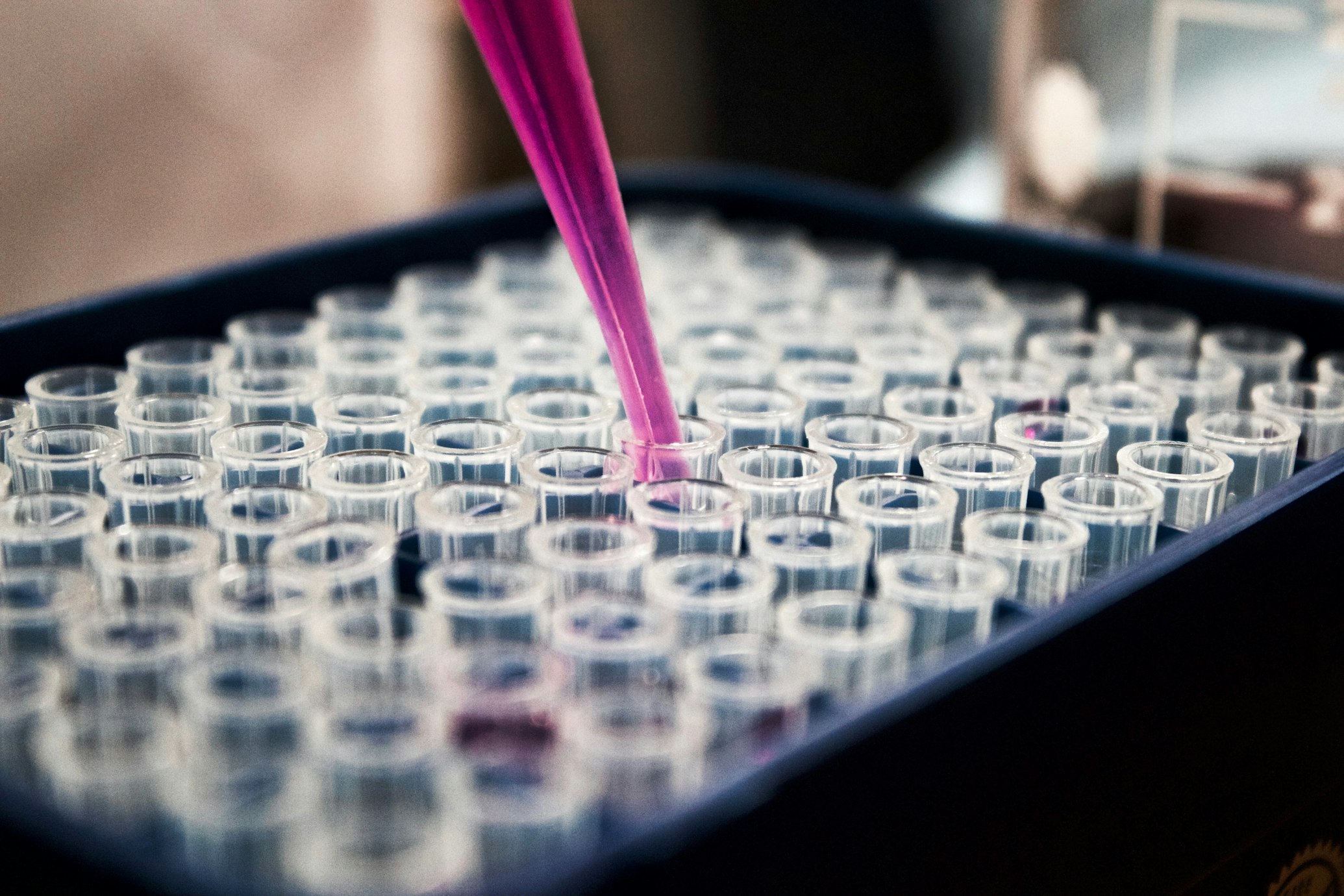
Fig. 2: Molecular dynamics simulation in progress
The Labyrinth Within: Why Protein Tunnels Matter
At their core, proteins are not rigid sculptures. They breathe, wobble, and morph in ways that are essential to their function. Buried deep within their structure are often active sites—the "engine rooms" where critical chemical reactions happen. The puzzle has always been: how do the raw materials (substrates) get to the engine room, and how do the finished products (products) get out?
This is where the tunnels come in. They are not permanent holes but transient pathways that open and close due to the protein's natural motion. Understanding this network is crucial because:
Drug Design
Many drugs work by blocking a protein's active site. If we know the secret tunnels a protein uses, we can design a "molecular cork" that perfectly blocks the entrance, deactivating harmful proteins like those in viruses or cancer cells .
Understanding Evolution
Enzymes evolve new functions, and often this is achieved by repurposing old tunnels or forming new ones, changing how they transport molecules .
Engineering Bio-Catalysts
We can potentially redesign enzymes to make them more efficient at producing biofuels or pharmaceuticals by optimizing their internal transport systems .
Until recently, techniques like X-ray crystallography gave us beautiful but static 3D images. They could show a tunnel, but not its dynamics. Molecular Dynamics (MD) simulations attempted to model this movement, but they faced a major problem: they were too slow. The opening and closing of these tunnels often happens on a timescale of microseconds to milliseconds—far too long for standard simulations to capture in a reasonable time .
Enter the Speed-Demon: Gaussian Accelerated Molecular Dynamics
This is where GaMD comes to the rescue. Think of a protein's energy landscape as a rugged mountain range. The protein spends most of its time in deep valleys (stable states), and to move to a new valley (e.g., to open a tunnel), it must climb over a high pass (an energy barrier). Standard MD simulations have to painstakingly simulate every small step up the mountain, making the process incredibly slow .
GaMD acts like a cleverly designed boost. It smooths out the mountain range by adding a gentle, harmonic (Gaussian) boost to the energy landscape. This effectively lowers the energy barriers, allowing the simulation to explore the landscape—and see those rare tunnel-opening events—thousands of times faster than before .
Crucially, the boost is applied in a way that the relative probabilities of the different states remain correct. This means that while GaMD is a "speed-demon," it's not a liar; it gives us an accurate picture of the protein's true dynamics, just on a massively accelerated timeline .
Fig. 3: Comparison of conformational sampling between standard MD and GaMD
A Deep Dive: Mapping the Tunnels of Cytochrome P450
Let's look at a real-world example. The Cytochrome P450 family of enzymes are the body's primary detoxifiers. They metabolize a vast range of drugs and toxins. Understanding how substrates enter and products exit their deeply buried active site is a classic problem in biochemistry. A landmark study used GaMD to crack this code .
The Experimental Blueprint
The researchers set out to create a complete dynamic map of the tunnel network in a specific P450 enzyme.
Methodology: A Step-by-Step Guide
Starting Point
The experiment began with a high-resolution crystal structure of the P450 enzyme, providing the initial 3D coordinates.
Simulation Setup
The protein was placed in a virtual box of water molecules, with ions added to mimic the salt concentration of a cell.
Conventional MD
A short, standard MD simulation was run to allow the system to relax and equilibrate.
GaMD Boost Calculation
The system analyzed the potential energy and calculated the optimal Gaussian boost to apply.
GaMD Production Run
The main event! A long, super-powered GaMD simulation was run.
Trajectory Analysis
Every nanosecond of the simulation was saved as a "frame" for analysis.

Fig. 4: Computational biology research in action
What Did They Discover?
The results were stunning. The GaMD simulation didn't just confirm one or two known tunnels; it revealed a complex, dynamic network .
- Multiple Pathways: At least five to six distinct tunnels were observed, each used with different frequencies.
- Gating Mechanisms: The simulations showed how specific amino acid side chains acted like "swinging gates," controlling access to the tunnels.
- Functional Specialization: Evidence suggested that some tunnels might be preferential entry routes for substrates, while others were dedicated exit routes for products, preventing molecular traffic jams .
The data from such an analysis is rich and quantifiable. Here are some representative tables that summarize the key findings:
| Parameter | Description | Value / Type |
|---|---|---|
| Simulation Software | Program used to run the simulation | NAMD/AMBER |
| Simulation Length | Total accelerated simulation time | 2.0 µs |
| Boost Potential | Type of energy boost applied | Dihedral GaMD |
| System Size | Number of atoms in the simulation | ~60,000 atoms |
| Tunnel ID | Frequency (%)* | Avg. Radius (Å) | Proposed Function |
|---|---|---|---|
| Tunnel 1 | 45% | 1.8 | Main substrate access |
| Tunnel 2a | 22% | 1.5 | Product release |
| Tunnel 2b | 15% | 1.6 | Solvent access |
| Tunnel 3 | 8% | 1.2 | Alternative substrate access |
| Tunnel 4 | 5% | 1.4 | Proposed drug target |
*Frequency refers to the percentage of simulation time the tunnel was open.
| Residue Number | Role in Gating | Tunnels Affected |
|---|---|---|
| Phe 87 | Side chain rotation opens/closes tunnel | Tunnel 1, 2a |
| Ile 120 | Backbone shift modulates tunnel size | Tunnel 2b |
| Leu 240 | Acts as a hydrophobic gate | Tunnel 3, 4 |
Fig. 5: Frequency distribution of different tunnel openings during GaMD simulation
The Scientist's Toolkit: Key Reagents for Virtual Exploration
This kind of research relies on a sophisticated digital toolkit. Here are the essential "research reagents" used in a GaMD study of protein tunnels .
| Research Reagent / Tool | Function in the Experiment |
|---|---|
| Protein Data Bank (PDB) Structure | The starting blueprint. A high-resolution 3D structure of the protein obtained from techniques like X-ray crystallography. |
| Molecular Dynamics Software (e.g., NAMD, AMBER, GROMACS) | The "virtual lab" where the simulation is set up, run, and managed. |
| GaMD Module/Plugin | The special engine that calculates and applies the Gaussian boost to accelerate the simulation. |
| Force Field (e.g., CHARMM, AMBER) | The set of mathematical rules that defines how atoms interact with each other (bond lengths, angles, electrostatic forces). |
| Visualization Software (e.g., VMD, PyMOL) | Used to visually inspect the simulation, animate the protein's motion, and identify the tunnels frame-by-frame. |
| Tunnel Analysis Algorithm (e.g., CAVER) | A specialized software tool that automatically detects and characterizes tunnels in each snapshot of the simulation trajectory. |
Data Availability
Simulation trajectories and analysis data from GaMD studies are increasingly being shared in public repositories, enabling reproducibility and further research .
Computational Resources
GaMD simulations require significant computational power, often running on high-performance computing clusters or specialized hardware .
Conclusion: The Future is Dynamic
Gaussian Accelerated Molecular Dynamics has fundamentally changed our view of proteins. We are no longer limited to static pictures; we can now watch the full, dynamic movie of a protein's life .
By reinforcing our exploration of tunnel networks, GaMD is providing an unprecedented look at the intricate plumbing of life's molecular machines. This deeper understanding is directly translating into a new era of rational drug design, where medicines can be crafted not just to fit a static lock, but to outsmart a dynamic, moving target .
The secret tunnels are no longer secret, and the path to new discoveries is wide open. As computational power continues to grow and algorithms become more sophisticated, we can expect GaMD and similar enhanced sampling methods to reveal even more intricate details of molecular life, driving innovations across medicine, biotechnology, and materials science .
The Future of Protein Science
With tools like GaMD, we're transitioning from observing biological structures to understanding biological processes in unprecedented detail.