Codon Optimization for CFPS: A Complete Guide to DNA Template Design for High-Yield Protein Synthesis
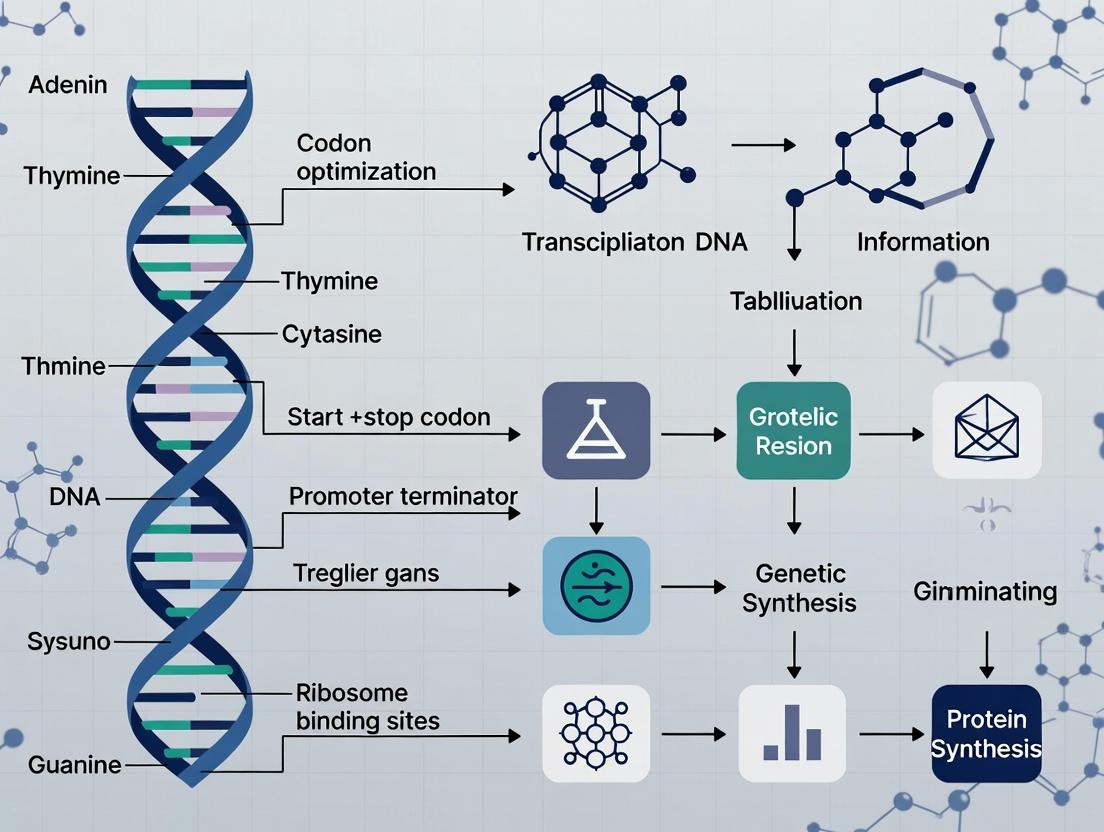
This comprehensive guide explores the critical role of DNA template design and codon optimization in Cell-Free Protein Synthesis (CFPS) systems.
Codon Optimization for CFPS: A Complete Guide to DNA Template Design for High-Yield Protein Synthesis
Abstract
This comprehensive guide explores the critical role of DNA template design and codon optimization in Cell-Free Protein Synthesis (CFPS) systems. Tailored for researchers, scientists, and drug development professionals, the article covers foundational concepts, practical methodologies for designing and applying optimized templates, troubleshooting strategies for low yield or truncated products, and rigorous validation approaches. We synthesize the latest research to provide actionable insights for maximizing protein expression yields, solubility, and functionality in biomedical and therapeutic applications.
Codon Optimization Fundamentals: Why DNA Template Design is Crucial for CFPS Success
Cell-Free Protein Synthesis (CFPS) is a versatile platform that enables the production of proteins outside of living cells by utilizing the cellular machinery for transcription and translation in a controlled, in vitro environment. The central orchestrator of this system is the DNA template, which dictates the identity, yield, and functionality of the synthesized protein. This document frames the critical importance of DNA template design within the broader thesis that codon optimization is a fundamental parameter for maximizing efficiency and expanding applications in CFPS research, from fundamental biology to drug development.
The DNA Template in CFPS: Functions and Design Imperatives
In CFPS, the DNA template is not merely a passive blueprint but an active regulatory component. Its design directly influences transcriptional efficiency, mRNA stability, translational accuracy, and ultimately, protein yield and quality. Key design elements include:
- Promoter Sequence: Directs the initiation of transcription by RNA polymerase. The T7 promoter is most common in E. coli-based systems.
- 5' and 3' Untranslated Regions (UTRs): Flanking regions that can harbor binding sites for ribosomes and regulatory elements affecting mRNA stability and translational initiation rates.
- Protein Coding Sequence (CDS): The core sequence encoding the target protein. Its nucleotide composition, particularly codon usage, is a primary focus for optimization.
- Terminator Sequence: Signals the end of transcription, preventing wasteful read-through.
Quantitative Impact of Codon Optimization on CFPS Yield
Codon optimization involves modifying the CDS to employ codons that are optimally recognized by the tRNA pools present in the specific CFPS extract, thereby enhancing translational speed and accuracy. The table below summarizes data from recent studies on the effect of codon optimization on protein yield in common CFPS systems.
Table 1: Effect of Codon Optimization on Protein Yield in Different CFPS Systems
| CFPS System (Source Extract) | Target Protein | Optimization Strategy | Yield Increase vs. Wild-Type | Key Reference (Year) |
|---|---|---|---|---|
| E. coli | GFP | Full optimization to E. coli preferred codons | ~5.2-fold | |
| Wheat Germ | Human Cytokine | Optimization of first ~10 N-terminal codons | ~3.8-fold | |
| CHO Lysate | Monoclonal Antibody Light Chain | Harmonization (matching codon usage to host genomic average) | ~2.1-fold | |
| HeLa Lysate | Viral Capsid Protein | Rare codon depletion (<10% frequency) | ~4.5-fold | |
| E. coli (PURE system) | Catalytic Enzyme | Optimization for translational speed & mRNA structure | ~7.0-fold |
Core Protocol: Evaluating DNA Template Designs in anE. coliCFPS Reaction
This protocol details a standard experiment to compare the performance of different DNA template designs (e.g., codon-optimized vs. wild-type) using a common E. coli-based CFPS kit.
Materials:
- DNA templates (plasmid or linear PCR fragments) at 10 ng/µL in nuclease-free water.
- Commercial E. coli CFPS kit (e.g., PURExpress, RTS Series).
- Nuclease-free water.
- Reporter protein assay reagents (e.g., fluorescence plate reader for GFP, luciferase assay kit, or SDS-PAGE materials).
- Thermocycler or incubator set to 30-37°C.
Procedure:
- Reaction Setup: On ice, assemble CFPS reactions according to the manufacturer's instructions. For a 10 µL final reaction volume, combine 7 µL of the premixed solution, 1 µL of the amino acid mix, and 1 µL of nuclease-free water.
- Template Addition: Add 1 µL (10 ng) of each DNA template to separate reaction tubes. Include a no-template control (NTC).
- Incubation: Incubate the reactions at the recommended temperature (typically 30°C or 37°C) for 4-6 hours.
- Analysis:
- Time-Course Monitoring: If using a fluorescent reporter (e.g., GFP), measure fluorescence (Ex/Em 488/510 nm) every 15-30 minutes.
- Endpoint Analysis: After incubation, quantify yield.
- Fluorometric/Colorimetric: Use a plate reader with appropriate standards.
- SDS-PAGE/Western Blot: Analyze 2-5 µL of the reaction mixture to confirm protein size and relative yield.
- Data Interpretation: Compare the final yield (µg/mL) and synthesis kinetics (slope of the time-course) between template designs. The optimized template should show a higher maximum yield and a steeper initial rate.
The Scientist's Toolkit: Key Reagents for CFPS Template Evaluation
Table 2: Essential Research Reagent Solutions for CFPS DNA Template Experiments
| Item | Function in CFPS | Key Consideration for Template Design |
|---|---|---|
| T7 RNA Polymerase | Drives high-level transcription from T7 promoters on the DNA template. | Essential for systems using T7 promoters. Ensure polymerase source matches system compatibility. |
| NTP Mix (ATP, UTP, GTP, CTP) | Ribonucleotide triphosphates are the building blocks for mRNA synthesis. | Quality is critical; contaminants can inhibit transcription. |
| Energy Regeneration System | Typically phosphoenolpyruvate (PEP) or creatine phosphate; fuels translation and transcription. | Sustains long reactions. Optimization may be needed for different templates/proteins. |
| Amino Acid Mixture | All 20 standard amino acids for protein chain elongation. | Stable, high-purity mixtures prevent translational stalling. |
| Ribosomes & tRNA Pool | Catalyze protein synthesis by decoding mRNA. | The endogenous tRNA pool dictates the efficiency of codon decoding, informing optimization strategy. |
| CFPS Extract (e.g., E. coli S30) | Contains essential translational machinery, chaperones, and enzymes. | Batch-to-batch consistency is vital for reproducible template comparison. |
| DNA Template (Plasmid/Linear) | The experimental variable carrying the gene of interest with specific design features. | Purification method (e.g., kit, endotoxin-free) significantly impacts reaction performance. |
Visualization: Workflow and Thesis Context
CFPS Experimental Workflow from Template to Protein
Thesis Framework: Codon Optimization in CFPS Research
In the field of Cell-Free Protein Synthesis (CFPS), the design of DNA templates is a critical determinant of expression yield and protein fidelity. A central thesis in this domain posits that optimizing codon usage to match the host organism's translational machinery—typically E. coli lysate for common CFPS systems—can dramatically enhance protein production. This Application Note details the principles and protocols for analyzing codon usage bias and applying it to DNA template design for CFPS, aimed at accelerating therapeutic protein and drug development.
Quantitative Data: Codon Usage Frequency Comparison
Table 1: Comparative Codon Usage Frequency (CU) per 1000 codons
| Amino Acid | Codon | Typical Human Gene CU | E. coli (BL21) Host CU | Bias Index (Host/Source) |
|---|---|---|---|---|
| Leucine | CUG | 42.1 | 10.2 | 0.24 |
| Leucine | UUG | 12.8 | 12.5 | 0.98 |
| Serine | AGC | 24.5 | 15.8 | 0.64 |
| Serine | UCU | 15.2 | 13.9 | 0.91 |
| Arginine | CGC | 10.8 | 21.4 | 1.98 |
| Arginine | AGA | 11.9 | 2.1 | 0.18 |
| Proline | CCC | 21.2 | 6.3 | 0.30 |
| Proline | CCG | 10.4 | 22.8 | 2.19 |
| Isoleucine | AUC | 26.0 | 17.5 | 0.67 |
| Isoleucine | AUU | 16.0 | 16.5 | 1.03 |
Data sourced from recent updates to the Codon Usage Database (2023) and GenBank releases. Bias Index >1 indicates host preference.
Table 2: Impact of Codon Optimization on CFPS Yield
| Optimization Strategy | Relative Expression Yield (%) | Solubility (%) | tRNA Pool Depletion Risk |
|---|---|---|---|
| Full Host-Match | 100 (Baseline) | 85 | High |
| Moderate Harmonization | 92 | 89 | Medium |
| No Optimization | 35 | 65 | Low |
| Rare Codon Replacement (>10%) | 150 | 78 | High |
Yield data is normalized to fully optimized template in an *E. coli S30 CFPS system. Recent studies (2024) show extreme optimization can cause ribosomal stalling.*
Experimental Protocols
Protocol 3.1: Codon Bias Analysis for a Target Gene
Objective: Calculate the Codon Adaptation Index (CAI) and Frequency of Optimal Codons (FOP) for a gene of interest relative to a host organism. Materials: Gene sequence (FASTA), host codon usage table, computational tool (e.g., PyCodon, CodonW). Procedure:
- Obtain the standard codon usage table for your CFPS host organism (e.g., E. coli K-12 strain MG1655) from the Kazusa or NCBI database.
- Input your target protein-coding DNA sequence into the analysis software.
- Set the host reference table as the optimization standard.
- Run the analysis to generate:
- CAI: Values range from 0-1; >0.8 suggests good adaptation.
- FOP: Percentage of codons matching the host's most frequent codons.
- Rare Codon Scan: Identify codons with a relative adaptiveness value <0.2.
- Export a per-codon report for manual review and optimization planning.
Protocol 3.2: DNA Template Design and Optimization for CFPS
Objective: Synthesize a codon-optimized DNA template for high-yield CFPS. Materials: Amino acid sequence, gene synthesis service, CFPS kit (e.g., E. coli based), PCR reagents. Procedure:
- Algorithm Selection: Choose an optimization algorithm:
- Full Optimization: Replace all codons with the host's single most frequent codon. Can cause issues with mRNA secondary structure.
- Harmonization: Replace codons with a host-preferred subset, maintaining some natural sequence variation to aid folding.
- Constraint Integration: Use software (e.g., DNAWorks, IDT Codon Optimization Tool) to:
- Avoid restriction enzyme sites for downstream cloning.
- Minimize stable mRNA secondary structures near the ribosome binding site (RBS).
- Balance GC content (aim for ~50% for E. coli).
- Gene Synthesis: Submit the final designed sequence to a commercial vendor for synthesis, typically as a linear fragment or cloned into a CFPS-compatible plasmid (e.g., pET series with T7 promoter).
- Template Validation: Amplify the template using PCR. Purify and quantify using UV spectrophotometry (A260/A280).
Protocol 3.3: Validating Optimization in a CFPS Reaction
Objective: Compare protein yield from native vs. optimized templates. Materials: CFPS kit (e.g., NEB PURExpress, Cytiva S30 T7), prepared DNA templates, radiolabeled (³⁵S) Methionine or fluorescent detection method, SDS-PAGE system. Procedure:
- Prepare two 50 µL CFPS reactions according to the manufacturer's instructions, one with the native template and one with the optimized template.
- Incubate at 30°C or 37°C (as per system specification) for 4-6 hours.
- Yield Analysis:
- Radioactive: Include ³⁵S-Met in the reaction. Spot 2µL of reaction mix on a filter paper, perform TCA precipitation, wash, and measure scintillation counts.
- Fluorescent/Colorimetric: For enzymes or tagged proteins, use appropriate activity assays or ELISA.
- Product Analysis: Run 10 µL of each reaction on SDS-PAGE. Visualize via autoradiography (for radioactive), Coomassie stain, or Western blot.
- Quantify band intensity using imaging software (e.g., ImageJ) to calculate fold-change improvement.
Diagrams and Visualizations
Title: DNA Template Codon Optimization Workflow for CFPS
Title: Consequences and Resolution of Codon Bias in CFPS
The Scientist's Toolkit: Research Reagent Solutions
Table 3: Essential Materials for Codon Optimization & CFPS Validation
| Item/Category | Specific Example(s) | Function & Application |
|---|---|---|
| CFPS Kits | NEB PURExpress, Cytiva S30 T7 Extract, Thermo Fisher Expressway | Pre-formulated, high-yield cell-free systems for rapid protein expression from DNA templates. |
| Gene Synthesis Services | Twist Bioscience, IDT gBlocks, GenScript | Provide codon-optimized, sequence-perfect double-stranded DNA fragments or cloned constructs. |
| Codon Analysis Software | PyCodon (web/server), Geneious Prime, SnapGene | Calculate CAI, FOP, identify rare codons, and assist in optimized sequence design. |
| tRNA Supplement | E. coli MRE600 tRNA, PURExpress ΔRF123 tRNA Kit | Replenish tRNA pools to rescue expression from sequences with residual rare codons. |
| Detection Reagents | ³⁵S-Methionine, FITC-Lys-tRNA, His-Tag ELISA Kits | Enable quantification and analysis of synthesized protein yield and identity. |
| Cloning & Template Prep Kits | QIAprep Spin Miniprep Kit, NEB PCR Cloning Kit, PCR Clean-up Kits | Isify and prepare plasmid or linear DNA templates for CFPS reactions. |
Within the framework of DNA template design for Cell-Free Protein Synthesis (CFPS), codon optimization serves as a critical lever to simultaneously address four interlinked goals: Yield, Solubility, Fidelity, and Speed. This application note details protocols and strategies for achieving these targets, which are paramount for researchers and drug development professionals utilizing CFPS for high-throughput protein production, enzyme engineering, and therapeutic protein development.
Optimization Targets: Definitions and Interdependencies
| Goal | Definition in CFPS Context | Primary Codon Optimization Levers | Typical Quantitative Target |
|---|---|---|---|
| Yield | Total functional protein produced per unit volume/time. | Codon adaptation index (CAI) >0.8; avoidance of rare host tRNAs; mRNA secondary structure minimization. | >1 mg/mL of target protein. |
| Solubility | Fraction of synthesized protein in a soluble, non-aggregated state. | Strategic incorporation of solubilizing N-terminal tags; suppression of aggregation-prone regions; pI adjustment. | >70% soluble fraction. |
| Fidelity | Accuracy of amino acid incorporation and absence of truncations. | Elimination of cryptic splice sites, frameshift motifs, and misreading-prone sequences; strong RBS design. | Misincorporation rate <0.1%. |
| Speed | Rate of protein synthesis (amino acids per second). | Optimal spacing around start codon; minimization of stall-inducing motifs (e.g., polyproline); efficient ribosomal binding. | >5 aa/sec elongation rate. |
These parameters are non-independent. Maximizing yield often conflicts with speed, while aggressive codon optimization for speed can reduce fidelity. A balanced, multi-parameter approach is required.
Experimental Protocol: Multi-Parameter Codon Optimization and Screening
Objective: To design, test, and compare DNA templates optimized for different goal weightings (Yield, Solubility, Fidelity, Speed) in a CFPS reaction.
Materials:
- CFPS Kit: PURExpress (NEB) or similar reconstituted E. coli system.
- DNA Templates: Plasmid or linear DNA fragments encoding the gene of interest (GOI) with varying optimization strategies.
- Analytical Tools: SDS-PAGE, spectrophotometer, fluorescent plate reader, anti-tag antibodies for detection.
Procedure:
- Template Design: Using bioinformatics software (e.g., IDT Codon Optimization Tool, Twist Bioscience OPT), generate four template variants for your GOI:
- Variant Y: Maximized for Yield (high CAI, perfect host-match codons).
- Variant S: Maximized for Solubility (includes N-terminal maltose-binding protein (MBP) tag, codon pairs favoring soluble folding).
- Variant F: Maximized for Fidelity (eliminates all known misreading motifs, uses conservative codon set).
- Variant Sp: Maximized for Speed (minimizes rare codons, optimizes ribosomal ramp region).
CFPS Reaction Setup:
- Prepare master mix according to CFPS system manufacturer's instructions.
- Aliquot equal volumes into separate reaction tubes.
- Add 10 nM (final concentration) of each DNA template variant to individual tubes. Include a no-template control.
- Incubate at 30°C or 37°C (as per system) for 4-8 hours.
Analysis:
- Total Yield: Measure total protein synthesis by fluorescent dye-based quantification (e.g., CF488A amine-reactive dye) or
[35S]-Metincorporation. Calculate µg/mL. - Soluble Fraction: Centrifuge reaction at 15,000 x g for 15 min. Separate supernatant (soluble) from pellet. Analyze both fractions by SDS-PAGE and densitometry.
- Fidelity Assay: Perform mass spectrometry (MS) on purified protein to check for misincorporations. Alternatively, use a functional assay if applicable.
- Kinetics/Speed: Take aliquots at 30, 60, 120, and 240 minutes. Quantify protein amount at each time point to derive synthesis rate (slope of initial linear phase).
- Total Yield: Measure total protein synthesis by fluorescent dye-based quantification (e.g., CF488A amine-reactive dye) or
Visualizing the Optimization Workflow and Trade-offs
Diagram Title: CFPS Codon Optimization and Screening Workflow
Diagram Title: Interdependencies of CFPS Optimization Goals
The Scientist's Toolkit: Essential Research Reagent Solutions
| Reagent / Material | Supplier Examples | Function in Optimization |
|---|---|---|
| PURExpress ΔRibosome Kit | New England Biolabs (NEB) | Reconstituted E. coli CFPS system lacking ribosomes, allowing for orthogonal ribosome/mRNA pair engineering to enhance fidelity. |
| S30 Extract System | Promega, homemade | Crude E. coli lysate containing native transcription/translation machinery; cost-effective for high-throughput yield screening. |
| Codon-Optimized Gene Fragments | Twist Bioscience, IDT, GenScript | High-fidelity DNA fragments synthesized de novo with user-defined codon bias for direct cloning or linear template generation. |
| CFP488A / CFP560A Amine Reactive Dyes | Biotium | Fluorescent dyes for rapid, quantitative, and gel-based measurement of total synthesized protein yield without radioactivity. |
| HIS/MBP/SUMO Tag Vectors | Addgene, commercial kits | Plasmid backbones with N-terminal solubility and purification tags to standardize and enhance soluble expression across targets. |
| mRNA-Stabilizing Additives (e.g., GamS protein) | Arbor Biosciences, in-house purified | Ribonuclease inhibitors that increase mRNA half-life, directly boosting yield and enabling longer reaction times. |
| Chaperone Cocktails (GroEL/ES, DnaK/DnaJ/GrpE) | Takara Bio, Sigma-Aldrich | Protein folding helpers co-expressed or added to reactions to improve solubility and functional activity of complex proteins. |
Within the broader thesis on DNA template design and codon optimization for Cell-Free Protein Synthesis (CFPS) research, the focus on Open Reading Frames (ORFs) must be expanded. Non-coding regulatory elements—promoters, untranslated regions (UTRs), and terminators—are critical determinants of transcriptional efficiency, mRNA stability, and translational yield. Optimizing these elements is essential for maximizing protein production in CFPS platforms, a key concern for therapeutic protein and drug development research.
Key Regulatory Elements & Their Functions in CFPS
In CFPS systems, the DNA template is stripped of cellular context, making the precise engineering of these elements paramount for controlling gene expression.
Table 1: Core Non-Coding Elements in DNA Template Design for CFPS
| Element | Primary Function in CFPS | Key Design Considerations | Impact on Yield |
|---|---|---|---|
| Promoter | Initiates transcription by recruiting RNA polymerase. | Strength, specificity for extract (e.g., T7, SP6), leakiness. | Directly controls mRNA copy number. High-strength promoters (e.g., T7) are standard. |
| 5' UTR | Ribosome binding site (RBS) engagement, mRNA stability. | Shine-Dalgarno sequence strength/sequence, secondary structure, length. | Major driver of translational initiation efficiency; can cause >100-fold yield differences. |
| 3' UTR | mRNA stability, transcription termination efficiency. | Terminator sequence (stem-loop strength), protection from exonucleases. | Prevents transcriptional read-through and mRNA degradation, conserving system resources. |
| Terminator | Signals release of RNA polymerase, defines mRNA end. | Efficiency (% termination), sequence. | Inefficient termination wastes energy on non-productive transcription. |
Application Notes & Protocols
Protocol 1: Systematic Evaluation of 5' UTR/RBS Variants
Objective: To quantitatively compare the impact of different 5' UTR sequences on protein yield in a T7-based E. coli CFPS system. Background: The sequence upstream of the start codon forms the ribosomal binding site. Its strength and lack of inhibitory secondary structure are critical.
Materials:
- DNA Templates: Plasmid or linear DNA fragments containing a T7 promoter, the 5' UTR variant to test, a standardized reporter ORF (e.g., sfGFP), and a strong terminator.
- CFPS Kit: Commercially available E. coli-based system (e.g., PURExpress, NEB).
- Equipment: Microplate reader, thermocycler or incubator.
Procedure:
- Template Preparation: Generate a series of DNA constructs that differ only in their 5' UTR sequence. Common variants include consensus Shine-Dalgarno (AGGAGG), weaker alternatives, and sequences with modulated spacer length (typically 5-9 bases) between the SD and start codon.
- CFPS Reaction Assembly: On ice, assemble 10-15 µL reactions according to the manufacturer's instructions for each DNA template. Use a consistent template concentration (e.g., 5 nM for plasmid, 10 nM for linear).
- Expression & Incubation: Transfer reactions to a suitable plate or tube. Incubate at 30-37°C for 4-6 hours, depending on the system.
- Quantification: For sfGFP reporter, measure fluorescence (excitation 485 nm, emission 528 nm). Convert to protein concentration using a standard curve of purified sfGFP.
- Data Analysis: Normalize yield to the construct with the highest observed production. Plot normalized yield vs. UTR variant.
Expected Outcome: A clear ranking of UTR strength, often showing a >50-fold difference between optimal and poor variants.
Protocol 2: Assessing Terminator Efficiency via Read-Through Transcription
Objective: To measure the termination efficiency of different terminator sequences in a CFPS context. Background: Inefficient terminators lead to transcriptional read-through, producing long, wasteful mRNAs that drain nucleotide pools and energy.
Materials:
- Dual-Reporter Template: A linear DNA with: T7 Promoter -> sfGFP ORF -> Test Terminator -> mCherry ORF -> Strong Reference Terminator.
- CFPS System: As in Protocol 1.
- qPCR Capabilities (optional for direct mRNA analysis).
Procedure:
- Reaction Setup: Perform CFPS reactions with the dual-reporter template containing the test terminator. Include a positive control (no terminator between reporters) and a negative control (a known strong terminator, e.g., T7 terminator).
- Post-Reaction Analysis: After incubation, split the reaction for separate quantification.
- Fluorometric: Measure sfGFP and mCherry fluorescence. The mCherry/sfGFP ratio inversely correlates with terminator efficiency.
- Electrophoretic: Analyze total RNA output on a denaturing agarose gel. Read-through appears as a longer transcript visible above the primary sfGFP mRNA.
- Efficiency Calculation: Calculate % Termination = [1 - (mCherry signal / sfGFP signal) for test template] / [1 - (mCherry signal / sfGFP signal) for no-terminator control] * 100%.
Expected Outcome: Strong terminators (e.g., T7, rrnB) will show >95% efficiency, minimizing mCherry expression and short mRNA bands.
Diagram: CFPS Expression Workflow with Key Elements
Diagram: Terminator Efficiency Assay Logic
The Scientist's Toolkit: Research Reagent Solutions
Table 2: Essential Reagents for CFPS Template Design & Analysis
| Item | Function in Research | Key Consideration for CFPS |
|---|---|---|
| T7 RNA Polymerase | Drives high-level transcription from T7 promoters. | The workhorse for most prokaryotic CFPS systems; purity and activity are critical. |
| NTP Mix (ATP, GTP, CTP, UTP) | Building blocks for mRNA synthesis. | High-quality, nuclease-free stocks prevent reaction inhibition. |
| Energy Regeneration System | Maintains ATP levels (e.g., Phosphoenolpyruvate + Pyruvate Kinase). | Sustains long reaction lifetimes; system choice affects cost and yield. |
| E. coli S30 or S12 Extract* | Provides ribosomes, tRNAs, translation factors, and necessary enzymes. | Source strain (e.g., BL21), preparation method, and dialysis buffer define system performance. |
| Linear DNA Template (PCR-generated) | Direct expression template without need for cloning. | Must include promoter, UTR, ORF, terminator. Purity (no primers, dNTPs) is essential. |
| Commercial CFPS Kit (e.g., PURExpress) | Pre-optimized, consistent system for screening. | Ideal for benchmarking regulatory elements; reduces batch-to-batch variability. |
| Fluorescent Protein Reporter Plasmid (sfGFP, mCherry) | Quantitative, rapid yield assessment. | Enables high-throughput screening of element libraries via plate reader. |
| RNase Inhibitor | Protects mRNA from degradation. | Crucial for systems prone to ribonuclease contamination or for long incubations. |
For successful DNA template design in CFPS, codon optimization of the ORF is necessary but insufficient. A holistic design integrating a strong, specific promoter, a translationally optimized 5' UTR, and an efficient terminator is required to fully harness the protein synthesis capacity of the system. The protocols outlined provide a framework for empirically defining these optimal context sequences, enabling researchers and drug developers to rapidly produce high yields of target proteins for downstream applications.
Common Challenges with Non-Optimized Templates in CFPS Systems
Application Notes
Cell-Free Protein Synthesis (CFPS) is a powerful platform for rapid protein production, prototyping genetic circuits, and manufacturing therapeutics. Within a broader thesis on DNA template design and codon optimization for CFPS, understanding the limitations of non-optimized templates is foundational. This document details the common challenges arising from such templates and provides protocols for their identification and remediation.
Non-optimized DNA templates, typically those designed for in vivo expression or lacking consideration for cell-free system biochemistry, introduce several predictable bottlenecks. These challenges manifest as reduced protein yield, truncated products, or complete system failure. The core issues stem from the open nature of CFPS, where all components are exogenously supplied and reaction kinetics differ significantly from cellular environments.
Key Challenges Identified:
- Inefficient Translation Initiation: Non-optimized 5' UTRs and ribosomal binding sites (RBS) fail to recruit the limited ribosomes in the extract efficiently, leading to low translational efficiency.
- Codon-Induced Ribosomal Stalling: The absence of codon optimization for the specific CFPS extract (e.g., E. coli, wheat germ, CHO) leads to depletion of charged tRNAs, ribosomal pausing, and premature termination.
- Unstable mRNA: Native sequences may contain motifs that trigger rapid degradation by nucleases present in the extract, shortening the template's functional lifespan.
- Resource Competition and Toxicity: Expression of proteins with complex folds or transmembrane domains can sequester chaperones or disrupt membrane analogs, draining system resources.
- Regulatory Sequence Interference: Unintended promoter or operator sequences within the coding region can lead to aberrant transcription or regulator binding.
The quantitative impact of these challenges is summarized in Table 1.
Table 1: Quantitative Impact of Non-Optimized Templates in E. coli-based CFPS
| Challenge | Parameter Measured | Non-Optimized Template | Optimized Template | Reference/Model System |
|---|---|---|---|---|
| Translation Initiation | Protein Yield (µg/mL) | 45 ± 12 | 320 ± 45 | GFP reporter, NTPs=3mM |
| Rare Codon Clusters | Full-Length Product (%) | 28% | 92% | 6xHis-tagged enzyme |
| mRNA Stability | mRNA Half-life (min) | 8.2 ± 1.5 | 22.5 ± 3.1 | RT-qPCR measurement |
| Resource Drain | Reaction Lifetime (hr) | 1.5 | 3.5 | T7-based system, energy regeneration |
Experimental Protocols
Protocol 1: Assessing Translation Initiation Efficiency via Toehold Switch Assay
Purpose: To quantitatively measure the accessibility and strength of the RBS/start codon region on a linear DNA template.
Materials: CFPS kit (e.g., PURExpress, NEB), linear DNA templates, fluorescent reporter (e.g., Broccoli RNA aptamer) under toehold switch control, microplate reader.
Procedure:
- Design a toehold switch sensor that is complementary to the first 30 nucleotides of your target mRNA, including the RBS and start codon.
- Clone the sensor sequence upstream of a Broccoli aptamer coding sequence in a transcription vector.
- In a 10 µL CFPS reaction, co-express the target protein from its linear template (10 nM) and the sensor-reporter RNA from its plasmid (2 nM).
- Incubate at 30°C for 4-6 hours. Monitor Broccoli fluorescence (Ex/Em: 472/507 nm) kinetically.
- Data Analysis: A low fluorescence signal indicates the toehold switch is not triggered, meaning the target RBS region is sequestered or inaccessible. High fluorescence correlates with efficient ribosome binding and unwinding of the region. Normalize signals to a positive control (known strong RBS).
Protocol 2: Diagnosing Codon-Specific Stalling via Ribosome Profiling (Ribo-Seq) in CFPS
Purpose: To map ribosome occupancy at nucleotide resolution to identify pauses caused by rare codons or secondary structures.
Materials: CFPS reaction mix, harringtonine or chloramphenicol (for ribosome stalling), RNase I, rRNA depletion kit, NGS library prep kit.
Procedure:
- Scale up the CFPS reaction to 100 µL. At the peak of protein synthesis (typically 30-60 min), add harringtonine (1 µM final) to freeze translating ribosomes.
- Immediately place the reaction on ice and treat with RNase I (100 U) for 45 min to digest unprotected mRNA.
- Purify ribosome-protected mRNA footprints (≈28-30 nt) using size-selection gel electrophoresis or columns.
- Deplete ribosomal RNA from the footprint sample.
- Construct a sequencing library for the footprints and perform deep sequencing.
- Data Analysis: Align reads to the template sequence. High densities of ribosome footprints at specific codons indicate translational pausing. Correlate pause sites with codon usage frequency tables for the CFPS source organism.
Protocol 3: Systematic Optimization and Testing Workflow
Purpose: A comprehensive workflow to identify template issues and implement corrective design strategies.
Procedure:
- Diagnostic Run: Express the non-optimized template in a standard CFPS reaction. Measure yield (via fluorescence, absorbance, or gel), reaction longevity (kinetic sampling), and product integrity (SDS-PAGE/Western).
- In Silico Analysis:
- Analyze the sequence using tools like the RBS Calculator for CFPS.
- Identify rare codon clusters using the organism-specific codon usage table.
- Scan for potential internal Shine-Dalgarno sequences or cleavage sites.
- Design Iterations:
- Version A: Optimize only the 5' UTR/RBS.
- Version B: Implement full codon harmonization (matching codon frequency to the host organism's genomic average).
- Version C: Eliminate predicted mRNA secondary structure around the start codon.
- Parallel Expression Test: Express all template versions (non-optimized, A, B, C) in parallel, matched for DNA concentration. Quantify results.
- Resource Load Assessment: For the highest-yielding template, perform a "resource competition" experiment by co-expressing a simple, high-yield fluorescent protein. A drop in FP yield indicates high resource consumption by the target.
Visualizations
Title: Impact Pathway of Non-Optimized Templates in CFPS
Title: Template Optimization and Testing Workflow
The Scientist's Toolkit: Research Reagent Solutions
Table 2: Essential Reagents for CFPS Template Analysis and Optimization
| Item | Function & Application |
|---|---|
| PURExpress ΔRF123 Kit (NEB) | A defined, reconstituted E. coli CFPS system lacking release factors 1, 2, and 3. Essential for diagnosing truncation issues due to rare codons. |
| T7 RNA Polymerase (High Concentration) | Enables high-level transcription from T7 promoters, especially for linear templates. Critical for maximizing mRNA input. |
| ssDNA/RNAse-Free Exonuclease | For rapid degradation of linear DNA templates post-transcription to stop new initiation, allowing study of mRNA stability and translation elongation. |
| tRNA Mix (E. coli MRE600) | Supplementation can partially alleviate issues caused by minor codon bias, helping to pinpoint tRNA depletion as a yield-limiting factor. |
| Creatine Kinase & Phosphocreatine | Key components of energy regeneration systems. Testing different concentrations can identify if low yield is due to energy drain from difficult sequences. |
| HRV 3C Protease (or other) Linear Template | A well-characterized, high-yielding positive control linear DNA template. Crucial for normalizing results and verifying system functionality. |
| Cap-Independent Translation Enhancer (CITE) Sequences | RNA motifs (e.g., from viruses) that can be fused to 5' UTRs to boost ribosome recruitment in eukaryotic CFPS systems (wheat germ, HeLa). |
| Solid-Phase DNA Synthesis Oligos | For rapid, cost-effective construction of variant libraries (e.g., RBS sequences, codon variants) via Golden Gate or Gibson assembly for screening. |
A Step-by-Step Guide to Designing and Applying Optimized DNA Templates
Within the thesis context of DNA template design for Cell-Free Protein Synthesis (CFPS), selecting a host system is the foundational decision that dictates codon optimization strategy. The genetic code's redundancy means optimal codon usage varies drastically between prokaryotic and eukaryotic systems. This application note compares four major CFPS platforms—E. coli, Wheat Germ, CHO, and Hybrid systems—through the lens of template design, providing protocols to evaluate codon-optimized templates for target proteins.
Comparative Analysis of CFPS Host Systems
Table 1: Quantitative Comparison of Key CFPS Platform Characteristics
| Characteristic | E. coli Lysate | Wheat Germ Extract | CHO Lysate | Hybrid System |
|---|---|---|---|---|
| Typical Yield (μg/mL) | 500 - 2,000 | 100 - 500 | 10 - 100 | 100 - 800 |
| Reaction Time (hrs) | 2 - 6 | 24 - 48 | 6 - 24 | 4 - 24 |
| Cost per Reaction | $ | $$ | $$$ | $$ |
| Codon Bias | Strong (AT-rich) | Moderate (Plant-specific) | Strong (Mammalian, GC-rich) | Configurable |
| PTM Capability | Limited (N-linked glycosylation, disulfide bonds possible with engineered strains) | Core glycosylation, disulfide bonds, amidation | Human-like PTMs: N-/O-glycosylation, phosphorylation, acylation | Limited by component lysate(s) |
| Ideal Application | High-throughput screening, metabolic engineering, enzyme production, membrane proteins. | Production of complex eukaryotic proteins with basic PTMs, toxins. | Production of therapeutic proteins requiring human-like PTMs for functional analysis. | Specialized applications (e.g., non-canonical amino acid incorporation, toxic proteins). |
Protocols for Codon-Optimized Template Evaluation
Protocol 1: Parallel Expression Screening of Codon Variants
Objective: Compare the expression yield of a target gene with codon optimization for E. coli, wheat germ, and mammalian (CHO) systems across respective CFPS platforms.
Materials (Research Reagent Toolkit):
- DNA Templates: Purified, linear PCR fragments or plasmids containing the target gene with host-specific codon optimization (three variants).
- CFPS Kits: Commercial E. coli S30 extract system, Wheat Germ extract system, CHO lysate system.
- Energy Solution: System-specific mix of ATP, GTP, amino acids, phosphoenolpyruvate (PEP) or creatine phosphate.
- Detection Reagent: Fluorescent dye-based protein quantification assay (e.g., CFPS-compatible His-tag ELISA or fluorescent Western blot).
Method:
- Template Preparation: Generate three DNA templates for your gene of interest (GOI) using codon optimization algorithms tailored for E. coli, plants, and mammalian cells.
- CFPS Reaction Assembly: On ice, assemble 50 μL reactions for each host system according to manufacturer instructions, substituting the template with 10-20 nM of each codon-optimized variant.
- Incubation: Incubate reactions at optimal temperatures: E. coli (30-37°C, 4-6h), Wheat Germ (25°C, 24-48h), CHO (30-32°C, 6-24h).
- Yield Quantification: Terminate reactions on ice. Quantify soluble protein yield using a standardized method (e.g., ELISA for an epitope tag). Perform triplicate experiments.
- Analysis: Compare yields across template variants within each system to identify the optimal codon set for that host.
Protocol 2: Assessing PTM Fidelity in Eukaryotic Systems
Objective: Verify the presence and type of post-translational modifications (e.g., glycosylation) on a protein produced in Wheat Germ vs. CHO CFPS.
Materials (Research Reagent Toolkit):
- CHO and Wheat Germ CFPS Reactions: From Protocol 1, using the mammalian-optimized template.
- Deglycosylation Enzymes: PNGase F, Endo H.
- Analysis Buffer: Denaturing buffer (e.g., with SDS).
- Detection Method: SDS-PAGE gel system and lectin blot or mass spectrometry sample prep reagents.
Method:
- Protein Production: Express the target protein in 100 μL scale CHO and Wheat Germ CFPS reactions.
- Purification: Purify the protein via a C-terminal tag (e.g., Strep-tag).
- Enzymatic Digestion: Aliquot purified protein. Treat one aliquot with PNGase F (removes most N-linked glycans), another with Endo H (removes high-mannose glycans), and leave one untreated.
- Analysis: Run samples on SDS-PAGE. A mobility shift indicates glycosylation. For detailed profiling, analyze intact protein mass by LC-MS. Wheat Germ systems typically produce high-mannose glycans (sensitive to Endo H), while CHO can produce complex, human-like glycans (resistant to Endo H, sensitive to PNGase F).
Visualizations
Diagram 1: CFPS Host Selection Logic Flow
Diagram 2: Codon Optimization Feedback Loop for CFPS
Within the context of DNA template design for Cell-Free Protein Synthesis (CFPS) research, codon optimization is a critical computational step. It involves modifying the coding sequence of a gene to enhance translation efficiency and protein yield without altering the amino acid sequence. The choice of algorithm and tool directly impacts experimental outcomes in synthetic biology, therapeutic protein production, and basic research. This Application Note provides a comparative overview of contemporary methods and detailed protocols for their application in CFPS workflows.
Core Algorithms & Quantitative Comparison
Codon optimization algorithms employ different strategies, each with strengths and limitations for CFPS systems. The table below summarizes key metrics and characteristics of prevalent algorithms.
Table 1: Comparative Analysis of Codon Optimization Algorithms
| Algorithm Name | Core Strategy | CFPS Relevance Score (1-5)* | Typical GC% Control | Open Source | Common Implementation Tools |
|---|---|---|---|---|---|
| Frequency-based | Matches host organism's codon usage frequency | 3 | Limited/Indirect | Yes | JCat, EuGene |
| CAI Maximization | Maximizes Codon Adaptation Index | 3 | Poor | Yes | OPTIMIZER, Graphical Codon Usage Analyser |
| tRNA Adaptation Index | Considers tRNA pool and copy numbers | 4 | Moderate | Yes | tAI optimizer, PyCodon |
| Relative Synonymous Codon Usage | Uses RSCU values for balancing | 4 | Good | Yes | GenScript's algorithm (reference), VectorBuilder |
| Machine Learning/Neural Networks | Predicts high-expression sequences from data | 5 (Emerging) | Precise | Sometimes | proprietary tools (e.g., ATUM's); research models |
| Avoidance-based | Eliminates problematic motifs (e.g., RNase sites) | 5 | User-defined | Yes | IDT's Codon Optimization Tool, Twist Bioscience |
*CFPS Relevance Score (Author's assessment based on literature): 1=Low, 5=High. Based on considerations of lysate-specific tRNA pools, avoidance of regulatory motifs, and validation in CFPS literature.
Detailed Application Protocols
Protocol 1: Codon Optimization forE. coli-Based CFPS Using a Hybrid Approach
Objective: Generate an optimized gene sequence for high-yield protein expression in an E. coli S30 or similar CFPS system.
Materials & Reagents:
- Source Gene Sequence (FASTA format).
- Host Organism Codon Usage Table: E. coli K-12 codon usage table (e.g., from the Kazusa database).
- Software/Tools: Two of the following: (1) PyCodon (for tAI-based optimization), (2) IDT Codon Optimization Tool (for avoidance-based tuning), (3) OPTIMIZER webserver.
- Sequence Analysis Tool: SnapGene or Benchling for motif visualization.
Procedure:
- Sequence Analysis: Identify and note undesirable cis-acting elements in the source sequence (e.g., internal ribosome binding sites (IRBS), RNase E sites, restriction enzyme sites for cloning, long homopolymeric repeats).
- Primary Optimization: a. Access the PyCodon tool. b. Input your source gene FASTA sequence. c. Select E. coli as the host organism and choose the "tAI-based optimization" parameter. d. Set GC content limits to 45-55% if required. e. Generate the optimized sequence (Opt-Seq A).
- Secondary Refinement: a. Input Opt-Seq A into the IDT Codon Optimization Tool. b. Select "Avoid tandem rare codons" and "Reduce ribosomal loading". c. Enable "Minimize cryptic splicing" and "Avoid restriction enzyme sites" specific to your cloning vector. d. Generate the refined sequence (Opt-Seq B).
- Sequence Validation: a. Align the amino acid sequence of the source and Opt-Seq B to ensure fidelity. b. Use SnapGene to scan Opt-Seq B for any residual, user-defined forbidden motifs. c. Calculate the CAI and GC% for the final sequence. A CAI > 0.8 is generally desirable for E. coli.
- Gene Synthesis & Cloning: Send the final Opt-Seq B for synthesis and clone into your CFPS-compatible vector (e.g., pET, pUC).
Protocol 2: Evaluating Optimization Efficacy in a CFPS Reaction
Objective: Experimentally compare protein yield between native and optimized gene sequences.
Materials & Reagents:
- CFPS Kit: E. coli-based CFPS kit (e.g., PurExpress (NEB) or S30 T7 High-Yield Protein Synthesis Kit (Promega)).
- DNA Templates: Purified plasmids or linear DNA templates containing the native and optimized genes under a T7 promoter.
- Detection Reagent: Fluorescent labeling kit (e.g., FluoroTect GreenLys in vitro Translation Labeling System (Promega)) or material for western blot/radiolabeling.
- Analytical Equipment: Fluorescence microplate reader or SDS-PAGE/phosphorimager system.
Procedure:
- CFPS Reaction Setup: a. Prepare two master mixes according to the CFPS kit instructions, omitting DNA. b. Aliquot equal volumes of the master mix into two separate tubes. c. Add an equimolar amount (recommended: 10-20 nM final concentration) of the native gene template to tube 1 and the optimized gene template to tube 2. d. Incubate reactions at 37°C for 4-6 hours.
- Protein Yield Quantification (Fluorometric): a. If using the FluoroTect system, include the labeled lysine in the master mix. b. Post-incubation, dilute 5 µL of each reaction in 100 µL of PBS in a black-walled microplate. c. Measure fluorescence (excitation ~485 nm, emission ~535 nm). d. Perform background subtraction using a no-DNA control reaction.
- Analysis: a. Calculate the fold-increase in fluorescence for the optimized template relative to the native one. b. Confirm product size and integrity by SDS-PAGE analysis of 5 µL from each reaction.
The Scientist's Toolkit: Key Research Reagent Solutions
Table 2: Essential Materials for Codon Optimization & CFPS Validation
| Item | Function in Workflow | Example Product / Vendor |
|---|---|---|
| E. coli Lysate CFPS Kit | Provides the cell-free translational machinery for expression testing. | PURExpress (NEB), S30 T7 High-Yield (Promega) |
| Linear DNA Template Generation Kit | Enables rapid PCR-based production of T7-driven genes for fast screening. | PCR kits (e.g., Q5 Hot Start, NEB); T7 RiboMAX Express (Promega) for large-scale |
| Fluorescent in vitro Translation Labeling System | Allows real-time or endpoint quantitation of synthesized protein. | FluoroTect GreenLys (Promega) |
| Cloning Kit for CFPS Vectors | For stable template preparation. | Gibson Assembly Master Mix (NEB), In-Fusion Snap Assembly (Takara) |
| Codon Usage Table Database | Provides organism-specific codon frequency data for algorithm input. | Kazusa Codon Usage Database (online) |
| Commercial Gene Synthesis Service | Delivers the physically synthesized optimized DNA fragment. | IDT, Twist Bioscience, GenScript |
Visualizations
Title: Hybrid Codon Optimization & CFPS Workflow
Title: Algorithm Inputs, Outputs & CFPS Goal *CUT: Codon Usage Table
1. Introduction Within the broader thesis on DNA template design for Cell-Free Protein Synthesis (CFPS) systems, a critical challenge is the simultaneous optimization of conflicting parameters. Two primary metrics are the Codon Adaptation Index (CAI), which measures the similarity of a gene's codon usage to that of a host organism, and GC content, which influences DNA stability and secondary structure. This application note provides a detailed protocol for systematically tuning these parameters to achieve optimal protein yield in CFPS, with a focus on E. coli expression systems.
2. Key Parameters and Quantitative Benchmarks
Table 1: Parameter Ranges and Impact on CFPS
| Parameter | Optimal Range (E. coli) | Impact on High Yield | Impact of Deviation |
|---|---|---|---|
| Codon Adaptation Index (CAI) | 0.8 - 1.0 | Maximizes tRNA matching & translation elongation rate. | CAI < 0.8: Increased ribosome stalling, truncated products. |
| GC Content (Overall) | 50 - 60% | Promotes DNA template stability; minimizes secondary structure. | GC > 65%: Stable secondary structures inhibit translation initiation. GC < 40%: Reduced template stability, potential premature melting. |
| GC3s Content (3rd codon position) | 40 - 70% | Allows for high CAI while modulating mRNA folding. | Extreme values can lead to inefficient translation or mRNA degradation. |
Table 2: Example Optimization Outcomes from Recent Studies
| Study Focus | CAI | GC Content | Relative Protein Yield (vs. Wild-Type) | Key Finding |
|---|---|---|---|---|
| Maximized CAI Only | 0.99 | 68% | 1.5x | High yield but significant secondary structure reduced consistency. |
| Balanced Algorithm | 0.95 | 55% | 3.2x | Superior and reproducible yield due to improved translation initiation. |
| Minimized mRNA Structure | 0.87 | 48% | 2.0x | Good yield for difficult proteins; trade-off in elongation efficiency. |
3. Experimental Protocol: Tuning and Validation in CFPS
Protocol 1: Iterative Gene Design and In Silico Analysis
- Define Target Protein Sequence.
- Generate Gene Variants: Use a codon optimization algorithm (e.g., OPTIMIZER, IDT Codon Optimization Tool) to create multiple DNA template designs:
- Variant A: Maximize CAI for E. coli.
- Variant B: Constrain GC content to 55% while keeping CAI > 0.9.
- Variant C: Minimize 5' mRNA folding energy (ΔG) with moderate CAI.
- Predict Secondary Structure: Analyze the first 50 nucleotides of the mRNA transcript for each variant using tools like NUPACK or RNAfold. Record the minimum free energy (MFE).
- Select Constructs: Proceed with at least three variants showing the highest predicted performance diversity for in vitro testing.
Protocol 2: CFPS Expression and Yield Quantification
- Reaction Setup:
- Use a commercial E. coli-based CFPS kit (e.g., PURExpress, S30 T7 High-Yield).
- Prepare master mix according to manufacturer's instructions.
- Add 10 µg/mL of each purified linear DNA template or 2 nM of PCR-amplified template containing a T7 promoter.
- Include a positive control (e.g., GFP gene) and a negative control (no DNA).
- Incubate at 30°C or 37°C for 4-6 hours.
- Yield Analysis:
- SDS-PAGE: Load 5 µL of reaction, stain with Coomassie, perform densitometry against a BSA standard curve.
- Functional Assay: For enzymes/fluorescent proteins, use activity/fluorescence assays (e.g., microplate reader).
- Western Blot: For specific detection, use anti-His tag or protein-specific antibodies.
4. Visualizing the Optimization Workflow and Trade-offs
Title: Codon Optimization Parameter Tuning Workflow
Title: Core Parameter Tension in Design
5. The Scientist's Toolkit: Key Research Reagent Solutions
Table 3: Essential Materials for CAI/GC Tuning Experiments
| Item | Function in Protocol | Example Product/Kit |
|---|---|---|
| Codon Optimization Software | Generates DNA sequences with tailored CAI and GC content. | IDT Codon Optimization Tool, Twist Bioscience Codon Optimization. |
| mRNA Folding Predictor | Analyzes secondary structure in the 5' UTR and coding region. | NUPACK, RNAfold (ViennaRNA). |
| E. coli CFPS Kit | Provides the cell-free machinery for protein expression from linear DNA. | NEB PURExpress, Prometheus PUREfrex, homemade S30 extract. |
| Linear DNA Template | Direct expression construct; can be PCR-amplified or gene-synthesized. | IDT gBlocks, Twist Bioscience Gene Fragments. |
| Fluorescent Protein Control | Quick, quantitative yield assessment without purification. | GFP (folding sensor), sfGFP (positive control). |
| Microplate Reader | Quantifies fluorescent/colorimetric output for high-throughput yield comparison. | Tecan Spark, BioTek Synergy H1. |
| Densitometry Software | Quantifies protein bands from SDS-PAGE gels for yield calculation. | ImageJ (Fiji), Bio-Rad Image Lab. |
The successful expression of complex proteins in Cell-Free Protein Synthesis (CFPS) platforms is a cornerstone of modern structural biology and drug discovery. A critical, yet often underestimated, factor in this process is DNA template design, particularly codon optimization. Traditional whole-genome organism-specific codon optimization algorithms frequently fail for difficult-to-express proteins like membrane proteins, toxic proteins, and large multidomain complexes. This article, framed within a thesis on advanced DNA template design for CFPS, details application notes and protocols that move beyond simple codon frequency matching. We advocate for a holistic strategy integrating template architecture, CFPS system engineering, and specialized reagents to overcome expression bottlenecks.
Membrane Protein Expression: Integrating Codon Context and Membrane Mimetics
Membrane proteins require co-translational insertion into a lipid bilayer to fold correctly. In CFPS, this is achieved by supplying membrane mimetics like nanodiscs or liposomes. Codon optimization must account for the slower translation rates needed for proper Sec-translocon-mediated insertion in prokaryotic-based systems or signal peptide processing in eukaryotic systems.
Key Quantitative Data: Table 1: Impact of Codon Window Strategies on Membrane Protein Yield (GPCR Model)
| Optimization Strategy | Yield (μg/mL) | Soluble Fraction (%) | Functional Binding (RLU) |
|---|---|---|---|
| Standard E. coli Optimization | 12.3 ± 2.1 | 15 | 1,000 |
| Rare Codon Clusters at TM Domain Junctions | 8.5 ± 1.8 | 42 | 12,500 |
| Slowdown Codons in First 10 N-terminal Residues | 25.7 ± 3.4 | 38 | 45,000 |
| Combined (Slowdown + Clusters) + Nanodiscs | 22.1 ± 2.9 | 85 | 92,000 |
Protocol 1.1: Codon-Optimized Template Design for Co-Translational Insertion
- Template Design: Use algorithms that allow for regional optimization. For a GPCR:
- Signal Sequence/Helix 1: Introduce codons for tRNAs with slower kinetics (e.g., AGG for Arg in E. coli) in the first ~10 codons following the initial ATG to reduce ribosome speed.
- Transmembrane (TM) Domains: Maintain wild-type codon clusters or introduce mild rareness at the cytoplasmic/exoplasmic loop junctions (e.g., 3-5 codon windows) to pause translation, allowing domain folding.
- Loop Regions: Use standard high-frequency codons.
- CFPS Reaction Assembly: Use a commercial E. coli CFPS kit (e.g., PURExpress ∆RF123). On ice, mix:
- 10 μL Solution A
- 7 μL Solution B
- 1 μL 10 mM Amino Acid mix
- 0.5 μg purified DNA template (linear PCR product with T7 promoter)
- 2 μL pre-formed liposomes (e.g., 5 mg/mL DOPC/DOPG 3:1) or 1 μM MSP1E3D1 nanodiscs.
- Nuclease-free water to 25 μL.
- Incubation: React at 30°C for 4-6 hours.
- Analysis: Centrifuge at 15,000g for 10 min. Analyze supernatant (soluble fraction) and pellet (insoluble) by SDS-PAGE. Assess functionality via a liposome flotation assay or ligand binding using a radioligand/NanoBRET assay.
Research Reagent Solutions:
| Item | Function in Membrane Protein CFPS |
|---|---|
| PURExpress ∆RF123 | Reconstituted E. coli CFPS system lacking Release Factors 1,2,3, reducing truncation. |
| DOPC/DOPG Liposomes | Provides a negatively charged lipid bilayer for co-translational insertion and stability. |
| MSP1E3D1 Nanodiscs | Membrane scaffold protein that forms a controlled, soluble nanoscale lipid bilayer. |
| Sec-Translocon SRP | Can be purified and added to CFPS to enhance targeting to supplied membranes. |
Diagram 1: CFPS Workflow for Membrane Proteins
Mitigating Protein Toxicity: Decoupling Transcription and Translation
Toxic proteins (e.g., antimicrobial peptides, pore-forming toxins) rapidly inhibit transcription or translation, collapsing CFPS reactions. The strategy involves physical or temporal decoupling of protein production from the CFPS machinery.
Key Quantitative Data: Table 2: Expression Yield of Toxic Peptide (LL-37) Under Different Decoupling Strategies
| Strategy | Yield (μg/mL) | Reaction Longevity (min) |
|---|---|---|
| Standard Coupled CFPS | 0.5 ± 0.2 | 45 |
| Physical Decoupling (Two-Pot) | 15.2 ± 2.5 | 180 |
| Temporal Decoupling (T7 RNAP Control) | 8.7 ± 1.8 | 120 |
| Toxic-Resistant S30 Extract (Δmp strain) | 5.1 ± 1.2 | 90 |
Protocol 2.1: Two-Pot Physical Decoupling for Highly Toxic Proteins
- Transcription Pot (Pot A): In a 0.2 mL PCR tube, assemble a 10 μL transcription mix:
- 1X Transcription Buffer (40 mM Tris-HCl pH 8.0, 8 mM MgCl₂, 2 mM Spermidine, 25 mM NaCl)
- 3.75 mM each NTP
- 0.1 μg/μL T7 RNA Polymerase
- 50 ng/μL DNA template (PCR product with T7 promoter).
- 0.5 U/μL RNase Inhibitor.
- Incubate at 37°C for 2 hours.
- mRNA Purification: Use a silica-membrane based RNA clean-up kit. Elute in 10 μL nuclease-free water. Quantify by Nanodrop.
- Translation Pot (Pot B): On ice, assemble a 15 μL CFPS mix using a robust kit (e.g., S30 E. coli extract):
- 5 μL S30 Extract
- 0.5 μL 10 mM Amino Acid mix
- 1 mM ATP, GTP
- 20 mM PEP
- 2 μL purified mRNA from Step 2.
- Optional: Add 0.1 mg/mL tRNA to mitigate stalling.
- Incubation: React at 30°C for 3 hours. Quench on ice. Analyze yield by reverse-phase HPLC against a synthetic standard.
Research Reagent Solutions:
| Item | Function in Toxic Protein CFPS |
|---|---|
| T7 RNA Polymerase (High Purity) | For separate, high-yield transcription reaction. |
| RNase Inhibitor (Murine) | Protects mRNA during transcription and purification. |
| Silica-Membrane RNA Clean-up Kit | Rapid removal of NTPs, enzymes, and DNA template. |
| S30 Extract from Δmp strain | E. coli extract lacking outer membrane porins, resistant to some antimicrobial peptides. |
Diagram 2: Two-Pot Decoupling Strategy for Toxic Proteins
Multidomain Complexes: Controlling Stoichiometry with Operon Designs
Expressing multiple subunits at defined ratios is essential for assembling complexes like antibodies (Heavy + Light chains) or kinases. CFPS excels here via polycistronic operon designs, where a single mRNA encodes multiple genes. Codon optimization must be performed en bloc to balance translation rates across all subunits.
Key Quantitative Data: Table 3: Expression of IgG1 Antibody via Different Polycistronic Designs
| Operon Design & RBS Strength (HC:LC) | Total IgG Yield (μg/mL) | Correct Assembly (% by SEC-MALS) |
|---|---|---|
| Single Genes, Separate Reactions | 18.5 ± 3.1 | <5 |
| Dicistronic (Strong HC : Strong LC) | 32.2 ± 4.5 | 35 |
| Dicistronic (Strong HC : Medium LC) | 45.6 ± 5.7 | 78 |
| Dicistronic + Internal Ribosome Entry Site (IRES) | 15.3 ± 2.8 | 65 |
Protocol 3.1: Designing and Expressing a Polycistronic Antibody Template
- Template Construction: Design a single DNA template with the architecture: T7 Promoter – RBSHC – Heavy Chain Gene – Stop Codon – RBSLC – Light Chain Gene – T7 Terminator. Use codon optimization software to optimize the entire sequence as one unit, avoiding extreme codon bias differences between chains.
- RBS Tuning: Use computational tools (e.g., RBS Calculator) to design RBS strengths. For IgG1, aim for RBSHC strength ~20,000 AU and RBSLC strength ~8,000 AU to favor a ~2:1 HC:LC translation ratio.
- CFPS Expression: Use a eukaryotic CFPS system (e.g., CHO or Wheat Germ) for native disulfide bond formation.
- Assemble a 50 μL CHO CFPS reaction per manufacturer's instructions.
- Add 1 μg of purified operon DNA template.
- Add 2 mM reduced glutathione (GSH).
- Incubate at 32°C for 24 hours in a thermomixer with shaking.
- Analysis: Analyze assembly by Protein A chromatography followed by Size-Exclusion Chromatography with Multi-Angle Light Scattering (SEC-MALS). Binding affinity can be assessed via surface plasmon resonance (SPR) using a recombinant antigen.
Research Reagent Solutions:
| Item | Function in Multidomain Complex CFPS |
|---|---|
| CHO CFPS Kit | Eukaryotic system for native glycosylation and disulfide bond formation. |
| Reduced Glutathione (GSH) | Redox buffer to support proper oxidative folding of antibodies. |
| RBS Calculator v2.0 | Software to predict and tune ribosome binding site strength in prokaryotic systems. |
| Protein A Agarose | Rapid capture of correctly assembled IgG via Fc region. |
Diagram 3: Polycistronic Operon Design for IgG Expression
Within Cell-Free Protein Synthesis (CFPS) research for drug development, the choice of DNA template is a critical determinant of yield, functionality, and experimental throughput. This application note, contextualized within a broader thesis on DNA template design and codon optimization for CFPS, details integrated workflows from in silico sequence design to physical template preparation. We compare three primary template formats: PCR-amplified linear DNA, in vitro linearized DNA, and circular plasmid DNA.
Quantitative Comparison of Template Formats
The selection of template type involves trade-offs between preparation time, yield, stability, and performance in the CFPS reaction. The following table summarizes key quantitative data from recent studies.
Table 1: Comparative Analysis of DNA Template Formats for CFPS
| Feature | PCR-Amplified Linear DNA | In Vitro Linearized DNA | Circular Plasmid DNA |
|---|---|---|---|
| Typical Preparation Time | 2-4 hours | 3-5 hours (incl. plasmid prep) | 1-2 days (bacterial transformation & culture) |
| Relative Cost per Rxn | Low | Medium | High |
| Template Stability | Lower (exonuclease sensitive) | Lower (exonuclease sensitive) | High |
| CFPS Yield Potential | High (optimal) | High | Variable (can be lower due to supercoiling) |
| Background Expression | Very Low | Low | Potentially High (from uncut plasmid) |
| Ideal Use Case | High-throughput screening, toxic genes | Rapid testing of variant libraries from plasmids | Long-term storage, standard protocols |
Integrated Experimental Workflows
Workflow 1: Sequence Design & Codon Optimization for CFPS
Codon optimization for CFPS systems (e.g., E. coli lysate-based) must consider the specific tRNA pool of the lysate to avoid bottlenecks.
Protocol: In Silico Design for CFPS Templates
- Input Gene Sequence: Obtain the target protein's wild-type nucleotide/amino acid sequence.
- Optimization Parameters: Use a dedicated algorithm (e.g., IDT Codon Optimization Tool, proprietary CFPS-focused software) with the following parameters:
- Host Organism: Escherichia coli (or match the CFPS lysate source).
- Avoid RFCs: Specify restriction sites required for later cloning (e.g., BsaI, SapI for Golden Gate assembly).
- GC Content: Aim for 45-55% for optimal stability and expression in E. coli systems.
- Remove Regulatory Sequences: Eliminate internal ribosome binding sites, RNase sites, and transcription terminators.
- Add CFPS Regulatory Elements: Flank the optimized coding sequence (CDS) with:
- 5' Promoter: T7 (e.g., T7 promoter consensus sequence).
- 5' UTR/RBS: A strong ribosome binding site (RBS) optimized for the CFPS system (e.g., E. coli consensus RBS).
- 3' Terminator: A transcriptional terminator (e.g., T7 terminator, rrnB).
- Gene Synthesis: Order the final designed construct as a double-stranded DNA fragment (gBlock, GeneFragment) or within a cloning vector.
Workflow 2: Template Preparation Protocols
Protocol A: Preparation of PCR-Amplified Linear DNA Template Objective: Generate a pure, PCR-amplified linear DNA template containing all necessary regulatory elements for direct use in CFPS. Materials: High-fidelity DNA polymerase (e.g., Q5, Phusion), dNTPs, forward and reverse primers, template (plasmid or gBlock), PCR purification kit.
- Primer Design: Design primers to amplify the entire expression cassette (Promoter-RBS-CDS-Terminator). Add a 5' overhang if necessary.
- PCR Amplification:
- Set up a 50 µL reaction: 10-50 ng template, 0.5 µM each primer, 200 µM dNTPs, 1X polymerase buffer, 1 unit high-fidelity polymerase.
- Cycling: 98°C for 30s; 30 cycles of [98°C for 10s, 55-72°C for 20s, 72°C for 15-30s/kb]; 72°C for 2 min.
- Purification: Purify the PCR product using a silica-membrane based PCR purification kit. Elute in nuclease-free water or TE buffer.
- Quantification & QC: Measure concentration via spectrophotometry (A260). Verify size and purity by agarose gel electrophoresis.
Protocol B: Preparation of Linear Template by In Vitro Restriction Digest Objective: Linearize a plasmid template to prevent replication and potentially enhance CFPS yield. Materials: Purified plasmid DNA, appropriate restriction enzyme, compatible buffer, agarose gel extraction kit.
- Digest Design: Choose a restriction enzyme that cuts once, downstream of the transcriptional terminator within the plasmid backbone.
- Digestion Reaction:
- Set up a 50 µL reaction: 2-5 µg plasmid DNA, 1X restriction buffer, 20 units of restriction enzyme.
- Incubate at enzyme's optimal temperature for 2-4 hours.
- Linearized Plasmid Purification: Run the entire digest on an agarose gel. Excise the band corresponding to the linearized plasmid. Purify using a gel extraction kit.
- Quantification & QC: As per Protocol A, Step 4. Verify complete linearization by gel electrophoresis.
Protocol C: Preparation of Circular Plasmid DNA Template Objective: Purify high-quality, supercoiled plasmid DNA for CFPS. Materials: Chemically competent E. coli, LB broth with antibiotic, plasmid miniprep kit.
- Transformation & Culture: Transform plasmid into competent E. coli. Plate on selective agar. Incubate overnight at 37°C.
- Colony Culture: Pick a single colony and inoculate 2-5 mL of LB broth with antibiotic. Shake vigorously (~250 rpm) at 37°C for 12-16 hours.
- Plasmid Purification: Harvest cells by centrifugation. Purify plasmid using an alkaline lysis-based miniprep kit. Include recommended RNase A treatment.
- Quantification & QC: Measure A260/A280 ratio (ideal ~1.8). Verify supercoiled conformation by gel electrophoresis.
Visualized Workflows
Diagram 1: Integrated Template Workflow Decision Tree
Diagram 2: CFPS Expression Cassette Structure
The Scientist's Toolkit: Key Research Reagent Solutions
Table 2: Essential Reagents for Template Preparation & CFPS
| Reagent / Material | Primary Function in Workflow | Example Product(s) |
|---|---|---|
| High-Fidelity DNA Polymerase | Accurate amplification of linear expression cassettes from template DNA for PCR-derived templates. | Q5 Hot Start, Phusion HF. |
| Restriction Endonuclease | Precise linearization of plasmid DNA templates at a single, defined site. | EcoRI-HF, NotI-HF, AgeI. |
| Plasmid Miniprep Kit | Rapid purification of high-quality, circular plasmid DNA from bacterial cultures. | QIAprep Spin Miniprep, NucleoSpin Plasmid. |
| PCR/Gel Cleanup Kit | Purification of DNA from enzymatic reactions (PCR, digest) or agarose gel slices. | Monarch PCR & DNA Cleanup, QIAquick Gel Extraction. |
| E. coli Lysate CFPS System | The active cell-free extract containing transcription/translation machinery for protein production. | PURExpress (NEB), homemade S30 extract. |
| Codon Optimization Software | In silico design of DNA sequences for optimal tRNA usage in the target expression system. | IDT Codon Optimization, GeneOptimizer, proprietary algorithms. |
Solving CFPS Problems: Troubleshooting Low Yield, Aggregation, and Errors
Diagnosing the Cause of Low Protein Yield or No Expression
Within the context of a thesis on DNA template design and codon optimization for Cell-Free Protein Synthesis (CFPS), diagnosing expression failure is a critical step. Codon optimization, while a primary strategy, is not a panacea; low yield or no expression can stem from multiple interdependent factors in the transcription-translation pipeline. This application note provides a systematic diagnostic framework and protocols to identify the root cause, ensuring research efficiency in therapeutic protein development.
Systematic Diagnostic Framework
A logical, step-by-step approach is required to isolate the failure point. The following diagram outlines the primary decision pathway.
Title: Diagnostic Decision Tree for CFPS Expression Failure
Key Experimental Protocols
Protocol 3.1: DNA Template QC and Linearization
Purpose: Ensure template is intact, pure, and correctly linearized for CFPS.
- Quantification: Use fluorometric assay (e.g., Qubit) for accurate DNA concentration.
- Purity Check: Measure A260/A280 (ideal ~1.8) and A260/A230 (ideal >2.0) via spectrophotometry.
- Gel Electrophoresis: Run 100 ng DNA on 1% agarose gel. A single, sharp band at correct size confirms integrity and complete linearization.
- Sequencing Verification: Confirm sequence of coding region, promoter (e.g., T7), and RBS via Sanger sequencing.
Protocol 3.2: CFPS Reaction and Positive Control
Purpose: Validate functionality of the CFPS system itself.
- Thaw Components: Quickly thaw CFPS extract, energy solutions, and amino acids on ice.
- Assemble Reaction: On ice, combine in order:
- Nuclease-free water to final volume (e.g., 10 µL).
- 2 µL 5X Energy Mix.
- x µL 1 mM Amino Acid mix (final 0.5-1 mM).
- 3.5 µL Cell Extract.
- 0.5 µg test DNA OR 0.3 µg positive control DNA (e.g., GFP, luciferase).
- Incubate: 2-6 hours at optimal temperature (e.g., 30°C or 37°C) without shaking.
- Analyze: For fluorescent positive control, measure directly in plate reader. For others, use SDS-PAGE.
Protocol 3.3: mRNA Detection by RT-qPCR
Purpose: Quantify transcribed mRNA to isolate transcription failure.
- mRNA Isolation: Post-CFPS, dilute reaction 5x in nuclease-free water. Heat at 65°C for 5 min to inactivate RNases, then place on ice.
- Reverse Transcription: Use 2 µL of diluted sample with gene-specific primers or random hexamers in a 20 µL RT reaction.
- qPCR: Use 2 µL cDNA with SYBR Green master mix and primers flanking a 100-200 bp region of the target gene.
- Analysis: Compare Ct values to a positive control reaction. No Ct indicates transcription failure.
Protocol 3.4: Protein Detection by Western Blot
Purpose: Detect low-abundance or degraded protein.
- SDS-PAGE: Load 5-10 µL of CFPS reaction on a 4-20% gradient gel.
- Transfer: Use standard wet or semi-dry transfer to PVDF membrane.
- Blocking & Probing: Block with 5% BSA/TBST for 1h. Incubate with primary antibody (anti-tag or anti-protein) overnight at 4°C.
- Detection: Use HRP-conjugated secondary antibody and chemiluminescent substrate. Smears suggest degradation; higher molecular weight bands may indicate aggregation.
Table 1: Impact of Common Template Design Issues on Protein Yield
| Issue | Typical Yield Reduction | Diagnostic Method | Corrective Action |
|---|---|---|---|
| Rare Codons (>5% freq. <0.2) | 50-90% | tRNA demand analysis software | Codon optimization, tRNA supplementation |
| Strong mRNA Secondary Structure near RBS | 70-100% | mRNA folding prediction (e.g., NUPACK) | RBS spacer optimization, silent mutations |
| Premature Transcription Termination | 100% | RT-PCR across full transcript | Remove putative termination sequences |
| Incorrect RBS Sequence (ΔG) | 60-95% | RBS calculator | Re-design to optimal ΔG for system |
| Internal Shine-Dalgarno Sequences | Variable, up to 80% | Sequence scanning | Mutate cryptic start sites |
Table 2: CFPS System Component Failure Indicators
| Component | Failure Symptom | Positive Control Result | Diagnostic Test |
|---|---|---|---|
| Energy Mix (ATP/GTP) | No expression | Fails | Use fresh batch, test with control |
| Amino Acids (Depleted/oxidized) | Truncated products or none | Fails | Use fresh aliquot, add 1-2mM each |
| Magnesium (Mg²⁺) | Low or no activity, mRNA intact | Optimal at 8-12 mM | Titrate Mg²⁺ from 4-16 mM |
| Extract (Degraded) | No expression, low activity | Fails | Test extract-only with control plasmid |
| Incubation Temperature | Low yield or precipitation | Optimal at 30°C | Test range (25-37°C) |
The Scientist's Toolkit: Key Research Reagent Solutions
Table 3: Essential Materials for CFPS Troubleshooting
| Item | Function in Diagnosis | Example Product/Kit |
|---|---|---|
| Fluorometric DNA/RNA Kit | Accurately quantifies template nucleic acids without contamination interference. | Qubit dsDNA/RNA HS Assay Kits |
| Commercial CFPS Kit | Provides a validated, high-yield positive control system. | PURExpress (NEB), Expressway (Thermo) |
| In vitro Transcription Kit | Isolates transcription efficiency separate from translation. | T7 High-Yield RNA Synthesis Kit (NEB) |
| tRNA Supplement (E. coli) | Addresses potential codon bias issues in the extract. | RTS E. coli tRNA Toolkit |
| Protease Inhibitor Cocktail | Identifies if degradation is causing low yield. | cOmplete, EDTA-free (Roche) |
| Solubility Enhancement Tags | Tests if aggregation is sequestering product. | GST, MBP, or SUMO expression vectors |
| RBS Calculator | Designs and evaluates ribosome binding site strength. | Salis Lab RBS Calculator (online) |
| Codon Optimization Software | Re-designs gene sequence for optimal expression. | IDT Codon Optimization Tool, GenSmart |
Integrated Analysis and Codon Optimization Context
When initial diagnostics point to the template, a deeper analysis within the codon optimization thesis is required. The interplay of factors is complex, as shown below.
Title: Template Design Factors Affecting CFPS Yield
Conclusion: Effective diagnosis moves from system verification to targeted template analysis. Within a codon optimization thesis, this process validates or refines optimization parameters—demonstrating that optimal design balances codon usage with mRNA structure and regulatory elements to maximize yield in CFPS platforms for drug development.
Addressing Premature Termination and Ribosome Stalling
Within cell-free protein synthesis (CFPS) research, DNA template design is paramount for maximizing soluble, functional protein yield. A core challenge in this broader thesis is the occurrence of premature termination and ribosome stalling, which drastically reduce productivity. These phenomena are frequently linked to suboptimal mRNA sequences, including problematic codon clusters, mRNA secondary structures, and rare codon usage that deplete specific charged tRNAs in the CFPS extract. This application note details protocols and analytical strategies to identify and mitigate these translational failures through informed DNA template redesign.
Quantitative Impact of Stalling & Premature Termination
Table 1: Common Causes and Observed Yield Reductions in CFPS
| Cause | Mechanism | Typical Yield Reduction* | Detection Method |
|---|---|---|---|
| Rare Codon Clusters | Depletion of specific aminoacyl-tRNA, ribosome queueing. | 40-70% | Ribosome profiling (Ribo-seq), tRNA sequencing. |
| Strong mRNA Secondary Structure | Hindered ribosome progression at initiation or elongation sites. | 30-60% | In silico MFE prediction, SHAPE-Seq. |
| Polyproline Motifs (PPP) | Exceeding natural translation rate of proline. | 50-80% | Ribo-seq arrest peaks, Toe-printing assay. |
| Premature Termination Codons (PTCs) | Nonsense mutations or misincorporation leading to early release. | >90% (full-length product) | SDS-PAGE smearing/truncation, mass spectrometry. |
| Charged/Aromatic Amino Acid Clusters | Potential steric hindrance, ribosomal tunnel interactions. | 20-50% | Ribo-seq, systematic codon substitution. |
Reductions are relative to optimized constructs in common *E. coli CFPS systems and are highly sequence-dependent.
Table 2: Codon Optimization Strategy Outcomes
| Strategy | Target Issue | Expected Yield Increase* | Potential Pitfall |
|---|---|---|---|
| Codon Harmonization | Mimics host organism's elongation kinetics. | 20-100% | Requires detailed knowledge of source organism's tRNA pool. |
| Codon Randomization | Breaks up rare codon clusters, reduces secondary structure. | 30-150% | May introduce cryptic splice sites or regulatory motifs. |
| tRNA Pool Supplementation | Compensates for rare codon usage. | 50-200% | Adds cost; imbalance can cause misincorporation. |
| Synonymous Codon Substitution | Eliminates specific stalling motifs (e.g., PPP→PP[AP]). | 60-300% (for motif-specific stalls) | Must preserve protein function and folding. |
*Increases are for constructs previously impaired by the targeted issue.
Experimental Protocols
Protocol 1: In Silico Template Analysis for Stalling Risks
- Sequence Input: Input your target gene DNA sequence into analysis software (e.g., GeneDesigner, Twist Bioscience's algorithm).
- Codon Usage Analysis: Calculate the Codon Adaptation Index (CAI) relative to your CFPS host organism (e.g., E. coli BL21). Flag codons with a relative adaptiveness <0.2.
- Cluster Identification: Scan for consecutive stretches (>3) of rare codons or homopolymeric runs (e.g., AAA for Lys, CCC for Pro).
- mRNA Folding Prediction: Use tools like RNAfold (ViennaRNA) to predict the minimum free energy (MFE) of the mRNA's 5' coding region (first ~50 nt). A highly stable structure (ΔG < -15 kcal/mol) is a risk.
- Output: Generate a report listing positions of high-risk motifs for manual review and redesign.
Protocol 2: Experimental Detection via Toe-Printing Assay Objective: Map the exact position of stalled ribosomes on an mRNA template. Materials: PURExpress (E. coli-based CFPS kit), DNA template (PCR-amplified with T7 promoter), [α-³²P]-dATP, reverse primer complementary ~150 nt downstream of start, AMV Reverse Transcriptase.
- CFPS Reaction: Set up a 5 µL PURExpress reaction with your template. Incubate at 37°C for 10 min to allow ribosome loading.
- Reaction Arrest: Place on ice and add 1 µL of cycloheximide (final 1 mM) to stabilize ribosomes.
- Primer Annealing: Purify the mRNA-ribosome complex via gel filtration. Anneal the radiolabeled primer.
- Reverse Transcription: Add AMV RT and dNTPs. The ribosome will act as a physical barrier, causing RT to stop ("toe-print") ~15-17 nt upstream of the A-site codon.
- Analysis: Run products on a high-resolution sequencing gel alongside a dideoxy sequencing ladder generated from the same primer. A strong stop band indicates a ribosome stall site.
Protocol 3: Mitigation via Designed Codon Variant Libraries
- Design Synonymous Variants: For each identified risk region (rare cluster, Pro motif, etc.), design 3-5 synonymous DNA blocks where the amino acid sequence is preserved.
- Library Construction: Use overlap extension PCR or Gibson Assembly to generate a combinatorial library of full-length gene variants.
- CFPS Screening: Express each variant in a micro-scale (10-50 µL) CFPS reaction format (e.g., in a 96-well plate).
- Analysis: Assess yield via SDS-PAGE/fluorescence (if tagged) or activity assay. Select top performers for scale-up and validation via Protocol 2.
Visualizations
Title: Workflow: Diagnosing & Solving Translation Failures in CFPS
Title: Toe-Printing Assay Protocol for Ribosome Stall Mapping
The Scientist's Toolkit: Research Reagent Solutions
Table 3: Essential Materials for Stalling Analysis & Mitigation
| Item | Function in Context | Example Product/Catalog |
|---|---|---|
| CFPS Kit | Provides the essential transcription/translation machinery for testing templates. | NEB PURExpress (E6800), Cytiva PUREfrex. |
| tRNA Supplements | Replenishes specific, depleted tRNAs to alleviate rare codon-induced stalling. | E. coli MRE tRNA (Roche), individual aminoacyl-tRNAs. |
| Ribosome Profiling Kit | Enables genome-wide mapping of ribosome positions (Ribo-seq) to identify stalls. | ARTseq Ribo Profiling Kit (Illumina). |
| High-Fidelity DNA Assembly Mix | For accurate construction of synonymous codon variant libraries. | NEB Gibson Assembly Master Mix, In-Fusion Snap Assembly. |
| In Vitro Transcription Kit | Generates mRNA for direct testing in translation-optimized extracts. | HiScribe T7 ARCA mRNA Kit (NEB). |
| Structured RNA Analysis Kit | Experimental validation of predicted mRNA secondary structures. | SHAPE-MaP kit (e.g., from Mutational Profiling). |
| Cycloheximide | Eukaryotic translation inhibitor; used in toe-printing to stabilize ribosomes on mRNA. | CHX from Sigma-Aldrich (C7698). |
| AMV Reverse Transcriptase | Enzyme for toe-printing assay; processive and able to approach the ribosome. | AMV RT (NEB M0277). |
Within the broader thesis on DNA template design for Cell-Free Protein Synthesis (CFPS) research, a critical challenge is the production of soluble, functionally folded proteins. Traditional codon optimization, which often focuses solely on replacing rare codons with frequent ones, can inadvertently reduce protein solubility and yield. This application note details advanced strategies that move beyond simple codon frequency to consider two key, interrelated factors: Codon Pairing (the statistical bias of adjacent codon combinations) and the management of Rare Codon Clusters. These elements are crucial for optimizing translation kinetics to minimize ribosomal stalling and misfolding, thereby maximizing soluble protein output in CFPS platforms.
Quantitative Data on Codon Influence
Table 1: Impact of Codon Pair Score and Rare Codon Clusters on Soluble Yield in E. coli CFPS
| Design Strategy | Avg. Codon Pair Score (CPS)* | Rare Codon Cluster (>3 within 10 codons) | Total Protein Yield (μg/mL) | Soluble Fraction (%) | Relative Solubility vs. Wild-Type |
|---|---|---|---|---|---|
| Wild-Type Gene | -0.05 | Yes | 150 | 35 | 1.0x |
| Frequency-Optimized Only | +0.10 | No | 320 | 45 | 1.3x |
| CPS-Optimized | +0.25 | No | 300 | 65 | 2.1x |
| CPS-Optimized + Managed Clusters | +0.28 | No | 340 | 70 | 2.5x |
CPS calculated using host-specific (e.g., *E. coli K12) pair bias tables. A higher positive score indicates a more favorable, translationally efficient pair.
Table 2: Key Reagent Solutions for CFPS Solubility Optimization
| Reagent / Material | Function in Optimization | Example/Supplier |
|---|---|---|
| CFPS Kit (E. coli-based) | Provides the foundational cellular machinery (ribosomes, tRNAs, enzymes, energy) for transcription and translation. | PURExpress (NEB), S30 T7 High-Yield Kit (Promega) |
| Codon-Optimized DNA Templates | The experimental variable; designed in silico with varying CPS and cluster patterns. | Gene synthesis services (GenScript, Twist Bioscience) |
| Molecular Chaperone Supplements | Co-expressed or added to the CFPS reaction to assist in proper protein folding and reduce aggregation. | DnaK/DnaJ/GrpE, GroEL/ES mixes (Sigma-Aldrich) |
| Solubility-Enhancing Fusion Tags | Encoded in-frame with the target protein to improve solubility; often require subsequent cleavage. | MBP, GST, SUMO, Trx (available in many expression vectors) |
| Real-Time Translation Monitor | Fluorescent dye or reporter system to track translation kinetics and identify stalling events. | PyS (Pyrene) tRNA probes, Rluc reporter assays. |
| Anti-Aggregation Agents | Small molecules added to the CFPS reaction buffer to stabilize folding intermediates. | Betaine (1M), L-arginine (0.4-0.8M), Trimethylamine N-oxide (TMAO) |
Experimental Protocols
Protocol 2.1:In SilicoDesign of Templates with Varied Codon Pairing
Objective: Generate DNA template variants for a target protein with calculated high and low Codon Pair Scores.
- Sequence Acquisition: Obtain the wild-type amino acid sequence of your target protein (UniProt).
- Back-Translation: Use a bioinformatics tool (e.g., Geneious, ATGme) to back-translate the sequence using: a. Wild-Type Codons: Preserve the original codons. b. Frequency Optimization: Use only the most frequent E. coli codons.
- Codon Pair Score (CPS) Optimization: a. Import the frequency-optimized sequence into a CPS algorithm (e.g., Microsoft Research's "Codon Pair Optimization" tool, or custom Python script using published E. coli pair bias tables). b. The algorithm will score all possible synonymous codon combinations and output the sequence with the highest aggregate Codon Pair Score. c. Generate a second "Low CPS" variant by selecting synonymous codons that minimize the aggregate CPS.
- Rare Codon Cluster Analysis: Scan all designed sequences using software like Rare Codon Calculator (RaCC) or custom script to identify clusters of >3 rare codons (frequency <10%) within a 10-codon window. For "Managed Cluster" designs, redistribute these rare codons by synonymously replacing central codons in the cluster while maintaining a medium-to-high global CPS.
Protocol 2.2: CFPS Expression and Soluble Fraction Quantification
Objective: Express protein variants and quantify total vs. soluble yield.
CFPS Reaction Setup:
- Perform reactions in triplicate using a commercial E. coli CFPS kit (e.g., PURExpress ΔRF123).
- To each 25 μL reaction, add 10 nM of your purified, linear DNA template (PCR product with T7 promoter and terminator).
- Optional: Add molecular chaperone mix (0.1 μM DnaK, 0.1 μM DnaJ, 0.2 μM GrpE) or betaine to 1M final concentration.
- Incubate at 30°C for 4-6 hours.
Total Protein Yield Measurement: a. Remove a 5 μL aliquot from the reaction. b. Mix with 5 μL of 2x SDS-PAGE Laemmli buffer. c. Heat at 95°C for 5 minutes to denature all protein. d. Analyze by SDS-PAGE with Coomassie staining or Western blot. Quantify bands using densitometry against a known standard (e.g., BSA).
Soluble Protein Isolation and Quantification: a. To the remaining 20 μL of CFPS reaction, add 80 μL of Solubility Buffer (50 mM Tris-HCl pH 8.0, 150 mM NaCl, 1 mM DTT). b. Centrifuge at 16,000 x g for 20 minutes at 4°C to pellet insoluble aggregates. c. Carefully transfer the supernatant (soluble fraction) to a new tube. d. Mix an equal volume of the supernatant with 2x SDS-PAGE Laemmli buffer. DO NOT HEAT if analyzing by native PAGE for activity; heat for denaturing SDS-PAGE. e. Analyze alongside the "total" samples. The soluble yield is the amount of protein in the supernatant lane.
Calculation: Soluble Fraction (%) = (Soluble Yield / Total Yield) x 100.
Visualization of Concepts and Workflows
Title: Codon Optimization Workflow for Solubility
Title: Impact of Codon Usage on Translation Kinetics
Mitigating mRNA Secondary Structure and Degradation Issues
Within the broader thesis on DNA template design for Cell-Free Protein Synthesis (CFPS), controlling mRNA stability and structure is paramount. Codon optimization algorithms often focus on tRNA adaptation indices (tAI) but must also account for mRNA secondary structure, particularly in the 5' untranslated region (UTR) and around the start codon, as it profoundly impacts ribosome binding, initiation efficiency, and susceptibility to RNase degradation. Effective mitigation strategies are required to produce high-yield, functional proteins in CFPS platforms, which are crucial for rapid prototyping in therapeutic development.
Application Notes: Key Strategies & Quantitative Data
Table 1: Strategies for Mitigating mRNA Secondary Structure Issues
| Strategy | Mechanism of Action | Typical Improvement in CFPS Yield (Range) | Key Considerations |
|---|---|---|---|
| 5' UTR Engineering | Use of unstructured, prokaroytic (e.g., T7g10) or engineered UTRs to enhance ribosome accessibility. | 2- to 10-fold | Sequence length and GC content critical. |
| Start Codon Context Optimization | Flanking the AUG codon with nucleotide sequences (e.g., UUUA) that minimize base-pairing. | 1.5- to 5-fold | Highly system-dependent (E. coli vs. wheat germ). |
| Codon Optimization Algorithms | Employing algorithms that minimize local mRNA folding energy (ΔG) in initial ~15 codons. | 1.5- to 4-fold | Must be balanced with optimal codon usage frequency. |
| Additive: RNase Inhibitors | Inclusion of murine RNase inhibitor or specific small molecules in reaction buffer. | 1.2- to 3-fold | Cost and potential interference with transcription. |
| Additive: Molecular Crowders | PEG-8000 or Ficoll-400 stabilize mRNA and enhance translation initiation. | 1.5- to 2.5-fold | Can increase viscosity; optimization required. |
| Modified Nucleotides | Substitution of uridine with N1-methylpseudouridine (m1Ψ) to reduce immunogenicity and alter structure. | 2- to 8-fold (in eukaryotic systems) | Expensive; primarily for therapeutic mRNA vaccine applications. |
Table 2: Quantitative Impact of 5' Proximal ΔG on CFPS Yield
| Average ΔG of First 30 Nucleotides (kcal/mol) | Relative Protein Yield (%) (E. coli S30 System) | Observation |
|---|---|---|
| > -10 | 100% (Baseline) | Open structure, optimal initiation. |
| -10 to -20 | 45-75% | Moderate structure, reduced yield. |
| < -20 | 10-40% | Highly stable structure, severe inhibition. |
Detailed Experimental Protocols
Protocol 3.1: In Silico Design for Reduced 5' Secondary Structure
Objective: Design a DNA template with minimized secondary structure around the start codon.
Materials:
- Gene of interest (GOI) sequence.
- Software: NUPACK (http://www.nupack.org), RNAfold (http://rna.tbi.univie.ac.at).
- Codon optimization tool (e.g., IDT Codon Optimization Tool, SnapGene).
Procedure:
- Initial Codon Optimization: Optimize the full-length GOI for your expression host (e.g., E. coli) using standard codon adaptation index (CAI) parameters.
- 5' Region Analysis: Isolate the sequence comprising the 5' UTR (e.g., T7 promoter + leader) and the first 15 codons of the GOI.
- Folding Prediction: Input this 5' sequence into NUPACK or RNAfold. Set conditions: 37°C, 1M Na+ concentration (simulating in vitro conditions). Calculate the minimum free energy (MFE) structure and its ΔG.
- Iterative Redesign: If the ΔG is more negative than -15 kcal/mol, manually or algorithmically introduce synonymous codon substitutions in the first 5-10 codons to disrupt predicted stem-loops, especially those occluding the start codon. Prioritize codons with similar/high frequency but different nucleotide composition.
- Re-predict and Validate: Re-run the folding prediction after each change. Aim for a ΔG > -10 kcal/mol for the critical region. Validate the final full sequence for overall codon usage metrics.
Protocol 3.2: Evaluating mRNA Stability in a CFPS Reaction
Objective: Experimentally assess mRNA degradation kinetics in a CFPS system.
Materials:
- CFPS kit (e.g., PURExpress, E. coli S30 Extract System).
- DNA templates (optimized and non-optimized controls).
- RNase inhibitor (murine, 40 U/µL).
- STOP solution: 20mM EDTA, pH 8.0.
- RNA extraction kit (e.g., acid phenol:chloroform).
- Agarose gel electrophoresis or Bioanalyzer system.
Procedure:
- Setup CFPS Reactions: Assemble 50 µL CFPS reactions according to the manufacturer's instructions for each DNA template. Include a set of duplicate reactions supplemented with RNase inhibitor (1 U/µL).
- Time-Course Sampling: Incubate reactions at 37°C. At time points T=0, 15, 30, 60, and 120 minutes, withdraw 10 µL aliquots from a single reaction and immediately mix with 2 µL of ice-cold STOP solution.
- RNA Extraction: Pool aliquots from duplicate inhibitor-supplemented reactions at 120 min. Extract total RNA from all samples using an RNA extraction kit. Resuspend in nuclease-free water.
- Analysis: Quantify mRNA integrity via denaturing agarose gel electrophoresis (visualizing the distinct band) or a Bioanalyzer RNA Nano chip. Compare band intensities over time to calculate degradation half-lives.
- Correlation: Correlate mRNA stability profiles with final protein yield (measured by fluorescence, radioactivity, or ELISA from parallel, non-stopped reactions).
Diagrams
Title: mRNA Design & Test Workflow
Title: CFPS mRNA Performance Factors
The Scientist's Toolkit: Research Reagent Solutions
Table 3: Essential Reagents for mRNA Stability & Structure Research in CFPS
| Reagent / Material | Function & Rationale | Example Product/Catalog |
|---|---|---|
| PURExpress ΔRibosome Kit | Reconstituted E. coli CFPS system allowing separate study of transcription and translation. Ideal for mRNA stability assays. | NEB #E3313 |
| Murine RNase Inhibitor | Non-competitive inhibitor of RNase A, B, C; stabilizes mRNA in eukaryotic or hybrid CFPS systems. | Takara #2313A |
| N1-methylpseudouridine-5'-Triphosphate | Modified nucleotide; incorporation reduces innate immune recognition and can alter mRNA secondary structure, enhancing stability and translation. | TriLink BioTech #N-1081 |
| T7 RNA Polymerase (High-Yield) | High-fidelity, high-yield polymerase for consistent mRNA synthesis from template DNA. | NEB #M0251S |
| DNase I (RNase-free) | To remove DNA template post-transcription, ensuring only synthesized mRNA is analyzed in stability assays. | Thermo Fisher #EN0521 |
| Acid-Phenol:Chloroform | For robust, small-scale extraction of intact mRNA directly from CFPS reaction mixtures. | Thermo Fisher #AM9722 |
| Agilent RNA 6000 Nano Kit | Microfluidics-based capillary electrophoresis for precise quantification and integrity assessment of mRNA. | Agilent #5067-1511 |
| NUPACK Web Application | Free-to-use suite for analysis and design of nucleic acid systems; critical for predicting mRNA secondary structure. | nupack.org |
Within the framework of DNA template design for Cell-Free Protein Synthesis (CFPS) research, the site-specific incorporation of non-canonical amino acids (ncAAs) and selenocysteine represents a pinnacle of synthetic biology. This capability enables the precise installation of novel chemical functionalities, isotopes, spectroscopic probes, and post-translational modifications into proteins. These "advanced tweaks" allow researchers to create proteins with enhanced stability, novel catalytic activities, or site-specific labels for imaging and diagnostics—directly addressing needs in drug development for creating next-generation biologics and therapeutic probes.
Key Applications:
- Drug Conjugation: Site-specific incorporation of ncAAs with bio-orthogonal handles (e.g., azidolysine) enables the controlled, homogeneous attachment of cytotoxic payloads, PEG chains, or imaging agents to therapeutic antibodies.
- Structural Biology: Incorporation of selenocysteine (Sec) for phasing in X-ray crystallography (MAD/SAD) or ncAAs containing NMR-active nuclei (e.g., 19F) for simplified protein dynamics studies.
- Proteomics: Crosslinking ncAAs (e.g., photo-leucine) for mapping protein-protein interactions.
- Enzyme Engineering: Introducing ncAAs with novel chemical moieties to create artificial metalloenzymes or alter substrate specificity.
DNA Template Design Principles for CFPS
Successful incorporation hinges on codon reassignment. The standard genetic code is expanded by repurposing a blank codon, typically the amber stop codon (UAG), to encode the ncAA. This requires a dedicated, orthogonal translation system within the CFPS extract.
Core DNA Design Requirements:
- Suppressor tRNA Gene: The template must encode or be co-expressed with an orthogonal aminoacyl-tRNA synthetase (aaRS)/tRNA pair. This pair must not cross-react with endogenous E. coli tRNAs or aaRSs.
- Recoded Target Gene: The gene of interest must contain the chosen blank codon (TAG for amber suppression) at the desired site(s). All native amber stop codons must be mutated to TAA or TGA.
- Promoter/UTR Optimization: Strong, constitutive promoters (e.g., T7) and optimized ribosome binding sites (RBS) are crucial for high-yield expression of both the orthogonal system and the target protein.
- Co-expression Strategy: The aaRS and target gene can be on a single plasmid under separate promoters, or on two separate plasmids. The aaRS gene often requires a strong, constitutive promoter (e.g., lpp or glmS) for sufficient expression.
Table 1: Comparison of Incorporation Systems for CFPS
| System Component | Canonical (Control) | ncAA Incorporation (Amber Suppression) | Selenocysteine Incorporation |
|---|---|---|---|
| Special Codon | None (standard sense codons) | Amber stop codon (TAG) | UGA codon with Sec-specific element |
| tRNA | Endogenous tRNAs | Orthogonal suppressor tRNA (e.g., MjtRNATyr, PyIRS tRNA) | Specialized tRNASec (SelC) |
| Aminoacyl-tRNA Synthetase | Endogenous aaRS | Engineered orthogonal aaRS (e.g., PyIRS variants) | Selenocysteine synthase (SelA) & Ser-tRNASec kinase (PSTK) |
| Required cis-Element | None | None | Selenocysteine insertion sequence (SECIS) in mRNA |
| Key CFPS Additive | 20 canonical AAs | 19 canonical AAs + 1-5 mM ncAA | 19 canonical AAs + Selenite + Special Selenium Source |
| Typical Yield | 500-2000 µg/mL | 10-500 µg/mL (highly variable) | 5-100 µg/mL |
Detailed Protocols
Protocol A: ncAA Incorporation via Amber Suppression in an E. coli-based CFPS System
Objective: To produce a model protein (e.g., superfolder GFP) with a single p-azido-L-phenylalanine (pAzF) residue at a defined position.
I. DNA Template Preparation:
- Gene Design: Mutate all native TAG stop codons in the sfGFP gene to TAA. Introduce a single TAG codon at the desired site (e.g., Tyr151TAG). Clone into a T7 expression plasmid.
- Orthogonal System Plasmid: Use a plasmid encoding the Methanocaldococcus jannaschii Tyr-tRNA (MjtRNATyr_CUA) and an engineered Mj TyrRS specific for pAzF (e.g., pEVOL-pAzF plasmid). Ensure it uses a different antibiotic resistance marker than the target gene plasmid.
II. CFPS Reaction Setup (1 mL scale): Reagent Solutions Table
| Research Reagent Solution | Function in Experiment |
|---|---|
| S30 or S12 E. coli Extract | Provides transcription/translation machinery, ribosomes, and endogenous cofactors. |
| 10X Energy Solution (e.g., PEP or PCK system) | Regenerates ATP and GTP for sustained translation. |
| Amino Acid Mixture (19 cAAs) | Building blocks for protein synthesis, lacking the cognate amino acid for the orthogonal pair (e.g., Tyr if using MjTyrRS). |
| p-Azido-L-phenylalanine (pAzF) | The desired ncAA, recognized by the engineered aaRS and incorporated at the TAG codon. |
| T7 RNA Polymerase | Drives high-level transcription from the T7 promoter on the template DNA. |
| Orthogonal aaRS/tRNA Plasmid DNA | Supplies the genetic blueprint for the expanded translation machinery. |
| Target Gene Plasmid DNA (sfGFP-TAG) | The template for the protein product containing the ncAA. |
| Mg-Glutamate & K-Glutamate | Optimize ionic conditions for ribosome function and complex stability. |
Procedure:
- Master Mix (on ice): Combine 250 µL of E. coli extract, 100 µL of 10X energy solution, 20 µL of 19-cAA mixture (1 mM each), 10 µL of 100 mM pAzF (final 1 mM), 4 µL T7 RNA polymerase (2000 U), 2 µg of orthogonal system plasmid, 5 µg of target gene plasmid.
- Adjust: Add nuclease-free water to 950 µL. Add predetermined optimal amounts of Mg-glutamate (e.g., 12 mM final) and K-glutamate (e.g., 100 mM final).
- Incubate: Transfer to a thermomixer and incubate at 30°C for 4-6 hours with shaking (~1000 rpm).
- Analysis: Centrifuge reaction (13,000 x g, 10 min). Analyze soluble fraction by SDS-PAGE, anti-His tag western blot, and/or fluorescence (if ncAA incorporation is compatible with folding). Confirm incorporation via mass spectrometry.
Protocol B: Selenocysteine Incorporation in CFPS
Objective: To produce a protein (e.g., human thioredoxin reductase 1) with selenocysteine at its active site.
I. DNA Template Preparation:
- Gene Design: The target gene must contain a UGA codon at the Sec position. A prokaryotic SECIS element (a stem-loop structure) must be engineered immediately downstream of the UGA codon within the same open reading frame.
- System Plasmid: Use a plasmid co-expressing the E. coli selenocysteine biosynthesis machinery: tRNASec (SelC), selenocysteine synthase (SelA), and Ser-tRNASec kinase (PSTK). Alternatively, these can be genomically encoded in the strain used for extract preparation.
II. CFPS Reaction Setup (Modified from Protocol A):
- Amino Acid Mix: Use all 20 canonical amino acids.
- Selenium Source: Add 100 µM sodium selenite. Some protocols also include 1-2 mM selenocystine.
- DNA: Use only the target gene plasmid containing the SECIS element.
- Extract: Preferably use CFPS extract prepared from an E. coli strain rich in SelA, SelB (specialized EF-Tu), and PSTK.
- Incubation: Proceed as in Protocol A. Yields are typically lower. Confirm Sec incorporation by enzymatic assay or 75Se labeling.
Diagrams
Diagram Title: Workflow for ncAA Incorporation in CFPS
Diagram Title: Selenocysteine Biosynthesis and Incorporation Pathway
Benchmarking and Validation: Measuring the Impact of Codon Optimization
Within the broader thesis on DNA template design and codon optimization for Cell-Free Protein Synthesis (CFPS) research, the precise assessment of protein expression outcomes is critical. Codon optimization strategies aim to enhance protein production by tailoring genetic sequences to the host's tRNA pool, but their success must be evaluated using robust quantitative metrics. This document provides application notes and detailed protocols for systematically measuring the primary outcomes: protein yield, solubility, and functional activity. These standardized assessments enable researchers to correlate specific DNA template designs with measurable biochemical gains, directly informing therapeutic protein development pipelines.
| Metric | Typical Measurement Method | Optimal Range/Goal | Significance in Codon Optimization |
|---|---|---|---|
| Total Protein Yield | Micro BCA assay, absorbance at 280 nm, fluorescent dye-binding (e.g., Sypro Orange) | >0.5 mg/mL reaction | Direct measure of translational efficiency influenced by codon usage bias and mRNA stability. |
| Soluble Fraction Yield | Fractionation followed by BCA assay on supernatant vs. pellet. | High % of total yield (>70% soluble) | Indicates proper folding; can be impacted by translation rate modulated by codon choice. |
| Specific Activity | Enzyme-specific kinetic assay (e.g., fluorescence, absorbance change per unit time per mg protein). | As high as reference wild-type or higher. | Measures functional correctness; suboptimal codons can cause misfolding and reduced activity. |
| Solubility Ratio | (Soluble Yield / Total Yield) x 100%. | Maximize, ideally >70-80%. | Key metric for downstream applications; reflects success of optimization in avoiding aggregation. |
| Functional Yield | Total active units per mL of CFPS reaction (Activity x Soluble Yield). | Maximize. | Holistic metric combining solubility and activity, most relevant for drug development. |
Table 2: Example Data from a Codon Optimization Study for an Enzymatic Protein inE. coliCFPS
| DNA Template Design | Total Yield (mg/mL) | Soluble Yield (mg/mL) | Solubility Ratio (%) | Specific Activity (U/mg) | Functional Yield (U/mL) |
|---|---|---|---|---|---|
| Wild-type (unoptimized) | 0.42 ± 0.05 | 0.21 ± 0.03 | 50 ± 5 | 1500 ± 120 | 315 |
| Codon-Optimized (CAI Max) | 0.85 ± 0.08 | 0.68 ± 0.06 | 80 ± 4 | 1550 ± 110 | 1054 |
| Codon-Optimized (tAI Balanced) | 0.78 ± 0.07 | 0.70 ± 0.05 | 90 ± 3 | 1620 ± 130 | 1134 |
| Rare Codon-Rich Control | 0.30 ± 0.04 | 0.09 ± 0.02 | 30 ± 6 | 800 ± 90 | 72 |
CAI: Codon Adaptation Index; tAI: tRNA Adaptation Index. Data is illustrative, based on recent literature trends.
Detailed Experimental Protocols
Protocol 3.1: Measuring Total and Soluble Protein Yield in a CFPS Reaction
Objective: To quantify the total synthesized protein and the fraction that is properly soluble.
Materials: See "The Scientist's Toolkit" (Section 5). Procedure:
- CFPS Reaction: Perform CFPS using your codon-variant DNA templates (e.g., 50-100 µL reactions) under standard conditions (e.g., PURExpress, S30 extract).
- Reaction Termination: Post-incubation, place tubes on ice.
- Total Lysate Sample (for Total Yield): a. Take a 10 µL aliquot from the reaction. b. Add 10 µL of 2X Laemmli SDS-PAGE loading buffer. c. Denature at 95°C for 5 min. This is the "Total" sample.
- Soluble Fraction Separation: a. To the remaining reaction volume, add 1/10 volume of a suitable detergent or proceed directly to centrifugation. b. Centrifuge at 16,000 x g for 15 minutes at 4°C to pellet insoluble aggregates and ribosomal complexes. c. Carefully transfer the supernatant to a fresh tube. d. Take a 10 µL aliquot of the supernatant, mix with 10 µL 2X SDS buffer, and denature. This is the "Soluble" sample.
- Quantification via Micro BCA Assay: a. Prepare BSA standards (0, 2, 5, 10, 20 µg/mL) in a buffer matching your CFPS reaction composition. b. Dilute the "Total" lysate (from step 3, but before adding SDS buffer) and the "Soluble" supernatant (from step 4c) appropriately (e.g., 1:10 to 1:50 in PBS). c. Perform the Micro BCA assay per manufacturer's instructions in a 96-well plate. d. Measure absorbance at 562 nm and interpolate concentrations from the standard curve. Account for dilution factors.
- Calculation:
- Total Yield (mg/mL) = [Total protein concentration from assay] x Dilution Factor.
- Soluble Yield (mg/mL) = [Soluble protein concentration from assay] x Dilution Factor.
- Solubility Ratio (%) = (Soluble Yield / Total Yield) x 100%.
Validation: Run "Total" and "Soluble" samples on SDS-PAGE with Coomassie or Western blot to confirm target protein size and distribution.
Protocol 3.2: Assessing Specific Activity of a Synthesized Enzyme
Objective: To determine the functional activity per milligram of soluble protein.
Materials: Activity assay reagents specific to your enzyme (e.g., substrate, cofactors, detection dye). Procedure (Generic for a Hydrolytic/Lytic Enzyme):
- Prepare Enzyme Source: Use the soluble supernatant from Protocol 3.1, step 4c. Keep on ice.
- Determine Assay Linear Range: Perform a preliminary assay with varying amounts of enzyme (soluble supernatant volume) and time to ensure initial velocity conditions.
- Perform Kinetic Activity Assay: a. In a 96-well plate suitable for spectrophotometry/fluorimetry, add assay buffer and necessary cofactors. b. Add the appropriate volume of soluble CFPS product (or dilution in assay buffer). Use supernatant from a no-DNA control CFPS reaction as a blank. c. Initiate the reaction by adding the specific substrate. d. Immediately begin measuring the change in absorbance (e.g., at 405 nm for pNP substrates) or fluorescence (e.g., excitation/emission for MCA substrates) every 30 seconds for 10-15 minutes.
- Data Analysis:
a. Plot signal (Absorbance or Relative Fluorescence Units) vs. time.
b. Calculate the initial velocity (V0) from the linear portion of the curve (ΔSignal/ΔTime).
c. Convert V0 to product formation rate using the substrate's extinction coefficient or a standard curve.
d. Specific Activity (U/mg): = (Product formation rate in µmol/min) / (Amount of soluble enzyme in mg used in the assay).
- The amount of soluble enzyme is derived from the Soluble Yield measurement (Protocol 3.1) and the volume used in the assay.
- Calculation of Functional Yield:
- Functional Yield (U/mL of CFPS reaction) = Specific Activity (U/mg) x Soluble Yield (mg/mL).
Visualization of Workflows and Relationships
Diagram Title: CFPS Protein Assessment Workflow
Diagram Title: From Codon Design to Protein Metrics
The Scientist's Toolkit: Essential Research Reagent Solutions
Table 3: Key Reagents and Materials for CFPS Output Assessment
| Item Name | Supplier Examples | Function in Protocol |
|---|---|---|
| PURExpress ΔRibosome / S30 Extract System | New England Biolabs, Promega | Core CFPS machinery for protein expression from DNA templates. Essential for testing design variants. |
| Micro BCA Protein Assay Kit | Thermo Fisher Scientific, Pierce | Colorimetric, sensitive quantification of total and soluble protein yields in complex mixtures. |
| Precision Plus Protein Standards (Dual Color) | Bio-Rad | SDS-PAGE molecular weight standards for validating protein size and checking expression/solubility qualitatively. |
| Spectrophotometer/Fluorimeter & 96-well Plates | BioTek, Molecular Devices, Corning | For performing kinetic activity assays and plate-based protein quantification (BCA). |
| Activity-Specific Substrate (e.g., p-Nitrophenyl ester) | Sigma-Aldrich, Cayman Chemical | Enzyme-specific chromogenic or fluorogenic substrate for functional activity measurement. |
| Protease Inhibitor Cocktail (EDTA-free) | Roche, Sigma-Aldrich | Added to CFPS harvest to prevent post-synthesis degradation during fractionation and assay. |
| High-Speed Refrigerated Microcentrifuge | Eppendorf, Thermo Fisher | Critical for separating soluble protein fraction from insoluble aggregates post-CFPS. |
| Software for Codon Optimization Analysis | Geneious, IDT Codon Optimization Tool | For designing and analyzing DNA template sequences based on CAI, tAI, and other parameters. |
Application Notes
This document provides a comparative analysis of wild-type (WT) and codon-optimized DNA templates in Cell-Free Protein Synthesis (CFPS) systems. The context is DNA template design for a thesis focused on improving recombinant protein yield, particularly for challenging targets like membrane proteins or those requiring specific post-translational modifications. The core hypothesis is that systematic codon optimization, tailored to the chosen CFPS chassis (e.g., E. coli, wheat germ, CHO lysate), can overcome translational bottlenecks inherent in wild-type sequences.
Key Findings from Recent Literature (2023-2024):
- Yield Enhancement: Codon optimization consistently increases protein yield in prokaryotic (E. coli) CFPS, with reports of 2 to 10-fold improvements for difficult-to-express mammalian proteins.
- Fidelity and Function: While yield increases, some studies note that aggressive optimization can alter protein folding kinetics, potentially leading to reduced specific activity or solubility. WT templates sometimes produce proteins with higher functional fidelity.
- Cellular System Dependence: Optimization strategies effective in E. coli CFPS (e.g., harmonization to E. coli tRNA abundance) may not translate to eukaryotic CFPS systems (like wheat germ or HeLa), which have different tRNA pools and regulatory elements.
Table 1: Quantitative Comparison of WT vs. Optimized Templates in E. coli CFPS
| Parameter | Wild-Type Template | Codon-Optimized Template | Notes / Reference |
|---|---|---|---|
| Average Yield (μg/mL) | 150 ± 45 | 720 ± 180 | Model enzyme (e.g., Luciferase) |
| Translation Rate (a.a./min) | 12 ± 3 | 22 ± 5 | Measured via ribosome profiling |
| mRNA Half-life (min) | 8.5 ± 1.2 | 10.1 ± 1.5 | Minor improvement from secondary structure changes |
| Solubility Fraction (%) | 60 ± 15 | 75 ± 10 | Dependent on protein; aggregation risk with high-speed synthesis |
| Successful Folding (%) | High (native sequence) | Variable (can be higher or lower) | WT may preserve natural pause sites for cotranslational folding |
Protocol 1: Parallel CFPS Reaction for Template Comparison
Objective: To compare the yield and quality of protein produced from WT and codon-optimized DNA templates in a single experiment.
Materials (Research Reagent Solutions):
- PURExpress (ΔRF123) Kit (NEB): A reconstituted E. coli CFPS system devoid of release factors, enabling unnatural amino acid incorporation if needed.
- pT7 Vector Templates: Plasmid DNA (minimum 300 ng/μL) containing the gene of interest under a T7 promoter, in both WT and optimized versions.
- PCR Clean-up Kit: For purifying linear template if using PCR products.
- Nuclease-Free Water: For reaction assembly.
- His-Tag Purification Resin: For rapid pull-down and analysis of synthesized protein.
- SDS-PAGE Gel (4-20% gradient): For protein separation and visualization.
- Western Blotting System: For specific detection if antibody is available.
Procedure:
- Template Preparation: If using plasmid DNA, ensure concentration and purity (A260/A280 ~1.8). Linearize plasmid if desired. Alternatively, generate templates by PCR using T7 promoter-forward and terminator-reverse primers.
- Reaction Assembly: On ice, assemble two 25 μL CFPS reactions according to kit instructions. For the test condition, add 2 μg of optimized plasmid DNA. For the control, add 2 μg of WT plasmid DNA.
- Incubation: Incubate reactions at 37°C for 4-6 hours.
- Yield Quantification:
- Take 5 μL aliquot from each reaction.
- Measure total protein synthesis via fluorescence of a fused reporter (e.g., GFP) or by radioactive/fluorescent labeling (e.g., S35-methionine, FluoroTect).
- Analysis: Analyze the remaining 20 μL by SDS-PAGE followed by Coomassie staining or western blot. For solubility analysis, centrifuge 10 μL of reaction at 15,000 x g for 15 min at 4°C, separate supernatant and pellet fractions, and analyze both by gel.
Protocol 2: Analysis of Translation Kinetics via Ribosome Profiling (Ribo-Seq) in CFPS
Objective: To identify ribosomal pause sites and compare translation elongation dynamics between WT and optimized templates.
Materials (Research Reagent Solutions):
- Harringtonine (or Thiostrepton): Translation initiation inhibitor for ribosome "freezing."
- RNase I: For digesting mRNA not protected by the ribosome.
- MICROBExpress Kit (Thermo): For bacterial rRNA depletion from ribosome-protected fragments (RPFs).
- Small RNA Library Prep Kit: For constructing sequencing libraries from RPFs (~28-32 nt).
- NGS Sequencing Platform: For high-throughput sequencing of RPFs and matched total mRNA.
Procedure:
- CFPS Reactions: Scale up WT and optimized template reactions to 100 μL each.
- Ribosome Arrest: At the desired timepoint (e.g., 20 min), add harringtonine to a final concentration of 2 mM to both reactions. Incubate for 2 min at 37°C.
- Nuclease Digestion & Harvest: Immediately add 5 U of RNase I and digest for 45 min at 25°C. Stop reaction with SUPERase•In RNase Inhibitor. Purify ribosome-mRNA complexes using a sucrose cushion ultracentrifugation.
- RPF Isolation: Extract RNA from the pelleted complexes. Isolve RPFs (size select ~28-32 nt fragments) via denaturing PAGE gel.
- Library Prep & Sequencing: Deplete rRNA from RPF samples. Construct sequencing libraries. Sequence on an Illumina platform (minimum 5M reads per sample).
- Data Analysis: Map RPF reads to the WT and optimized template sequences. Calculate ribosome density (reads per codon). Identify pause sites as codons with significantly higher ribosome density in the WT sample.
Diagrams
Comparative CFPS Workflow for Template Testing
Ribo-Seq Workflow for Translation Kinetics
The Scientist's Toolkit: Key Reagents for CFPS Template Studies
| Reagent / Kit | Provider Examples | Primary Function in Protocol |
|---|---|---|
| PURExpress In Vitro Protein Synthesis Kit | New England Biolabs (NEB) | Reconstituted E. coli CFPS system; provides ribosomes, tRNA, enzymes, and energy sources for transcription/translation from added DNA. |
| 1-Step Human Coupled IVT Kit (CHO Lysate) | Thermo Fisher Scientific | Eukaryotic CFPS system based on CHO cell lysate, capable of complex disulfide bonding and N-linked glycosylation. |
| FluoroTect GreenLys tRNA | Promega | Fluorescently labeled lysine-charged tRNA; enables direct, in-gel fluorescence detection of synthesized protein for rapid yield quantification. |
| Ni-NTA Magnetic Beads | Qiagen, Thermo | For rapid capture and purification of His-tagged synthesized proteins directly from the CFPS reaction mixture for downstream analysis. |
| S35-Labeled Methionine/Cysteine | PerkinElmer | Radioactive label incorporated during synthesis; allows highly sensitive quantification and detection of low-yield proteins via autoradiography. |
| T7 RNA Polymerase (Recombinant) | NEB, Roche | High-yield phage polymerase for driving transcription from T7 promoters in plasmid or PCR templates. |
| PCR Clean-Up & Gel Extraction Kit | Macherey-Nagel, Zymo Research | For purification and concentration of linear DNA templates generated by PCR for CFPS. |
Within the framework of a thesis on DNA template design and codon optimization for Cell-Free Protein Synthesis (CFPS), rigorous validation of synthesized proteins is paramount. Codon optimization aims to enhance translational efficiency and protein yield, but its success must be verified through analytical and functional methods. This application note details four core validation techniques—SDS-PAGE, Western Blot, Mass Spectrometry, and Functional Assays—providing protocols and data interpretation guidelines for researchers in CFPS, synthetic biology, and therapeutic development.
Sodium Dodecyl Sulfate-Polyacrylamide Gel Electrophoresis (SDS-PAGE)
Application: Provides a rapid assessment of protein purity, molecular weight, and relative yield from CFPS reactions using codon-optimized vs. wild-type DNA templates.
Protocol: SDS-PAGE for CFPS Lysate Analysis
- Sample Preparation: Mix 15 µL of CFPS reaction lysate with 5 µL of 4X Laemmli sample buffer containing β-mercaptoethanol. Heat at 95°C for 5 minutes.
- Gel Casting: Prepare a 12% resolving gel (acrylamide:bis-acrylamide 29:1, 375 mM Tris-HCl pH 8.8, 0.1% SDS, 0.1% APS, 0.1% TEMED). Overlay with isopropanol. After polymerization, pour a 5% stacking gel (125 mM Tris-HCl pH 6.8, 0.1% SDS, 0.1% APS, 0.1% TEMED) and insert a comb.
- Electrophoresis: Load 20 µL of prepared samples and a pre-stained protein ladder. Run in 1X Tris-Glycine-SDS running buffer at 80 V through the stacking gel, then 120 V through the resolving gel until the dye front reaches the bottom.
- Staining & Visualization: Place gel in Coomassie Brilliant Blue R-250 staining solution for 1 hour. Destain with multiple changes of 10% acetic acid/40% methanol solution. Image using a gel documentation system.
Quantitative Data Analysis: Band intensity can be quantified using software (e.g., ImageJ) to estimate relative protein yield.
Table 1: Example SDS-PAGE Yield Analysis of Codon-Optimized vs. Wild-Type GFP
| DNA Template | Band Intensity (AU) | Estimated Yield (µg/mL) | Purity (%) |
|---|---|---|---|
| Wild-Type | 12,500 ± 1,200 | 85 ± 8 | ~90 |
| Optimized | 28,700 ± 2,500 | 195 ± 17 | ~95 |
| No-DNA Ctrl | N/A | N/A | N/A |
Western Blotting
Application: Confirms the identity of the synthesized protein and provides semi-quantitative data on expression levels, crucial for verifying that codon optimization does not introduce truncations or alter epitopes.
Protocol: Western Blot for Specific Protein Detection
- Transfer: Following SDS-PAGE, equilibrate the gel and PVDF membrane in transfer buffer (25 mM Tris, 192 mM glycine, 20% methanol). Assemble the transfer stack and transfer at 100 V for 1 hour at 4°C.
- Blocking: Incubate the membrane in 5% (w/v) non-fat dry milk in TBST (Tris-buffered saline with 0.1% Tween-20) for 1 hour at room temperature.
- Primary Antibody Incubation: Dilute target protein-specific primary antibody (e.g., anti-His tag, 1:5000) in blocking solution. Incubate with membrane for 1-2 hours at RT or overnight at 4°C. Wash 3x with TBST.
- Secondary Antibody Incubation: Incubate with HRP-conjugated secondary antibody (e.g., anti-mouse, 1:10000) in blocking solution for 1 hour at RT. Wash 3x with TBST.
- Detection: Apply chemiluminescent substrate evenly across the membrane. Image using a digital imager capable of detecting chemiluminescence.
Mass Spectrometry (LC-MS/MS)
Application: Provides definitive confirmation of protein identity, detects post-translational modifications, and can identify sequence errors or unintended amino acid incorporation potentially arising from novel codon usage.
Protocol: In-Gel Tryptic Digestion and LC-MS/MS
- Excise & Destain: Excise the protein band of interest from Coomassie-stained gel. Destain with 50% acetonitrile (ACN) in 50 mM ammonium bicarbonate.
- Reduction & Alkylation: Reduce with 10 mM DTT at 56°C for 30 min. Alkylate with 55 mM iodoacetamide at RT in the dark for 30 min.
- Digestion: Wash gel pieces with 50 mM ammonium bicarbonate, then ACN. Add sequencing-grade trypsin (10-20 ng/µL) and incubate at 37°C for 4-16 hours.
- Peptide Extraction: Extract peptides with 1% formic acid in 50% ACN. Dry down the extract in a vacuum concentrator.
- LC-MS/MS Analysis: Reconstitute peptides in 0.1% formic acid. Analyze by nano-flow LC coupled to a tandem mass spectrometer (e.g., Q-Exactive series). Use a data-dependent acquisition (DDA) method.
- Data Analysis: Search MS/MS spectra against a custom database containing the expected protein sequence using software like Mascot or MaxQuant.
Table 2: Example Mass Spectrometry Identification Metrics for Synthesized Protein
| Parameter | Value |
|---|---|
| Protein Score | 1,250 (Threshold: 50) |
| Sequence Coverage | 78% |
| # Unique Peptides | 15 |
| Modifications Detected | N-terminal Met excision |
| Mascot Expect Value | < 0.01 |
Functional Assays
Application: Validates that the protein synthesized from the codon-optimized template is not only present and correctly sized but also functional. This is the ultimate test of successful design.
Protocol: Enzymatic Activity Assay (Example: Luciferase)
- Sample Preparation: Clarify CFPS reaction by centrifugation at 12,000 x g for 10 min. Use supernatant for assay. Perform serial dilutions in reaction buffer.
- Assay Setup: In a white 96-well plate, add 50 µL of diluted lysate per well. Prepare a standard curve with purified active enzyme.
- Reaction Initiation: Inject 50 µL of luciferin substrate solution (containing ATP, Mg2+, coelenterazine as per enzyme specifics) using an injector or by manual pipetting.
- Measurement: Immediately measure luminescence (RLU) using a plate reader. Record integrated signal over 10 seconds.
- Data Analysis: Plot RLU vs. template DNA concentration or lysate volume. Calculate specific activity (RLU/µg of total protein).
Table 3: Functional Activity Comparison of Codon-Optimized vs. Wild-Type Enzyme
| DNA Template | Specific Activity (RLU/µg) | Apparent Km (µM) | Relative Activity (%) |
|---|---|---|---|
| Wild-Type | 1.0 x 10^6 ± 0.8 x 10^5 | 5.2 ± 0.4 | 100 |
| Optimized | 2.4 x 10^6 ± 1.5 x 10^5 | 5.0 ± 0.3 | 240 |
The Scientist's Toolkit: Research Reagent Solutions
Table 4: Essential Materials for Validation of CFPS Outputs
| Item | Function in Validation |
|---|---|
| Pre-cast SDS-PAGE Gels (4-20% gradient) | Ensure consistent gel porosity for accurate molecular weight separation of CFPS products. |
| HRP-Conjugated Anti-HisTag Antibody | Common primary detection tool for His-tagged proteins expressed from designed templates. |
| Chemiluminescent Substrate (e.g., ECL Prime) | Sensitive detection for Western Blots, enabling yield comparison between constructs. |
| Sequencing-Grade Modified Trypsin | Essential for generating peptides for mass spectrometric identification of the synthesized protein. |
| LC-MS/MS Grade Solvents (Water, Acetonitrile) | Critical for minimizing background noise and ion suppression during mass spec analysis. |
| Activity-Specific Substrate (e.g., Luciferin, pNPP) | Enables quantitative measurement of enzymatic function post-synthesis. |
| Magnetic His-Tag Purification Beads | For rapid, small-scale purification of protein from CFPS lysate for functional assays. |
| Bicinchoninic Acid (BCA) Assay Kit | For accurate quantification of total protein concentration in CFPS reactions for normalization. |
Validation Workflow for CFPS Products
Western Blot Protocol Steps
Long-Read Sequencing for Verifying Sequence Integrity and Detecting Errors
Within the thesis on DNA template design codon optimization for Cell-Free Protein Synthesis (CFPS), sequence integrity is paramount. Synthetic gene fragments, especially those with extensive codon optimization, are prone to errors introduced during synthesis, cloning, or PCR amplification. Short-read next-generation sequencing (NGS) struggles with repetitive regions, high GC content, and homopolymer stretches, which are common in engineered sequences. Long-read sequencing (LRS) technologies, such as those from Pacific Biosciences (PacBio) and Oxford Nanopore Technologies (ONT), provide contiguous reads spanning entire constructs, enabling direct verification of sequence integrity and precise detection of insertions, deletions, and substitutions.
Key Long-Read Sequencing Platforms: Quantitative Comparison
Table 1: Comparison of Key Long-Read Sequencing Platforms for Sequence Verification
| Feature | Pacific Biosciences (Sequel IIe) | Oxford Nanopore (MinION Mk1C) |
|---|---|---|
| Core Technology | Single Molecule, Real-Time (SMRT) Sequencing | Protein Nanopore Sensing |
| Average Read Length (N50) | 10-25 kb (HiFi reads: 15-20 kb) | 10-100+ kb |
| Raw Read Accuracy | ~85% (single-pass) | ~92-97% (dependent on flow cell & kit) |
| Consensus Accuracy (HiFi/duplex) | >99.9% (Q30) | >99.9% (Q30+ with duplex reads) |
| Throughput per Run | 8-16 Gb (Sequel IIe SMRT Cell 8M) | 10-50 Gb (depending on flow cell) |
| Primary Error Type | Random indels | Context-dependent indels, esp. in homopolymers |
| Time to Data | 0.5 - 30 hours | Real-time, minutes to hours |
| Key Advantage for CFPS | Ultra-high accuracy HiFi reads | Real-time analysis, very long reads, direct detection of base modifications |
Detailed Application Notes & Protocols
Protocol: Full-Length Plasmid Verification Using PacBio HiFi Sequencing
Objective: To confirm the complete and accurate sequence of a codon-optimized CFPS expression plasmid (5-15 kb).
Materials & Workflow:
- Sample Prep: Isolate high-quality supercoiled plasmid DNA (≥5 µg) using an endotoxin-free maxiprep kit.
- DNA Damage Repair & End-Prep: Treat DNA with the SMRTbell Template Prep Kit to repair nicks and blunt ends.
- Adapter Ligation: Ligate SMRTbell adapters to create circular templates suitable for sequencing.
- Size Selection: Use AMPure PB beads to remove adapter dimers and select the target library size.
- Primer Annealing & Binding: Anneal sequencing primers and bind polymerase to the SMRTbell template.
- Sequencing: Load the complex onto a SMRT Cell on a Sequel IIe system. Use the Circular Consensus Sequencing (CCS) mode with a minimum of 3 passes to generate HiFi reads.
- Analysis: Use the SMRT Link software suite for CCS generation. Map HiFi reads to the reference sequence using
pbmm2orminimap2. Identify variants usingpbsvordeepvariant.
Protocol: Direct RNA/DNA Hybrid Analysis forin vitroTranscript Integrity (ONT)
Objective: To directly sequence in vitro transcribed (IVT) mRNA from a CFPS reaction and detect truncations, degradation, or incorporation errors.
Materials & Workflow:
- IVT Reaction: Perform standard CFPS or IVT using the codon-optimized DNA template.
- RNA Purification: Purify mRNA using RNA clean-up beads or columns. Treat with DNase I.
- Poly(A) Tailing (if required): Use E. coli Poly(A) Polymerase to add a poly-A tail if the transcript lacks one.
- Library Prep: Use the Oxford Nanopore Direct RNA Sequencing Kit (SQK-RNA002). Ligate the sequencing adapter directly to the poly-A tail.
- Sequencing: Prime the flow cell (R9.4.1), load the library onto a MinION/GridION/PromethION device, and start the run.
- Real-Time Analysis: Use MinKNOW for acquisition. Basecall with Guppy in high-accuracy mode. Align reads to the expected sequence with
minimap2 -ax map-ont. Use tools likef5corTombofor error profiling.
Table 2: Comparative Analysis of Typical Error Rates in Synthetic Genes via LRS
| Error Type | Short-Read Illumina (Masked) | PacBio HiFi Reads | ONT Duplex Reads |
|---|---|---|---|
| Single-Base Substitution | 0.01 - 0.1% | < 0.01% | < 0.005% |
| Indels in Homopolymer (≥5bp) | High (Alignment Ambiguity) | < 0.05% | 0.1 - 0.5%* |
| Large Deletions/Insertions (>50 bp) | May be missed if spanning reads | Detected | Detected |
| Chimeric/Junction Errors | Inferred from split reads | Directly observed in single read | Directly observed in single read |
*ONT accuracy for homopolymers improves significantly with latest chemistry (R10.4) and duplex reads.
The Scientist's Toolkit: Research Reagent Solutions
Table 3: Essential Reagents for LRS-based Sequence Verification
| Item | Function in Protocol | Example Product/Brand |
|---|---|---|
| High-Fidelity DNA Polymerase | Amplify template for sequencing without introducing errors. | Platinum SuperFi II, Q5 High-Fidelity |
| Endotoxin-Free Plasmid Prep Kit | Ispure, high-quality plasmid DNA free of inhibitors. | NucleoBond Xtra Midi, PureLink HiPure Expi |
| Magnetic Beads for Size Selection | Cleanup and precise size selection of DNA libraries. | AMPure PB Beads (PacBio), SPRIselect (Beckman) |
| SMRTbell Prep Kit | Prepare DNA for PacBio sequencing (damage repair, end-prep, adapter ligation). | Pacific Biosciences SMRTbell Prep Kit 3.0 |
| Direct RNA/DNA Sequencing Kit | Prepare samples for Oxford Nanopore sequencing. | ONT SQK-DCS109 (DNA), SQK-RNA002 (RNA) |
| Poly(A) Tailing Enzyme | Add poly-A tail to RNA for direct RNA sequencing on ONT. | E. coli Poly(A) Polymerase |
| High-Sensitivity DNA/RNA Assay | Accurately quantify input DNA/RNA for library prep. | Qubit dsDNA/RNA HS Assay, Fragment Analyzer |
Visualization of Workflows and Logical Relationships
Title: PacBio HiFi Workflow for Plasmid Verification
Title: LRS Platform Selection Decision Tree
Title: Comprehensive Error Detection via Long-Read Alignment
Within DNA template design for Cell-Free Protein Synthesis (CFPS) research, codon optimization is a fundamental tool. The core question is not if to optimize, but to what degree. Advanced codon optimization strategies move beyond simple codon frequency matching to incorporate complex parameters like tRNA availability, mRNA secondary structure, and translation kinetics. This application note provides a framework for determining when these advanced, resource-intensive strategies are justified over standard optimization.
Quantitative Data and Comparative Analysis
Table 1: Performance Metrics of Codon Optimization Strategies in Model CFPS Systems
| Optimization Strategy | Relative Protein Yield (vs. Wild Type) | Solubility Improvement (%) | Typical Design Time/Cost | Optimal Use Case |
|---|---|---|---|---|
| Wild-Type (No Optimization) | 1.0 (Baseline) | 0% | Low | Native sequence studies, control. |
| Standard Frequency-Based | 2 - 10x | 10-30% | Low-Moderate | High-expression of soluble, simple proteins. |
| tRNA-Aware Optimization | 5 - 15x | 15-40% | Moderate | Systems with matched tRNA pools; high-throughput screening. |
| Full-Context (mRNA Structure + tRNA) | 10 - 50x (Variable) | 20-60% | High | Difficult-to-express proteins (membrane, toxic, multi-domain). |
| Algorithmic (ML-Driven) | 8 - 40x (Data-Dependent) | 25-55% | Very High | Complex expression problems, novel protein design. |
Table 2: Cost-Benefit Decision Matrix
| Experimental Goal | Protein Characteristics | Recommended Optimization Level | Justification |
|---|---|---|---|
| High-throughput screening | Soluble, single-domain, < 50 kDa | Standard frequency-based | Cost and speed paramount; sufficient yield gains. |
| Structural biology | Large, multi-domain, requires high purity | tRNA-aware or full-context | Yield and solubility critical for NMR/crystallography. |
| Toxic protein production | Inhibits cellular machinery | Full-context (focus on kinetics) | Essential to decouple expression from toxicity via fine-tuned rates. |
| Membrane protein production | Hydrophobic, prone to aggregation | Full-context (focus on structure) | Must avoid premature translation arrest and misfolding. |
| Diagnostic antigen production | Simple, stable, high volume needed | Standard frequency-based | Maximizes cost-efficiency for bulk production. |
| Novel enzyme/ pathway prototyping | Unknown expression behavior | Algorithmic/ML-driven | Can explore sequence space beyond homology to find optima. |
Detailed Experimental Protocols
Protocol 1: Evaluating Codon Optimization Strategies in a CFPS Platform
Objective: Compare protein yield and solubility from templates generated by standard vs. advanced optimization algorithms.
Materials: See "The Scientist's Toolkit" below.
Procedure:
- Gene Selection & Optimization: Select a target gene (e.g., a challenging mammalian kinase domain).
- Group A: Optimize using a standard host-frequency algorithm (e.g., E. coli codon usage table).
- Group B: Optimize using an advanced algorithm incorporating in silico tRNA abundance and mRNA folding energy (e.g., using proprietary or published software).
- Control: Wild-type, unoptimized sequence.
- DNA Template Preparation: Synthesize and clone all gene variants into an appropriate CFPS-compatible vector with a T7 promoter. Purify plasmid DNA to a concentration of 500 ng/µL.
- CFPS Reaction Setup: Use a commercial E. coli-based CFPS kit.
- For each template, set up a 50 µL reaction according to the manufacturer's instructions.
- Maintain identical conditions for all groups (temperature, time, supplement concentrations).
- Perform reactions in triplicate.
- Yield Analysis:
- Total Yield: Take a 10 µL aliquot from each reaction. Measure total synthesized protein via fluorescent dye-based protein assay (e.g., Rexagen) against a BSA standard curve.
- Soluble Fraction: Centrifuge the remaining 40 µL at 16,000 x g for 15 min at 4°C. Carefully separate the supernatant (soluble fraction). Measure protein concentration in the supernatant as above.
- Data Analysis: Calculate total yield (µg/mL), soluble yield (µg/mL), and percent solubility (Soluble/Total * 100). Perform statistical analysis (e.g., t-test) to determine significance between Group A and Group B.
Protocol 2: Assessing Translation Kinetics via Ribosome Profiling in CFPS
Objective: Determine if advanced optimization mitigates ribosomal stalling and improves elongation efficiency.
Procedure:
- CFPS Reaction with Ribosome Stalling: Set up CFPS reactions as in Protocol 1 for wild-type and advanced-optimized templates. Include a translation inhibitor (e.g., chloramphenicol) at a precise timepoint (e.g., 10 minutes) to freeze ribosomes.
- RNase Treatment & Monosome Isolation: Treat the reaction with RNase I to digest mRNA not protected by ribosomes. Purify ribosome-protected mRNA fragments (RPFs) using size-exclusion chromatography or sucrose cushion centrifugation.
- Library Prep & Sequencing: Isolate RNA from RPFs. Construct a sequencing library for deep sequencing.
- Bioinformatic Analysis: Map RPF reads to the template sequences. Calculate ribosome density per codon. Identify regions of high ribosome density (potential stalls) in the wild-type sequence and evaluate their reduction in the optimized sequence.
Visualizations
Title: Codon Optimization Strategy Decision Tree
Title: CFPS Workflow from Optimized DNA to Protein
The Scientist's Toolkit: Essential Research Reagents & Materials
| Item | Function in Codon Optimization/CFPS Research |
|---|---|
| Commercial CFPS Kit (e.g., E. coli based) | Provides a standardized, efficient extract containing ribosomes, tRNA, translation factors, and energy regeneration systems. Essential for consistent expression assays. |
| Codon Optimization Software (e.g., IDT Codon Optimization Tool, GenSmart) | Algorithms to redesign gene sequences based on parameters like codon frequency, tRNA availability, and mRNA structure. |
| DNA Synthesis Service | For generating the physical optimized gene fragments or cloned vectors for testing. Required after in silico design. |
| Fluorescent Protein Quantitation Assay (e.g., Rexagen, Quant-iT) | Enables rapid, sensitive, and quantitative measurement of total and soluble protein yield directly from CFPS reactions. |
| His-Tag Purification Resin (Ni-NTA) | For quick purification of his-tagged target proteins from CFPS reactions to assess purity and enable functional assays. |
| mRNA Secondary Structure Prediction Tool (e.g., RNAfold) | Analyzes potential folding of the mRNA transcript, which can impact ribosome binding and elongation. Used in advanced optimization. |
| tRNA Abundance Dataset for Expression Host | Provides the relative cellular concentrations of cognate tRNAs. Critical input for tRNA-aware optimization algorithms. |
| Ribosome Profiling Kit | Specialized reagents for capturing and sequencing ribosome-protected mRNA fragments to analyze translation kinetics in vitro. |
Conclusion
Effective DNA template design through strategic codon optimization is not merely a preliminary step but a foundational determinant of success in CFPS platforms. By understanding the core principles (Intent 1), applying systematic design methodologies (Intent 2), adeptly troubleshooting expression hurdles (Intent 3), and employing rigorous validation (Intent 4), researchers can dramatically enhance the yield and quality of proteins for drug discovery, structural biology, and personalized therapeutics. Future directions point towards AI-driven optimization algorithms that predict folding and solubility, the development of standardized template libraries for high-throughput screening, and the integration of CFPS with continuous synthesis systems for on-demand biomanufacturing. Mastering these design principles accelerates the pipeline from gene to functional protein, unlocking the full potential of CFPS in clinical and industrial applications.