The City of Life and Its Bridges
Imagine a single cell in your body is a bustling microscopic city. It needs to know where it is, communicate with its neighbors, and stay firmly anchored to the ground, resisting the constant push and pull of its environment. This "ground" is a scaffold of proteins called the extracellular matrix. The "bridges" and "anchor points" that connect the cell's internal skeleton to this external world are known as focal adhesions.
For decades, scientists knew these bridges were crucial for cell movement, growth, and survival. But a fundamental mystery remained: what gives them their incredible strength and flexibility? What is the literal backbone that holds these complex structures together? The answer lies in visualizing a single, remarkable protein in action, revealing the core architecture of life itself.

Cells adhering to a surface, showing focal adhesion points
The Cast of Characters: Integrins, Talin, and Actin
To understand the discovery, we first need to meet the key players inside the cell:
Integrins
These are the "molecular hands" that reach out from the cell and grab onto the external scaffold. They transmit signals both inside and outside the cell.
Actin Filaments
These are the internal "muscles and bones" of the cell. They form long, dynamic cables that provide structure and generate force for movement.
Talin
This is the star of our show. Talin is a long, flexible protein that acts as the central adaptor. One end binds to the integrin "hands," and the other end recruits the actin "cables."
Key Insight: For years, it was hypothesized that talin forms the backbone of focal adhesions, but seeing it in action was the real challenge that required innovative visualization techniques.
The "Holy Grail" Experiment: Lighting Up the Backbone
The definitive proof came from a groundbreaking experiment published in Nature by scientists using a technique called TIRF microscopy (Total Internal Reflection Fluorescence) . Their goal was simple yet revolutionary: to visualize, in real-time, how talin molecules arrange themselves within a living focal adhesion.
Methodology: A Step-by-Step Breakdown
Preparation
They created a version of the talin protein that could be made to fluoresce under a specific light.
Cell Culture
They grew these engineered cells on a glass slide coated with fibronectin, a common "ground" protein that triggers focal adhesion formation.
Microscopy
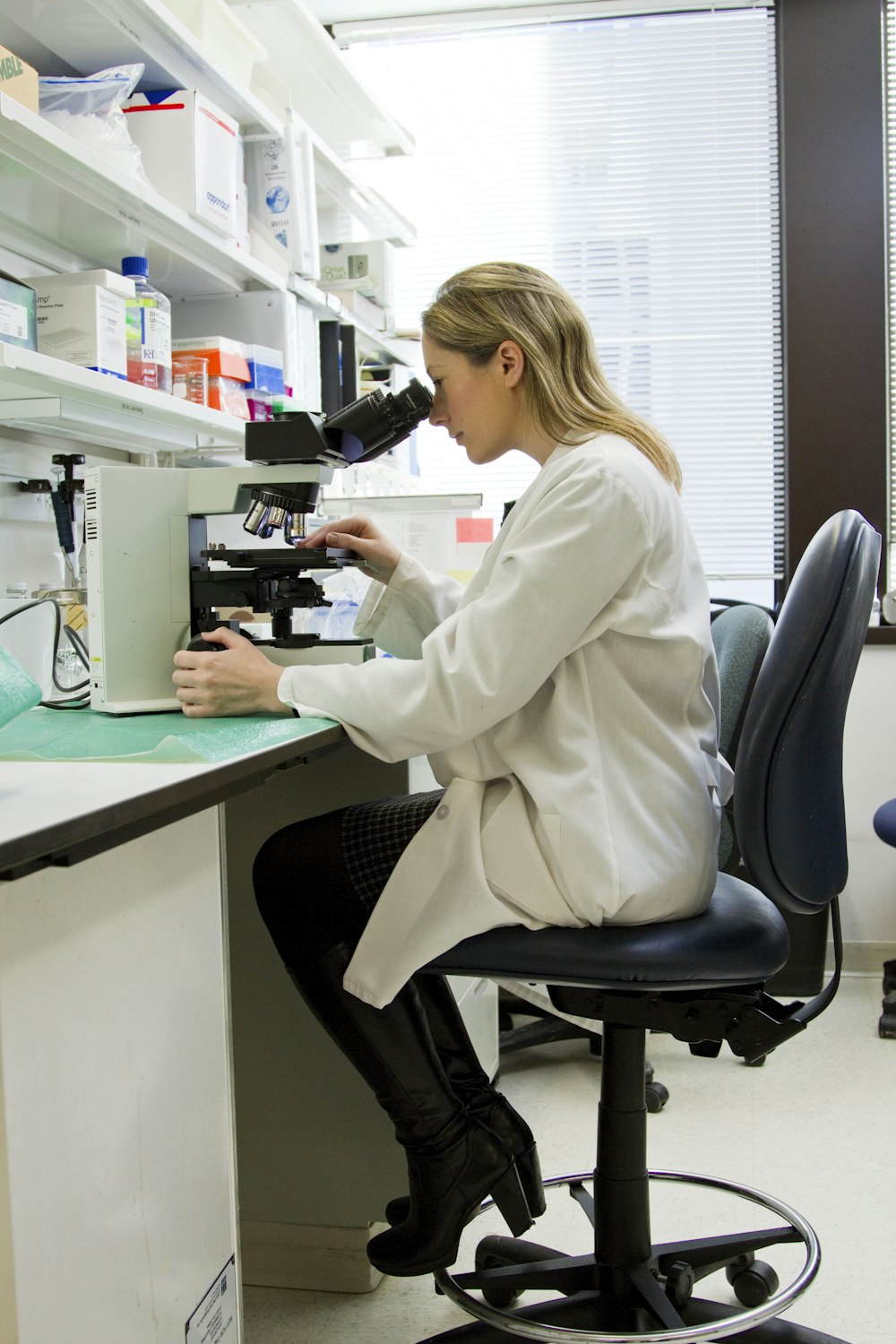
They used TIRF microscopy, a technique that only illuminates a very thin layer (about 100 nanometers) right at the glass-cell interface. This eliminated background noise, making the focal adhesions at the cell's underbelly crystal clear.
Imaging and Analysis
They took high-resolution videos and images of the glowing talin within the focal adhesions. Using sophisticated software, they analyzed the orientation and density of the talin molecules .

TIRF microscopy allows visualization of structures at the cell membrane
Fluorescent tagging reveals protein localization in cells
Results and Analysis: The Backbone Revealed
The results were stunning. Instead of a chaotic jumble of proteins, the talin molecules were arranged in a highly ordered, parallel array.
- The "Picket Fence"
- Talin molecules stood upright, like pickets in a fence, linking the integrins at the membrane to the actin cables deeper inside the cell.
- Direct Proof
- This was the first direct visual evidence that talin forms the structural core, or backbone, of the focal adhesion.
- Force Transmission
- This ordered arrangement elegantly explains how force is transmitted from actin cables through talin to integrins and the external environment.
Visualization of talin molecule orientation in focal adhesions
Quantitative Findings
The following tables summarize the key quantitative findings from this experiment and others like it.
| Measurement | Finding | Significance |
|---|---|---|
| Talin Molecule Length | ~50 nanometers | Confirmed its size is sufficient to span the distance between the membrane and actin network. |
| Molecular Spacing | ~30-40 nanometers between molecules | Indicates a densely packed, ordered structure, not a random cluster. |
| Alignment | Highly parallel to the direction of force | Directly supports its role as a force-bearing scaffold. |
| Lifetime in Adhesion | Minutes to hours | Shows it's a stable structure, but can dynamically disassemble when the cell needs to move. |
| Protein | Role | Analogy |
|---|---|---|
| Integrin | Transmembrane Receptor | The Foundation's Anchor Bolts |
| Talin | Adaptor / Scaffold | The Building's Steel Girders (The Backbone) |
| Vinculin | Actin Binder / Reinforcer | The Cross-Beams and Braces |
| Actin Filament | Force Generator | The Cables and Winches |
| Experimental Manipulation | Effect on Focal Adhesions | Effect on Cell Behavior |
|---|---|---|
| Remove/Gene Knockout Talin | Adhesions fail to form or are extremely weak. | Cells cannot spread or move properly; often die. |
| Block Talin-Integrin binding | Adhesions are small and unstable. | Cell migration is impaired; force generation is lost. |
| Block Talin-Actin binding | Adhesions form but cannot transmit force. | Cells cannot contract their environment or move effectively. |
The Scientist's Toolkit: Building and Probing Cellular Bridges
The experiment to visualize talin relied on a suite of sophisticated tools. Here are some of the essential "Research Reagent Solutions" used in this field.
TIRF Microscope
A special microscope that creates super-sharp images of structures very close to the cell membrane, perfect for studying adhesions.
siRNA / CRISPR-Cas9
Gene-editing tools used to "knock out" or reduce the production of specific proteins (like talin) to study what happens when they are missing.
Fluorescent Proteins
Used to "tag" proteins like talin, making them visible inside living cells under a microscope .
Fibronectin / Collagen
Proteins coated onto glass slides to mimic the natural extracellular matrix and encourage cells to form focal adhesions.
Traction Force Microscopy
A technique that uses flexible gels to measure the tiny forces that cells exert through their focal adhesions.
More Than Just Glue
Visualizing talin as the backbone of focal adhesions was more than just solving a cellular mystery. It provided a fundamental understanding of how cells physically interact with their world. This knowledge ripples out into countless areas of biology and medicine.
From the rapid migration of immune cells chasing an invader, to the careful navigation of a developing neuron in the brain, to the dangerous spread of cancer cells—all these processes rely on the dynamic assembly and disassembly of these molecular bridges.
By understanding their core architecture, we open new doors to developing therapies that can, for instance, prevent cancer metastasis by targeting its "cellular anchors," or help regenerate tissues by guiding stem cells more effectively. The backbone of the focal adhesion, once hidden in darkness, is now illuminated, holding the key to the physical poetry of life.
Understanding focal adhesions has implications for cancer research and regenerative medicine
Medical Applications
- Cancer metastasis prevention
- Tissue regeneration
- Wound healing enhancement
- Stem cell guidance
Research Directions
- Real-time visualization of adhesion dynamics
- Mechanotransduction pathways
- Drug targeting of adhesion components
- Engineering synthetic adhesions