Generative AI for Protein Sequence Design: Models, Applications, and Future Frontiers
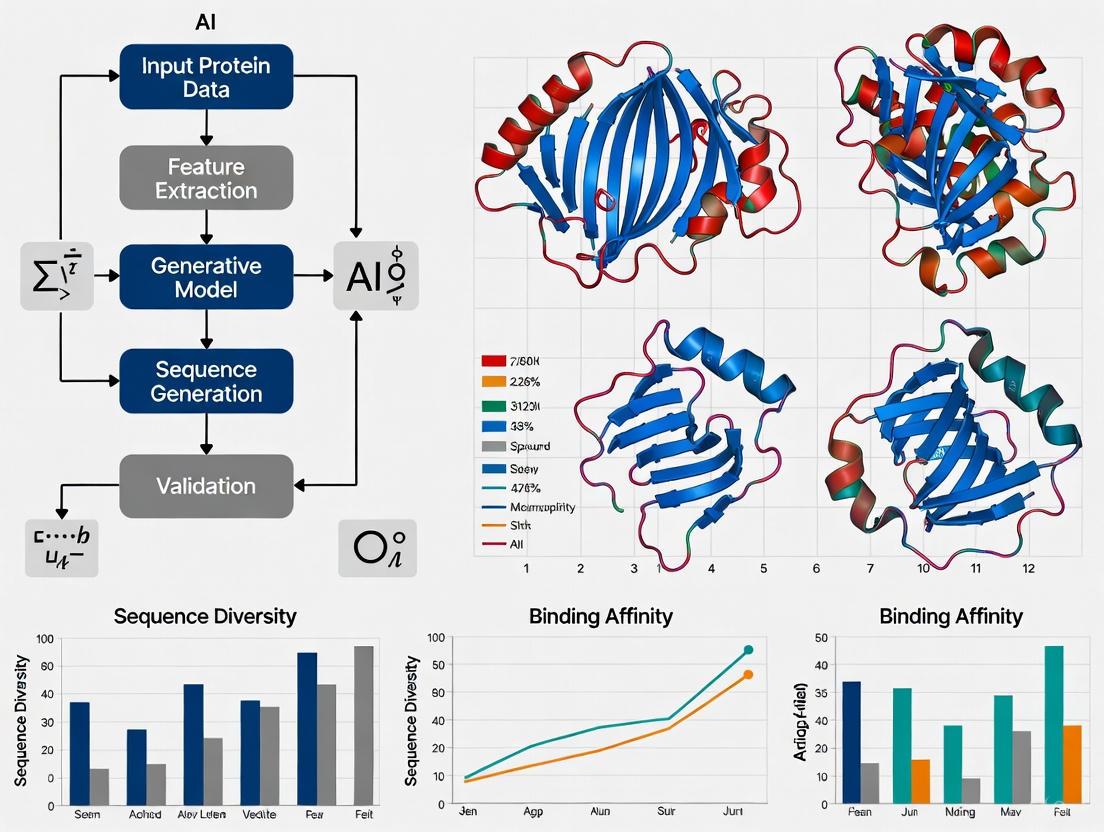
This article provides a comprehensive overview of the transformative impact of generative artificial intelligence on de novo protein sequence design.
Generative AI for Protein Sequence Design: Models, Applications, and Future Frontiers
Abstract
This article provides a comprehensive overview of the transformative impact of generative artificial intelligence on de novo protein sequence design. Tailored for researchers, scientists, and drug development professionals, it explores the foundational principles of protein language models and diffusion models, details pioneering architectures like ProGen and RoseTTAFold Diffusion, and examines their applications in creating novel therapeutics, enzymes, and biosensors. The content further addresses critical challenges such as data scarcity, model interpretability, and functional validation, while also discussing state-of-the-art benchmarking and experimental techniques. By synthesizing insights from cutting-edge research, this review serves as a strategic guide for navigating the rapidly evolving landscape of AI-driven protein engineering.
From Prediction to Creation: How Generative AI is Redefining Protein Design
De novo protein design represents a fundamental paradigm shift in biological engineering, moving beyond the modification of existing natural proteins to the ab initio creation of novel proteins with precisely desired structures and functions that do not exist in nature [1]. This approach fundamentally distinguishes itself from traditional protein engineering strategies, which typically involve altering naturally occurring proteins, or from protein structure prediction tools like AlphaFold, which primarily infer the three-dimensional (3D) structure from a known amino acid sequence [1]. The core impetus behind de novo design is to transcend the inherent limitations of natural proteins, which, as products of billions of years of evolution, are optimized for specific biological contexts and often exhibit suboptimal stability or functionality when repurposed for human applications [1] [2].
The field has evolved from early computational attempts in the 1980s to the current era of sophisticated generative artificial intelligence (AI) [1]. This transition marks a move from a "search and optimize" approach, characteristic of traditional methods like directed evolution, to a "generate and validate" methodology [1] [2]. Where conventional protein engineering is tethered to evolutionary history and requires experimental screening of vast variant libraries, de novo design offers a systematic route to functions that natural evolution has not explored, thereby fundamentally expanding the possibilities within protein engineering [2]. This is critical because the known natural protein fold space is approaching saturation, with novel folds rarely emerging through natural processes [2]. De novo design thus unlocks access to the vast, uncharted regions of the theoretical protein functional universe—the space encompassing all possible protein sequences, structures, and biological activities they can perform [2].
Key Principles and Methodological Frameworks
The Central Dogma of Protein Design and the Role of AI
The ultimate objective in protein design is to specify a desired function, design a structure that executes this function, and identify a sequence that folds into this structure [1]. Generative AI is increasingly inverting this "central dogma" of protein design through joint sequence-structure-function co-design frameworks that model the fitness landscape more effectively than models treating these modalities independently [1]. This holistic approach is crucial for generating complete proteins with functionally relevant, coherent sequences and full-atom structures [1].
At the heart of generative AI for protein design lie two principal families of models [1]:
- Protein Language Models (PLMs): These models, such as ProGen, treat protein sequences as linguistic texts and learn the underlying "grammar" of protein folding from vast datasets of natural sequences, enabling the generation of novel, functional sequences [1].
- Diffusion Models: Inspired by image generation, these models, such as RFdiffusion, progressively refine random noise into structured protein backbones by learning to reverse a noising process, allowing for the creation of novel protein structures [1] [3].
Overcoming the "Chicken-and-Egg" Problem
A fundamental technical hurdle in de novo design is the interdependent "chicken-and-egg problem" of combining the continuous nature of protein structure with the discrete nature of protein sequence [1]. Modern AI solutions address this through co-design approaches that manage the intrinsic interdependence between backbone, sequence, and sidechains throughout the generative process [1]. This capability is essential for transitioning from simple backbone scaffolding to genuine functional design where sequence and structure are mutually optimized for a desired outcome, such as creating specific binding sites or catalytic activities [1].
Integrative Optimization Frameworks
For complex design challenges with multiple competing objectives, multi-objective optimization frameworks provide a powerful approach. The Non-dominated Sorting Genetic Algorithm II (NSGA-II) represents one such framework, enabling the integration of different AI models like ProteinMPNN, AlphaFold2, and protein language models directly into the design process [4]. This allows for the explicit approximation of the Pareto front in the objective space, ensuring that final design candidates represent optimal trade-offs between competing specifications, such as stability in multiple conformational states [4].
Quantitative Analysis of Leading AI Models
The table below summarizes the capabilities, core methodologies, and key applications of major generative AI models driving progress in de novo protein design.
Table 1: Key Generative AI Models for De Novo Protein Design
| Model Name | Model Type | Key Capabilities | Core Methodology | Demonstrated Applications |
|---|---|---|---|---|
| ProGen [1] | Protein Language Model (PLM) | Generating functional protein sequences with predictable functions | 1.2B parameter model trained on 280M protein sequences; conditioned on taxonomic/keyword tags | Artificial proteins with catalytic efficiencies comparable to natural enzymes (e.g., 31.4% sequence similarity to natural lysozymes) [1] |
| RFdiffusion [1] [3] | Diffusion Model | Designing novel protein backbones, binders, symmetric oligomers | Fine-tuned RoseTTAFold on protein structure denoising; uses self-conditioning for improved performance | High-accuracy binders for influenza haemagglutinin; symmetric assemblies; metal-binding proteins [3] |
| Proteina [5] | Flow-based Generative Model | Unconditional backbone generation up to 800 residues | Scalable transformer architecture conditioned on hierarchical fold classes; trained on millions of synthetic structures | Production of diverse and designable proteins at unprecedented lengths [5] |
| AlphaDesign [1] [6] | Generative Framework | Accelerating creation of functional de novo proteins | Repurposes AlphaFold as a generative component within a design workflow | Moving protein design toward custom therapeutics and precision medicine [6] |
Experimental Validation and Application Protocols
Protocol: ValidatingDe NovoMonomeric Proteins with RFdiffusion
The following protocol outlines the key steps for generating and validating novel protein monomers using RFdiffusion, as demonstrated in foundational research [3].
Table 2: Research Reagent Solutions for De Novo Design
| Reagent/Tool | Function in Protocol | Key Characteristics |
|---|---|---|
| RFdiffusion Model [3] | Generative backbone design | Fine-tuned from RoseTTAFold; employs denoising diffusion probabilistic models (DDPMs) |
| ProteinMPNN [3] | Sequence design | Designs sequences for generated backbones; samples multiple sequences per design |
| AlphaFold2 [3] | In silico validation | Predicts structure from designed sequence; used with confidence metrics (pAE) for validation |
| E. coli Expression System [3] | Experimental production | Heterologous expression of designed protein sequences |
| Circular Dichroism (CD) Spectroscopy [3] | Experimental biophysical validation | Measures secondary structure and thermal stability |
Procedure:
- Unconditional Backbone Generation: Initialize RFdiffusion with random residue frames. Allow the model to perform iterative denoising steps (up to 200) to progressively generate a novel protein backbone from noise [3].
- Sequence Design: Input the generated backbone structure into ProteinMPNN. Sample multiple amino acid sequences (typically 8 per backbone) that are predicted to fold into the designed structure [3].
- In Silico Validation: Process each designed sequence-structure pair through AlphaFold2. A design is considered an in silico "success" if the AF2-predicted structure meets three criteria [3]:
- High confidence (mean predicted aligned error (pAE) < 5).
- Global backbone root mean-squared deviation (r.m.s.d.) < 2 Ã… from the designed structure.
- Local backbone r.m.s.d. < 1 Ã… on any scaffolded functional site.
- Experimental Characterization: Clone and express validated sequences in E. coli. Purify the expressed proteins and characterize them using Circular Dichroism (CD) spectroscopy to verify secondary structure and assess thermostability, comparing the results to the design model [3].
Protocol: Designing Protein Binders with Conditional RFdiffusion
This protocol details the application of RFdiffusion for designing proteins that bind to a specific target, a process known as binder design [3].
Procedure:
- Target Specification and Conditioning: Define the target protein structure. Provide this structural information to RFdiffusion as conditioning information during the generative process. The model is guided to create a binder backbone that complements the shape and chemical features of the target [3] [1].
- Binder Backbone Generation: Execute the conditional diffusion process. RFdiffusion generates a diversity of possible binder backbone structures that fit the target specification, unlike deterministic methods which produce limited diversity [3].
- Interface Sequence Design: Use ProteinMPNN to design sequences for the generated binder backbones, with special focus on optimizing the binding interface for complementary interactions with the target [3].
- Complex Validation: Use AlphaFold2 or RoseTTAFold to predict the structure of the designed binder in complex with the target. These networks serve as scoring functions to evaluate the likelihood of successful binding, increasing experimental success rates by approximately 10-fold [1] [3].
- Experimental Validation: Express the designed binders and the target protein. Use techniques such as cryogenic electron microscopy (cryo-EM) to resolve the structure of the complex and confirm it matches the design model with near-atomic accuracy [3].
The workflow for this binder design process is illustrated below.
The Scientist's Toolkit: Essential Research Reagents and Computational Tools
Successful de novo protein design relies on a suite of specialized computational tools and experimental reagents. The following table details key components of the modern protein designer's toolkit.
Table 3: Essential Research Reagents and Computational Tools
| Tool/Reagent | Category | Primary Function | Application Example |
|---|---|---|---|
| RFdiffusion [1] [3] | Generative AI Model | Designs novel protein backbones and binders via diffusion | Generating symmetric oligomers and target-binding proteins from scratch |
| ProteinMPNN [3] [4] | Inverse Folding Model | Designs optimal amino acid sequences for a given protein backbone | Rapidly generating stable, foldable sequences for RFdiffusion-designed backbones |
| AlphaFold2 [3] [4] | Structure Prediction | Validates in silico that a designed sequence folds into the intended structure | Scoring design confidence (pAE, r.m.s.d.) before costly experimental testing |
| ProGen [1] | Protein Language Model | Generates novel, functional protein sequences conditioned on desired properties | Creating artificial enzymes with low sequence similarity but high functional similarity to natural counterparts |
| ESM-1v [4] | Protein Language Model | Predicts functional effects of sequence variations; used in mutation operators | Ranking residue positions for optimization in multi-objective design frameworks |
| NSGA-II Algorithm [4] | Optimization Framework | Integrates multiple AI models for problems with competing design goals | Designing fold-switching proteins that must be stable in multiple conformations |
| 2-carboxylauroyl-CoA | 2-carboxylauroyl-CoA, MF:C34H58N7O19P3S, MW:993.8 g/mol | Chemical Reagent | Bench Chemicals |
| Istradefylline-d3,13C | Istradefylline-d3,13C, MF:C20H24N4O4, MW:388.4 g/mol | Chemical Reagent | Bench Chemicals |
Integrated Workflow for Multi-Objective Design
For complex design challenges, such as engineering proteins that must adopt multiple stable states or possess several optimal but competing traits, a multi-objective optimization approach is required. The following diagram illustrates an integrative workflow based on the NSGA-II algorithm, which combines multiple AI models to find optimal trade-off solutions [4].
This workflow demonstrates how different AI models are synergistically combined [4]:
- Informed Mutation: A mutation operator uses ESM-1v to identify the least native-like residue positions in a candidate protein and uses ProteinMPNN to redesign them, accelerating sequence space exploration [4].
- Multi-Model Scoring: Candidates are evaluated using objective functions derived from multiple models, such as the AF2Rank score (from AlphaFold2) for folding propensity and ProteinMPNN confidence [4].
- Pareto Optimization: The NSGA-II algorithm sorts candidates into successive Pareto fronts (F1, F2, F3, etc.), where designs in front F1 are non-dominated and represent the best trade-offs between all objectives. This explicit approximation of the Pareto front ensures the final design set contains optimal solutions for complex specifications [4].
De novo protein design, powered by generative AI, has fundamentally redefined the boundaries of protein engineering. By moving beyond natural sequences, it provides a systematic framework for accessing the vast, untapped potential of the protein functional universe. The integration of powerful generative models like RFdiffusion and ProGen with robust validation tools and sophisticated optimization frameworks enables the creation of bespoke proteins with tailor-made functions. As these methodologies continue to mature, they promise to accelerate the development of novel therapeutics, enzymes, and materials, firmly establishing de novo design as a mainstream approach in protein science and engineering.
The Limitations of Natural Proteins and Evolutionary Constraints
Natural proteins, products of millions of years of evolution, are fundamental to biological processes. However, their evolutionary history constrains their sequence and structural diversity, limiting their utility for human applications. The known natural fold space is approaching saturation, with recent innovations arising primarily from domain rearrangements rather than novel fold emergence [2]. Furthermore, natural proteins are optimized for biological fitness in specific niches, not for the stability, expressibility, or functional specificity required in industrial or therapeutic contexts [7] [2]. This application note details these inherent limitations and outlines how generative AI models provide a systematic framework to transcend these evolutionary constraints, enabling the creation of proteins with customized functions.
Quantitative Analysis of Natural Protein Constraints
The following table summarizes key quantitative limitations observed in natural proteins and the corresponding capabilities of AI-driven design.
Table 1: Constraints of Natural Proteins vs. AI-Driven Design Capabilities
| Constraint Feature | Observation in Natural Proteins | AI-Driven Design Solution | Quantitative Impact/Evidence |
|---|---|---|---|
| Fold Space Exploration | Natural fold space is nearing saturation; new functions primarily arise from domain recombination [2]. | De novo generation of novel folds and topologies not found in nature [2]. | AI has been used to create proteins with novel topologies (e.g., Top7) and large self-assembling complexes [7]. |
| Stability & Expression | Many natural proteins are marginally stable, leading to low functional yields in heterologous expression [7]. | Computational optimization of stability, enabling robust expression [7]. | Stability design enabled robust E. coli expression of malaria vaccine candidate RH5 with a ~15°C increase in thermal resistance [7]. |
| Sequence Sampling | Evolution samples sequence space via step-wise mutations, creating historical contingency and inaccessible states [8]. | Generative models sample sequence space combinatorially, bypassing evolutionary paths [2]. | A "zero-day" vulnerability test generated >76,000 functional variants of toxic proteins, demonstrating vast novel sequence generation [9]. |
| Structural Dynamics | Functional proteins are dynamic, but static structures dominate databases, limiting understanding [10]. | Emerging methods (e.g., AFsample2) predict conformational ensembles and alternative states [10]. | AFsample2 successfully predicted alternate conformations in 11 of 16 membrane transport proteins, with one TM-score improving from 0.58 to 0.98 [10]. |
| Functional Site Design | Limited by existing natural scaffolds and the rarity of specific catalytic geometries [7]. | De novo design of functional sites and binders on novel protein scaffolds [7] [2]. | De novo designed proteins have been engineered to generate new binders for proteins and small molecules, advancing "new-to-nature" activities [7]. |
Experimental Protocols for Evaluating Constraints and AI Designs
Protocol: Assessing Evolutionary and Population Constraint
This protocol quantifies residue-level constraints by integrating evolutionary and human population variation data, highlighting structurally and functionally critical regions [11].
Input Data Preparation:
Calculate Constraint Metrics:
- Evolutionary Conservation: For each position in the MSA, compute Shenkin's diversity score or a similar entropy-based measure [11].
- Population Constraint (MES): For each alignment column, compute the Missense Enrichment Score (MES).
MES = (Missense_count_position / Total_variants_position) / (Missense_count_domain / Total_variants_domain)- Determine the statistical significance (p-value) of the MES deviation from 1 using a two-tailed Fisher's exact test [11].
Classification and Structural Mapping:
- Classify residues as follows:
- Missense-depleted: MES < 1; p < 0.1 (high constraint)
- Missense-enriched: MES > 1; p < 0.1 (low constraint)
- Missense-neutral: p ≥ 0.1 [11]
- Map these classifications onto a high-resolution experimental or AI-predicted (e.g., AlphaFold) 3D structure.
- Analyze enrichment of missense-depleted sites in buried cores or binding interfaces using structural analysis software [11].
- Classify residues as follows:
Protocol: AI-Driven De Novo Protein Design and Validation
This protocol outlines a standard workflow for generating and validating novel proteins using generative AI, overcoming natural constraints [12] [2].
Define Design Objective: Specify the target, such as a novel fold, a small-molecule binding site, or a stabilized enzyme variant.
Generative Design Phase:
In Silico Validation:
- Structure Prediction: Use a structure predictor (e.g., AlphaFold 2/3) to validate that the designed sequence folds into the intended structure [10] [12].
- Virtual Screening: Employ tools like Boltz-2 to predict functional properties, such as binding affinity for a target, or other physics-based scoring functions to assess stability [10] [12].
Experimental Characterization:
- DNA Synthesis & Cloning: Translate the final protein sequence into an optimized DNA sequence for synthesis and cloning into an expression vector [12].
- Expression & Purification: Express the protein in a heterologous host (e.g., E. coli) and purify it.
- Biophysical Assays:
- Use Circular Dichroism (CD) or Differential Scanning Calorimetry (DSC) to assess folding and thermal stability.
- Use Surface Plasmon Resonance (SPR) or Isothermal Titration Calorimetry (ITC) to quantify binding affinity and specificity for functional designs.
- For enzymes, perform kinetic assays (e.g., spectrophotometric activity assays) to determine catalytic efficiency.
Protocol: Benchmarking AI-Generated Proteins Against Natural Variants
This protocol compares the properties of AI-designed proteins to natural and computationally evolved sequences to assess "naturalness" and performance [8].
Generate Sequence Sets:
- AI-Designed Sequences: Generate sequences for a target scaffold using a fixed-backbone design tool (e.g., RosettaDesign) [8].
- Evolved Sequences: Simulate evolution using an origin-fixation algorithm with the same energy function, introducing mutations sequentially and accepting them based on a fitness function derived from protein stability [8].
- Natural Sequences: Compile homologous sequences from natural databases.
Comparative Analysis:
- Calculate site-specific variability for each sequence set.
- Compare the variability patterns, particularly for surface residues. AI-designed sequences often exhibit excessive surface conservation compared to the more realistic variability profile of evolved and natural sequences [8].
- Experimentally express and purify top candidates from each set and measure yields, solubility, and thermal stability.
AI-Driven Protein Design Workflow
The Scientist's Toolkit: Research Reagent Solutions
Table 2: Essential Tools for AI-Driven Protein Design Research
| Tool / Reagent | Function / Application | Example Use Case |
|---|---|---|
| AlphaFold 2/3 Server | Predicts 3D protein structures from sequences; AF3 extends to biomolecular complexes [10]. | Validating the fold of a designed protein or predicting its interaction with a DNA/ligand target [10]. |
| RFdiffusion | Generative AI model for creating novel protein backbones de novo or from partial specifications [12]. | Designing a novel protein scaffold with a predefined pocket for small-molecule binding [12]. |
| ProteinMPNN | Neural network for solving the "inverse folding" problem by designing sequences for a given backbone [12]. | Generating stable, foldable amino acid sequences for a backbone structure from RFdiffusion [12]. |
| Boltz-2 | Open-source model predicting protein-ligand complex structure and binding affinity simultaneously [10]. | Rapid virtual screening of designed binders, reducing synthesis needs [10]. |
| Rosetta Software Suite | Physics-based modeling suite for protein design, structure prediction, and refinement [2]. | Precisely designing an enzyme active site or performing energy-based stability calculations [2]. |
| gnomAD Database | Public catalog of human genetic variation, including missense variants [11]. | Calculating population constraint (MES) to identify functionally critical residues [11]. |
| 2'-Deoxyuridine-d | 2'-Deoxyuridine-d, MF:C9H12N2O5, MW:229.21 g/mol | Chemical Reagent |
| Benzylmethylether-d2 | Benzylmethylether-d2, MF:C8H10O, MW:124.18 g/mol | Chemical Reagent |
Natural proteins are inherently limited by the slow, path-dependent process of evolution, which favors biological fitness over biotechnological utility. These constraints manifest as marginal stability, limited exploration of sequence-structure space, and an over-reliance on existing folds. Generative AI models fundamentally disrupt this paradigm. By providing a systematic engineering framework for de novo protein design, they enable researchers to create stable, functional proteins that transcend nature's limitations, accelerating discovery in therapeutics, synthetic biology, and green chemistry.
Core AI Architectures: Protein Language Models (PLMs) vs. Diffusion Models
The design of novel protein sequences represents a frontier in biotechnology, with profound implications for therapeutic development, enzyme engineering, and synthetic biology. Generative artificial intelligence (AI) is at the forefront of this revolution, enabling researchers to move beyond natural evolutionary templates. Two core AI architectures have emerged as particularly powerful: Protein Language Models (PLMs) and Diffusion Models. While both can generate protein sequences, they are founded on distinct principles and excel in different applications. PLMs, inspired by natural language processing, treat amino acid sequences as texts to learn evolutionary patterns and semantic meaning. In contrast, Diffusion Models are generative frameworks that learn to construct data by iteratively denoising random noise, making them exceptionally suited for tasks requiring precise geometric control, such as structure-based design. This Application Note provides a comparative analysis of these architectures, summarizes key quantitative data in structured tables, and outlines detailed experimental protocols for their application in protein sequence design.
2.1 Protein Language Models (PLMs) PLMs are trained on millions of natural protein sequences from databases like UniProt, learning the statistical patterns and "grammar" of protein sequences in a self-supervised manner. Models like ESM-2 [13] and ProGen2 [14] develop rich, contextual representations for each amino acid in a sequence. Their strength lies in understanding sequence-based semantics, which makes them excellent for:
- Function Prediction: Extracting features for predicting protein function [15].
- Sequence Generation: Generating novel, plausible protein sequences de novo [14].
- Protein-Protein Interaction (PPI) Prediction: Specialized models like PLM-interact jointly encode protein pairs to predict physical interactions [13].
A key limitation of standard PLMs is their focus on sequence, often without explicit 3D structural reasoning, which can restrict their utility for designing proteins where precise spatial arrangement is critical.
2.2 Diffusion Models Diffusion Models for protein design, such as RFdiffusion and CPDiffusion, learn to generate data through a process of iterative denoising [16] [17]. Starting from pure random noise, the model applies a learned reverse process over multiple steps to produce a coherent output. This architecture is inherently well-suited for:
- Inverse Folding: Generating sequences that fold into a specific backbone structure [17] [18].
- Structure Generation: Directly creating novel and diverse 3D protein structures, as demonstrated by RFdiffusion for nanobodies and protein backbones [16].
- Conditional Generation: Precisely steering the generation of sequences or structures based on conditions like secondary structure, target binding sites, or desired properties [17] [19] [18].
The primary challenges for diffusion models are their significant computational cost and the expertise required for fine-tuning and guiding the generation process [16].
Table 1: Core Architectural Comparison: PLMs vs. Diffusion Models
| Feature | Protein Language Models (PLMs) | Diffusion Models |
|---|---|---|
| Core Principle | Learned from evolutionary-scale sequence data using transformer architectures; treats sequences as language. | Learns a data distribution by iteratively denoising from random noise. |
| Primary Input | Amino acid sequences (text-like). | Can be sequences, structural coordinates (atom, backbone), or 3D voxels. |
| Primary Output | Novel sequences, sequence embeddings for prediction tasks. | Novel sequences conditioned on structure, or novel 3D structures directly. |
| Key Strength | High-level understanding of evolutionary patterns and sequence semantics; efficient feature extraction. | Fine-grained control over 3D geometry and structural diversity; excels at spatial reasoning. |
| Common Tasks | Function prediction, sequence generation, PPI prediction, fitness prediction. | Inverse folding, de novo structure design, motif scaffolding, property-guided design. |
| Representative Models | ESM-2, ProGen2, PLM-interact [13] [14] | RFdiffusion, CPDiffusion, DPLM [16] [17] [18] |
Quantitative Performance Benchmarking
Empirical studies highlight the complementary strengths of both architectures. The following table consolidates key performance metrics from recent research.
Table 2: Key Experimental Results from Recent Studies
| Study & Model | Model Type | Task | Key Performance Metric & Result |
|---|---|---|---|
| CPDiffusion [17] | Conditional Diffusion | Design of programmable endonucleases (pAgo proteins). | Success Rate: 24/27 (89%) and 15/15 (100%) of generated proteins for two templates showed unambiguous ssDNA cleavage activity. Enhanced Function: ~74% (20/27) of active designs showed superior activity to wild-type. |
| PLM-interact [13] | Protein Language Model | Cross-species Protein-Protein Interaction (PPI) prediction. | AUPR: Achieved state-of-the-art AUPR on mouse (0.86), fly (0.78), worm (0.80), yeast (0.71), and E. coli (0.72) when trained on human data. |
| Generative AI for PiggyBac [14] | Protein Language Model (ProGen2) | Design of synthetic transposases for gene editing. | Activity: 7 of 22 tested synthetic variants showed higher excision activity than the natural hyperactive benchmark (HyPB). One variant, "Mega-PiggyBac," significantly improved integration efficiency. |
| RFdiffusion for Nanobodies [16] | Diffusion | De novo generation of nanobody backbone structures. | Structural Accuracy: Generated nanobody structures achieved Root Mean Square Deviation (RMSD) values below 2.0 Ã… compared to reference structures, indicating high structural similarity. |
Experimental Protocols
4.1 Protocol A: Conditional Sequence Generation using a Diffusion Model (e.g., CPDiffusion)
This protocol outlines the process for generating novel, functional protein sequences conditioned on a specific backbone structure, as demonstrated for Argonaute proteins [17].
1. Model Training and Conditioning:
- Objective: Train a conditional denoising diffusion probabilistic model (DDPM) to learn the mapping from protein backbone structures to sequences that fold into that structure.
- Training Data: A base model is first pre-trained on a large set of diverse protein structures (e.g., ~20,000 structures from CATH 4.2) to learn general protein folding principles [17].
- Conditioning: The model is conditioned on specific constraints during the reverse diffusion process. For CPDiffusion, this includes:
- Backbone Structure: The 3D coordinates of the target backbone (e.g., from a wild-type KmAgo or PfAgo structure).
- Secondary Structure: The predicted or assigned secondary structure elements (helices, sheets, coils) for the backbone.
- Conserved Residues: Masking specific positions (e.g., catalytic tetrads) to remain fixed or highly conserved throughout the generation process [17].
- Loss Function: The model is trained to minimize the variational lower bound on the negative log-likelihood, often implemented as a mean squared error or categorical cross-entropy loss between the predicted and true amino acid distributions [17] [19].
2. Sequence Generation and In Silico Screening:
- Generation: Run the trained CPDiffusion model to generate 100s of novel sequences. The process starts from random noise and iteratively denoises it, guided by the target backbone and other conditions over multiple steps (e.g., 1000 steps).
- Sequence Identity Filtering: Filter generated sequences to ensure diversity by removing those with >70% sequence identity to the wild-type template [17].
- Structure Prediction and Validation: Use a high-accuracy structure prediction tool like AlphaFold2 or ESMFold to predict the 3D structure of the generated sequences.
- Quality Control: Screen predicted structures for:
- Structural Integrity: Packing quality, presence of knots, and overall fold stability.
- Condition Adherence: Verify that the predicted structure matches the conditioning backbone (e.g., using TM-score or RMSD) and that functional motifs are preserved.
3. Experimental Validation:
- Gene Synthesis and Cloning: Codon-optimize and synthesize the DNA sequences for the top-ranking generated proteins. Clone them into an appropriate expression vector.
- Protein Expression and Purification: Express the proteins in a suitable host system (e.g., E. coli). Purify the proteins using affinity chromatography and validate solubility and stability (e.g., via SDS-PAGE and size-exclusion chromatography).
- Functional Assay: Perform a functional assay specific to the protein family. For pAgo proteins [17], this was a single-strand DNA (ssDNA) cleavage assay, measuring cleavage activity and comparing it to the wild-type protein.
- Biophysical Characterization: Determine thermostability by measuring the melting temperature (Tm) using differential scanning fluorimetry (DSF).
4.2 Protocol B: De Novo Protein Design using a Protein Language Model (e.g., ProGen2)
This protocol describes the use of a pLLM for the de novo generation of novel protein sequences, such as synthetic transposases [14].
1. Data Curation and Model Fine-Tuning:
- Bioprospecting: Compile a large, diverse set of natural protein sequences for the target family. For PiggyBac transposases, this involved computationally screening >31,000 eukaryotic genomes to identify ~13,000 novel sequences [14].
- Fine-Tuning: Take a pre-trained pLLM (e.g., ProGen2) and fine-tune it on the curated, family-specific dataset. This process teaches the model the specific biochemical and structural "language" of the protein family of interest.
2. Sequence Generation and Selection:
- Unconditional Generation: Use the fine-tuned model to generate thousands of novel protein sequences. The model functions as a language model, predicting the next likely amino acid in a sequence.
- Sequence Analysis: Analyze the generated sequences for:
- Novelty: Compare against natural sequences in databases (e.g., using BLAST) to ensure they are distinct.
- Plausibility: Check for the presence of known functional domains and motifs critical for activity (e.g., DNA-binding domains like zinc fingers in transposases).
- AlphaFold3 Analysis: Use AlphaFold3 to predict the structures of selected variants and identify key structural features and fusion architectures [14].
3. Experimental Characterization:
- DNA Synthesis and Cloning: Synthesize genes for a subset (e.g., 20-30) of the most promising generated sequences and clone them into expression vectors.
- Functional Testing in Cell-Based Assays: Transfert the constructs into mammalian cells and perform activity assays. For transposases [14], this involves:
- Excision Assay: Measure the ability of the synthetic transposase to remove a transposon from a donor plasmid.
- Integration Assay: Quantify the efficiency of transgene integration into the host genome.
- Comparison to Wild-Type: Compare the activity of the synthetic proteins directly to the current gold-standard natural protein (e.g., hyperactive PiggyBac, HyPB).
Table 3: Key Resources for AI-Driven Protein Design
| Resource / Reagent | Type | Function in Workflow | Example Sources / Tools |
|---|---|---|---|
| Pre-trained Models | Software | Foundational models for fine-tuning or feature extraction. | ESM-2, ProGen2 [13] [14], RFdiffusion [16] |
| Structure Prediction Tools | Software | Validates structural integrity of generated sequences in silico. | AlphaFold2/3, ESMFold, RosettaFold [20] [2] [14] |
| Protein Structure Databases | Database | Source of training data and templates for conditioning. | Protein Data Bank (PDB), CATH, AlphaFold DB [17] [2] |
| Protein Sequence Databases | Database | Source for training PLMs and for sequence similarity checks. | UniProt, MGnify [2] [15] |
| Gene Synthesis Service | Commercial Service | Converts in silico designed sequences into physical DNA for testing. | Various commercial providers |
| Activity-Specific Assay Kits | Wet-lab Reagent | Measures the biochemical function of the designed protein. | e.g., ssDNA cleavage assay kits [17], transposition assay systems [14] |
Protein Language Models and Diffusion Models are powerful, complementary architectures driving the field of generative protein design. PLMs provide an unparalleled understanding of sequence-based evolutionary principles, making them ideal for function-oriented design and prediction. Diffusion Models offer superior control over 3D structural geometry, enabling the design of proteins with precise shapes and novel topologies. The choice between them is not a question of which is superior, but which is the right tool for the specific research objective. As evidenced by the protocols and data herein, a hybrid approach that leverages the strengths of both architectures may ultimately provide the most robust path forward for creating the next generation of synthetic biological tools and therapeutics.
The Shift from Structure Prediction to Generative Design with AlphaFold and Beyond
The field of structural biology has undergone a profound transformation, moving from the challenge of predicting protein structures to the frontier of generating novel protein sequences and complexes. This shift represents a fundamental change in the application of artificial intelligence (AI) in biology. Initially, breakthroughs like AlphaFold provided unprecedented accuracy in determining how amino acid sequences fold into three-dimensional structures [21]. Today, the field is leveraging these predictive frameworks as foundations for generative models that design proteins with custom structures and functions [10] [22] [23]. This document details the experimental protocols and applications driving this transition, providing researchers with practical methodologies for generative protein design within the broader context of AI-driven biological discovery.
Fundamental Technologies and Research Reagents
The following toolkit comprises essential computational resources and AI models that form the foundation of modern generative protein design workflows.
Table 1: Essential Research Reagents for Generative Protein Design
| Tool Name | Type | Primary Function | Application in Generative Design |
|---|---|---|---|
| AlphaFold 3 [10] [24] | Structure Prediction Network | Predicts 3D structures of proteins, DNA, RNA, ligands, and their complexes. | Serves as an "oracle" for in silico validation of designed protein complexes and for network inversion. |
| AlphaFold 2 [21] [23] | Structure Prediction Network | Highly accurate single-protein structure prediction. | Core engine for inversion-based design (AF2-Design) and structural validation. |
| ProteinMPNN [10] | Sequence Design Neural Network | Inverse-folding tool that generates sequences for a given protein backbone. | Rapid sequence design following backbone generation with tools like RFdiffusion. |
| RFdiffusion [10] | Generative Backbone Design | Designs novel protein backbone structures based on user constraints. | De novo backbone generation for custom folds and binding interfaces. |
| ProtGPT2 [22] | Generative Language Model | Decoder-only transformer that generates novel protein sequences unsupervised. | Exploration of novel, stable protein sequences in unexplored regions of sequence space. |
| ESM2 [22] | Protein Language Model | Large-scale encoder model that learns representations from protein sequences. | Used for fitness prediction and guiding sequence sampling for defined backbones. |
| Boltz-2 [10] | Structure & Affinity Model | Jointly predicts protein-ligand 3D structure and binding affinity. | Accelerates drug discovery by combining structure prediction with functional affinity assessment. |
| ProtGPS [25] | Localization Prediction & Design | Predicts and generates protein subcellular localization sequences. | Design of proteins targeting specific cellular compartments, improving therapeutic efficacy. |
Core Methodologies and Experimental Protocols
Protocol 1: De Novo Protein Design via AlphaFold Network Inversion
This protocol details the inversion of the AlphaFold 2 network to generate novel protein sequences that fold into a user-defined target structure, a method known as AF2-Design [23].
Workflow Overview:
Step-by-Step Procedure:
- Input Preparation: Define the target protein backbone's 3D atomic coordinates in PDB format. This scaffold serves as the fixed objective for sequence generation.
- Sequence Initialization: Initialize a starting amino acid sequence of corresponding length. This can be a random sequence or a sequence from a natural protein with a similar fold.
- Structure Prediction: Process the current sequence through AlphaFold 2 in single-sequence mode (disabling multiple sequence alignments and templates) to obtain a predicted structure [23].
- Loss Calculation: Compute the Frame Aligned Point Error (FAPE) loss between the predicted structure and the target backbone. The FAPE loss measures the local distance differences between aligned residue frames, making it rotation- and translation-independent [23].
- Sequence Optimization: Backpropagate the FAPE loss through the AlphaFold network to calculate the gradient with respect to the input sequence. Use this gradient to update the amino acid sequence via gradient descent, minimizing the structural deviation.
- Iteration: Repeat steps 3-5 until the loss converges or reaches a satisfactory threshold. Using all five AlphaFold ensemble models during backpropagation reduces overfitting.
- Post-Design Optimization: Early implementations often resulted in surfaces overpopulated with hydrophobic residues. A final optimization step, such as replacing surface hydrophobic residues with hydrophilic ones, is frequently required to ensure solubility [23].
- Validation: The final designed sequence must be validated in silico by a full AlphaFold prediction and, for experimental work, in vitro for stability and correct folding.
Protocol 2: Generative Protein Sequence Design with Language Models
This protocol uses protein language models, like ProtGPT2, to generate novel, stable protein sequences unconditionally or conditioned on specific families [22].
Workflow Overview:
Step-by-Step Procedure:
- Model Selection: Choose a pre-trained generative language model. For unconditional generation (exploring entirely novel sequence space), use models like ProtGPT2 or RITA. For generation focused on a specific protein family, select a model capable of being fine-tuned [22].
- Conditioning (Optional): For targeted design, fine-tune the base model on a multiple sequence alignment (MSA) of the protein family of interest. This conditions the model's probability distribution to generate sequences belonging to that family.
- Sequence Generation: Employ an autoregressive generation process. The model predicts the next amino acid in the sequence based on all previous ones, building the protein from N- to C-terminus.
- In Silico Validation: Process generated sequences through structure prediction tools (e.g., AlphaFold) to confirm they adopt a stable, folded structure. Analyze predicted pLDDT scores and structural metrics.
- Property Filtering: Screen sequences for desired biophysical properties using predictive models. Key properties include:
- Predicted Stability: Using tools like ESM2 or dedicated stability predictors.
- Solubility: Predicting aggregation-prone regions.
- Function: For example, using ProtGPS to ensure correct subcellular localization if required [25].
- Experimental Characterization: The top-ranking sequences should be synthesized and experimentally tested for expression, stability, and function.
Protocol 3: Functional Protein Complex Design with Integrated Tools
This protocol describes an integrated workflow for designing functional proteins, such as binders or enzymes, by combining structure generation (RFdiffusion), sequence design (ProteinMPNN), and validation (AlphaFold 3) [10].
Workflow Overview:
Step-by-Step Procedure:
- Problem Definition: Specify the functional objective (e.g., "design a protein that binds to target protein X at site Y").
- Backbone Generation: Use RFdiffusion to generate a novel protein backbone structure. The generation process can be conditioned on the 3D structure of the target site to create complementary shapes.
- Sequence Design: Pass the generated backbone to ProteinMPNN, which solves the "inverse folding" problem by designing a sequence that is most likely to fold into that specific structure. This step optimizes for folding stability.
- Complex Validation: Use AlphaFold 3 to model the 3D structure of the complex between the designed protein and its target. This assesses the quality of the binding interface [10] [26].
- Functional Scoring: Employ specialized models to evaluate function. For drug targets, use Boltz-2 to predict the binding affinity between the designed protein and its target, going beyond structure to function [10].
- Iterative Refinement: If the design fails to meet criteria (e.g., poor predicted affinity, incorrect binding mode), iterate the process by adjusting RFdiffusion parameters or sequence design constraints.
- Experimental Testing: Express the designed protein and characterize its function experimentally using techniques like surface plasmon resonance (SPR) for binding affinity or cellular assays for functional activity.
Performance Metrics and Validation
Rigorous in silico validation is critical before moving to costly experimental stages. The following metrics are standard for evaluating generative design outputs.
Table 2: Key Performance Metrics for Generative Protein Designs
| Metric | Description | Interpretation & Target Value |
|---|---|---|
| pLDDT [21] | AlphaFold's predicted Local Distance Difference Test; per-residue model confidence. | >90: High confidence. >70: Confident. <50: Low confidence. |
| pTM [21] | Predicted Template Modeling score; global fold confidence metric. | Closer to 1.0 indicates a more correct overall fold. |
| RMSD [23] | Root Mean Square Deviation of atomic positions between predicted and target structures. | Lower values indicate better structural agreement. <2.0 Ã… for high accuracy. |
| FAPE Loss [23] | Frame Aligned Point Error; local structural loss function used in AF2 training and inversion. | Minimized during AF2-design; indicates how well the design matches the target scaffold. |
| Sequence Recovery | Percentage of native sequence residues recovered in a designed protein when using a natural template. | Measures design accuracy in fixed-backbone design. |
| Predicted ΔΔG | Predicted change in folding free energy relative to a wild-type or reference structure. | Negative values indicate more stable designs. |
| Boltz-2 Affinity Corr. [10] | Correlation between Boltz-2 predicted binding affinities and experimental values. | ~0.6 correlation with experiment, rivaling more costly physics-based simulations. |
Application Notes in Drug Discovery
Generative protein design is having a direct impact on pharmaceutical R&D by accelerating the discovery of therapeutic modalities.
Rational Antibody and Therapeutic Protein Design: The accurate prediction of protein-protein interfaces with AlphaFold 3 enables the design of antibodies and other biologics against specific epitopes. Designers can generate sequences for these scaffolds with tools like ProteinMPNN and RFAntibody, then validate binding complexes in silico, drastically reducing the need for initial animal immunization or large-scale display library screening [10] [26].
Targeting Previously Intractable Systems: AlphaFold 3's ability to model complexes of proteins, DNA, RNA, and small molecules (ligands) provides a holistic view of a drug target's biological context. For instance, designing a small molecule to disrupt a specific protein-DNA interaction becomes feasible when the complex structure can be accurately predicted [10] [26]. This allows for structure-based drug design against target classes previously deemed "undruggable."
A Practical Case Study: TIM-3 Inhibitor Design: Isomorphic Labs demonstrated the application of AlphaFold 3 in rational drug design for the TIM-3 target. They input the protein sequence and the SMILES string of a ligand, and AlphaFold 3 accurately predicted the binding mode and revealed a previously uncharacterized pocket, matching later experimental structures. This shows how generative structure prediction can directly guide the optimization of small-molecule drug candidates by visualizing their interaction with the target before synthesis [26].
Understanding the Protein Functional Universe and the Combinatorial Challenge
The functional sequence landscape of a protein represents the set of all amino acid sequences capable of carrying out a specific biological activity. This landscape is astronomically vast; for a typical protein, the total number of possible amino acid sequences is so large that exhaustive experimental exploration remains impossible. For example, evaluating all combinatorial mutations at just 27 residue positions on the SARS-CoV-2 spike protein's receptor-binding domain defines a theoretical search space of approximately 1.3×10³ⵠsequences and more than 5×10â¸â· side-chain conformations—a number greater than the number of atoms in the observable universe [27].
This combinatorial explosion represents the fundamental challenge in protein engineering: navigating an almost infinite possibility space to identify novel sequences with desired functions. Table 1 quantifies this complexity by breaking down the elements of the combinatorial challenge.
Table 1: The Combinatorial Protein Design Challenge
| Aspect of Complexity | Scale/Example | Implication for Protein Engineering |
|---|---|---|
| Theoretical Sequence Space | >10³ⵠsequences for 27 positions [27] | Impossible to explore exhaustively with brute-force methods. |
| Functional Sequence Landscape | Substantially reduced vs. total possible landscape [27] | Defines a tractable, yet still vast, search space for functional variants. |
| Epistatic Interactions | Non-linear effects of combined mutations [27] | Prevents accurate prediction of combinatorial mutations from individual mutation data. |
| Experimentally Confirmed Gold Standards | Sparse even in well-studied organisms (e.g., ~20% of S. cerevisiae genes lack annotations) [28] | Limits the supervised training data for machine learning models. |
| Functionally Dark Proteins | ~34% of UniRef50 clusters lack substantial functional annotation [29] | Represents a vast reservoir of unexplored natural protein diversity. |
Computational Frameworks for Navigating Sequence Space
AI-Driven Complete Combinatorial Enumeration
The Complete Combinatorial Mutational Enumeration (CCME) approach leverages artificial intelligence to define an entire functional sequence landscape in silico. This method utilizes a 3D protein structure and a pairwise decomposable energy function with the cost function network prover Toulbar2 to systematically discard unfit sequences and retain the exact ensemble of all functional sequences within a defined energy threshold [27].
Protocol 1: CCME for Functional Landscape Enumeration
- Input Structure: Begin with a high-resolution 3D structure of the protein or protein complex of interest (e.g., ACE2:RBD complex, PDB: 6M0J) [27].
- Define Search Parameters:
- Specify the residue positions for combinatorial mutation.
- Define the energy threshold for functional sequences (e.g., within 8 kcal/mol of the global energy minimum for binding).
- Set a stability cutoff (e.g., < 1 kcal/mol increase in folding energy).
- Sequence Enumeration with Toulbar2: Execute the enumeration to compute an exhaustive list of variant sequences meeting the energy and stability criteria. This step systematically prunes non-functional sequences.
- Fitness Landscape Analysis: Model the enumerated sequences as a network where nodes are sequences and edges connect single-mutation neighbors. Identify locally optimal sequences within this landscape.
- Cluster and Select: Cluster optimal sequences by similarity (e.g., using MMseqs2) and select medoid sequences from each cluster for downstream experimental characterization [27].
Generative AI for De Novo Protein Design
Generative AI models have emerged as powerful tools for creating novel protein structures and sequences beyond those found in nature. Unlike enumeration approaches, these models learn the underlying distribution of natural protein structures and can sample from this distribution to generate new, plausible designs.
The RFdiffusion and ProteinMPNN pipeline represents the current state-of-the-art:
- RFdiffusion: A diffusion model that iteratively denoises a cloud of atoms or a starting scaffold to generate novel protein backbones tailored for a specific function, such as binding a target [30] [31].
- ProteinMPNN: A sequence design model that, given a backbone structure, predicts an amino acid sequence that will fold into that structure [30].
Protocol 2: De Novo Design with RFdiffusion and ProteinMPNN
- Define Objective: Specify the design goal (e.g., create a binder for a specific helical peptide hormone).
- Scaffold Library Generation (Optional): Generate initial structural scaffolds using non-ML methods or existing folds as starting points for partial diffusion [31].
- Partial Diffusion with RFdiffusion: Use RFdiffusion in "partial" or "inpainting" mode, holding the target (e.g., the peptide) fixed while denoising the scaffold to form a complementary binding interface. Generate thousands of designs [31].
- Sequence Design with ProteinMPNN: For each generated backbone, run ProteinMPNN to design a corresponding amino acid sequence.
- In Silico Validation: Filter designs by structural metrics. A key validation step is to process the generated sequences with a structure prediction network like AlphaFold2 or RosettaFold2 and measure the similarity between the designed and predicted structures (pTM > 0.5, IDDT > 0.6 are common thresholds) [31].
- Iterative Redesign: Use the results from initial rounds to inform subsequent design cycles, potentially fine-tuning the models on successful designs.
Application Notes: From Prediction to Validation
Application Note: Engineering High-Affinity Binding Proteins
A landmark study demonstrated the design of proteins binding to human hormones (e.g., glucagon, PTH) with exceptional affinity, achieving what is believed to be the highest reported binding affinity for a computer-generated biomolecule [30].
Experimental Workflow & Validation:
- Computational Design: The RFdiffusion/ProteinMPNN pipeline was used to generate designs targeting helical peptides.
- Biosensor Integration: High-affinity binders were grafted into a lucCage biosensor system.
- Performance: The best biosensor for Parathyroid Hormone (PTH) showed a 21-fold increase in bioluminescence upon target binding [30].
- Robustness Testing: Designed proteins retained binding ability after exposure to high heat, a crucial attribute for real-world applications [30].
- Sensitivity: Mass spectrometry confirmed binding to low-concentration peptides in human serum, demonstrating diagnostic potential [30].
Application Note: Mapping Escape Mutants in Viral Evolution
The CCME method was applied to the ACE2 binding site of the SARS-CoV-2 spike RBD, enumerating 4.5 million functional sequence variants and clustering them into 59 representative "Potential Variants" (PVs) [27].
Key Findings:
- The PVs contained 10-15 amino acid changes each (over 40% of interface residues).
- 11 of 59 PVs retained ACE2 binding capability, with 8 binding at levels comparable to the native strain.
- Pseudovirus assays confirmed that selected PV RBDs could mediate host cell entry.
- Critically, these designed variants were shown to escape neutralization by monoclonal antibodies, providing a map of potential evolutionary pathways [27].
Table 2: Experimentally Validated AI-Designed Proteins
| Application | Computational Method | Experimental Validation & Key Result |
|---|---|---|
| High-Affinity Peptide Binders [30] | RFdiffusion + ProteinMPNN | Biosensor showed 21-fold activation; retained function after heating. |
| SARS-CoV-2 RBD Variants [27] | CCME (Toulbar2) | 8/59 designs bound ACE2; variants mediated cell entry and escaped antibodies. |
| CRISPR Activators [32] | Combinatorial Library Screening | Identified potent activators (MHV, MMH) with enhanced activity and reduced toxicity. |
| Stability Prediction [33] | QresFEP-2 (FEP Protocol) | Accurate prediction of ΔΔG for ~600 mutations across 10 protein systems. |
The Scientist's Toolkit: Essential Research Reagents and Materials
Success in combinatorial protein design relies on a suite of computational and experimental tools. Table 3 details key reagents and their functions in a typical design-validate pipeline.
Table 3: Research Reagent Solutions for Combinatorial Protein Design
| Reagent / Software / Method | Function in the Pipeline | Key Features / Considerations |
|---|---|---|
| Toulbar2 [27] | Exact combinatorial sequence enumeration within an energy threshold. | Guarantees finding all sequences meeting criteria; avoids sampling bias. |
| RFdiffusion [30] [31] | Generative AI for creating novel protein backbone structures. | Can be conditioned on target motifs (e.g., binding sites); requires substantial GPU resources. |
| ProteinMPNN [30] [31] | Sequence design for a given backbone structure. | Fast, robust, and produces highly designable sequences. |
| AlphaFold2 / RosettaFold2 [31] | In silico validation of designed protein structures. | Used to compute pTM, IDDT scores to assess design quality (pTM > 0.5 is a common filter). |
| Yeast Surface Display [27] | High-throughput screening of protein variants for binding. | Links genotype to phenotype; enables FACS-based enrichment of binders. |
| Biolayer Interferometry (BLI) [27] | Label-free measurement of binding affinity and kinetics. | Provides quantitative KD values for designed binders without purification. |
| Pseudovirus Particles [27] | Safe, functional assay for viral protein function (e.g., cell entry). | Recapitulates key steps of viral infection in a BSL-2 setting. |
| Free Energy Perturbation (QresFEP-2) [33] | Physics-based calculation of mutational effects on stability/binding. | High accuracy for ΔΔG prediction; computationally intensive but robust. |
| Antitumor agent-181 | Antitumor agent-181, MF:C23H18F3N3O3, MW:441.4 g/mol | Chemical Reagent |
| Endoxifen-d5 | Endoxifen-d5, MF:C25H27NO2, MW:378.5 g/mol | Chemical Reagent |
Detailed Experimental Protocols
Protocol: Yeast Display Binding Assay for Designed RBDs
This protocol is adapted from the CCME study for testing the function of designed SARS-CoV-2 RBD variants [27].
Materials:
- Saccharomyces cerevisiae strain (e.g., EBY100).
- pCT-Con plasmid for AGA2 fusion surface expression.
- Synthesized genes encoding designed RBD variants.
- Purified Fc-ACE2 fusion protein.
- Fluorescently labeled anti-human Fc secondary antibody.
- FACS sorter.
Method:
- Cloning and Transformation: Clone synthesized RBD variant genes into the pCT-Con vector and transform into yeast competent cells.
- Induction of Expression: Grow transformed yeast cultures in selective media at 30°C to an OD₆₀₀ of ~2.0. Induce protein expression by transferring cells to induction media (SG-CAA) and incubate at 20°C for 24-48 hours.
- Binding Assay: a. Harvest ~1×10ⶠinduced yeast cells by centrifugation. b. Resuspend cells in PBSF (PBS + 1% BSA) containing a range of concentrations of Fc-ACE2 (e.g., 1 nM to 40 nM). c. Incubate for 1 hour at room temperature with gentle rotation. d. Wash cells twice with PBSF to remove unbound Fc-ACE2. e. Incubate cells with a fluorescently labeled anti-human Fc antibody on ice for 30 minutes in the dark. f. Wash cells twice and resuspend in PBSF for analysis.
- FACS Analysis and Sorting: Analyze yeast cells using a flow cytometer. The binding affinity can be assessed by the shift in fluorescence intensity across different Fc-ACE2 concentrations. Gate the positive population for binding.
Protocol: In Silico Validation with AlphaFold2
This protocol is critical for filtering generated designs before costly experimental testing [31].
Materials:
- FASTA files of sequences generated by ProteinMPNN.
- AlphaFold2 or ColabFold installation (local or cloud-based).
- Computing environment with GPU acceleration.
Method:
- Structure Prediction: Run AlphaFold2 in a no-template mode (
--db_preset=reduced_dbsor--template_mode=nonein ColabFold) for each designed sequence. Generate 5 models per sequence. - Metrics Extraction: For the top-ranked model (by pLDDT), extract key quality metrics:
- pLDDT (per-residue confidence score): A value > 90 indicates high confidence, > 70 indicates good confidence. The average pLDDT is a good overall metric.
- pTM (predicted Template Modeling score): Measures the global fold confidence. A pTM > 0.5 is often used as a passable threshold for novel designs.
- pLDDT at the interface: Ensure residues in the designed binding interface have high local confidence.
- Structural Alignment: Superimpose the AlphaFold2-predicted structure onto the original RFdiffusion-generated backbone using a tool like PyMOL or ChimeraX. Calculate the Root Mean Square Deviation (RMSD) of the Cα atoms.
- Filtering: Designs that meet the following criteria are prioritized for experimental testing:
- High average pLDDT (> 70-80).
- High pTM score (> 0.5-0.6).
- Low RMSD (< 1.0-2.0 Ã…) between the predicted and designed structures, indicating the sequence is likely to fold as intended.
Architectures in Action: A Deep Dive into Generative Models and Their Real-World Applications
The field of protein design is undergoing a revolutionary transformation, moving from evolutionary-inspired approaches to first-principle rational engineering powered by generative artificial intelligence (AI). This paradigm shift enables the creation of novel bioactive molecules and functional proteins unbound by known structural templates and evolutionary constraints [34] [35]. Among the most impactful developments are two complementary approaches: ProGen, a language model for functional sequence generation, and RFdiffusion, a structure-based model for de novo protein design. These systems represent foundational technologies in the modern computational biologist's toolkit, enabling the programmable design of proteins with tailored functionalities for therapeutic, diagnostic, and synthetic biology applications [36].
ProGen operates primarily in sequence space, leveraging patterns learned from millions of natural protein sequences to generate novel, functional sequences. In contrast, RFdiffusion operates in structure space, generating novel protein backbones and complexes that can then be filled with sequences using complementary tools. Together, these platforms enable both sequence-first and structure-first design strategies, offering researchers complementary pathways to address diverse protein engineering challenges [36] [37].
ProGen: Engineering Functional Protein Sequences
Core Architecture and Mechanism
ProGen is an autoregressive language model based on the Transformer architecture, trained on millions of natural protein sequences from diverse families [36]. Unlike masked language models that learn to predict randomly omitted tokens from their context, autoregressive models generate sequences token-by-token from beginning to end, making them particularly suited for de novo generation tasks. ProGen treats amino acid sequences as sentences in the "language of life," learning the statistical patterns and syntactic rules that govern functional protein sequences across evolutionary lineages [36].
The model's training incorporates control tags specifying protein family, biological function, and other properties, enabling conditional generation of sequences with predefined characteristics. This capability allows researchers to steer sequence generation toward particular functional classes, essentially "programming" protein properties through prompt engineering [36]. Recent advancements have expanded ProGen's architecture to include structural awareness, with models like DS-ProGen integrating both backbone geometry and surface-level representations through dual-structure encoders [37].
Performance Metrics and Benchmarking
Table 1: Performance Benchmarks for Protein Language Models
| Model | Architecture | Primary Application | Key Metric | Performance Value |
|---|---|---|---|---|
| ProGen | Autoregressive Transformer | Functional sequence generation | Diversity of generated sequences | High (spans diverse families) |
| ESM-2 | Masked Language Model | Sequence representation learning | Structural prediction accuracy | ~0.96Ã… RMSD (250 residues) |
| DS-ProGen | Dual-structure Transformer | Inverse protein folding | Sequence recovery rate | 61.47% (PRIDE benchmark) |
| ProteinMPNN | Graph Neural Network | Sequence design for structures | Sequence recovery rate | ~60% (native-like sequences) |
ProGen has demonstrated remarkable capability in generating functional protein sequences that diverge significantly from natural homologs while maintaining structural integrity and function. In benchmark evaluations, the model produces sequences with native-like properties and has been experimentally validated to generate functional enzymes and binding proteins [36]. The DS-ProGen variant, which incorporates structural information, achieves state-of-the-art performance on inverse folding tasks, demonstrating the synergistic advantage of combining sequence-based and structure-based approaches [37].
Application Protocol: Generating Functional Enzymes
Protocol Title: De Novo Generation of Functional Enzyme Sequences Using ProGen
Purpose: To generate novel enzyme sequences with potential catalytic activity for a specific biochemical reaction.
Materials and Reagents:
- ProGen model (publicly available weights)
- High-performance computing environment with GPU acceleration
- Sequence alignment tools (e.g., BLAST, HMMER)
- Molecular dynamics simulation software (e.g., GROMACS, OpenMM)
- Heterologous expression system (E. coli, yeast, or cell-free)
- Activity assays specific to target enzyme function
Procedure:
Prompt Design and Conditioning:
- Define functional constraints including enzyme commission number, catalytic mechanism, and desired organismal optimization (e.g., thermostability)
- Format control tags as:
[Family=Enzyme] [EC=1.1.1.1] [Function=Alcohol_dehydrogenase] [Stability=Thermostable]
Sequence Generation:
- Initialize generation with start token and control tags
- Sample sequences using temperature-based sampling (T=0.7-1.0) to balance diversity and quality
- Generate 1,000-10,000 candidate sequences for screening
In Silico Validation:
- Filter sequences by length, composition, and complexity
- Perform multiple sequence alignment against natural families to verify novelty
- Predict structures using AlphaFold2 or ESMFold to confirm fold integrity
- Run molecular dynamics simulations to assess stability
Experimental Validation:
- Synthesize top 50-100 candidates codon-optimized for expression system
- Express in suitable host system and purify proteins
- Characterize catalytic efficiency (kcat/Km), substrate specificity, and stability
- For successful designs, determine crystal structures to validate computational predictions
Troubleshooting:
- If generated sequences show poor expression, adjust conditional tags to include solubility constraints
- If catalytic activity is low, employ iterative optimization with focused libraries around active site residues
- If structural predictions disagree with experimental data, fine-tune on structural constraints
RFdiffusion: De Novo Structure-Based Design
Theoretical Foundations and Algorithmic Innovation
RFdiffusion belongs to the class of score-based denoising diffusion probabilistic models (DDPMs) that learn to iteratively transform random noise into coherent protein structures through a reverse diffusion process [34]. The model builds on the architectural framework of RoseTTAFold, which provides a robust representation of protein geometry through coordinates of Cα atoms and their associated orientation frames (N-Cα-C) for each residue [38].
The diffusion process occurs over a fixed number of timesteps (T), during which the model is trained to predict the de-noised structure (pXâ‚€) at each step, minimizing the mean squared error between the predicted and true structure (Xâ‚€) [39]. During inference, RFdiffusion starts from a completely random distribution of residues (X_T) and iteratively refines this distribution through learned denoising steps to generate novel protein structures that satisfy user-defined constraints [38] [39].
Recent advancements in RFdiffusion have expanded its capabilities through specialized fine-tuning:
- RFdiffusion3 implements all-atom co-diffusion, simultaneously generating protein backbones, sidechains, and complex interactions with ligands, DNA, and other biomolecules [38]
- RFantibody fine-tunes the network on antibody complex structures, enabling de novo design of complementarity-determining regions (CDRs) that target specific epitopes [39] [40]
- Flexible target fine-tuning enables targeting of intrinsically disordered proteins (IDPs) and regions (IDRs) by freely sampling both target and binder conformations [41]
Performance Benchmarks and Experimental Validation
Table 2: RFdiffusion Performance Across Design Challenges
| Design Challenge | RFdiffusion Variant | Success Rate | Affinity Range (Kd) | Experimental Validation |
|---|---|---|---|---|
| Protein-small molecule binders | RFdiffusion All-Atom | High | nM-μM | Yes (crystal structures) |
| Intrinsically disordered proteins | Flexible target | ~60% | 3-100 nM | Yes (biolayer interferometry) |
| Antibody design (VHHs) | RFantibody | Moderate | tens-hundreds nM | Yes (cryo-EM confirmation) |
| Enzyme active sites | RFdiffusion3 | 90% successful scaffolding | N/A | Yes (catalytic efficiency) |
| Protein-DNA interactions | RFdiffusion3 | High diversity | Low micromolar (e.g., 5.9 μM) | Yes (binding confirmed) |
RFdiffusion has demonstrated remarkable performance across diverse design challenges. In targeting intrinsically disordered proteins, the platform generated binders to amylin, C-peptide, and other IDPs with dissociation constants ranging from 3 to 100 nM [41]. For enzyme design, RFdiffusion3 successfully scaffolded catalytic motifs in 90% of tested cases, with the best designs achieving catalytic efficiencies (kcat/Km) of 3557 Mâ»Â¹sâ»Â¹ for a cysteine hydrolase [38]. The atomic-level accuracy of designs has been confirmed through high-resolution cryo-EM structures of designed antibodies, verifying precise epitope targeting [39].
Application Protocol: Designing Binders for Intrinsically Disordered Proteins
Protocol Title: De Novo Binder Design for Intrinsically Disordered Targets Using RFdiffusion
Purpose: To generate high-affinity, structured protein binders that target intrinsically disordered proteins or protein regions.
Materials and Reagents:
- RFdiffusion installation (with flexible target fine-tuning)
- ProteinMPNN for sequence design
- AlphaFold2 or AlphaFold3 for structure validation
- Biolayer interferometry (BLI) or surface plasmon resonance (SPR) system
- Fluorescence polarization/detection equipment
- Mammalian cell culture system for cellular validation
Procedure:
Target Specification and Preparation:
- Obtain target IDP sequence and define target length (typically 30-50 residues)
- Run disorder prediction algorithms (IUpred3, Jpred4) to confirm disordered regions
- No structural information is required—input is sequence-only
Binder Generation with Two-Sided Partial Diffusion:
- Use flexible target fine-tuned RFdiffusion with sequence-only input
- Implement two-sided partial diffusion to sample varied target and binder conformations simultaneously
- Generate 500-1,000 backbone designs with diverse architectural motifs (αβ, αβL, αα)
- Select designs with high shape complementarity and extensive interface interactions
Sequence Design and Filtering:
- Process generated backbones with ProteinMPNN to design sequences
- Filter designs using AlphaFold2 initial guess for complex formation
- Select top 100-200 designs with highest predicted confidence metrics (pLDDT > 80)
Experimental Characterization:
- Express and purify top 50-100 designs using E. coli or mammalian systems
- Measure binding affinity using BLI/SPR with serial dilutions (typically 1 nM - 10 μM)
- Validate binding specificity through competition assays
- For confirmed binders, determine thermostability using circular dichroism
- Conduct cellular imaging to verify intracellular target engagement
- For therapeutic candidates, evaluate functional consequences (e.g., inhibition of amyloid formation)
Troubleshooting:
- If initial designs show weak binding, employ two-sided partial diffusion to improve shape complementarity
- If expression yields are low, optimize sequences using structure-based stability calculations
- If binders show aggregation, incorporate negative design principles during sequence optimization
Integrated Workflow: From Design to Validation
The most powerful applications of generative protein design emerge from integrating sequence-based and structure-based approaches in a unified workflow. The following diagram illustrates a comprehensive pipeline combining ProGen and RFdiffusion for functional protein design:
Integrated Workflow for Generative Protein Design
Essential Research Reagent Solutions
Table 3: Key Research Reagents and Computational Tools for Generative Protein Design
| Category | Specific Tool/Reagent | Function/Purpose | Access Type |
|---|---|---|---|
| Generative Models | ProGen (Family) | Conditional protein sequence generation | Open source |
| RFdiffusion Suite | De novo protein structure generation | Open source | |
| DS-ProGen | Dual-structure inverse protein folding | Open source | |
| Validation Tools | ProteinMPNN | Sequence design for structural scaffolds | Open source |
| AlphaFold2/3 | Structure prediction validation | Partially restricted | |
| RoseTTAFold2 | Complex structure prediction | Open source | |
| Experimental Systems | Yeast Surface Display | High-throughput binder screening | Commercial/Wet-lab |
| Biolayer Interferometry | Binding affinity quantification | Commercial | |
| Cell-free Expression | Rapid protein synthesis | Commercial/Wet-lab | |
| Specialized Frameworks | RFantibody | De novo antibody design | Open source |
| IgGM | Comprehensive antibody design suite | Open source with restrictions | |
| Mosaic | General protein design framework | Open source |
The integration of ProGen and RFdiffusion represents a paradigm shift in protein engineering, moving the field from evolutionary imitation to first-principle design. These platforms have demonstrated remarkable success across diverse applications, from developing therapeutic candidates for challenging targets like IDPs and GPCRs to creating enzymes with novel catalytic functions [41] [40].
The future of generative protein design lies in several key directions: increased atomic-level precision through models like RFdiffusion3 [38]; tighter integration of sequence and structure generation in unified frameworks [37]; and the development of closed-loop experimental validation systems that feed back into model improvement [35]. As these technologies mature, they promise to accelerate the development of novel biologics, enzymes for sustainable chemistry, and modular components for synthetic biology, ultimately enabling the programmable design of biological function from first principles.
The field of protein design is undergoing a profound transformation, moving beyond traditional methods that treat sequence, structure, and function as separate design problems. The emergence of unified AI frameworks represents a paradigm shift toward integrated co-design, where these elements are generated simultaneously within a single model. This approach transcends the limitations of conventional pipeline-based methods, which often propagate errors between sequential stages and fail to capture the complex interdependencies between sequence, structure, and biological function [2] [12].
This Application Note examines the foundational principles, cutting-edge methodologies, and experimental validations of these co-design frameworks. We place special emphasis on their practical implementation for researchers developing novel enzymes, therapeutic proteins, and genome-editing tools, providing detailed protocols and quantitative benchmarks to guide experimental design.
The Paradigm Shift to Unified Co-Design
Limitations of Sequential and Traditional Methods
Traditional computational protein design has largely relied on sequential, multi-stage pipelines. A common approach involves first generating a protein backbone structure, then designing a compatible amino acid sequence (inverse folding), and finally screening for function—a process known as the "two-stage" approach [42]. Methods such as RFdiffusion for structure generation followed by ProteinMPNN for sequence design exemplify this pipeline model [12] [42]. While productive, this sequential methodology suffers from inherent constraints. The initial structure generation operates with limited sequence information, potentially resulting in backbones that are difficult to optimalize with functional sequences. Errors introduced at one stage propagate to subsequent stages, and the process often fails to fully exploit the synergistic relationships between sequence and structure [42].
Physics-based design tools, such as Rosetta, have demonstrated groundbreaking achievements like the design of novel folds (e.g., Top7) and enzymes. However, they typically require extensive computational resources for conformational sampling and are constrained by the approximations of their energy functions [2].
Core Principles of Unified Co-Design
Unified frameworks address these limitations by modeling the joint distribution of protein sequence, structure, and function. This integrated approach offers several fundamental advantages:
- Cross-Modality Information Flow: During the generation process, information seamlessly flows between sequence, structure, and function representations, allowing each to inform and constrain the others in real-time [42].
- Reduced Error Propagation: By generating all modalities simultaneously, these frameworks avoid the error accumulation common in sequential pipelines [43].
- Exploration of Novel Functional Landscapes: Unified models can generate proteins with novel sequences and structures that remain functionally coherent, accessing regions of protein space beyond natural evolutionary paths [2] [44].
Table 1: Comparison of Protein Design Paradigms
| Design Paradigm | Key Characteristics | Example Tools | Limitations |
|---|---|---|---|
| Sequential (Two-Stage) | Structure-first, then sequence design; modular tools | RFdiffusion + ProteinMPNN | Error propagation, limited cross-modality feedback |
| Physics-Based | Energy function minimization; rational design | Rosetta | Computationally expensive; force field inaccuracies |
| Unified Co-Design | Joint generation of sequence and structure; single-model framework | ProtDAT, JointDiff, Evo | Training complexity; emerging field with ongoing development |
Key Unified Frameworks and Architectures
ProtDAT: Text-Guided Protein Design
The ProtDAT framework enables the generation of protein sequences directly from natural language descriptions of protein function and properties. Its innovation lies in unifying sequences and text as a cohesive whole rather than separate data modalities [43].
Architecture and Workflow: ProtDAT employs a multi-modal cross-attention mechanism that deeply integrates protein sequences and textual information at a foundational level. This allows the model to interpret functional requirements from text prompts and translate them into biologically plausible protein sequences that fulfill the described functions [43].
Performance Benchmarks: On a benchmark of 20,000 text-sequence pairs from Swiss-Prot, ProtDAT demonstrated significant improvements over previous methods, increasing the pLDDT (predicted Local Distance Difference Test) confidence score by 6%, improving the TM-score (Template Modeling Score) by 0.26, and reducing the RMSD (Root Mean Square Deviation) by 1.2 Ã…, indicating higher quality and more accurate structures [43].
JointDiff: Multimodal Diffusion for Co-Design
JointDiff implements a joint diffusion process that simultaneously generates protein sequence and structure. It represents a fundamental departure from sequential methods by modeling all protein modalities in a unified denoising process [42].
Architecture and Representation:
- Represents each residue by three distinct modalities: amino acid type (discrete), backbone position (Cartesian coordinates), and orientation (SO(3) group).
- Implements separate but coupled diffusion processes for each modality: multinomial diffusion for types, Cartesian diffusion for positions, and SO(3) diffusion for orientations.
- Employs a unified ReverseNet architecture with a shared graph attention encoder (GAEncoder) to integrate multimodal information, followed by separate projectors for each modality prediction [42].
Experimental Validation: In a case study on green fluorescent protein (GFP) design, several evolutionarily distant variants generated by JointDiff exhibited measurable fluorescence, confirming the functional validity of this co-design approach [42].
Evo: Genomic Language Modeling for Semantic Design
Evo represents a different approach to unified design, operating at the DNA level to generate protein-coding sequences within their genomic context. Rather than treating proteins as isolated entities, Evo learns the "distributional semantics" of genes—the principle that gene function can be inferred from genomic neighborhood associations [44].
Semantic Design Methodology: Evo performs a genomic "autocomplete" function where a DNA prompt encoding the genomic context for a function of interest guides the generation of novel sequences enriched for related functions. This approach successfully generated functional toxin-antitoxin systems and anti-CRISPR proteins, including de novo genes with no significant sequence similarity to natural proteins [44].
Diagram 1: Evo Semantic Design Workflow. The framework uses genomic context prompts to generate novel functional proteins through distributional semantics.
Application Notes: Experimental Design and Validation
Research Reagent Solutions
Table 2: Essential Research Reagents and Computational Tools for AI-Driven Protein Design
| Category | Tool/Reagent | Primary Function | Application Notes |
|---|---|---|---|
| Structure Prediction | AlphaFold2 | Predicts 3D structures from amino acid sequences | Provides structural foundation for design; validate against predicted structures [12] |
| Sequence Design | ProteinMPNN | Solves "inverse folding" problem for given structures | Use as baseline comparison for co-design methods [12] |
| Structure Generation | RFdiffusion | Generates novel protein backbones de novo | Benchmark against joint diffusion models [12] |
| Functional Screening | Growth Inhibition Assays | Validates toxin-antitoxin system function | Essential for testing antimicrobial proteins [44] |
| Fluorescence Validation | Spectrofluorometry | Measures fluorescence intensity in designed proteins | Critical for validating GFP variants [42] |
| DNA Synthesis | Custom Gene Synthesis | Converts designed protein sequences to DNA for expression | Required for experimental testing of AI-designed proteins [12] |
Protocol 1: Joint Sequence-Structure Generation Using Diffusion
Purpose: To generate novel protein sequences and their corresponding structures simultaneously using joint diffusion models.
Materials:
- Pre-trained JointDiff or JointDiff-x model
- Computing resources (GPU recommended)
- Protein data set for conditioning (optional)
Procedure:
- Model Initialization: Load the pre-trained JointDiff model, which includes three modality-specific decoders (type, position, orientation) and the shared GAEncoder.
- Noise Initialization: Initialize the three modalities with random noise:
- Amino acid types: random categorical distribution
- Backbone positions: Gaussian noise in Cartesian space
- Orientations: uniform random distribution on SO(3) manifold
- Denoising Iteration: For each diffusion step (typically 100-1000 steps): a. Encode current state of all three modalities using the shared GAEncoder. b. Predict the denoised state for each modality using dedicated projectors. c. Update all modalities simultaneously based on predicted denoising.
- Output Extraction: After final iteration, extract:
- Amino acid sequence from type probabilities
- 3D atomic coordinates from position and orientation outputs
- Computational Validation:
- Calculate pLDDT using AlphaFold2 or ESMFold
- Assess structural novelty against PDB database
- Predict function from sequence and structural motifs [42]
Troubleshooting:
- For poor structure formation: Increase number of diffusion steps or apply structure-based guidance.
- For non-physical geometries: Add structural regularization losses during sampling.
Protocol 2: Semantic Design of Functional Proteins Using Genomic Language Models
Purpose: To design novel functional proteins by leveraging genomic context prompts with the Evo model.
Materials:
- Evo 1.5 genomic language model
- Curated set of genomic sequences related to target function
- Functional assay materials for validation
Procedure:
- Prompt Engineering: a. Identify genomic regions associated with target function (e.g., toxin-antitoxin clusters, anti-CRISPR loci). b. Select 30-80% of a known functional gene sequence or its genomic context as prompt.
- Sequence Generation:
a. Input DNA prompt to Evo model.
b. Sample multiple completions with temperature-based sampling for diversity.
c. Filter generated sequences for:
- Open reading frame preservation
- Amino acid conservation at critical functional positions
- Novelty relative to training set (<70% sequence identity)
- In Silico Functional Prediction: a. Predict protein structures using AlphaFold2. b. Assess putative functional regions (e.g., binding sites, catalytic triads). c. For multi-component systems, predict complex formation using docking or interface analysis.
- Experimental Validation:
a. Synthesize and clone top candidate genes.
b. Express proteins in appropriate host system (e.g., E. coli).
c. Assess function using relevant assays:
- For toxin-antitoxin: growth inhibition assays
- For anti-CRISPRs: phage resistance assays
- For enzymes: substrate conversion assays [44]
Troubleshooting:
- If generated sequences lack functionality: Adjust prompt length or try reverse-complement prompts.
- If expression fails: Optimize codon usage for expression host.
Protocol 3: Text-to-Protein Design for Target Function
Purpose: To generate protein sequences conditioned on textual descriptions of desired function using ProtDAT.
Materials:
- ProtDAT framework implementation
- Textual descriptions of target function
- Computational resources for inference
Procedure:
- Textual Description Preparation: a. Create concise, specific descriptions of desired protein function. b. Include key attributes: molecular function, structural features, functional motifs. Example: "Enzyme that hydrolyzes beta-lactam antibiotics with thermostability above 70°C"
- Sequence Generation: a. Encode text description using ProtDAT's text encoder. b. Generate protein sequences through cross-attention with sequence decoder. c. Generate multiple candidates with varied sampling parameters.
- Validation and Filtering:
a. Predict structures for generated sequences.
b. Compute confidence metrics (pLDDT, TM-score).
c. Filter candidates based on:
- Structural quality (pLDDT > 70)
- Presence of functional motifs
- Novelty relative to known proteins
- Downstream Processing: a. Select top candidates for experimental testing. b. Optimize DNA sequences for synthesis and expression. c. Proceed to experimental characterization [43]
Quantitative Benchmarking and Performance Metrics
Computational Metrics for Co-Design Frameworks
Table 3: Performance Benchmarks of Unified Co-Design Frameworks
| Framework | Sequence Recovery (%) | Structure Quality (pLDDT) | Designability | Inference Speed | Key Applications |
|---|---|---|---|---|---|
| JointDiff | Comparable to baselines | High (>70) | High | 1-2 orders faster than sampling-based methods | GFP design, motif scaffolding |
| ProtDAT | N/A | +6% improvement | High | Not specified | Text-to-protein generation, enzyme design |
| Evo | 65-85% (varies by prompt) | Not specified | Functionally validated | Not specified | Anti-CRISPRs, toxin-antitoxin systems |
| Two-Stage Baseline | Higher sequence metrics | High | High | Slower due to sequential processing | General protein design |
Diagram 2: Unified Co-Design Architecture. Integrated frameworks process multiple input modalities and leverage cross-modality feedback to generate functionally validated proteins.
Unified frameworks for co-designing protein sequence, structure, and function represent a significant advancement over sequential design paradigms. By modeling the joint distribution of protein modalities, these approaches enable more efficient exploration of protein space and generate functionally coherent designs that transcend natural evolutionary boundaries.
The experimental protocols and benchmarking data presented in this Application Note provide researchers with practical methodologies for implementing these cutting-edge approaches. As the field evolves, we anticipate further integration of experimental feedback loops into generative models, enhanced conditioning on functional annotations, and expansion to multi-protein complexes and dynamic systems.
For drug development professionals and researchers, these co-design frameworks offer accelerated paths to novel therapeutics, enzymes for biocatalysis, and precise genome-editing tools. The quantitative benchmarks and standardized protocols provided here serve as essential guides for adopting these transformative technologies in both academic and industrial settings.
The field of de novo protein design is undergoing a revolutionary transformation through the integration of generative artificial intelligence (AI) and natural language processing. Where traditional protein engineering approaches relied on modifying existing biological templates, contemporary methodologies now enable researchers to design novel proteins with customized functions based on textual descriptions or functional keywords. This paradigm shift represents a significant departure from conventional protein engineering, which has been constrained by evolutionary history and experimental throughput limitations [2]. The emergence of conditional generation frameworks that translate natural language prompts into functional protein sequences constitutes a fundamental advancement in biological engineering, offering unprecedented opportunities for therapeutic development, enzyme engineering, and sustainable biotechnology.
The conceptual foundation of this approach rests on understanding the "protein functional universe"—the theoretical space encompassing all possible protein sequences, structures, and their biological activities. This universe extends far beyond naturally evolved proteins to include stable folds and functions that could potentially exist but have not been explored by natural evolution [2]. The integration of natural language prompts with generative AI models provides a systematic mechanism to explore this vast uncharted territory, enabling researchers to navigate sequence-structure-function relationships through intuitive textual descriptions rather than complex structural specifications.
The Paradigm Shift: From Natural Evolution to AI-Driven Design
Limitations of Conventional Protein Engineering
Traditional protein engineering methodologies, particularly directed evolution, have demonstrated remarkable success in optimizing existing proteins for enhanced or novel functions. However, these approaches remain inherently constrained by their dependence on natural templates as starting points and require labor-intensive experimental screening of variant libraries. This process is not only costly and time-consuming but fundamentally restricts exploration to local neighborhoods within the protein functional universe—incremental improvements within well-explored regions rather than pioneering ventures into genuinely novel functional landscapes [2]. Furthermore, natural proteins are products of evolutionary pressures for biological fitness rather than optimization for human utility, creating inherent limitations for industrial applications or therapeutic interventions.
The scale of the protein sequence-structure landscape presents an additional fundamental challenge. For a modest 100-residue protein, the theoretical sequence space encompasses approximately 20^100 (≈1.27 × 10^130) possible amino acid arrangements—a number that exceeds the estimated atoms in the observable universe (~10^80) by more than fifty orders of magnitude [2]. Within this astronomically vast possibility space, the subset of sequences that fold into stable, functional structures is exceptionally sparse, rendering unguided experimental exploration profoundly inefficient and economically unfeasible.
The Generative AI Revolution in Protein Science
Generative artificial intelligence has emerged as a disruptive paradigm that transcends these limitations by enabling the computational creation of proteins with customized folds and functions. AI-driven de novo protein design operates on a fundamentally different principle: rather than modifying existing biological templates, these systems generate entirely novel protein sequences and structures based on learned statistical patterns from vast biological datasets [2]. This approach leverages high-dimensional mappings between sequence, structure, and function, allowing researchers to directly explore regions of the functional landscape that natural evolution has not sampled.
The integration of natural language processing with protein generation represents the latest evolution in this revolutionary trajectory. By establishing connections between textual functional descriptions and protein sequence-structure relationships, these systems enable a more intuitive and accessible design process. Researchers can now describe desired functions in natural language, with AI models translating these prompts into biologically plausible protein sequences that can be synthesized and validated experimentally [45]. This capability dramatically accelerates the design-build-test cycle and democratizes protein engineering by reducing the specialized knowledge required for computational design.
Technical Frameworks for Language-Guided Protein Design
Architectural Foundations and Model Typologies
Language-guided protein design employs diverse architectural strategies to establish connections between natural language prompts and protein sequences. Current approaches can be broadly categorized into description-guided and keyword-guided design frameworks, each with distinct technical implementations and applications.
Description-guided design utilizes free-form textual descriptions of protein function as input to generate corresponding amino acid sequences. These models typically employ transformer-based architectures trained on large-scale datasets of protein sequence-function pairs, such as SwissProtCLAP (441K description-sequence pairs) and Mol-Instructions (196K protein-oriented instructions) [45]. The training objective involves learning the conditional probability distribution P(P|t), where protein sequence P = (xâ‚, xâ‚‚, ..., xâ‚–) is generated based on functional description t, with each xáµ¢ representing one of the 20 standard amino acids.
Keyword-guided design operates on structured functional annotations rather than free-form text. Inputs consist of keyword sets K = {kâ‚, kâ‚‚, ..., kâ‚™}, where each keyword káµ¢ contains a functional name náµ¢ and a location tuple (begáµ¢, endáµ¢) denoting the subsequence sáµ¢ = (pbegáµ¢, pbegáµ¢+â‚, ..., p_endáµ¢) that performs the specified function [45]. This approach generates sequences according to the conditional distribution P(P|K), offering more precise control over functional localization within the designed protein.
Multimodal Integration and Co-design Strategies
Advanced language-guided protein design frameworks increasingly adopt multimodal architectures that simultaneously model sequence, structure, and functional relationships. The JointDiff framework represents a significant technical advancement by implementing joint sequence-structure generation through coupled diffusion processes [42]. This approach models three distinct residue modalities—amino acid type (discrete), Cartesian position (continuous), and orientation in SO(3) space (continuous)—using dedicated diffusion processes that are linked through a shared graph attention encoder (ReverseNet architecture).
Table 1: Comparative Analysis of Language-Guided Protein Design Models
| Model | Architecture | Input Modality | Output Modality | Key Innovation |
|---|---|---|---|---|
| ESM3 | Generative Language Model | Keywords + Chain-of-Thought | Sequence + Structure | Sequential modality generation across secondary structure, structure, and sequence [42] |
| JointDiff | Multimodal Diffusion | Structural Motifs | Sequence + Structure | Unified architecture for simultaneous sequence-structure generation [42] |
| Chroma | Diffusion + Potts Model | Text Descriptions | Structure then Sequence | Two-stage generation: structure first, then sequence inversion [42] |
| RFdiffusion | Fine-tuned RoseTTAFold | Functional Motifs | Structure | Structure denoising trained on protein structure prediction model [42] [46] |
| ProteinGenerator | Sequence Denoising + Structure Update | Text Descriptions | Sequence then Structure | Two-stage generation: sequence first, then structure refinement [42] |
A critical challenge in multimodal protein design involves the sequence-structure co-design problem. While models like ESM3 demonstrate impressive capabilities in learning joint distributions across sequence, structure, and function, they typically employ sequential "chain-of-thought" approaches rather than truly simultaneous generation [42]. For instance, when designing green fluorescent proteins (GFPs) conditioned on a functional motif, ESM3 first generates secondary structure tokens, followed by structure tokens, and finally the amino acid sequence. This sequential approach highlights the ongoing challenges in achieving fully integrated co-design and represents an active area of methodological development.
Experimental Protocols for Language-Guided Protein Design
Benchmarking and Evaluation Frameworks
Comprehensive evaluation of language-guided protein design models requires standardized benchmarks that assess multiple dimensions of design quality. PDFBench has emerged as the first comprehensive benchmark specifically developed for evaluating de novo protein design from functional specifications [45]. This benchmark supports both description-guided and keyword-guided design tasks and incorporates 22 distinct metrics spanning sequence plausibility, structural fidelity, language-protein alignment, novelty, and diversity.
The experimental workflow for benchmarking language-guided protein design models typically follows these standardized steps:
Dataset Preparation and Partitioning
- For description-guided tasks: Curate 640K description-sequence pairs from SwissProtCLAP and Mol-Instructions datasets
- For keyword-guided tasks: Compile 554K keyword-sequence pairs from CAMEO via InterPro annotations
- Implement rigorous train-validation-test splits with sequence identity thresholds (<30%) to prevent data leakage
Model Training and Optimization
- Initialize model parameters using pre-trained weights where available
- Employ masked language modeling objectives for sequence-only models
- Implement multimodal training losses (e.g., ε-prediction, x₀-prediction) for joint sequence-structure models
- Optimize using adaptive learning rates with early stopping based on validation performance
Comprehensive Multi-Metric Evaluation
- Sequence Quality: Perplexity, amino acid recovery, sequence likelihood
- Structural Fidelity: Predicted TM-score, RMSD, pLDDT (predicted Local Distance Difference Test)
- Function Alignment: Semantic similarity between input prompt and generated protein function
- Diversity and Novelty: Sequence diversity metrics, structural novelty compared to training set
Experimental Validation
- Select top-performing designs for wet-lab synthesis and characterization
- Assess functional activity through domain-specific assays (e.g., fluorescence measurements for GFP designs)
- Evaluate structural integrity via circular dichroism, X-ray crystallography, or cryo-EM
Diagram Title: Language-Guided Protein Design Workflow
Designability Optimization Protocols
A critical challenge in language-guided protein design involves optimizing designability—the probability that a generated sequence will fold into its intended structure and perform the desired function. Traditional protein sequence design models optimized for sequence recovery often exhibit poor designability, with success rates as low as 3% for challenging enzyme design benchmarks [46]. The Residue-level Designability Preference Optimization (ResiDPO) protocol addresses this limitation by directly optimizing for structural foldability using AlphaFold2 pLDDT scores as preference signals.
The ResiDPO experimental protocol involves these key steps:
Preference Dataset Curation
- Generate initial sequence designs using base models (e.g., LigandMPNN)
- Calculate residue-level pLDDT scores for all designs using AlphaFold2
- Annotate each residue with structural confidence metrics
- Construct preference pairs (yhigh, ylow) where y_high exhibits higher designability
Model Fine-tuning with ResiDPO Objective
- Adapt Direct Preference Optimization (DPO) for protein sequences
- Implement residue-level reward assignment based on pLDDT scores
- Decouple optimization objectives: maximize preference reward for low-pLDDT residues while maintaining KL regularization for high-pLDDT regions
- Fine-tune base sequence design models (e.g., LigandMPNN to EnhancedMPNN)
Designability Validation
- Assess in silico design success rates using folding simulations
- Compare designability metrics between base and optimized models
- Validate top designs through experimental characterization
Table 2: Designability Improvement with ResiDPO Optimization
| Model | Benchmark | Base Success Rate | Optimized Success Rate | Improvement Factor |
|---|---|---|---|---|
| EnhancedMPNN | Enzyme Design | 6.56% | 17.57% | 2.68× |
| EnhancedMPNN | Binder Design | 8.92% | 17.84% | 2.00× |
| DPO-Optimized Peptide Designer | Structural Similarity | Baseline | +8% | - |
| DPO-Optimized Peptide Designer | Sequence Diversity | Baseline | +20% | - |
Application of ResiDPO to create EnhancedMPNN has demonstrated nearly 3-fold improvements in design success rates for challenging enzyme design benchmarks, increasing from 6.56% to 17.57% [46]. This optimization framework represents a significant advancement in aligning protein sequence generation with structural foldability, addressing a critical gap in functional protein design.
Application Notes: Implementation Guidelines and Best Practices
The Scientist's Toolkit: Essential Research Reagents
Successful implementation of language-guided protein design requires careful selection of computational tools, datasets, and validation methodologies. The following research reagent solutions represent essential components for establishing a robust protein design pipeline:
Table 3: Essential Research Reagents for Language-Guided Protein Design
| Research Reagent | Type | Function | Implementation Example |
|---|---|---|---|
| Protein Language Models (pLMs) | Software | Learn evolutionary patterns from protein sequences; generate novel sequences | ESM-3, ProtGPT2 [42] [45] |
| Structure Prediction Tools | Software | Predict 3D structure from amino acid sequence | AlphaFold2, RoseTTAFold [46] |
| Designability Metrics | Analytical | Quantify likelihood of sequence folding into target structure | pLDDT, predicted TM-score [46] |
| Multimodal Datasets | Data | Train and evaluate language-guided design models | SwissProtCLAP, Mol-Instructions [45] |
| Diffusion Frameworks | Software | Generate protein structures through denoising processes | RFdiffusion, JointDiff [42] |
| Benchmarking Suites | Software | Standardized evaluation of design models | PDFBench [45] |
| Inverse Folding Tools | Software | Design sequences for given backbone structures | ProteinMPNN, LigandMPNN [46] |
| Kuguacin R | Kuguacin R, MF:C30H48O4, MW:472.7 g/mol | Chemical Reagent | Bench Chemicals |
| 6"'-Deamino-6"'-hydroxyneomycin B | 6"'-Deamino-6"'-hydroxyneomycin B, MF:C23H45N5O14, MW:615.6 g/mol | Chemical Reagent | Bench Chemicals |
Practical Implementation Considerations
Implementing language-guided protein design in research settings requires attention to several practical considerations:
Computational Infrastructure Requirements Language-guided protein design models, particularly large multimodal architectures, demand substantial computational resources. Training from scratch typically requires high-end GPU clusters with hundreds of gigabytes of memory, while inference can often be performed on more modest hardware. For research groups with limited computational resources, leveraging pre-trained models through API access or transfer learning approaches represents a practical alternative.
Data Curation and Preprocessing The quality of training data significantly impacts model performance. Effective implementation requires:
- Careful filtering of sequence datasets to remove fragments and low-quality entries
- Balancing dataset representation across protein families and functions
- Implementing appropriate sequence identity thresholds to prevent overfitting
- Standardizing functional annotations and textual descriptions
Experimental Validation Strategies Computational designs require rigorous experimental validation through:
- High-throughput synthesis and screening platforms
- Structural characterization through crystallography or cryo-EM
- Functional assays specific to target applications (enzymatic activity, binding affinity, etc.)
- Stability assessments under relevant conditions
Diagram Title: Iterative Protein Design Optimization Cycle
Challenges and Future Directions
Despite significant progress, language-guided protein design faces several persistent challenges that represent active research frontiers. The designability gap remains a fundamental limitation, with many computationally designed proteins failing to adopt their intended structures or functions when synthesized experimentally [46]. While optimization approaches like ResiDPO demonstrate promising improvements, further advances in aligning sequence generation with structural constraints are needed.
The representation gap between natural language descriptions and precise structural specifications presents another significant challenge. Functional descriptions in natural language often lack the precision required to specify detailed structural features critical for protein function. Future research directions likely include developing more structured representation languages for protein function and incorporating physical constraints more directly into generative models.
Multimodal integration represents a particularly promising frontier. Current approaches typically generate sequences and structures in sequential stages rather than truly integrated designs. Frameworks like JointDiff that directly model joint sequence-structure distributions offer promising directions, though these approaches currently lag behind state-of-the-art two-stage methods in sequence quality and motif scaffolding performance [42]. Future advances may involve more sophisticated architectures for cross-modal attention and energy-based models that simultaneously satisfy sequence, structure, and function constraints.
The generalization challenge extends beyond technical architectural considerations to the fundamental question of how well models can design proteins with functions or structures not well-represented in training data. Few-shot and zero-shot learning approaches, potentially incorporating physical principles or reasoning capabilities, may help address this limitation and enable more creative exploration of the protein functional universe.
Finally, the integration of language-guided design with automated experimental workflows represents a critical translational frontier. Closed-loop systems that combine computational design with high-throughput synthesis and characterization can dramatically accelerate the design-build-test cycle, enabling rapid iterative improvement of initial designs based on experimental feedback. As these technologies mature, language-guided protein design promises to become an increasingly powerful platform for creating bespoke biomolecules with tailored functionalities for therapeutic, industrial, and environmental applications.
Generative artificial intelligence (AI) has emerged as a disruptive paradigm in molecular science, enabling the algorithmic creation of novel proteins with customized therapeutic functions [34]. This approach leverages deep generative models—including variational autoencoders, generative adversarial networks, and diffusion models—to navigate the vast sequence-structure-function space beyond natural evolutionary constraints [2]. By learning the fundamental "grammar" of proteins from vast biological datasets, these AI systems can design de novo enzymes, antibodies, and signaling proteins with enhanced properties for therapeutic applications [47] [14]. The integration of these computational methods with high-throughput experimental validation is accelerating the development of targeted treatments for cancer, genetic disorders, and other diseases, potentially reducing the time and cost associated with conventional drug discovery [48] [49].
AI-Designed Enzymes for Biocatalysis and Therapy
Engineering Amide Synthetases for Pharmaceutical Synthesis
The ML-guided engineering of amide synthetases demonstrates a robust framework for creating specialized biocatalysts. Researchers developed an integrated platform combining cell-free DNA assembly, cell-free gene expression, and functional assays to rapidly map fitness landscapes across protein sequence space [49]. This approach was applied to engineer McbA, an ATP-dependent amide bond synthetase from Marinactinospora thermotolerans, to synthesize pharmaceutical compounds.
Table 1: Performance of ML-Designed Amide Synthetase Variants
| Target Pharmaceutical | Parent Activity | Best ML Variant Improvement | Key Applications |
|---|---|---|---|
| Moclobemide | 12% conversion | 1.6-42x improved activity | Monoamine oxidase inhibitor |
| Metoclopramide | 3% conversion | 1.6-42x improved activity | Gastroprokinetic agent |
| Cinchocaine | 2% conversion | 1.6-42x improved activity | Local anesthetic |
The experimental workflow involved five critical steps [49]:
- Hot Spot Identification: Site-saturation mutagenesis of 64 residues enclosing the active site (1,216 total single mutants)
- Cell-Free DNA Assembly: Primer-based mutation introduction followed by DpnI digestion and Gibson assembly
- Linear Expression Template Preparation: PCR amplification of mutated plasmids for cell-free expression
- High-Throughput Screening: Functional assessment of 1,217 enzyme variants across 10,953 unique reactions
- Machine Learning Guidance: Augmented ridge regression models trained on sequence-function data to predict higher-order mutants
Protocol: ML-Guided Enzyme Engineering Workflow
Materials Required:
- Target enzyme plasmid DNA
- Site-saturation mutagenesis primers
- Cell-free expression system (e.g., NEBExpress)
- DpnI restriction enzyme
- Gibson assembly master mix
- Substrate libraries for functional screening
- LC-MS/MS for reaction quantification
Procedure:
- Design mutant libraries targeting residues within 10Ã… of active site tunnels
- Perform PCR mutagenesis using primers containing nucleotide mismatches
- Digest parent plasmid with DpnI (1 hour, 37°C)
- Assemble mutated plasmids via intramolecular Gibson assembly (1 hour, 50°C)
- Amplify linear expression templates using PCR with flanking primers
- Express protein variants in cell-free system (4-6 hours, 30°C)
- Screen enzyme activity using relevant substrates under industrial conditions
- Collect sequence-function data for ML training
- Train ridge regression models with evolutionary zero-shot fitness predictors
- Predict and validate higher-order mutant combinations
AI-Driven Antibody Design and Optimization
High-Throughput Antibody Engineering Platforms
The integration of high-throughput experimentation and machine learning is transforming data-driven antibody engineering [48]. These approaches employ extensive datasets comprising antibody sequences, structures, and functional properties to train predictive models that enable rational design. Key advancements include:
Next-Generation Sequencing Technologies: Illumina, PacBio, and Oxford Nanopore platforms enable massive parallel sequencing of antibody repertoires, providing detailed views of diversity and identifying rare clones [48].
Display Technologies: Phage display (library size >10¹â°), yeast display (library size ~10â¹), and mammalian cell display enable screening of vast antibody sequence spaces while maintaining eukaryotic protein folding and post-translational modifications [48].
High-Throughput Interaction Analysis: Surface plasmon resonance (SPR) and bio-layer interferometry (BLI) provide quantitative binding kinetics for hundreds of antibody-antigen interactions simultaneously, generating essential training data for machine learning models [48].
Table 2: AI-Based Methods for Antibody Design and Validation
| Method Category | Specific Tools | Key Function | Experimental Validation |
|---|---|---|---|
| Structure Prediction | AlphaFold2, IgFold, ABodyBuilder3 | Predict antibody FV structure | Yes, with Rosetta refinement |
| Language Models | AntiBERTy, ProtXLNet | Sequence representation learning | Yes, for affinity optimization |
| Antigen-Conditioned Design | Various generative models | De novo binder design | Yes, for single-domain antibodies |
| Reformatting Prediction | Multimodal ML framework | Predict reformatting success | Yes, on real-world datasets |
Protocol: AI-Guided Antibody Affinity Maturation
Materials:
- Antibody sequence library
- NGS platform (Illumina recommended)
- Yeast display system
- FACS instrumentation
- BLI or SPR instrumentation
- Machine learning infrastructure
Procedure:
- Sequence Library Generation:
- Amplify antibody variable regions from immunized hosts
- Prepare NGS libraries with unique molecular identifiers
- Sequence using long-read technology for complete CDR coverage
High-Throughput Screening:
- Express antibody variants using yeast display
- Label with fluorescent antigen conjugates
- Sort binding populations using FACS
- Isolate high-affinity clones for sequencing
Binding Characterization:
- Express purified antibodies from selected clones
- Measure binding kinetics using BLI or SPR
- Determine KD, kon, and koff values for 100-500 variants
Machine Learning Model Training:
- Assemble sequence-kinetics dataset
- Train protein language models on antibody sequences
- Fine-tune with binding affinity data
- Generate and rank new variant predictions
Iterative Design Cycles:
- Synthesize top AI-predicted variants
- Validate binding properties experimentally
- Retrain models with new data
- Repeat for 3-5 design cycles
Advanced Applications: Gene Editing and Cell Therapy Proteins
AI-Designed Transposases for Genome Engineering
Generative AI has been successfully applied to design synthetic transposases that outperform natural counterparts. Researchers used a protein large language model (ProGen2) fine-tuned on 13,000 newly identified PiggyBac sequences to generate synthetic transposases for improved gene editing [47] [14].
Key Findings:
- Computational bioprospecting of 31,000 eukaryotic genomes revealed 13,000 novel PiggyBac sequences
- Experimental testing validated 10 active transposases, with two showing activity comparable to engineered natural variants
- AI-designed "Mega-PiggyBac" showed significantly improved excision and integration activity
- Synthetic transposases doubled integration efficiency in the FiCAT targeted integration platform
Protein-Based Control Systems for Cell Therapies
Novel protein tools are addressing the challenge of controlling therapeutic cells after administration. The humanized Drug-Induced Regulation of Engineered Cytokines system enables precise control of immune cell activity using FDA-approved drugs [50].
hDIRECT Mechanism:
- Protease Control: Engineered human renin protease acts as molecular scissors
- Caged Cytokines: Signaling proteins contain inhibitory "caging domains"
- Small Molecule Regulation: Oral drug aliskiren inhibits renin to control system
- Tunable Activity: System can activate or suppress T-cell responses as needed
Table 3: AI-Designed Therapeutic Proteins and Their Applications
| Protein Type | Therapeutic Application | AI Method | Performance Improvement |
|---|---|---|---|
| PiggyBac Transposase | Gene therapy, CAR-T cells | Protein Language Model | Enhanced excision and integration |
| Amide Synthetase | Pharmaceutical manufacturing | Ridge Regression ML | 1.6-42x increased activity |
| Cytokine Controllers | Cell therapy safety | Human protease engineering | Tunable immune activation |
| Targeted Degraders | Cancer, neurodegenerative diseases | Structural AI Design | Novel E3 ligase engagement |
Research Reagent Solutions
Table 4: Essential Research Reagents for AI-Driven Protein Therapeutic Development
| Reagent/Category | Function | Example Applications |
|---|---|---|
| Cell-Free Expression Systems | Rapid protein synthesis without cells | Enzyme variant screening [49] |
| NGS Platforms (Illumina, PacBio) | Antibody repertoire sequencing | Diversity analysis, clone identification [48] |
| Yeast Display Systems | Surface expression of antibody libraries | High-throughput affinity screening [48] |
| BLI/SPR Instrumentation | Label-free binding kinetics | Affinity maturation characterization [48] |
| AlphaFold3 | Protein structure prediction | De novo protein design validation [51] |
| ProGen2 | Protein language model | Transposase design [14] |
| AntiBERTy | Antibody-specific language model | Sequence representation learning [51] |
| Linear Expression Templates | Cell-free protein expression | Rapid variant testing [49] |
Generative AI is fundamentally transforming therapeutic protein design by enabling the creation of novel enzymes, antibodies, and signaling proteins that exceed natural capabilities. The protocols and applications detailed herein provide a framework for researchers to leverage these advanced computational methods in developing next-generation therapeutics. As AI models continue to evolve and integrate with high-throughput experimental validation, they promise to accelerate the discovery and optimization of protein-based treatments for diverse diseases, ultimately expanding the accessible therapeutic landscape beyond natural evolutionary constraints.
The field of protein design is undergoing a revolutionary transformation, moving beyond traditional medical applications to address critical challenges in nanotechnology, biosensing, and environmental sustainability. This shift is powered by generative artificial intelligence (AI) models that are fundamentally changing how scientists explore the vast protein functional universe. These AI models, including protein large language models (LLMs) and diffusion-based architectures, have learned the "grammar" of proteins from evolutionary data, enabling them to generate novel, functional protein sequences that often outperform their natural counterparts [47] [2]. The known natural protein fold space is approaching saturation, constrained by evolutionary history, but AI-driven de novo protein design is overcoming these constraints by enabling the computational creation of proteins with customized folds and functions not found in nature [2]. This capability is opening unprecedented opportunities for engineering biological solutions to global challenges in sustainability, manufacturing, and environmental monitoring.
The power of generative AI lies in its ability to navigate the astronomically vast sequence space more efficiently than natural evolution or conventional protein engineering. For a mere 100-residue protein, the theoretical sequence space encompasses approximately 20^100 (≈1.27 × 10^130) possible amino acid arrangements – a number that exceeds the estimated atoms in the observable universe by more than fifty orders of magnitude [2]. Within this space, functional proteins occupy an infinitesimally small region, making their discovery through traditional experimental methods profoundly inefficient. Generative AI models tackle this challenge by establishing high-dimensional mappings between sequence, structure, and function, allowing researchers to systematically explore regions of the functional landscape that natural evolution has not sampled [2]. This document provides application notes and experimental protocols for leveraging these AI-powered capabilities across three emerging domains: biosensing, green technology, and nanomaterial development.
Application Notes: AI-Designed Proteins Across Domains
Intelligent Biosensing Systems
AI-designed proteins are revolutionizing biosensor technology by enabling highly specific molecular recognition elements that can detect diverse biomarkers with clinical precision. Green nanotechnology approaches increasingly leverage biologically synthesized nanoparticles to create implantable biosensors that transform medical diagnostics while minimizing environmental impact [52]. These systems utilize in-situ phytochemicals or microbial enzymes from plant extracts to synthesize nanoparticles of Graphene, Carbon Nanotubes (CNTs), Gold Nanoparticles (AuNPs), Silver Nanoparticles (AgNPs), and Quantum Dots (QDs) with superior cell viability and colloidal stability compared to those synthesized using conventional citrate reduction methods [52].
The functional integration of these green-synthesized nanomaterials into biosensors enables precise detection of biomarkers such as glucose, lactate, and proteins with high sensitivity and specificity [52]. Generative AI accelerates this process by designing protein components optimized for specific binding interactions and stability under operational conditions. The convergence of Internet of Things (IoT) integration creates intelligent sensing networks that bridge biomedical diagnostics and environmental parameter monitoring, enhancing data reliability while minimizing energy usage [52]. Future directions include biodegradable electronics, AI-assisted analytics, and automated stimuli-responsive nanomaterials that adjust to physiological changes, highlighting the move toward patient-centered, sustainable healthcare [52].
Table 1: AI-Designed Protein Components for Advanced Biosensing Applications
| Protein Component | Biosensor Function | Target Analyte | Performance Metrics |
|---|---|---|---|
| De novo binders | Molecular recognition | Proteins, small molecules | Binding affinity (KD): fM-nM range [53] |
| Enzyme variants | Signal generation | Glucose, lactate | Sensitivity: >95% specificity [52] |
| Stabilized luciferases | Bioluminescent reporting | Multiple biomarkers | Half-life improvement: 2-5x [12] |
| Nanoparticle conjugates | Signal transduction | Proteins, ions | Signal-to-noise ratio: >100:1 [52] |
| Membrane proteins | Cellular monitoring | Neurotransmitters | Response time: <100ms [54] |
Environmental Biotechnology and Green Technology
Generative AI is proving particularly valuable for addressing environmental challenges, especially through the engineering of enzymes capable of degrading persistent pollutants. The 2025 Align Protein Engineering Tournament exemplifies this approach, focusing on engineering PETase enzymes for plastic waste degradation [55]. PETase breaks down polyethylene terephthalate (PET) – a major component of plastic bottles, packaging, and textiles – into reusable monomers that can be reassembled into new, high-quality products [55]. While traditional recycling downgrades plastics into lower-performance materials, enzymatic recycling offers a path to true circularity where plastic retains its quality and value.
Previous PETase engineering efforts have followed the evolution of protein design itself, from rational design that introduced stabilizing loops to directed evolution that produced HotPETase (which tolerates higher heat), and machine learning that yielded enzymes like FAST-PETase (active across broader pH and temperature ranges) [55]. However, all these approaches build on natural scaffolds, limiting their performance to what evolution has already explored. Generative AI now enables de novo PETase design – building enzymes from scratch – which remains an open challenge but offers the potential for dramatically improved performance [55]. These AI-designed enzymes could transform plastic waste management at scale and serve as a blueprint for how biology and AI can accelerate climate solutions more broadly, potentially extending to enzymes that degrade persistent pollutants, "forever chemicals," or capture greenhouse gases [55].
Table 2: Performance Metrics for AI-Engineered Plastic-Degrading Enzymes
| Enzyme Variant | Engineering Approach | Temperature Optimum | PET Degradation Efficiency | Industrial Relevance |
|---|---|---|---|---|
| Natural PETase | Natural evolution | ~30°C | Baseline | Limited [55] |
| HotPETase | Directed evolution | ~60°C | 5x improvement | Moderate [55] |
| FAST-PETase | Machine learning | 50-70°C | 15x improvement | High [55] |
| AI-generated (theoretical) | Generative AI | >70°C | >20x improvement (projected) | Very High [55] |
Advanced Nanomaterials and Smart Systems
AI-designed proteins are enabling a new era of protein-based materials with precisely tailored functionalities for applications ranging from tissue engineering to smart packaging [56]. Fibrous proteins like collagen, keratin, and silk, along with adhesive proteins and elastin, can now be manipulated at the molecular level through chemical modifications and de novo design to achieve specific mechanical, chemical, and biological properties [56]. Generative AI models assist in this process by predicting optimal amino acid sequences for desired material characteristics, such as elasticity, strength, biodegradability, or self-assembly behavior.
These capabilities are particularly valuable for creating stimuli-responsive nanomaterials that adjust to environmental cues, enabling applications in programmable drug release, adaptive biomaterials, and self-healing systems [52] [56]. For instance, elastin and elastin-like polypeptides serve in biomedical scaffolds due to their "stretch-relax" elasticity, while adhesive proteins from mussels and sandcastle worms inspire underwater adhesives [56]. Through binding site redesign, side-chain optimization, and hydrophobic core stabilization – all guided by AI prediction tools – researchers are engineering protein materials with functionalities beyond natural templates [56]. The integration of these protein materials with nanomaterials like graphene and carbon nanotubes further enhances their application in biosensing, where they contribute to highly sensitive detection systems [52].
Experimental Protocols and Methodologies
Integrated AI-Protein Design Workflow
The following diagram illustrates the systematic, iterative workflow for AI-driven protein design, as established in recent research and implementation platforms:
Figure 1: AI-Driven Protein Design Workflow. This systematic framework maps AI tools to specific stages of the protein design lifecycle, creating an iterative design-build-test-learn cycle [12].
Protocol: Implementing the AI-Design Workflow
Objective: To computationally design novel protein sequences with customized functions using an integrated AI toolkit.
Materials and Software Requirements:
- Hardware: High-performance computing cluster with GPU acceleration
- Database Search (T1): NCBI BLAST, UniProt, Protein Data Bank access
- Structure Prediction (T2): AlphaFold2, OpenFold, ESMFold
- Function Prediction (T3): DeepFRI, ProtBert, FuncNet
- Sequence Generation (T4): ProteinMPNN, ProGen2, ESM-2
- Structure Generation (T5): RFDiffusion, FrameDiff, Chroma
- Virtual Screening (T6): Rosetta FlexDDG, FoldX, molecular docking suites
- DNA Synthesis (T7): DNA sequence optimization tools (e.g., IDT Codon Optimization)
Methodology:
- Functional Specification: Precisely define the target function, including required binding affinity, catalytic activity, stability parameters, and expression system constraints.
- Template Identification (T1): Search protein databases for structural and sequence homologs to inform design strategy and identify potential starting scaffolds.
- Structure-Function Mapping (T2-T3): For natural templates, predict tertiary structures and annotate functional regions, binding sites, and stability determinants.
- De Novo Generation (T4-T5): For novel folds, employ structure generation models (T5) to create backbone architectures meeting geometric constraints, then use sequence design models (T4) to generate amino acid sequences compatible with these backbones.
- In Silico Validation (T6): Screen candidate designs computationally for stability (ΔΔG folding), solubility, specificity, and immunogenicity using physics-based and machine learning scoring functions.
- DNA Implementation (T7): Convert optimized protein sequences into DNA sequences with codon optimization for the target expression system (E. coli, yeast, mammalian cells).
- Iterative Refinement: Use experimental results from expressed proteins to retrain and refine generative models, improving subsequent design cycles.
High-Throughput Experimental Validation
The transition from in silico designs to physically validated proteins represents a critical bottleneck in protein engineering. Automated cloud laboratory platforms like Adaptyv Bio have emerged to address this challenge by providing high-throughput experimental validation [53].
Protocol: High-Throughput Protein Expression and Characterization
Objective: To experimentally validate AI-designed proteins for expression, stability, and function using automated platforms.
Materials:
- Automated Platform: Adaptyv Bio's eProtein Discovery System or equivalent
- Reagents: DNA template, in vitro transcription-translation system, purification resins, assay substrates
- Consumables: 96-well or 384-well plates, chromatography cartridges
Methodology:
- DNA Template Preparation:
- Receive optimized DNA sequences from the computational design pipeline (T7)
- Format sequences for the expression system (cell-free preferred for high-throughput screening)
- Distribute in 96-well or 384-well plates for parallel processing
Automated Expression Screening:
- Program the automated platform to screen up to 192 construct and condition combinations in parallel
- Express proteins using cell-free systems for rapid production (avoiding cellular toxicity concerns)
- Monitor expression levels in real-time using fluorescent tags or immunoassays
Purification and Quality Control:
- Execute automated purification using affinity tags (His-tag, GST-tag)
- Assess protein solubility and aggregation state via dynamic light scattering
- Determine concentration using spectrophotometric methods
Functional Characterization:
- For enzymes: Measure catalytic activity with specific substrates under varying conditions (pH, temperature, salinity)
- For binding proteins: Quantify affinity using surface plasmon resonance (SPR) or bio-layer interferometry (BLI)
- For structural proteins: Analyze mechanical properties through atomic force microscopy (AFM)
Data Integration:
- Compile experimental results into structured datasets with standardized metadata
- Feed results back to computational models for iterative improvement
- Prioritize lead candidates for further engineering or application testing
Critical Parameters:
- Throughput: Platform should process 100+ designs per week with 48-hour turnaround [53]
- Expression Success: Target >50% soluble expression rate for validated designs
- Function Validation: Implement orthogonal assays to confirm computational predictions
The Scientist's Toolkit: Essential Research Reagents and Platforms
Table 3: Essential Research Reagent Solutions for AI-Driven Protein Design
| Tool Category | Specific Solutions | Function | Application Example |
|---|---|---|---|
| AI Design Platforms | RFDiffusion, ProteinMPNN, ESM-2 | De novo protein structure and sequence generation | Creating novel protein folds not found in nature [12] |
| Structure Prediction | AlphaFold2, OpenFold | Predicting 3D structures from amino acid sequences | Validating AI-designed protein folds [12] |
| Validation Cloud Labs | Adaptyv Bio, Nuclera eProtein | High-throughput experimental testing | Expressing and characterizing 10,000+ protein designs annually [53] |
| Protein Generation Models | Protein LLMs (large language models) | Generating novel sequences maintaining structural meaning | Designing hyperactive transposases [47] |
| Screening Software | Rosetta, FoldX, GROMACS | Virtual screening for stability and function | Prioritizing designs before experimental testing [12] |
| DNA Synthesis | Twist Bioscience, IDT | Converting protein sequences to DNA | Implementing designs for physical testing [57] |
| Onc112 | Onc112, MF:C109H177N37O24, MW:2389.8 g/mol | Chemical Reagent | Bench Chemicals |
| Fak-IN-24 | Fak-IN-24, MF:C39H45Cl2F3N8O3, MW:801.7 g/mol | Chemical Reagent | Bench Chemicals |
The integration of generative AI with protein design is creating unprecedented opportunities to address challenges beyond traditional medical applications. As the field matures, several key trends are emerging that will shape its future trajectory. First, the design-build-test-learn cycle is accelerating through platforms that tightly integrate computational design with automated experimental validation, enabling rapid iteration and model improvement [53] [12]. Second, community benchmarking competitions – like the Align Protein Engineering Tournament for PETase design – are establishing standardized evaluation frameworks that drive progress through head-to-head comparisons [55]. These competitions serve as proving grounds for AI models, highlighting which approaches perform best under experimental scrutiny.
Looking ahead, the field must address several critical challenges. Biosecurity concerns require attention, as research has demonstrated that AI-designed genetic sequences for potentially harmful proteins can bypass conventional screening tools [57]. The development of improved screening algorithms and responsible disclosure practices will be essential for safe advancement. Additionally, bridging the gap between in silico predictions and in vivo performance remains a significant hurdle, necessitating more sophisticated models that account for cellular environments and complex physiological conditions. Despite these challenges, the rapid progress in AI-driven protein design promises to unlock a new era of biological engineering, providing custom-made protein tools for a more sustainable and technologically advanced future.
Navigating the Challenges: Data Scarcity, Functional Accuracy, and Optimization Strategies
The application of artificial intelligence (AI) in bioprocessing and protein design is fundamentally constrained by the "low n" problem, where the number of available data points (n) is insufficient for training robust AI models. This data scarcity stems from the high cost and time-intensive nature of wet-lab experiments and bioprocessing runs, which generate vast amounts of data per run but have a relatively low number of total runs, especially during development phases [58]. This scarcity limits the statistical power of traditional models and impedes reliable conclusions, creating a significant bottleneck for AI-driven innovation in biologics development [58]. The challenge is particularly acute in therapeutic modalities like monoclonal antibodies, bispecifics, and novel protein scaffolds, where the potential design space is enormous but the available empirical data is sparse.
Federated Learning (FL) has emerged as a transformative paradigm to overcome this challenge. FL is a distributed machine learning approach that enables collaborative model training across multiple decentralized devices or data sources without sharing the raw data itself [59]. This capability is especially critical for the biopharmaceutical industry, where proprietary data and privacy concerns are paramount. By allowing organizations to pool insights without pooling sensitive data, FL facilitates the creation of more robust and generalizable AI models while preserving data confidentiality and intellectual property [58] [59].
Federated Learning Architectures for Protein Science
Core Architectural Framework
Federated Learning systems in computational biology typically follow a client-server architecture with a central orchestrator coordinating the learning process across multiple distributed clients [59] [60]. The fundamental workflow involves: (1) global model initialization on the central server, (2) distribution of the model to participating clients, (3) local model training on private data, (4) transmission of model updates (not raw data) back to the server, and (5) aggregation of these updates to improve the global model [61] [60]. This process occurs iteratively, with each cycle enhancing the model's performance while maintaining data privacy.
The following diagram illustrates this core federated learning workflow for protein research:
Implementation Platforms and Technologies
Multiple technological frameworks have been developed to implement FL for protein research. NVIDIA FLARE (Federated Learning Application Runtime Environment) provides a scalable infrastructure for managing federated workflows, while the NVIDIA BioNeMo Framework offers specialized support for large-scale biological language models [62]. The Apheris Gateway platform, deployable on Amazon Web Services (AWS) infrastructure, enables FL across distributed research organizations through isolated Amazon EKS clusters with exclusive S3 storage, ensuring data remains within secure boundaries while allowing model collaboration [59].
These platforms typically employ secure communication protocols like gRPC over TLS-encrypted channels to protect model updates in transit [59]. For protein-specific applications, they often integrate with specialized biological language models, particularly the ESM-2 (Evolutionary Scale Modeling) architecture, which adapts transformer-based language model concepts to process protein amino acid sequences numerically [59] [62].
Table: Federated Learning Platforms for Protein Research
| Platform | Key Features | Supported Models | Deployment Environment |
|---|---|---|---|
| NVIDIA FLARE with BioNeMo | Federated averaging, secure aggregation, real-time monitoring | ESM-2nv, custom protein language models | Docker containers, cloud or on-premises |
| Apheris Gateway | Federated LoRA fine-tuning, differential privacy, data access control | ESM-2, graph neural networks | Amazon EKS, AWS VPC |
| Dynamic Weighted FL (DWFL) | Performance-based aggregation, feed-forward neural networks | Custom deep learning models | Research implementations |
Experimental Protocols and Performance Analysis
Federated Fine-Tuning of Protein Language Models
Protocol 1: Federated Fine-Tuning of ESM-2 for Binding Site Prediction
This protocol outlines the methodology for fine-tuning protein language models to predict protein binding sites using federated learning, based on implementations by Apheris on AWS infrastructure [59].
Data Preparation:
- Curate protein sequences with token-level binding site annotations from UniProt and Protein Data Bank
- Format sequences to a maximum length of 1,000 amino acids as context window for the model
- Annotate binding sites at the amino acid level (binary classification: binding vs. non-binding)
- Distribute data across participating clients, maintaining heterogeneity to simulate real-world conditions
Model Configuration:
- Utilize ESM-2 model architecture (35M parameter version recommended for balance of performance and efficiency)
- Implement LoRA (Low-Rank Adaptation) for parameter-efficient fine-tuning, reducing trainable parameters to approximately 2% of original
- Configure FRA-LoRA (Full Rank Aggregation for LoRA) aggregation scheme for federated learning
Federated Training Setup:
- Deploy Apheris Gateway agents in isolated Amazon EKS clusters for each participating organization
- Configure central orchestrator in separate VPC for model parameter collection and aggregation
- Establish secure communication channels using NVIDIA FLARE connectivity layer with gRPC over TLS
Training Parameters:
- Batch size: 32 sequences per batch
- Local training iterations: 5,000 steps per communication round
- Communication rounds: 30 cycles between clients and server
- Learning rate: 1e-4 with linear decay schedule
- Optimizer: AdamW with weight decay of 0.01
Evaluation Metrics:
- Token-level accuracy for binding site prediction
- Precision and recall for binding site identification
- F1-score to balance precision and recall
- Comparison against centralized training baseline
Protocol 2: Federated Protein Property Prediction with BioNeMo
This protocol describes the process for training federated models to predict protein subcellular localization using NVIDIA BioNeMo and FLARE [62].
Data Formatting:
- Format protein sequences as FASTA files following biotrainer standard
- Include sequence, training/validation split, and location class (e.g., Nucleus, Cell_membrane)
- Example format: >Sequence1 TARGET=Cell_membrane SET=train VALIDATION=False MMKTLSSGNCTLNVPAKNSYRMVVLGASRVGKSSIVSRFLNGRFEDQYTPTIEDFHRKVYNIHGDMYQLD...
Model Selection:
- Utilize ESM-2nv model with 650 million parameters pretrained in BioNeMo
- Adapt classification head for 10 subcellular location classes
Federated Configuration:
- Implement heterogeneous data splitting across clients to mimic real institutional variability
- Apply Federated Averaging (FedAvg) for aggregation with weighting based on dataset size
- Deploy TensorBoard for real-time visualization of local and federated training metrics
Training Regimen:
- Local epochs: 3 per communication round
- Batch size: 16 sequences
- Communication rounds: 50
- Learning rate: 5e-5 with cosine annealing
Performance Analysis and Comparative Results
Experimental results demonstrate that federated learning approaches can achieve comparable or superior performance to centralized training while preserving data privacy. The following tables summarize key performance metrics from published studies:
Table: Performance Comparison of Federated vs. Centralized Training for Protein Binding Site Prediction [59]
| Training Method | Data Distribution | Accuracy | F1-Score | Precision | Recall |
|---|---|---|---|---|---|
| Centralized | Balanced | 0.85 | 0.82 | 0.78 | 0.86 |
| Federated | Balanced IID | 0.87 | 0.84 | 0.81 | 0.87 |
| Federated | Imbalanced Non-IID | 0.86 | 0.83 | 0.80 | 0.86 |
Table: Federated Learning for Subcellular Localization Prediction [62]
| Client Site | Sample Count | Local Training Accuracy | Federated (FedAvg) Accuracy |
|---|---|---|---|
| Site-1 | 1,844 | 78.2% | 81.8% |
| Site-2 | 2,921 | 78.9% | 81.3% |
| Site-3 | 2,151 | 79.2% | 82.1% |
| Average | 2,305 | 78.8% | 81.7% |
The performance improvement observed in federated approaches (approximately 2.9% average accuracy increase in subcellular localization) demonstrates how FL leverages knowledge across institutions to build stronger models than any single site could achieve alone [62]. Notably, federated models maintain robust performance even under challenging conditions with imbalanced data distributions and added noise for differential privacy [59].
Advanced Federated Learning Techniques
Dynamic Weighted Federated Learning (DWFL)
To address limitations of standard Federated Averaging, advanced techniques like Dynamic Weighted Federated Learning (DWFL) have been developed. DWFL introduces performance-based aggregation where local model weights are adjusted using weighted averaging based on their validation metrics [61]. The global model update in DWFL follows the formula:
[ G = \frac{1}{N}\sum{i=1}^{N}\betai \cdot L_i ]
Where (G) is the global model, (N) is the total number of local models, (Li) is the i-th local model, and (\betai) is the dynamic weight associated with the i-th local model based on its performance [61]. This approach assigns higher weights to better-performing models, creating a more robust global model while penalizing poor-performing local models that might negatively impact the global model in standard FedAvg.
Federated Learning with Differential Privacy
For enhanced privacy protection, FL systems can incorporate differential privacy mechanisms by adding carefully calibrated noise to model updates before they are shared with the central server [59]. This provides mathematical privacy guarantees while maintaining model utility. Experimental results demonstrate that FL with differential privacy (noise magnitude of 1e-4) maintains robust performance even with non-IID data distributions, achieving comparable accuracy to non-private federated models while providing stronger privacy assurances [59].
The following diagram illustrates the advanced DWFL workflow with differential privacy:
Research Reagent Solutions
Table: Essential Research Reagents and Computational Tools for Federated Protein Research
| Reagent/Tool | Function | Application Example | Implementation Considerations |
|---|---|---|---|
| ESM-2 Protein Language Models | Learn structural and functional information from protein sequences | Base model for fine-tuning on specific prediction tasks | Multiple parameter sizes (8M to 35B) allow tradeoff between accuracy and computational requirements |
| LoRA (Low-Rank Adaptation) | Parameter-efficient fine-tuning method | Adapt large PLMs to specific tasks with minimal trainable parameters | Reduces trainable parameters by ~98%, enabling federated learning with limited bandwidth |
| NVIDIA FLARE | Federated learning application runtime | Orchestrates distributed training across multiple institutions | Provides security frameworks, aggregation algorithms, and monitoring tools |
| Apheris Gateway | Privacy-preserving data access platform | Enables cross-institutional collaboration while keeping data localized | Deploys in isolated Kubernetes clusters with configurable data governance rules |
| FedAvg & Variants | Model aggregation algorithms | Combine model updates from distributed clients | DWFL extends FedAvg with performance-based weighting for improved accuracy |
| Differential Privacy | Mathematical privacy framework | Protects against inference attacks on model updates | Requires careful noise calibration to balance privacy and model utility |
Integration with Generative AI for Protein Design
Federated learning provides the foundational infrastructure to address data scarcity, enabling the development of robust generative AI models for protein sequence design. By leveraging FL, researchers can collaboratively train generative models like RFdiffusion, AlphaFold 3, and ESM without sharing proprietary protein sequences or structural data [20] [34]. These generative models can then explore the vast "white space" of possible protein sequences and structures that may never have been discovered through empirical methods alone [58] [34].
The convergence of federated learning with generative AI enables a paradigm shift from predictive to generative protein design. Where traditional approaches were limited to analyzing existing protein data, federated generative models can now design novel protein binders, enzymes, and inhibitors de novo [20] [34]. This is particularly valuable for therapeutic modalities where limited natural examples exist, such as specific enzyme classes or protein scaffolds with tailored properties.
Furthermore, FL facilitates the creation of universal bioprocess models that can be customized to individual facilities, products, and modalities [58]. As the biotherapeutics market diversifies—with modalities like mRNA, CAR-T, and personalized vaccines—FL will be the common thread enabling agility, scalability, and precision across this complex landscape [58]. By combining federated learning with generative AI, researchers can build a future where groundbreaking protein-based treatments are developed with unprecedented speed and accuracy, ultimately delivering transformative therapies to patients faster.
The advent of generative artificial intelligence (AI) has revolutionized computational protein design, enabling the de novo creation of novel protein sequences and structures with unprecedented speed and diversity [34] [63]. These AI-driven platforms, including diffusion models (RFdiffusion, Chroma), protein language models (ESM3), and sequence design tools (ProteinMPNN), can navigate the vast protein space beyond evolutionary constraints [10] [63] [64]. However, the ultimate measure of success lies not in computational metrics but in wet-lab performance—the experimentally verified expression, folding, stability, and function of AI-designed proteins. This application note details standardized protocols and analytical frameworks to bridge this critical validation gap, ensuring that in-silico innovations translate to tangible biological functionality.
A primary challenge stems from the inherent limitations of static structural predictions when representing dynamic biological systems. Studies confirm that even state-of-the-art tools like AlphaFold can oversimplify flexible regions and fail to capture the full spectrum of conformational states essential for function [10]. Furthermore, the complex interplay of multiple mutations (epistasis) can lead to unpredictable functional outcomes that are not apparent from single-point designs [65]. Consequently, a multi-stage, closed-loop validation protocol is indispensable for establishing functional accuracy.
Quantitative Performance Framework for AI-Designed Proteins
A critical first step in validation is establishing quantitative benchmarks. The following table synthesizes key performance metrics from recent pioneering studies that have successfully translated AI designs into experimentally validated proteins.
Table 1: Experimental Performance Metrics of AI-Designed Proteins
| Protein Function | AI Design Tool | Key Experimental Metrics | Reported Outcome | Source |
|---|---|---|---|---|
| Serine Hydrolase | RFdiffusion, ProteinMPNN | Catalytic efficiency (kcat/Km), Cα RMSD | kcat/Km up to 2.2 × 10âµ Mâ»Â¹ sâ»Â¹; Cα RMSD < 1.0 Ã… | [63] |
| Venom Toxin Binder | RFdiffusion | Binding affinity (Kd), Cα RMSD | Kd = 0.9 nM (High-Affinity); Complex RMSD = 1.04 Å | [63] |
| Transposase | Protein Language Model | Gene-writing activity in human primary T-cells | Hyperactive variants outperforming natural sequences | [47] |
| Myoglobin Redesign | ProteinMPNN, AlphaFold2 | Thermostability, Heme-binding at 95°C, Cα RMSD | 5 of 20 designs active at 95°C; RMSD = 0.66 Å | [63] |
| De Novo Protein | Chroma | Expression, Folding, Crystallography | High expression; backbone RMSD ~1.0 Ã… | [64] |
| GLP1R-Targeting Peptide | Generative Biologics | Binding affinity (ICâ‚…â‚€), Activity | 14/20 candidates active; 3 with nanomolar activity | [66] |
Core Experimental Validation Protocol
This section outlines a definitive, multi-modality protocol for the experimental characterization of AI-designed proteins.
Phase 1: In-Silico Pre-Screening and Filtering
Before initiating wet-lab experiments, a rigorous computational pre-screening is essential to prioritize the most promising candidates.
- Structural Plausibility Check: Use predictors like AlphaFold2 to generate in-silico models of designed sequences. Filter based on high per-residue confidence (pLDDT) and low Cα root-mean-square deviation (RMSD) between the AI's design model and the in-silico predicted structure. A threshold of Cα RMSD < 2.0 Å is a common initial filter [63].
- Function and Druggability Prediction: Employ tools like DPFunc to identify key functional regions (e.g., binding pockets, active sites) from sequence and predicted structure [63]. For therapeutic candidates, use platforms like PandaOmics to score targets for confidence, druggability, and commercial tractability [66].
- Property Optimization: Leverage design-specific models to optimize sequences for properties like solubility and thermostability. ProteinMPNN, for instance, can be used to generate sequences that stabilize a given backbone [10] [63].
Phase 2: Wet-Lab Characterization Workflow
The following diagram and detailed protocol describe the core experimental validation workflow.
Diagram 1: Core wet-lab validation workflow for AI-designed proteins.
Protocol 1: Expression, Purification, and Biophysical Characterization
- Objective: Confirm the protein can be produced in a heterologous system and folds into a stable, monodisperse structure.
- Materials:
- Gene Fragment: Designed DNA sequence, codon-optimized for the expression host (e.g., E. coli).
- Expression Vector: Standard plasmid (e.g., pET series for bacterial expression).
- Host Cells: E. coli BL21(DE3) or similar expression strains.
- Chromatography Systems: AKTA pure or similar FPLC for affinity and size-exclusion chromatography (SEC).
- Methodology:
- Gene Synthesis and Cloning: Clone the synthesized gene into an expression vector with an appropriate affinity tag (e.g., His-tag, GST-tag).
- Recombinant Expression: Induce expression in the host cells. Test small-scale cultures at different temperatures and inducer concentrations to optimize soluble yield.
- Affinity Purification: Lyse cells and purify the protein using immobilized metal affinity chromatography (IMAC) or other tag-specific resin.
- Size-Exclusion Chromatography (SEC): Inject the purified protein onto an SEC column (e.g., Superdex 75 Increase) to assess oligomeric state and monodispersity. A sharp, symmetric peak indicates a homogeneous, properly folded sample.
- Thermal Stability Assay: Use differential scanning fluorometry (DSF, e.g., using a SYPRO Orange dye) to determine the melting temperature (Tm). A high, well-defined Tm correlates with stable folding [65].
Protocol 2: Functional Activity Assays
- Objective: Quantitatively measure the protein's intended biological function.
- Materials:
- Purified AI-designed protein (from Protocol 1).
- Relevant substrates, ligands, or target molecules.
- Microplate reader for absorbance, fluorescence, or luminescence detection.
- Methodology:
- Enzyme Kinetics: For enzymatic designs, perform steady-state kinetic assays. Serially dilute the substrate and measure initial reaction velocities. Plot the data and fit to the Michaelis-Menten equation to extract kcat and Km, and calculate catalytic efficiency (kcat/Km) [63].
- Binding Affinity Measurements: For binders (e.g., antibodies, nanobodies), use surface plasmon resonance (SPR) or bio-layer interferometry (BLI) to measure real-time binding kinetics and determine the equilibrium dissociation constant (Kd). A low nanomolar Kd is indicative of high affinity [63] [66].
- Cellular Activity Assay: For proteins intended for cellular applications (e.g., genome editors, biosensors), transfert the DNA into relevant cell lines (e.g., HEK293T, primary T-cells) and measure the functional output (e.g., editing efficiency, fluorescence signal) [47].
Protocol 3: High-Resolution Structural Validation
- Objective: Confirm that the experimentally determined atomic structure matches the computational design model.
- Materials:
- Highly purified, monodisperse protein at high concentration (>5 mg/mL).
- Crystallization screens.
- Access to synchrotron X-ray source or home-source X-ray diffractometer.
- Methodology:
- Crystallization: Set up sparse-matrix crystallization screens to identify initial crystallization conditions. Optimize hits to grow large, single crystals.
- X-ray Data Collection and Structure Solution: Flash-freeze crystals and collect X-ray diffraction data. Solve the structure by molecular replacement using the design model as a search probe.
- Structure Analysis: Refine the structure and calculate the Cα RMSD between the experimental electron density map and the original design model. An RMSD of < 2.0 Å is generally considered a successful validation of the design [63] [64].
The Scientist's Toolkit: Essential Research Reagents & Platforms
A successful validation pipeline relies on integrated computational and experimental resources. The following table catalogues key platforms and reagents.
Table 2: Key Research Reagent Solutions for AI Protein Validation
| Category | Tool/Reagent | Primary Function | Application Context |
|---|---|---|---|
| Generative Design | RFdiffusion / RFdiffusion2 | De novo protein backbone generation conditioned on functional motifs | Designing novel binders, enzymes, and scaffolds [10] [63] |
| Sequence Design | ProteinMPNN / LigandMPNN | Designing optimal amino acid sequences for a given protein backbone/ligand | Stabilizing de novo designs and engineering active sites [10] [63] |
| Structure Prediction | AlphaFold 3, Boltz-2 | Predicting 3D structures of single proteins and complexes; Boltz-2 also predicts binding affinity | In-silico pre-screening and validation of design models [10] |
| AI Drug Discovery | Chemistry42 (Insilico) | AI-driven suite for de novo small molecule design & optimization | Generating and optimizing small-molecule therapeutics [66] |
| Omics Analysis | PandaOmics (Insilico) | AI-powered multi-omics and target discovery platform | Prioritizing therapeutic targets and understanding disease context [66] |
| Stability Assay | SYPRO Orange Dye | Fluorescent dye for thermal shift assays (DSF) | High-throughput measurement of protein thermal stability [65] |
| Binding Affinity | Biacore / Octet Systems | Label-free platforms (SPR, BLI) for biomolecular interaction analysis | Quantifying binding kinetics and affinity of designed proteins [63] |
| Ascamycin | Ascamycin, MF:C13H18ClN7O7S, MW:451.84 g/mol | Chemical Reagent | Bench Chemicals |
| Avidinorubicin | Avidinorubicin, MF:C60H86N4O22, MW:1215.3 g/mol | Chemical Reagent | Bench Chemicals |
Advanced Consideration: Capturing Protein Dynamics
Proteins are dynamic machines, and a single static structure may not suffice for accurate functional prediction. Advanced methods are emerging to address this.
Protocol 4: Ensemble Prediction and Conformational Sampling
- Objective: Probe the flexibility and alternative conformational states of an AI-designed protein.
- Methodology:
- Computational Sampling: Use tools like AFsample2, which perturbs AlphaFold2's input (e.g., by masking portions of the multiple sequence alignment) to generate an ensemble of plausible structures rather than a single prediction. This can reveal alternative functional states [10].
- Hybrid Modeling with Experimental Data: Integrate sparse experimental data into structural prediction. For example, the "AlphaFold3x" method incorporates cross-linking mass spectrometry (XL-MS) data as distance restraints to guide and improve the accuracy of complex predictions, especially for flexible regions [10].
The transformative potential of generative AI in protein science is contingent upon robust experimental validation. By adopting the standardized protocols and metrics outlined in this application note—from in-silico pre-screening and biophysical characterization to high-resolution structural analysis and feedback loops—researchers can systematically close the gap between computational design and wet-lab performance. This disciplined, iterative approach ensures that AI-designed proteins are not just computational marvels but functional tools that advance therapeutics, diagnostics, and synthetic biology.
The classical paradigm in protein engineering—designing a stable structure first and then a functional sequence—often presents a chicken-and-egg problem: optimal function depends on precise structure, but stable folding depends on a compatible sequence. Generative AI models are overcoming this historical impediment through joint sequence-structure optimization, simultaneously designing both elements to achieve previously unattainable functional properties [2]. This paradigm shift is accelerating the creation de novo proteins with customized functions, moving beyond the constraints of natural evolutionary pathways [35] [2].
These AI-driven approaches leverage deep learning architectures trained on vast biological datasets to establish high-dimensional mappings between sequence, structure, and function. By simultaneously considering structural constraints and functional requirements, these models can explore the vast protein sequence-structure space more efficiently than traditional sequential methods, enabling the design of proteins for therapeutic, catalytic, and synthetic biology applications [2] [67].
Quantitative Performance of Joint Optimization Tools
The performance of AI-driven joint optimization tools is demonstrated by their sequence recovery rates—the percentage of residues in a designed protein that match the native sequence when folded into the target backbone. The following table compares the performance of leading computational methods across different molecular contexts.
Table 1: Performance comparison of protein design methods on native backbone sequence recovery
| Method | Approach Type | Sequence Recovery Near Small Molecules | Sequence Recovery Near Nucleotides | Sequence Recovery Near Metals |
|---|---|---|---|---|
| LigandMPNN | Deep Learning (with full atomic context) | 63.3% [68] | 50.5% [68] | 77.5% [68] |
| ProteinMPNN | Deep Learning (protein-only context) | 50.4% [68] | 34.0% [68] | 40.6% [68] |
| Rosetta | Physics-based Modeling | 50.4% [68] | 35.2% [68] | 36.0% [68] |
LigandMPNN's significant outperformance, particularly for metal-binding sites (77.5% vs. 40.6% for ProteinMPNN), highlights the advantage of explicitly modeling all nonprotein components during the design process [68]. This demonstrates that joint optimization of sequence and structure while considering the complete biomolecular context yields substantially better functional designs.
Computational Framework & Architecture
Core Architecture Components
Joint sequence-structure optimization relies on specialized neural network architectures that integrate multiple data types:
Graph-Based Representation: Protein residues are treated as nodes in a graph, with edges defined by atomic distances (Cα–Cα typically). The architecture encodes protein backbone geometry through pairwise distances between N, Cα, C, O, and Cβ atoms [68].
Context Integration: LigandMPNN extends this graph structure by constructing additional graph layers: (1) a protein-ligand graph with edges between each protein residue and the closest ligand atoms, and (2) fully connected ligand graphs that enable message passing between ligand atoms to enrich the information transferred to the protein [68].
Multi-Component Encoders: The system employs multiple encoder layers—typically three protein encoder layers with 128 hidden dimensions followed by two additional protein-ligand encoder layers—to process structural features and generate intermediate node and edge representations [68].
Integration Mechanisms
The integration of sequence and structure information occurs through several key mechanisms:
Simultaneous Input Processing: The networks process protein backbone coordinates and any nonprotein atomic context simultaneously, rather than sequentially [68].
Cross-Domain Message Passing: Information flows between protein residues and ligand atoms through carefully constructed edges in the protein-ligand graph, typically connecting each residue to the 25 closest ligand atoms based on protein virtual Cβ and ligand atom distances [68].
Autoregressive Decoding: Sequences are decoded using random autoregressive schemes that maintain symmetry constraints and handle multistate protein design requirements [68].
AI Protein Design Workflow
Experimental Protocols
Protocol 1: Ligand-Aware Sequence Design with LigandMPNN
Purpose: To design protein sequences that optimally interact with specific small molecules, nucleotides, or metal ions.
Materials:
- Protein backbone structure (PDB format preferred)
- Ligand molecular structure file
- Computing environment with GPU acceleration
- LigandMPNN software package
Procedure:
Input Preparation:
- Prepare protein backbone coordinates in standard PDB format
- Prepare ligand coordinates, ensuring proper bond ordering and chemical geometry
- Define protein-ligand graph parameters (default: 25 closest atoms)
Model Configuration:
- Initialize the combined protein-ligand graph structure
- Set protein-ligand encoder layers to 2
- Configure random autoregressive decoding for symmetry handling
Sequence Generation:
- Run LigandMPNN inference to generate candidate sequences
- Generate multiple designs (typically 10 per protein) for diversity
- Output sequences with corresponding confidence scores
Validation:
- Compute sequence recovery metrics for positions near ligands (<5.0 Ã…)
- Compare with ground truth native sequences when available
- Select designs with highest confidence scores for experimental testing
Technical Notes: Training incorporates Gaussian noise (0.1 Ã… standard deviation) to input coordinates to avoid memorization of native sequences. For metal-binding sites, chemical element type encoding is critical for performance [68].
Protocol 2: Joint Backbone-Sequence Generation with RFdiffusion
Purpose: To generate novel protein folds and their corresponding sequences optimized for specific functional binding sites.
Materials:
- RFdiffusion software package
- Target binding site information (structure or sequence)
- ProteinMPNN for sequence design
- High-performance computing cluster
Procedure:
Target Definition:
- Define functional constraints (binding pocket geometry, catalytic residues)
- Input target information: for peptide targets, amino acid sequence alone may suffice [30]
Diffusion Process:
- Initialize with random backbone coordinates or noisy input
- Run iterative denoising process conditioned on functional constraints
- Generate multiple backbone candidates (typically hundreds to thousands)
Sequence Design:
- Process generated backbones with ProteinMPNN
- Optimize sequences for stability and function
- Filter designs using scoring functions (energy, confidence metrics)
Experimental Validation:
- Express and purify top candidate proteins
- Measure binding affinity (e.g., SPR, ITC)
- Assess thermostability (e.g., thermal shift assays)
- Validate structural accuracy (X-ray crystallography when possible)
Applications: This protocol has successfully generated proteins binding to challenging biomarkers like human hormones, achieving what is believed to be the highest binding affinity ever reported between a computer-generated biomolecule and its target [30].
Protocol 3: Functional Site Integration and Validation
Purpose: To incorporate specific functional sites into designed protein scaffolds and validate their activity.
Materials:
- LucCage biosensor system or alternative reporter platform
- Mass spectrometry equipment
- Serum-containing media for binding assays
- Temperature-controlled incubation equipment
Procedure:
Functional Site Design:
- Identify key functional residues (catalytic triads, binding motifs)
- Design complementary structural environment around functional site
- Maintain structural stability while introducing function
Biosensor Integration:
- Graft high-affinity binders into reporter systems (e.g., lucCage)
- Validate proper folding and function in biosensor context
Binding Assessment:
- Incubate designed proteins with target peptides in human serum
- Use mass spectrometry to detect binding at low concentrations
- Quantify affinity and specificity under physiological conditions
Stability Testing:
- Subject designed proteins to elevated temperatures
- Measure retention of binding function after heat stress
- Compare with natural protein benchmarks
Validation Metrics: Successful designs have demonstrated up to 21-fold increase in bioluminescence when mixed with target hormone and retained binding capability despite harsh conditions including high heat [30].
Design Validation Pipeline
The Scientist's Toolkit: Research Reagent Solutions
Table 2: Essential resources for AI-driven protein design
| Tool/Resource | Type | Function | Access |
|---|---|---|---|
| LigandMPNN | Software | Designs protein sequences with explicit modeling of small molecules, nucleotides, and metals [68] | Open source |
| RFdiffusion | Software | Generates novel protein structures via diffusion models conditioned on functional constraints [69] [30] | Open source |
| ProteinMPNN | Software | Message-passing neural network for protein sequence design [67] | Open source |
| RosettaFold2 | Software | Protein structure prediction for validating and filtering designs [69] | Open source |
| LucCage Biosensor | Experimental Platform | Validates binding function through bioluminescence output [30] | Academic research |
| Mass Spectrometry Binding Assay | Analytical Method | Detects designed protein-target binding in complex media like human serum [30] | Core facilities |
| Hsv-1-IN-1 | Hsv-1-IN-1, MF:C21H19F2N3O3S2, MW:463.5 g/mol | Chemical Reagent | Bench Chemicals |
Joint sequence-structure optimization represents a fundamental advance in protein design, effectively overcoming the classical chicken-and-egg problem that has limited de novo protein engineering. By leveraging generative AI architectures that simultaneously consider structural constraints and functional requirements, researchers can now design proteins with exceptional binding affinities and specificities that rival or exceed natural proteins [68] [30].
As these tools continue to evolve, integrating more sophisticated biological context and multi-state design capabilities, they promise to unlock new possibilities in therapeutic development, diagnostic biosensing, and engineered biological systems. The experimental validation of these computationally designed proteins demonstrates that the integration of AI-driven design with robust experimental protocols is already yielding functional proteins with real-world applications in biomedicine and biotechnology [35] [2] [30].
Application Notes
The Role of Optimization in Generative AI for Protein Design
In generative AI for protein sequence design, optimization techniques bridge the gap between generative models and functional protein development. While models like Protein Language Models (PLMs) learn the distribution of natural sequences, they often lack directability toward specific, novel engineering goals such as enhanced thermostability, catalytic activity, or binding affinity [70] [71]. Optimization empowers researchers to steer these models, navigating the vast combinatorial sequence space to discover variants with custom-tailored properties, thereby accelerating therapeutic and enzymatic development [72].
Two dominant paradigms have emerged for this steering: Latent Space Optimization (LSO), which performs continuous optimization within a compressed representation of proteins, and Reinforcement Learning (RL), which fine-tunes the generative model itself based on feedback from a reward function [73] [71]. The choice between them often hinges on the problem constraints, such as the availability of a differentiable reward model or the need to avoid catastrophic forgetting of native protein features during fine-tuning.
Key Challenges and Solutions
A significant challenge in LSO is over-exploration, where the optimization process ventures into unrealistic regions of the latent space, generating invalid or non-protein-like sequences [74] [75]. The recently proposed Latent Exploration Score (LES) mitigates this by acting as a regularizer, constraining the search to areas that correspond to valid, data-like sequences [74].
In RL, a primary challenge is the design of effective reward functions and the computational cost of querying large models like PLMs [73] [76]. Solutions include training smaller, proxy reward models that are periodically fine-tuned, and employing efficient policy optimization algorithms like Group Relative Policy Optimization (GRPO) that eliminate the need for a separate value model [73] [71].
Experimental Protocols
Protocol 1: Latent Space Optimization with LES Constraint
This protocol details using LSO with LES to design protein sequences with improved fitness while maintaining naturalism [74] [75].
1. Objective: Maximize a target property (e.g., fluorescence) of a protein sequence, formulated as a black-box optimization problem.
2. Prerequisites:
* A trained Variational Autoencoder (VAE) for proteins.
* A pre-trained oracle or experimental assay to evaluate the target property.
3. Procedure:
* Step 1 - Initialization: Start with an initial population of latent vectors, z, sampled from the VAE's prior or encoded from known sequences.
* Step 2 - Optimization Loop: For a fixed number of iterations:
a. Decode: Use the VAE decoder to generate sequences from the latent vectors.
b. Evaluate: Query the oracle to obtain fitness scores for the generated sequences.
c. Calculate LES: For each latent vector z, compute the LES. This score leverages the decoder to approximate the log-likelihood log p(x|z), penalizing points in latent space that decode to low-probability sequences [74].
d. Select and Update: Combine the fitness score and the LES into a single objective (e.g., fitness - λ * LES). Use Bayesian Optimization to select the next set of latent points for evaluation.
* Step 3 - Validation: Select the top-performing latent vectors, decode them to sequences, and validate them through in silico metrics (e.g., predicted structure confidence) and experimental assays.
The workflow below illustrates this LSO process with an LES constraint:
Protocol 2: RL Fine-Tuning of a Protein Language Model
This protocol uses RL to align a generative PLM toward producing sequences with desired properties [73] [70] [71].
1. Objective: Fine-tune a generative PLM (e.g., ZymCTRL) to generate novel protein sequences optimized for a specific property or set of properties.
2. Prerequisites:
* A pre-trained autoregressive generative PLM.
* A reward function R(sequence) that scores a sequence based on the target property (e.g., structural similarity via TM-score, thermostability, or catalytic activity).
3. Procedure (Using GRPO):
* Step 1 - Initial Sampling: The current policy (PLM) generates a group of N sequences.
* Step 2 - Reward Calculation: Each generated sequence is scored by the reward function R.
* Step 3 - Advantage Calculation: For each sequence in the group, compute the advantage. This is done by subtracting the group's mean reward from the sequence's individual reward and normalizing by the group's standard deviation [71].
* Step 4 - Policy Update: Update the PLM's parameters using the GRPO objective. The loss function increases the likelihood of tokens (actions) that are part of high-reward sequences and decreases the likelihood for low-reward sequences, weighted by the advantage.
* Step 5 - Iteration: Repeat Steps 1-4 for multiple rounds until the average reward of generated sequences converges or meets a target threshold.
The workflow below illustrates this RL fine-tuning process:
Table 1: Performance Comparison of Protein Optimization Techniques
| Optimization Technique | Key Metric | Reported Performance | Benchmark/Task Notes |
|---|---|---|---|
| Latent Space Opt. (LES) [74] | Solution Quality / Objective Value | Enhanced quality while maintaining high objective values vs. baseline LSO | Evaluation across 5 benchmarks & 22 VAE models |
| ProteinRL (RL) [70] | Property Target Achievement | Generated sequences with unusually high charge content; Successful multi-objective hit expansion | Single- and multi-objective design scenarios |
| ProtRL (RL) [71] | Structural Similarity (TM-score) | 95% of generated sequences had desired fold by 6th RL round | Aligning ZymCTRL model for α carbonic anhydrase fold |
| RLXF (PPO) [71] | Fluorescence Intensity | 1.7-fold improvement over wild-type (vs. 1.2-fold previous best) | Fluorescent protein (CreiLOV) variant |
| EvoPlay (MCTS) [71] | Luminescence | 7.8x higher luminescence than wild-type | Luciferase mutants |
Table 2: Comparison of Reinforcement Learning Algorithms for Protein Design
| Algorithm | Category | Key Principle | Training Overhead | Applicability in Protein Design |
|---|---|---|---|---|
| PPO [77] [71] | Policy-based (Generative) | Optimizes policy using a clipped objective, often with a separate value model. | High (requires reward & value models) | Used in RLXF for experimental feedback fine-tuning [71] |
| DPO [71] | Policy-based (Generative) | Directly optimizes policy from preference data without an explicit reward model. | Medium (requires preference dataset) | Used in ProteinDPO for thermostability and immunogenicity [71] |
| GRPO [71] | Policy-based (Generative) | Uses group-wise relative rewards to compute advantage, no value model needed. | Lower (more efficient than PPO) | Implemented in ProtRL for aligning PLMs with structural rewards [71] |
| MCTS [71] | Planning-based (Search) | Tree-based search strategy guided by a policy and value network. | Varies (search-intensive) | Used in EvoPlay for guided exploration of mutation paths [71] |
The Scientist's Toolkit
Table 3: Essential Research Reagents and Computational Tools
| Item Name | Function / Role in Workflow | Example / Notes | |
|---|---|---|---|
| Variational Autoencoder (VAE) | Learns a continuous, compressed latent representation of protein sequences for smooth optimization [74]. | Trained on a relevant protein family; Provides the latent space z and a decoder `p(x |
z)`. |
| Protein Language Model (PLM) | Serves as a powerful prior for protein sequences; Can be used as a generator or to compute fitness/log-likelihood [73] [71]. | ESM2, ZymCTRL; Can be used as the policy π in RL or as an oracle for fitness. |
|
| Reward Function | Provides the optimization signal by quantitatively evaluating a designed sequence against the target goal [73] [70]. | Can be based on TM-score (structure), PLM log-likelihood (naturalism), or an experimental assay score. | |
| Bayesian Optimization | An efficient global optimization strategy for navigating the black-box latent space where each evaluation is expensive [74]. | Used in LSO to select the most promising latent points z to evaluate next. |
|
| Policy Optimization Algorithm | The core RL algorithm that updates the generative model's parameters based on rewards [71]. | GRPO, PPO, or DPO; GRPO is noted for its efficiency and is implemented in ProtRL [71]. |
Addressing Model Interpretability and Robustness in Regulated Environments
The deployment of generative artificial intelligence (AI) for de novo protein design represents a paradigm shift in biotechnology, offering unprecedented potential for developing novel therapeutics, enzymes, and biomaterials [2]. However, the translation of these AI-designed proteins into regulated drug development pipelines necessitates rigorous validation of model interpretability and robustness. In regulated environments, where predictive models may be subject to scrutiny by agencies like the U.S. Food and Drug Administration (FDA) and European Medicines Agency (EMA), researchers must demonstrate that their AI systems produce reliable, consistent, and interpretable outputs [34]. This application note establishes detailed protocols for evaluating and ensuring the interpretability and robustness of generative AI models in protein sequence design, specifically addressing the requirements of preclinical therapeutic development.
Quantitative Performance Benchmarks
Establishing quantitative benchmarks is essential for comparing model performance and tracking improvements in interpretability and robustness. The following metrics, derived from foundational studies, provide standardized measures for evaluation.
Table 1: Key Performance Metrics for Generative Protein Models
| Metric | Definition | Experimental Value | Model/Context |
|---|---|---|---|
| Sequence Recovery | Percentage of amino acids in a native sequence correctly predicted from a backbone structure [78]. | 52.4% | ProteinMPNN on native protein backbones [78]. |
| 32.9% | Rosetta on native protein backbones [78]. | ||
| Functional Sequence Identity | Sequence identity between a functional AI-generated protein and its natural counterpart [79]. | As low as 31.4% | ProGen-designed lysozymes with natural catalytic efficiency [79]. |
| AlphaFold pLDDT | Per-residue model confidence score (0-100); higher values indicate more confident prediction [78]. | > 80 (on models with average pLDDT > 80) | ProteinMPNN sequence recovery on AF2 models [78]. |
| Test Perplexity | Exponentiated categorical cross-entropy loss per residue; lower values indicate better model performance [78]. | 4.74 (no noise) | ProteinMPNN trained with Gaussian noise (std=0.02Ã…) [78]. |
Experimental Protocols for Assessing Interpretability and Robustness
Protocol: In-silico Robustness Analysis via Backbone Perturbation
Purpose: To quantify a model's sensitivity to small, realistic errors in input protein backbone structures, simulating uncertainties in predicted or experimentally-derived structures.
Materials:
- Input: High-resolution protein backbone structure (e.g., from PDB, AlphaFold, or RFdiffusion).
- Software: ProteinMPNN or equivalent deep learning-based sequence design model [78].
- Computing Environment: Python scripting environment with necessary ML libraries (PyTorch/TensorFlow).
Methodology:
- Baseline Sequence Generation: Input the original, unmodified backbone structure
B_originto ProteinMPNN to generate a designed amino acid sequenceS_orig. - Backbone Perturbation: Systematically apply Gaussian noise to the atomic coordinates of
B_origto create a perturbed backboneB_pert. The noise should be sampled from a normal distribution with a mean of 0 and a standard deviation of 0.02 Ã… [78]. - Perturbed Sequence Generation: Input
B_pertinto the same ProteinMPNN model to generate a new sequenceS_pert. - Sequence Divergence Calculation: Compute the sequence identity between
S_origandS_pertacross all residue positions.Sequence Identity = (Number of identical residues) / (Total length of sequence) * 100 - Interpretability Correlation: For models with attention mechanisms (e.g., transformers), compare the attention maps generated for
B_origandB_pert. A robust model will show high correlation in attention weights despite backbone perturbations.
Interpretation: Models exhibiting high sequence identity (>90%) and high attention map correlation under perturbation are considered robust. This protocol directly tests a model's stability against structural noise, a critical factor for reliability in regulated design cycles.
Protocol: Functional Validation via In-silico Folding and Docking
Purpose: To provide a computable, high-throughput measure of the functional plausibility of AI-designed protein sequences before costly experimental characterization.
Materials:
- Input: AI-generated protein sequence.
- Software: AlphaFold2 or ESMFold for structure prediction; molecular docking software like DiffDock [34]; PyMOL or Chimera for structure visualization.
- Hardware: Access to high-performance computing (HPC) resources is recommended for structure prediction tasks.
Methodology:
- Structure Prediction: Use AlphaFold2 to predict the three-dimensional structure of the AI-generated protein sequence. Record the average pLDDT (predicted Local Distance Difference Test) score as a global confidence metric [78].
- Structural Alignment: Perform a structural alignment (e.g., using TM-score) between the predicted structure and the original design target (if applicable). A high TM-score (>0.7) indicates the sequence successfully folds into the intended structure.
- Functional Site Analysis: If the protein is an enzyme or binder, use a docking tool like DiffDock to predict the binding pose and affinity of its substrate or target [34]. A low predicted binding energy and a pose consistent with known mechanistic data support the functional validity of the design.
- Data Logging for Audits: Document all software versions, input parameters, and output files (e.g., PDB files, confidence scores, alignment scores, docking scores) to create an auditable trail.
Interpretation: A successful design will produce a high-confidence predicted structure (pLDDT > 80) that aligns well with the target scaffold and demonstrates plausible function in docking simulations. This protocol is a cornerstone for building regulatory confidence in computational predictions.
Protocol: Latent Space Interpolation for Interpretability
Purpose: To probe the internal logic of a generative model by analyzing how controlled changes in its latent space map to coherent changes in output protein sequences and properties.
Materials:
- Model: A generative model with a defined latent space, such as a Variational Autoencoder (VAE) [34].
- Input: Two distinct, but related, seed protein sequences (e.g., two homologous enzymes).
- Software: Custom Python scripts to interface with the model's latent representation.
Methodology:
- Encoding: Encode the two seed sequences,
S1andS2, into their corresponding latent vectors,Z1andZ2. - Linear Interpolation: Generate a series of
Nintermediate latent vectorsZ_iby linearly interpolating betweenZ1andZ2.Z_i = Z1 + (i / (N-1)) * (Z2 - Z1)fori = 0toN-1. - Decoding: Decode each intermediate latent vector
Z_iback into a protein sequenceS_i. - Phenotypic Analysis: For each generated sequence
S_i, predict its structure and, if possible, a functional property (e.g., stability via FoldX, or active site geometry). Plot the trajectory of this property across the interpolation path. - Constraint Testing: Repeat the interpolation with functional constraints applied during decoding (e.g., fixing active site residues). This tests if the model can smoothly vary global sequence and structure while preserving a key local function.
Interpretation: A robust and interpretable model will produce a smooth trajectory of stable, foldable proteins with a logical transition in properties. Abrupt changes or the generation of non-physical sequences indicate a fractured or poorly structured latent space, which is a significant risk in a regulated context.
The Scientist's Toolkit: Research Reagent Solutions
Table 2: Essential Computational Tools for Robust Protein Design
| Tool Name | Type | Primary Function in Protocol | Relevance to Interpretability/Robustness |
|---|---|---|---|
| ProteinMPNN [78] | Deep Learning Model | Protein sequence design given a backbone. | High native sequence recovery; robust to backbone noise via tailored training. |
| AlphaFold2 [78] | Deep Learning Model | Protein structure prediction from sequence. | Provides pLDDT confidence metric for in-silico validation of designs. |
| Rosetta [2] | Physics-based Suite | Protein structure modeling & design. | Provides a physics-based benchmark for AI models; used in hybrid AI-physics approaches. |
| RFdiffusion [34] | Deep Learning Model | De novo protein backbone generation. | Enables exploration of novel structural space while conditioning on functional motifs. |
| ProGen [79] | Language Model | Controllable generation of functional protein sequences. | Demonstrates controllable generation via tags, linking sequence to programmable function. |
| IMPRESS [80] | Computing Middleware | Scalable, adaptive execution of design protocols. | Manages computational workload for large-scale robustness and sampling studies. |
From Digital to Physical: Benchmarking AI Models and Experimental Validation
The advancement of generative AI for protein sequence design relies critically on robust, standardized benchmarks for evaluating model performance. These benchmarks provide the foundational datasets and evaluation protocols necessary to drive methodological progress, ensure reproducible comparisons, and ultimately build confidence in computational predictions before costly experimental validation. Within this ecosystem, ProteinGym and FLIP have emerged as preeminent benchmarks for assessing protein fitness prediction and uncertainty quantification, respectively. Meanwhile, structural similarity searches, often leveraging resources like the Protein Data Bank (PDB), provide a complementary axis for evaluating designed protein structures. This application note details the scope, experimental protocols, and practical implementation of these key resources, providing researchers with a structured guide for their application in generative protein design.
Table 1: Overview of Key Protein Design Benchmarks
| Benchmark Name | Primary Focus | Core Application | Key Metric(s) | Dataset Scale |
|---|---|---|---|---|
| ProteinGym [81] [82] | Protein Fitness Prediction | Evaluating variant effect predictors | Spearman's Rank Correlation (Ï), AUC, MCC | ~2.7M missense variants (substitutions), ~300k indels |
| FLIP [83] | Fitness Landscape Inference | Uncertainty Quantification (UQ) for protein engineering | UQ Accuracy, Calibration, Coverage | Multiple regression tasks from fitness landscapes |
| Structural Similarity [84] | Structure Comparison & Search | Evaluating 3D structural similarity of predicted models | TM-score, DALI Z-score | Domain-level, full-length chains, and computed structure models |
ProteinGym: A Large-Scale Benchmark for Fitness Prediction
Dataset Composition and Structure
ProteinGym is a comprehensive compilation of Deep Mutational Scanning (DMS) assays, systematically curated to facilitate the comparison of mutation effect predictors [81] [82]. Its datasets are bifurcated into substitution benchmarks and indel benchmarks. The substitution benchmark is notably extensive, comprising approximately 2.7 million missense variants across 217 DMS assays and 2,525 clinical proteins. The indel benchmark includes roughly 300,000 mutants across 74 DMS assays [81]. Each processed dataset file provides critical information, including the mutant description (e.g., A1P:D2N), the full mutated_sequence, a continuous DMS_score (where a higher value indicates higher fitness), and a binarized DMS_score_bin (1 for fit/pathogenic, 0 for not fit/benign) [81]. The benchmark covers a wide range of protein families, functional modalities (e.g., enzymatic activity, binding affinity, stability), and taxonomic origins, enabling stratified performance analysis [82].
Evaluation Metrics and Protocols
ProteinGym employs a suite of metrics to evaluate model performance under zero-shot and supervised settings, ensuring a holistic assessment [81] [82]. For the zero-shot setting on DMS benchmarks, which is most relevant for generative AI models without task-specific fine-tuning, the primary metrics are:
- Spearman's Rank Correlation (Ï): The primary metric measuring the monotonic relationship between predicted and experimental fitness scores [82].
- AUC: Area Under the ROC Curve, used for binary classification of variants as beneficial or deleterious [81] [82].
- Matthews Correlation Coefficient (MCC): A balanced measure for binary classification, especially useful with imbalanced classes.
- NDCG (Normalized Discounted Cumulative Gain) & Top-K Recall: Assess the quality of the top-ranked predictions [81].
A critical protocol in ProteinGym is the aggregation of metrics by UniProt ID to prevent bias from proteins with multiple DMS assays. Performance is further stratified by functional categories, MSA depth, and taxonomic kingdom to reveal model strengths and weaknesses [81] [82]. For model scoring, two primary conventions are used: the Likelihood Ratio for autoregressive models and the Log-Odds score for masked language models [82].
Experimental Workflow and Implementation
Implementing the ProteinGym benchmark involves a sequence of steps for scoring and evaluation. The following workflow outlines the core process for a zero-shot assessment of a novel protein fitness predictor.
Performance Baselines and Model Families
ProteinGym has established a clear hierarchy of performance across different model families. The current state-of-the-art models are predominantly hybrid ensembles that integrate multiple data modalities [82].
Table 2: Representative Model Performance on ProteinGym Substitution Benchmark
| Model / Modality | Mean Spearman (Ï) | Notable Strengths |
|---|---|---|
| ESM2 (Sequence-only) | ~0.414 [82] | Strong baseline for sequence-based methods |
| S3F (Sequence+Structure) | 0.470 [82] | Excels in stability assays |
| EvoIF-MSA (Ensemble) | 0.518 [82] | Leverages evolutionary scale data |
| TranceptEVE (Ensemble) | Top performance [82] | Combines multiple state-of-the-art architectures |
FLIP: Benchmarking Uncertainty Quantification for Protein Engineering
Scope and Significance
The Fitness Landscape Inference for Proteins (FLIP) benchmark provides a standardized framework for evaluating Uncertainty Quantification (UQ) methods on protein sequence-function regression tasks [83]. Accurate UQ is indispensable for protein engineering, as it directly informs iterative experimental design processes like Bayesian optimization and active learning. A model with well-calibrated uncertainty estimates can guide researchers to prioritize sequences that balance exploration (high uncertainty) and exploitation (high predicted fitness), thereby accelerating the protein optimization cycle [83].
Evaluation Framework and Metrics
FLIP assesses UQ methods across a panel of regression tasks derived from protein fitness landscapes. The evaluation is comprehensive, analyzing UQ methods not just on in-distribution data but also under varying degrees of distributional shift, which is critical for real-world generalization [83]. The core metrics used in FLIP include:
- Accuracy and Calibration: Measures whether the predicted confidence intervals match the empirical frequency of containing the true fitness value.
- Coverage and Width: Assesses the span of the prediction intervals and the proportion of data they cover.
- Rank Correlation: Evaluates the correlation between the magnitude of the uncertainty and the absolute prediction error [83].
The benchmark compares a wide array of deep learning UQ methods, including ensemble techniques, dropout variants, and probabilistic backbones, using both one-hot encoded sequence representations and embeddings from pretrained protein language models [83].
Protocol for Uncertainty Quantification Assessment
The following workflow details the steps for benchmarking a UQ method using the FLIP framework, from data preparation to final analysis.
A key finding from the FLIP benchmark is that no single UQ method dominates across all datasets, splits, and metrics [83]. This underscores the importance of method selection based on the specific task and data characteristics. Furthermore, the benchmark revealed that in many Bayesian optimization settings, simple greedy (exploitation-only) sampling often outperforms uncertainty-aware sampling, highlighting a critical area for future methodological development [83].
PDB and Structural Similarity Benchmarks
The Role of Structural Validation
While sequence-based fitness is a primary optimization target, the ultimate validation for many de novo protein designs often lies in their three-dimensional structures. Structural similarity benchmarks are used to assess whether a designed sequence adopts the intended fold or, in the case of functional site design, the correct local geometry. These benchmarks compare predicted or designed models against experimentally determined reference structures or other designed targets [84].
Established Tools and Metrics
Structural similarity is evaluated using established tools and metrics, each with a specific purpose:
- TM-score: A metric for assessing the global topological similarity of two protein structures. A score >0.5 suggests the same fold in SCOP/CATH, while a score <0.17 indicates random similarity.
- DALI: A method for protein structure comparison that provides a Z-score, where higher values indicate more significant structural alignment.
- Foldseek: A fast and sensitive method for comparing protein structures and their sequences [84].
Benchmarking datasets for structural similarity are diverse, encompassing domain-level folds (e.g., from SCOPe), full-length protein chains, computed structure models (e.g., from AlphaFold DB), and multimeric assemblies (e.g., from 3DComplex) [84]. This multi-scale evaluation ensures that search and comparison methods are robust across different levels of structural complexity.
Table 3: Key Research Reagents and Computational Tools for Protein Design Benchmarks
| Resource / Tool | Type | Primary Function in Benchmarking | Access / Source |
|---|---|---|---|
| ProteinGym Datasets | Dataset | Provides standardized DMS assays for training and evaluating fitness prediction models. | Marks.hms.harvard.edu [81] |
| FLIP Benchmark | Dataset | Supplies regression tasks for evaluating uncertainty quantification methods in protein engineering. | BioRxiv / PLOS CB [83] |
| ESM-2 Model | Computational Model | A state-of-the-art protein language model used as a base for fitness prediction and feature extraction. | Hugging Face [85] |
| AlphaFold2 DB | Dataset | Repository of predicted structures used for structural feature input or validation in structure-based benchmarks. | AlphaFold Website [84] [82] |
| TM-align | Software Tool | Algorithm for calculating TM-score, a key metric for evaluating global structural similarity. | Zhang Lab [84] |
| Ridge Regression | Algorithm | A simple, effective model for training specific or generalized scoring functions from sequence embeddings. | Scikit-learn [85] |
The emergence of generative artificial intelligence (AI) is catalyzing a paradigm shift in de novo protein design, transitioning the field from the modification of existing natural proteins to the ab initio creation of novel proteins with bespoke structures and functions [1]. This capability is critical for overcoming the limitations of natural proteins, which are products of evolutionary myopia and represent only a minuscule fraction of the theoretically possible protein functional universe [2]. The objective of this application note is to provide a systematic, comparative analysis of the performance of leading generative AI models in protein design. We focus on the core metrics of accuracy, diversity, and novelty—attributes that are often in tension—to offer researchers a framework for selecting and applying these powerful tools in biomedical research and therapeutic development.
Performance Metrics for Generative Protein Models
Evaluating generative models requires a multi-faceted approach that considers not only the plausibility of a single design but the quality and breadth of an entire generated portfolio. The following metrics are essential for a holistic performance assessment:
- Accuracy and Designability: This is typically quantified by the success of experimental validation or, computationally, by the self-consistent root-mean-square deviation (scRMSD) and predicted local distance difference test (pLDDT) from structure predictors like AlphaFold2 or ESMFold. A common success criterion is scRMSD < 2 Ã… and pLDDT > 70 for ESMFold (or pLDDT > 80 for AlphaFold2), indicating that the designed sequence reliably folds into the intended structure [86].
- Diversity: Diversity measures the variety of structures a model can produce. It is often quantified by the template modeling (TM) score within a set of generated structures. A higher average TM-score indicates lower diversity, as the structures are more similar to one another [86] [87].
- Novelty: Novelty assesses how dissimilar the generated proteins are from those in the model's training set, which is also measured using the TM-score to compare against known structures in databases like the Protein Data Bank (PDB) [86] [87].
Comparative Performance of Model Architectures
A systematic comparison of 13 state-of-the-art generative models reveals fundamental and often complementary trade-offs between different AI approaches [87]. The table below summarizes the performance characteristics of the primary model architectures.
Table 1: Performance Characteristics of Generative Protein Model Architectures
| Model Architecture | Representative Models | Accuracy/Designability | Diversity | Novelty | Key Strengths |
|---|---|---|---|---|---|
| Structural Diffusion Models | RFdiffusion, Genie, salad [1] [86] [87] | High structural confidence, biologically plausible energy [87] | Lower diversity, strong sequence biases [87] | Moderate [87] | High designability for structured motifs; excels in scaffolding [1] [86] |
| Protein Language Models (PLMs) | ProGen [1] [87] | Lower structural confidence [87] | Higher diversity [87] | Higher novelty [87] | Generation of diverse sequences; functional protein design [1] [47] |
| All-Atom Discrete Diffusion | EvoDiff (All-Atom) [88] | Comparable structural reliability to amino-acid models [88] | Improved diversity [88] | Improved novelty [88] | Incorporates non-canonical amino acids and post-translational modifications [88] |
These performance characteristics highlight a fundamental trade-off: structural diffusion models prioritize structural confidence and designability, while PLMs and all-atom models explore a broader and more novel region of the protein sequence space, albeit with less certain structural outcomes [87] [88].
Quantitative Benchmarking: The Case of SALAD
The performance of structural diffusion models can be quantitatively benchmarked across different protein lengths. The sparse all-atom denoising (salad) model, for instance, demonstrates high designability across a wide range of protein sizes [86].
Table 2: Performance Benchmark of the SALAD Model Across Protein Lengths
| Protein Length (aa) | Designability (Success Rate) | Runtime Performance | Comparison to State-of-the-Art |
|---|---|---|---|
| Up to 400 aa | High designability [86] | Faster than RFdiffusion/Genie [86] | Matches or outperforms [86] |
| 400 - 800 aa | Good designability [86] | Faster than RFdiffusion/Genie [86] | Matches or outperforms [86] |
| Up to 1000 aa | Successful generation of designable backbones [86] | Significant runtime advantage over hallucination [86] | Drastically reduces runtime and parameter count [86] |
Experimental Protocols for Model Validation
Rigorous experimental validation is the ultimate measure of a generative model's performance. The following protocols describe standardized methodologies for testing AI-designed proteins.
Protocol: In Silico Validation of Designed Protein Structures
This computational protocol is used to assess the designability and structural confidence of generated proteins before moving to costly wet-lab experiments.
- Input Generation: Use the generative model (e.g., RFdiffusion, ProGen) to produce a set of protein backbone structures and/or corresponding amino acid sequences based on the design task [86].
- Sequence Design (if needed): For models that generate only backbones, use a sequence design tool such as ProteinMPNN to generate a sequence that is optimized to fold into the given backbone [10] [86].
- Structure Prediction: Pass the generated amino acid sequence through a high-accuracy structure predictor like AlphaFold2 or ESMFold to obtain a predicted 3D structure [86].
- Self-Consistency Analysis: Calculate the scRMSD between the AI-designed backbone (from Step 1) and the AI-predicted structure (from Step 3). This measures how well the design intent matches the predicted folding outcome [86].
- Confidence Scoring: Obtain the pLDDT score from the structure prediction, which indicates the per-residue and overall confidence of the prediction [86].
- Success Criteria: A design is typically considered successful in silico if it achieves an scRMSD < 2 Ã… and a pLDDT > 70 (for ESMFold) or pLDDT > 80 (for AlphaFold2) [86].
Protocol: Experimental Validation of a Novel Transposase
This protocol is based on a published study that used a protein language model to design hyperactive transposases, demonstrating a real-world application of generative AI [47].
- Model Conditioning and Generation:
- Fine-tune a protein large language model (e.g., a conditional model like ProGen) on a dataset of known and newly identified transposase sequences (e.g., >13,000 PiggyBac transposases) [47].
- Generate a library of novel transposase sequences conditioned on the desired function.
- Molecular Cloning:
- Synthesize the DNA sequences encoding the AI-designed transposases.
- Clone these sequences into an appropriate mammalian expression vector.
- Cell-Based Assay:
- Transfect the constructed plasmids into cultured human cells (e.g., HEK293) and primary T-cells, which are relevant for therapeutic applications [47].
- Co-transfect with a donor plasmid containing a transgene (e.g., a reporter gene like GFP) flanked by the necessary terminal repeat domains.
- Functional Analysis:
- Use flow cytometry to quantify the percentage of cells expressing the reporter gene, which indicates successful 'cut-and-paste' transposition activity [47].
- Compare the integration efficiency of the AI-designed transposases to wild-type and other engineered versions.
- Specific Application Testing:
- Test the top-performing AI-designed transposase for compatibility and activity with advanced gene-writing platforms (e.g., a "find and cut-and-transfer" system) [47].
The Scientist's Toolkit: Research Reagent Solutions
The following table details key computational tools and experimental resources that form the essential toolkit for researchers working with generative AI for protein design.
Table 3: Key Research Reagents and Tools for Generative Protein Design
| Tool/Reagent Name | Type | Function in Workflow | Key Feature |
|---|---|---|---|
| RFdiffusion | Generative AI Model | De novo backbone generation, binder design, symmetric oligomer design [1] [10] | Diffusion-based; excels at motif scaffolding and functional site design [1] |
| ProGen | Generative AI Model | Conditional generation of functional protein sequences [1] | Protein Language Model (PLM); can be fine-tuned for specific families [1] |
| ProteinMPNN | Sequence Design Algorithm | Designs optimal sequences for a given protein backbone structure [10] [86] | Fast, robust; improves stability and binding affinity of designs [10] |
| AlphaFold2/3 | Structure Prediction | Validates folding of designed sequences; predicts complex structures [1] [10] | Provides pLDDT and scRMSD for in silico validation [86] |
| salad | Generative AI Model | Efficient generation of large protein structures (up to 1000 aa) [86] | Sparse architecture; fast runtime; compatible with structure editing [86] |
| Reporter Gene Plasmid | Molecular Biology Reagent | Measures the functional activity of designed proteins (e.g., enzymes) [47] | Typically encodes a fluorescent protein (e.g., GFP) for easy quantification |
The comparative analysis presented herein underscores that there is no single "best" model for generative protein design. Instead, the choice of model is dictated by the specific goal of the project. Structural diffusion models like RFdiffusion and salad are the tools of choice for tasks demanding high structural confidence, such as scaffolding pre-defined functional motifs. In contrast, protein language models like ProGen offer a superior path for exploring a wider landscape of sequence diversity and novelty, which is valuable for generating entirely new protein families. Emerging paradigms, such as all-atom representation, promise to further expand this functional landscape by moving beyond the 20 canonical amino acids [88]. As the field progresses, the integration of these complementary approaches into unified, conditionable frameworks—paired with robust experimental validation—will be pivotal in unlocking the full potential of de novo protein design for biotechnology and medicine.
The advent of generative artificial intelligence (AI) has revolutionized protein sequence design, enabling the rapid in silico generation of novel protein binders and enzymes with tailored functions. Models such as BindCraft and ABACUS-T demonstrate the capability to hallucinate protein sequences and optimize them for specific structural features [89] [90]. However, the ultimate measure of success in computational protein design lies not in algorithmic performance but in experimental verification. AI-generated sequences must fold into stable three-dimensional structures, perform intended biological functions, and exhibit properties suitable for therapeutic or industrial applications. This application note establishes a framework for the experimental validation of AI-designed proteins, focusing on the critical roles of X-ray crystallography and functional assays in bridging the gap between in silico predictions and real-world utility. Without rigorous experimental validation, computational advancements remain theoretical exercises rather than practical solutions to biological challenges.
Quantitative Validation of AI-Designed Proteins
The integration of structural biology and functional testing provides a comprehensive assessment of AI design success. The following table summarizes key performance metrics from recent studies validating AI-designed proteins, highlighting the effectiveness of this combined approach.
Table 1: Experimental Validation Metrics for AI-Designed Proteins and Materials
| System Validated | Validation Method | Key Performance Metrics | Result Significance |
|---|---|---|---|
| BindCraft Protein Binders [89] | Biolayer Interferometry (BLI), Surface Plasmon Resonance (SPR) | Binder Affinity (Kd*): <1 nM to 615 nM; Experimental Success Rate: 10-100% across targets | High-affinity binders achieved without high-throughput screening or optimization |
| ABACUS-T Redesigned Enzymes [90] | Activity Assays, Thermostability Measurement | 17-fold higher affinity (allose binder); ΔTm ≥ 10°C; maintained or surpassed wild-type activity | Enhanced stability and function with dozens of simultaneous mutations |
| XDXD Crystal Structures [91] | Root-Mean-Square Error (RMSE) | Match Rate: 70.4% (2.0 Ã… data); RMSE < 0.05 | Accurate atomic models directly from low-resolution diffraction data |
| PXRDGen Crystal Structures [92] | Rietveld Refinement, RMSE | Match Rate: 82% (1-sample), 96% (20-samples); RMSE < 0.01 | Automated, accurate crystal structure determination from powder data |
| Room-Temperature vs. Cryo Fragment Screening [93] | Serial Crystallography, Electron Density Maps | More binders identified at cryo; unique protein conformations captured at room temperature | Temperature-dependent binding reveals physiologically relevant states |
Experimental Protocols for Structure and Function Validation
Protein Production and Crystallization
Objective: To produce and purify AI-designed proteins and obtain crystals suitable for high-resolution structure determination.
Materials:
- Purified AI-designed protein construct (≥95% purity)
- Crystallization screening kits (e.g., Hampton Research, Molecular Dimensions)
- 96-well sitting drop crystallization plates
- Liquid handling robot or manual pipetting system
- Incubator or temperature-controlled environment (18°C)
Procedure:
- Protein Refolding (For Insoluble Constructs): Dilute denatured protein (in guanidine buffer with 10 mM Dithiothreitol) into a large volume of pre-chilled refolding buffer (e.g., 100 mM Tris, 400 mM L-Arginine, 2 mM EDTA) with stirring at 4°C for 3 hours [94].
- Dialysis and Concentration: Dialyze the refolded protein against a suitable buffer (e.g., 10 mM Tris, pH 8.1) to remove impurities. Concentrate the protein to 0.2 mM using a centrifugal concentrator with an appropriate molecular weight cutoff [94].
- Crystallization Screening: Prepare a 1:1 mixture (200 nL each) of concentrated protein solution and crystallization reservoir solution using a sitting drop vapor diffusion setup. Incubate plates at a stable temperature (e.g., 18°C) [94].
- Crystal Monitoring and Harvesting: Score plates for crystal formation after 24, 48, and 72 hours, then weekly. Harvest single crystals of sufficient quality with a cryo-compatible loop for X-ray data collection [94].
X-ray Diffraction Data Collection and Analysis
Objective: To determine the high-resolution three-dimensional structure of the AI-designed protein and confirm its match to the intended computational model.
Materials:
- Cryo-cooled protein crystal (in liquid nitrogen)
- Synchrotron or in-house X-ray source
- X-ray diffractometer with area detector
- Data processing software (e.g., XDS, DIALS)
Procedure:
- Data Collection: Perform synchrotron X-ray diffraction on the crystal under a stream of nitrogen gas at 100 K. For room-temperature studies, use serial crystallography methods to minimize radiation damage [94] [93].
- Data Processing: Index diffraction spots, integrate intensities, and scale the data using standard software packages. For serial crystallography, merge data from hundreds to thousands of crystals to create a complete dataset [93].
- Structure Solution: Determine initial phases by molecular replacement using the AI-predicted structure as a search model. For novel folds, alternative phasing methods such as experimental phasing with anomalous scatterers may be required [91].
- Model Building and Refinement: Iteratively build and refine the atomic model against the electron density map using programs such as Coot and Phenix. Validate the final model using geometric and stereochemical statistics [94].
Functional Characterization of Designed Proteins
Objective: To quantitatively assess the functional properties of AI-designed proteins, including binding affinity, enzymatic activity, and thermodynamic stability.
Materials:
- Purified AI-designed protein and target/receptor
- Biacore T200 or Octet RED96 system (for BLI/SPR)
- Spectrophotometer or plate reader (for activity assays)
- Real-time PCR instrument (for thermostability assays)
Procedure: A. Binding Affinity via Surface Plasmon Resonance (SPR)
- Surface Functionalization: Activate a carboxymethylated dextran sensor chip with a 1:1 mixture of 100 mM N-Hydroxysuccinimide (NHS) and 400 mM EDC. Immobilize the target protein (e.g., streptavidin for biotinylated ligands) to the surface [94].
- Binding Kinetics: Inject a series of concentrations of the AI-designed protein (e.g., 10 dilutions spanning concentrations above and below the expected Kd) over the functionalized surface at a constant flow rate (e.g., 30 μL/min) [94].
- Data Analysis: Calculate the equilibrium binding constant (Kd) and kinetic parameters (kon, koff) using the sensorgram data and appropriate binding models in the instrument's software [94].
B. Enzymatic Activity Assay
- Reaction Setup: Prepare reactions containing the AI-designed enzyme, substrate at varying concentrations, and appropriate buffer components in a 96-well plate format.
- Activity Measurement: Monitor the production of product or consumption of substrate spectrophotometrically at the wavelength specific to the reaction (e.g., change in absorbance for NADH/NAD+ at 340 nm).
- Kinetic Analysis: Calculate Michaelis-Menten parameters (kcat, KM) by fitting the initial velocity data versus substrate concentration to the appropriate equation.
C. Thermostability Assessment
- Thermal Denaturation: Use differential scanning fluorimetry (DSF) to monitor protein unfolding as a function of temperature by measuring the fluorescence of a dye (e.g., SYPRO Orange) that binds to hydrophobic regions exposed during denaturation.
- Tm Determination: Identify the melting temperature (Tm) as the inflection point of the fluorescence versus temperature curve. Compare the Tm of the AI-designed protein to the wild-type control [90].
Research Reagent Solutions
Essential materials and reagents for the experimental validation pipeline are summarized below.
Table 2: Essential Research Reagents for Experimental Validation
| Reagent / Material | Function in Validation Pipeline | Application Notes |
|---|---|---|
| Crystallization Screening Kits | Identifies conditions for protein crystal formation | Essential for initial structure determination; multiple kits recommended for coverage |
| Streptavidin Sensor Chips | Immobilizes biotinylated targets for SPR binding studies | Critical for accurate kinetic measurements of protein-protein interactions |
| Size Exclusion Chromatography Columns | Purifies proteins and protein complexes; analyzes oligomeric state | Confirms protein monodispersity before crystallization and functional assays |
| Synchrotron Beam Time | Provides high-intensity X-rays for diffraction data collection | Enables high-resolution structure determination from microcrystals |
| Fragment Libraries (e.g., F2X) | Collection of small molecules for binding site characterization | Useful for probing functionality and conformational states of designed proteins [93] |
Integrated Workflow for AI Model Validation
The following diagram illustrates the comprehensive experimental validation pipeline for generative AI protein models, integrating structural and functional assays.
Diagram 1: AI Protein Validation Workflow
Advanced Applications and Specialized Methodologies
Room-Temperature Crystallography for Physiological Relevance
Traditional cryocooling in crystallography can introduce structural artifacts that may not reflect physiologically relevant states. Room-temperature serial crystallography (RT-SSX) addresses this limitation, particularly for capturing authentic protein-ligand interactions [93].
Protocol for Room-Temperature Fixed-Target Serial Crystallography:
- On-Chip Crystallization: Grow protein crystals directly in the compartments of microporous fixed-target sample holders using sitting-drop vapor diffusion [93].
- Ligand Soaking: Remove crystallization solution by blotting through the porous membrane and add fragment or ligand solutions directly to crystals. Incubate for 24 hours [93].
- Data Collection: Mount the sample holder in a humidity-controlled chamber (≥95% r.h., 296 K) and collect diffraction stills from thousands of crystal hits using a synchrotron X-ray beam [93].
- Data Processing: Index and merge partial datasets from multiple crystals to generate a complete, high-resolution dataset for structure determination [93].
Absolute Configuration Determination for Chiral Compounds
For AI-designed proteins that bind small molecule ligands or for chiral protein therapeutics themselves, determining absolute configuration is essential for understanding structure-activity relationships.
Protocol for Absolute Configuration Determination:
- Enantiomeric Separation: Separate enantiomers using a chiral HPLC column (e.g., ChiralPak AD-H) with a hexane/ethanol/diethylamine mobile phase [95].
- Polarimetric Analysis: Determine specific rotation of isolated enantiomers using a polarimeter [95].
- Crystallization for X-ray: Grow single crystals of a heavy atom derivative (e.g., oxalate salt) suitable for X-ray analysis [95].
- Anomalous Dispersion: Collect X-ray diffraction data and determine absolute configuration using anomalous dispersion effects from heavy atoms [95].
The integration of generative AI with rigorous experimental validation creates a powerful feedback loop for advancing protein design. X-ray crystallography provides the atomic-resolution verification that AI-designed proteins adopt their intended folds, while functional assays confirm that these structures perform their designed activities. As AI models continue to evolve, the demand for robust validation protocols will only increase. The methodologies outlined here provide a framework for establishing confidence in AI-generated proteins, ultimately accelerating their translation into therapeutic and industrial applications.
The integration of artificial intelligence (AI) into protein engineering has catalyzed a paradigm shift, moving beyond the modification of natural proteins to the de novo design of custom biomolecules. This case study examines the application of this AI-driven approach to engineer Alcohol Dehydrogenases (ADHs), a critical class of enzymes for biotechnology and medicine. ADHs, which catalyze the interconversion of alcohols and aldehydes/ketones, are widely used in synthetic biology and industrial biocatalysis. By leveraging generative AI models, researchers can now explore the vast, uncharted regions of the protein functional universe to create ADHs with enhanced stability, novel substrate specificity, and optimized catalytic efficiency that are not constrained by natural evolutionary history [2]. This document details the experimental protocols and application data for the successful computational design and validation of novel ADH enzymes, providing a framework for their development within a broader research thesis on generative AI for protein sequence design.
The AI-Driven Protein Design Roadmap
The process of AI-driven protein design can be systematized into a cohesive workflow. A pivotal 2025 review in Nature Reviews Bioengineering organized the prevailing disparate tools into a modular, seven-part toolkit that maps AI resources to specific stages of the design lifecycle [12]. This framework transforms protein design from a complex art into a systematic engineering discipline.
The Seven-Toolkit Workflow
The following workflow provides a blueprint for combining different AI tools to create powerful, customized design pipelines for proteins like ADHs.
Application to ADH Design
For AI-driven ADH design, this workflow enables a targeted approach:
- T1 & T2: Existing ADH structures (e.g., from PDB) are used as inputs and for benchmarking predictions from tools like AlphaFold 3, which can model complexes with ligands, ions, and cofactors [10].
- T3 & T5: Functional site prediction informs the de novo creation of novel catalytic scaffolds using generative tools like RFdiffusion. This tool can generate a de novo designed protein of 100 residues in just 11 seconds [96].
- T4: The generated backbones are then populated with optimal amino acid sequences using inverse-folding tools like ProteinMPNN, which designs novel sequences optimized for stability and binding [10].
- T6: Virtual screening is critical for evaluating designed ADHs. Models like Boltz-2 represent a landmark development, as they can simultaneously predict a protein-ligand complex's 3D structure and its binding affinity in about 20 seconds on a single GPU, achieving accuracy on par with gold-standard free-energy perturbation calculations [10].
Experimental Success Metrics & Data
The quantitative success of AI-designed proteins is demonstrated by breakthroughs in structure prediction accuracy and the functional validation of de novo created enzymes.
Table 1: Performance Metrics of Key AI Tools in Protein Design
| AI Tool | Primary Function | Key Performance Metric | Experimental Validation |
|---|---|---|---|
| AlphaFold2 [96] | Structure Prediction | 0.96 Ã… backbone RMSD for a 250-residue protein (prediction in ~4 mins) | X-ray Crystallography |
| RFdiffusion [96] | Structure Generation | Generates 100-residue protein in 11 s; >70% of designs are thermally stable | Circular Dichroism (CD) Spectra |
| SCUBA Model [96] | Protein Design | Achieved 1.85 Ã… accuracy | X-ray Crystallography |
| Boltz-2 [10] | Structure & Affinity Prediction | ~0.6 correlation with experimental binding data; prediction in ~20 s on single GPU | Gold-Standard Free-Energy Perturbation (FEP) |
| ProteinMPNN [10] | Sequence Design | AI-designed binders show improved solubility, stability, and binding affinity vs. conventional engineering | Binding Assays, Stability Measurements |
The real-world impact is tangible. For instance, the biotech company Recursion reported that using Boltz-2 in its pipeline helped cut preclinical project timescales from 42 months to 18 months and reduced the number of compounds needing synthesis from thousands to only a few hundred [10]. In another application, an AI-driven workflow for creating synthetic binding proteins resulted in sequences with significantly improved solubility, stability, and calculated binding affinity [10].
Detailed Experimental Protocols
Protocol 1:De NovoADH Design Using RFdiffusion and ProteinMPNN
This protocol details the generation of a novel ADH scaffold and its corresponding sequence.
1. Objective: Generate a de novo protein backbone with an ADH-like active site and design a stable, foldable sequence for it. 2. Materials: * RFdiffusion software (available on GitHub) * ProteinMPNN software (available on GitHub) * High-performance computing (HPC) cluster with GPUs 3. Procedure: * Step 1: Define Design Goal. Specify constraints for RFdiffusion, such as a catalytic triad (e.g., Ser-His-Asp) geometry or a cofactor (NAD+/NADP+) binding pocket, based on known ADH structures from T1. * Step 2: Generate Backbone. Run RFdiffusion with specified constraints to produce a plurality of novel protein backbones (e.g., 100-500 residues). Typical run time is seconds to minutes per design on a single GPU [96]. * Step 3: Select Backbones. Filter generated backbones using structural metrics (e.g., PackDock, SCUBA) to select those with realistic geometry and the desired active site configuration. * Step 4: Design Sequence. Input the selected backbones into ProteinMPNN to generate amino acid sequences that are predicted to fold into the target structure. Generate multiple sequence candidates per backbone (e.g., 10-100). * Step 5: In Silico Validation. Screen all designed sequences through the T2 toolkit (e.g., AlphaFold 3) to verify they indeed fold into the intended structure. A predicted aligned error (PAE) and pLDDT confidence score are used for validation.
Protocol 2: Functional Validation of AI-Designed ADHs
This protocol covers the experimental testing of the AI-designed ADH sequences after they have been synthesized.
1. Objective: Express, purify, and biochemically characterize the catalytic activity and stability of AI-designed ADHs. 2. Materials: * Synthetic gene cassette for the designed ADH sequence (from T7) * Expression vector and appropriate microbial host (e.g., E. coli) * Ni-NTA affinity chromatography system * UV-Vis spectrophotometer and cuvettes * Substrates (e.g., ethanol, butanol) and cofactors (NAD+) 3. Procedure: * Step 1: Gene Synthesis & Cloning (T7). The final protein design is translated into an optimized DNA sequence, which is synthesized and cloned into an expression vector. * Step 2: Protein Expression & Purification. * Transform the expression plasmid into the host system. * Induce protein expression with IPTG. * Lyse cells and purify the His-tagged ADH using Ni-NTA chromatography. * Step 3: Activity Assay. * Prepare a reaction mixture containing suitable buffer, NAD+ cofactor, and the AI-designed ADH. * Initiate the reaction by adding the alcohol substrate. * Monitor the increase in absorbance at 340 nm (from NADH production) for 1-5 minutes. * Calculate enzyme activity (U/mg) from the initial linear rate of the reaction. * Step 4: Stability Assessment. * Perform thermal shift assays to determine melting temperature (T~m~). * Incubate enzymes at various temperatures and measure residual activity over time to assess thermostability.
The following diagram illustrates the complete iterative cycle from AI design to experimental validation, which is central to the modern protein engineering paradigm.
The Scientist's Toolkit: Research Reagent Solutions
A successful AI-driven ADH design project relies on a suite of computational and experimental reagents.
Table 2: Essential Research Reagents and Platforms for AI-Driven ADH Design
| Research Reagent / Platform | Type | Primary Function in ADH Design |
|---|---|---|
| AlphaFold 3 Server [10] | Software Tool / Web Platform | Predicts 3D structure of single-chain ADHs and their complexes with DNA, RNA, ligands, and ions. |
| RFdiffusion [10] [96] | Software Tool | Generative model for creating de novo protein backbones, including novel ADH scaffolds. |
| ProteinMPNN [10] [12] | Software Tool | Solves the "inverse folding" problem by designing optimal amino acid sequences for a given protein backbone. |
| Boltz-2 [10] | Software Tool | Unified prediction of protein-ligand 3D complex structure and binding affinity, crucial for virtual screening of designed ADHs. |
| Nano Helix Platform [10] | Integrated Platform | Provides a user-friendly interface for several AI models (e.g., RFdiffusion, ProteinMPNN, Boltz-2), democratizing access. |
| Ailurus vec & PandaPure [12] | Experimental Platform | Accelerates the "Build-Test" cycle and generates structured, AI-native data at scale for model refinement. |
| Martini Coarse-Grained MD [96] | Software Tool | Simulates peptide aggregation propensity and large-scale molecular dynamics; used for validation and defining training data. |
The experimental success of AI-designed Alcohol Dehydrogenases is not an isolated achievement but a direct result of the maturation of generative AI models for protein sequence and structure design. By adhering to a systematic roadmap that integrates powerful, modular toolkits—from structure prediction and de novo generation to virtual screening—researchers can now reliably engineer ADHs with customized functions. The quantitative data shows that these AI-designed enzymes are not merely computational fantasies but are experimentally validated, exhibiting high stability and specific activity. This case study underscores that AI-driven protein design is a foundational, generalizable capability. It provides a robust and scalable framework that can be extended to design virtually any protein of interest, firmly establishing generative AI as the cornerstone of a new era in protein engineering and synthetic biology.
Application Notes: AI-Designed Proteins in the Drug Development Pipeline
The integration of artificial intelligence into protein design has created a new paradigm for therapeutic development, enabling the rapid generation of novel biologics, enzymes, and binding proteins with tailored functions. The following application notes summarize the current landscape, key technologies, and quantitative impact of these approaches as they transition from computational design to preclinical and clinical evaluation.
State of the Field: AI Protein Design Tools and Applications
Table 1: Key AI Models for Protein Design and Their Primary Applications
| AI Tool | Type | Primary Application in Protein Design | Notable Capabilities |
|---|---|---|---|
| AlphaFold 3 [10] | Structure Prediction | Predicts structures of protein complexes with ligands, DNA, RNA | Models multi-molecule interactions; ≥50% accuracy improvement on protein-ligand complexes |
| RFdiffusion [97] [10] | Generative Design | De novo protein structure generation | Designs novel protein scaffolds and binders from scratch |
| ProteinMPNN [97] [10] | Sequence Design | Optimizes protein sequences for stable folding | Generates sequences for structural templates; improves solubility & stability |
| Boltz-2 [10] [98] | Structure & Affinity Prediction | Predicts protein-ligand binding affinity | Unifies structure prediction & affinity estimation (~0.6 correlation with experiment) |
| MULTICOM4 [98] | Complex Prediction | Enhances prediction of protein complex structures | Improves MSA usage; predicts complexes with unknown stoichiometry |
The pipeline for AI-driven protein therapeutic development leverages these tools in a multi-stage process. It begins with generative design using tools like RFdiffusion to create novel protein backbones or scaffolds tailored to a specific function, such as binding to a disease target [10]. This is followed by sequence optimization with tools like ProteinMPNN, which designs amino acid sequences that reliably fold into the desired structure while improving key properties like stability and solubility [10]. The final critical stage is functional validation, where tools like Boltz-2 predict interactions with molecular targets, estimating binding affinity to prioritize the most promising candidates for synthesis and experimental testing [10] [98].
Quantitative Impact on Preclinical Development
AI-driven protein design demonstrates significant quantitative advantages over traditional methods, primarily by compressing development timelines and reducing the experimental burden.
Table 2: Reported Efficiency Gains from AI-Driven Protein Design Workflows
| Metric | Traditional Methods | AI-Driven Approach | Reported Improvement |
|---|---|---|---|
| Candidate Nomination Timeline | ~4-5 years [99] | ~18-30 months [98] | Reduction of ~40-50% [98] |
| Compounds Synthesized | Thousands [99] | Hundreds [10] | Reduction of ~90% [10] |
| Preclinical Project Timeline | 42 months [10] | 18 months [10] | Reduction of >50% [10] |
| Binding Affinity Calculation | 6-12 hours (FEP) [10] | ~20 seconds [10] | Speed increase >1000x [10] |
A notable preclinical example involves the design of synthetic binding proteins (SBPs). Researchers used ProteinMPNN on known structural templates to generate novel protein sequences optimized for stability and binding [10]. The AI-designed binders showed superior performance in key metrics: sequences based on monomeric scaffolds exhibited significantly improved solubility and stability, while those designed on complex multimeric scaffolds achieved higher calculated binding energies, indicating tighter binding to their targets [10].
Clinical-Stage AI-Designed Therapeutics
While the field is young, several AI-designed therapeutics have progressed into clinical trials, marking a critical milestone for evaluating real-world impact.
Table 3: Select AI-Designed Therapeutics in Clinical Development
| Therapeutic | Company/Institution | AI Platform | Indication | Development Stage |
|---|---|---|---|---|
| Rentosertib (TNK inhibitor) [98] | Insilico Medicine | AI-driven target & compound discovery | Undisclosed | Phase II trials [98] |
| EXS-21546 (A2A antagonist) [99] | Exscientia | Generative AI design platform | Immuno-oncology | Phase I (Program halted) [99] |
| GTAEXS-617 (CDK7 inhibitor) [99] | Exscientia | Generative AI design platform | Solid tumors | Phase I/II trials [99] |
| EXS-74539 (LSD1 inhibitor) [99] | Exscientia | Generative AI design platform | Undisclosed | Phase I (IND 2024) [99] |
Rentosertib represents a landmark case as the first reported therapeutic where both the disease-associated target and the compound itself were discovered by an AI platform [98]. Its development demonstrated a substantially accelerated timeline, taking approximately 18 months from target discovery to nomination of a preclinical candidate, and advancing to Phase 0/1 clinical testing in under 30 months [98]. The subsequent Phase IIa trial demonstrated that the asset was generally safe and well-tolerated, providing initial clinical validation for the AI-driven discovery approach [98].
Other companies, such as Exscientia, have also advanced AI-designed small molecules into the clinic. While some programs, like the A2A antagonist EXS-21546, were later halted due to strategic portfolio decisions, others remain in active early-stage trials [99]. A key efficiency metric from Exscientia's work is that a CDK7 inhibitor program achieved a clinical candidate after synthesizing only 136 compounds, far fewer than the thousands typically required in traditional medicinal chemistry [99].
Experimental Protocols
This section provides detailed methodological workflows for key experiments in the AI-driven protein design and validation pipeline.
Protocol: De Novo Protein Design using RFdiffusion and ProteinMPNN
Application: Generating a novel protein binder against a specific target antigen. Background: This protocol combines structure generation (RFdiffusion) and sequence design (ProteinMPNN) to create functional proteins not found in nature [10].
Materials and Reagents
- Computational Resources: Workstation with GPU (e.g., NVIDIA A100) or access to cloud computing.
- Software:
- Target Definition: Structural data (experimental or predicted) for the target antigen.
Procedure
Problem Specification:
- Define the functional site on the target antigen (e.g., a conserved epitope, active site).
- Provide RFdiffusion with the target structure and any desired constraints (e.g., symmetry, secondary structure).
Backbone Generation with RFdiffusion:
- Run RFdiffusion to generate a diversity of protein backbones that satisfy the input constraints.
- Output: Hundreds to thousands of candidate backbone structures in PDB format.
Sequence Design with ProteinMPNN:
- Input the top-scoring backbone structures from Step 2 into ProteinMPNN.
- Generate multiple amino acid sequences that are predicted to fold into each input backbone.
- Key Parameters: Use the
--num_seqs 500flag to generate a large number of sequences per backbone for screening.
In Silico Filtering and Ranking:
- Filter 1 (Sequence-based): Remove sequences with low predicted stability or solubility scores. ProteinMPNN outputs can be filtered based on sequence probability and diversity.
- Filter 2 (Structure-based): Use AlphaFold 2 or RoseTTAFold to predict the 3D structure of the designed ProteinMPNN sequences. Discard designs where the predicted structure deviates significantly (e.g., RMSD >2.0 Ã…) from the original RFdiffusion backbone.
- Filter 3 (Function-based): For binder designs, use a tool like Boltz-2 to predict the binding affinity and structure of the protein-antigen complex. Rank candidates based on predicted binding energy [10].
Output:
- A shortlist of 10-20 designed protein sequences, with their associated predicted structures and binding scores, ready for experimental validation.
Protocol: Validating AI-Designed Proteins with Boltz-2 Binding Affinity Prediction
Application: Rapid in silico screening of binding affinity for AI-designed protein ligands. Background: Boltz-2 is a deep learning model that jointly predicts the 3D structure of a protein-ligand complex and its binding affinity in seconds, achieving accuracy comparable to much slower physics-based simulations [10].
Materials and Reagents
- Boltz-2 Model: Available under a permissive MIT license. Can be run locally or via platforms like Nano Helix [10].
- Input Data:
- Protein: Amino acid sequence(s) of the designed protein(s) in FASTA format.
- Ligand: SMILES string of the small molecule ligand or 3D structure file (e.g., SDF).
- Computational Environment: A single GPU is sufficient for rapid prediction (~20 seconds per complex) [10].
Procedure
Input Preparation:
- Prepare a list of designed protein sequences in FASTA format.
- Prepare the corresponding small molecule ligand information as SMILES strings.
Running Boltz-2:
- For each protein-ligand pair, execute the Boltz-2 prediction script.
- Optional: Utilize control parameters to guide predictions, such as specifying known contact constraints or providing structural templates [98].
Output Analysis:
- Structure Analysis: Visually inspect the predicted co-folded complex structure (output in PDB format). Check for plausible binding mode and key interactions.
- Affinity Analysis: The model outputs a predicted binding affinity (e.g., pKd). Rank all designed protein variants based on this value.
- Correlation with Experiment: Benchmark Boltz-2 predictions against available experimental data (e.g., ICâ‚…â‚€, Kd) for known binders to establish confidence. The model has shown a correlation of ~0.6 with experimental binding data [10].
Decision Point:
- Select the top 5-10 designed proteins with the highest predicted binding affinity and most plausible binding mode for experimental expression and testing.
Protocol: Assessing Protein Dynamics and Alternate States with AFsample2
Application: Predicting conformational ensembles and alternate states of AI-designed proteins. Background: Standard AlphaFold2 often predicts a single, static structure. AFsample2 perturbs AlphaFold2's input (e.g., by masking portions of the Multiple Sequence Alignment) to sample diverse conformations, which is critical for understanding functional dynamics [10].
Materials and Reagents
- Software: AFsample2 (available via public repositories like GitHub).
- Input: Protein amino acid sequence in FASTA format.
- Computational Resources: Similar to running standard AlphaFold2. Generating multiple models requires more compute time and storage.
Procedure
Setup:
- Install AFsample2 and its dependencies, which include AlphaFold2 and necessary databases.
Sampling:
- Run AFsample2 on the target protein sequence. The protocol will perform multiple independent AlphaFold2 runs, each with a different random seed and potentially masked MSA to reduce bias.
- Generate a large ensemble of models (e.g., 50-100 structures).
Analysis:
- Clustering: Use a structural clustering algorithm (e.g., based on Cα RMSD) on the generated ensemble to identify distinct conformational states.
- State Characterization: For each major cluster, calculate the average structure and analyze differences between states (e.g., active vs. inactive conformations, open vs. closed clefts).
- Validation: If available, compare predicted alternate states with known structures of homologs in different conformations. AFsample2 has been shown to recapitulate alternative conformations in 9 of 23 test cases, with significant accuracy improvements in some instances (TM-score improvement from 0.58 to 0.98) [10].
The Scientist's Toolkit
Table 4: Essential Research Reagents and Platforms for AI-Driven Protein Design
| Tool/Reagent | Type | Function in Workflow | Key Features |
|---|---|---|---|
| RFdiffusion [97] [10] | Software | Generative backbone design | Creates novel protein structures conditioned on user-defined constraints (symmetry, shape). |
| ProteinMPNN [97] [10] | Software | Protein sequence design | Inverse-folds protein backbones into optimal, stable amino acid sequences. |
| Boltz-2 [10] [98] | Software | Binding affinity prediction | Jointly predicts protein-ligand complex structure and binding affinity in seconds. |
| AlphaFold 3 Server [10] | Web Service | Biomolecular complex prediction | Free server for predicting structures of proteins with ligands, DNA, RNA. |
| Nano Helix Platform [10] | Commercial Platform | Integrated AI protein design | Provides user-friendly interface to RFdiffusion, ProteinMPNN, and Boltz-2. |
| CRISPR-GPT [98] | AI Agent | Experimental design copilot | LLM-powered system that designs gene-editing experiments (gRNAs, protocols). |
| EMBO Practical Course [97] | Training | Hands-on education | Annual course (e.g., Nov 2025) offering training on AI protein design tools. |
Conclusion
Generative AI has fundamentally shifted the paradigm of protein engineering from modifying existing natural templates to the de novo creation of bespoke biomolecules. By leveraging foundational models like ProGen and RFdiffusion, researchers can now explore the vast, untapped regions of the protein functional universe, designing proteins with novel folds and tailored functionalities for medicine, industrial catalysis, and synthetic biology. While significant challenges remain—particularly in data scarcity, model interpretability, and ensuring robust experimental validation—the convergence of advanced AI with high-throughput experimental techniques is rapidly closing this gap. The future points towards more integrated, automated ecosystems where generative models, powered by ever-larger datasets and potentially quantum computing, will enable the autonomous design of complex protein-based therapeutics and materials, ultimately accelerating the delivery of breakthrough solutions to some of the world's most pressing biomedical and environmental challenges.
References
- 1. for Generative : Building AI Nature... De Novo Protein Design Proteins [https://www.linkedin.com/pulse/generative-ai-de-novo-protein-design-building-proteins-fatih-akay-9khme]
- 2. The Role of AI -Driven De in the Exploration of... Novo Protein Design [https://pmc.ncbi.nlm.nih.gov/articles/PMC12467925/]
- 3. De novo design of protein structure and function with ... [https://www.nature.com/articles/s41586-023-06415-8]
- 4. An integrative approach to protein sequence design through ... [https://journals.plos.org/ploscompbiol/article?id=10.1371/journal.pcbi.1011953]
- 5. Proteina: Scaling Flow-based Protein Structure Generative ... | Research [https://research.nvidia.com/publication/2025-01_proteina-scaling-flow-based-protein-structure-generative-models]
- 6. BIO 2025 , Huge Virtual Cell Dataset, AI - Designed De Novo Proteins [https://www.genengnews.com/topics/artificial-intelligence/bio-2025-huge-virtual-cell-dataset-ai-designed-de-novo-proteins/]
- 7. Opportunities and challenges in design and optimization of ... [https://pmc.ncbi.nlm.nih.gov/articles/PMC7616297/]
- 8. Evolutionary Sampling Generates Realistic Protein ... [https://pmc.ncbi.nlm.nih.gov/articles/PMC5887137/]
- 9. Dangerous AI-Designed Proteins Could Evade Today's ... [https://singularityhub.com/2025/10/06/dangerous-ai-designed-proteins-could-evade-todays-biosecurity-software/]
- 10. 2025 Guide to AI-Driven Protein Design & Machine Learning ... [https://nanohelix.ai/blog/ai-protein-design-guide-2025]
- 11. A unified analysis of evolutionary and population constraint ... [https://www.nature.com/articles/s42003-024-06117-5]
- 12. Engineering Life: A New Roadmap for AI-Driven Protein ... [https://www.ailurus.bio/post/engineering-life-a-new-roadmap-for-ai-driven-protein-design]
- 13. PLM-interact: extending protein language models to predict ... [https://www.nature.com/articles/s41467-025-64512-w]
- 14. Generative AI Designs Synthetic Gene Editing Proteins ... [https://www.insideprecisionmedicine.com/topics/translational-research/generative-ai-designs-synthetic-gene-editing-proteins-better-than-nature/]
- 15. Evaluating the advancements in protein language models for ... [https://pmc.ncbi.nlm.nih.gov/articles/PMC11790633/]
- 16. Showdown in AI Drug Discovery: LLMs vs Diffusion Models [https://www.loka.com/blog/showdown-in-ai-drug-discovery-llms-vs-diffusion-models]
- 17. A conditional protein artificial... diffusion model generates [https://www.nature.com/articles/s41421-024-00728-2?error=cookies_not_supported&code=18dc1124-133e-4efb-8848-4350b776ab0e]
- 18. Diffusion Language Models Are Versatile Protein Learners [https://arxiv.org/abs/2402.18567]
- 19. Demystify Protein with Hierarchical Conditional Generation ... Diffusion [https://arxiv.org/html/2507.18603v1]
- 20. Expansion of artificial intelligence for genome editing [https://www.nature.com/articles/s41594-025-01722-2]
- 21. Highly accurate protein structure prediction with AlphaFold [https://www.nature.com/articles/s41586-021-03819-2]
- 22. Exploring the Protein Sequence Space with Global ... [https://pmc.ncbi.nlm.nih.gov/articles/PMC10626256/]
- 23. De novo protein design by inversion of the AlphaFold ... [https://pmc.ncbi.nlm.nih.gov/articles/PMC10204179/]
- 24. AlphaFold [https://deepmind.google/science/alphafold/]
- 25. AI model deciphers the code in proteins that tells them ... [https://news.mit.edu/2025/ai-model-deciphers-code-proteins-tells-them-where-to-go-0213]
- 26. Rational drug design with AlphaFold 3 [https://www.isomorphiclabs.com/articles/rational-drug-design-with-alphafold-3]
- 27. Complete Combinatorial Mutational Enumeration ... [https://pmc.ncbi.nlm.nih.gov/articles/PMC9727770/]
- 28. an experimental benchmark for protein function prediction - PMC [https://pmc.ncbi.nlm.nih.gov/articles/PMC2735660/]
- 29. Uncovering new families and folds in the natural protein ... [https://www.nature.com/articles/s41586-023-06622-3]
- 30. AI generates proteins with exceptional binding strengths [https://www.ipd.uw.edu/2023/12/ai-generates-proteins-with-exceptional-binding-strengths/]
- 31. The Hitchhiker's Guide to Generative AI for Proteins [https://www.tribe.ai/applied-ai/the-hitchhikers-guide-to-generative-ai-for-proteins]
- 32. Combinatorial protein engineering identifies potent ... [https://www.nature.com/articles/s41467-025-65986-4]
- 33. Accurate predictions of protein mutational effects ... [https://www.nature.com/articles/s42004-025-01771-0]
- 34. Generative AI for drug discovery and protein design [https://www.sciencedirect.com/science/article/pii/S2590098625000107]
- 35. Beyond evolution: De novo designed protein toolkit ... [https://www.sciencedirect.com/science/article/pii/S2590053625001314]
- 36. AAAI 2025 Tutorial Artificial Intelligence for Protein Design [https://deepgraphlearning.github.io/ProteinTutorial_AAAI2025/]
- 37. DS-ProGen: A Dual-Structure Deep Language Model for ... [https://arxiv.org/html/2505.12511v1]
- 38. The Atomic Era of Protein Design: A Deep Dive into ... [https://www.ailurus.bio/post/the-atomic-era-of-protein-design-a-deep-dive-into-rfdiffusion3]
- 39. Atomically accurate de novo design of antibodies with ... [https://www.nature.com/articles/s41586-025-09721-5]
- 40. AI antibody design in 2025 - Boolean Biotech [https://blog.booleanbiotech.com/ai-antibody-design-2025]
- 41. Diffusing protein binders to intrinsically disordered proteins [https://www.nature.com/articles/s41586-025-09248-9]
- 42. Multimodal diffusion for joint design of protein sequence and ... [https://pmc.ncbi.nlm.nih.gov/articles/PMC12617271/]
- 43. [2412.04069] ProtDAT: A Unified Framework for Protein ... [https://arxiv.org/abs/2412.04069]
- 44. Semantic design of functional de novo genes from a ... [https://www.nature.com/articles/s41586-025-09749-7]
- 45. A Benchmark for De novo Protein Design from Function [https://arxiv.org/html/2505.20346v1]
- 46. Improving Protein Sequence Design through ... [https://arxiv.org/html/2506.00297v1]
- 47. Study Finds Generative AI Outperforms Nature in Protein ... [https://www.biopharminternational.com/view/study-finds-generative-ai-outperforms-nature-in-protein-design]
- 48. Accelerating antibody discovery and optimization with high ... [https://jbiomedsci.biomedcentral.com/articles/10.1186/s12929-025-01141-x]
- 49. Accelerated enzyme engineering by machine-learning ... [https://www.nature.com/articles/s41467-024-55399-0]
- 50. New RNA and protein tools may improve cell therapies [https://engineering.stanford.edu/news/new-rna-and-protein-tools-may-improve-cell-therapies]
- 51. Artificial intelligence-driven computational methods for ... [https://pmc.ncbi.nlm.nih.gov/articles/PMC12279266/]
- 52. Green nanotechnology for implantable biosensors [https://www.sciencedirect.com/science/article/pii/S2590137025001050]
- 53. Adaptyv is the cloud lab for protein designers — and now ... [https://www.adaptyvbio.com/blog/launch/]
- 54. Inside ELRIG's Drug Discovery 2025 [https://www.drugtargetreview.com/article/190237/inside-elrigs-drug-discovery-2025/]
- 55. A Green Challenge for AI: Engineering Proteins to Tackle ... [https://alignbio.org/blog/a-green-challenge-for-ai-engineering-proteins-to-tackle-plastic-waste/]
- 56. Protein-based materials enter a new era with molecular ... [https://www.eurekalert.org/news-releases/1102031]
- 57. AI-Designed Proteins Expose Gaps in Biosecurity [https://chenected.aiche.org/2025/11/ai-designed-proteins-expose-gaps-biosecurity]
- 58. The impact of generative AI on protein design for drug ... [https://pharmaphorum.com/rd/impact-generative-ai-protein-design-drug-discovery-and-beyond]
- 59. Federated learning-based protein language models with ... [https://aws.amazon.com/blogs/industries/federated-learning-based-protein-language-models-with-apheris-on-aws/]
- 60. A privacy-preserving dependable deep federated learning ... [https://www.nature.com/articles/s41598-025-89612-x]
- 61. DWFL: Enhancing Federated Learning through Dynamic ... [https://arxiv.org/html/2411.05173v1]
- 62. Training Federated AI Models to Predict Protein Properties [https://developer.nvidia.com/blog/training-federated-ai-models-to-predict-protein-properties/]
- 63. Beyond evolution: De novo designed protein toolkit ... [https://pmc.ncbi.nlm.nih.gov/articles/PMC12624534/]
- 64. Illuminating protein space with a programmable generative ... [https://www.nature.com/articles/s41586-023-06728-8]
- 65. Discussion and Future Work | BIT-LLM - iGEM 2025 [https://2025.igem.wiki/bit-llm/discussion-future-work]
- 66. Insilico Pharma.AI fall launch recap: Understand latest AI ... [https://insilico.com/tpost/003kiu5pv1-insilico-pharmaai-fall-launch-recap-unde]
- 67. Creating Life's Building Blocks: Models for De Novo Protein ... [https://frontlinegenomics.com/creating-lifes-building-blocks-models-for-de-novo-protein-design/]
- 68. Atomic context-conditioned protein sequence design using ... [https://www.nature.com/articles/s41592-025-02626-1]
- 69. Generative AI imagines new protein structures [https://news.mit.edu/2023/generative-ai-imagines-new-protein-structures-0712]
- 70. ProteinRL: Reinforcement learning with generative protein ... [https://openreview.net/forum?id=sWCsSKqkXa]
- 71. ProtRL - Reinforcement learning and the Move 37 of ... [https://www.adaptyvbio.com/blog/protrl/]
- 72. AI² Research Talk Series: "Generative AI for Functional Protein ... [https://invent.ai.princeton.edu/events/2025/ai%C2%B2-research-talk-series-generative-ai-functional-protein-design]
- 73. Reinforcement Learning for Sequence Design Leveraging ... [https://arxiv.org/abs/2407.03154]
- 74. Mitigating over-exploration in latent space optimization ... [https://arxiv.org/abs/2406.09657]
- 75. mitigating over-exploration in latent space optimization ... [https://icml.cc/virtual/2025/poster/46670]
- 76. LLM Reinforcement : Improving Model Accuracy in Learning 2025 [https://labelyourdata.com/articles/llm-reinforcement-learning]
- 77. The State of Reinforcement in Learning - DataRoot Labs 2025 [https://datarootlabs.com/blog/state-of-reinforcement-learning-2025]
- 78. Robust deep learning based protein sequence design using ... [https://pmc.ncbi.nlm.nih.gov/articles/PMC9997061/]
- 79. Large language models generate functional protein ... [https://www.nature.com/articles/s41587-022-01618-2]
- 80. Adaptive Protein Design Protocols and Middleware [https://www.arxiv.org/abs/2510.06396]
- 81. Official repository for the ProteinGym benchmarks [https://github.com/OATML-Markslab/ProteinGym]
- 82. ProteinGym: Protein Fitness Benchmark [https://www.emergentmind.com/topics/proteingym]
- 83. Benchmarking uncertainty quantification for protein ... [https://pubmed.ncbi.nlm.nih.gov/39775201/]
- 84. Protein structure similarity search evaluation benchmarks [https://figshare.com/articles/dataset/Protein_structure_similarity_search_evaluation_benchmarks/30546650]
- 85. Models and Methodology | BIT-LLM - iGEM 2025 [https://2025.igem.wiki/bit-llm/model]
- 86. Efficient protein structure generation with sparse denoising ... [https://www.nature.com/articles/s42256-025-01100-z]
- 87. Systematic comparison of Generative AI-Protein Models ... [https://labs.sciety.org/articles/by?article_doi=10.1101/2025.03.23.644844]
- 88. GitHub... [https://github.com/Intelligent-molecular-systems/All-Atom-Protein-Sequence-Generation]
- 89. One-shot design of functional protein binders with BindCraft [https://www.nature.com/articles/s41586-025-09429-6]
- 90. Enhancing functional proteins through multimodal inverse ... [https://www.nature.com/articles/s41467-025-65175-3]
- 91. XDXD: End-to-end crystal structure determination with low ... [https://arxiv.org/html/2510.17936v1]
- 92. Powder diffraction crystal structure determination using ... [https://www.nature.com/articles/s41467-025-62708-8]
- 93. Room-temperature X-ray fragment screening with serial ... [https://www.nature.com/articles/s41467-025-64918-6]
- 94. Video: Using X - ray , Biophysics, and Crystallography ... Functional [https://www.jove.com/v/54991/using-x-ray-crystallography-biophysics-functional-assays-to-determine]
- 95. Enantiomeric Separation, Absolute Configuration by X - ray ... [https://pmc.ncbi.nlm.nih.gov/articles/PMC10285950/]
- 96. Artificial intelligence-driven approaches for the rational ... [https://www.nature.com/articles/s44431-025-00005-6]
- 97. AI for protein design - Conferences & training - EMBO [http://meetings.embo.org/event/25-ai-protein-design]
- 98. AI in Biotech: 2025 Trends, Discoveries, and Game-Changing ... [https://blackthorn.ai/blog/ai-in-biotech-trends-discoveries-and-game-changing-technologies/]
- 99. Leading AI-Driven Drug Discovery Platforms [https://www.sciencedirect.com/science/article/abs/pii/S0031699725075118]